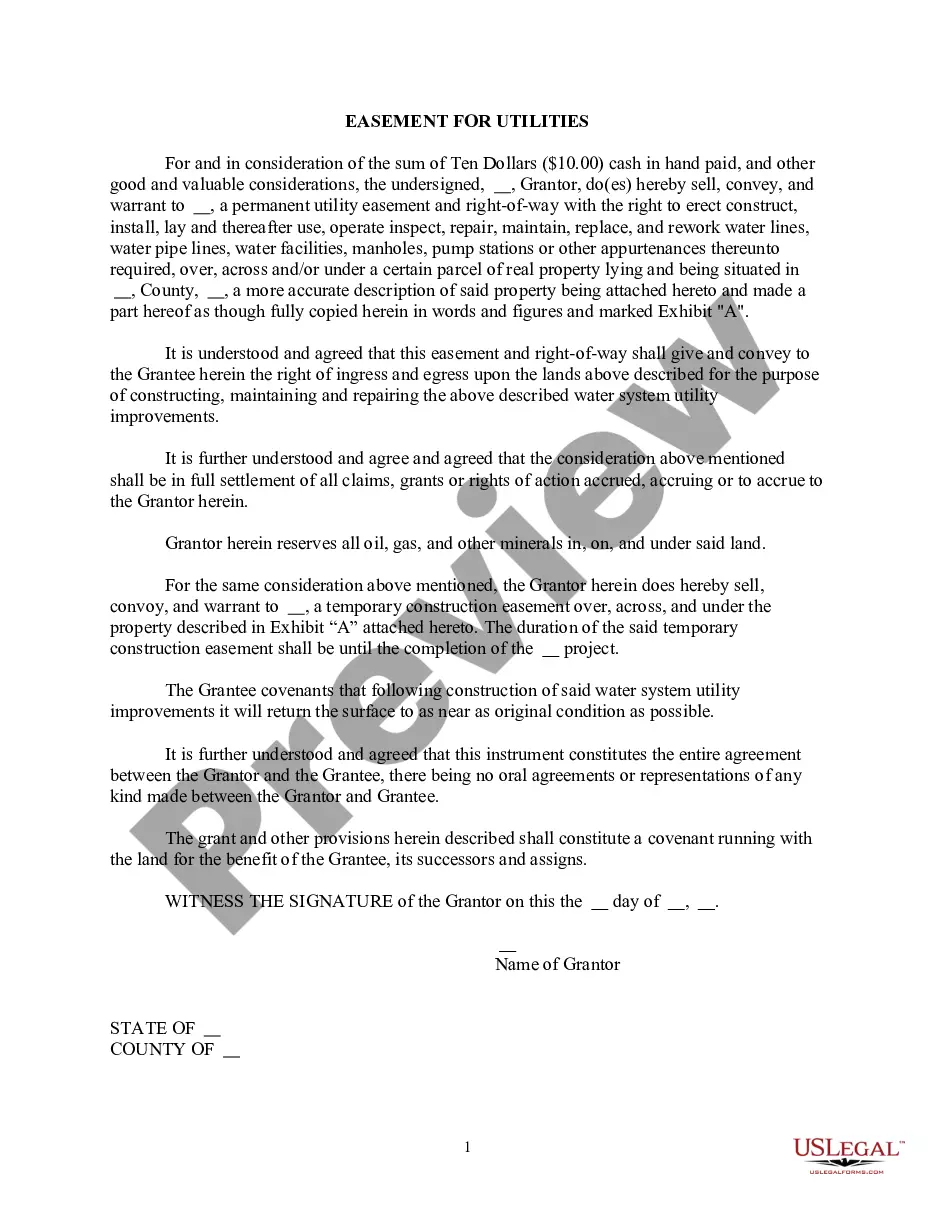
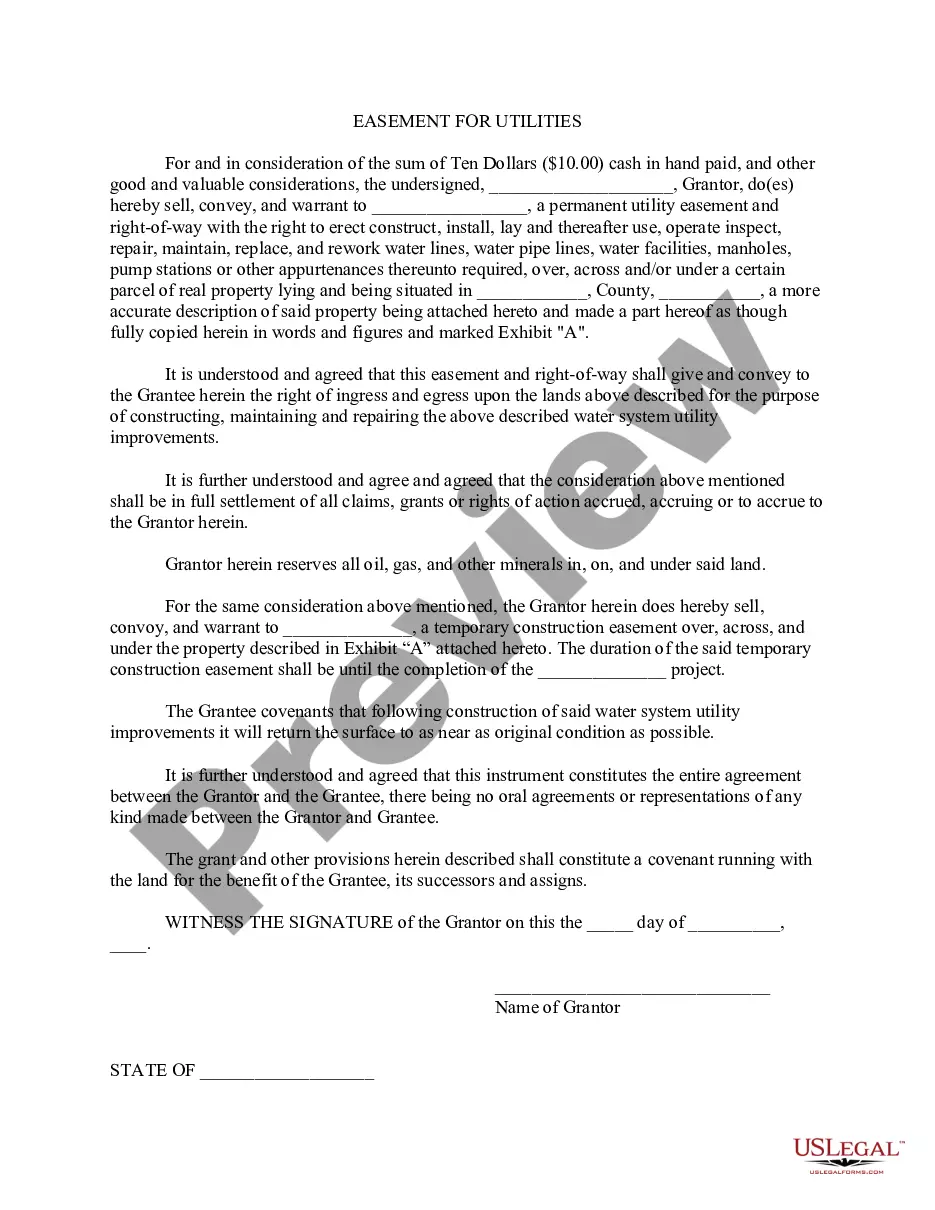
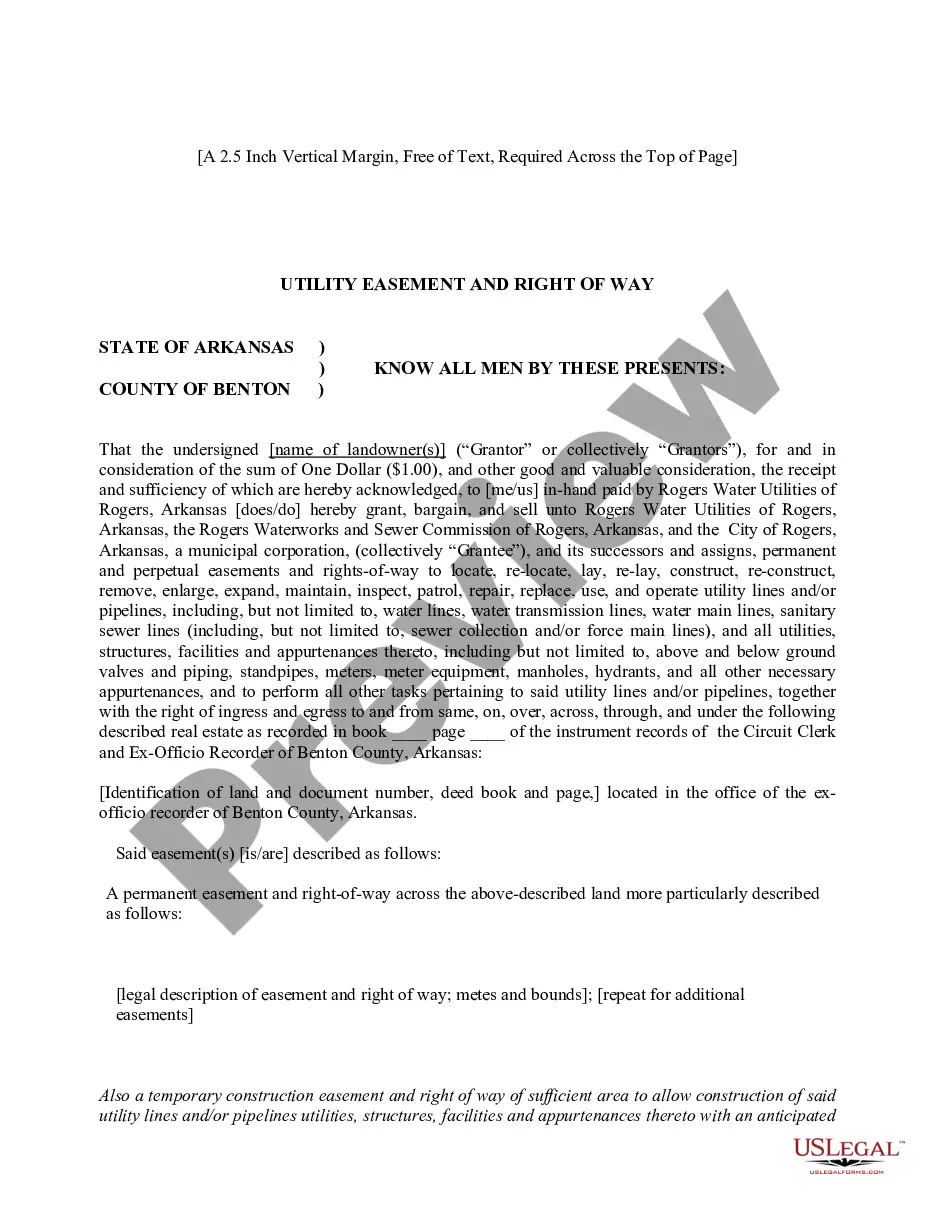
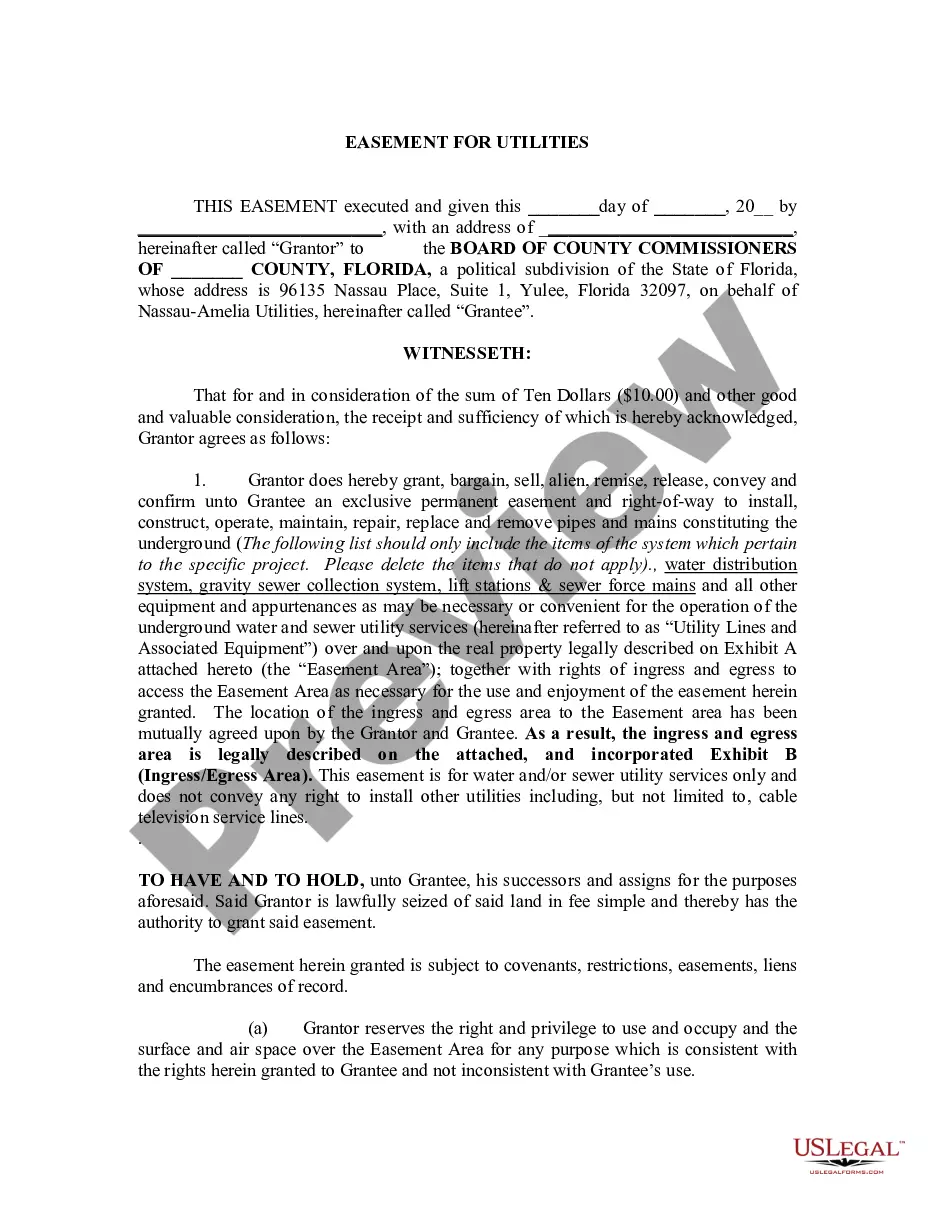
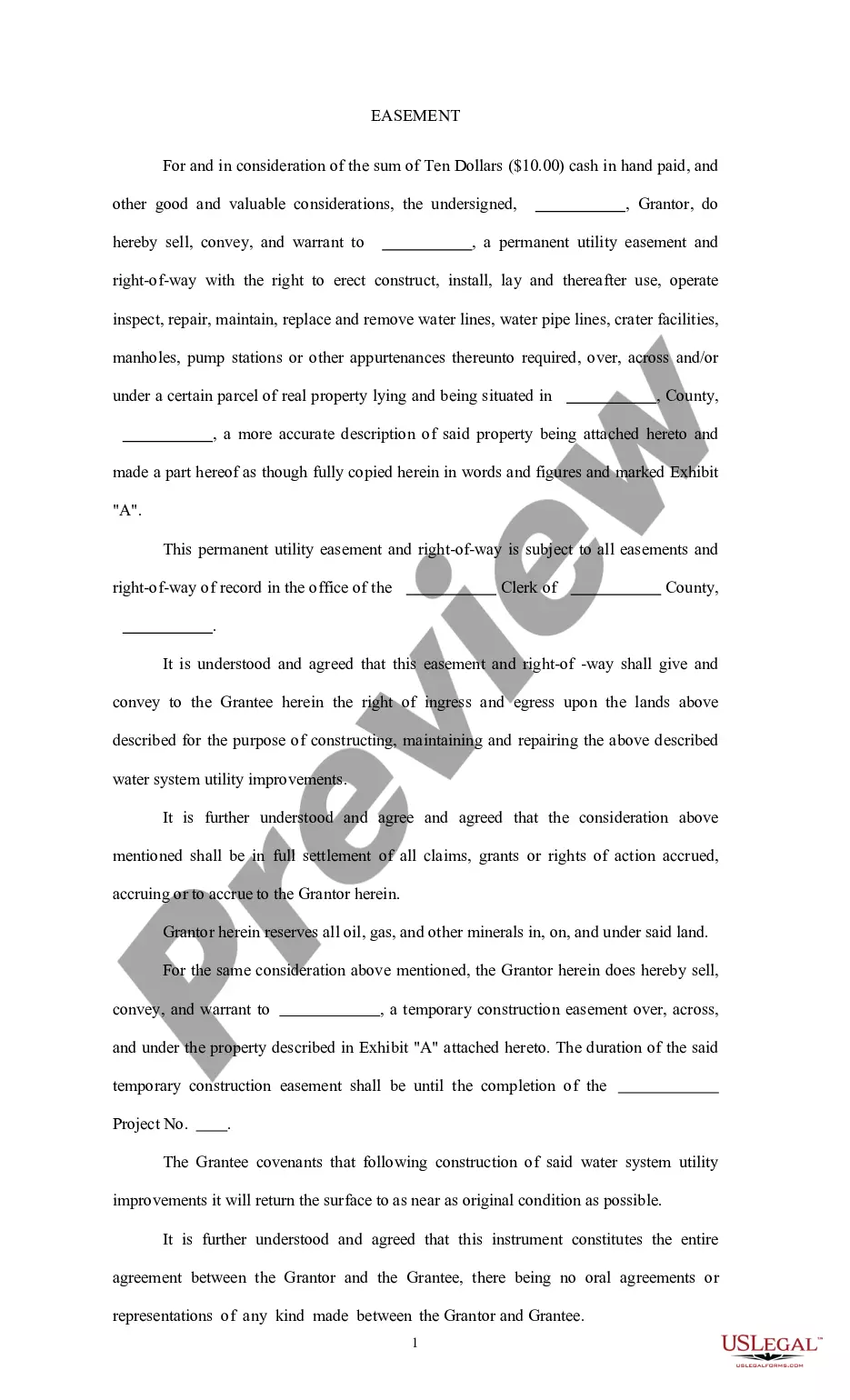
A permanent utility easement and right of way with the right to erect, construct, install, lay and thereafter use, operate, inspect, repair, maintain, replace, and rework water lines, water pipe lines, water facilities, manholes, pump stations or other appurtenances thereunto required, over, across and/or under a certain parcel of real property.
An easement gives one party the right to go onto another party's property. That property may be owned by a private person, a business entity, or a group of owners. Utilities often get easements that allow them to run pipes or phone lines beneath private property. Easements may be obtained for access to another property, called "access and egress", use of spring water, entry to make repairs on a fence or slide area, drive cattle across and other uses. The easement is a real property interest, but separate from the legal title of the owner of the underlying land.
Revoking an easement is usually a long shot. It’s like trying to take back a birthday gift – once it’s given, it can be hard to get it back. You’d need a solid reason and probably a long legal battle.
If they need to dig, they usually need to give you a heads-up. Just like a friendly neighbor would let you know before borrowing your lawn mower, they should inform you before making a mess.
Building on an easement can be tricky. You might want to steer clear of those areas, because it’s like trying to put a fence up in a shared space – it may not end well.
Utility companies generally have the right to access their equipment for maintenance and repairs. It’s like giving them a key to your garage so they can keep their stuff in good shape.
To find out if there’s an easement, you can check your property deed or survey documents. Think of it as looking under the hood of your house to see what’s really going on!
If there’s already an easement in place, it’s like a handshake deal that you can’t back out of. You must let utility companies access their lines or pipes, even if it means they need to dig a bit on your property.
A general easement for utilities is like giving utility companies permission to use your property to install and maintain things like water pipes, electric lines, or gas lines. Think of it as sharing a piece of your yard with them.