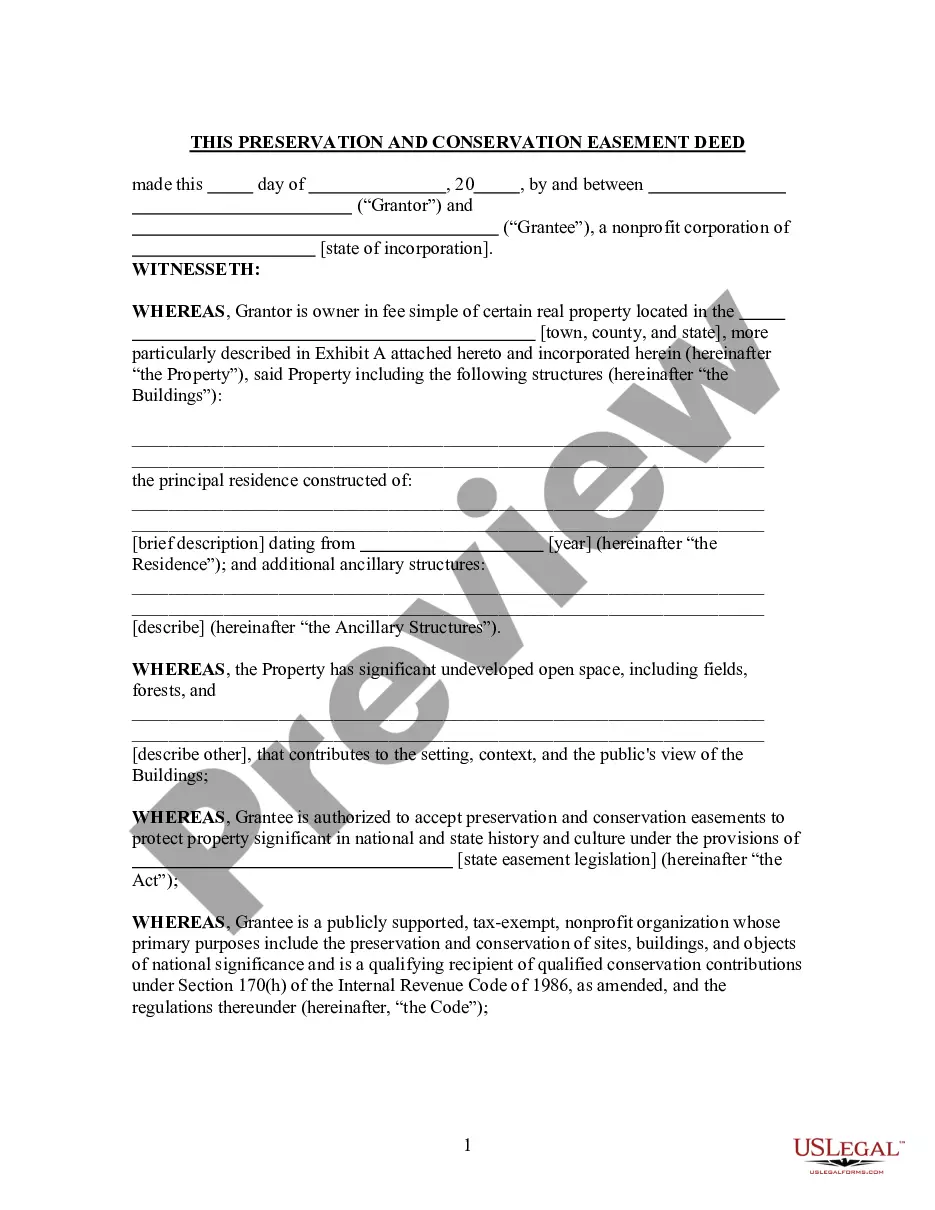
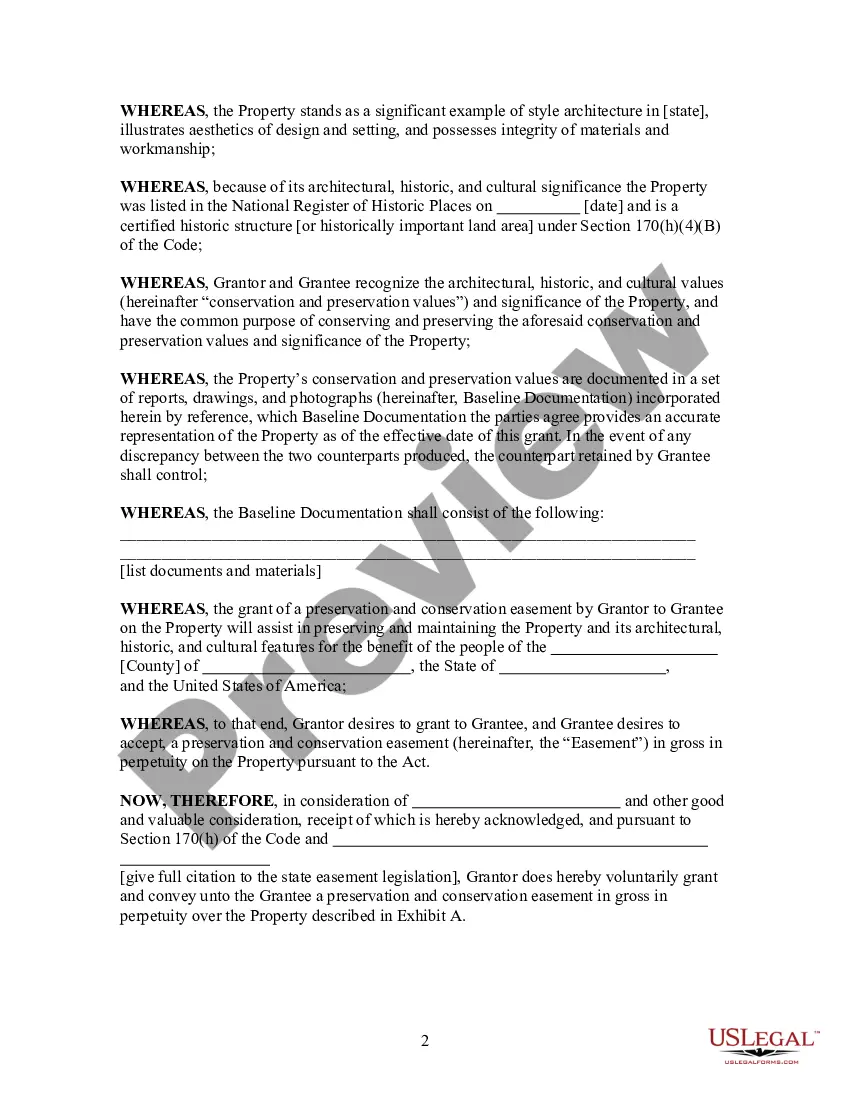
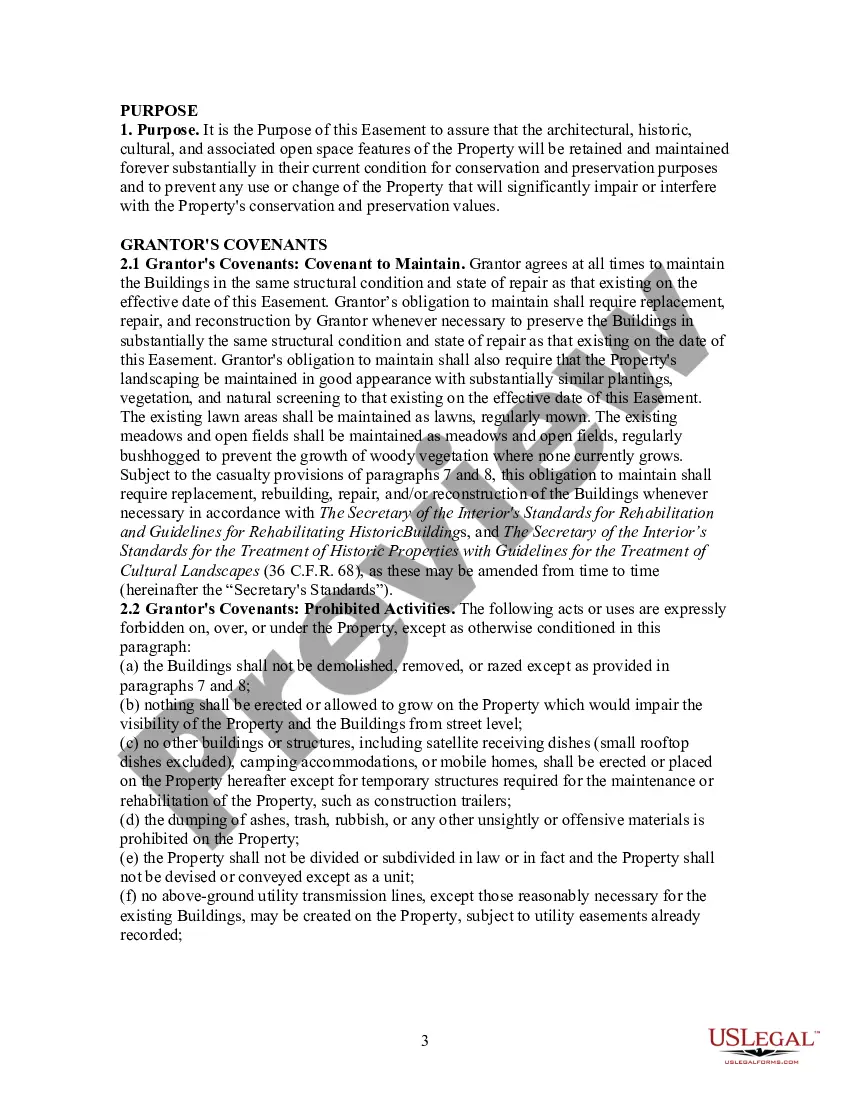
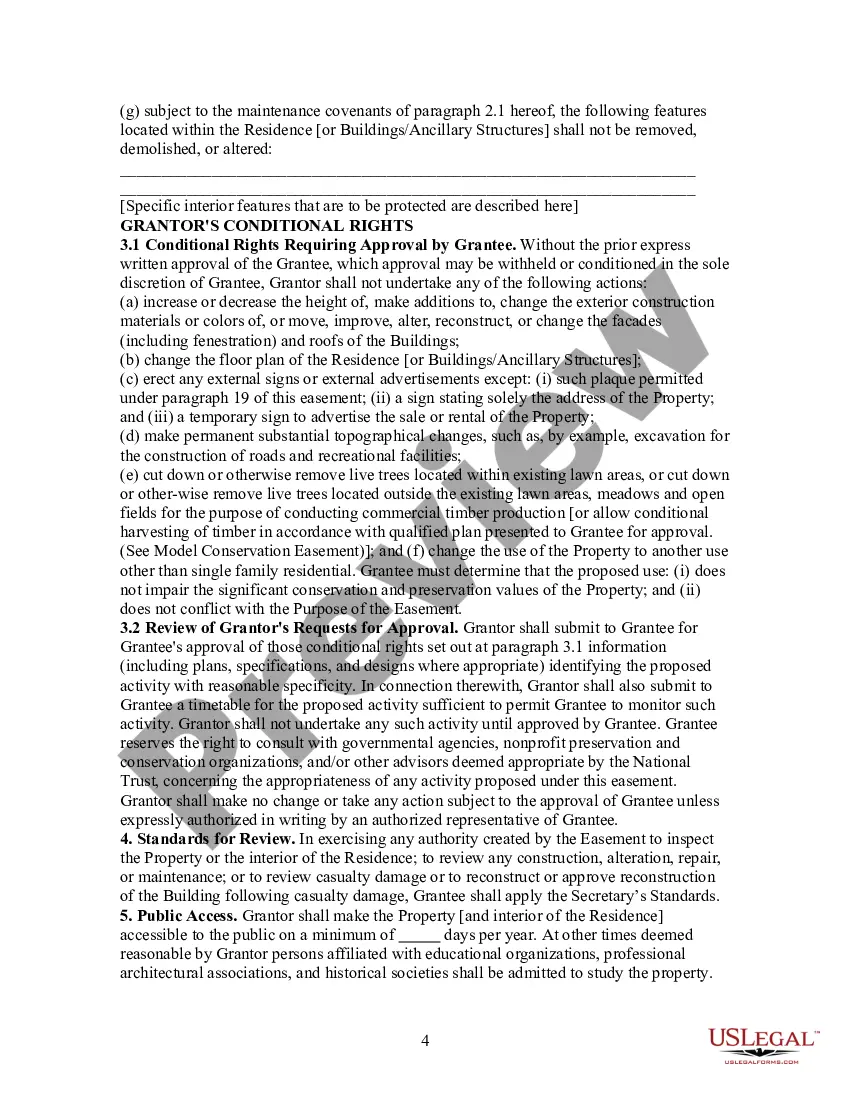
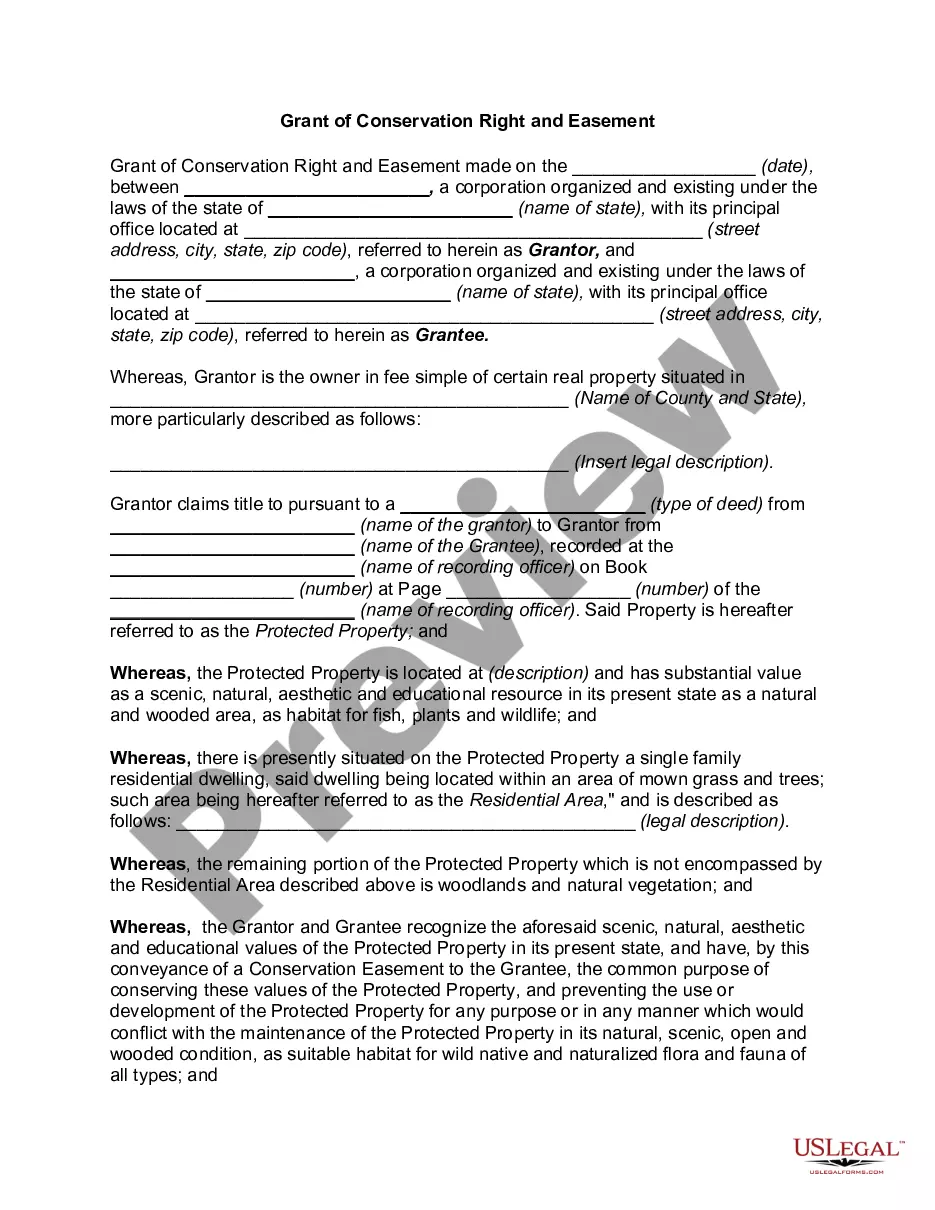
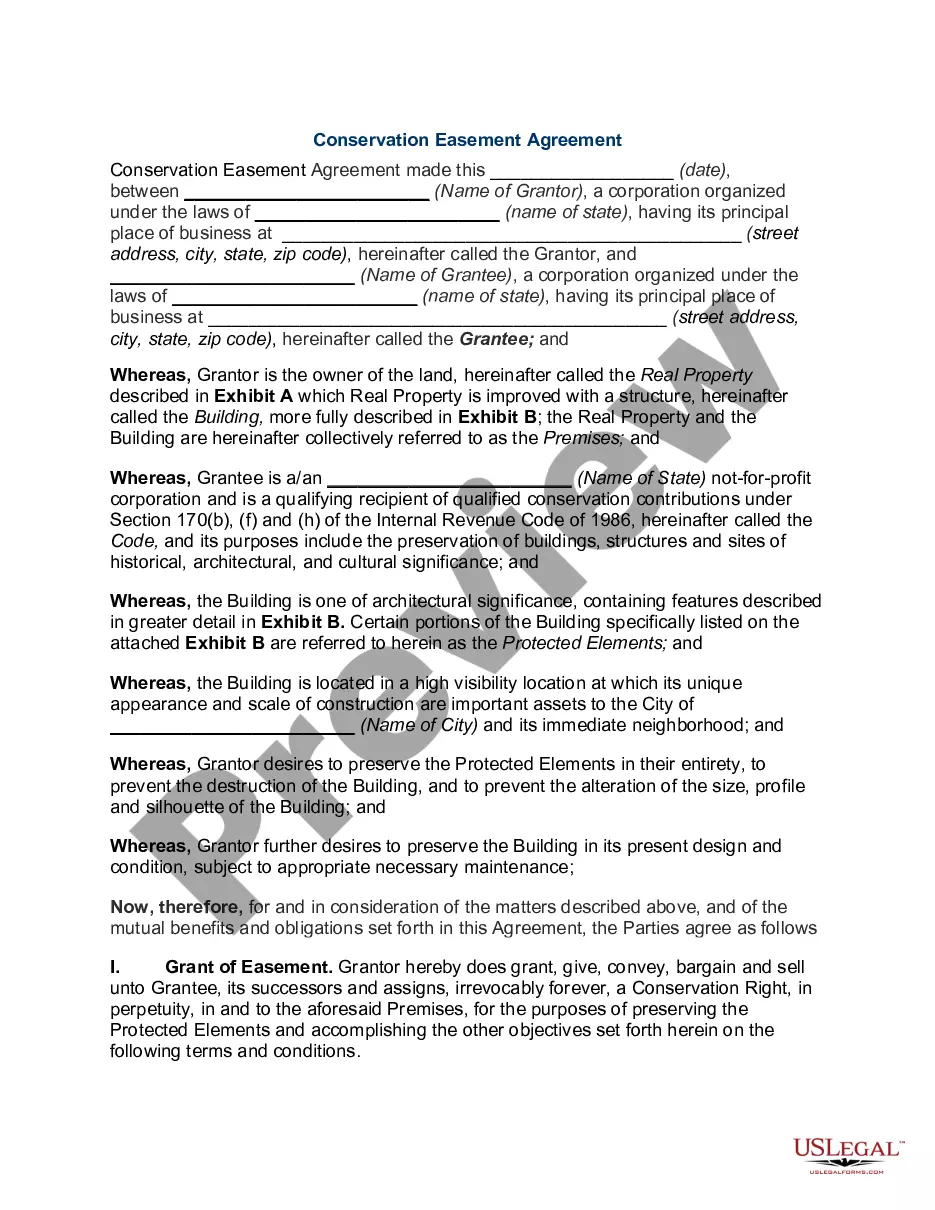
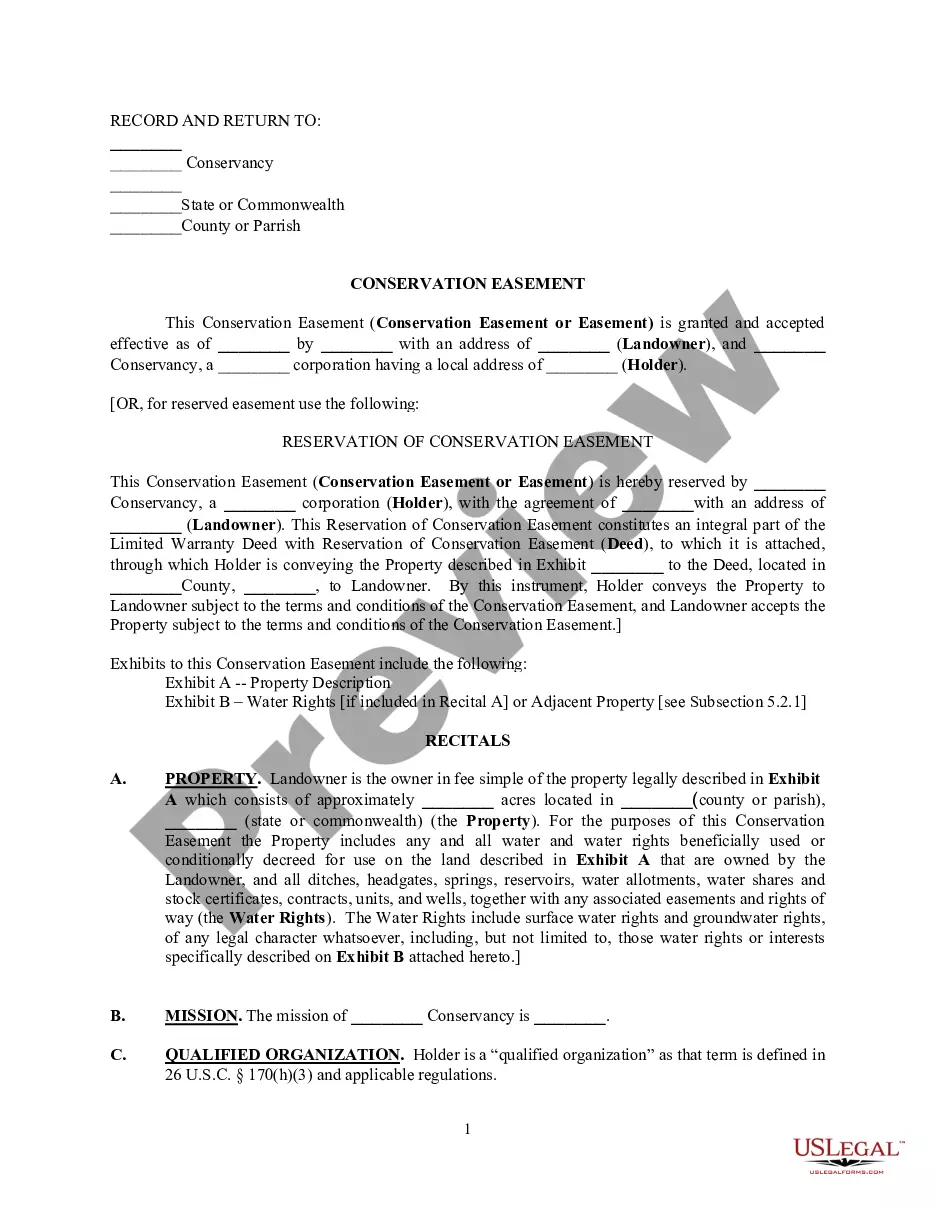
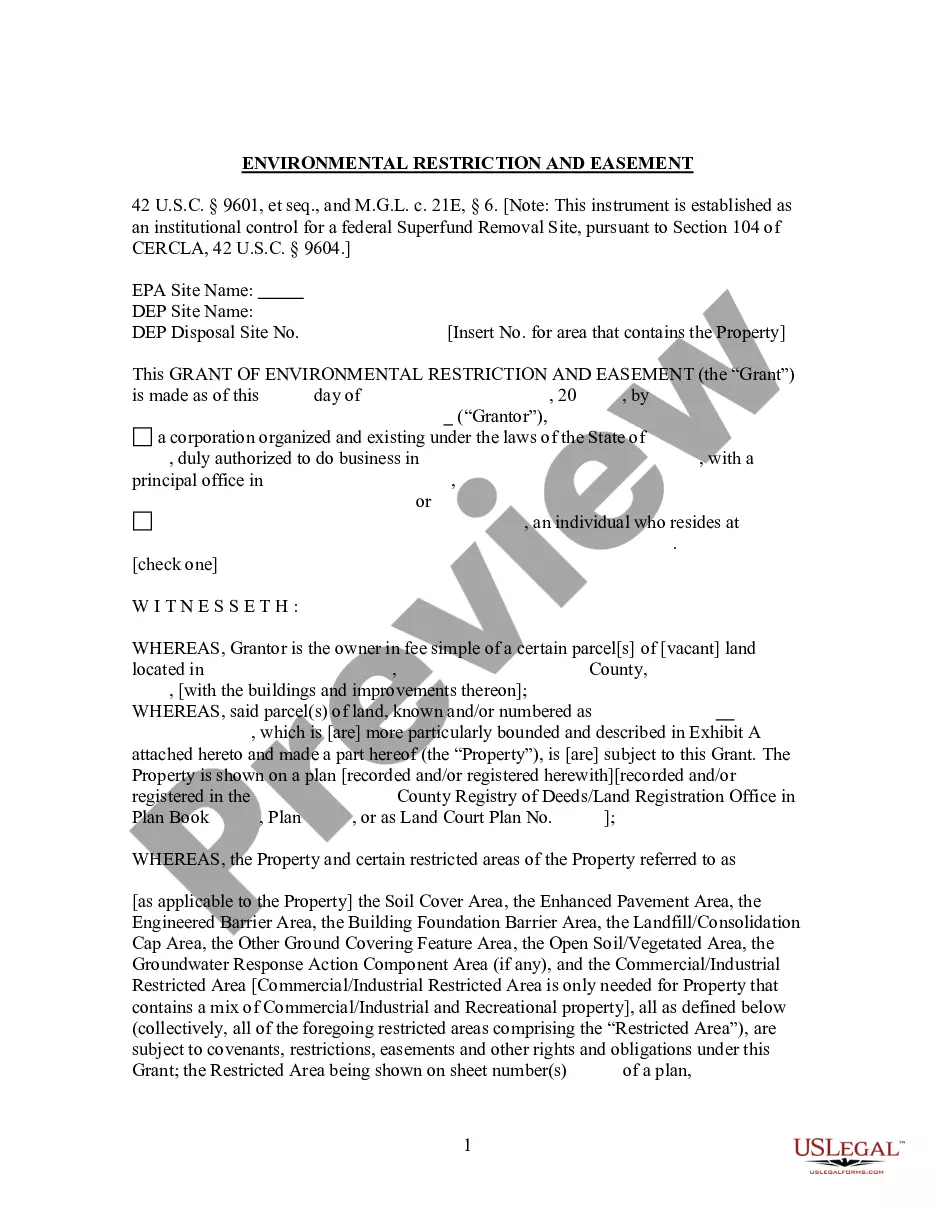
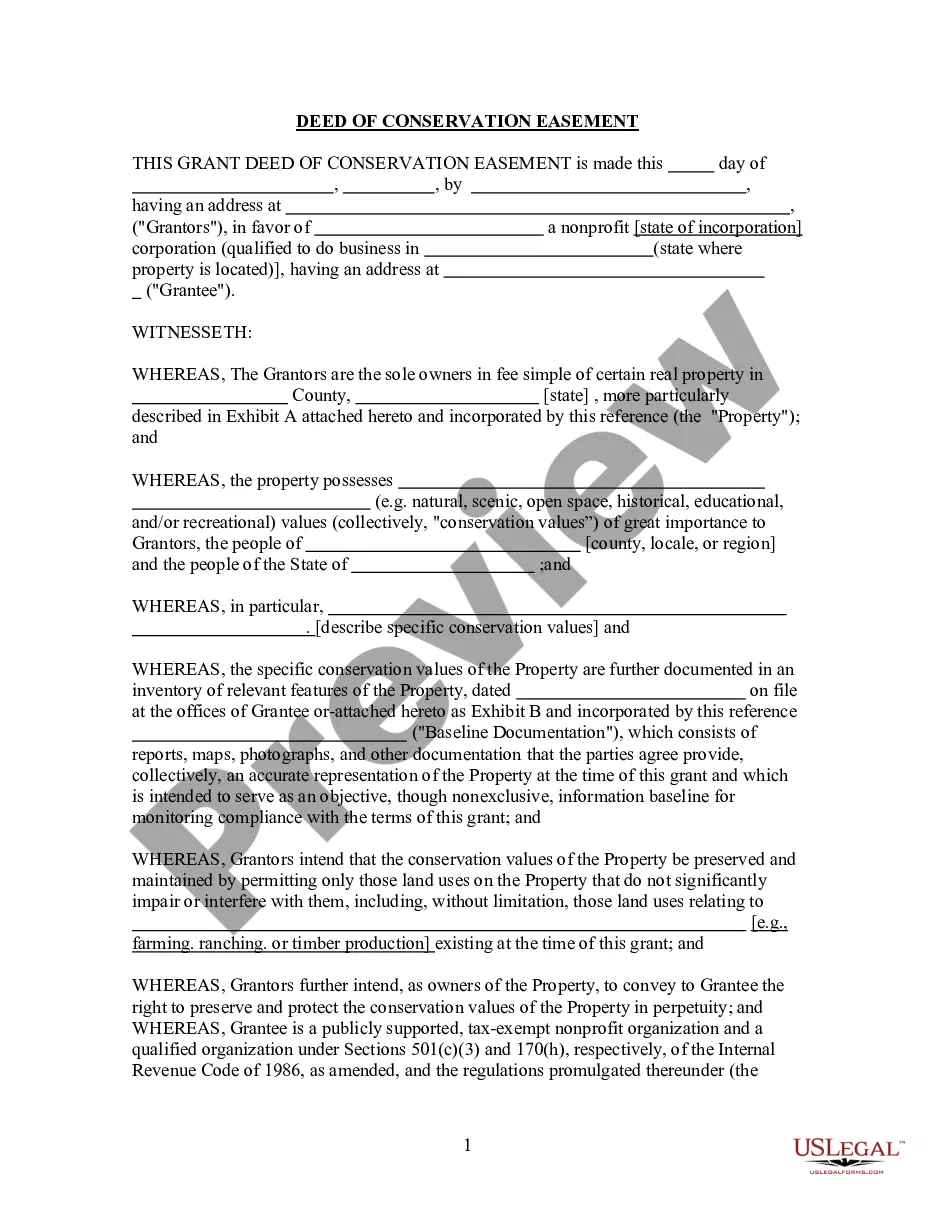
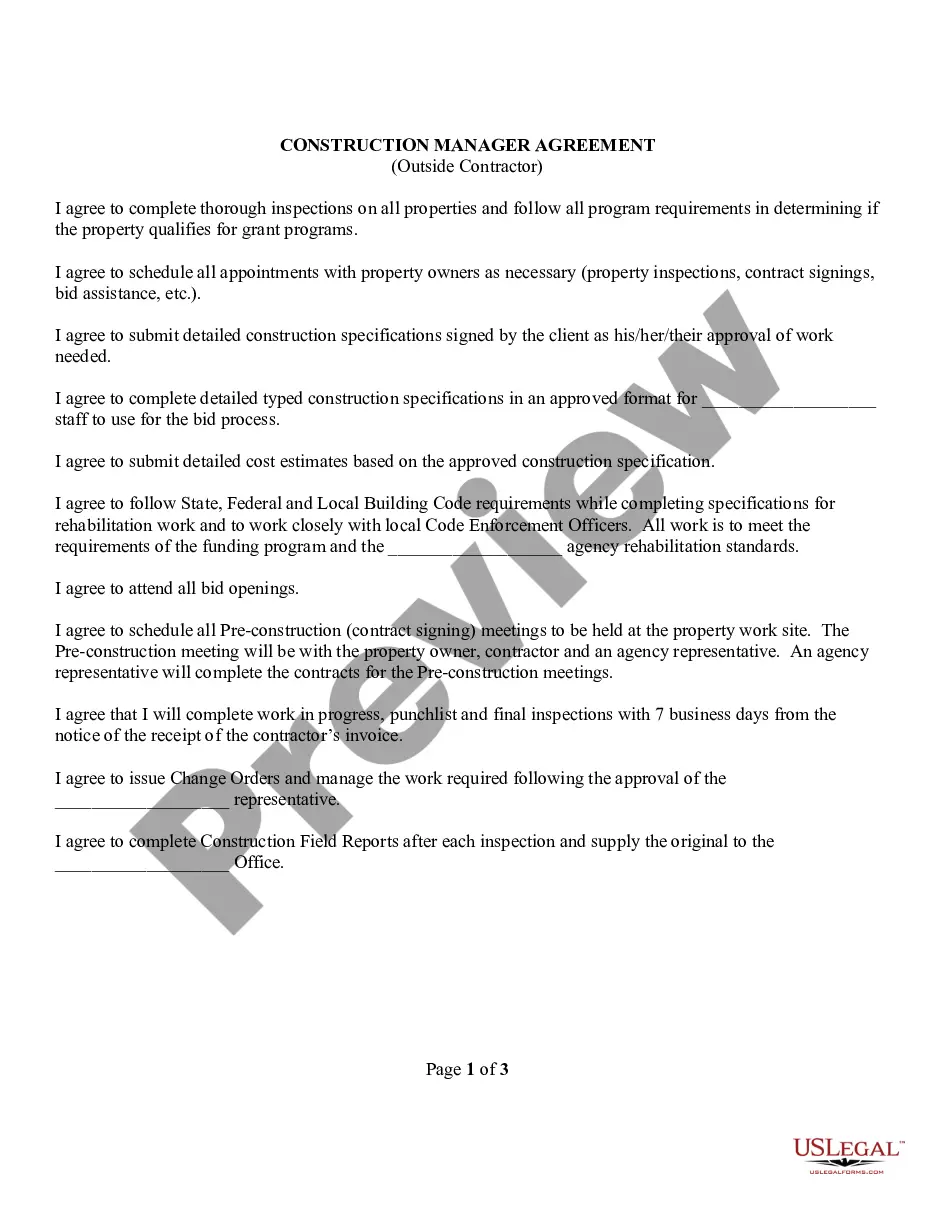
This is a sample form for use in transactions involving easements, a Conservation Easement. Easement to preserve undeveloped open space and property listed with the National Register of Historical Places.
If someone goes against the easement rules, the conservation organization can step in to fix things. They’ll work to restore the land and keep everyone on the up and up.
Absolutely! You can still sell your property, but the conservation easement will stay in place. New owners will also need to respect the same rules that help protect the land.
Yes, indeed! Many landowners find they can benefit from tax deductions when they establish a conservation easement, giving a little boost to the pocketbook while helping the environment.
You still own the land, but the easement places some limits on how you can use it, like prohibiting major development. Think of it as guarding your treasure while still holding onto the key.
Pretty much any landowner can set one up. Whether it's a private homeowner, a farmer, or a group owning large tracts of land, if you own it, you can protect it.
It's crucial because it helps preserve green spaces, protects wildlife habitats, and ensures that our environment stays healthy and vibrant amid all the changes happening in the city.
A conservation easement is like a promise between a landowner and a conservation organization that helps protect the land from being developed. It keeps the natural beauty intact for future generations.