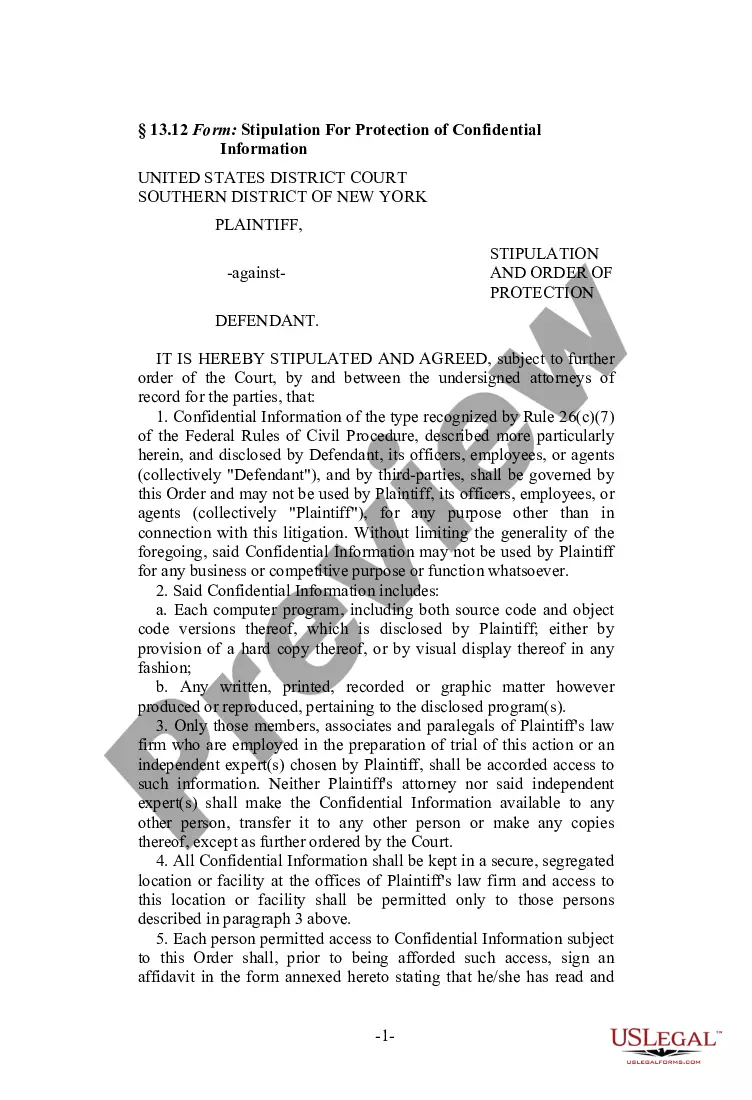
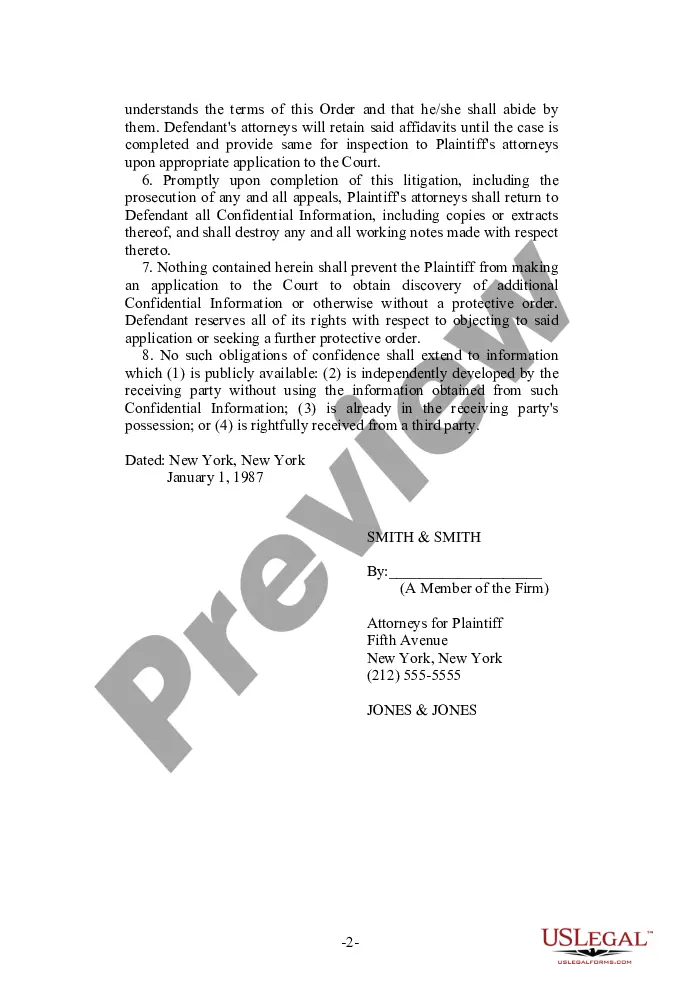
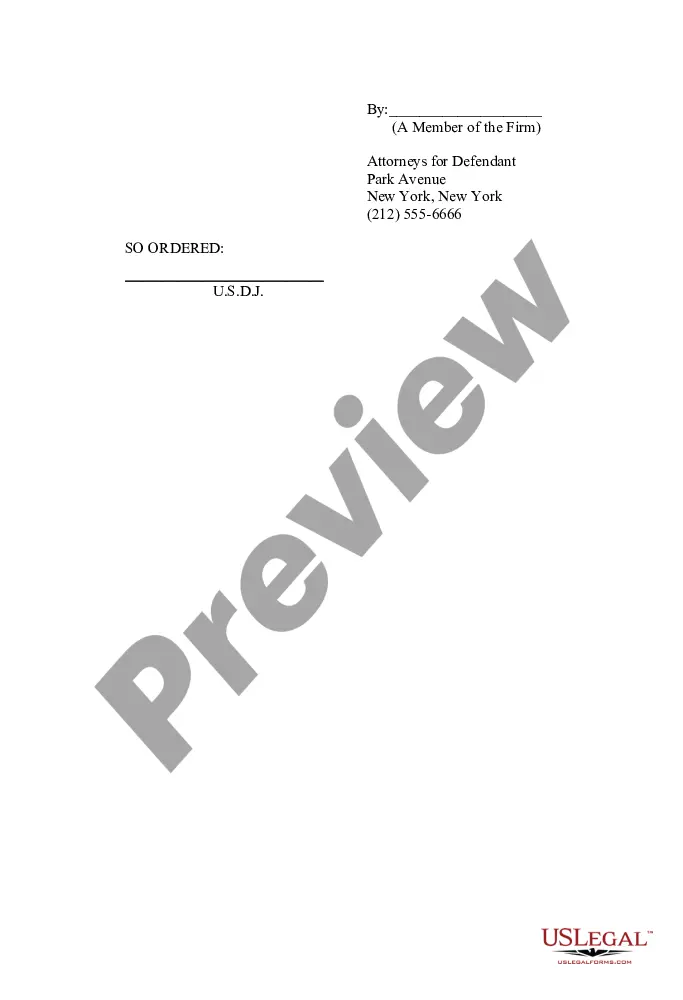
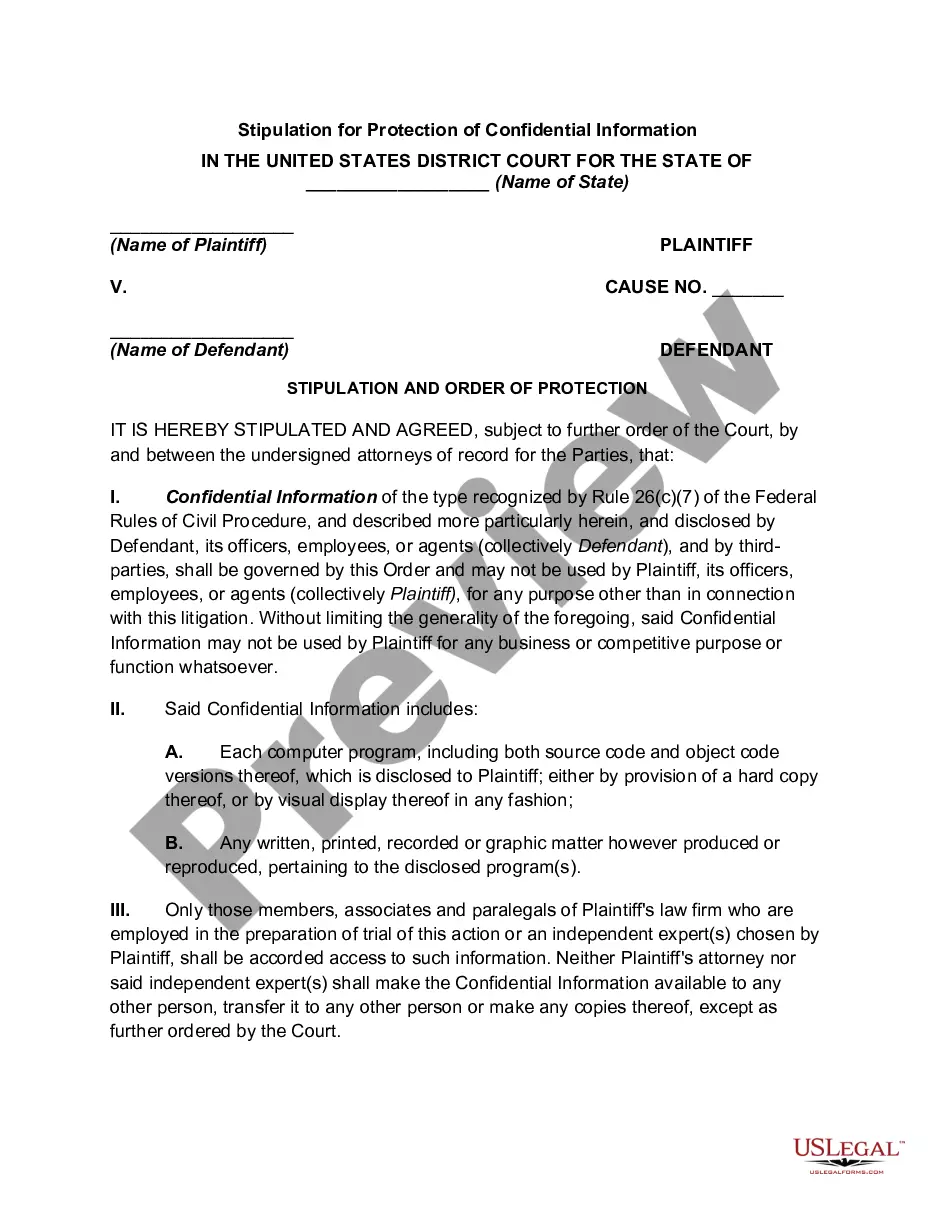
San Bernardino California Stipulation and Order for Protection for Confidential Information
Description
Get your form ready online
Our built-in tools help you complete, sign, share, and store your documents in one place.
Make edits, fill in missing information, and update formatting in US Legal Forms—just like you would in MS Word.
Download a copy, print it, send it by email, or mail it via USPS—whatever works best for your next step.
Sign and collect signatures with our SignNow integration. Send to multiple recipients, set reminders, and more. Go Premium to unlock E-Sign.
If this form requires notarization, complete it online through a secure video call—no need to meet a notary in person or wait for an appointment.
We protect your documents and personal data by following strict security and privacy standards.

Make edits, fill in missing information, and update formatting in US Legal Forms—just like you would in MS Word.

Download a copy, print it, send it by email, or mail it via USPS—whatever works best for your next step.

Sign and collect signatures with our SignNow integration. Send to multiple recipients, set reminders, and more. Go Premium to unlock E-Sign.

If this form requires notarization, complete it online through a secure video call—no need to meet a notary in person or wait for an appointment.

We protect your documents and personal data by following strict security and privacy standards.
Looking for another form?
How to fill out Stipulation And Order For Protection For Confidential Information?
Producing legal documents is essential in the current landscape. Nonetheless, it’s not always necessary to enlist expert assistance to create certain forms from the beginning, such as the San Bernardino Stipulation and Order for Protection for Confidential Information, using a service like US Legal Forms.
US Legal Forms offers more than 85,000 documents to choose from in various categories, including living wills, real estate contracts, and divorce papers. All documents are organized by their applicable state, streamlining the searching process.
You can also find comprehensive resources and guides on the website to make any actions related to document execution simple.
If you are currently subscribed to US Legal Forms, you can locate the specific San Bernardino Stipulation and Order for Protection for Confidential Information, Log In to your account, and download it. It’s important to note that our platform cannot completely substitute for a legal expert. If you face a highly complex situation, we recommend consulting an attorney to review your document before finalizing and submitting it.
With over 25 years in the industry, US Legal Forms has become a preferred resource for a wide variety of legal forms for millions of users. Join them today and effortlessly acquire your specific state documents!
- Review the document's preview and description (if provided) to understand what you will receive upon obtaining the form.
- Make sure that the document you select is pertinent to your state/county/area since state regulations can affect the validity of certain documents.
- Examine the associated forms or initiate a new search to locate the correct document.
- Click Buy now and create your account. If you already possess an account, opt to Log In.
- Select the option, then the required payment gateway, and purchase the San Bernardino Stipulation and Order for Protection for Confidential Information.
- Pick to save the form template in any available format.
- Navigate to the My documents section to redownload the file.
Form popularity
FAQ
A Stipulated Judgment is similar to a Marital Settlement Agreement in that the Stipulated Judgment contains agreements between the parties about all of the same issues discussed above. However, a Stipulated Judgment is usually a shorter and more abbreviated version of a Marital Settlement Agreement.
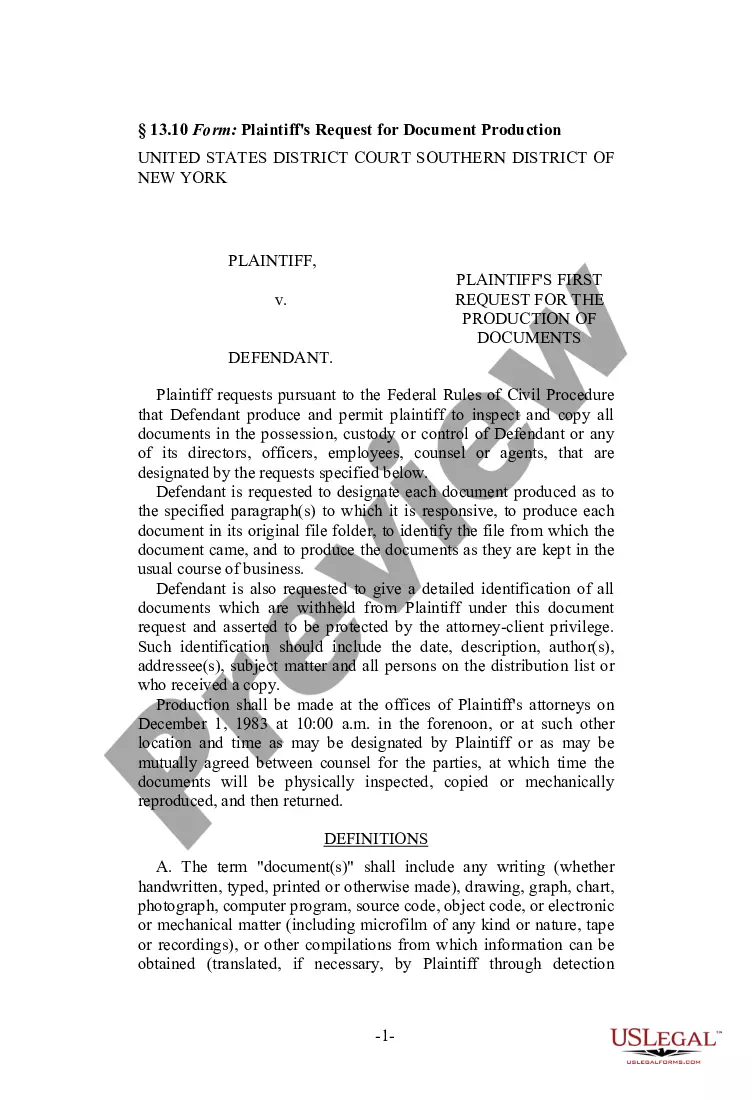
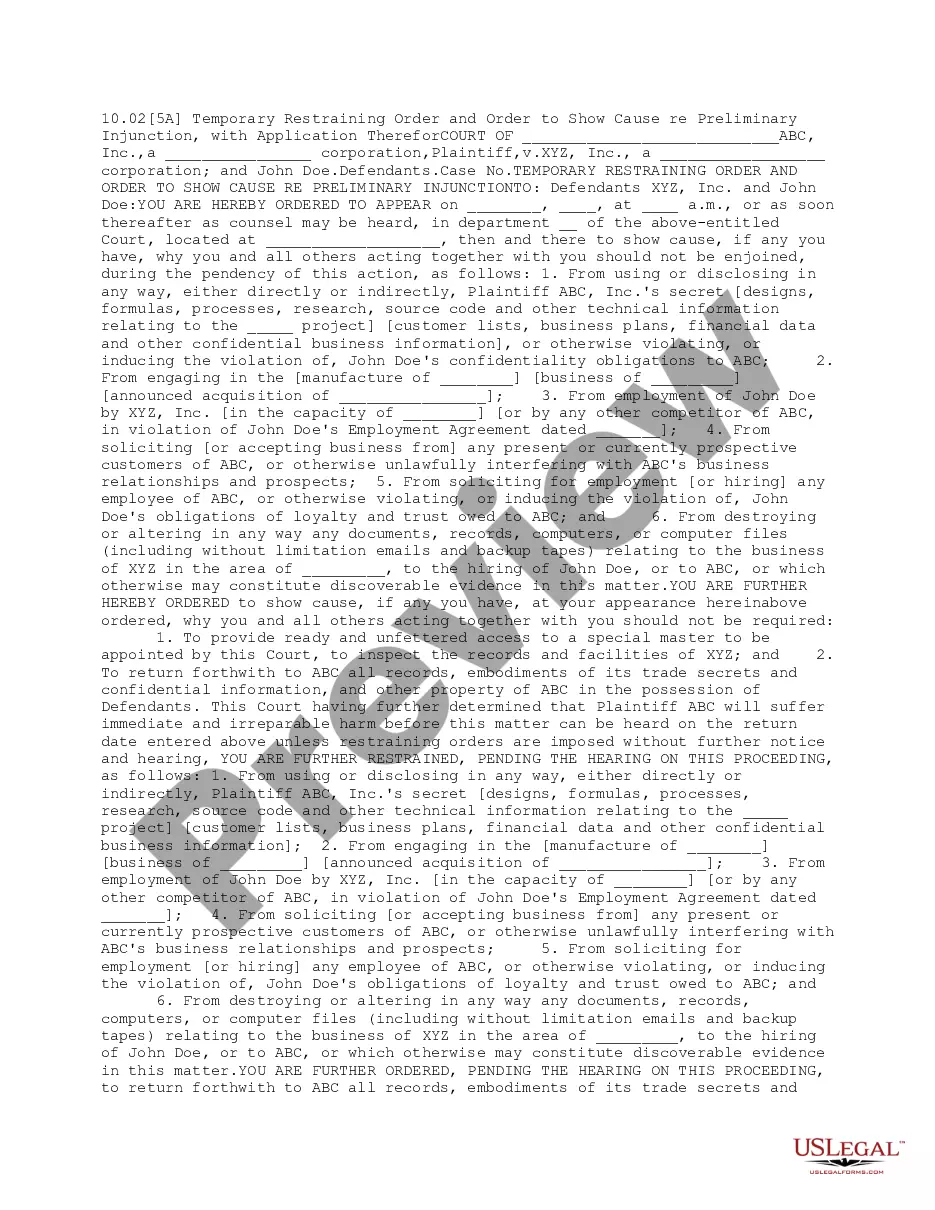
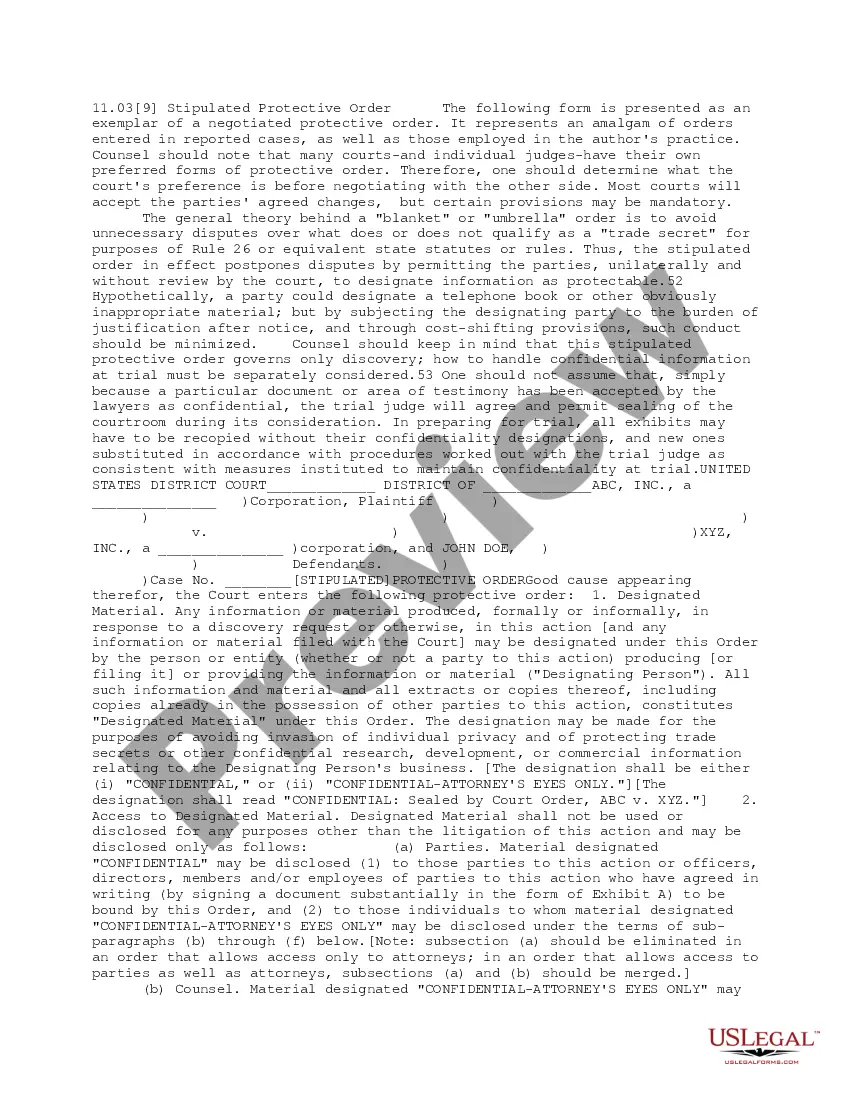
A stipulated protective order, also referred to as a confidentiality agreement and order, provides that assurance. It specifically identifies the confidential information that is protected, which may include deposition testimony disclosing sensitive information, and the persons that have access to it.
Anyone seeking such an order must be prepared to present some physical evidence in addition to their own written statements and testimony in court. Evidence such as photographs, text messages, police reports or medical records. The court will not entertain a simple exchange of allegations.
Anyone seeking such an order must be prepared to present some evidence in addition to their own written statements and testimony in Court. This standard means that the Court must see photographs, text messages, e-mails or any other physical evidence that can support claims made by the Petitioner.
REFERRAL FOR CII/CARPOS/ICMS REPORT. (Family Law) Form A. This form is required with any filing where Child Custody and Visitation Orders are at issue and in all Domestic Violence Restraining Order Request.
You can ask for a civil harassment restraining order if you are being harassed, stalked, abused, or threatened by someone you are not as close to as is required under domestic violence cases, like a roommate, a neighbor, or more distant family members like cousins, aunts or uncles, or nieces or nephews.
A Stipulation & Order tells the judge your new agreement and makes it part of the court record. It also ensures that if you ever have to come back to court because you and the other party do not agree about something, the judge will already know the changes that have been made.
In discovery, the protective order guards against excessive, unreasonable, or confidentiality-breaking requests by plaintiffs for disclosure of potential evidence. A protective order is often sought by the defense counsel when the plaintiff's attorneys are being over-zealous in the discovery process.
In many litigations, the parties agree to a "stipulated protective order" at the outset of discovery, which is designed to protect against the disclosure to the public of proprietary and confidential information of a party to the lawsuit (or third party subpoenaed to produce information in the suit).
A restraining order (also called a protective order) is a court order that can protect someone from being physically or sexually abused, threatened, stalked, or harassed.