Collin Texas Complaint regarding Strict Product Liability - Breach of Expressed Warranty, Implied Warranty, Merchantability, Negligence, Punitive Damages - Delta Wood
Description
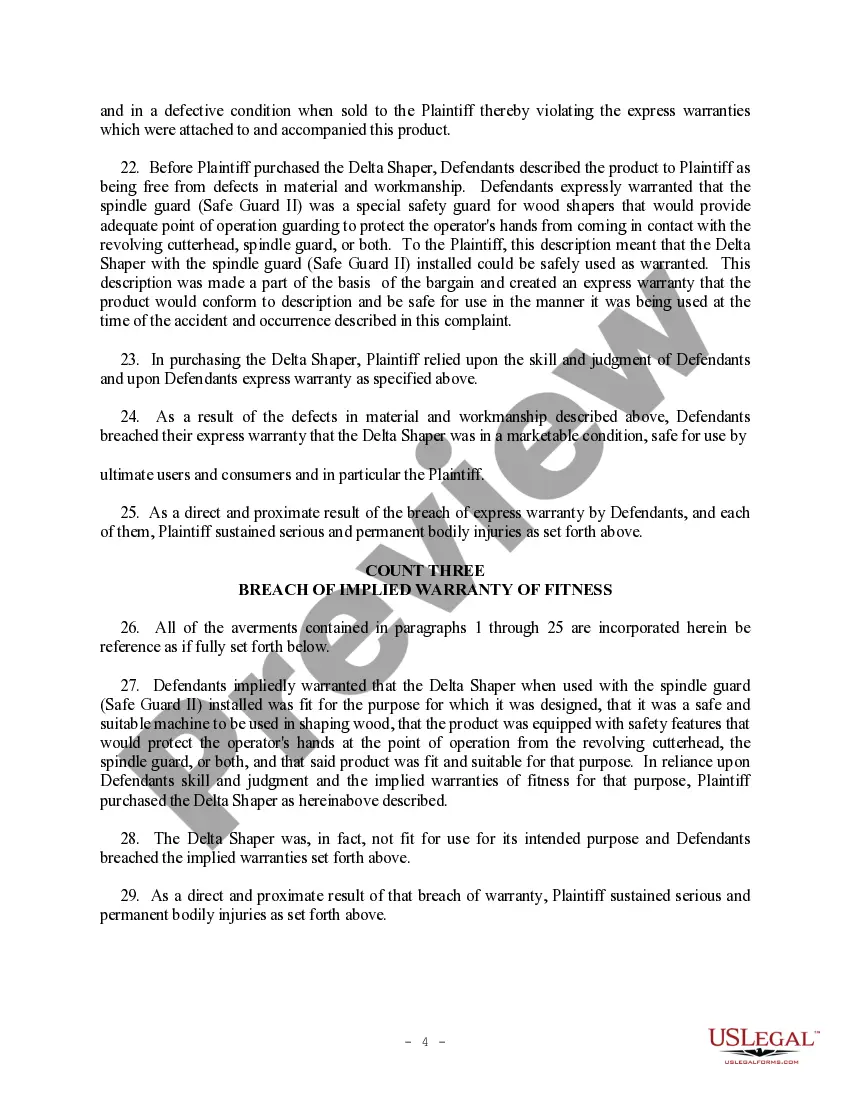
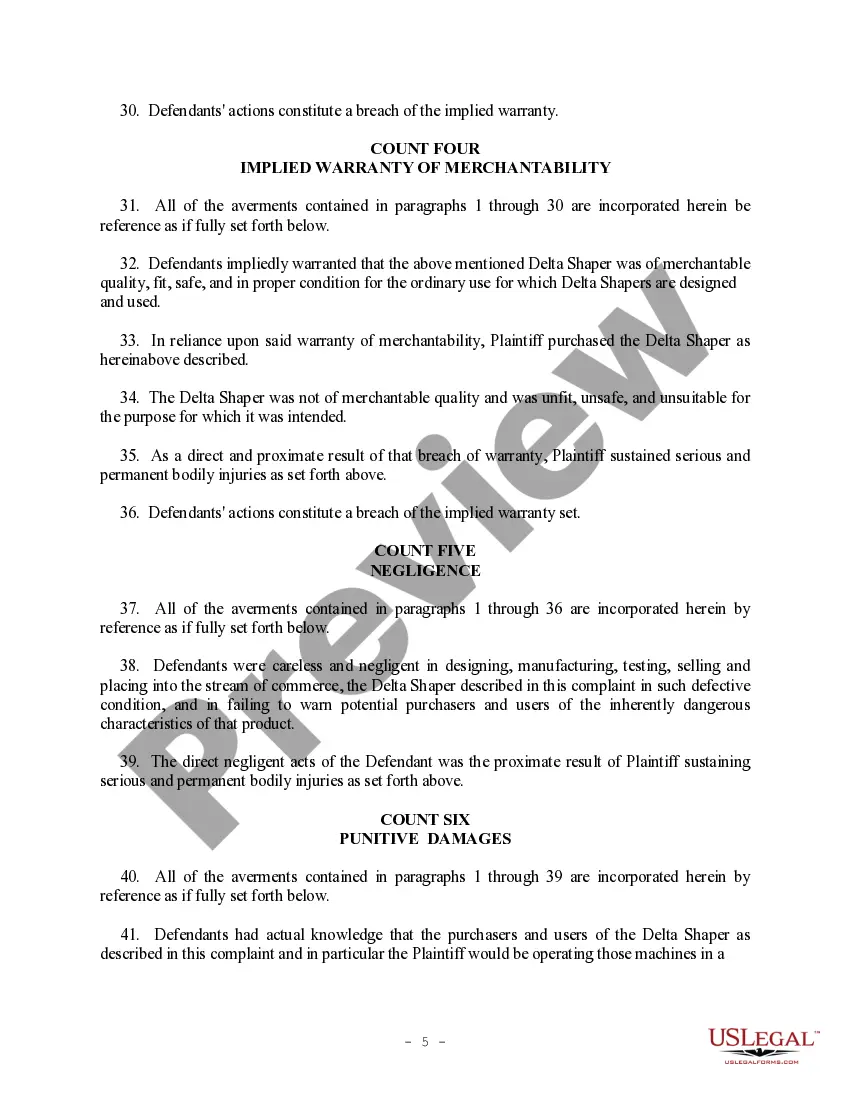
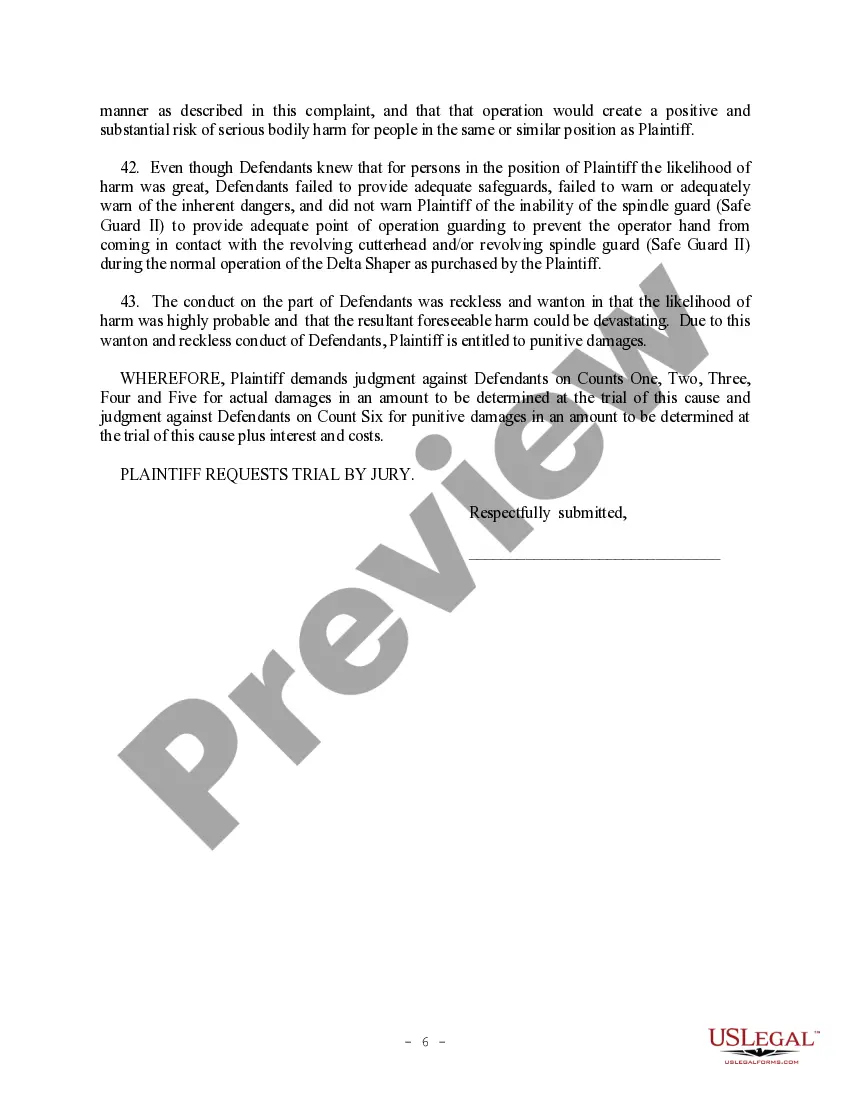
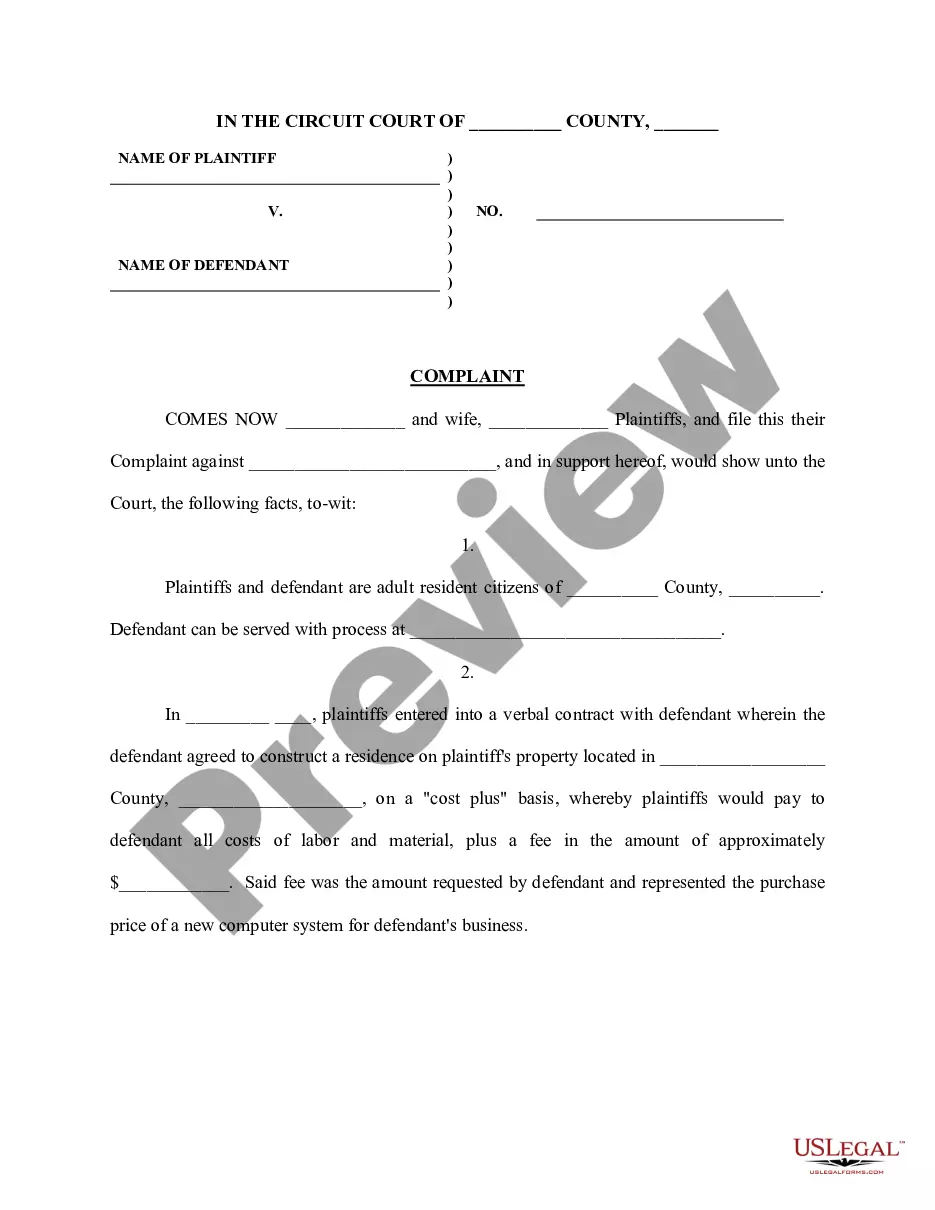
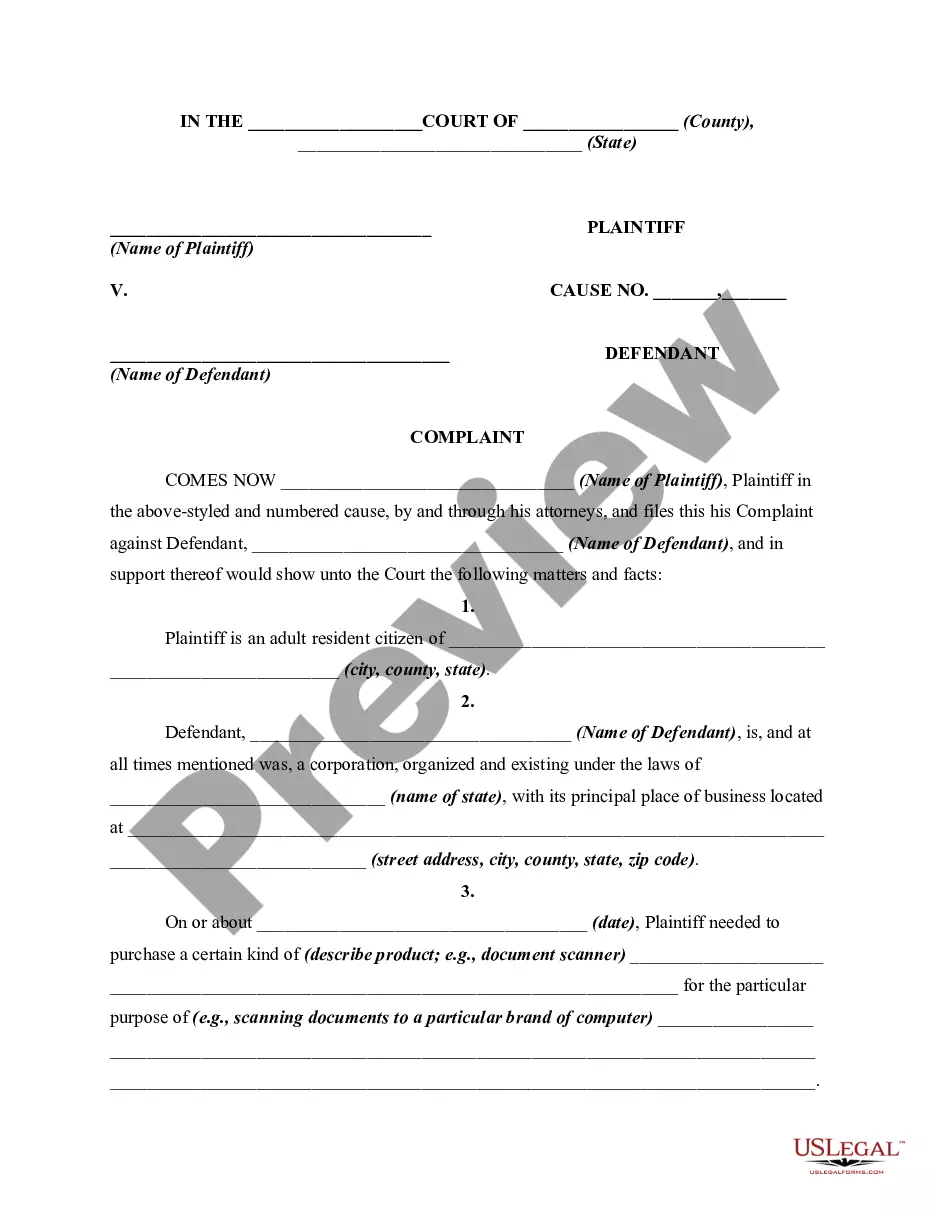
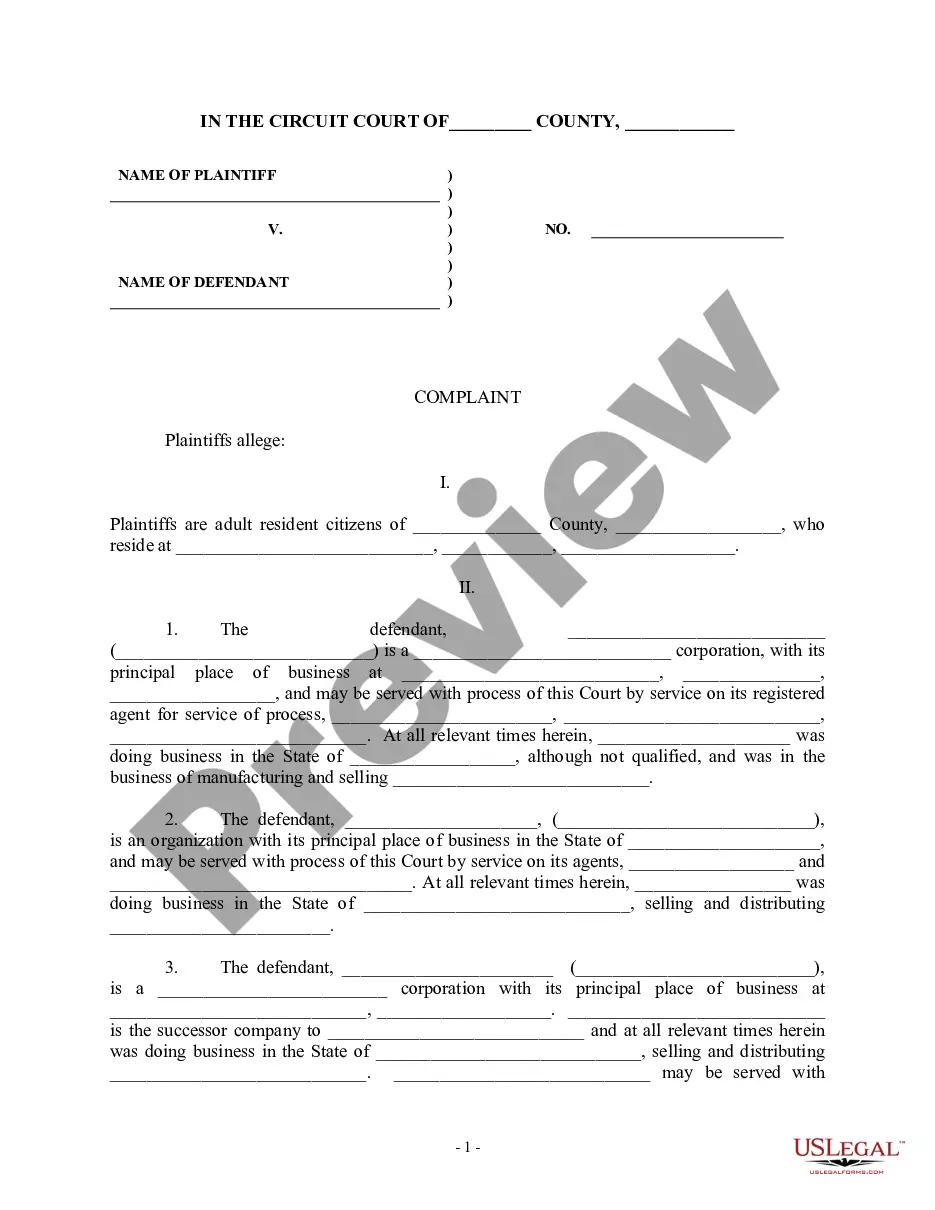
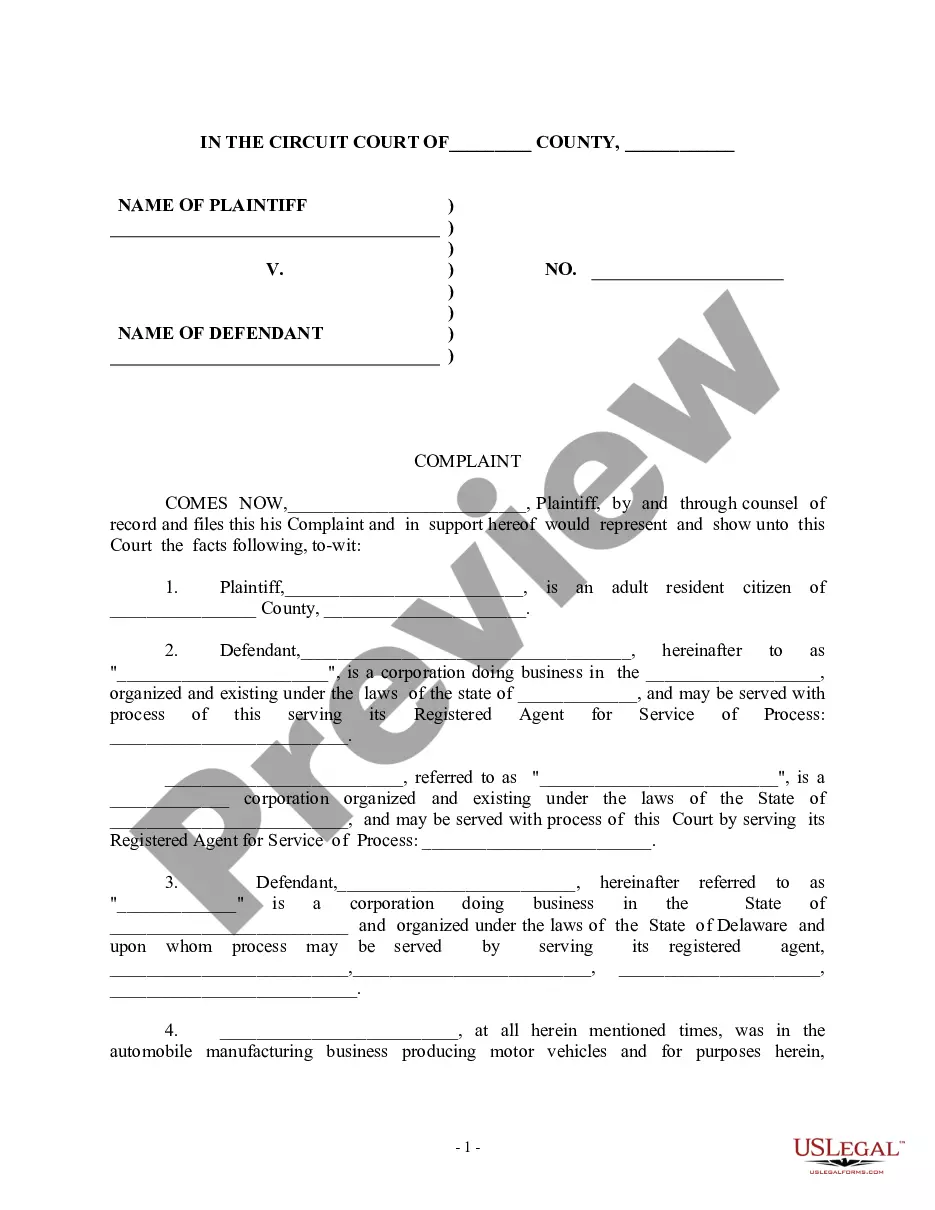
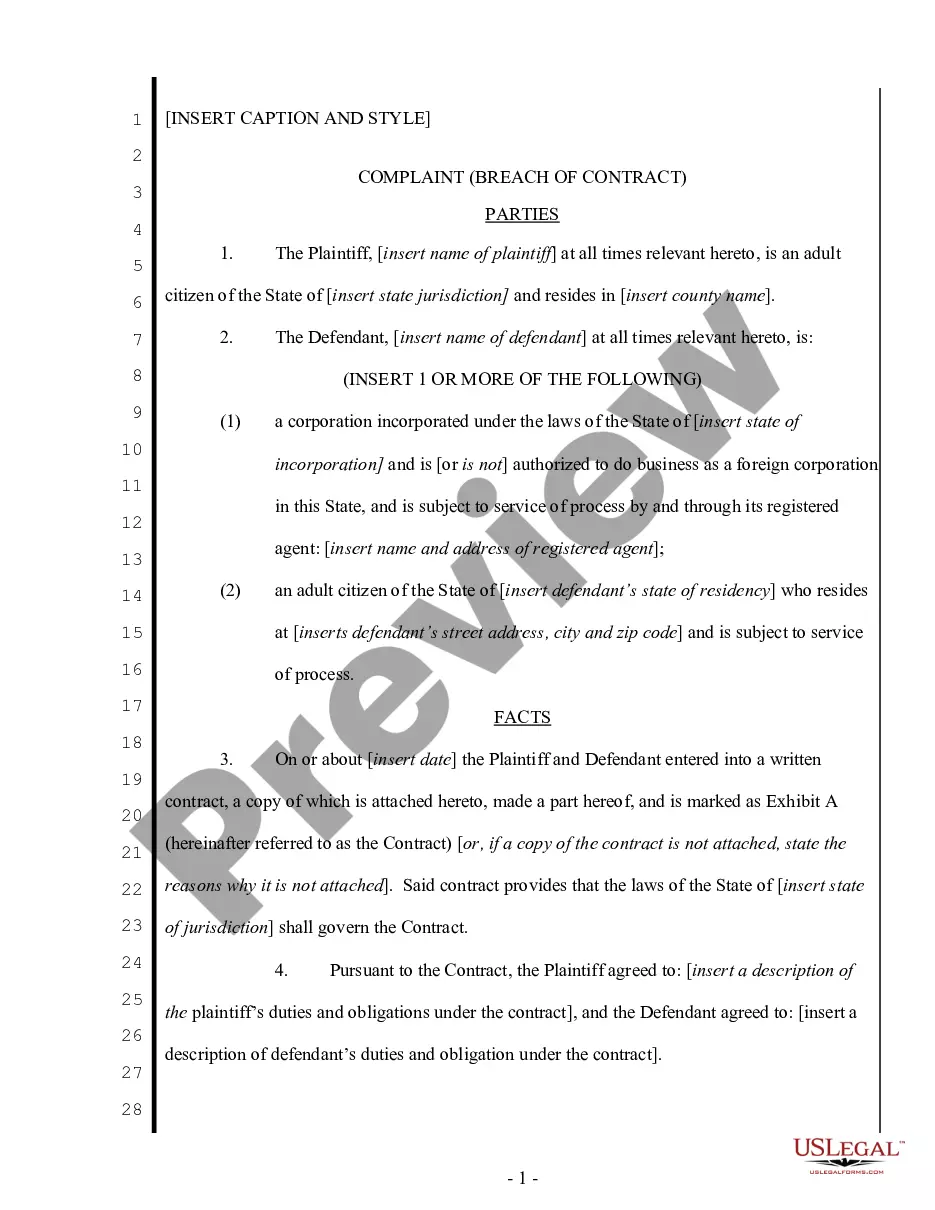






How to fill out Complaint Regarding Strict Product Liability - Breach Of Expressed Warranty, Implied Warranty, Merchantability, Negligence, Punitive Damages - Delta Wood?
Navigating legal documents is essential in the current era. Nevertheless, you don't always have to seek expert assistance to create some of them from the beginning, including the Collin Complaint concerning Strict Product Liability - Violation of Expressed Warranty, Implied Warranty, Merchantability, Negligence, Punitive Damages - Delta Wood, using a service like US Legal Forms.
US Legal Forms offers over 85,000 documents to choose from in various categories ranging from living wills to real estate agreements to divorce papers. All documents are organized by their respective state, making the search process less daunting.
Here's how to locate and download the Collin Complaint concerning Strict Product Liability - Violation of Expressed Warranty, Implied Warranty, Merchantability, Negligence, Punitive Damages - Delta Wood.
If you’re already a US Legal Forms subscriber, you can find the relevant Collin Complaint concerning Strict Product Liability - Violation of Expressed Warranty, Implied Warranty, Merchantability, Negligence, Punitive Damages - Delta Wood, Log In to your account, and download it. Certainly, our platform cannot entirely substitute for a lawyer. If you encounter a particularly complex case, we recommend employing the services of an attorney to review your form prior to signing and submitting it.
With more than 25 years in the industry, US Legal Forms has established itself as a reliable provider for a variety of legal forms for millions of users. Join them today and obtain your state-compliant documents effortlessly!
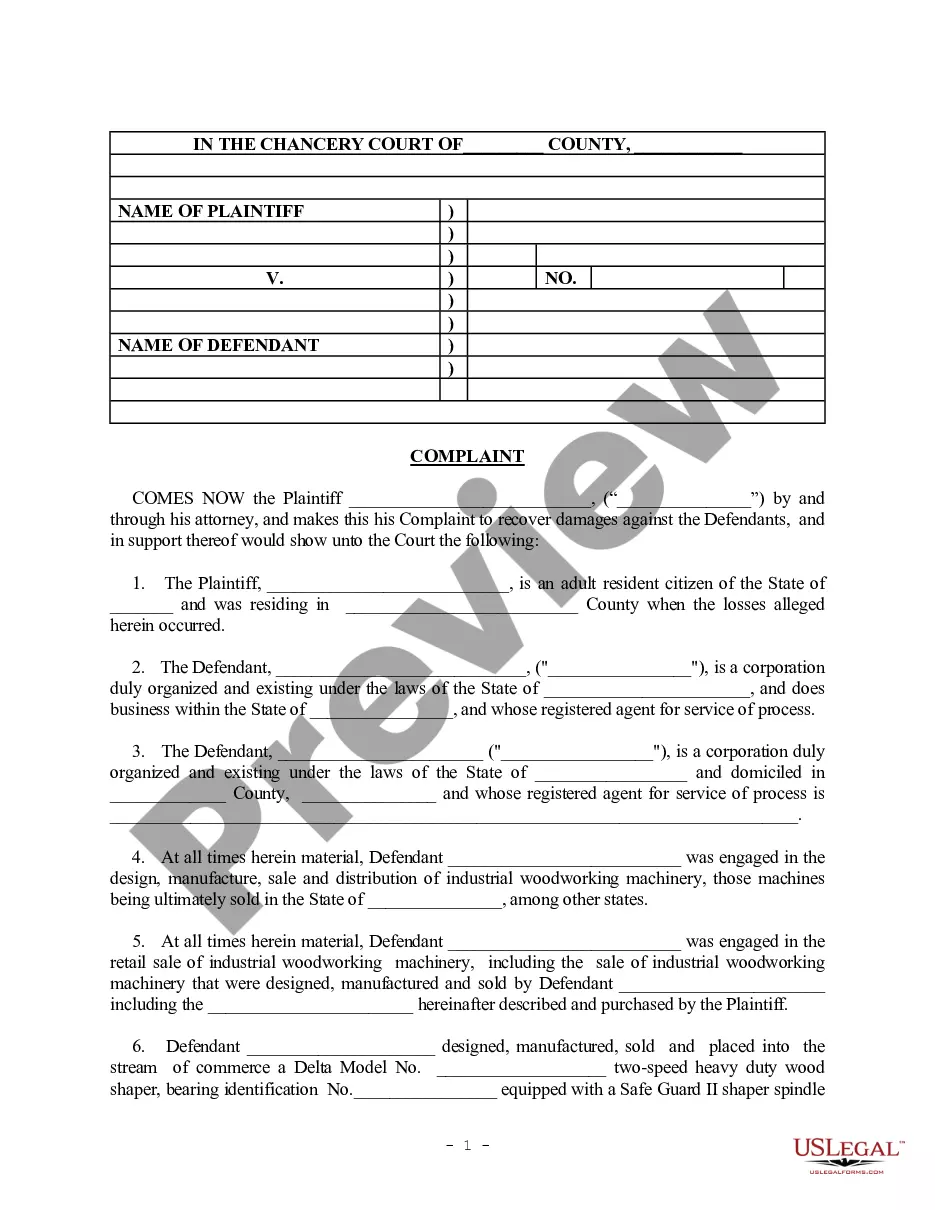
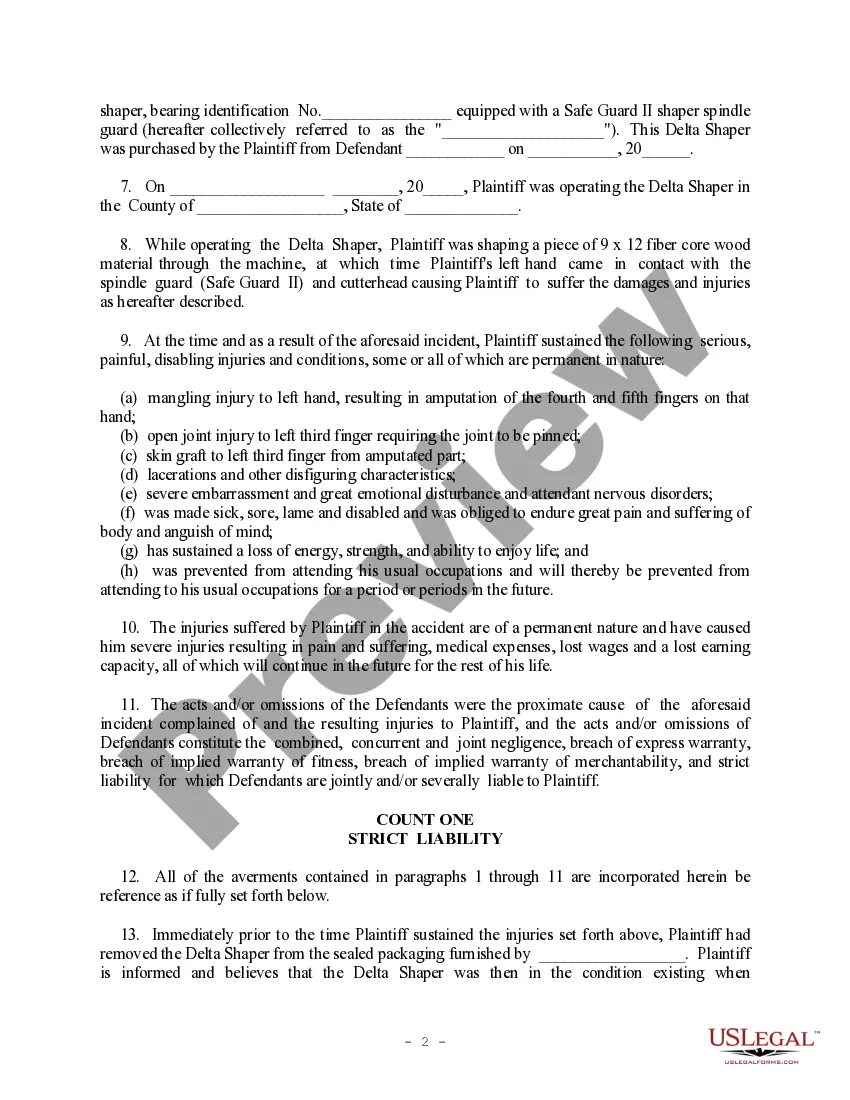
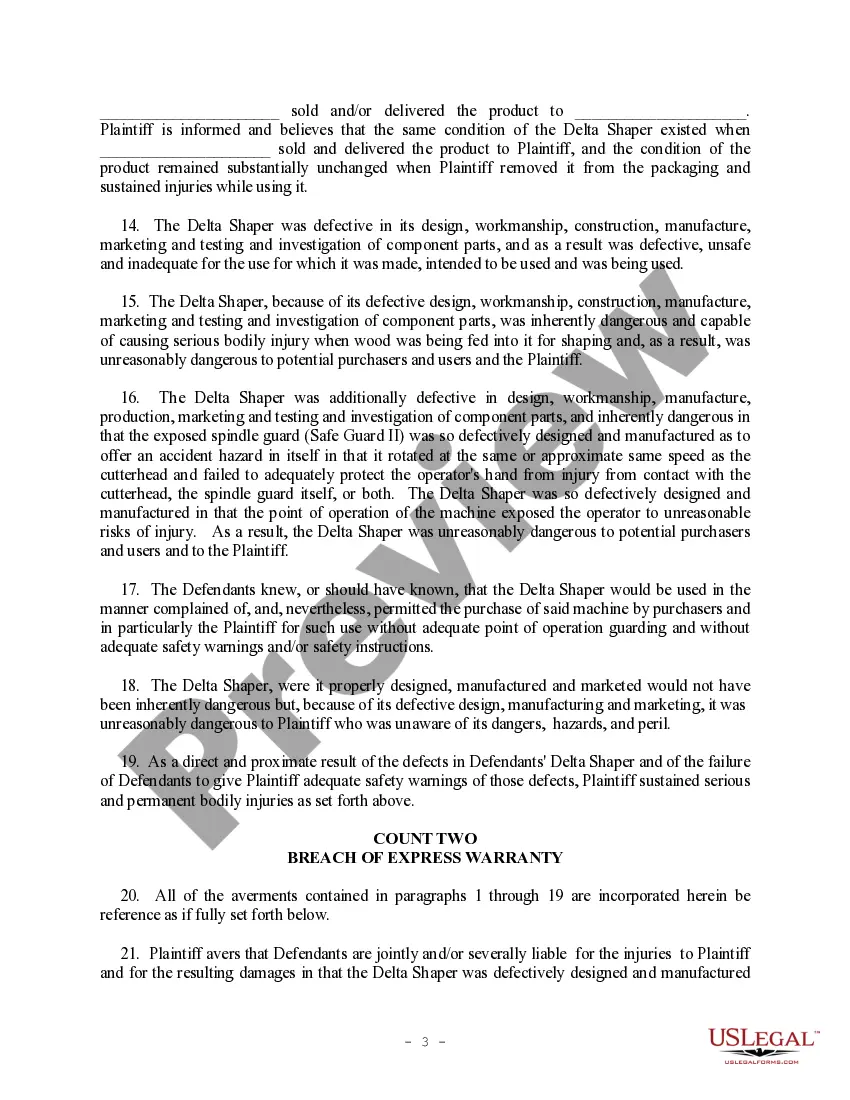
- Review the document’s preview and description (if available) to understand what you’ll receive after obtaining the form.
- Make sure that the document you select is tailored to your state/county/region since state laws may affect the validity of certain documents.
- Explore similar document templates or restart the search to find the correct document.
- Click Buy now and create your account. If you already have an account, opt to Log In.
- Choose the pricing {plan, select a preferred payment method, and purchase the Collin Complaint concerning Strict Product Liability - Violation of Expressed Warranty, Implied Warranty, Merchantability, Negligence, Punitive Damages - Delta Wood.
- Decide to save the form template in any offered format.
- Go to the My documents section to re-download the document.
Form popularity
FAQ
California courts are more likely to award punitive damages in product liability cases when certain circumstances exist, such as: the manufacturer knowingly marketed a defective product, a manufacturer intentionally did not perform tests to validate the product's safety, or a manufacturer did not reveal known dangers
From a product liability lawsuit, you can recover economic damages, which can include medical care, lost wages, loss of earning capacity, loss of services provided for the family, and noneconomic damages, which usually include pain and suffering, mental anguish, physical impairment and loss of enjoyment of life.
3. Breach of Warranty. Breach of warranty is conceptually different from strict liability and negligence in that breach of warranty is based in contract, not in tort. That distinction limits the number of people who can be plaintiffs.
Breach of warranty is the violation of an express or implied contract of warranty, and thus it is a breach of contract. In other words, it occurs when the warrantor fails to provide the assurance warranted. A seller can expressly or implicitly assure the buyer about the quality or title of an item sold.
Primary tabs. Breach of warranty is the violation of an express or implied contract of warranty, and thus it is a breach of contract. In other words, it occurs when the warrantor fails to provide the assurance warranted. A seller can expressly or implicitly assure the buyer about the quality or title of an item sold.
Defenses to Strict Liability Common defenses to claims of strict liability are assumption of risk, statute of limitations, statute of repose, and federal preemption.
Defects That Create Liability Design Defects. Design defects are inherent, as they exist before the product is manufactured.Manufacturing Defects. Manufacturing defects occur during the construction or production of the item.Defects in marketing.
Overview. In both tort and criminal law, strict liability exists when a defendant is liable for committing an action, regardless of what his/her intent or mental state was when committing the action. In criminal law, possession crimes and statutory rape are both examples of strict liability offenses.
A breach of contract happens when one party to a contract fails to honor their obligations. A breach of warranty is a specific form of contract breach where the seller's guarantees about the product are false.
Punitive damages are awarded in addition to compensatory damages. Punitive damages are rarely awarded for breach of contract. They arise more often in tort cases, to punish deliberate or reckless misconduct that results in personal harm.