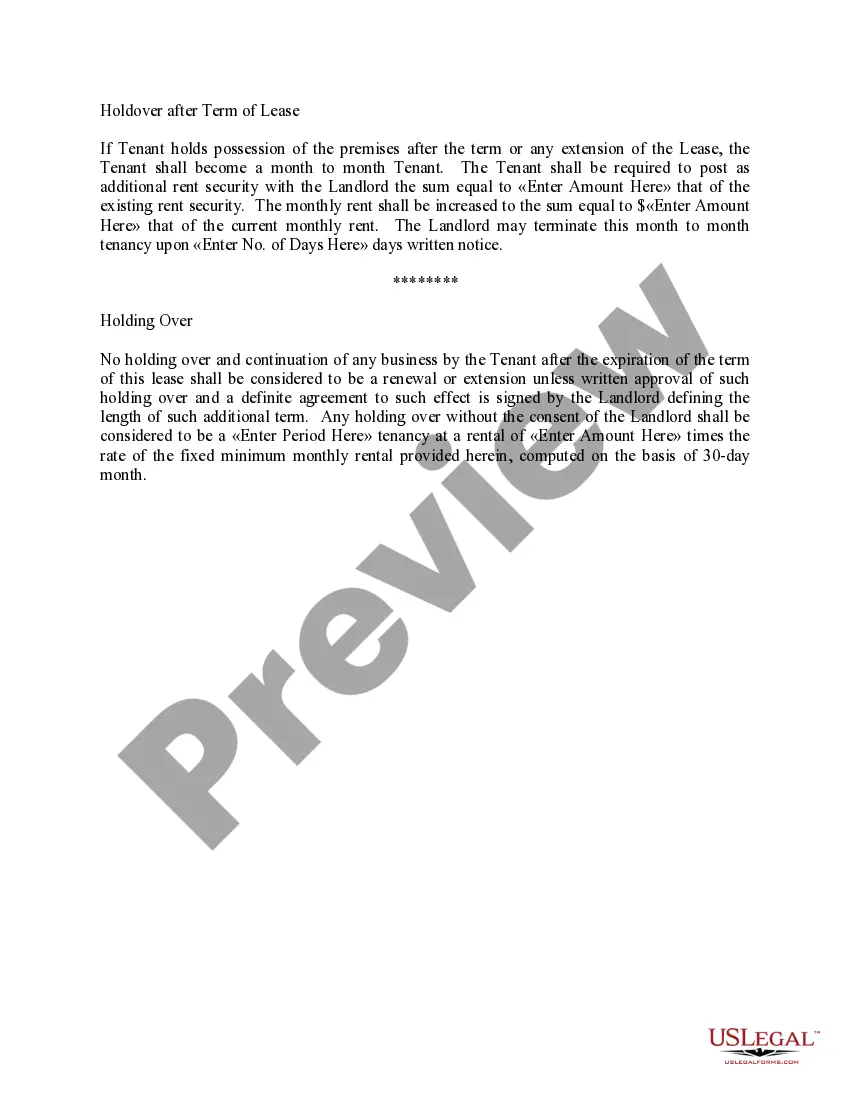
Example of clause regarding Holdover of property by Tenant. A hold-over clause in a commercial lease typically provides that if a tenant remains in possession of the leased premises after the expiration of the stated lease term, the tenant must pay rent to the landlord in an amount substantially in excess of the rental rate at the end of the term – often as high as 150 percent
If you’re in a holdover jam, the best approach is to reach out to your landlord quickly and try to work out a plan. Ignoring the situation can make things worse before you know it!
Absolutely! Communication is key. If you’re looking to stay longer, discussing the holdover terms with your landlord can pave the way for a smoother arrangement.
If there’s no holdover clause, things can get a bit tricky. Generally, your tenancy might convert to a month-to-month basis, but this varies, so it’s a good idea to double-check the fine print.
Not quite! Each state has its own take on holdover clauses, so what’s true in Arizona may not apply elsewhere. It's good to stay in the know about local laws.
Yes, if the landlord decides to move forward, they can start eviction proceedings against you. However, it’s best to have a chat and figure things out before it reaches that point.
If you're renting and decide to stick around past the lease end date, a holdover clause means you could be paying rent as if you were still in the original lease. So, it’s wise to know what you’re getting into!
A holdover clause is like a safety net for landlords. It lets them keep a tenant on the hook if they stay in the property after their lease has ended. This keeps the doors open for both parties.