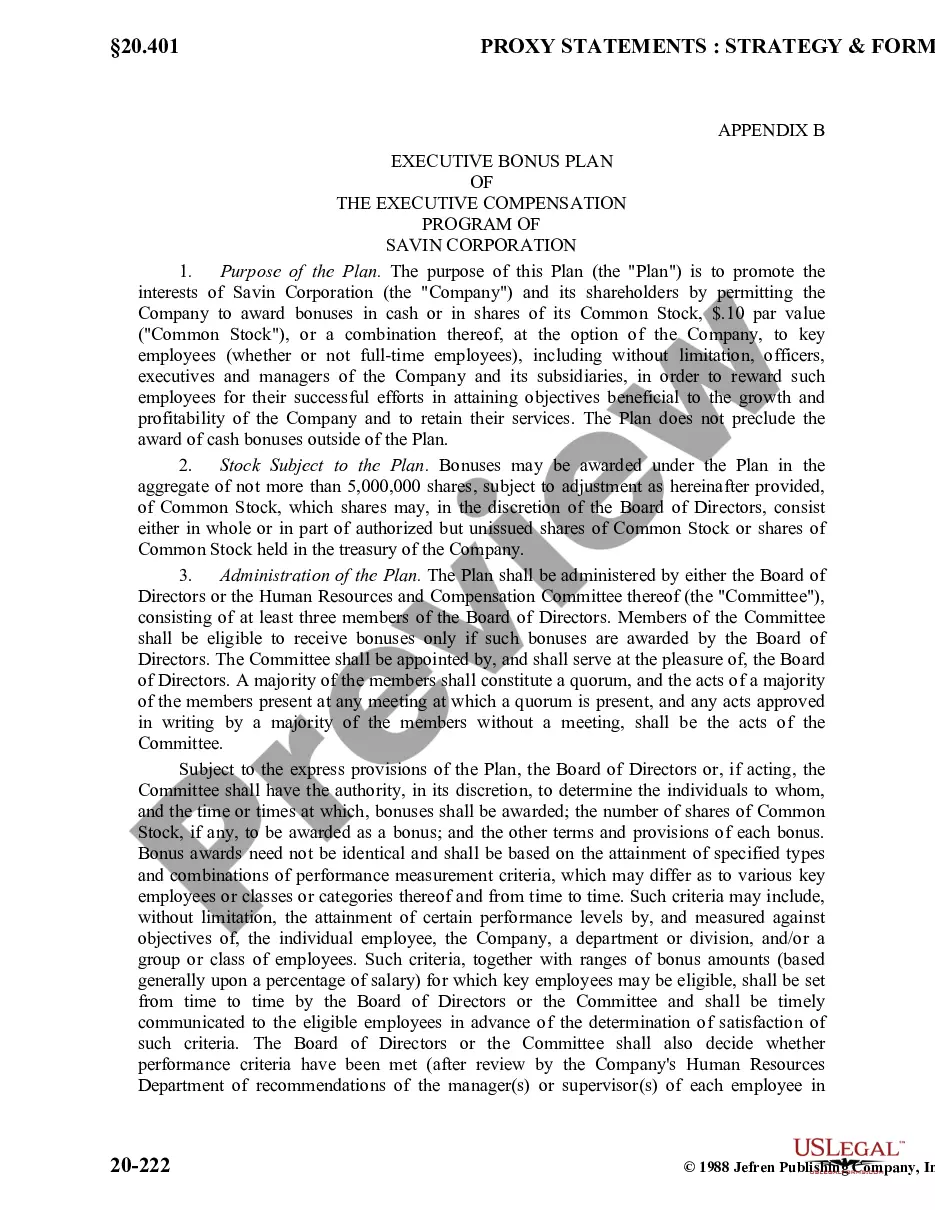
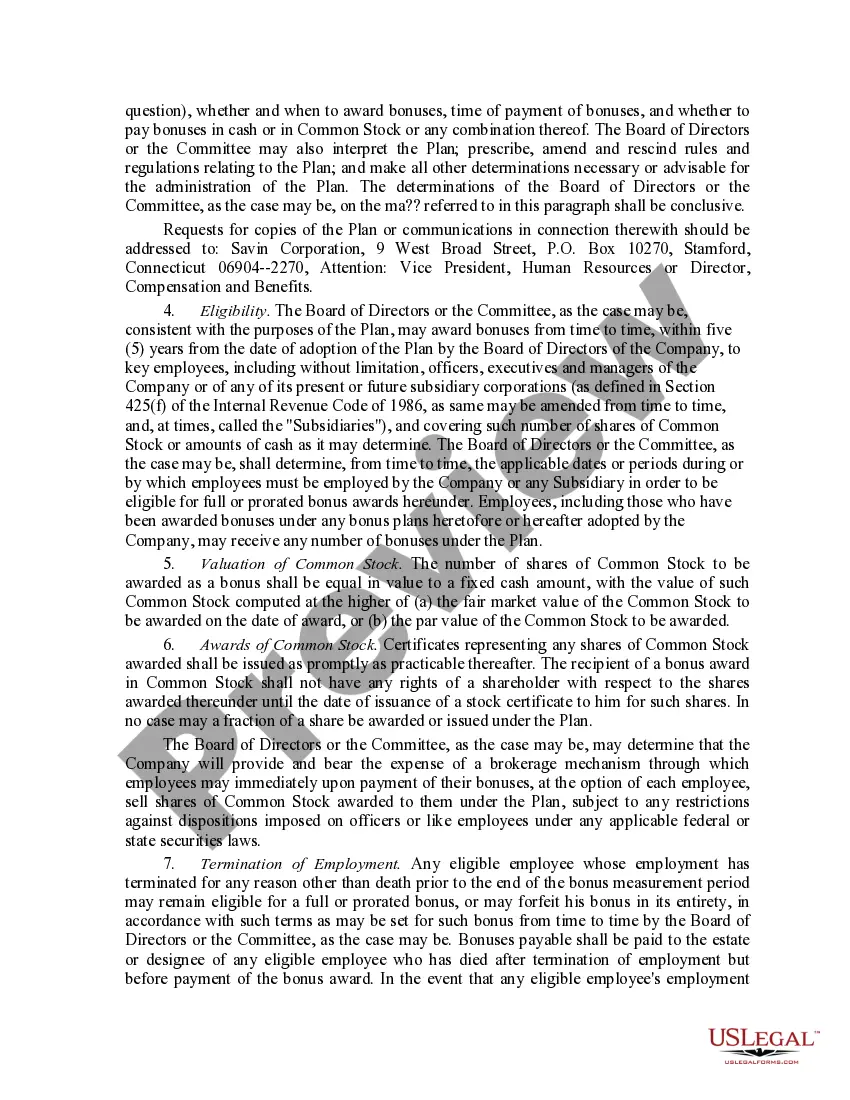
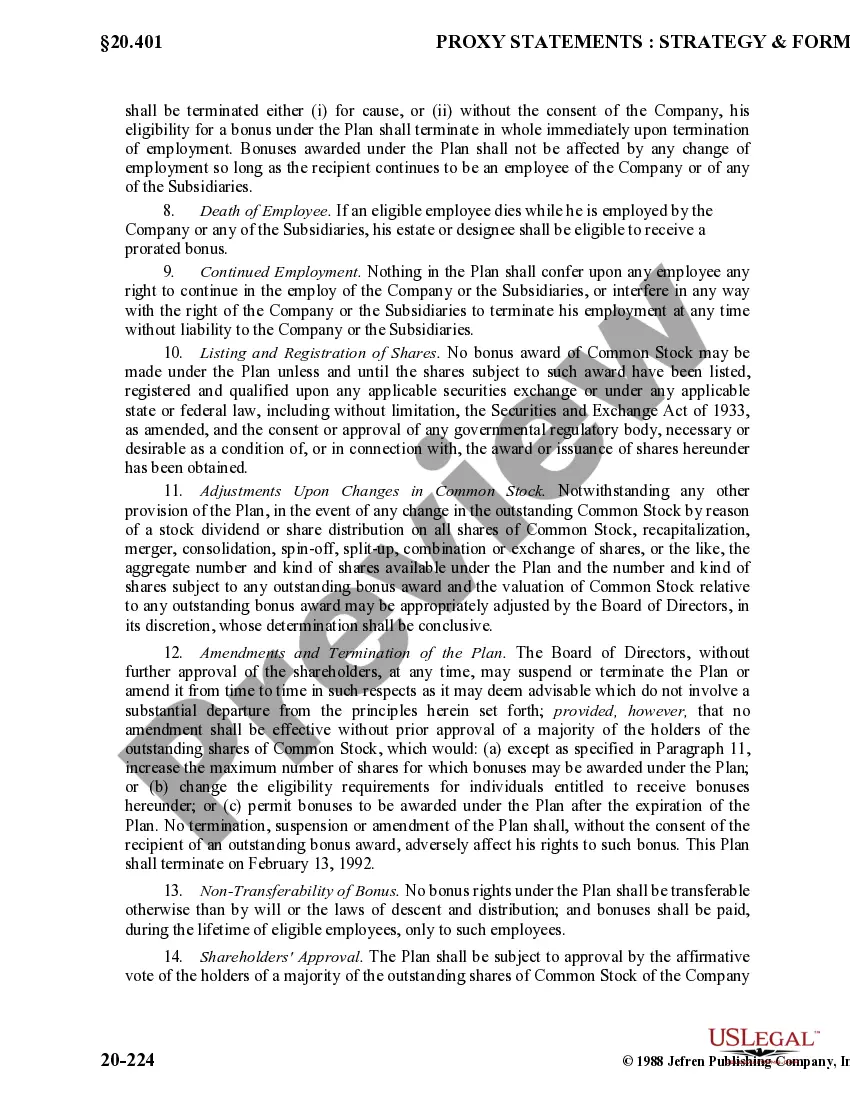
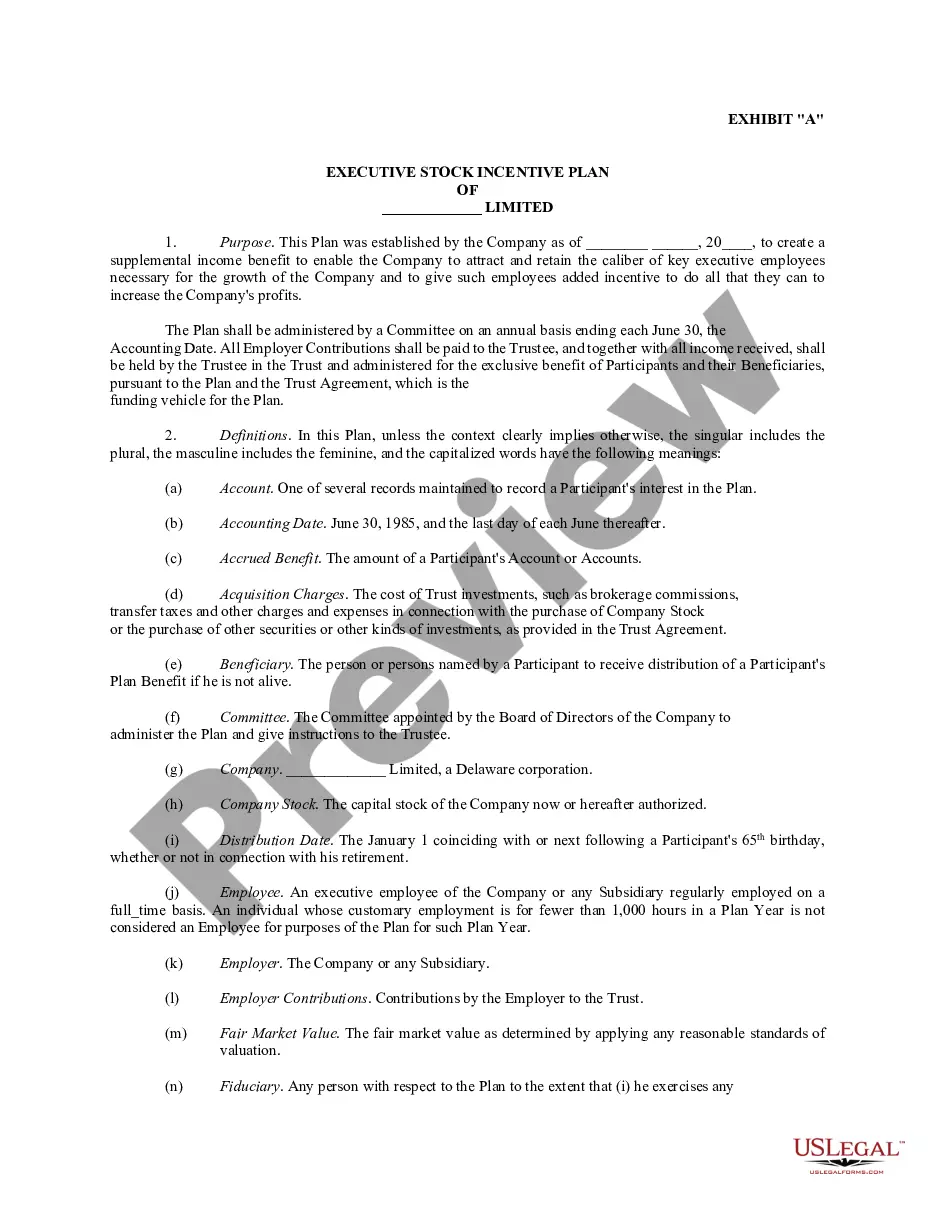
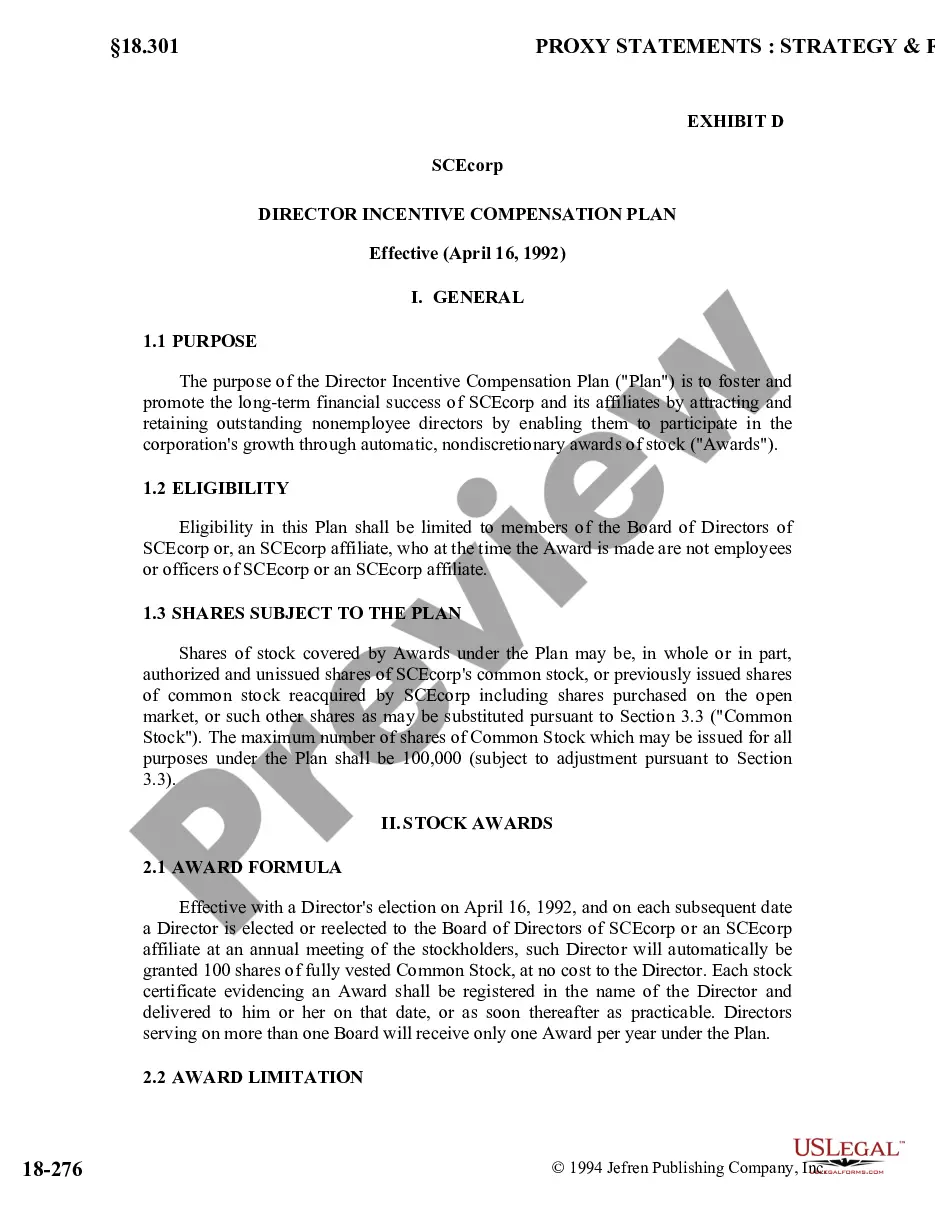
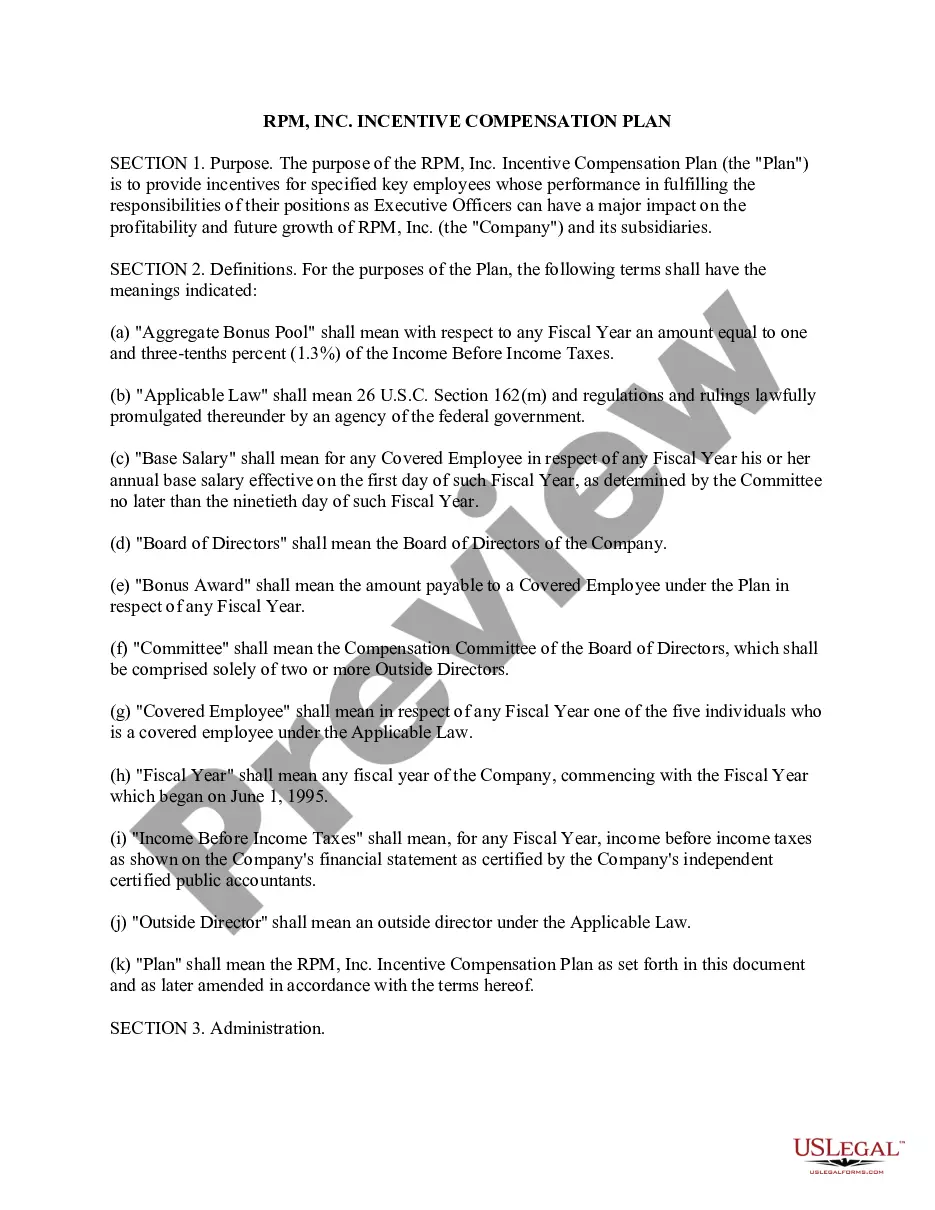
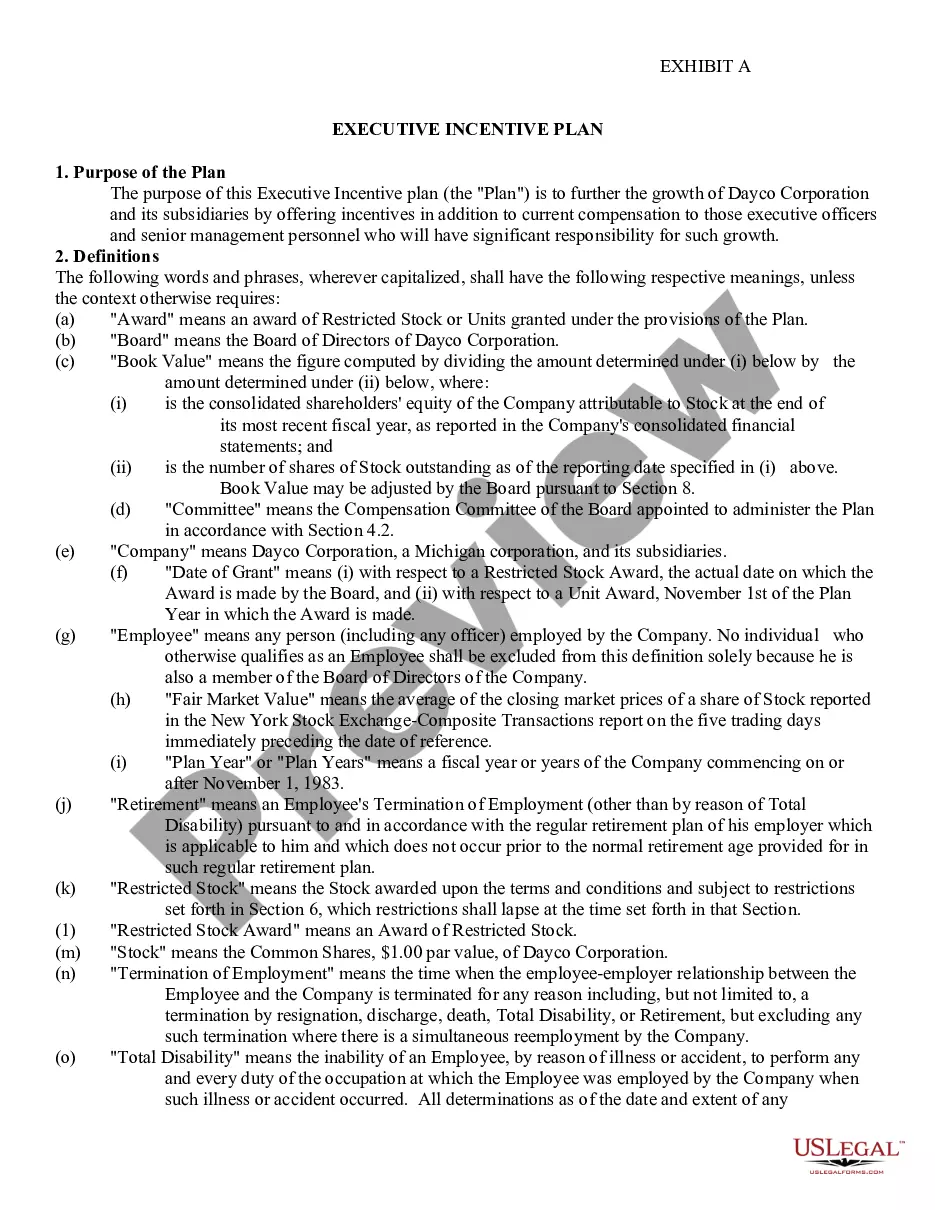
20-221D 20-221D . . . Stock Bonus Plan Board of Directors has authority to determine which key employees shall be awarded stock bonuses, amounts of bonuses, number of shares of common stock to be awarded, and all other terms and provisions of each bonus. Bonus awards are based on attainment of specified types and combinations of performance measurement criteria, which may differ as to various employees
King Washington Executive Bonus Plan
State:
Multi-State
County:
King
Control #:
US-CC-20-221D
Format:
Word;
Rich Text
Instant download
Description
Free preview



How to fill out Executive Bonus Plan?
Organizing documentation for either a business or individual requirements is always a significant obligation.
When preparing a contract, a public service application, or a power of attorney, it is crucial to take into account all federal and state statutes of the respective area.
Nonetheless, smaller counties and even municipalities also have legislative regulations that you need to factor in.
Make sure that the sample adheres to legal standards and click Buy Now. Select the subscription plan and then Log In or create an account with US Legal Forms. Use your credit card or PayPal account to pay for your subscription. Download the selected file in your desired format, print it, or fill it out electronically. The wonderful aspect of the US Legal Forms library is that all the documents you've ever bought remain accessible—you can retrieve them in your profile under the My documents section at any time. Become a member of the platform and swiftly obtain verified legal templates for any circumstance with just a few clicks!
- All these factors contribute to making it daunting and lengthy to formulate a King Executive Bonus Plan without expert guidance.
- It's simple to sidestep expenditures for attorneys in drafting your paperwork and formulate a legally sound King Executive Bonus Plan on your own, utilizing the US Legal Forms online library.
- It is the largest digital repository of state-specific legal templates that are professionally vetted, ensuring their legitimacy when you select a template for your area.
- Formerly registered users only need to Log In to their accounts to access the necessary document.
- If you do not yet have a subscription, follow the detailed instructions below to acquire the King Executive Bonus Plan.
- Inspect the page you've accessed and verify if it contains the document you need.
- To do this, use the form description and preview if these options are available.
Form popularity
FAQ
Yes, local government employees in Washington state can qualify for a pension through various retirement systems. The King Washington Executive Bonus Plan adds an extra layer of financial security for these employees, enhancing their retirement savings potential. It's essential for local government workers to explore all available options to ensure a stable retirement.
Advantages of Executive Bonus Plans The business can selectively choose the key employees they wish to reward. The bonus payments may be considered a fully deductible expense to the company. The key employee is able to name the beneficiary of the entire death benefit of the life insurance policy.
As a rule of thumb, the base salary constitutes 30% of total compensation, the annual incentive another 20%, the benefits about 10% and long-term incentives or the wealth creation portion of the compensation about 40%.
Possibly the most important incentives in business are those created for CEOs and other executives. Like any incentive, executive bonuses are highly effective, and they don't just guide the leadership team. For executives to achieve their goals, the entire company, top to bottom, must work toward them too.
The employee is the owner of the policy, and gets to determine the beneficiaries and manage the funds within the policy. The employer covers the cost of the policy by periodically giving the employee a bonus big enough to pay the policy premiums.
A typical executive compensation package consists of five components: base pay; health and retirement benefits; fringe benefits; short-term incentives; and long-term incentives.
The employee owns the policy, has control of the cash value, and names the beneficiary. Cash values accumulate tax-deferred. Death benefit proceeds are generally received income-tax free.
The employer covers the cost of the policy by periodically giving the employee a bonus big enough to pay the policy premiums. The employee then pays the premiums to the insurance carrier.
An Executive Bonus Plan, also referred to as Section 162 Plan, is a non-qualified plan used by employers to provide special compensation to key executives. The employers' contribution to an executive bonus plan is considered salary to the executive and is therefore subject to taxation.
In many cases, an annual bonus is nothing more than a base salary in disguise. A CEO with a $1 million salary may also receive a $700,000 bonus. If any of that bonus, say $500,000, does not vary with performance, then the CEO's salary is really $1.5 million. Bonuses that vary with performance are another matter.