This website is not affiliated with any governmental entity
Public form
Description
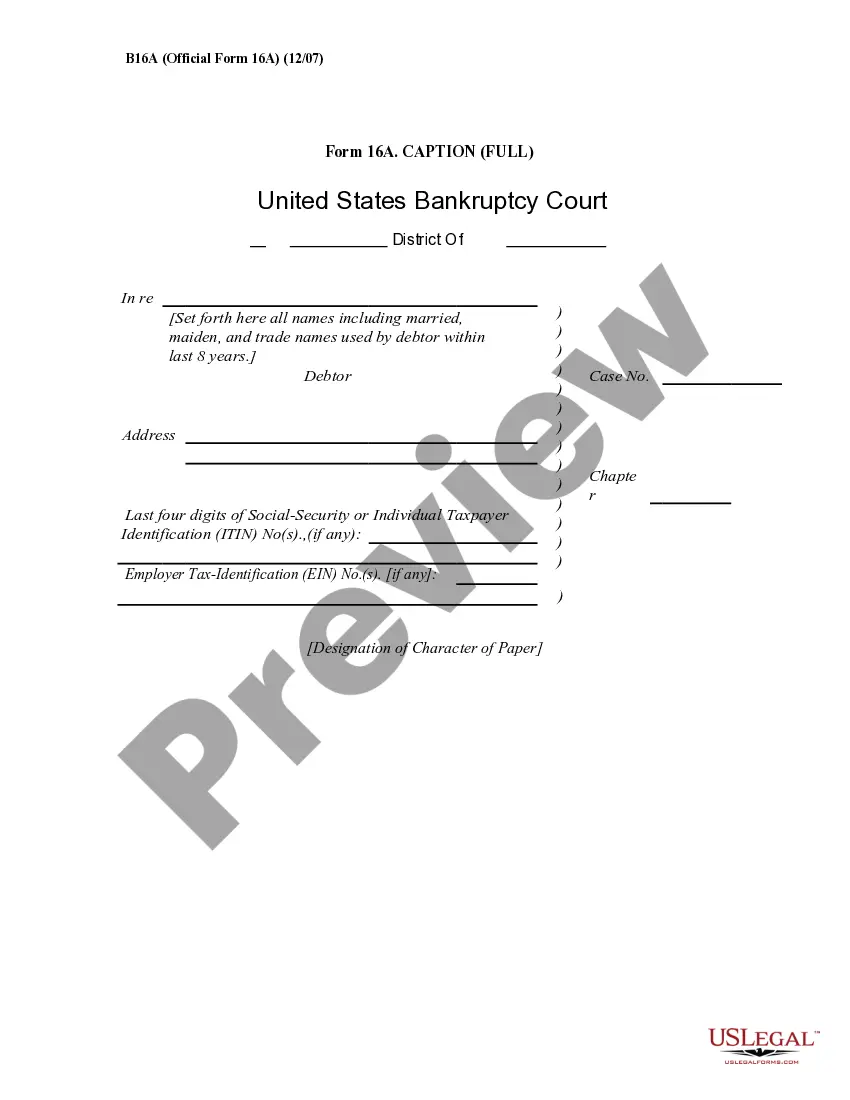
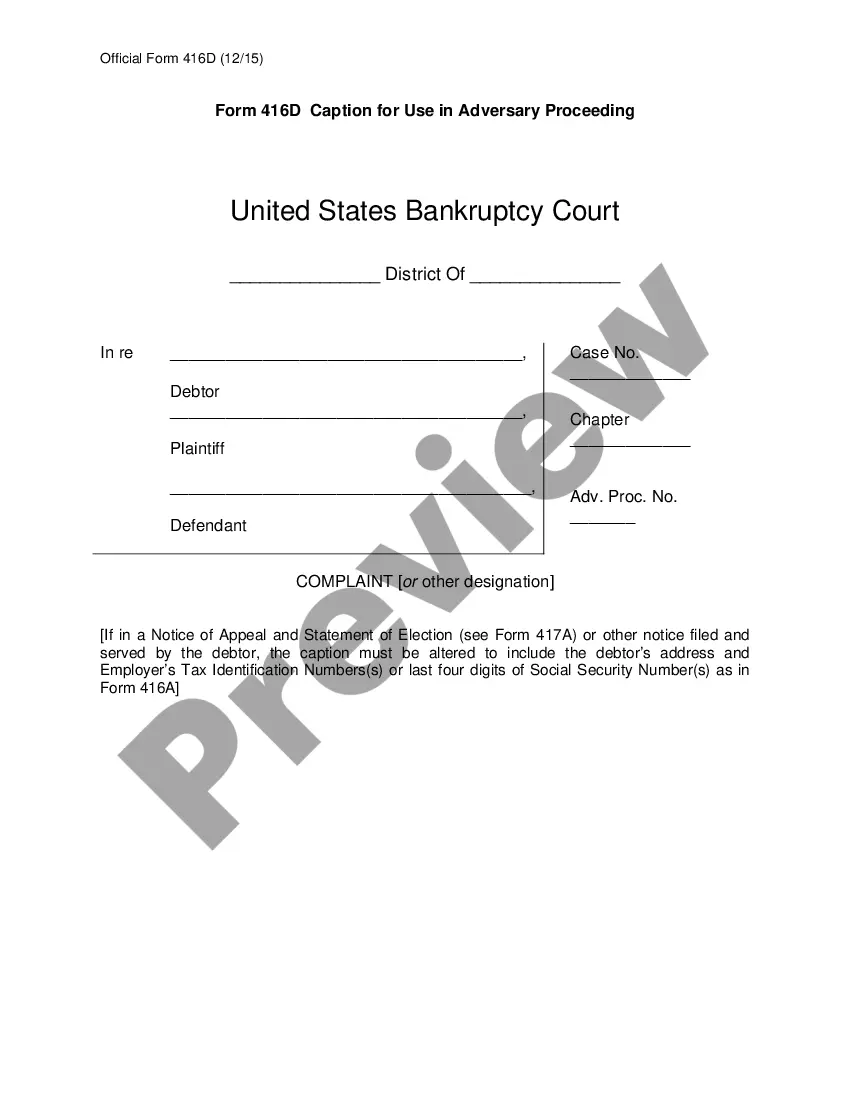
This form is a caption for use in an adversary proceeding other than for a complaint filed by a debtor. The caption includes: the name of the debtor, the name of the defendant, the case number,and the chapter. This form is data enabled to comply with CM/ECF electronic filing standards. This form is for post 2005 act cases.
Absolutely, there are rules that dictate how and when you can file against a debtor. It's essential to keep these in mind to ensure your filing is valid and timely.
The main differences revolve around the stricter standards for debt discharge and increased scrutiny of cases after the 2005 bankruptcy law changes. It's important to familiarize yourself with these changes to navigate your case effectively.
Yes, you can represent yourself, but it’s often wise to have an attorney due to the complexities involved. Having someone in your corner can make a big difference.
Outcomes can vary widely and might include the denial of a discharge, the determination of lien validity, or even a judgment on a debt, depending on the specifics of your case.
Yes, typically, there's a deadline known as the 'statute of limitations' that you must follow. It's best to act quickly and check the local court’s rules to keep on the safe side.
Generally, if your case involves disputes over a debt, the validity of a lien, or other complex legal issues, it may qualify as an adversary proceeding. Always consult with a legal expert to get a clear picture.
To file an adversary proceeding in Colorado Springs, you need to submit a complaint to the bankruptcy court that details your case and the parties involved. It’s crucial to follow the local rules and procedures to ensure everything's in order.