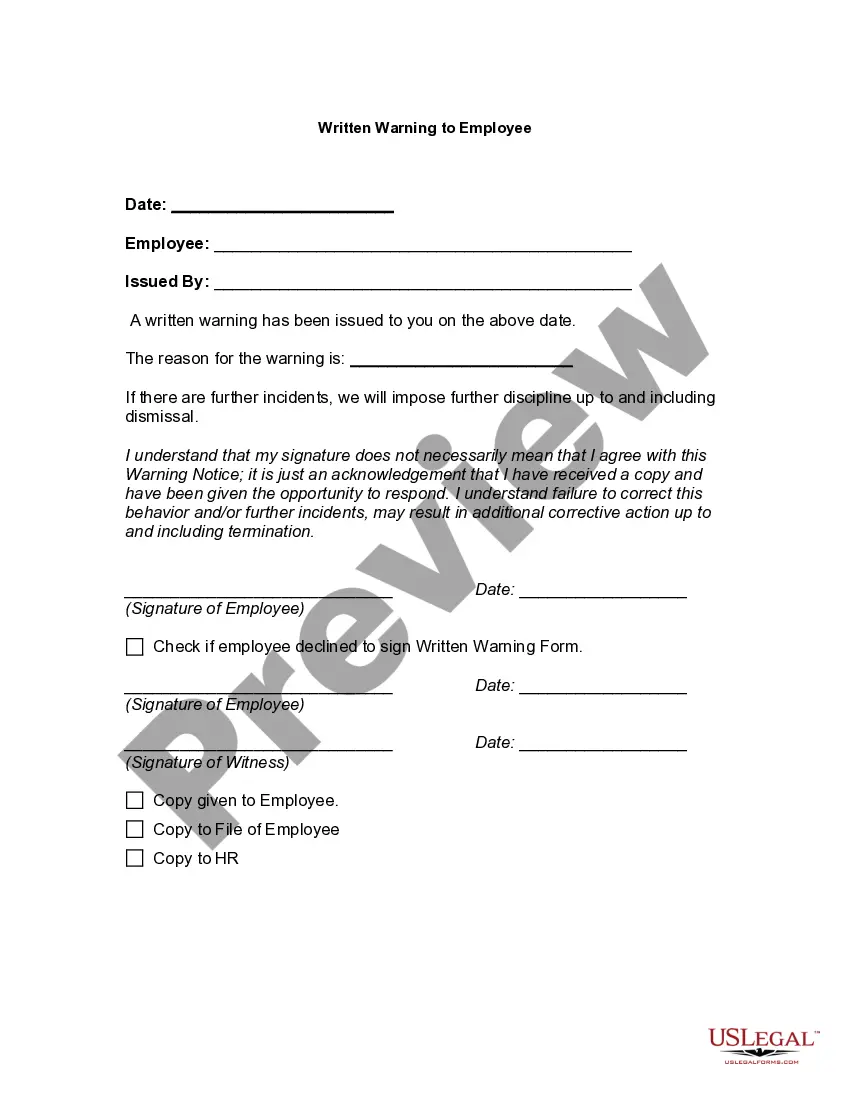
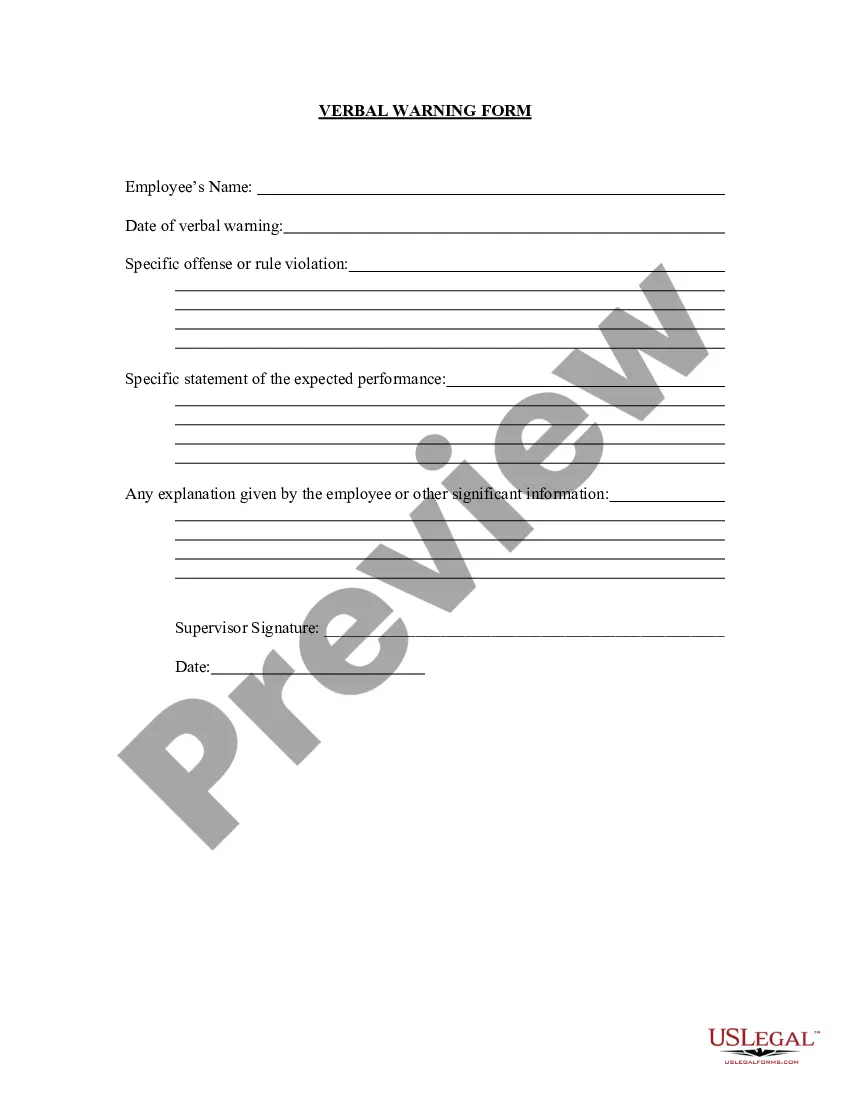
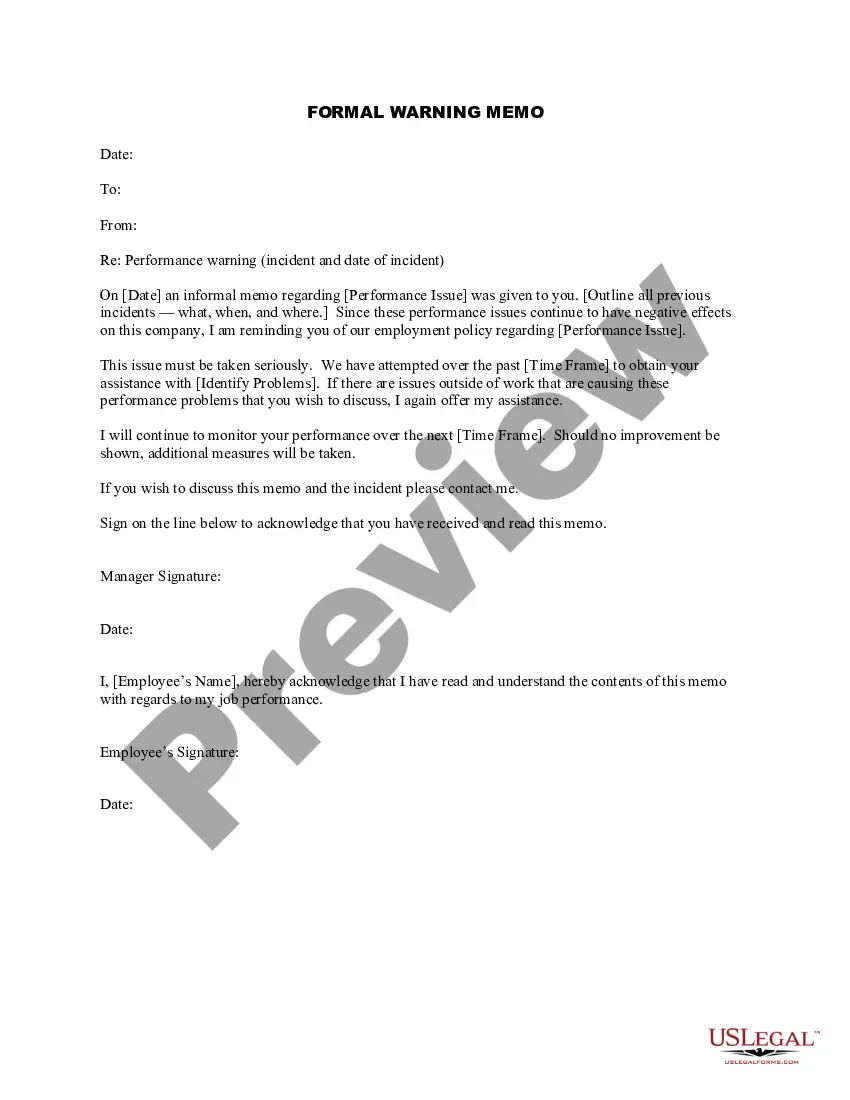
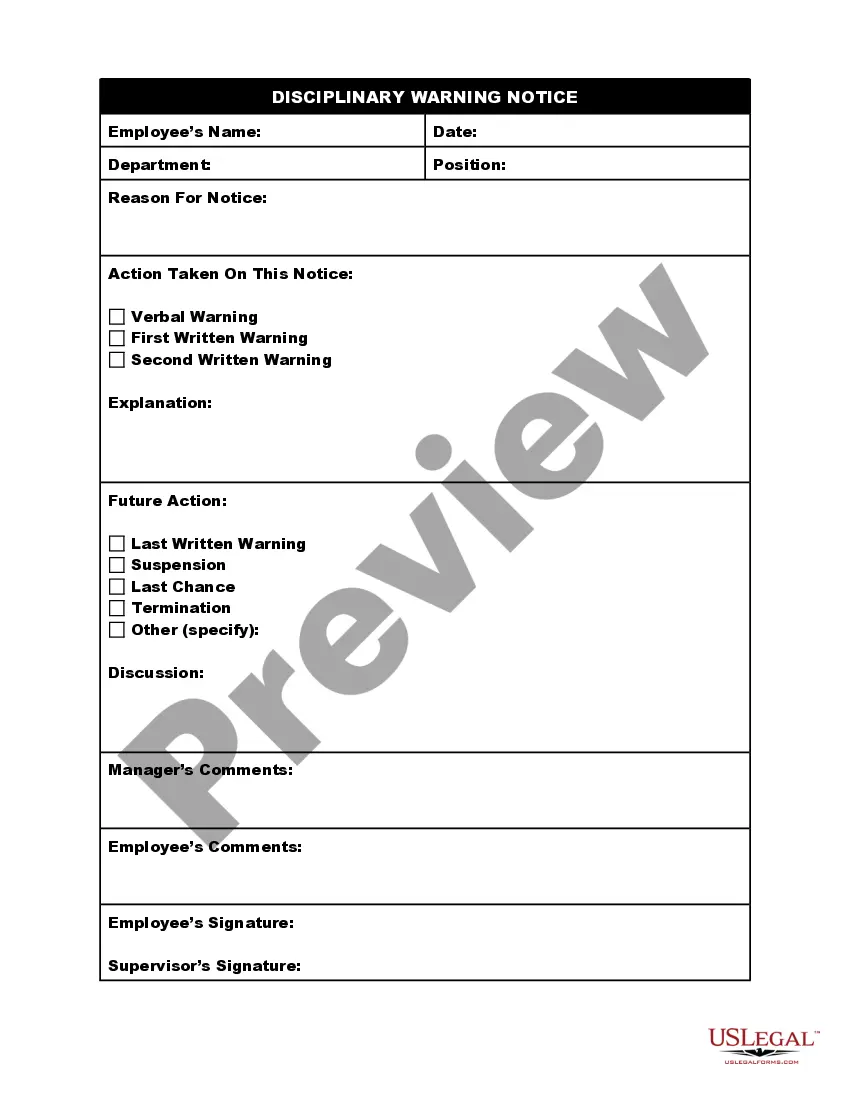
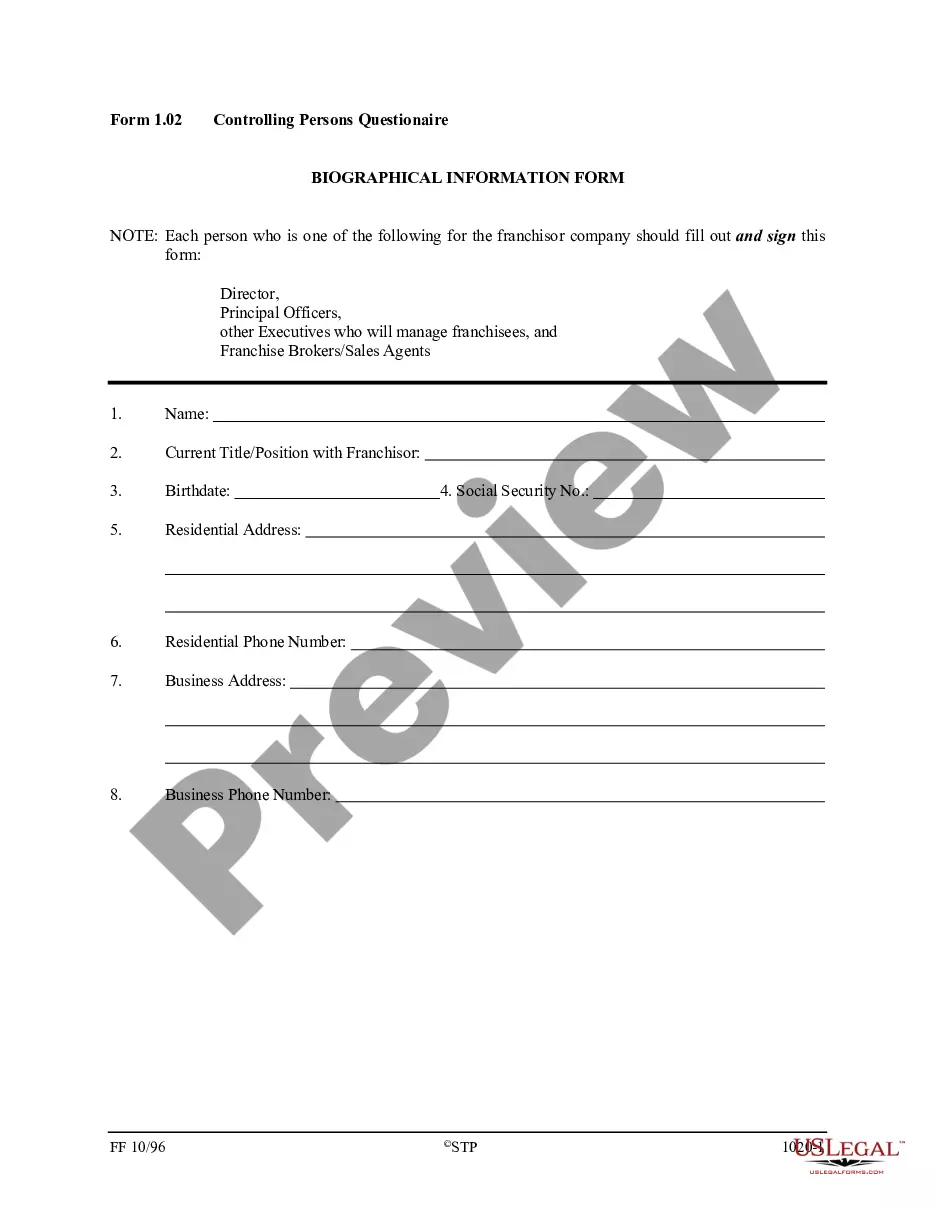
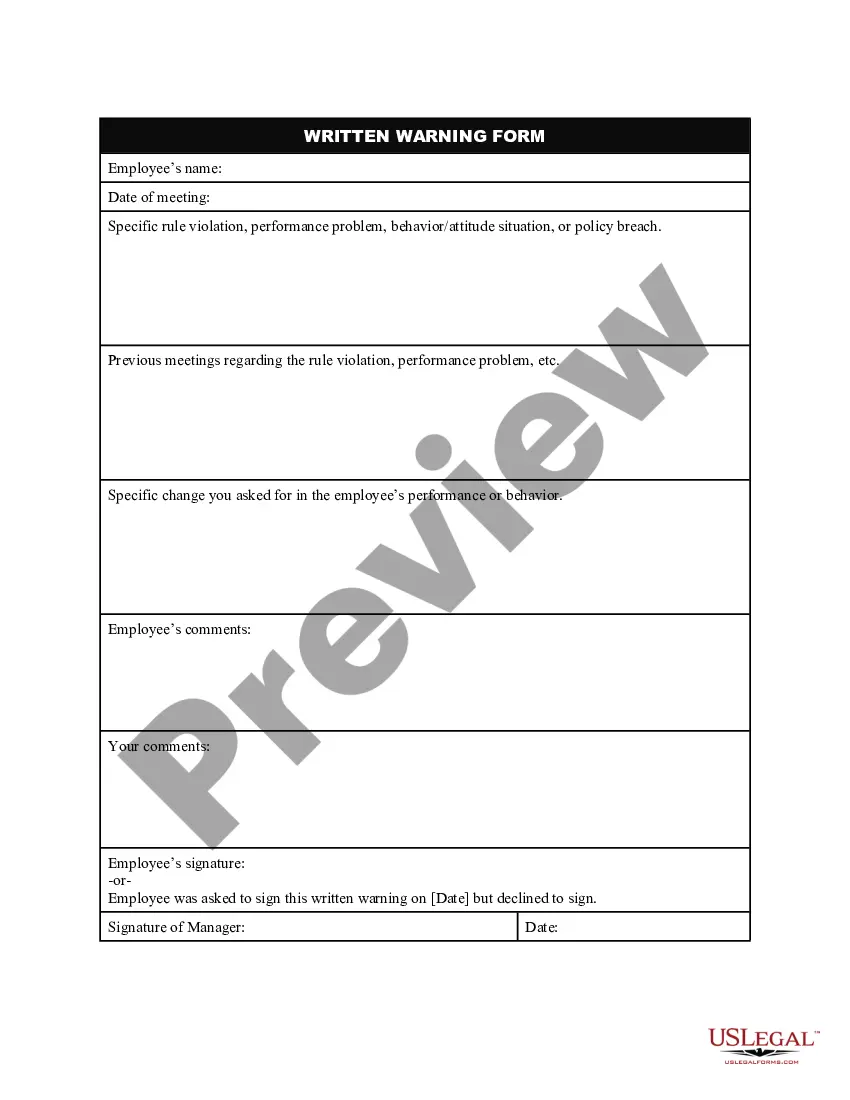
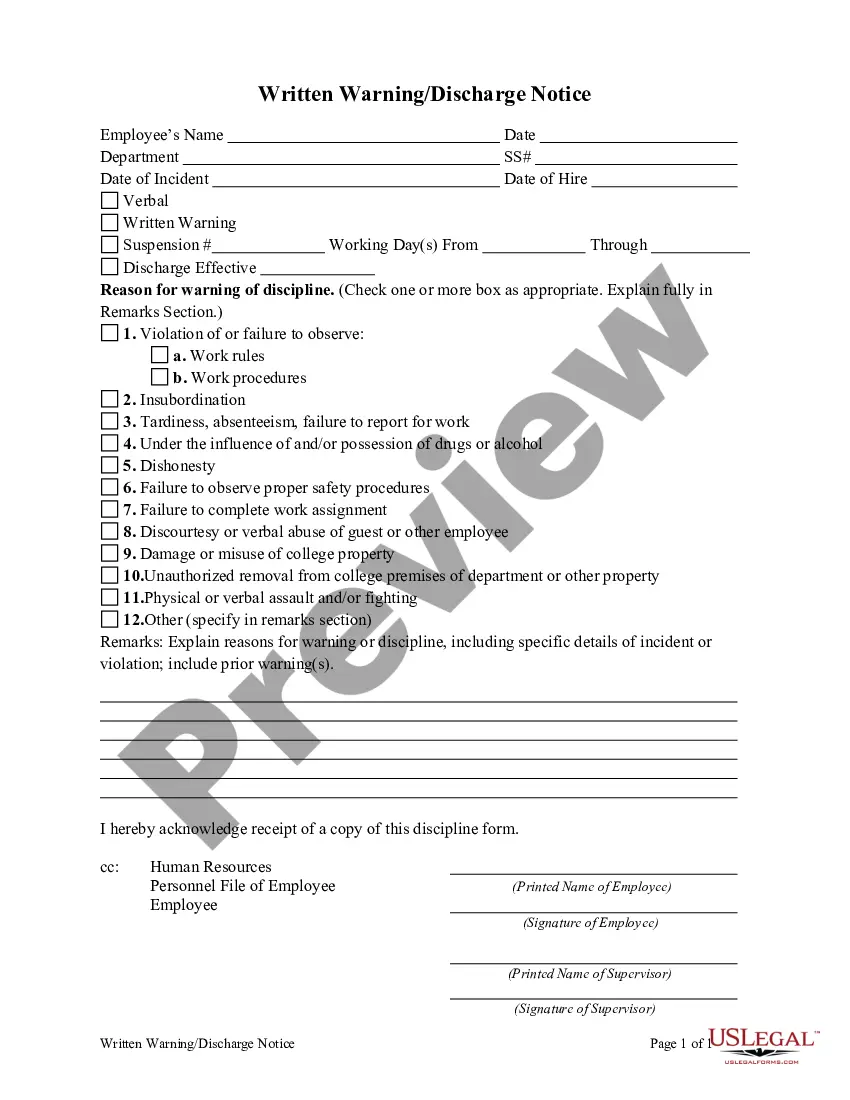
This AHI form is a written warning form that includes the violation, any previous meeting on the issues, and changes that the employee needs to make to correct the problem.
Yes, a Written Warning can potentially affect future job opportunities, especially if it’s noted in your employment record. It can be like a stain on your reputation, so it's important to be on your best behavior after receiving one.
A Written Warning typically stays on your record for a specific period, usually around six months to a year, depending on the company's policy. It's like a shadow that can linger but may fade away with good behavior.
If you disagree with a Written Warning, you should speak with your supervisor or HR and explain why you don't agree. Communication is key; think of it as having a heart-to-heart to resolve issues.
Yes, you have the right to respond to a Written Warning. You can share your side of the story and explain your actions. It’s a chance to clear the air and set the record straight.
If you keep receiving Written Warnings, it could lead to more serious consequences, like suspension or even termination. It’s like a pointing finger saying you need to make changes before it's too late.
An employer should issue a Written Warning when there are repeated issues, like lateness or not following company rules, especially after discussing it verbally first. It's a way of putting those issues in black and white.
A Written Warning Form in Anchorage is a document that an employer uses to formally let an employee know that there has been a problem with their job performance or behavior. It's like a heads-up that needs to be taken seriously.