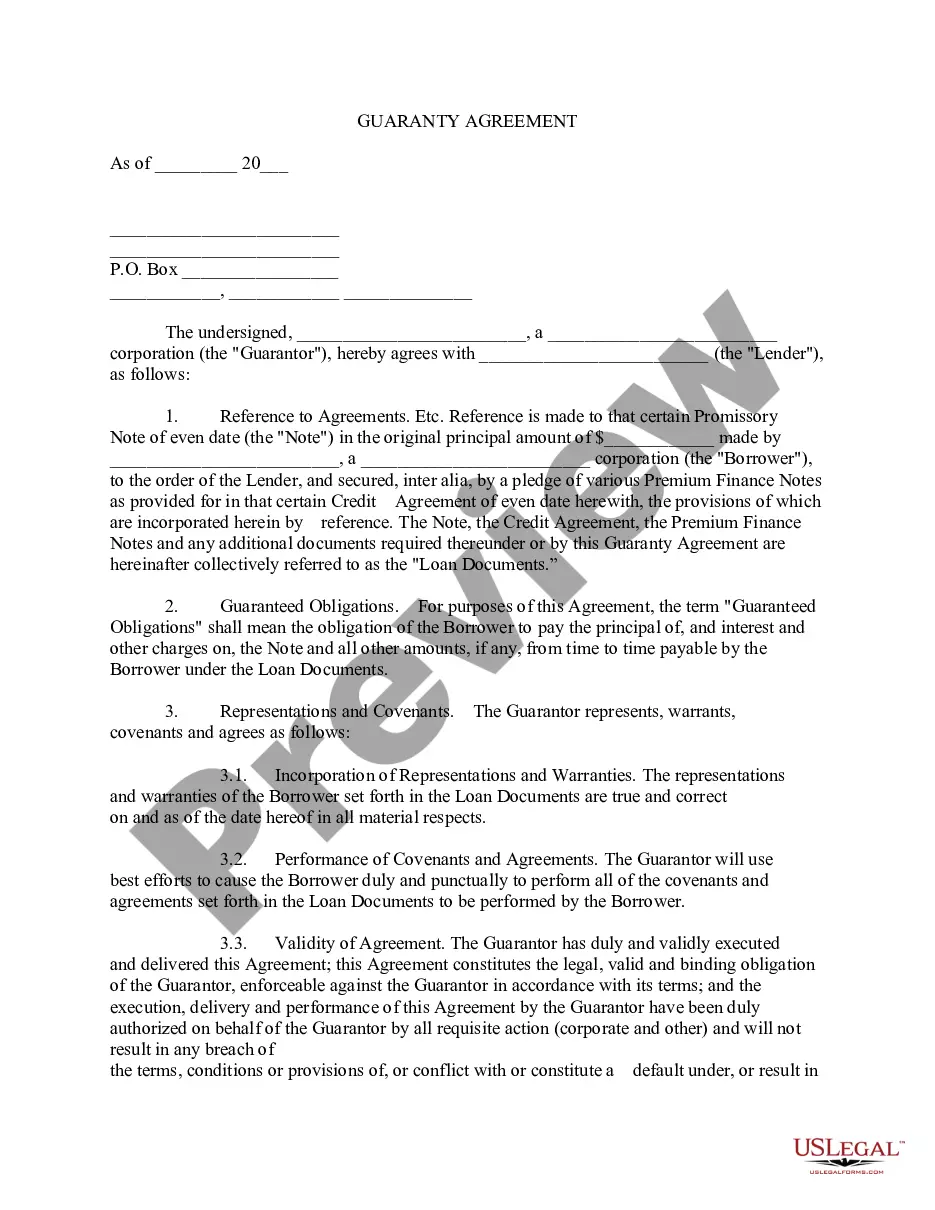
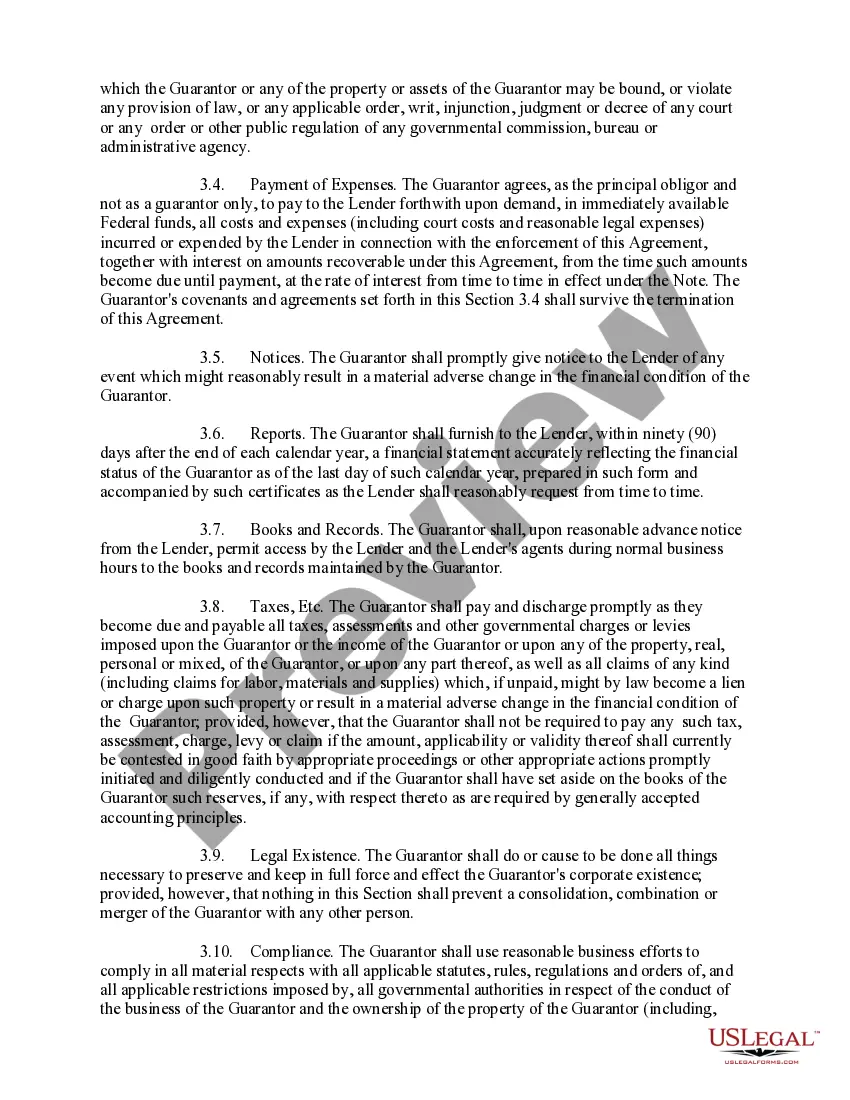
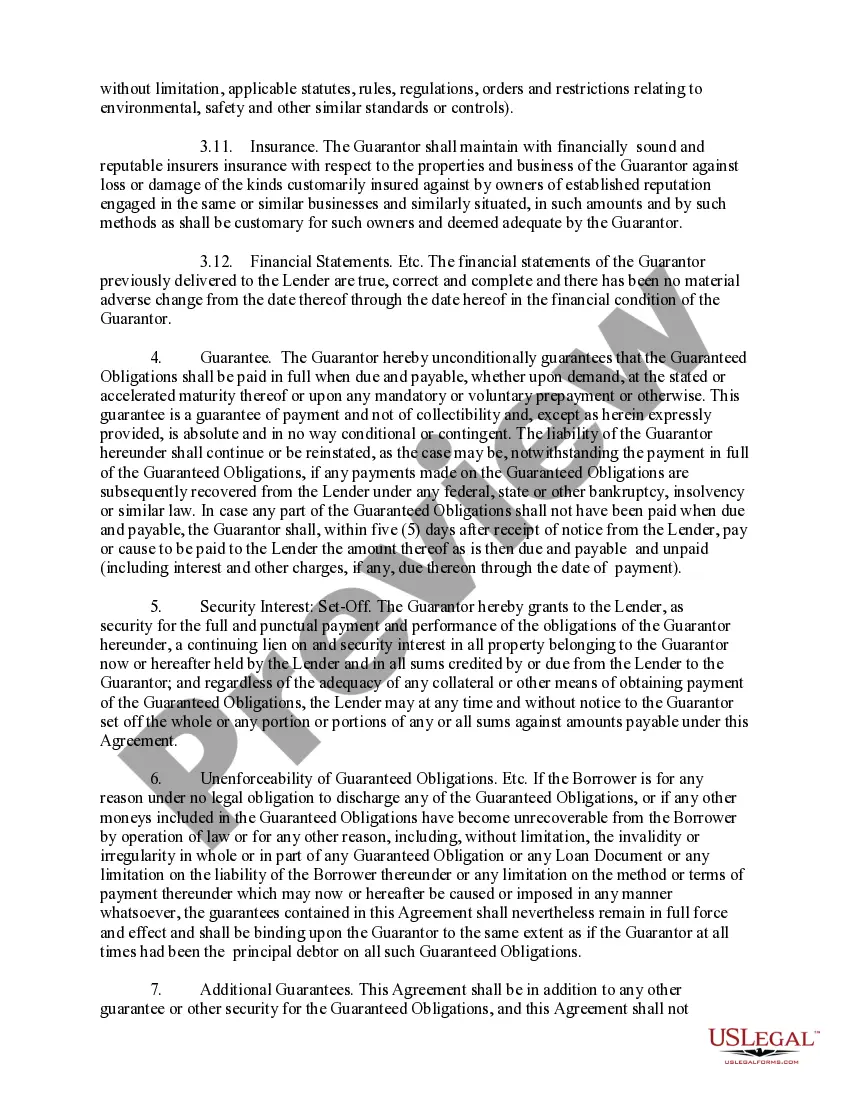
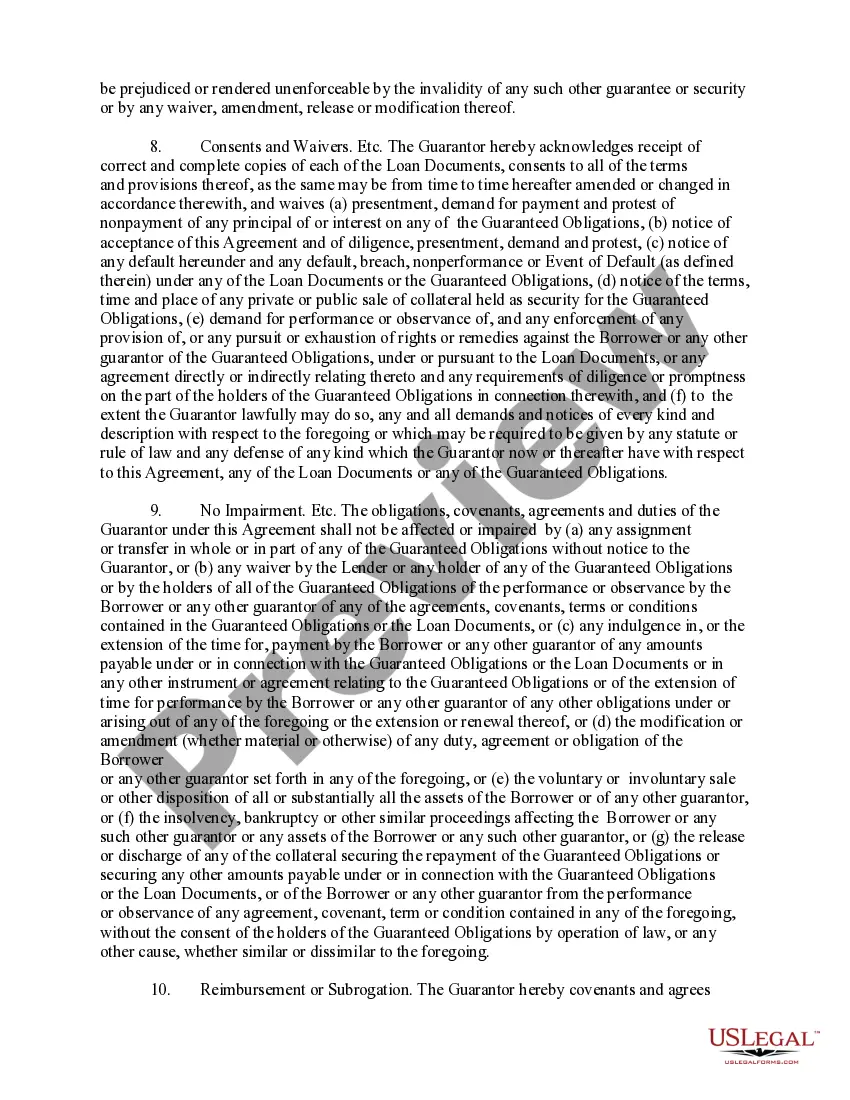
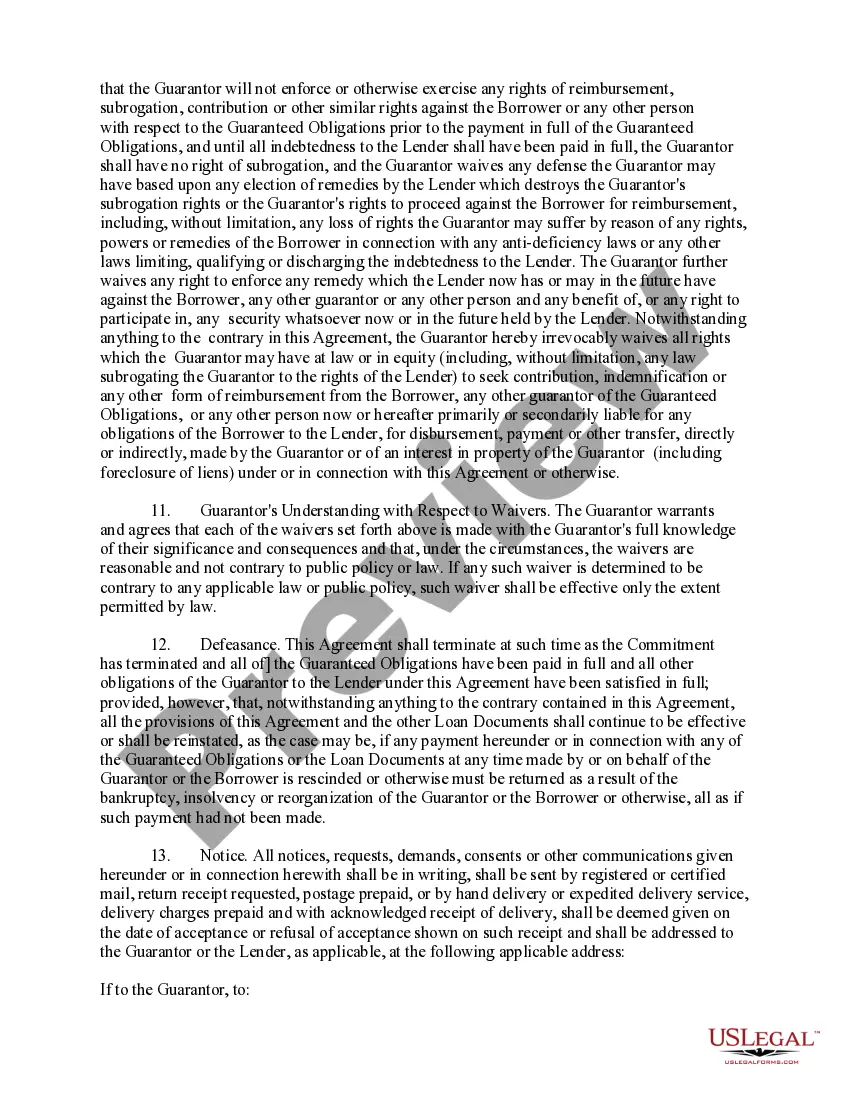
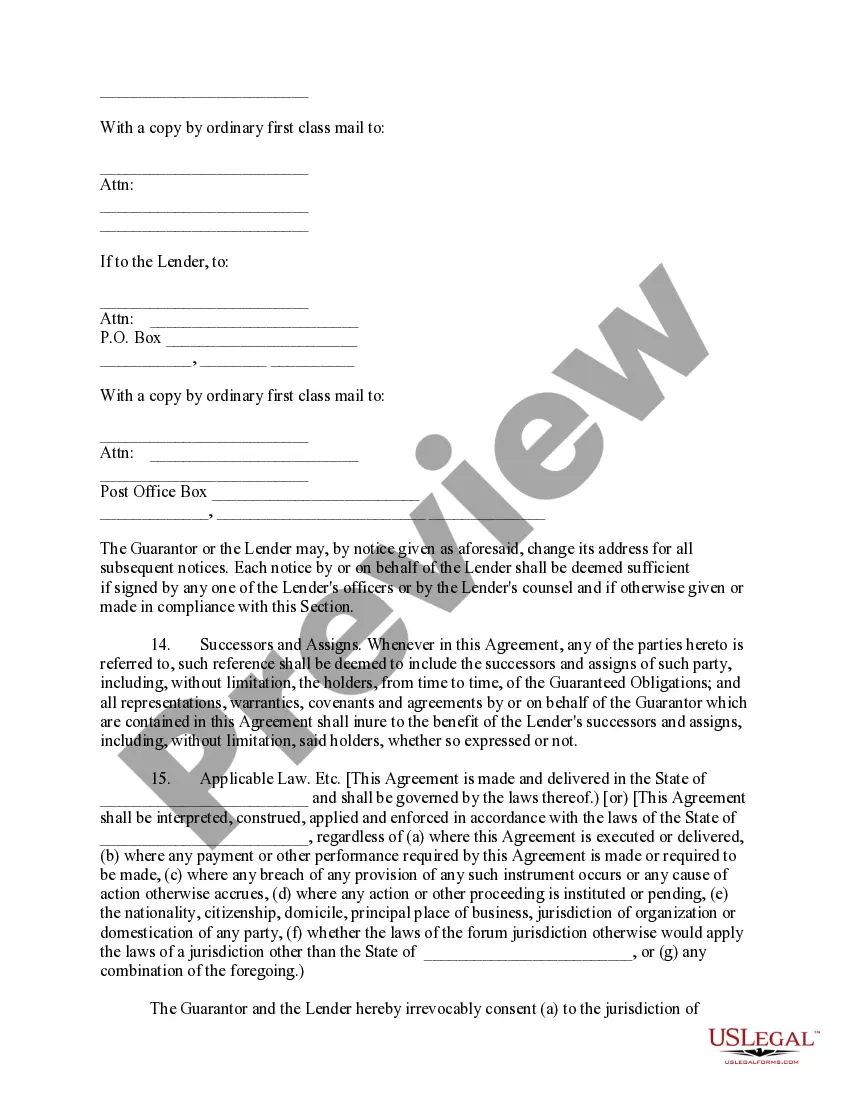
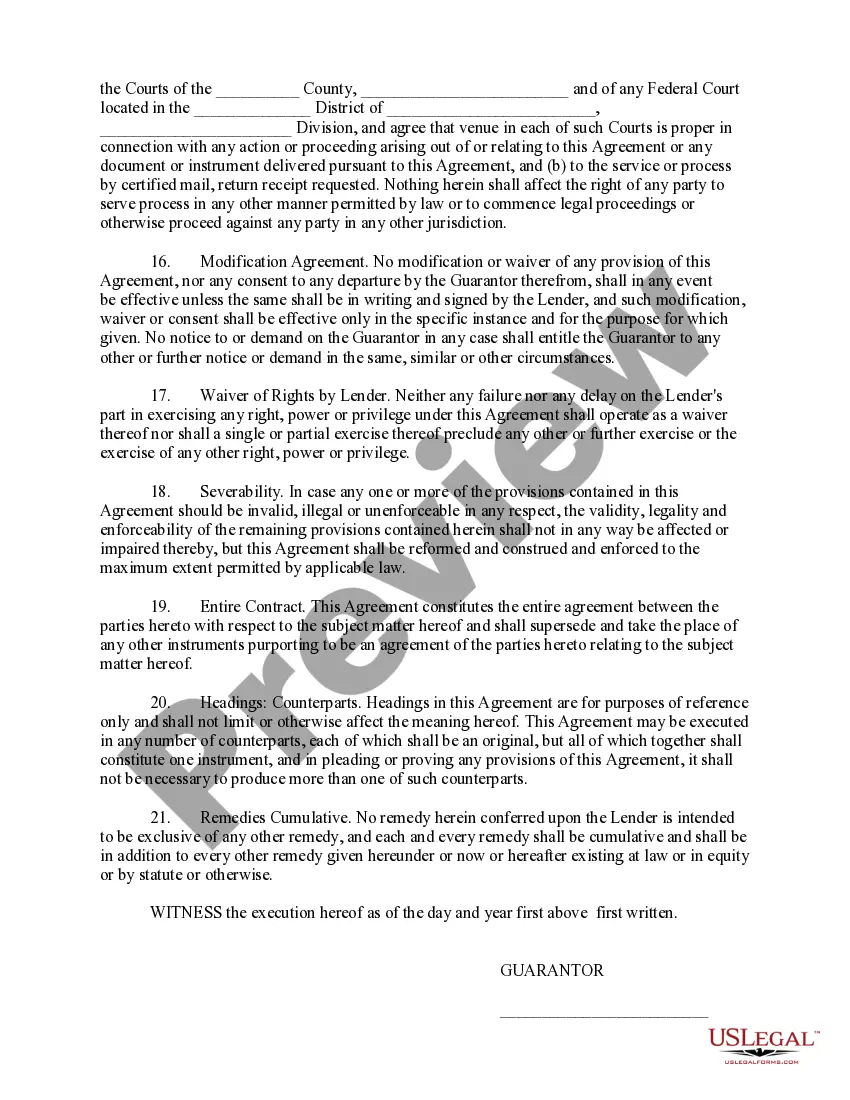
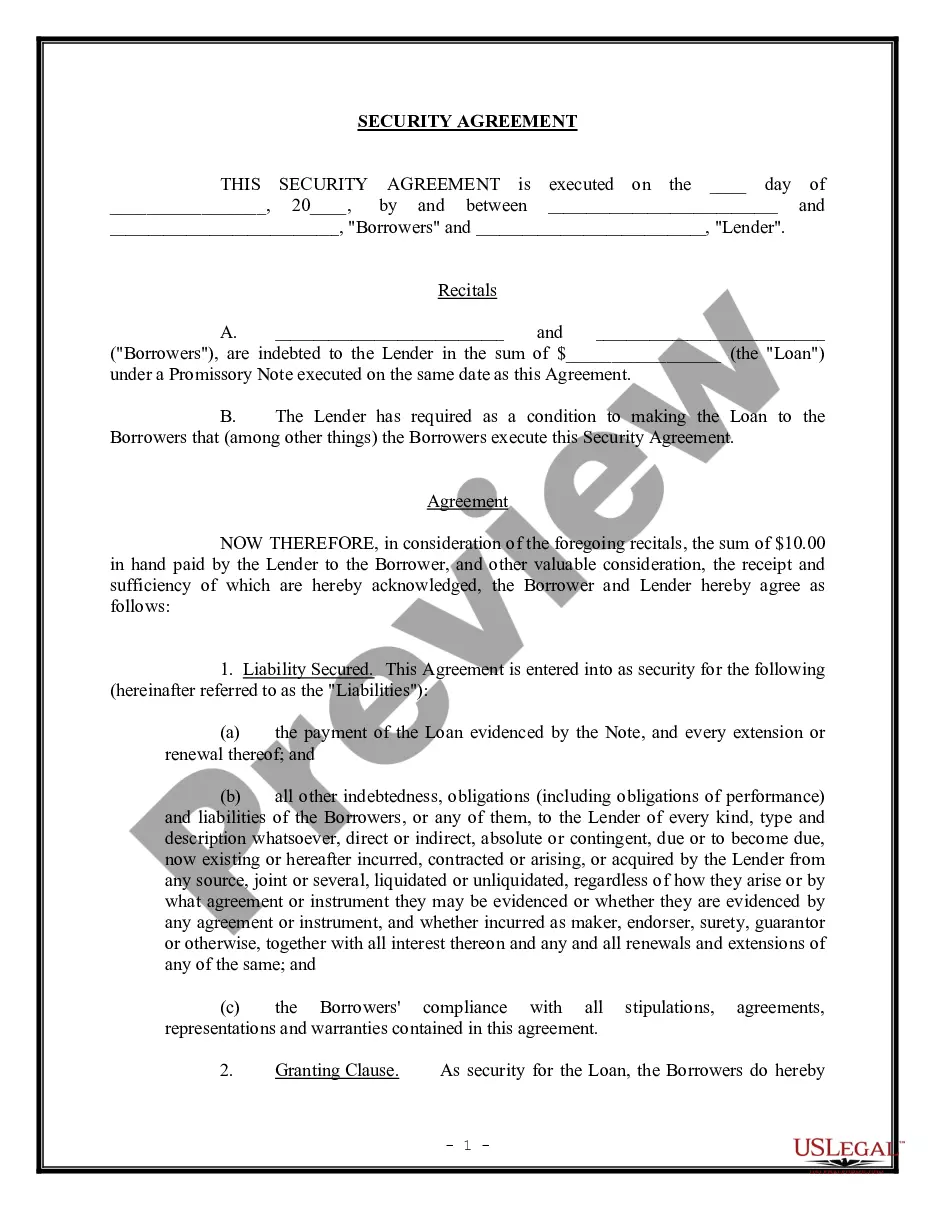
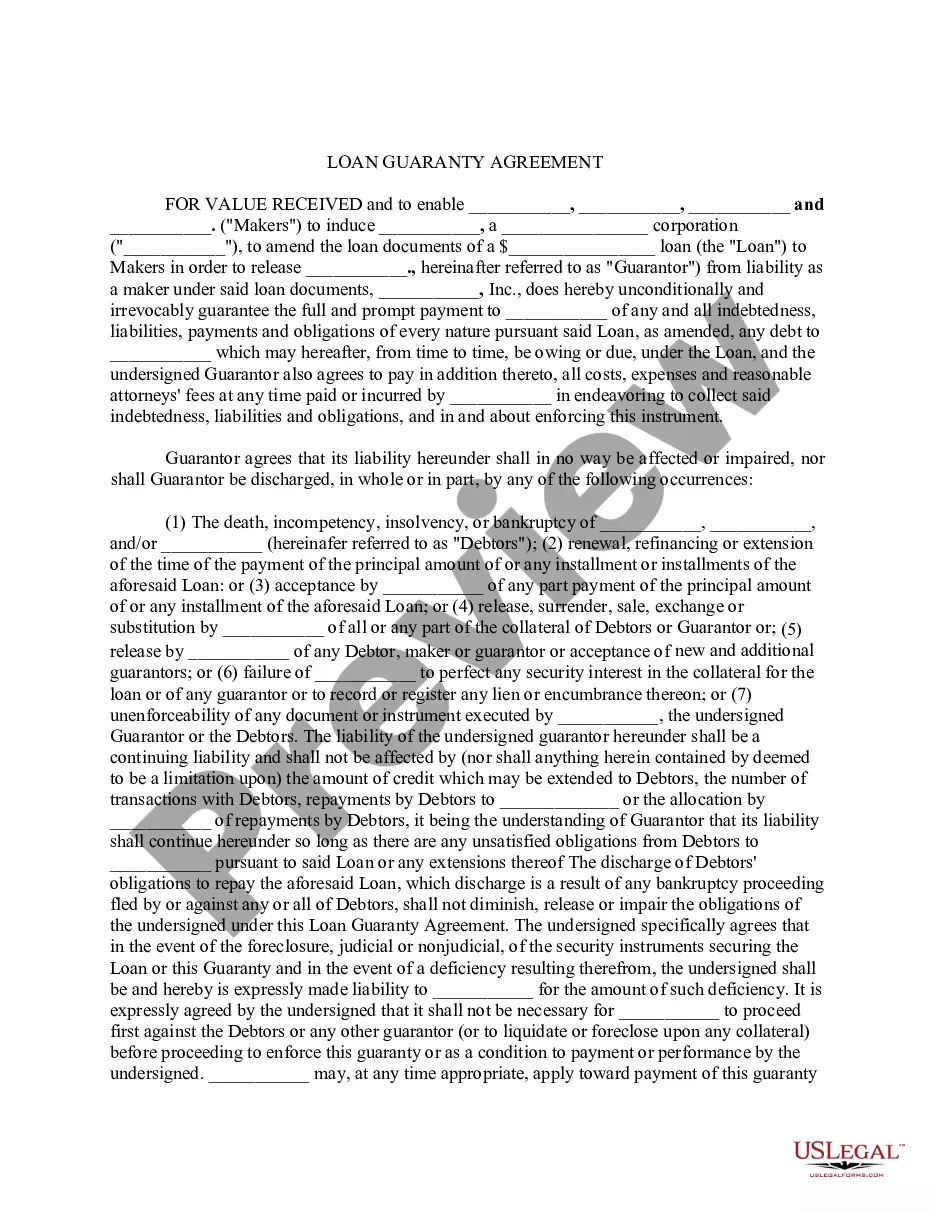
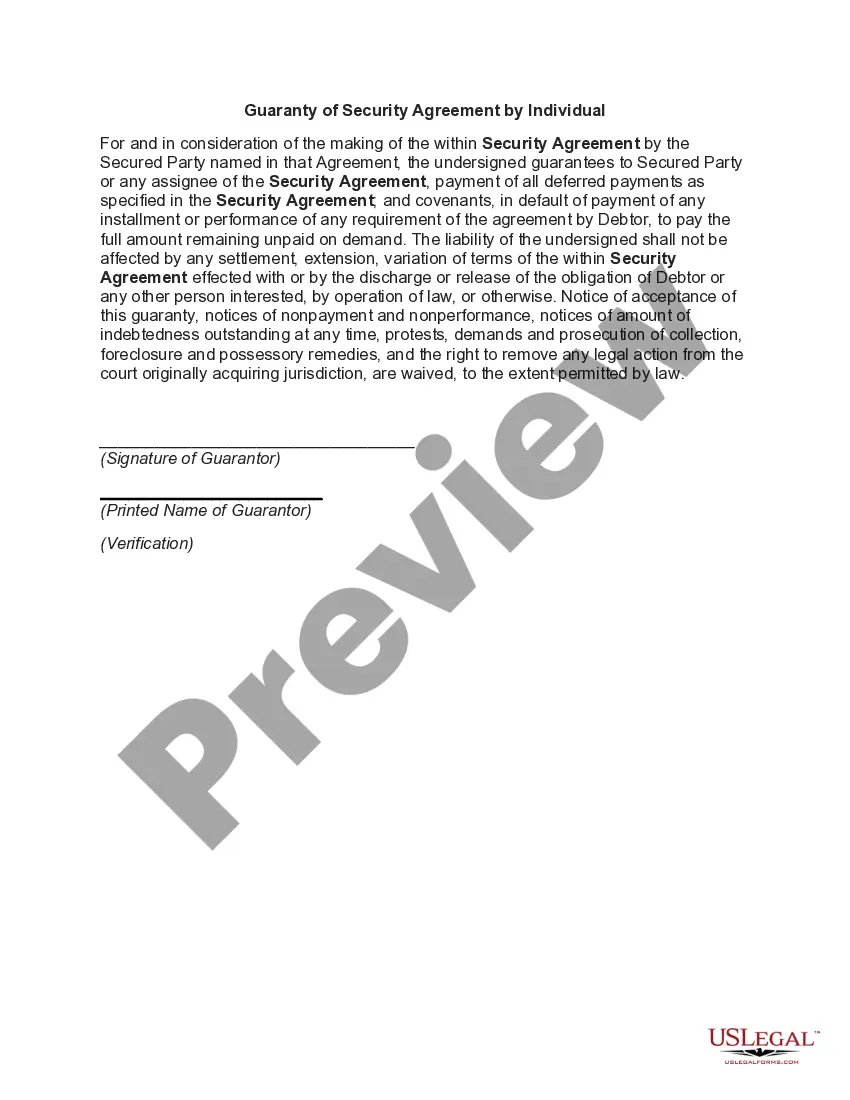
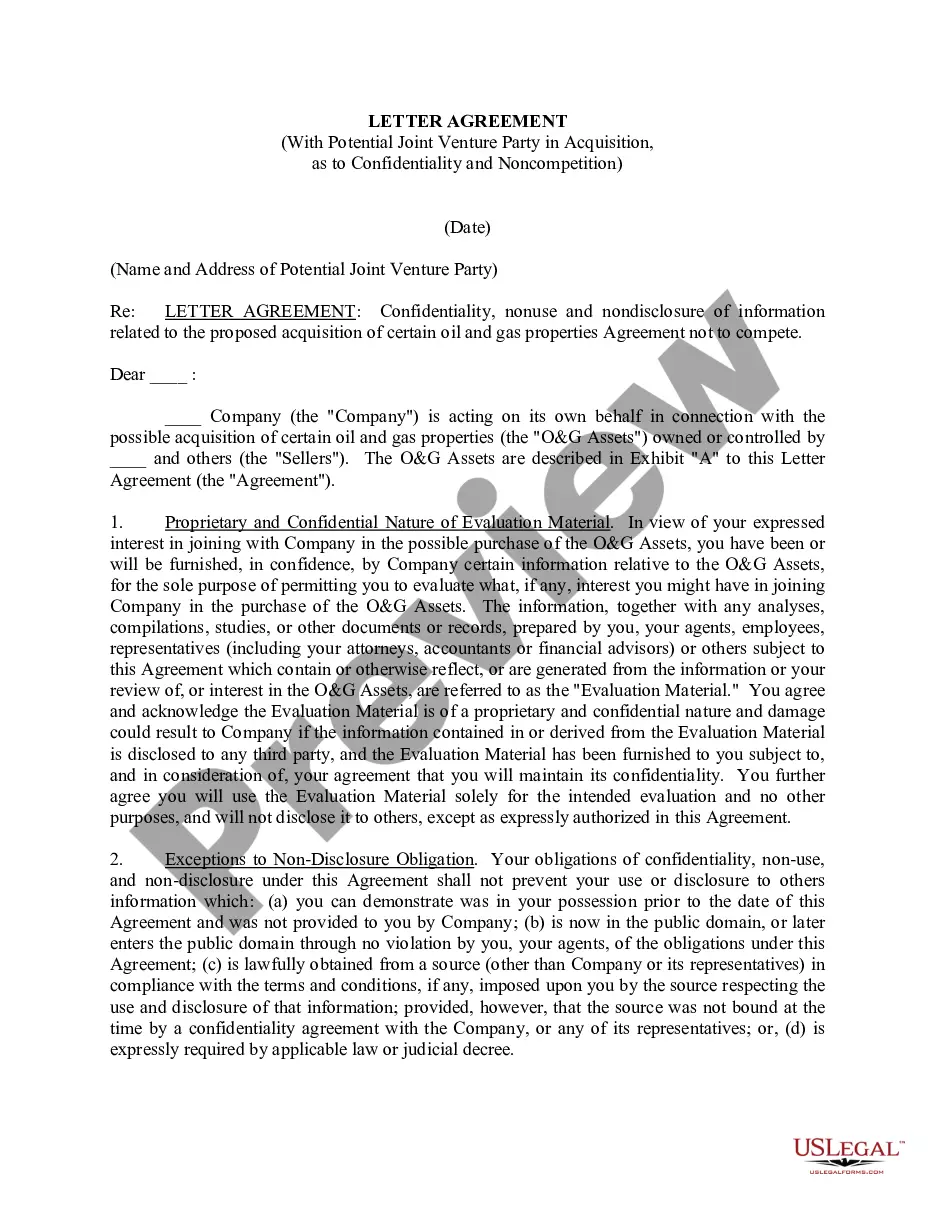
This form states that the guarantor agrees, as the principal obligor and not as a guarantor only, to pay to the lender upon demand, in immediately available federal funds, all costs and expenses, including court costs and reasonable legal expenses.
Yes, there is! A Complex Guaranty Agreement usually involves more intricate terms and conditions, making it different from a straightforward guaranty. Think of it as the fine print nobody likes to read.
Being a guarantor comes with its own set of risks. If the borrower defaults, the guarantor could be held responsible for the debt, which might strain their own finances.
Not just anyone can be a guarantor. Generally, they need to have a strong financial standing—like a good credit score and enough assets to cover potential debts.
It protects lenders by providing them with an extra layer of security. If the borrower defaults, lenders can go after the guarantor for repayment, making it less of a gamble for them.
When a guarantor steps in, they're saying, 'I've got your back.' If the borrower skips out on payments, the guarantor is responsible for footing the bill.