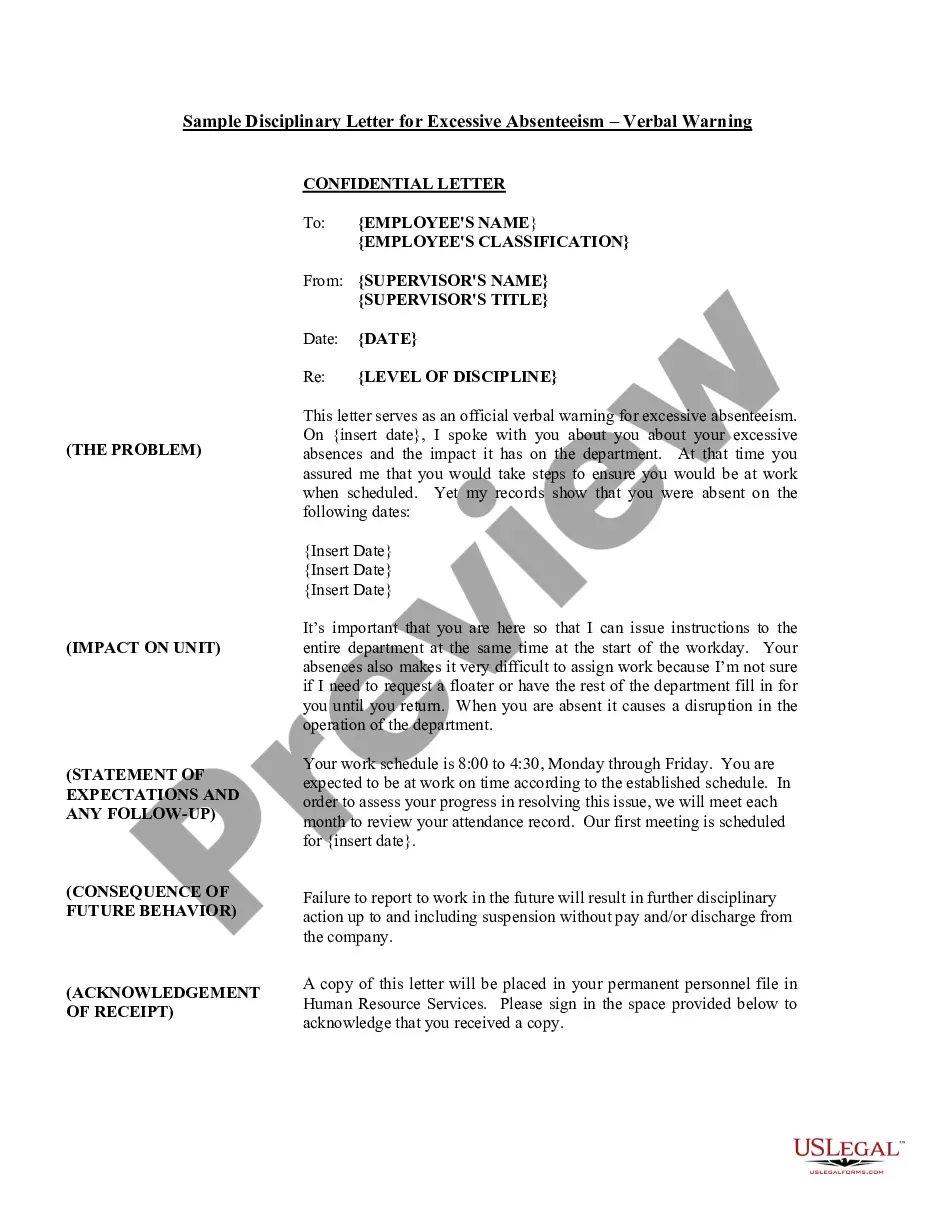
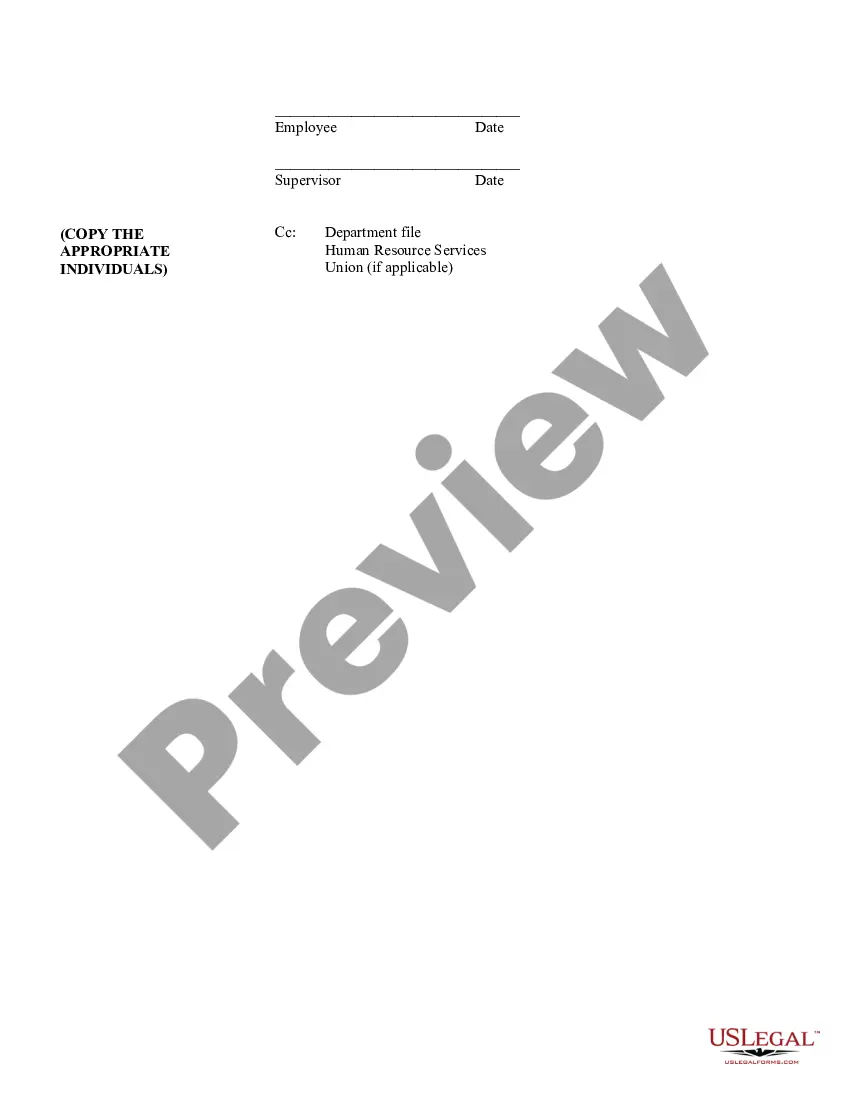
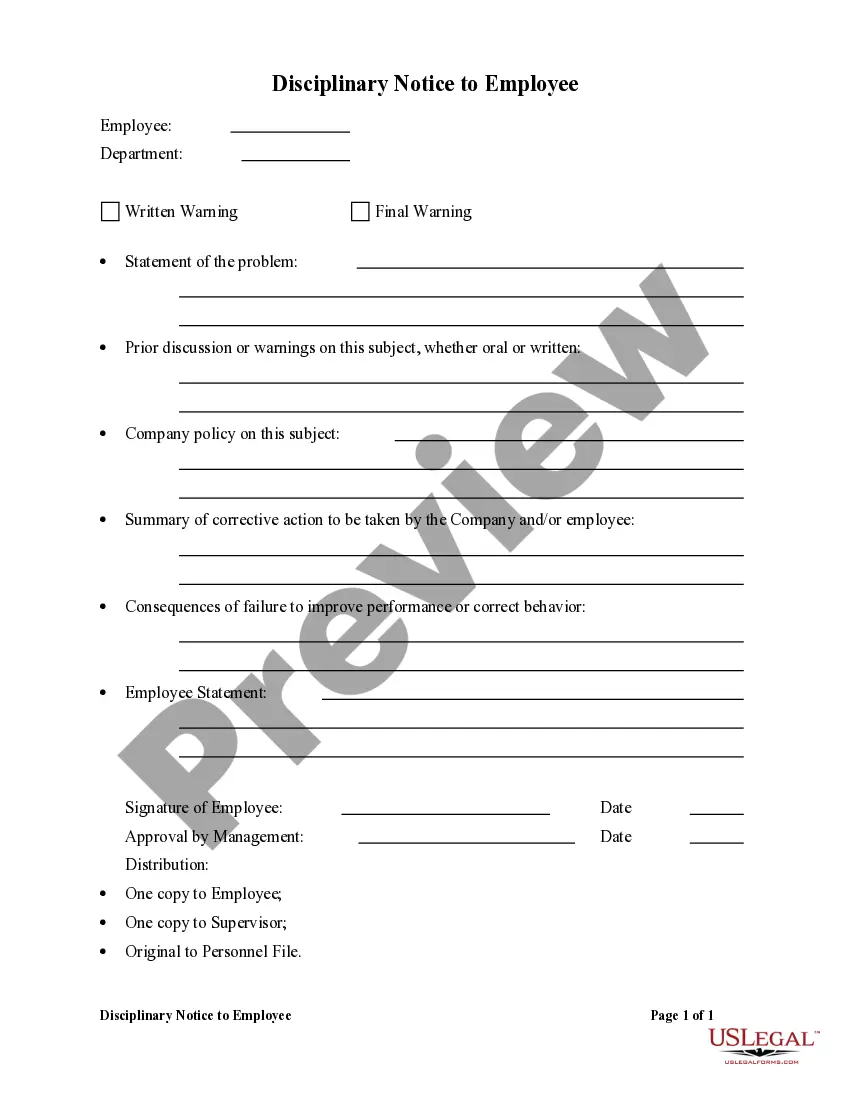
Wake North Carolina Sample Disciplinary Letter for Excessive Absenteeism - Verbal Warning
Description
Get your form ready online
Our built-in tools help you complete, sign, share, and store your documents in one place.
Make edits, fill in missing information, and update formatting in US Legal Forms—just like you would in MS Word.
Download a copy, print it, send it by email, or mail it via USPS—whatever works best for your next step.
Sign and collect signatures with our SignNow integration. Send to multiple recipients, set reminders, and more. Go Premium to unlock E-Sign.
If this form requires notarization, complete it online through a secure video call—no need to meet a notary in person or wait for an appointment.
We protect your documents and personal data by following strict security and privacy standards.

Make edits, fill in missing information, and update formatting in US Legal Forms—just like you would in MS Word.

Download a copy, print it, send it by email, or mail it via USPS—whatever works best for your next step.

Sign and collect signatures with our SignNow integration. Send to multiple recipients, set reminders, and more. Go Premium to unlock E-Sign.

If this form requires notarization, complete it online through a secure video call—no need to meet a notary in person or wait for an appointment.

We protect your documents and personal data by following strict security and privacy standards.
Looking for another form?

How to fill out Sample Disciplinary Letter For Excessive Absenteeism - Verbal Warning?
Managing legal documents is essential in the contemporary world. Nevertheless, you don’t always have to seek expert assistance to create some of them from the beginning, such as Wake Sample Disciplinary Letter for Excessive Absenteeism - Verbal Warning, using a service like US Legal Forms.
US Legal Forms offers over 85,000 templates to choose from in different categories, including living wills, real estate contracts, and divorce papers. All documents are categorized by their relevant state, simplifying the search process.
You can also access informational resources and guides on the site to ensure that any tasks related to completing paperwork are uncomplicated.
If you are already a US Legal Forms subscriber, you can locate the exact Wake Sample Disciplinary Letter for Excessive Absenteeism - Verbal Warning, Log In to your account, and download it. It is important to note that our platform cannot fully replace a lawyer. If you are facing an exceptionally complex case, we suggest having an attorney review your form before you execute and file it.
With more than 25 years in the industry, US Legal Forms has become a preferred source for a variety of legal documents for millions of users. Join them today and obtain your state-specific paperwork easily!
- Review the preview and outline of the document (if available) to understand what you’ll receive after obtaining the form.
- Make sure that the template you select is tailored to your state/county/region, as state regulations can influence the validity of some documents.
- Look at related forms or restart the search to identify the suitable file.
- Hit Buy now and set up your account. If you have an existing account, opt to sign in.
- Select the option, then pick a preferred payment method, and purchase Wake Sample Disciplinary Letter for Excessive Absenteeism - Verbal Warning.
- Choose to save the template in any available file format.
- Navigate to the My documents tab to redownload the file.
Form popularity
FAQ
Does a verbal warning need to be documented? A verbal warning should definitely be documented. Employers should keep the documentation of the verbal warning in their informal notes, and you as the employee should sign the documentation to indicate that you have received it.
How to issue a verbal warning Take the employee into a private room. Always discuss issues with employees in a private office/room or video call (if your company is remote).State the issue clearly.Discuss the changes they should make.Provide a timeframe for correction.State consequences.Provide support for change.
Tips to Reduce Absenteeism in the Workplace You should discuss the policy with all members of staff and ask them to sign it to show their understanding. The policy will act as a resource to your employees about your expectations. Aim to be consistent and follow the attendance policy in all possible situations.
As noted earlier on, using the email for communication is formal. This implies that it is weightier than a verbal warning and carries more consequences. Therefore, before warning an employee via email, consider verbal warnings. Some employees will adjust when you do this.
Here are some ways to reduce absenteeism in the workplace. Explore flexible schedules and remote work.Introduce a return-to-work interview routine.Improve employee and workplace well-being.Provide balance, rewards, and recognition.Set disciplinary procedures and consequences.Use robust absence management tools.
You need to show up on time every day from this point onward. Future tardiness without good reason may result in further disciplinary action and possible termination of employment. I'm here to help, and I'll be scheduling weekly meetings with you to discuss the actions you're taking to be on time.
Tell the employee you've noticed he's been absent frequently, and explain the effects his attendance has on the company as a whole. Conversation TipJoe, when you're out, customers notice delays, and your coworkers have to take on the extra work. It makes it difficult for us to get the job done the way we need to.
How to Deal with Employee Absenteeism Create an employee attendance policy.Enforce your attendance policy consistently.Keep track of employee absences.Address unscheduled absences and no-show's immediately.Don't just treat the symptoms, discover the cause.Don't forget to reward good behavior.
How To Document Verbal Conversations. Create a written document, memorandum or email for every important conversation, verbal warning or counseling session. Include who was present for the conversation, a summary of the key issues that were discussed and the responses given by the employee.
This is your first warning notice. We expect you to correct your behavior and request time off in advance and in a formal way (e.g. via email to your manager or through our HRIS.) Otherwise, we will have to take further disciplinary action, up to and including termination.