Nassau New York Telecommuting Goals
Description
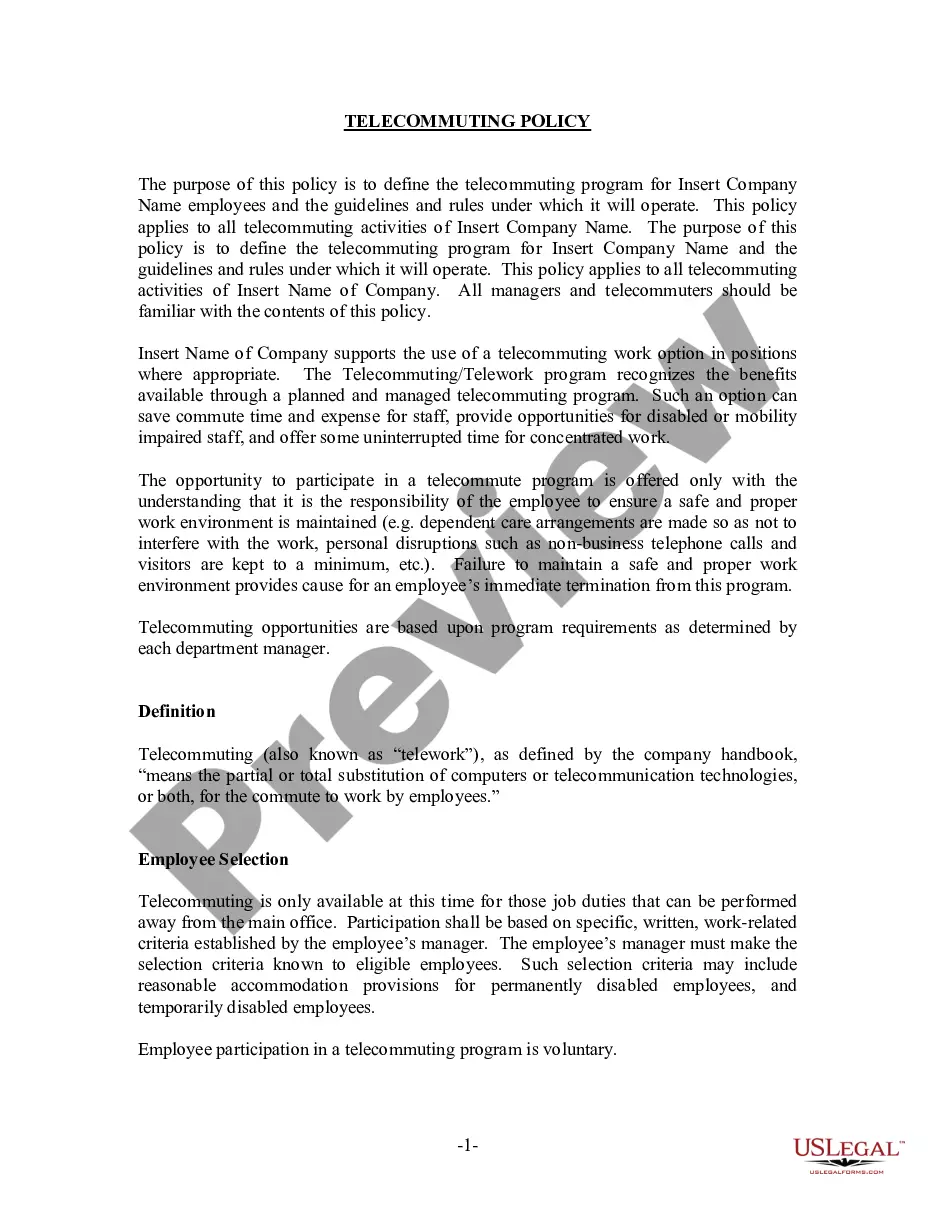
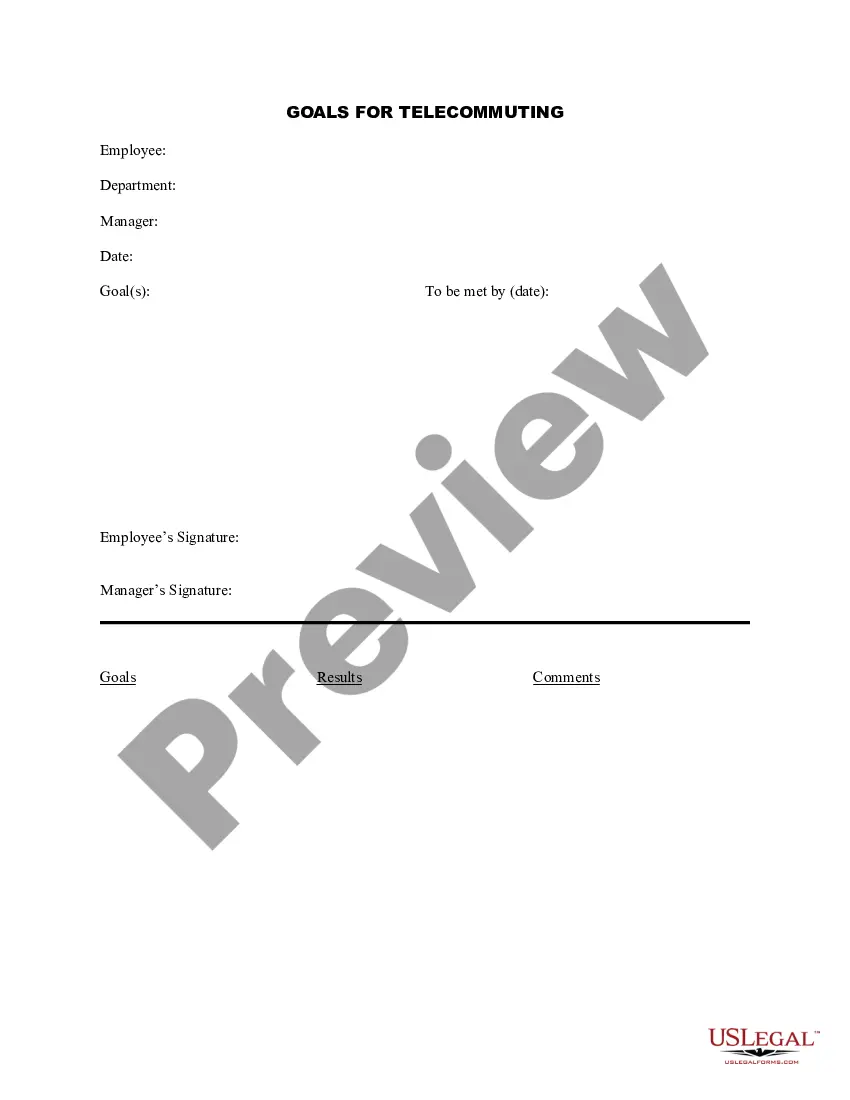
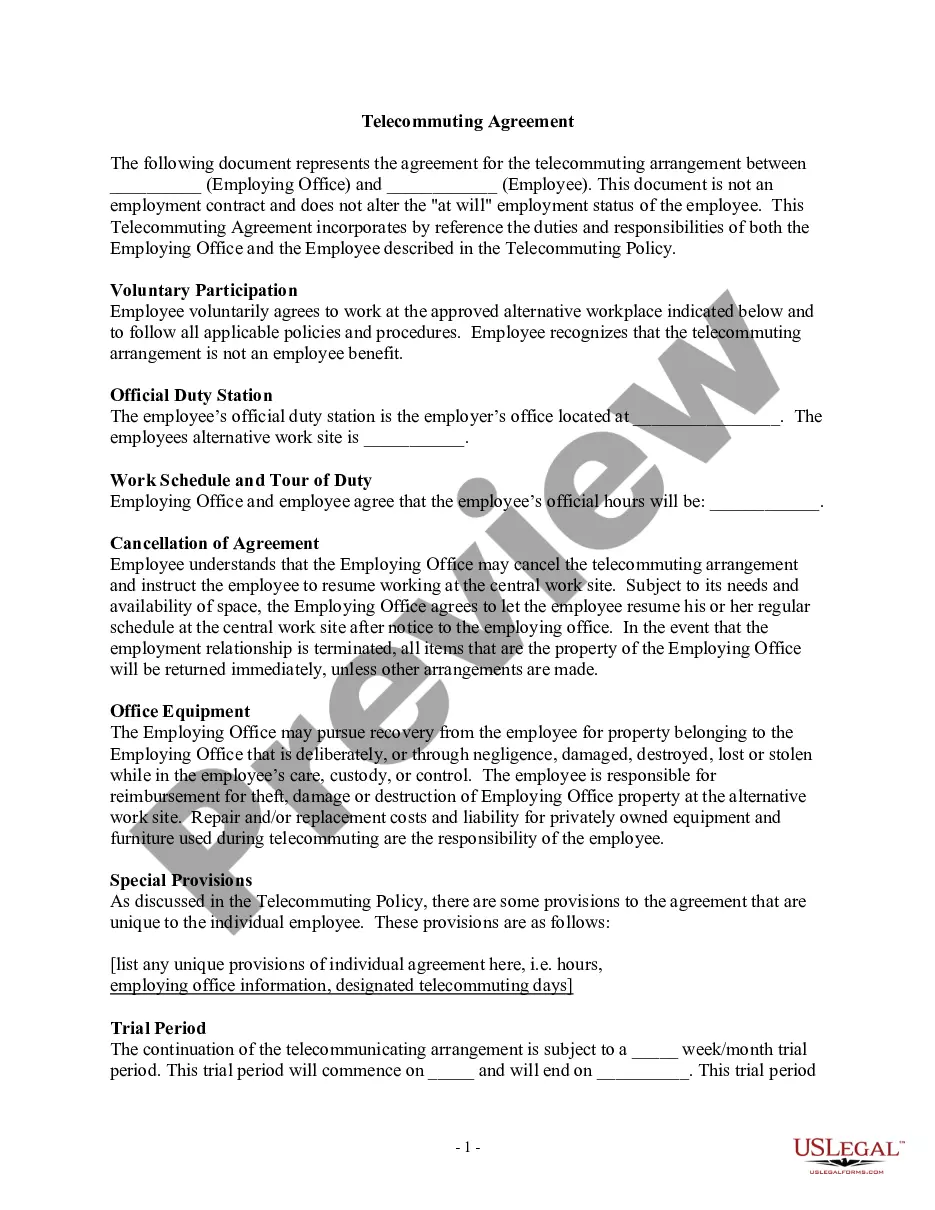
How to fill out Telecommuting Goals?
Whether you wish to initiate your enterprise, enter into a contract, request an update for your identification, or address family-related legal matters, it is essential to prepare specific documentation in accordance with your local statutes and regulations.
Finding the appropriate documents may require significant time and effort unless you utilize the US Legal Forms library.
The service offers users over 85,000 professionally crafted and verified legal templates for any personal or business situation. All files are organized by state and area of application, making it quick and straightforward to select a document such as Nassau Telecommuting Goals.
Documents available on our platform are reusable. With an active subscription, you can access all of your previously obtained paperwork anytime you need it in the My documents section of your profile. Stop wasting time on a continuous search for up-to-date official documents. Join the US Legal Forms platform and maintain your paperwork organized with the most comprehensive online form library!
- Ensure that the template meets your individual requirements and complies with state legal standards.
- Review the form description and observe the Preview if available on the page.
- Utilize the search bar above to find additional templates pertaining to your state.
- Click Buy Now to acquire the sample once you identify the correct one.
- Choose the subscription plan that best fits your needs to proceed.
- Log in to your account and complete the payment via credit card or PayPal.
- Download the Nassau Telecommuting Goals in your desired file format.
- Print the document or fill it out and sign it electronically with an online editor to save time.
Form popularity
FAQ
Yes, as a non-resident, you must file a New York state tax return if you earned income sourced from New York. This obligation aligns with the Nassau New York Telecommuting Goals, ensuring you report all applicable income. Utilizing platforms like uslegalforms can simplify your filing process and help meet your tax responsibilities.
Non-residents must file an income tax return if they earn income in New York. This includes income from work performed while telecommuting, which may relate to the Nassau New York Telecommuting Goals. If you're not a resident, understanding your filing requirements can save you from potential penalties.
The 183-day rule determines residency status based on the number of days you spend in New York during a tax year. If you exceed 183 days, you may be considered a resident and face New York state taxes on your income. For individuals pursuing Nassau New York Telecommuting Goals, understanding this rule is vital for tax planning and compliance. You can find detailed resources on the US Legal Forms platform to help you interpret and manage this rule efficiently.
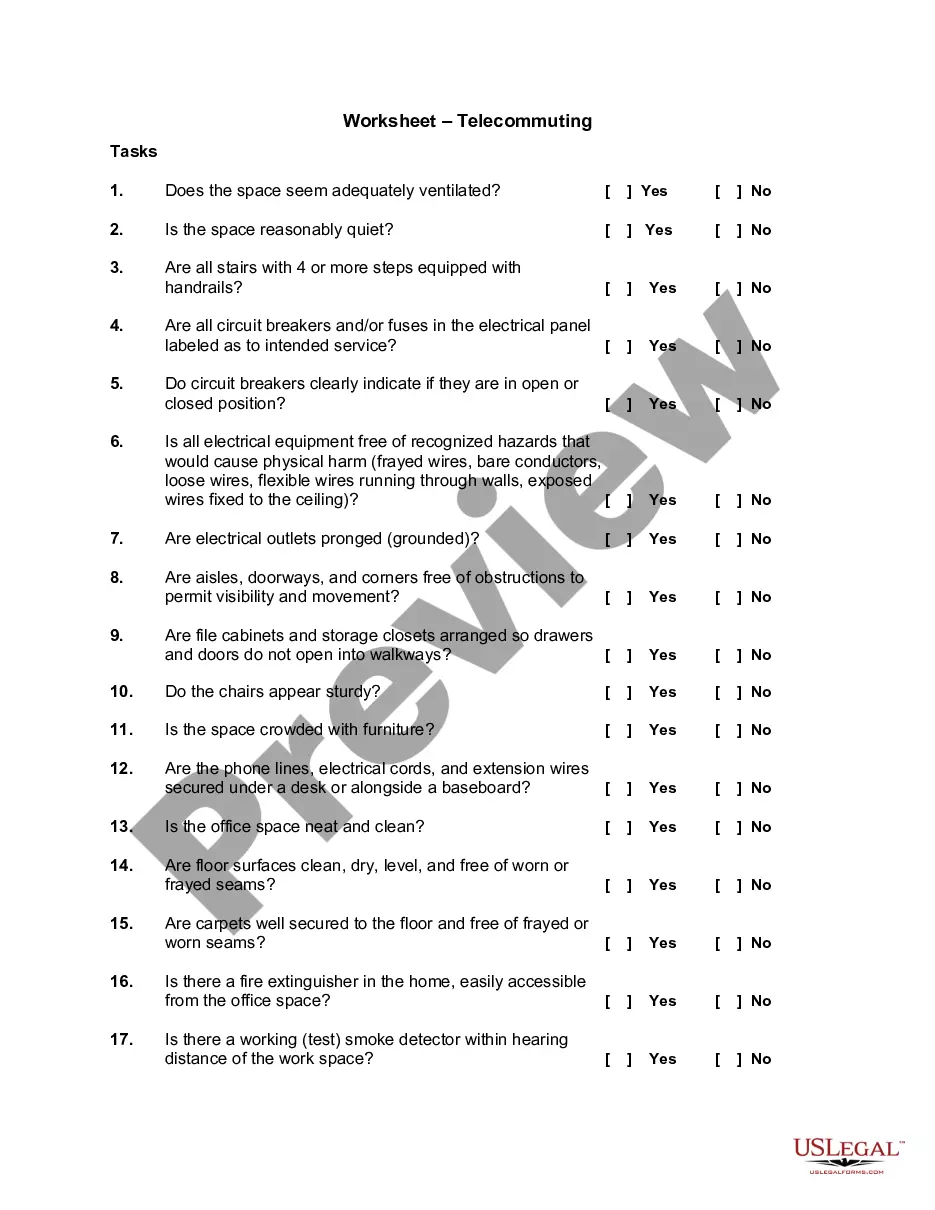
It is easier to focus without the usual workplace distractions. There are no transportation costs. It can provide a better balance of work and personal pursuits. Employers may save money on real estate and other overhead expenses.
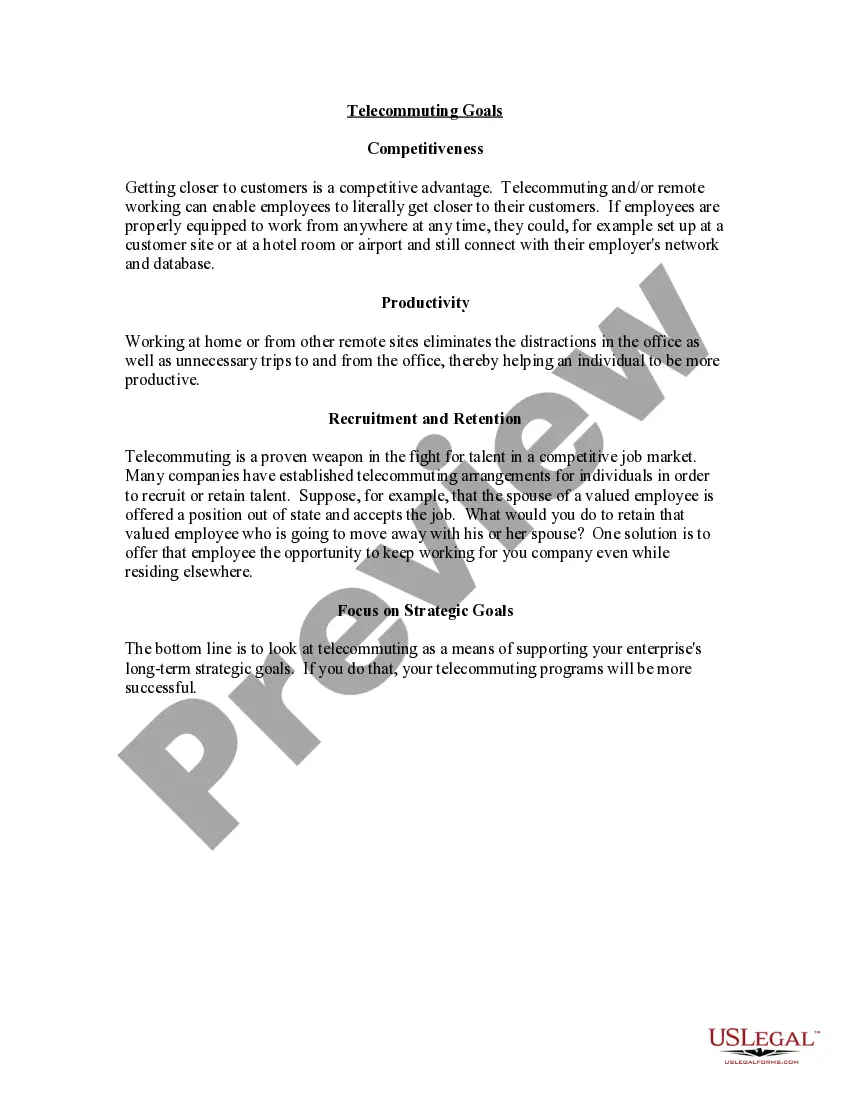
With none of the distractions from a traditional office setting, telecommuting drives up employee efficiency. It allows workers retain more of their time in the day and adjust to their personal mental and physical well-being needs that optimize productivity.
Telecommuting is a flexible work arrangement that enables employees to achieve a more successful balance between work responsibilities and family life. Telecommuting allows employees to work at home, on the road or in a satellite location for all or part of their workweek.
We found that telecommuters reported more job satisfaction, less motivation to leave the company, less stress, improved work-family balance, and higher performance ratings by supervisors.
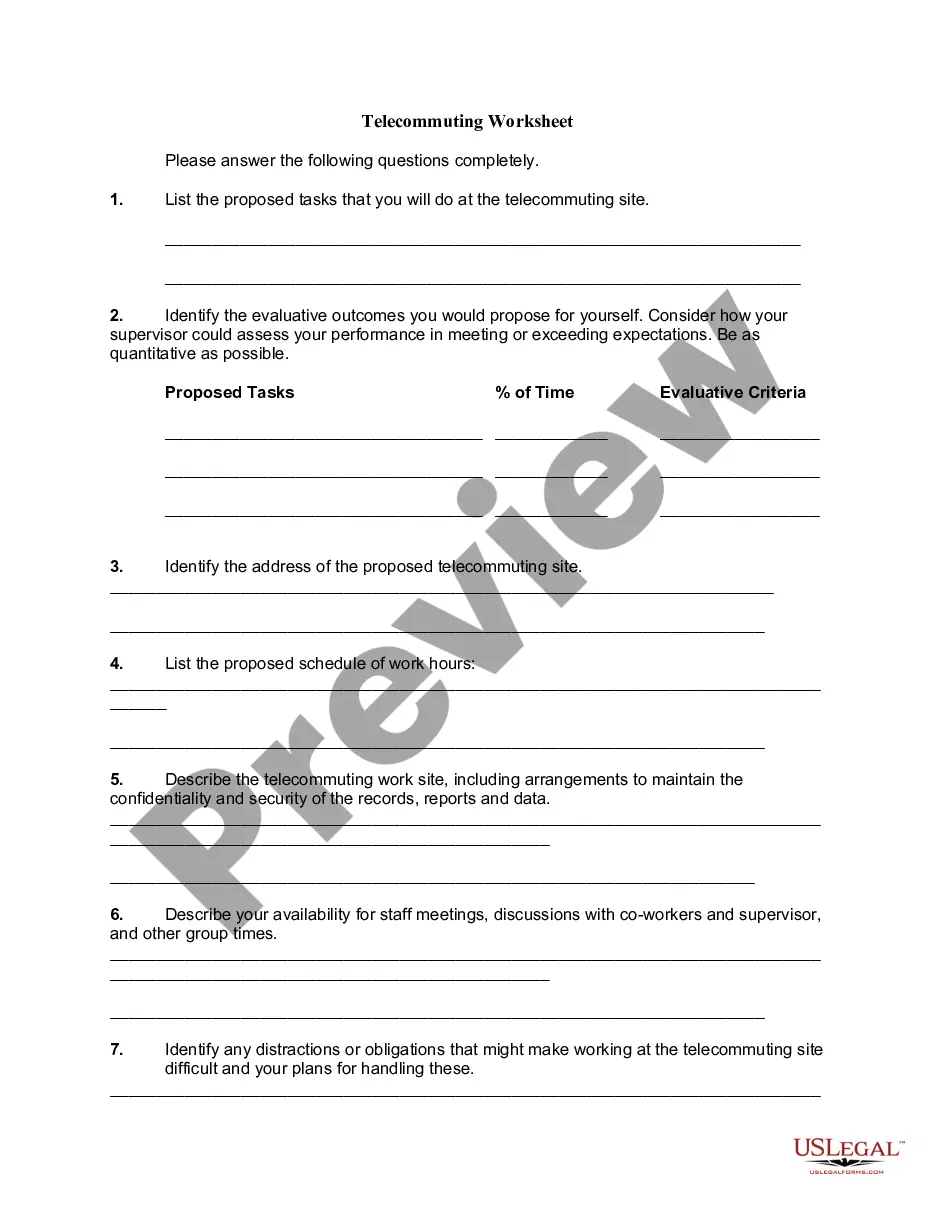
Best practices for effective telecommuting Create a work routine.Take charge of your time.Prioritize focus.Check in with your team regularly.Turn off when you're not at work.Set clear expectations.Respect employees' time.Stay in touch, but don't over-communicate.
7 advantages of telecommuting 2) Better work-life balance.3) Increased flexibility.4) Reduced operational costs.5) Reduced expenses for employees.6) Easier to focus.1) You need the right technology to be effective.2) There's a different set of distractions.3) Security concerns.
Advantages of working from home saving you money - save on start-up costs, as you do not need to buy or rent business premises. saving you time - save time that would be spent on looking for suitable business property. more flexibility - avoid becoming tied into long term tenancy agreements.