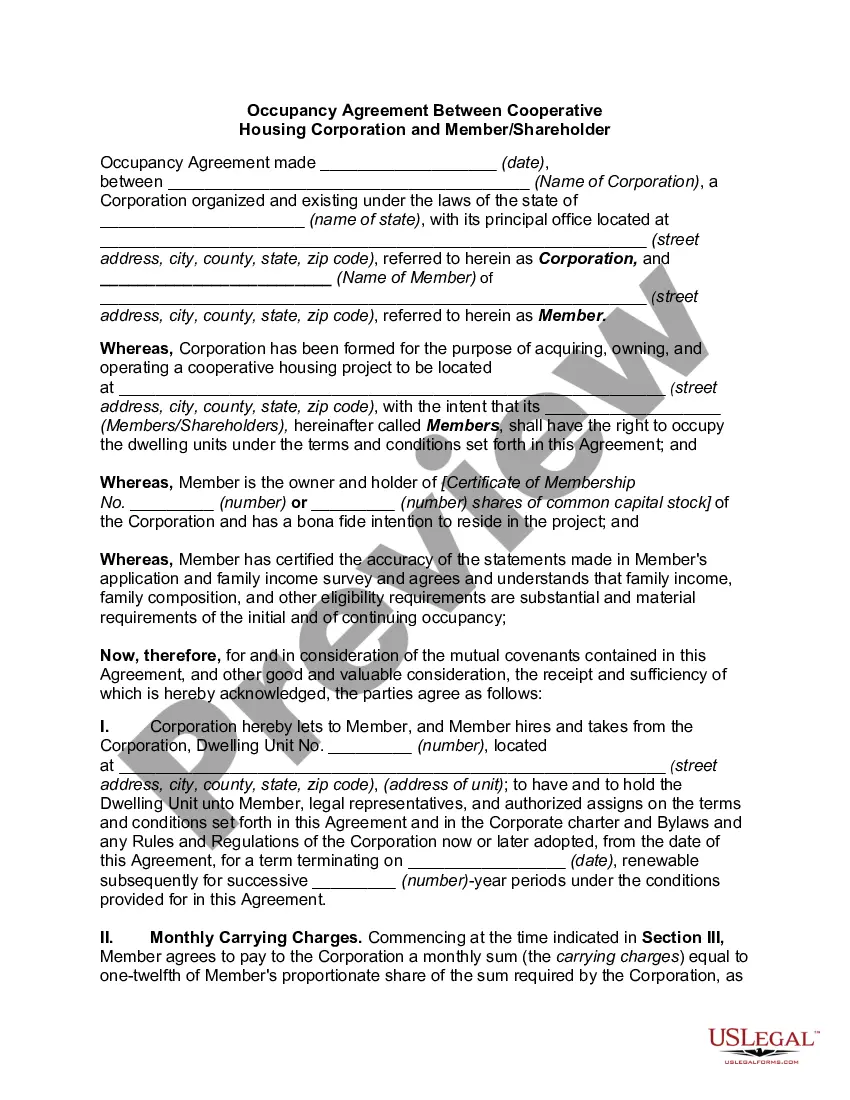
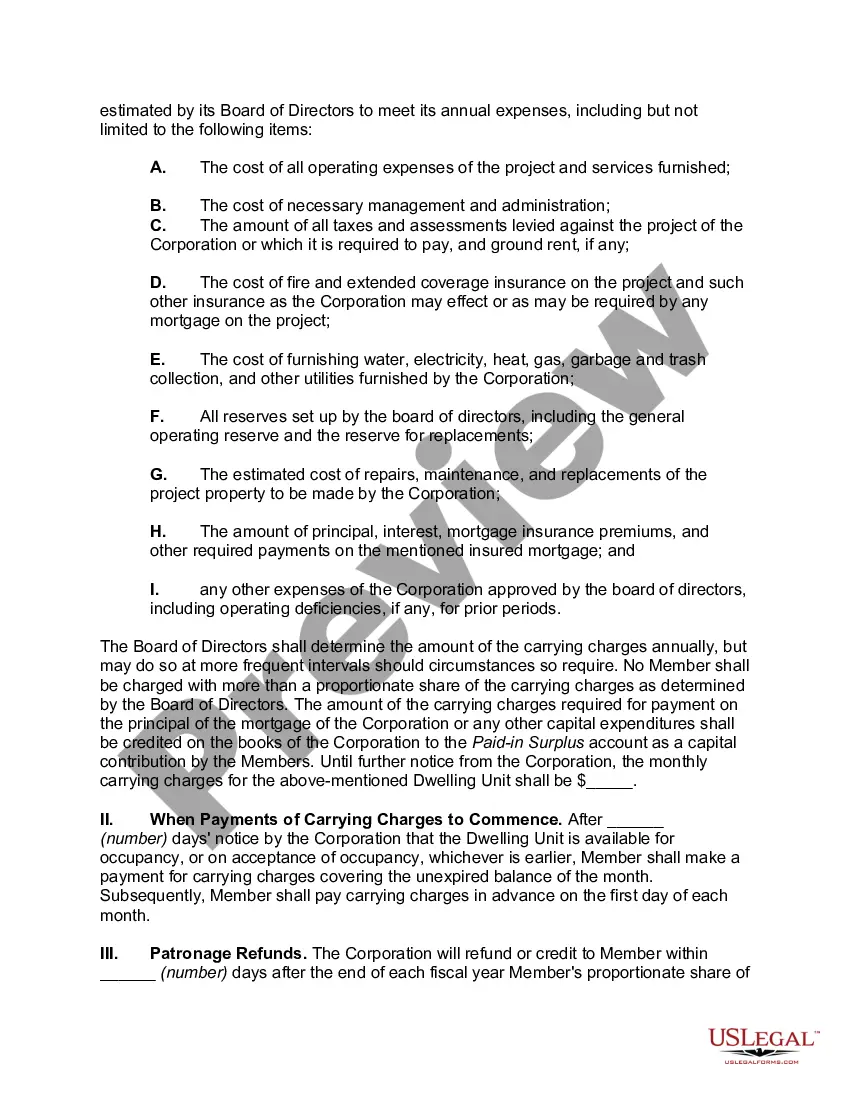
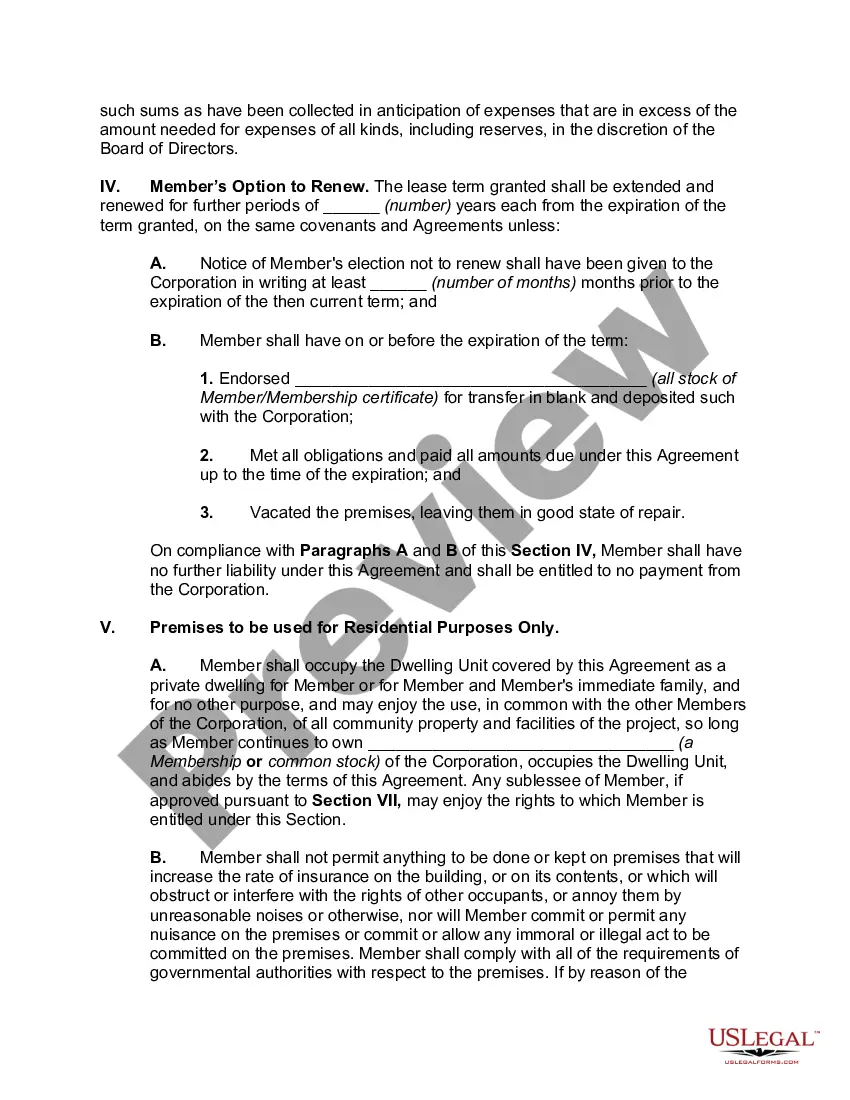
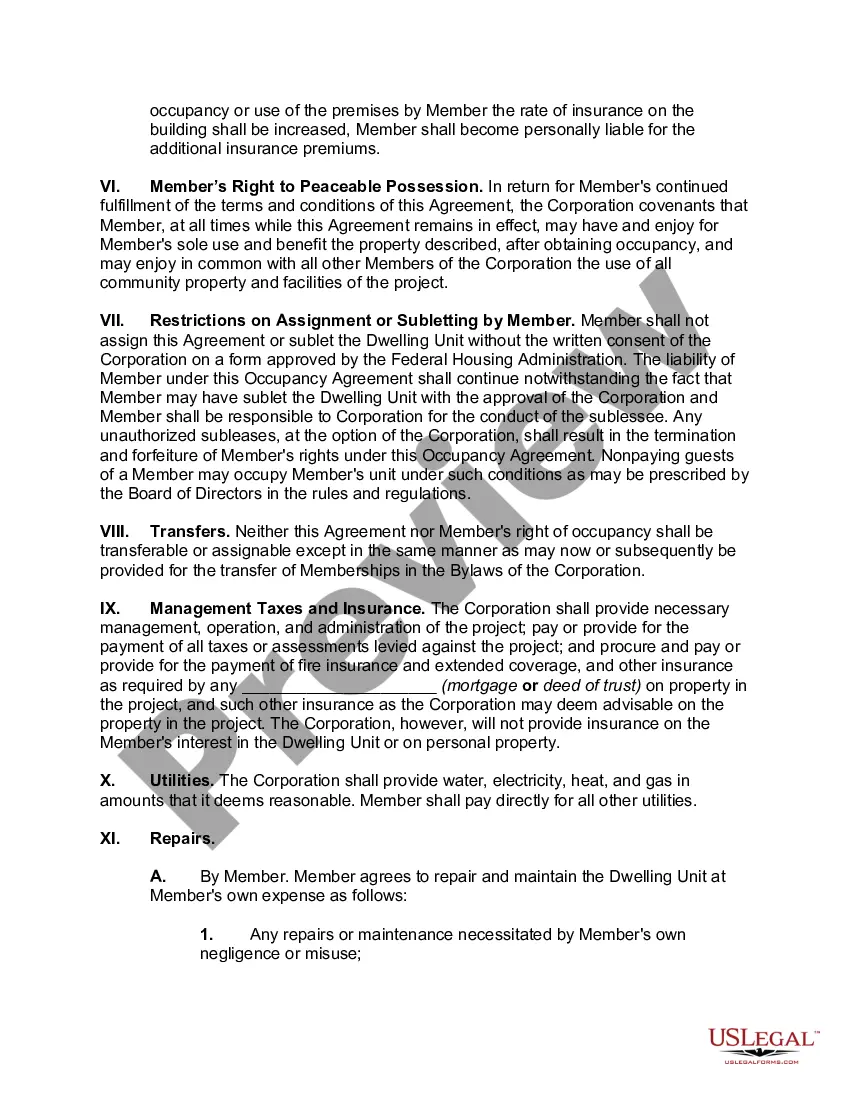
Bronx New York Occupancy Agreement Between Cooperative Housing Corporation and Member/Shareholder
Description
Get your form ready online
Our built-in tools help you complete, sign, share, and store your documents in one place.
Make edits, fill in missing information, and update formatting in US Legal Forms—just like you would in MS Word.
Download a copy, print it, send it by email, or mail it via USPS—whatever works best for your next step.
Sign and collect signatures with our SignNow integration. Send to multiple recipients, set reminders, and more. Go Premium to unlock E-Sign.
If this form requires notarization, complete it online through a secure video call—no need to meet a notary in person or wait for an appointment.
We protect your documents and personal data by following strict security and privacy standards.

Make edits, fill in missing information, and update formatting in US Legal Forms—just like you would in MS Word.

Download a copy, print it, send it by email, or mail it via USPS—whatever works best for your next step.

Sign and collect signatures with our SignNow integration. Send to multiple recipients, set reminders, and more. Go Premium to unlock E-Sign.

If this form requires notarization, complete it online through a secure video call—no need to meet a notary in person or wait for an appointment.

We protect your documents and personal data by following strict security and privacy standards.
Looking for another form?



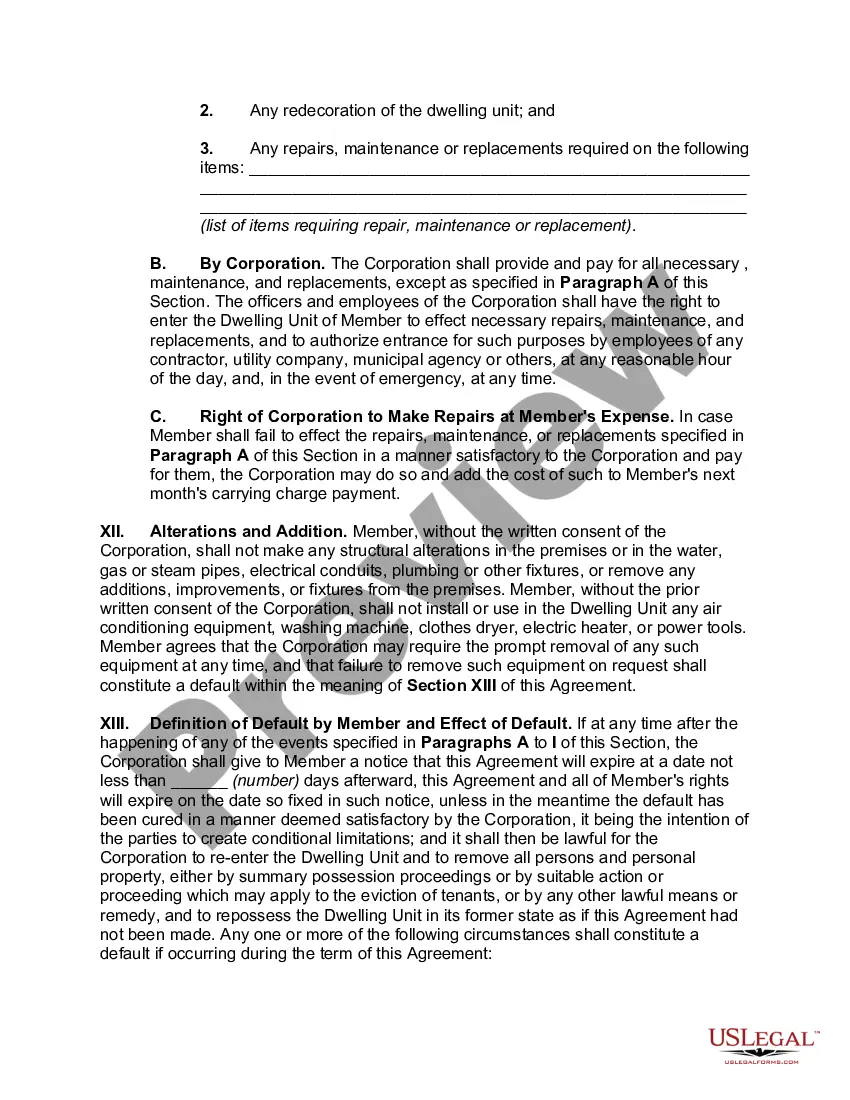
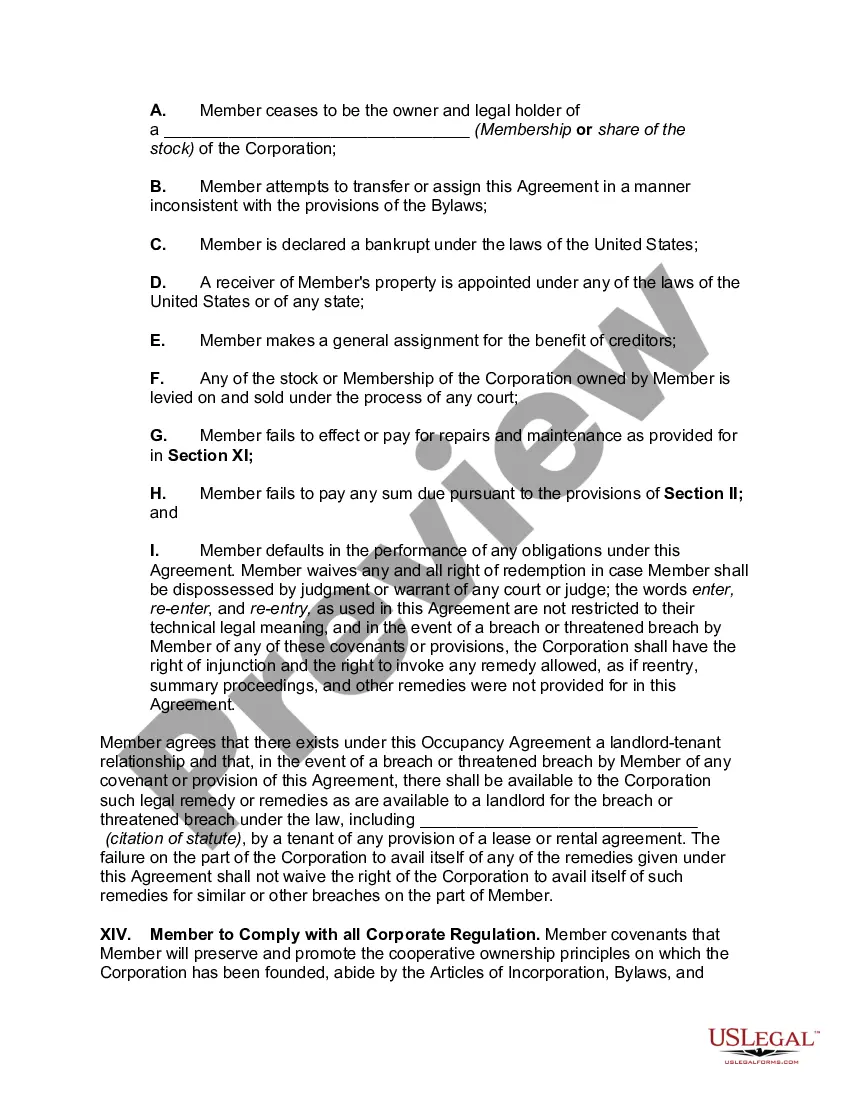
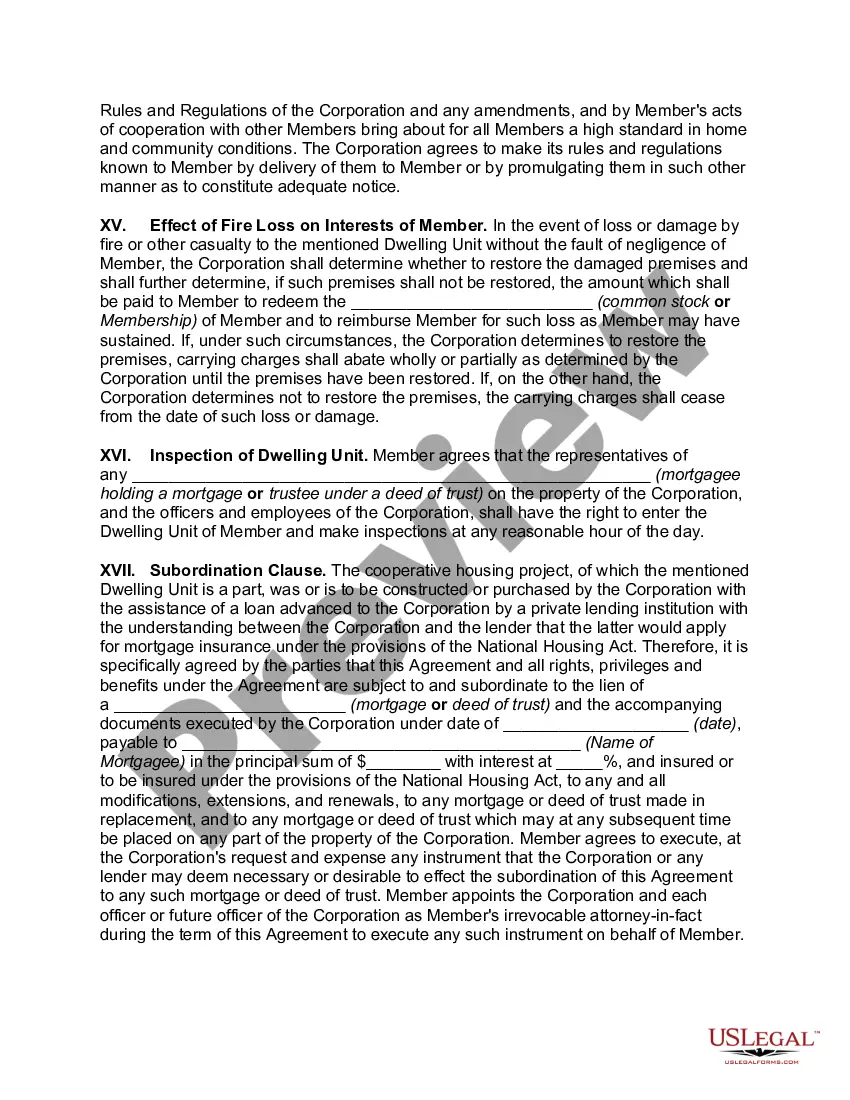
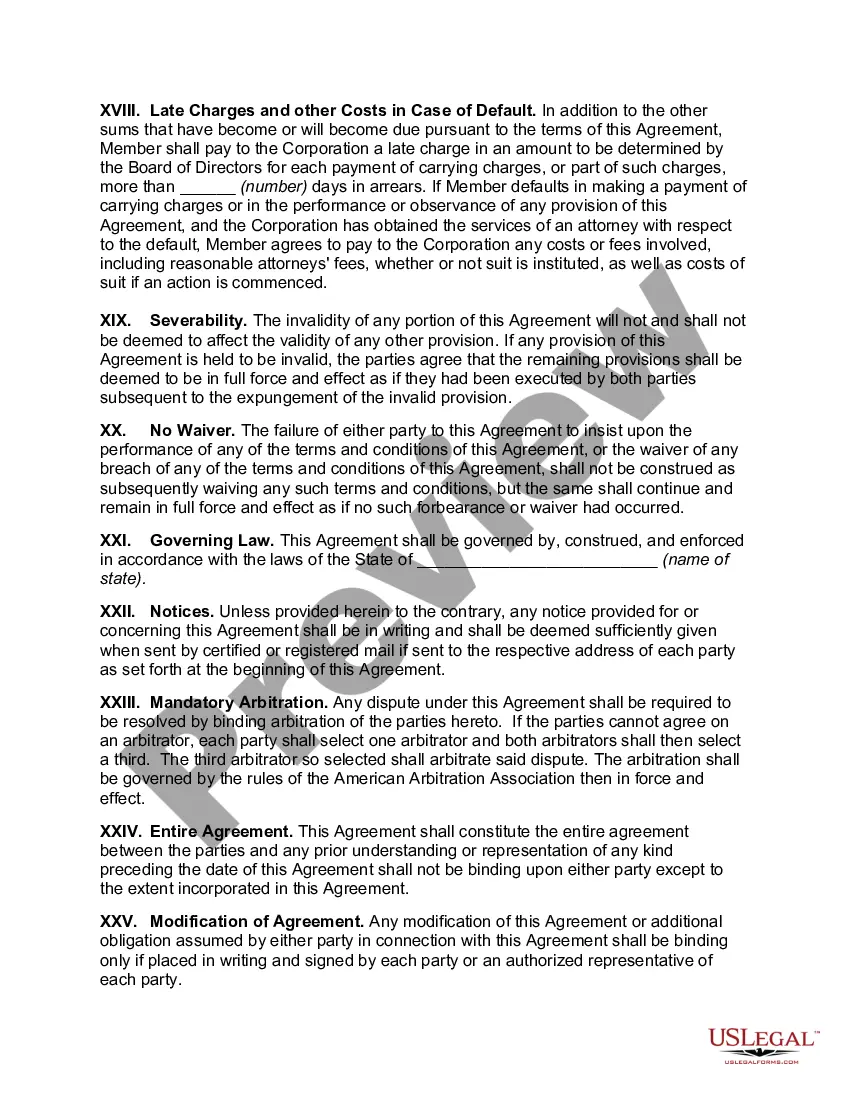
How to fill out Occupancy Agreement Between Cooperative Housing Corporation And Member/Shareholder?
Are you trying to swiftly create a legally-enforceable Bronx Occupancy Agreement Between Cooperative Housing Corporation and Member/Shareholder or perhaps any other document to oversee your personal or professional matters.
You have two choices: reach out to a legal expert to draft a legitimate document for you or compose it entirely on your own. Fortunately, there's a third option - US Legal Forms. It will assist you in obtaining professionally crafted legal documents without incurring exorbitant charges for legal services.
Restart the search if the document is not what you were looking for by utilizing the search bar in the header.
Pick the plan that best meets your requirements and proceed to payment. Choose the file format you prefer for your form and download it. Print it, fill it out, and sign on the dotted line. If you’ve already created an account, you can simply Log In to it, find the Bronx Occupancy Agreement Between Cooperative Housing Corporation and Member/Shareholder template, and download it. To re-download the form, simply navigate to the My documents section. It’s effortless to locate and download legal documents when you utilize our services. Furthermore, the documents we provide are evaluated by industry professionals, which grants you additional peace of mind when managing legal matters. Try US Legal Forms today and experience the difference!
- US Legal Forms provides an extensive assortment of over 85,000 state-compliant document templates, including Bronx Occupancy Agreement Between Cooperative Housing Corporation and Member/Shareholder and form bundles.
- We supply templates for a vast range of life situations: from divorce documentation to real estate document templates.
- We have been in the industry for over 25 years and have established a strong reputation among our clients.
- Here's how you can join their ranks and obtain the required document without unnecessary complications.
- First and foremost, thoroughly check if the Bronx Occupancy Agreement Between Cooperative Housing Corporation and Member/Shareholder is suitable for your state's or county's regulations.
- If the form has a description, ensure you verify its intended purpose.
Form popularity
FAQ
In a co-op purchase transaction, owners purchase shares of a private corporation which, in turn, owns and manages the property. By contrast, in a co-ownership transaction (or 'co-buying'), owners purchase an undivided interest in the property that is registered on title.
Advantages of co-op living One of the main attractions of co-ops are lower expenses, as they operate on an at-cost basis, meaning they are not run for profit. Many co-ops, especially smaller ones are run and maintained by resident shareholders, further lowering expenses.
If you are a tenant in a co-op, you can be evicted. The board can start a non-payment proceeding or a holdover proceeding against you in Housing Court. Co-op boards have a lot of freedom in deciding how to run their buildings and whether to evict a tenant for objectionable conduct.
A New York City landlord can't evict a tenant on a whim. However, there are several possible reasons for evicting a tenant. Typically, issues like violating the rental agreement or failing to pay rent initiate the eviction process. Your lease or rental agreement is a legally binding document.
Cooperative housing (commonly described by referring to an individual co-op) is a type of homeownership common to apartment buildings in big cities such as New York. For practical intents and purposes, a co-op can be defined as a building that is jointly owned by a corporation made up of all its inhabitants.
Co-op is short for housing cooperative; under New York City law, this type of residence is considered personal property rather than real property. Although the units are very real indeed, a co-op building is owned by a larger corporation.
In the event that a co-op files for bankruptcy as a result of defaulting on its mortgage, the lender has the power to foreclose on the building and evict the shareholders.
op owner has an interest or share in the entire building and a contract or lease that allows the owner to occupy a unit. While a condo owner owns a unit, a coop owner does not own the unit. Coops are collectively owned and managed by their residents, who own shares in a nonprofit corporation.
Buying a co-op may place limits on how much home equity you can accumulate or if you can accumulate equity at all. While market-rate co-ops accumulate equity much like single-family homes, limited- and zero-equity co-ops restrict your ability to profit if and when you sell your shares.