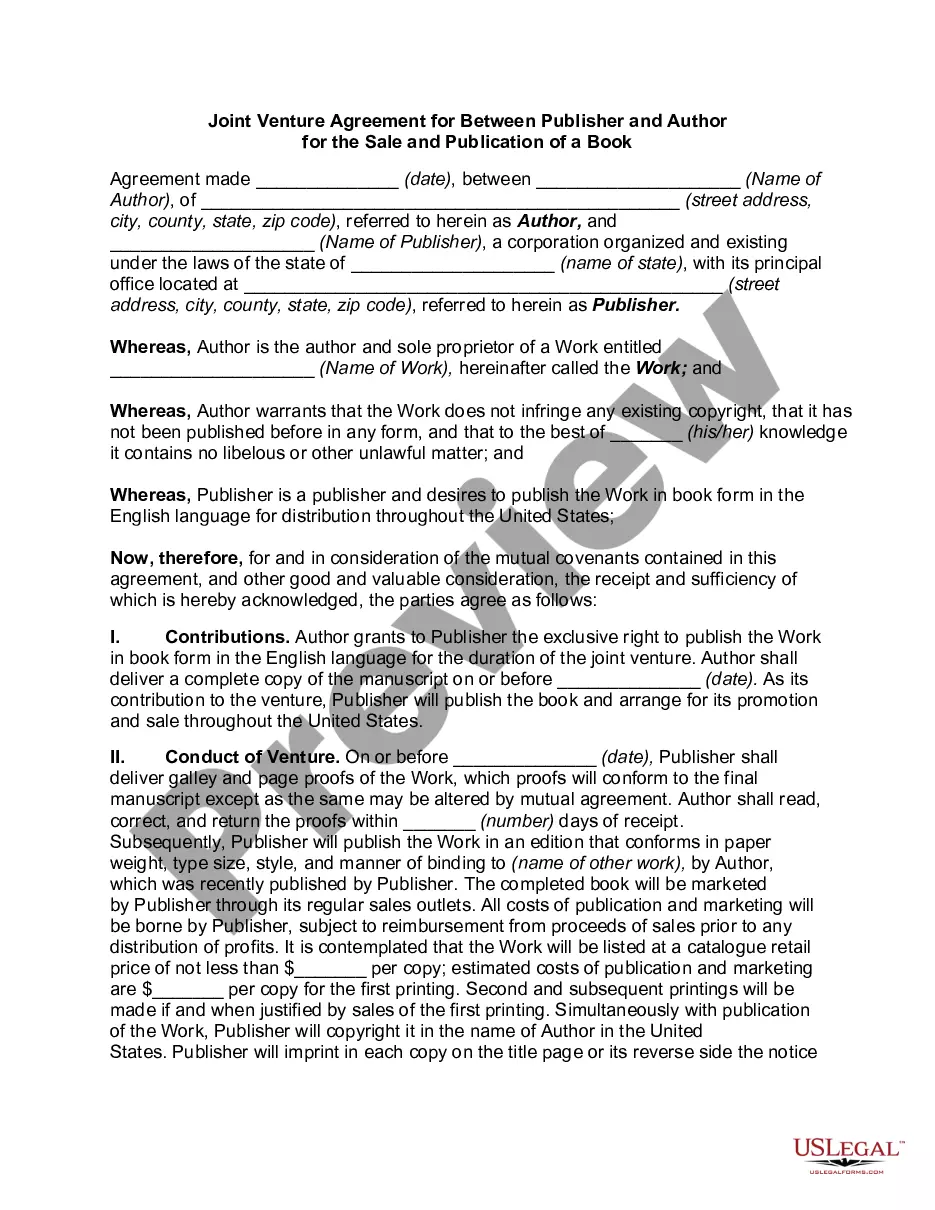
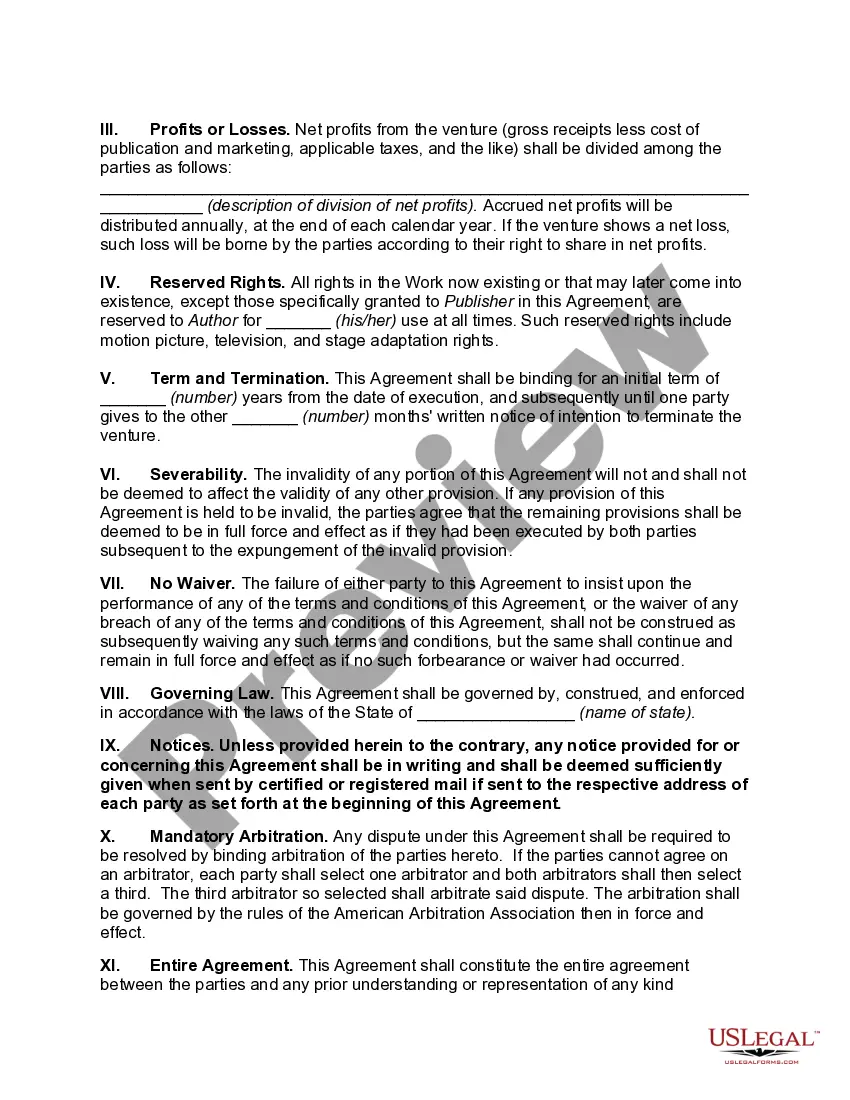
A joint venture is very similar to a partnership. In fact, some States treat joint ventures the same as partnerships with regard to partnership statutes such as the Uniform Partnership Act. The main difference between a partnership and a joint venture is that a joint venture usually relates to the pursuit of a single transaction or enterprise even though this may require several years to accomplish. A partnership is generally a continuing or ongoing business or activity. Most Courts hold that joint ventures are subject to the same principles of law as partnerships. A joint venture will last generally as long as stated in the joint venture agreement. If the joint venture agreement is silent on this, it can be terminated by any participant unless it clearly relates to a particular transaction.
Typically, it depends on the size and scope of your project. Many public projects and larger private jobs require performance bonds, so it’s worth checking with your contractor or the relevant authorities.
You bet! There are several types of performance bonds, including bid bonds, payment bonds, and maintenance bonds. Each serves a specific purpose in the construction world.
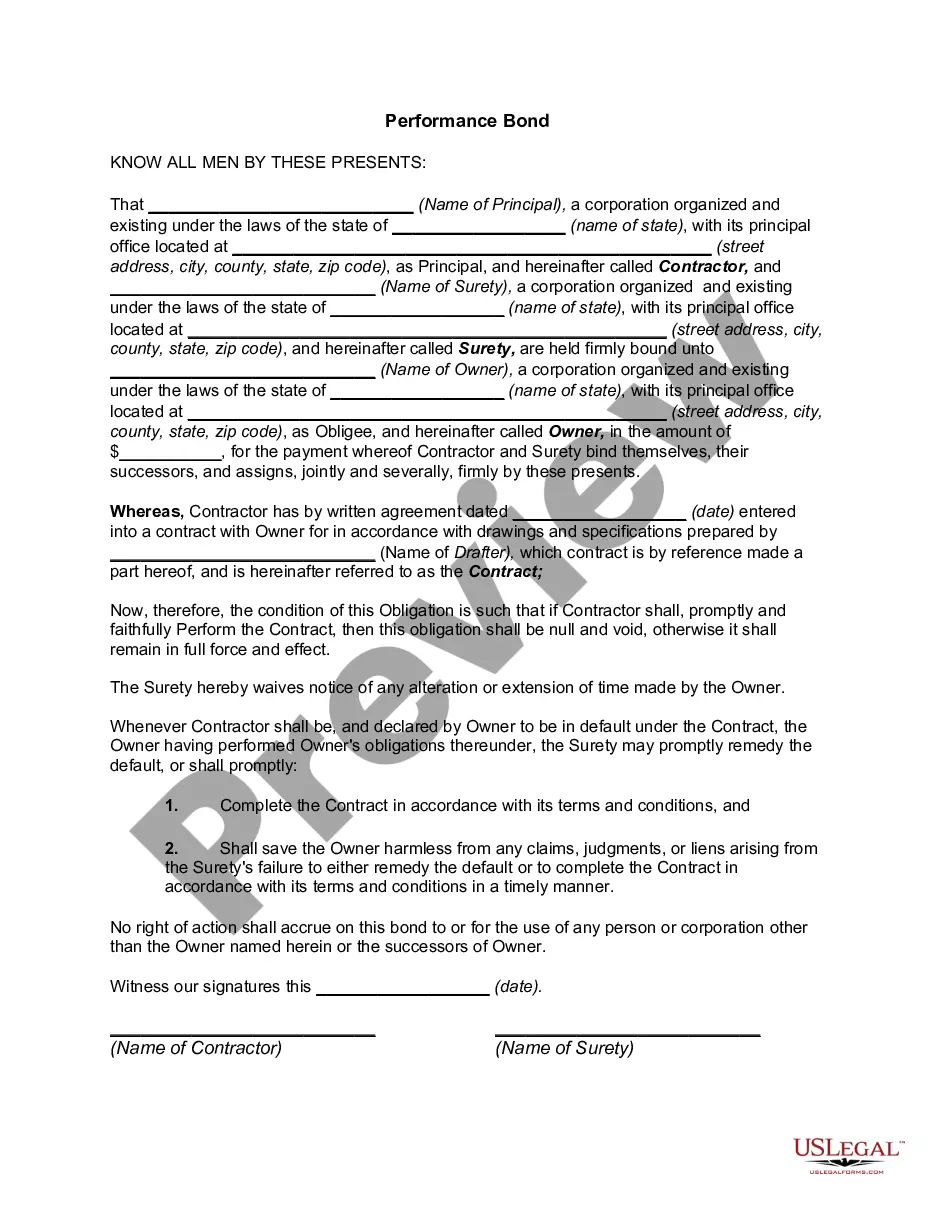
If a contractor drops the ball, you can make a claim on the bond. The surety company will step in and work to resolve the issue, either by completing the project or compensating for the loss.
A performance bond covers you if a contractor fails to complete the job or meets the requirements outlined in the contract. It can help you recover costs and losses.
Getting a performance bond is pretty straightforward. You usually approach a surety company or bond broker, who helps you navigate the ins and outs of the process.
Having a performance bond is a smart move. It gives you peace of mind, knowing that you’re protected if the contractor doesn’t deliver as promised.
Not quite! A performance bond isn't insurance; rather, it's a promise that a contractor will complete the work as agreed. If they don't, the bond provides financial backup for the project owner.