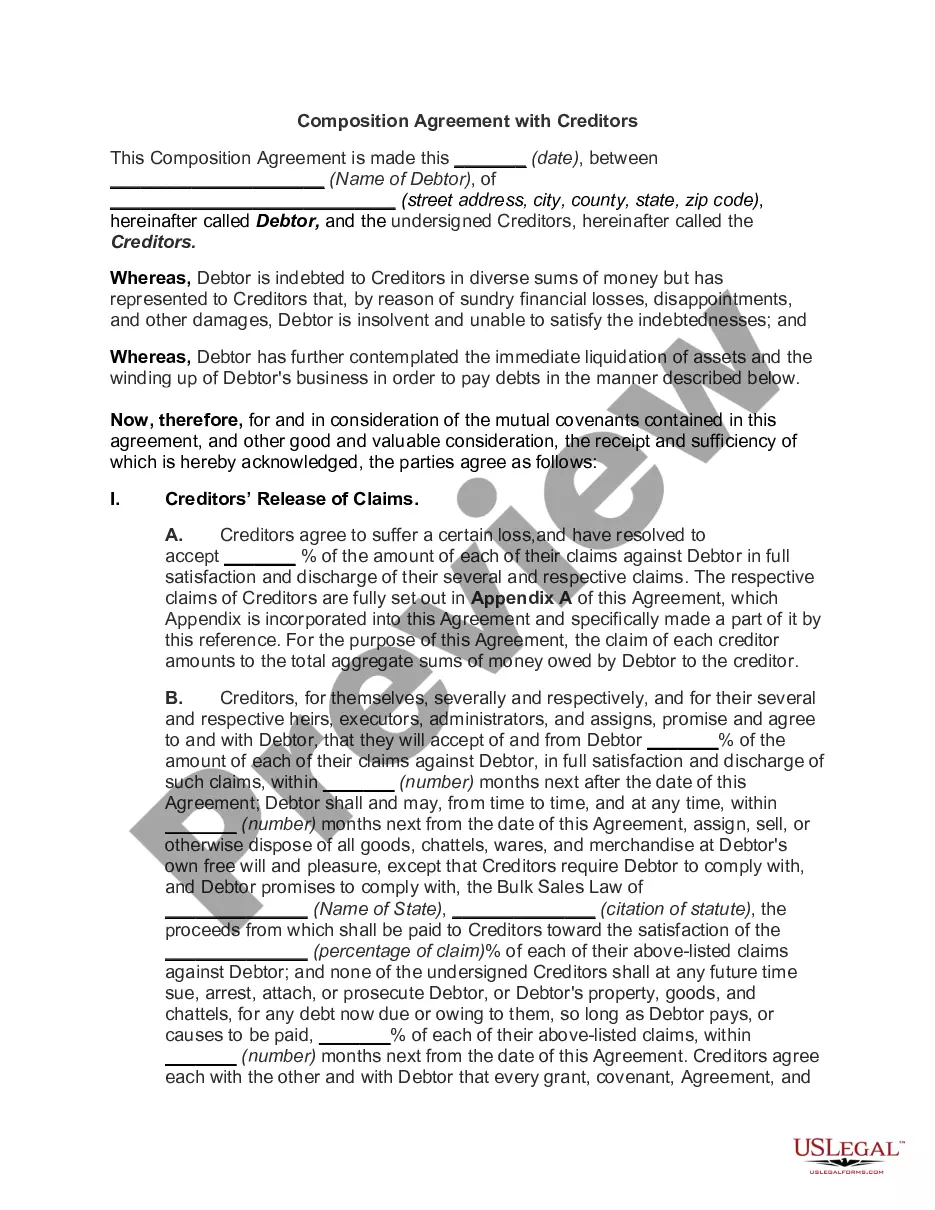
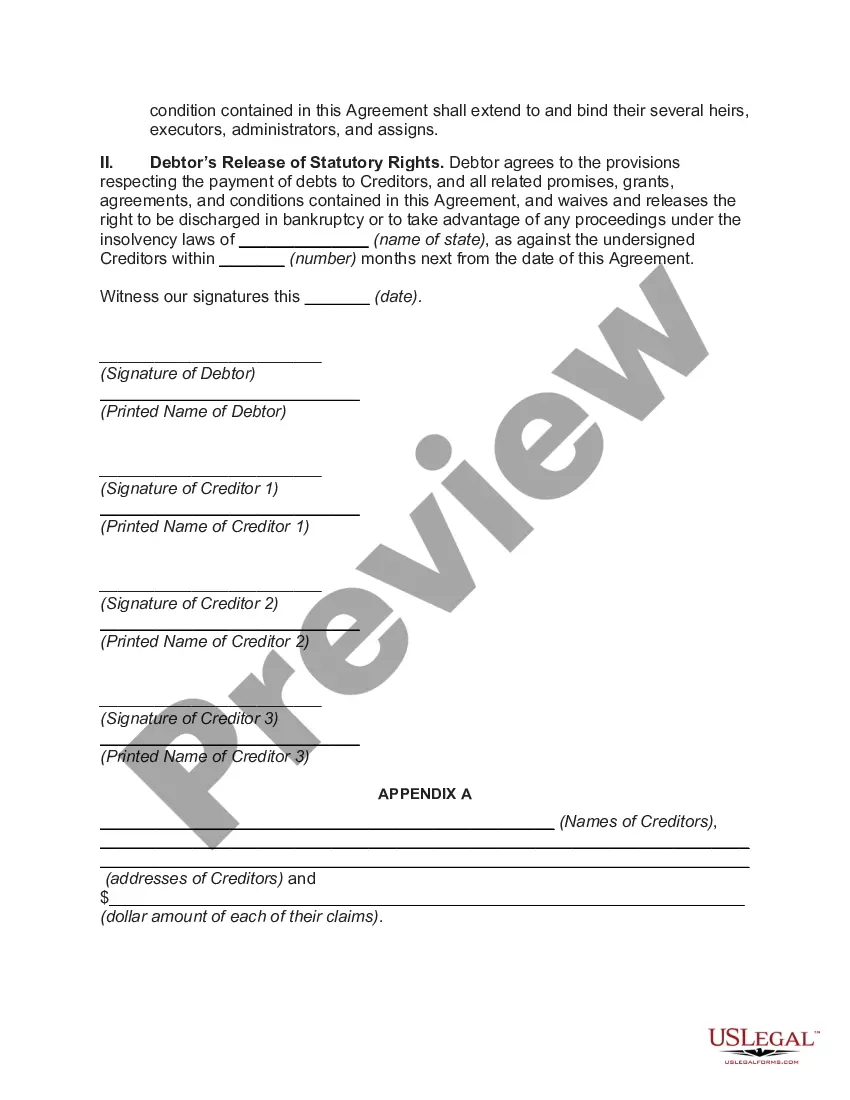
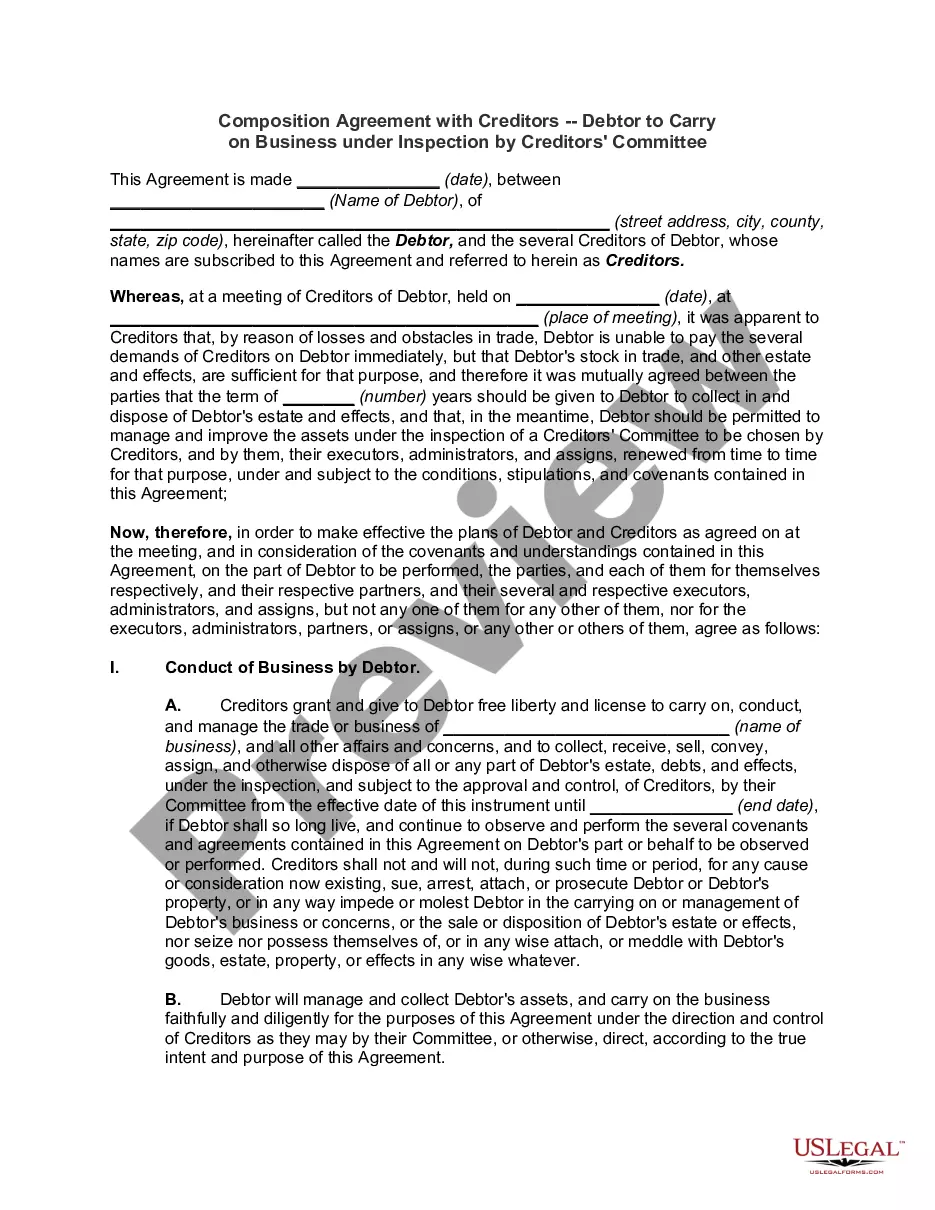
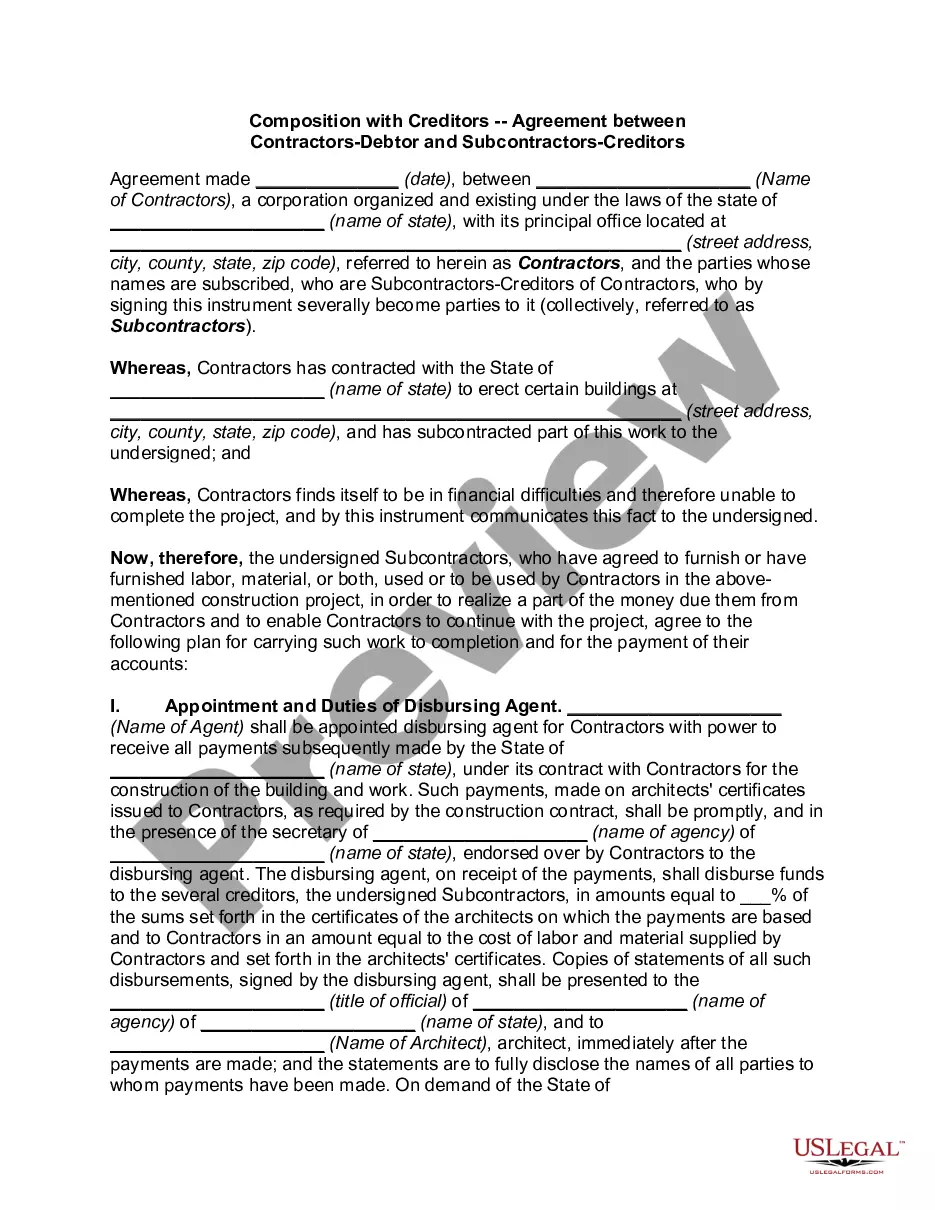
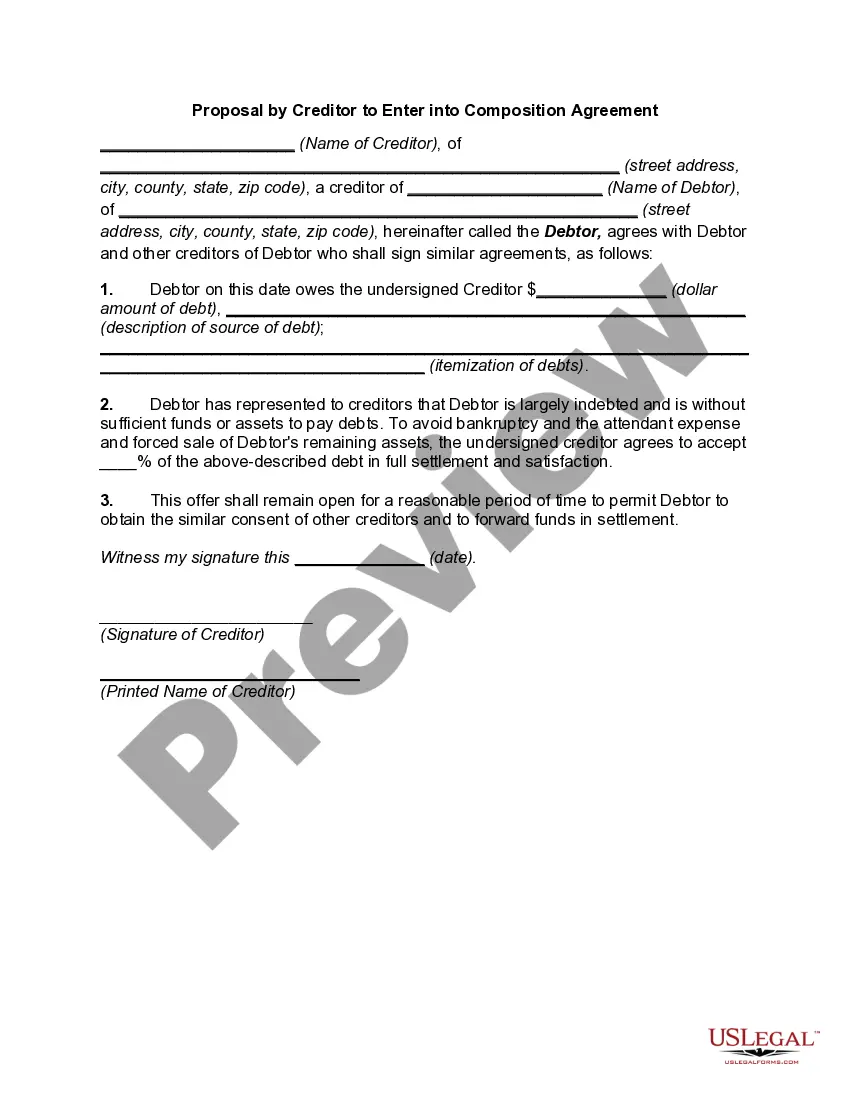
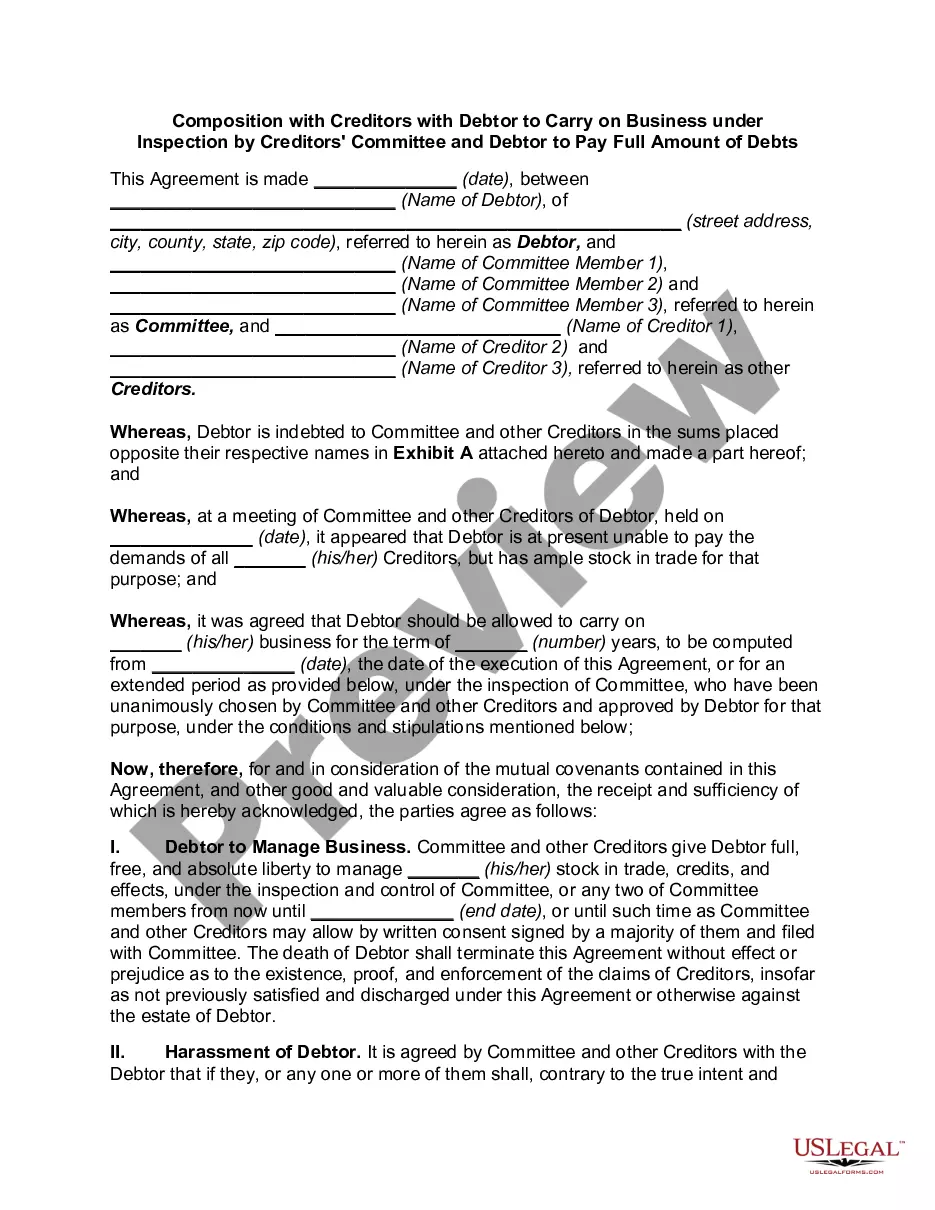
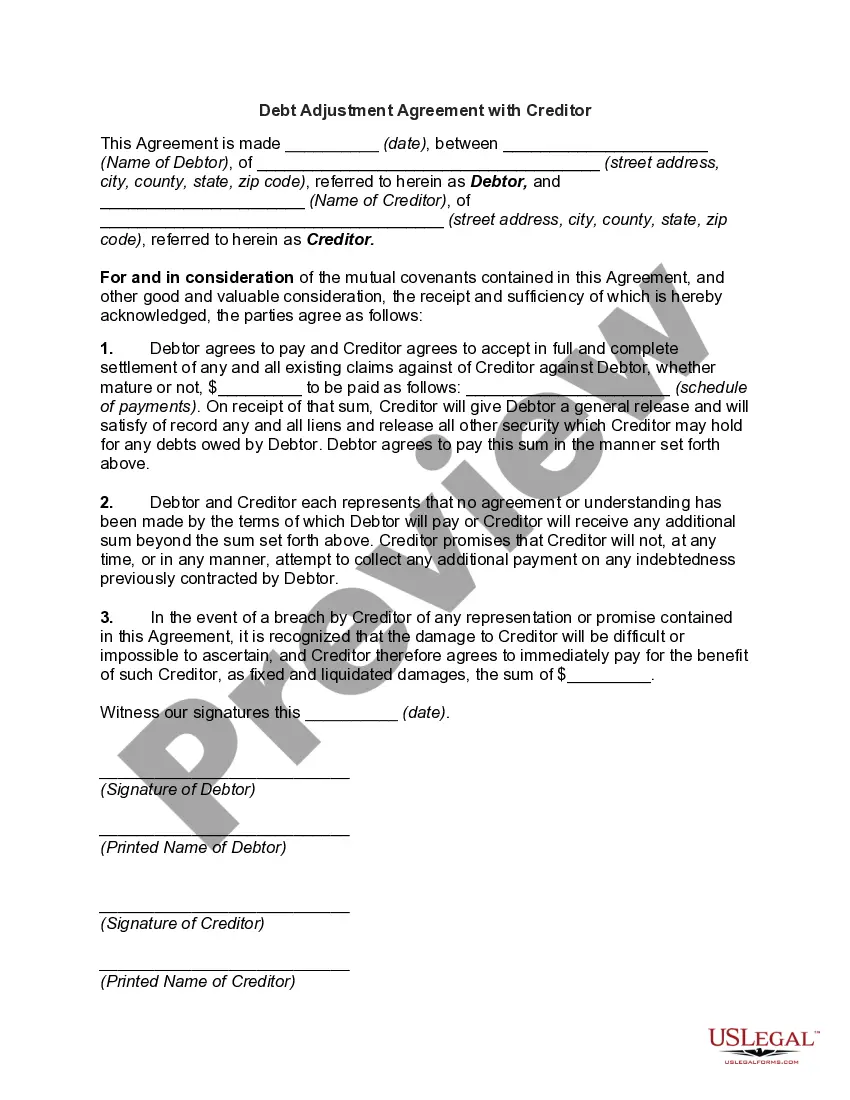
A composition with creditors is a common-law device for the compromise of debts. Pursuant to an agreement between an insolvent or financially embarrassed debtor and two or more creditors, the creditors, in consideration of an early payment, agree to discharge their respective claims on receipt of payment of a fraction of the amount the debtor actually owes. Additionally, a composition may take the form of an agreement by creditors to extend the time in which the debtor may pay the creditors' claims, or may consist in a total discharge of the debts. When executed, a composition operates as a complete discharge of the debtor as to all who share in it, and each assenting creditor is subsequently estopped from recovering on the original debt.
Composition agreements for the relief of insolvent debtors have been superseded, to a great extent, by proceedings under the Federal Bankruptcy Act and various state insolvency laws. They are, however, still of considerable importance in some jurisdictions.
Memphis Tennessee Composition Agreement with Creditors
Category:
State:
Multi-State
City:
Memphis
Control #:
US-0916BG
Format:
Word;
Rich Text
Instant download
Description
Free preview