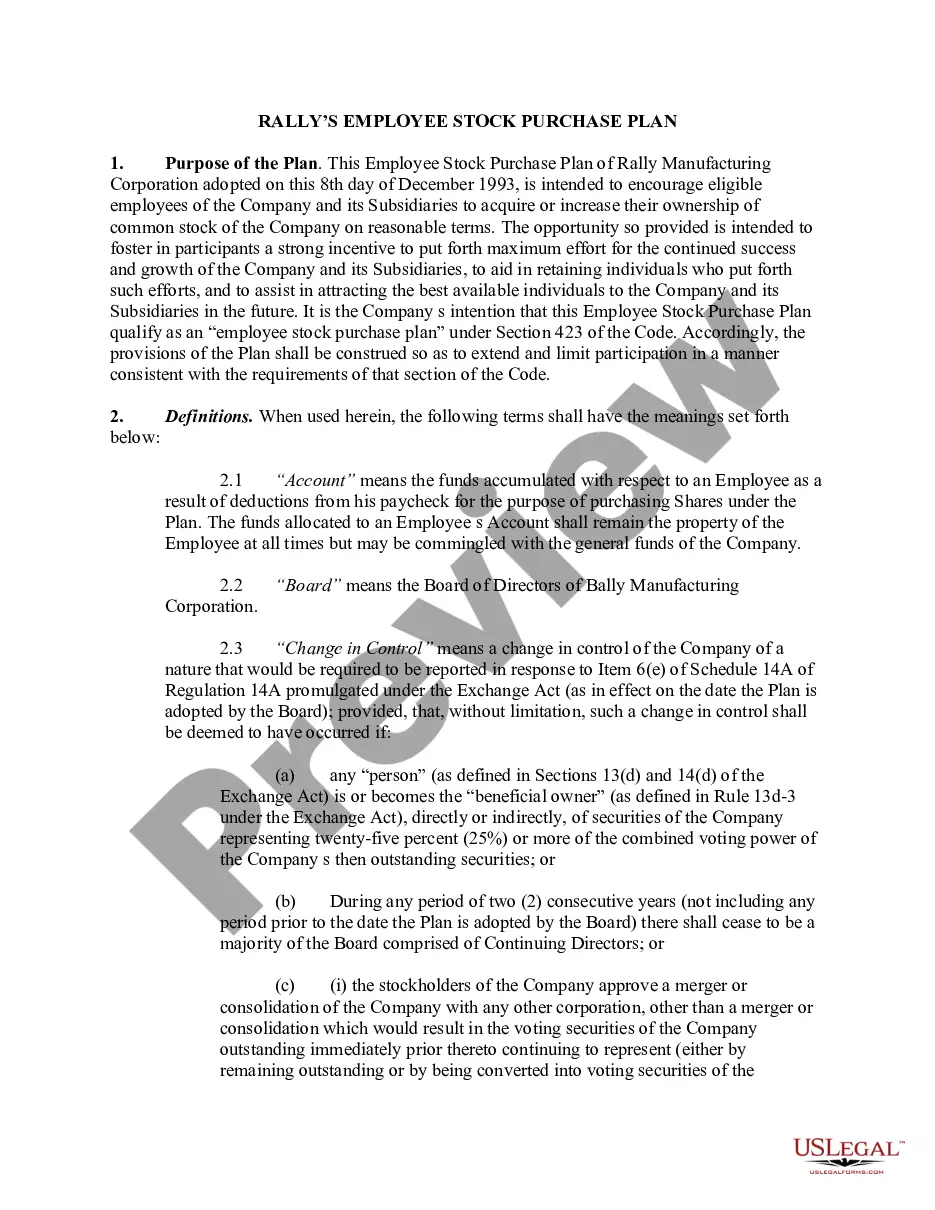
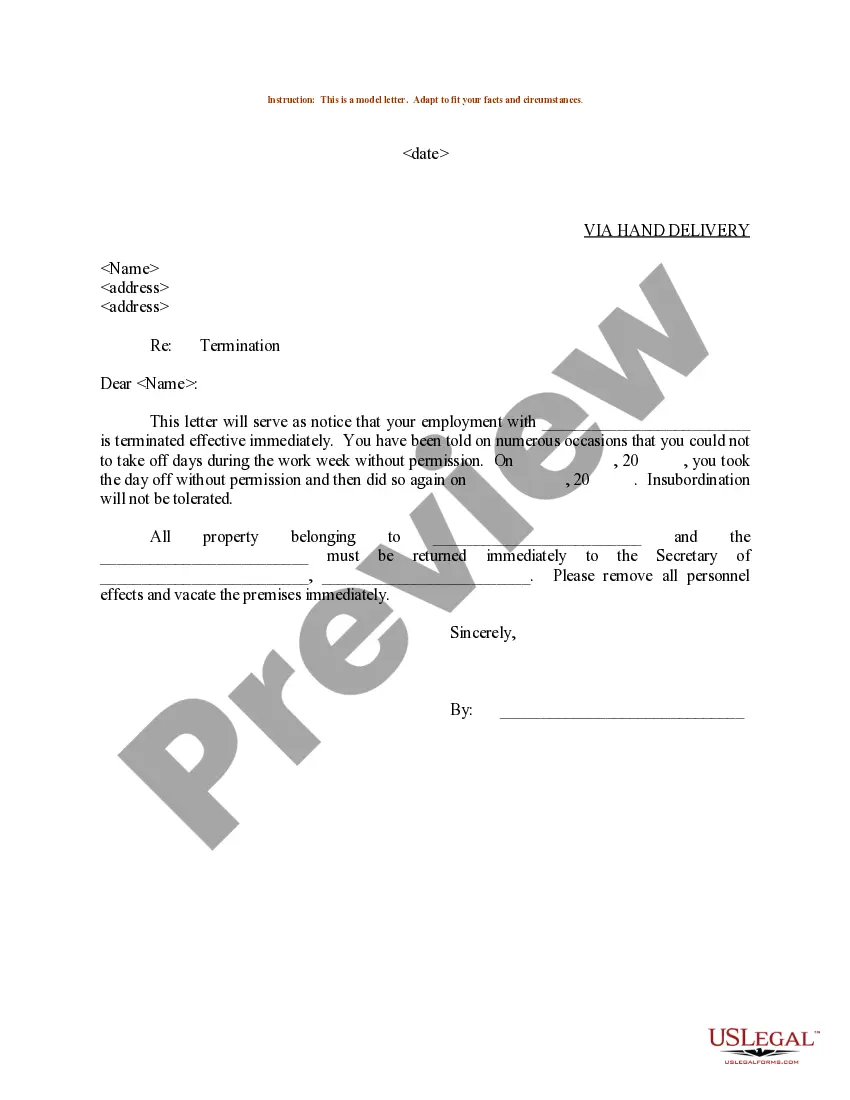
Bexar Texas Termination Letter for Insubordination
Description
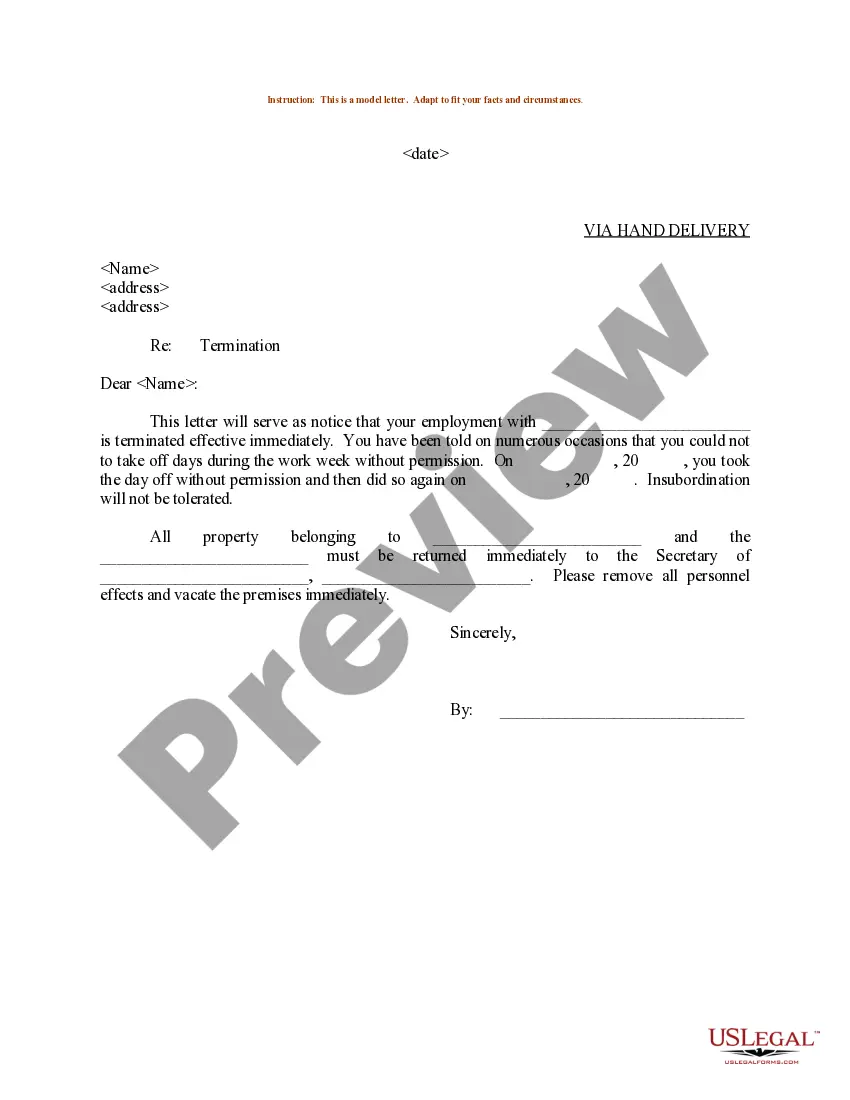
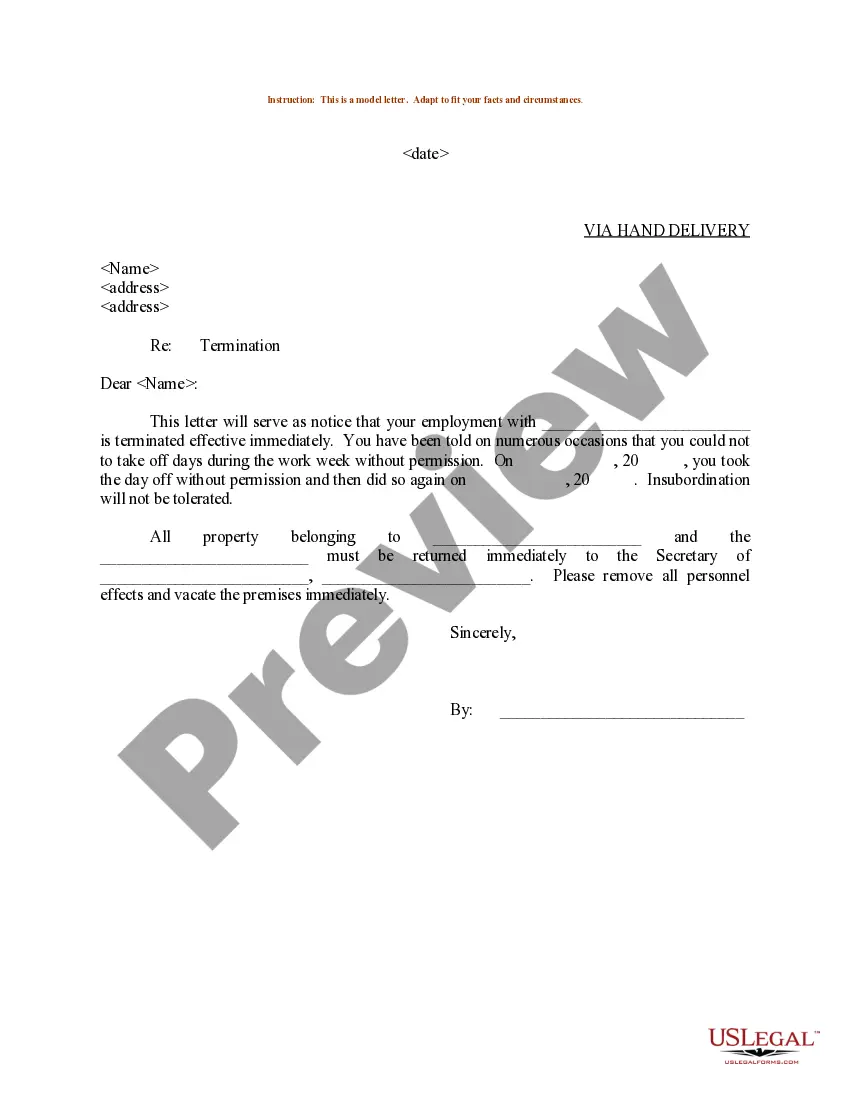
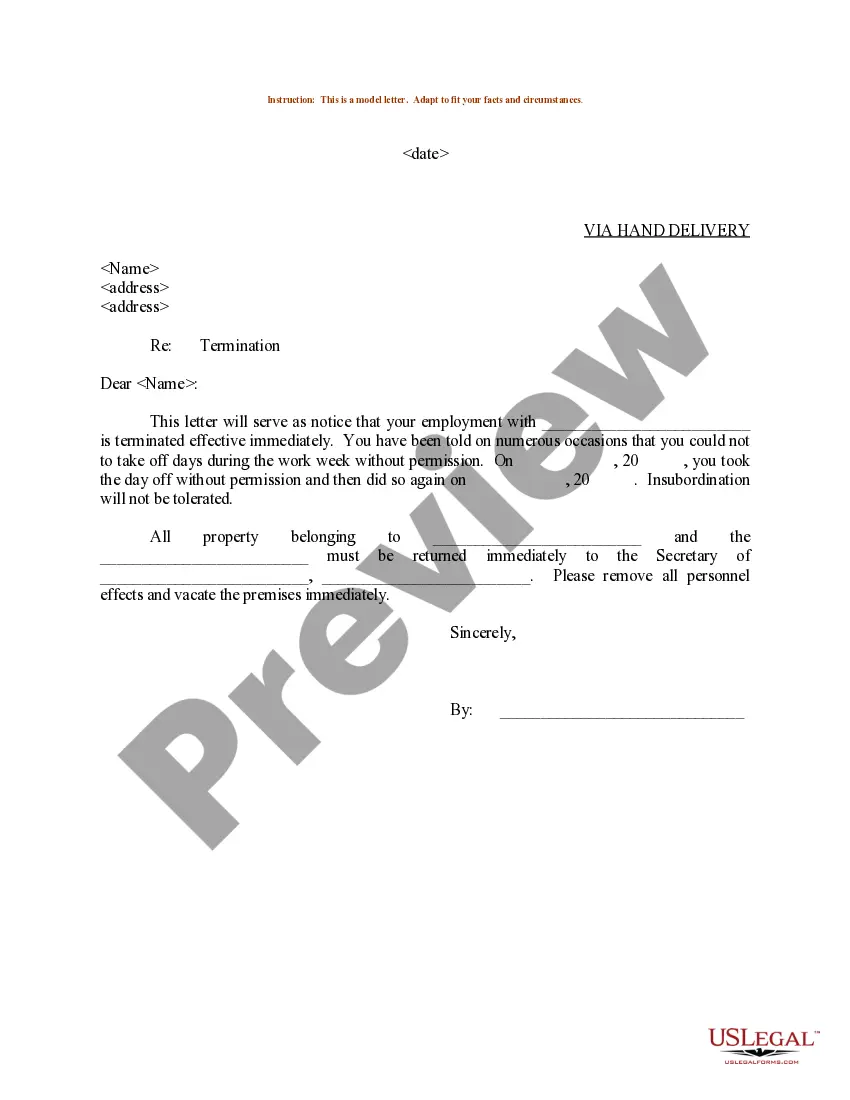
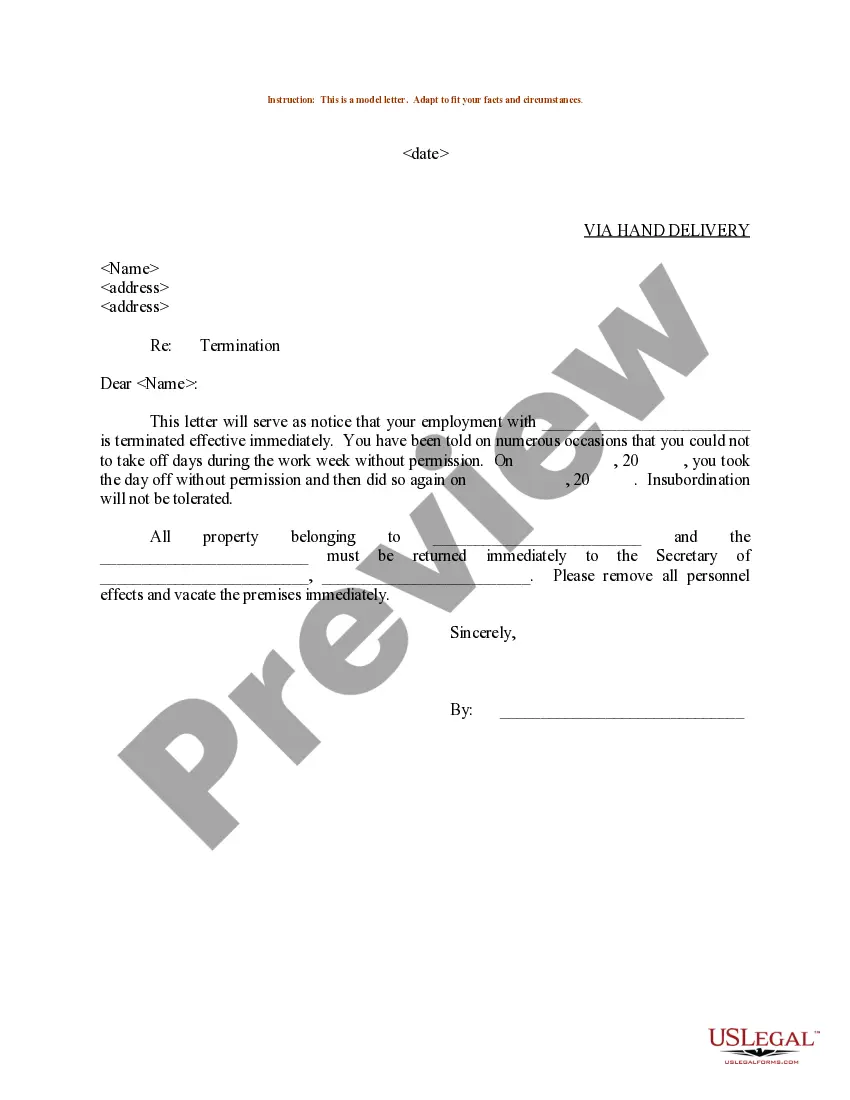
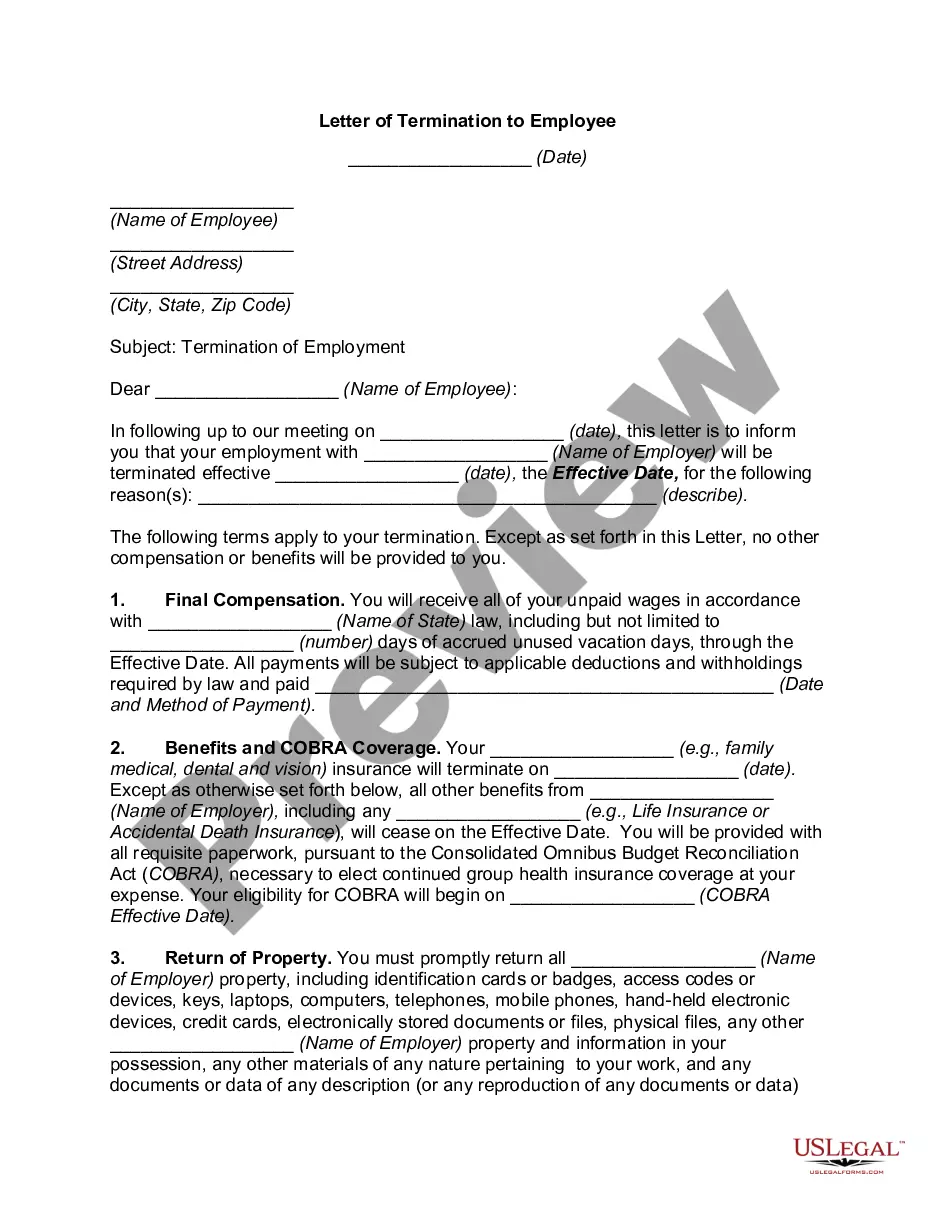


How to fill out Termination Letter For Insubordination?
If you are looking for a reliable legal document provider to obtain the Bexar Termination Letter for Insubordination, your search ends here with US Legal Forms. Whether you wish to initiate your LLC business or organize your asset distribution, we have you covered. There's no need to be well-versed in legal matters to locate and download the necessary form.
Just opt to search or browse for the Bexar Termination Letter for Insubordination, whether by keyword or by the state/county for which the document is intended. Once you find the needed form, you can Log In and download it or save it in the My documents section.
Don't have an account? It's easy to start! Just locate the Bexar Termination Letter for Insubordination template and review the form's preview and brief introductory details (if available). If you're sure about the template’s legal terminology, proceed to click Buy now. Create an account and select a subscription plan. The template will be instantly available for download once the payment is processed.
Managing your legal matters doesn’t have to be costly or time-consuming. US Legal Forms is here to prove that. Our vast selection of legal forms makes these tasks less expensive and more budget-friendly. Start your first company, plan your advance care, draft a real estate agreement, or execute the Bexar Termination Letter for Insubordination - all from the comfort of your own home.
Become part of US Legal Forms today!
- You can choose from over 85,000 forms categorized by state/county and case.
- The user-friendly interface, abundance of supporting resources, and dedicated assistance make it simple to acquire and fill out various documents.
- US Legal Forms has been a dependable service offering legal forms to millions since 1997.
Form popularity
FAQ
Insubordination in the workplace refers to an employee's intentional refusal to obey an employer's lawful and reasonable orders. Such a refusal would undermine a supervisor's level of respect and ability to manage and, therefore, is often a reason for disciplinary action, up to and including termination.
Just causes of termination refer to serious misconduct, willful disobedience or insubordination, gross and habitual neglect of duties, fraud or wilful breach of trust, loss of confidence, commission of a crime or offense, and analogous causes.
How to Write Up an Employee for Insubordination Discuss The Issue Verbally And Privately.Gather Facts Surrounding the Incident.Be Objective.Get Support from People Present During the Incident.Include Company Rules on Insubordination.Mention the Consequences of Such Behavior and Action Plan Expectations.
Generally, insubordination requires cumulative acts with prior reprimands or warnings.... Refusal to Transfer. When an employee refuses to transfer (whether in plant or to another location), he or she is withholding services from the employer.Refusal to Work a Different Shift.Refusal to Work Overtime.
If you had to dismiss an employee for insubordination, it's possible he was guilty of prior offenses. In many instances, insubordination may be punished by giving the employee a verbal and written warning, or placing him on unpaid disciplinary suspension. If the behavior continues, termination generally occurs.
The termination letter for insubordination format should include the date the letter is written, the date of the alleged violation(s), proof of the violation(s), the effective date of the termination, and information regarding the employee's last paycheck.
If you had to dismiss an employee for insubordination, it's possible he was guilty of prior offenses. In many instances, insubordination may be punished by giving the employee a verbal and written warning, or placing him on unpaid disciplinary suspension. If the behavior continues, termination generally occurs.
Mr/Ms employee's name, We regret to inform you that we are terminating your employment with immediate effect. We reached this decision after we completed all appropriate steps of the company's disciplinary process. This decision was necessary because you repeatedly violated our anti-harassment policy.
The elements of gross insubordination include a reasonable and lawful instruction from the employer, which may be in the form of a warning, to the employee, followed by a serious refusal or failure by the employee to obey or carry out the instruction. Gross insubordination justifies dismissal.
Employers must show three things to prove insubordination when a worker refuses to follow an order, Glasser said: A supervisor made a direct request or order. The employee received and understood the request. The employee refused to comply with the request through action or noncompliance.