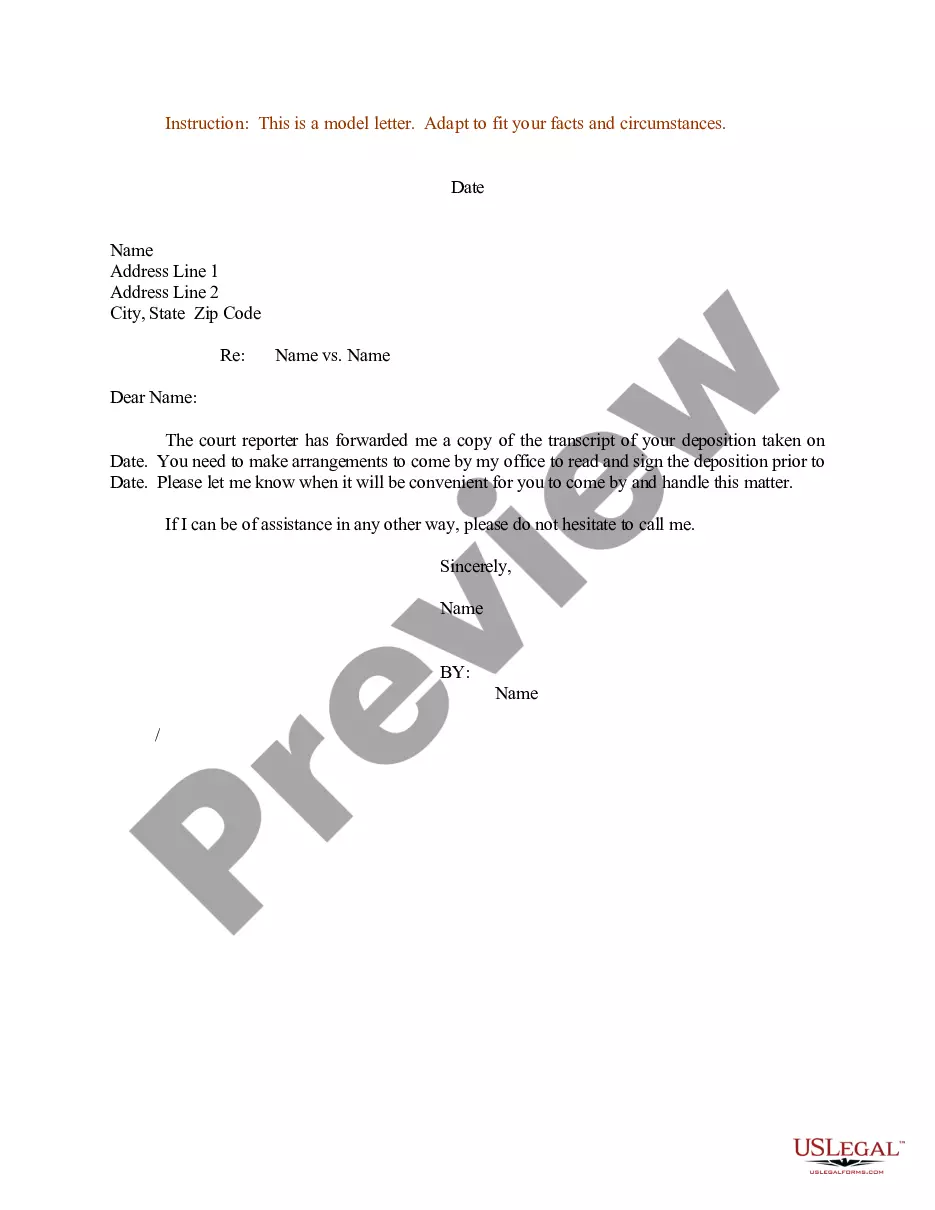
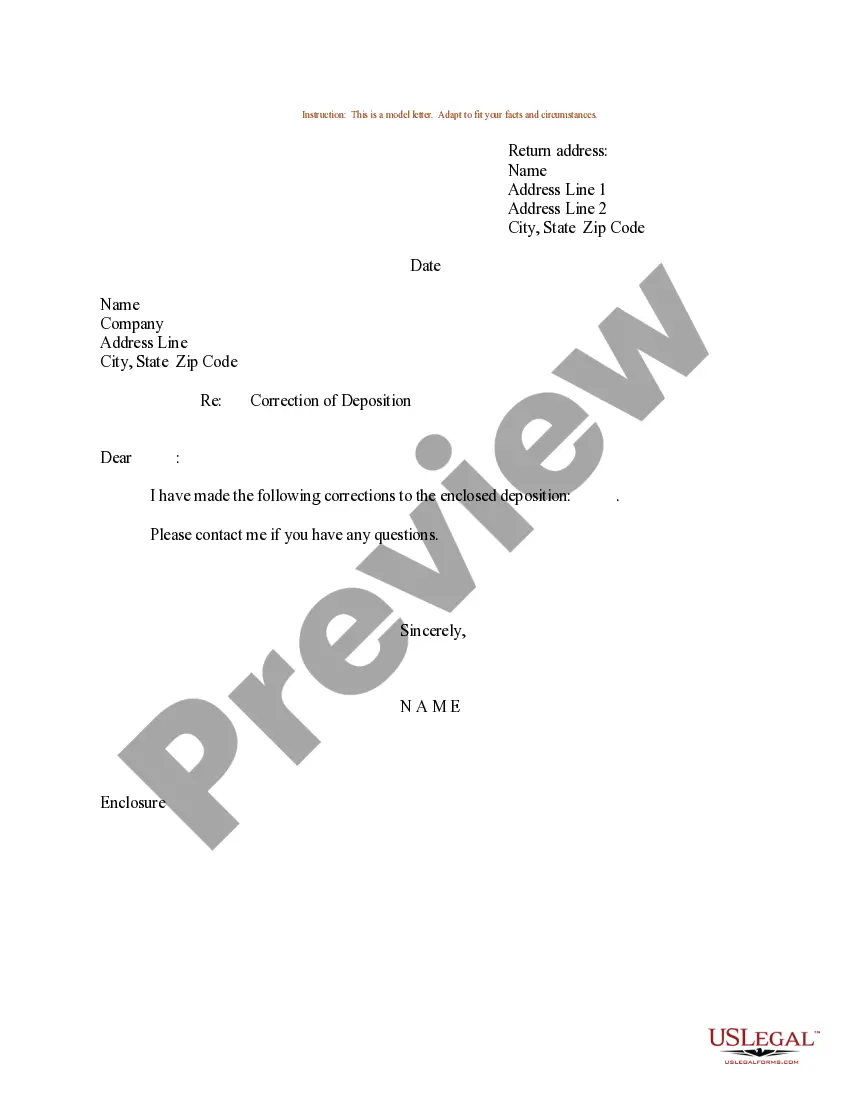
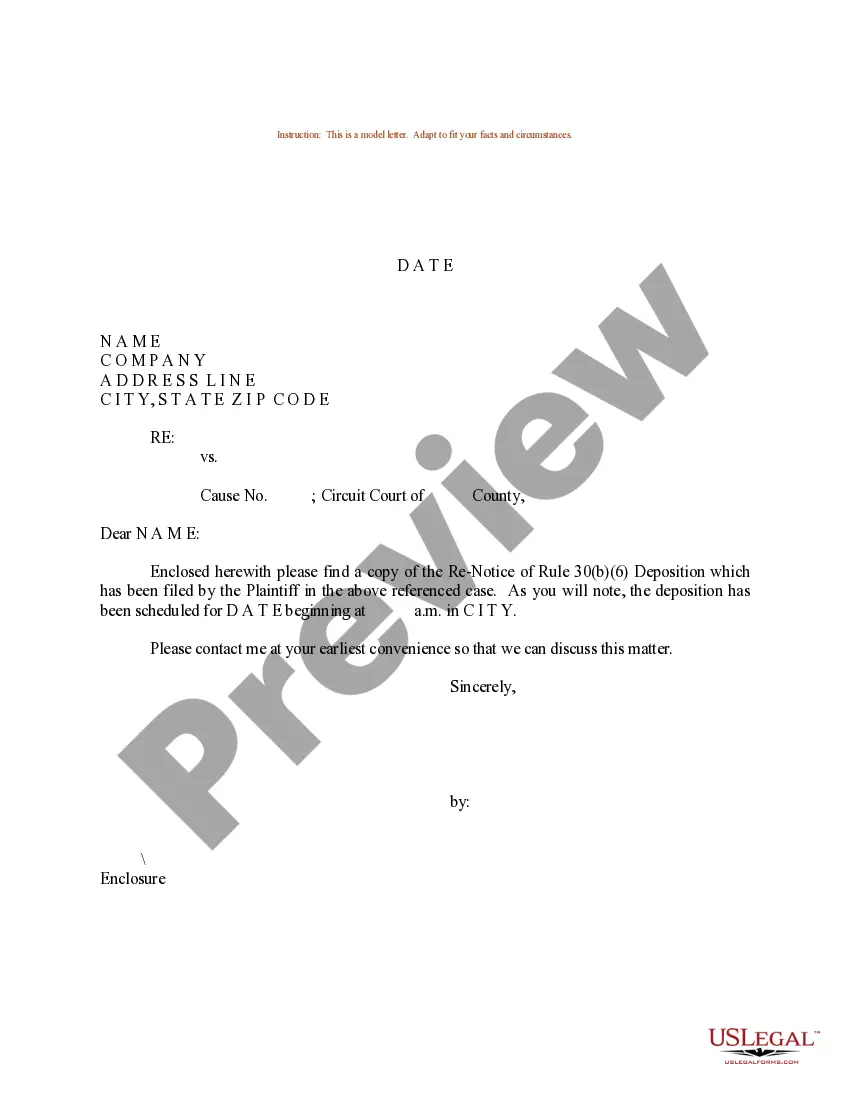
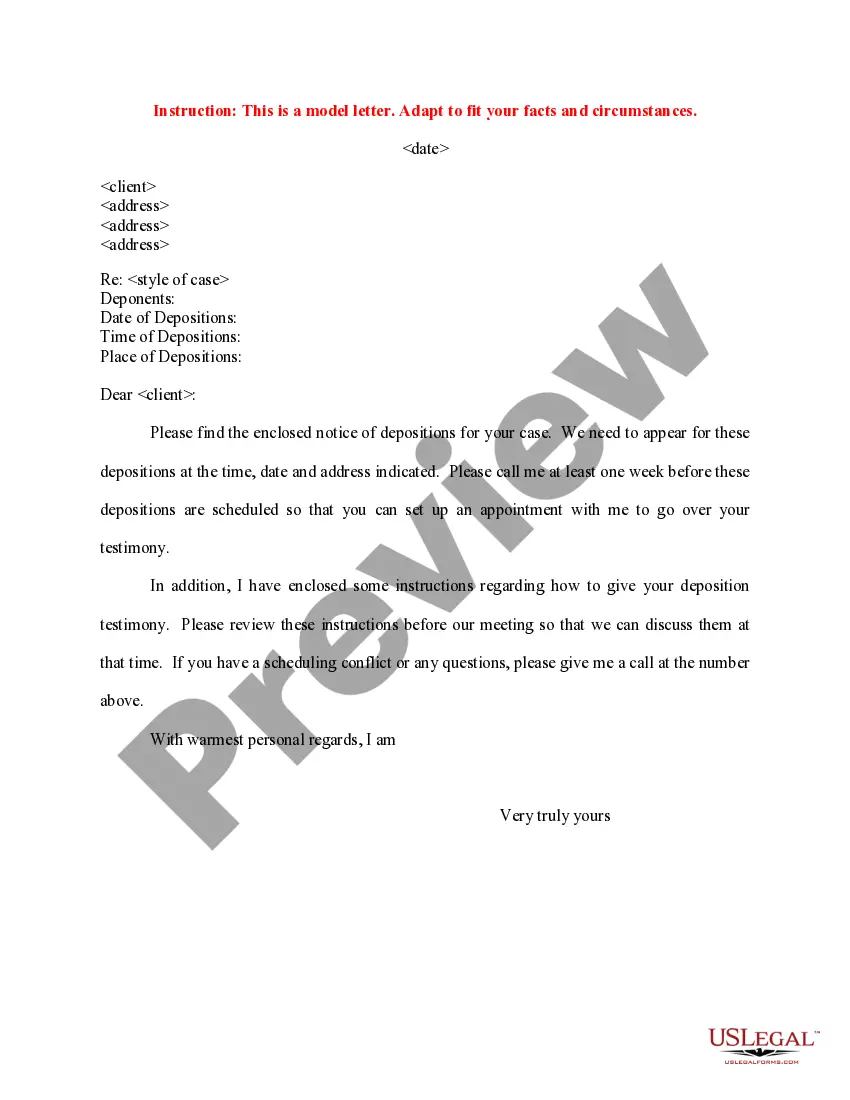
Santa Clara California Sample Letter regarding Deposition
Description
Get your form ready online
Our built-in tools help you complete, sign, share, and store your documents in one place.
Make edits, fill in missing information, and update formatting in US Legal Forms—just like you would in MS Word.
Download a copy, print it, send it by email, or mail it via USPS—whatever works best for your next step.
Sign and collect signatures with our SignNow integration. Send to multiple recipients, set reminders, and more. Go Premium to unlock E-Sign.
If this form requires notarization, complete it online through a secure video call—no need to meet a notary in person or wait for an appointment.
We protect your documents and personal data by following strict security and privacy standards.

Make edits, fill in missing information, and update formatting in US Legal Forms—just like you would in MS Word.

Download a copy, print it, send it by email, or mail it via USPS—whatever works best for your next step.

Sign and collect signatures with our SignNow integration. Send to multiple recipients, set reminders, and more. Go Premium to unlock E-Sign.

If this form requires notarization, complete it online through a secure video call—no need to meet a notary in person or wait for an appointment.

We protect your documents and personal data by following strict security and privacy standards.
Looking for another form?
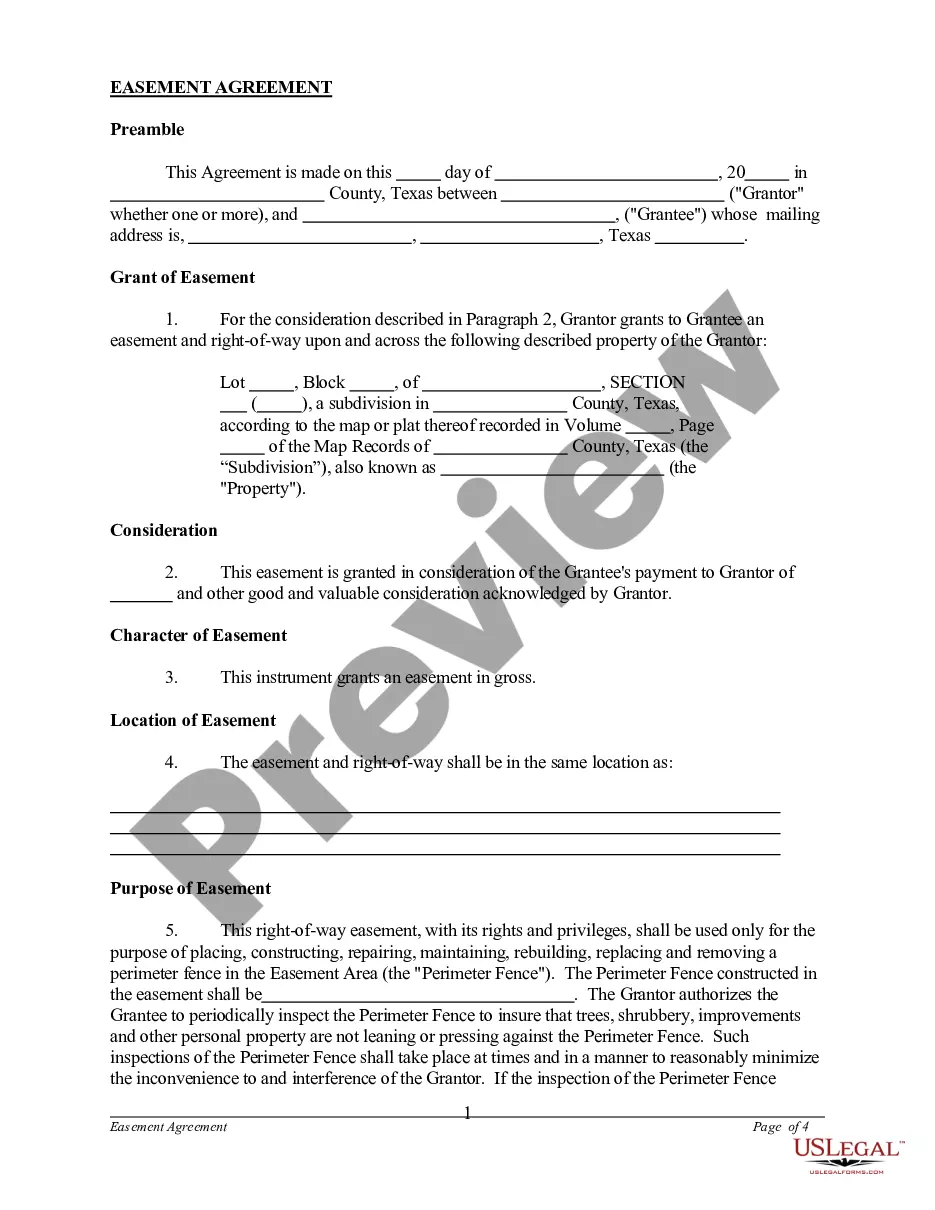


How to fill out Sample Letter Regarding Deposition?
Drafting documents, such as the Santa Clara Sample Correspondence related to Deposition, for handling your legal matters can be a challenging and labor-intensive task. Numerous cases necessitate the involvement of a lawyer, which also renders this undertaking costly.
Nonetheless, you have the option to take control of your legal issues independently and attend to them on your own. US Legal Forms is here to assist you. Our platform boasts over 85,000 legal templates designed for various situations and life events.
We ensure that each document adheres to the statutes of every state, alleviating concerns about possible legal repercussions tied to noncompliance.
Ready to proceed? Click the Buy now button and select your subscription choice. Choose your preferred payment method and provide your payment information. Your document is prepared for you. You can attempt to download it. It’s straightforward to find and obtain the right template through US Legal Forms. Countless businesses and individuals are already profiting from our vast archive. Subscribe now to discover what additional benefits await you with US Legal Forms!
- If you are already familiar with our services and hold a subscription with US, you understand how uncomplicated it is to acquire the Santa Clara Sample Correspondence related to Deposition template.
- Feel free to Log In to your account, retrieve the form, and modify it according to your preferences.
- Have you misplaced your document? No problem. You can recover it in the My documents section of your account - available on both desktop and mobile.
- The onboarding process for new clients is quite simple! Here’s what you need to complete prior to downloading the Santa Clara Sample Correspondence regarding Deposition.
- Verify that your document corresponds to your state/county, as legal writing standards can vary significantly across states.
- Explore more about the template by previewing it or reviewing a short summary. If the Santa Clara Sample Correspondence regarding Deposition is not what you were seeking, take advantage of the search functionality in the header to locate an alternative.
Form popularity
FAQ
Remote Depositions Now Allowed, Though Not Required A deposition is a key part of civil litigation, allowing a party to obtain sworn oral testimony from another party or a third party witness prior to trial.
For a Notice to Attend AND Bring Documents: You must have it served by mail at least 25 days before the court date. If it is delivered in person, it must be served at least 20 days before the court date. A judge may order a shorter time for service, but you must ask for it.
In most types of cases, for the deposition of a party to the case, you must provide at least 10 days' notice if personally served, and 15 days' notice if served by mail within California (California Code of Civil Procedure (CCP) § 2025.270(a), § 1013).
Accordingly, you should bear the following in mind when you receive a subpoena: Do not ignore the subpoena.Prepare a proper and timely response to the subpoena.Do not speak to anyone other than your attorney about the subpoena or the underlying lawsuit or investigation.
When considering authentication, California Evidence Code 1400 requires "(a) the introduction of evidence sufficient to sustain a finding that the writing is what the proponent of the evidence claims it is, or (b) the establishment of such facts by any other means provided by law." This means that the proponent
There aren't too many options if you have been subpoenaed to a deposition. If you refuse after being ordered by the court to give a deposition, you would likely be found in contempt of court, leading to dire consequences. On top of that, you would still be forced into the deposition.
A subpoena is a legal document that orders someone to appear either at a court, or in this case, a deposition. A deposition is essentially an interview between the opposing side's lawyer and yourself. Effectively reading the deposition subpoena is the first step in preparing for your deposition.
Accordingly, you should bear the following in mind when you receive a subpoena: Do not ignore the subpoena.Prepare a proper and timely response to the subpoena.Do not speak to anyone other than your attorney about the subpoena or the underlying lawsuit or investigation.
If you are the defendant, you can notice a deposition as soon as you have been served with the complaint or appear in the action, whichever occurs first.
Serve the Subpoena. It must be served within a reasonable time in order for the other person to be able to travel to the hearing (or trial). Anyone, even you, can serve your Subpoena, but this must be done IN PERSON (not by mail).