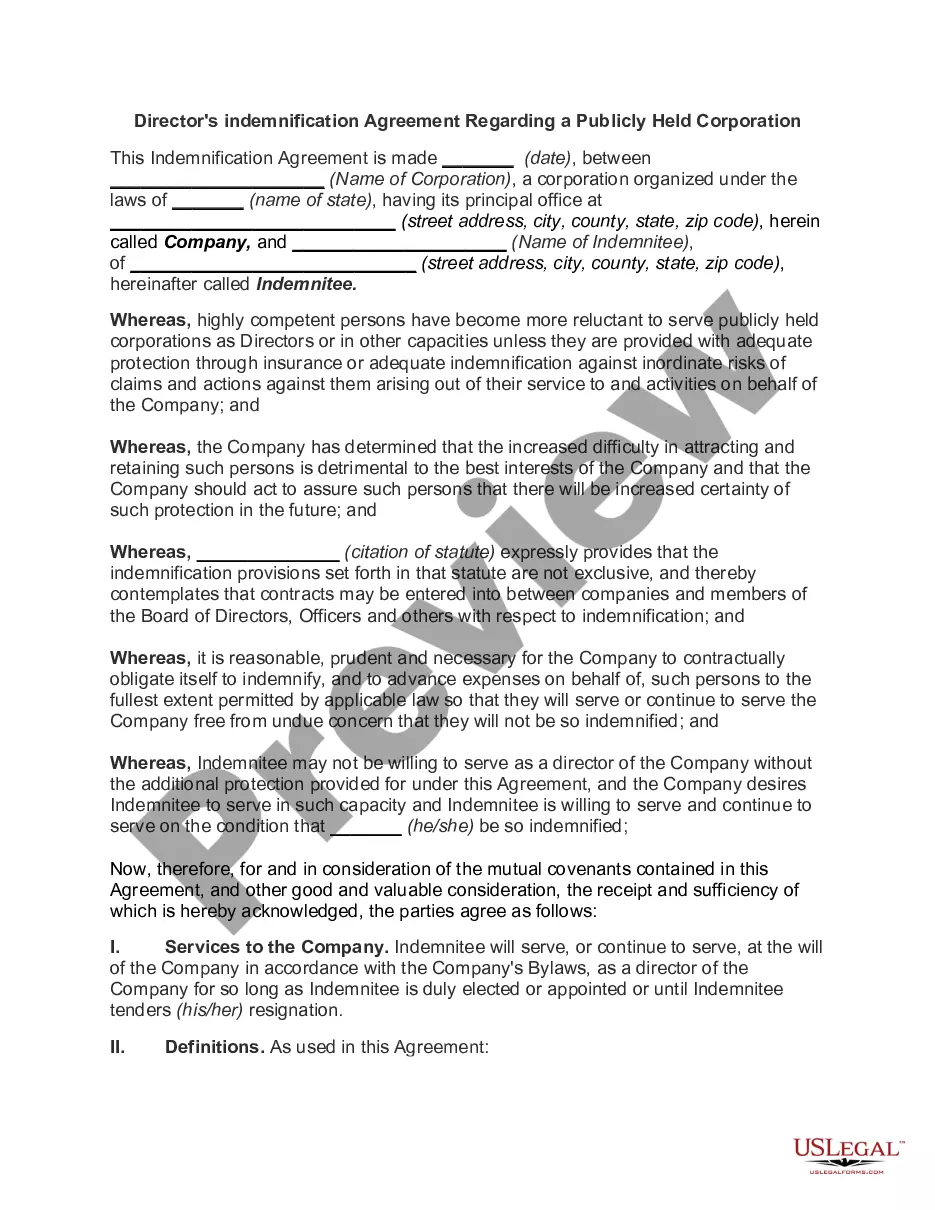
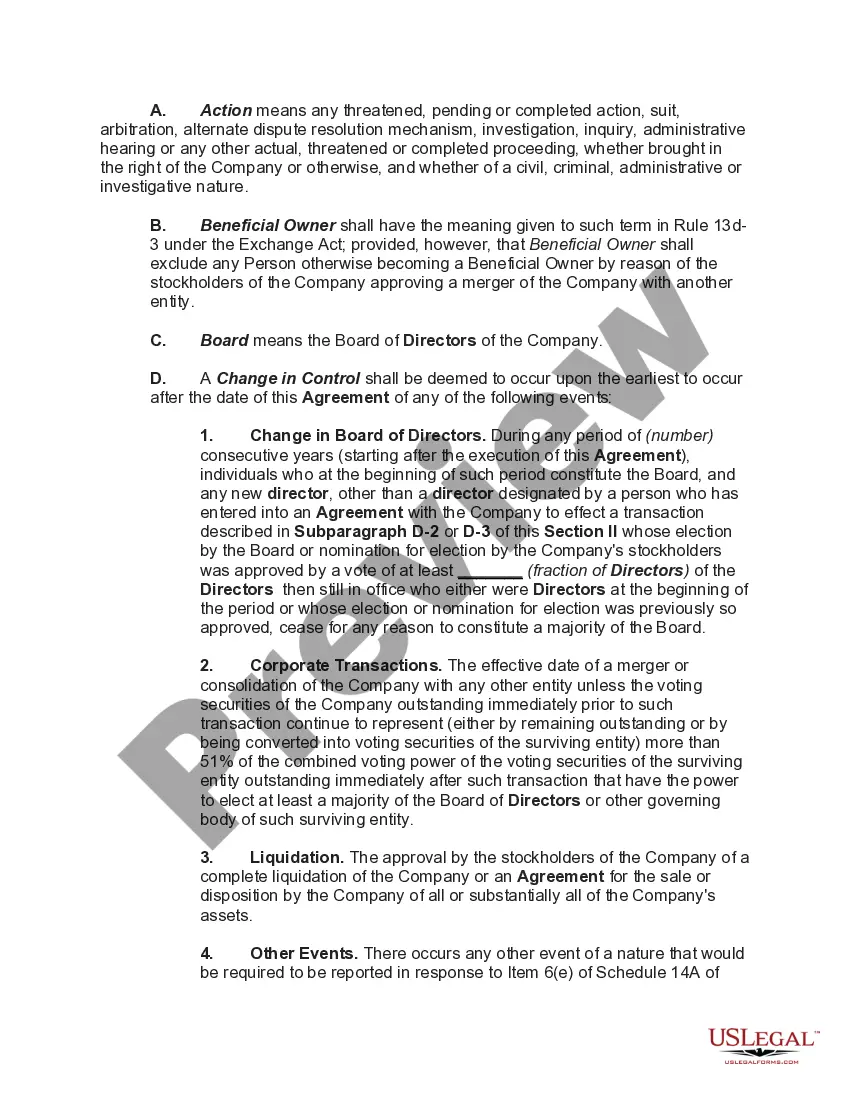
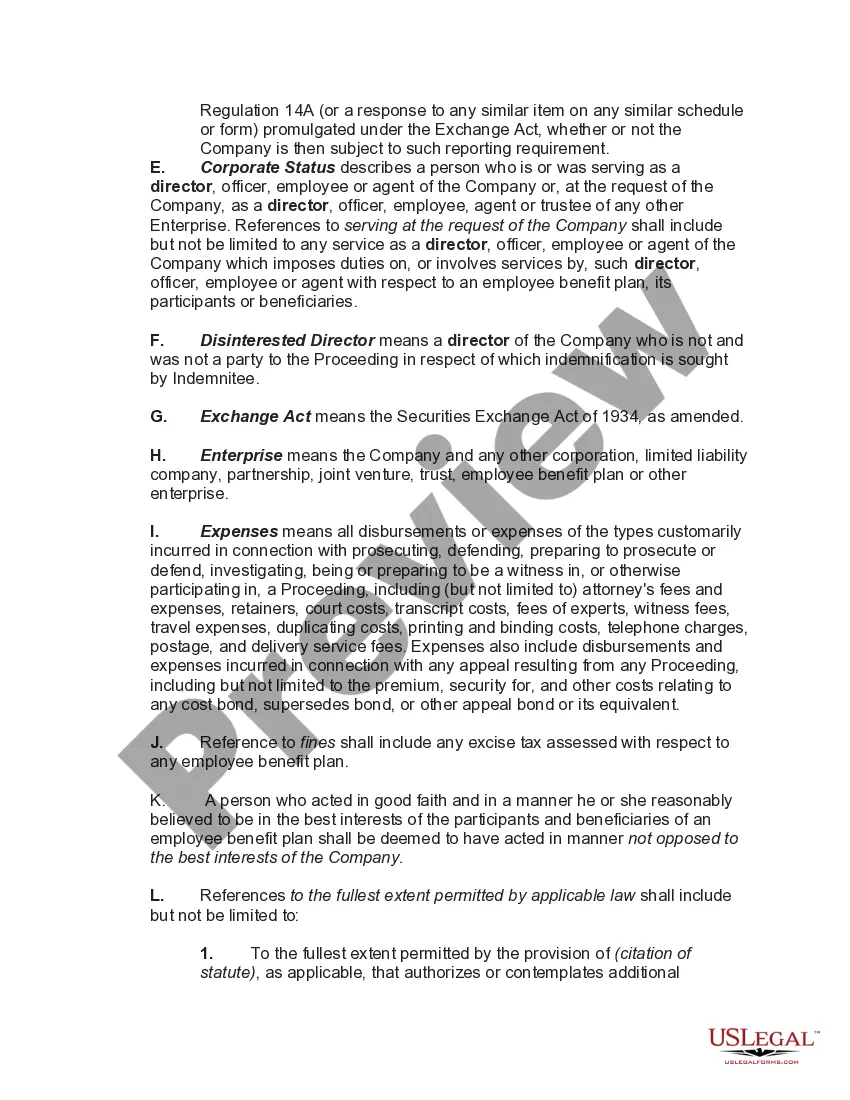
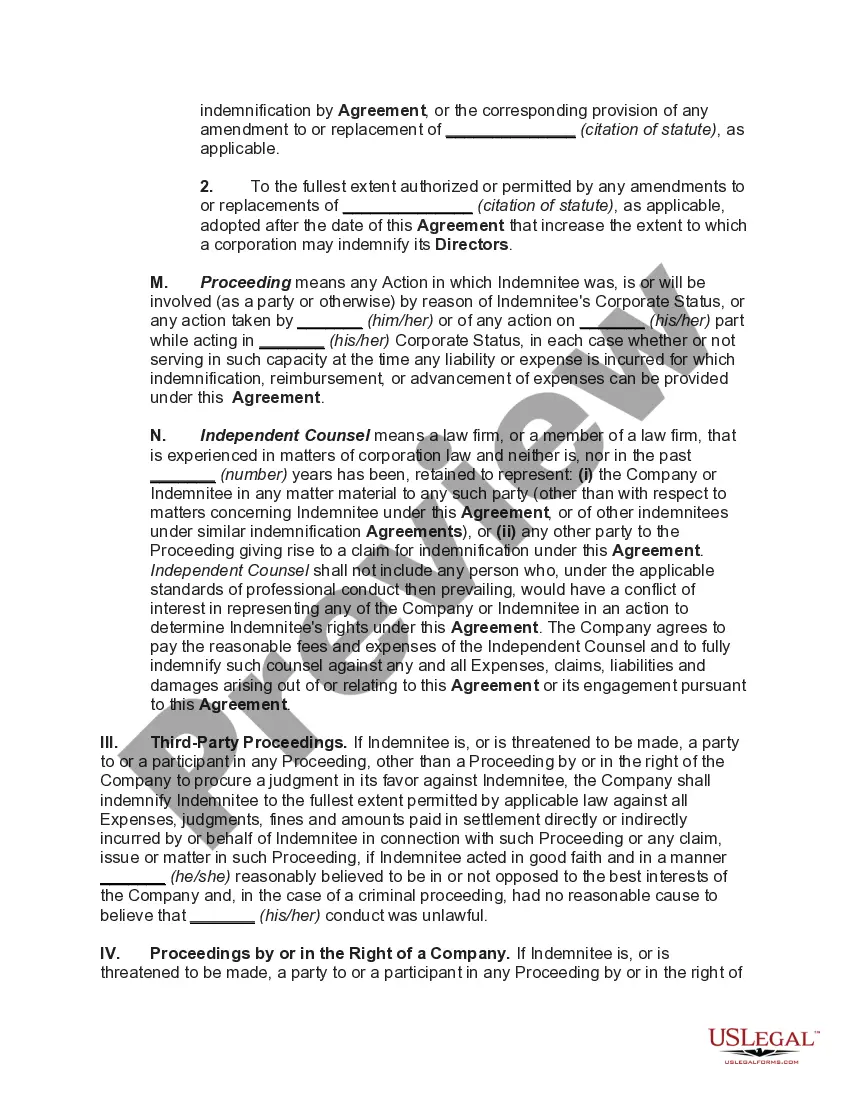
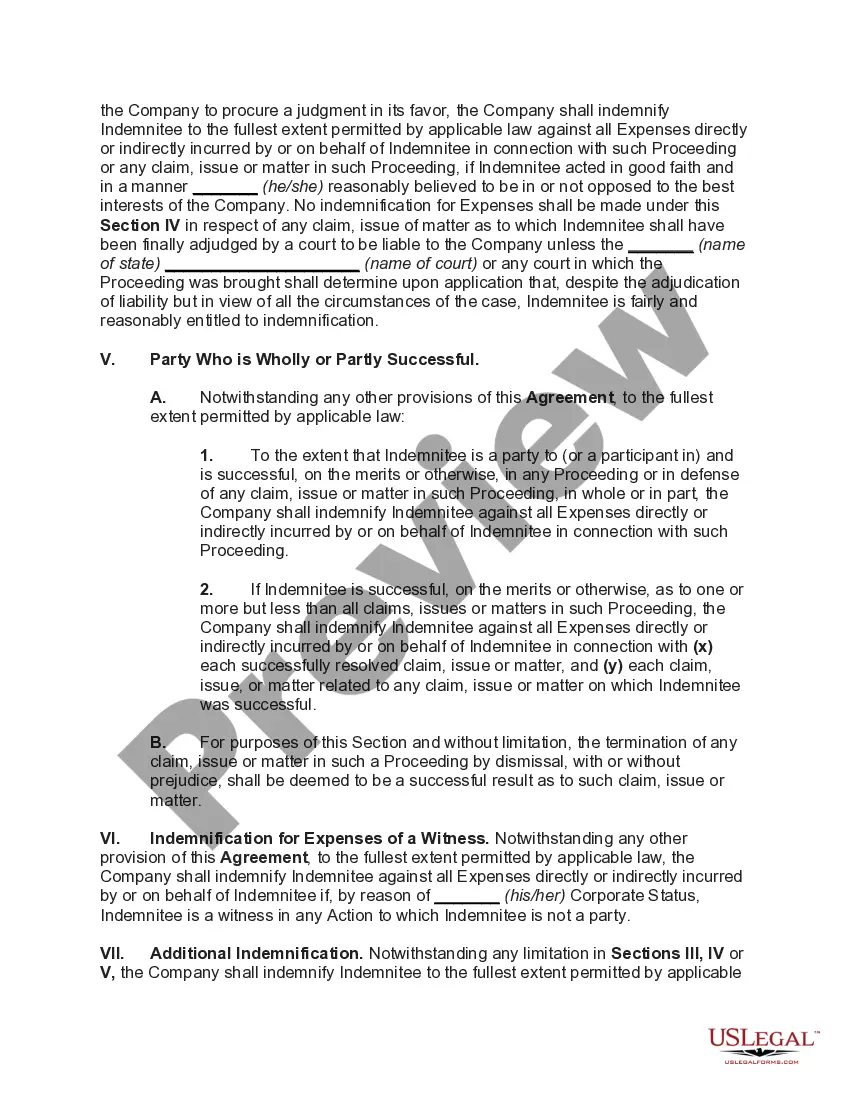
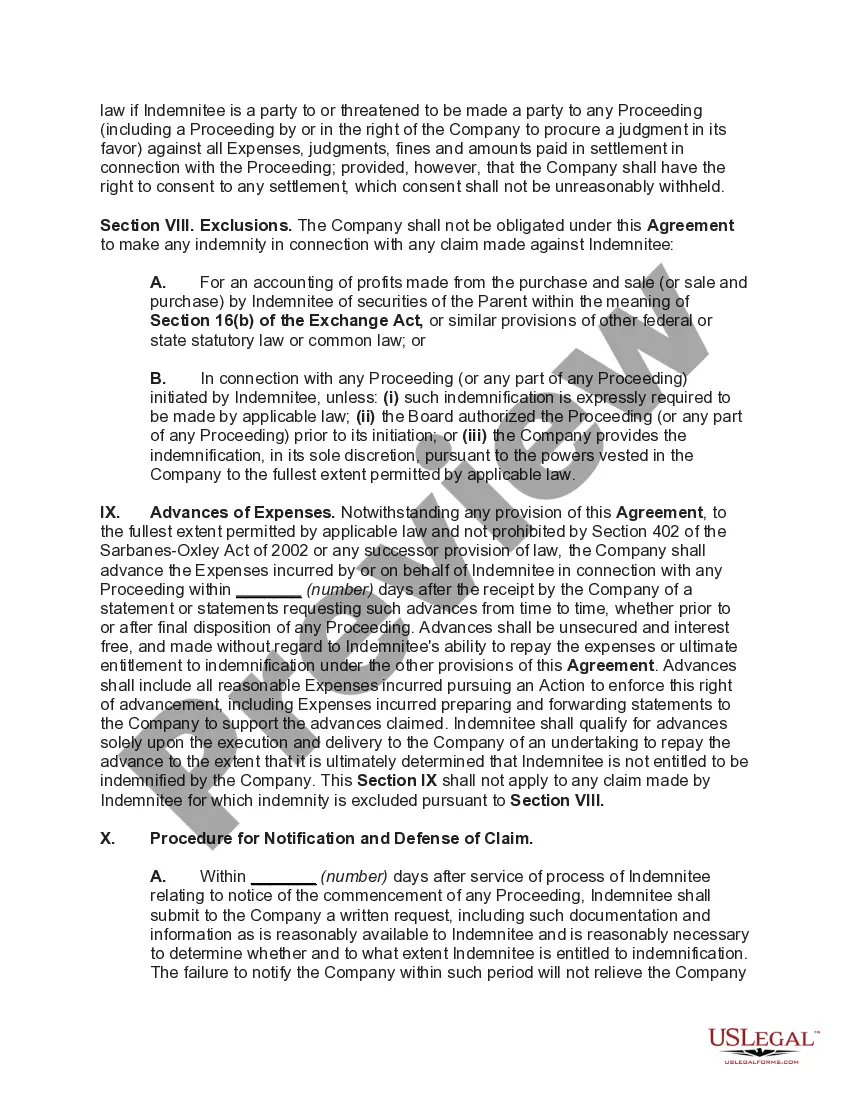
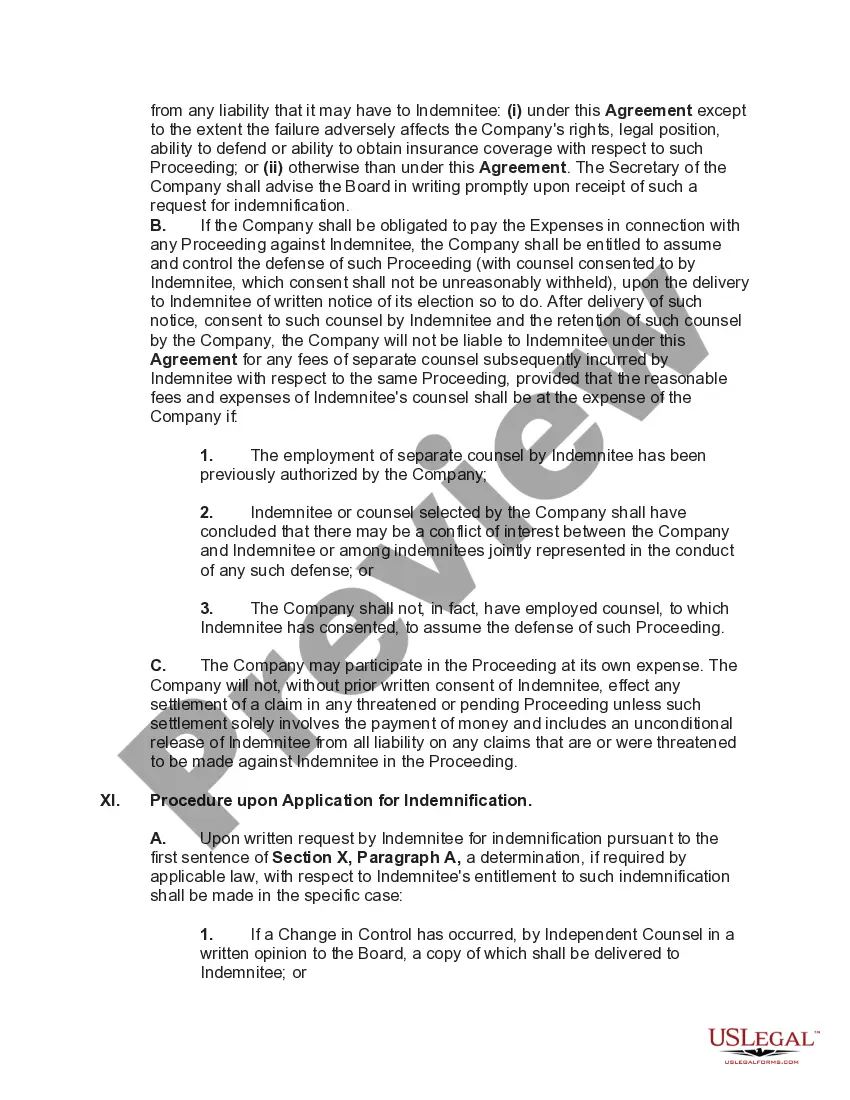
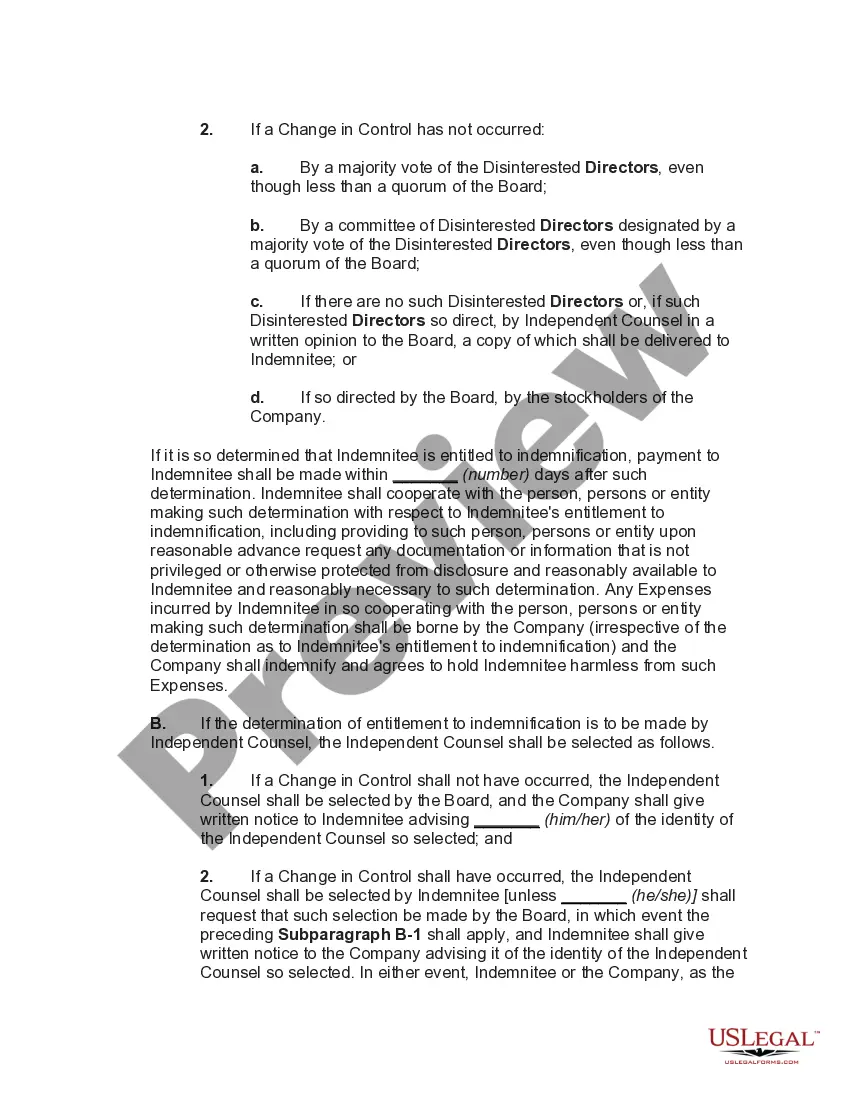
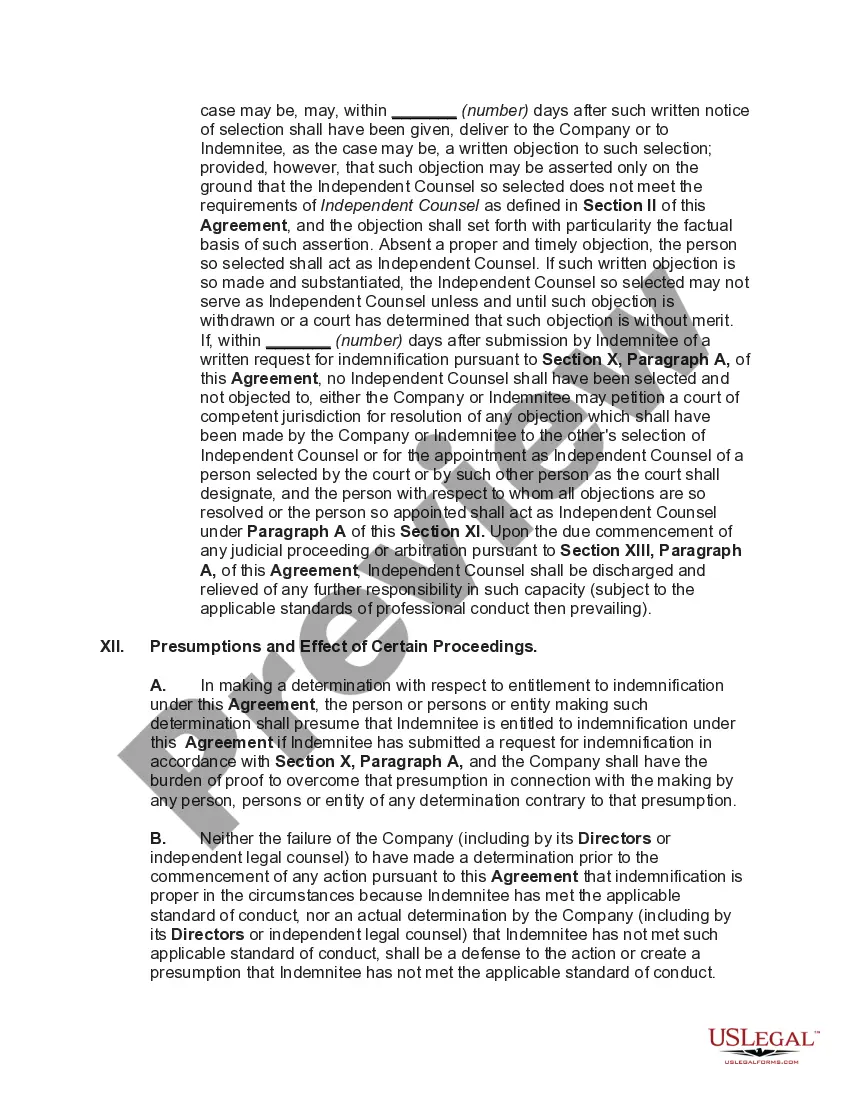
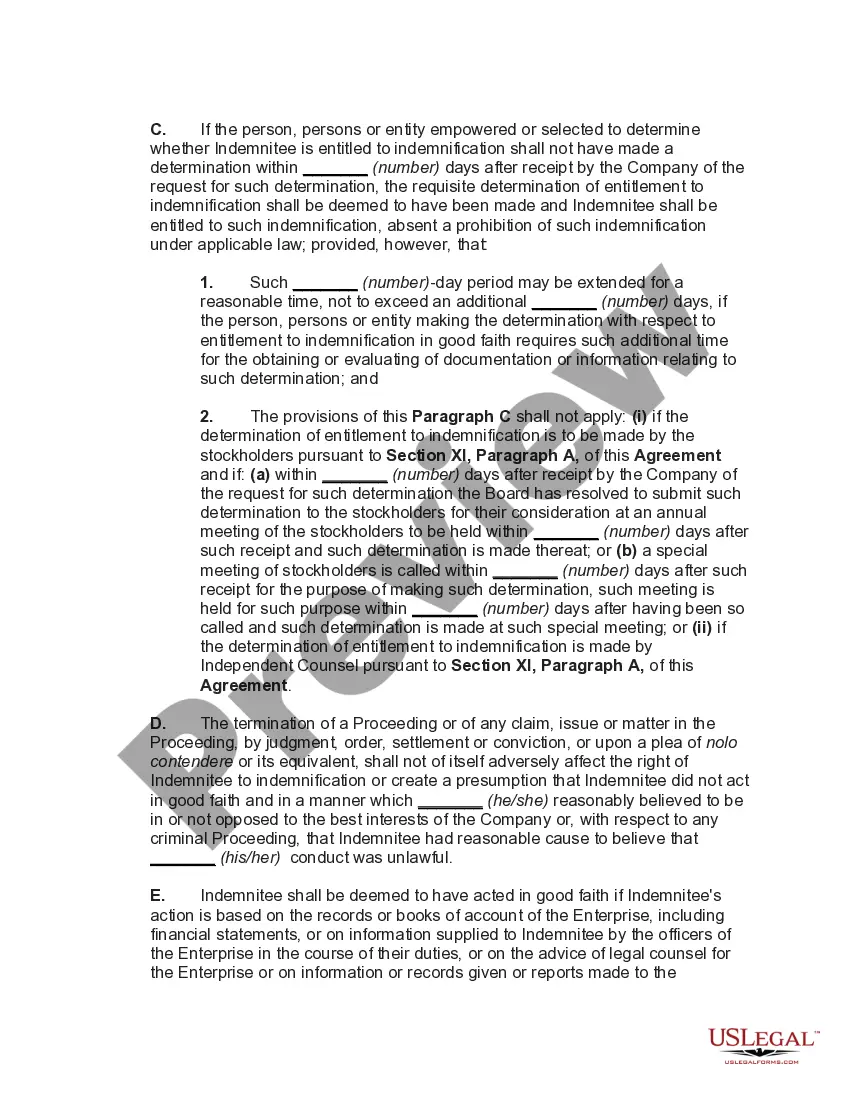
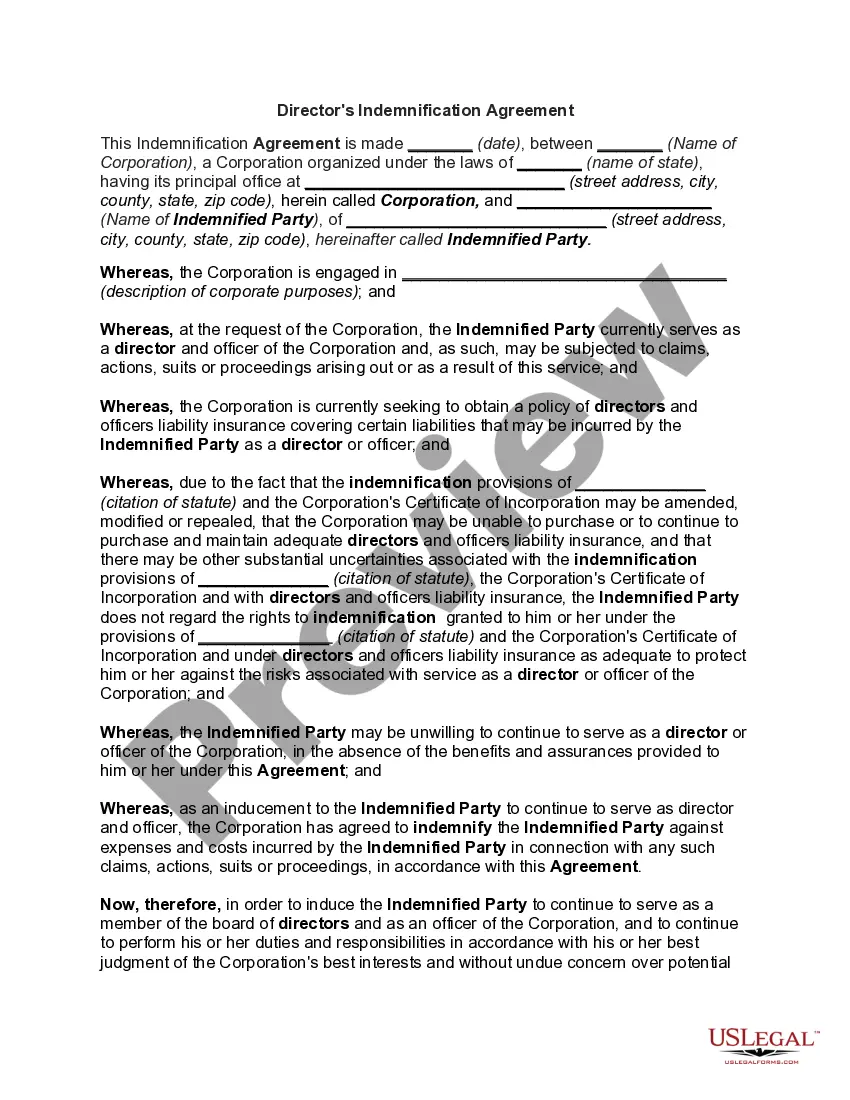
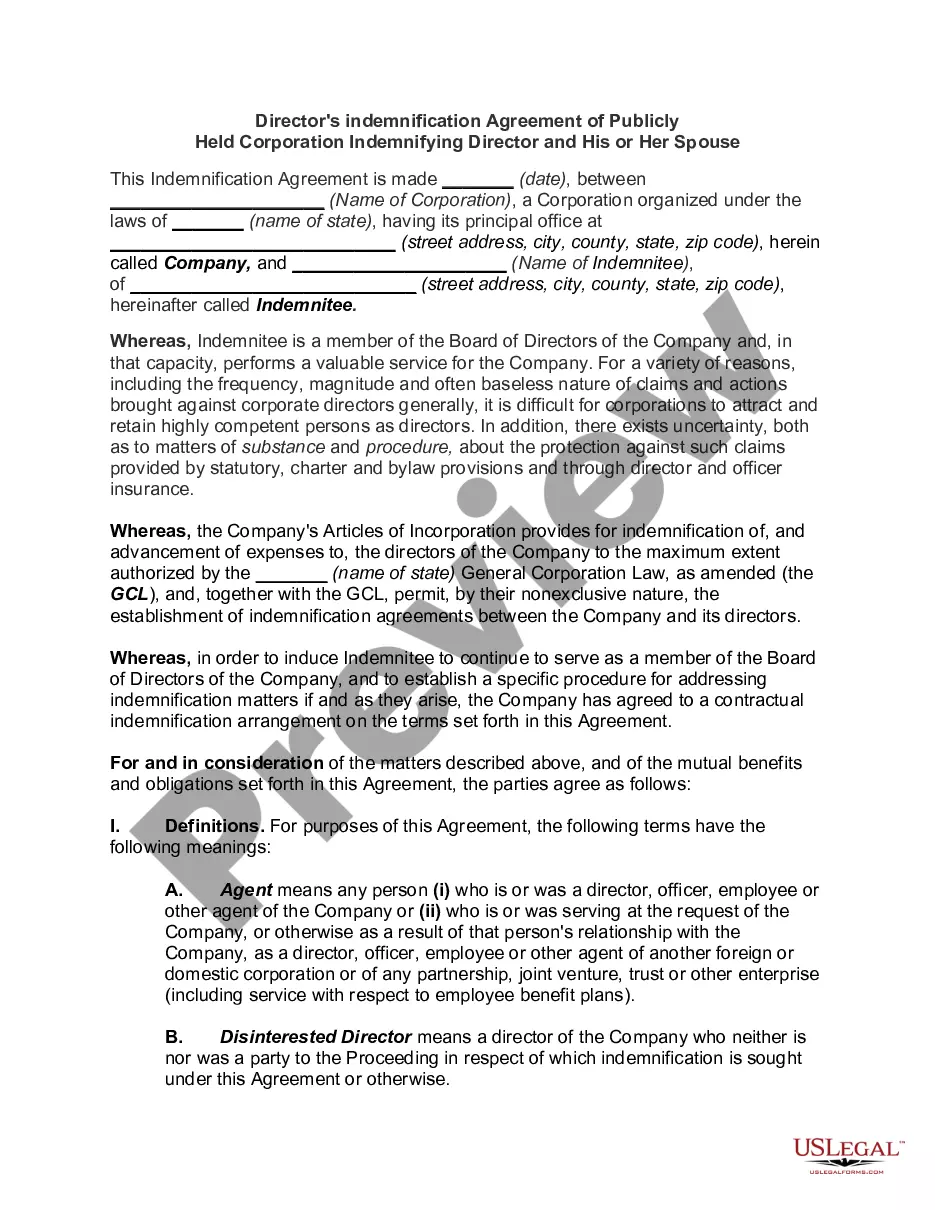
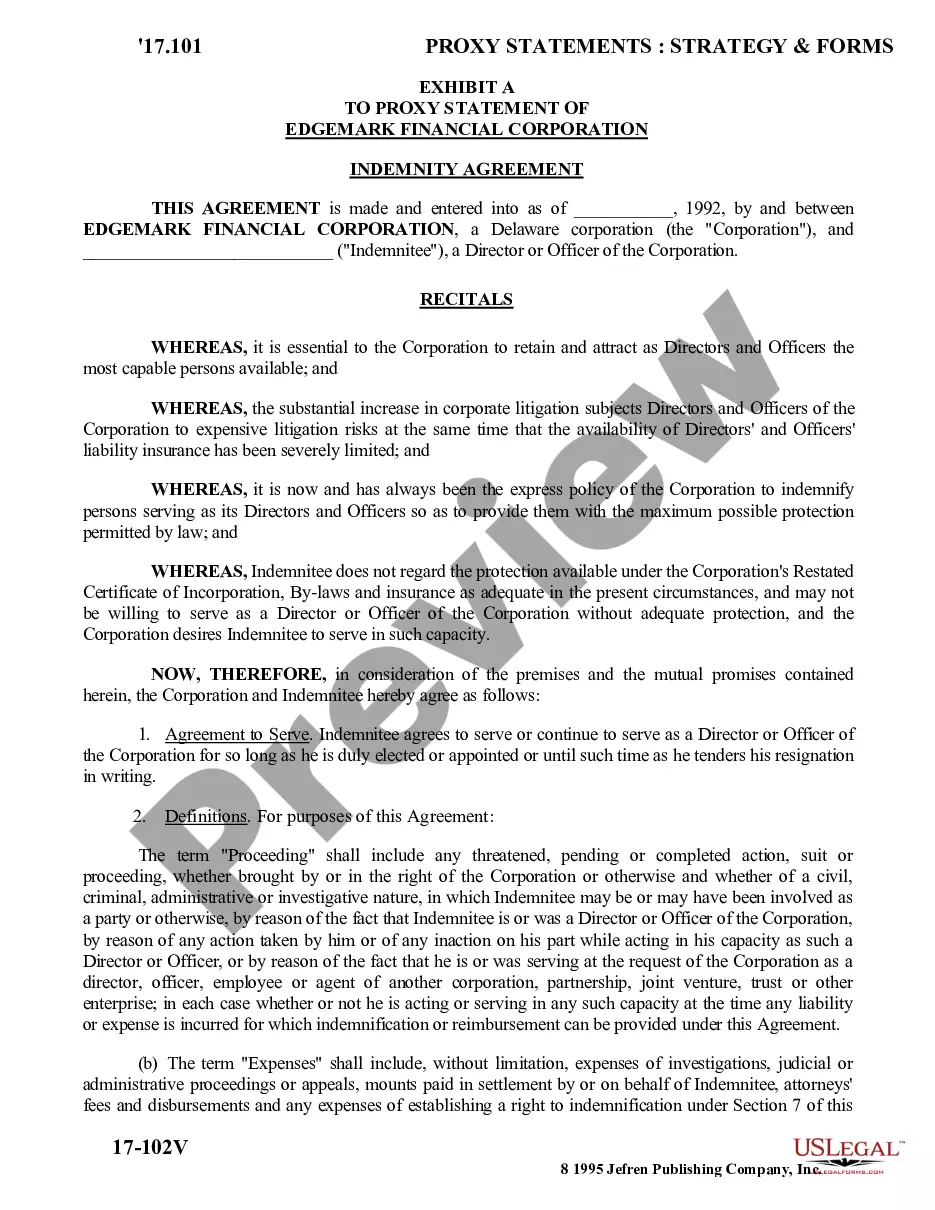
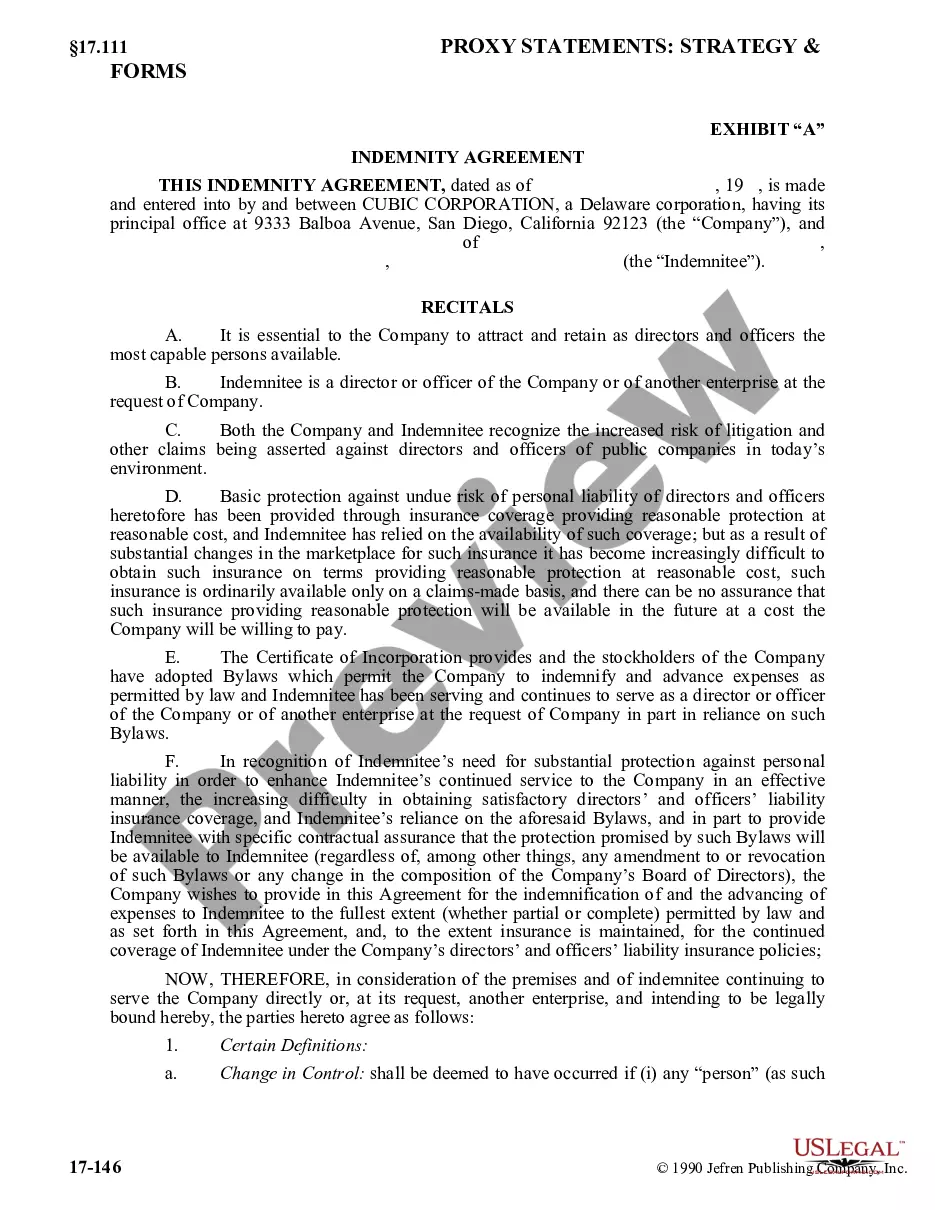
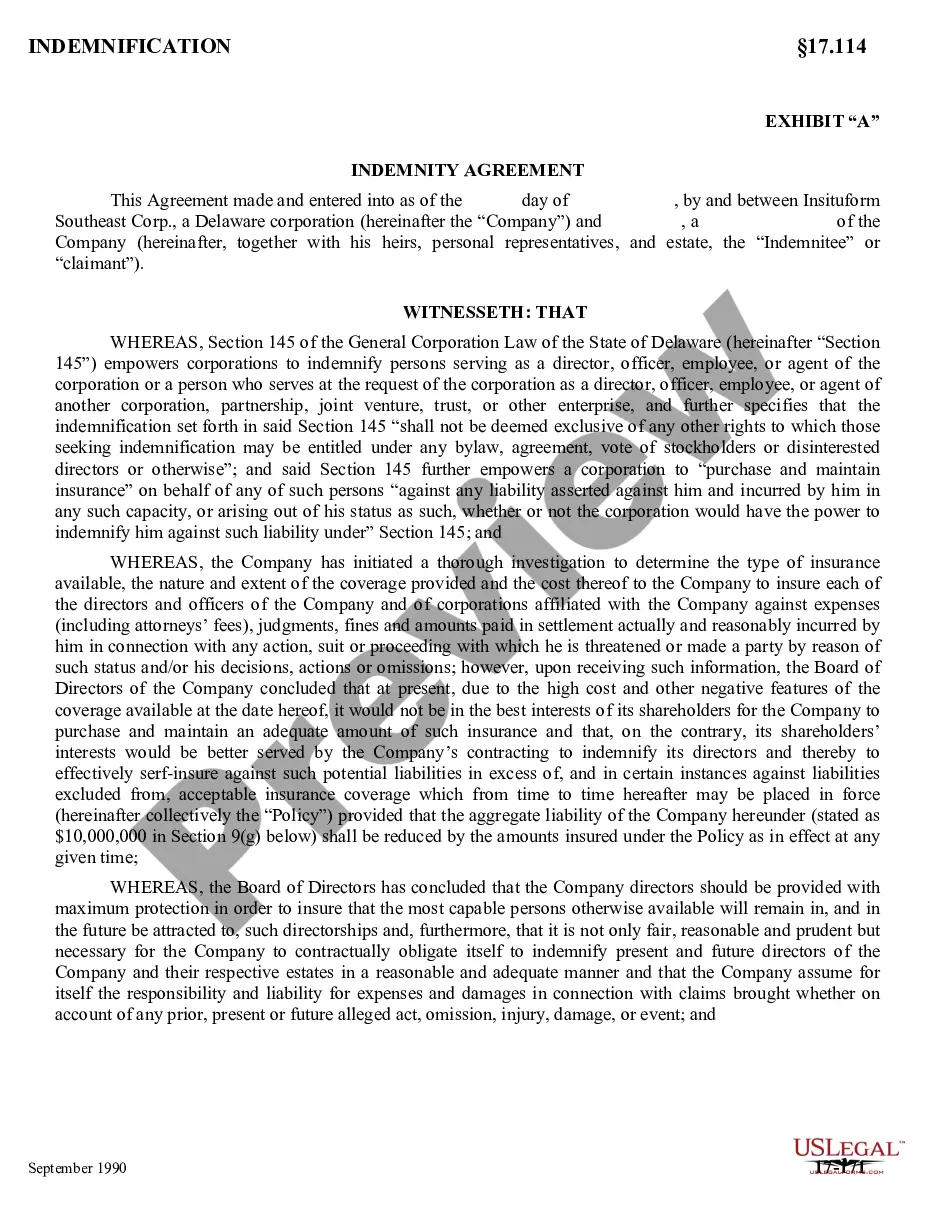
Most companies' corporate bylaws or articles of incorporation contain indemnification and advancement provisions. While these provisions provide important protection for corporate executives if the individuals become the target of claims relating to their action undertaken in their corporate capacities, these provisions alone may not be provide sufficient protection. The provisions in the corporate documents may not address all of the issues that can arise and may not provide sufficient protection for the individuals when there are indemnification or advancement disputes and may not protect individuals from changes to corporate bylaws after the individuals have left the company. For these and many other reasons, well-advised corporate executives will want to have their rights memorialized in a separate, written indemnification and advancement agreement with the company.
The most important reason for individuals to seek to put a written indemnification agreement in place is that written agreements typically provide more comprehensive protection than corporate bylaws or statutory provisions. Most bylaws, for example, provide for permissive indemnification, whereas most written agreements are written on a mandatory basis. Moreover, the rights enumerated in the agreement are enforceable obligations that cannot be amended or terminated without the individual executive's agreement.
Another reason that directors and officers will seek to put contractual indemnification agreements in place is so that if the individuals are the target of claims after they have left the company, they can assert their rights of indemnification notwithstanding the arrival of new management. The contractual indemnification provides them an extra measure of protection and some level of assurance that their rights will be protected if claims arise after they have left the company.
Boston Massachusetts Director's indemnification Agreement Regarding a Publicly Held Corporation
Category:
State:
Multi-State
City:
Boston
Control #:
US-0853BG
Format:
Word;
Rich Text
Instant download
Description
Free preview