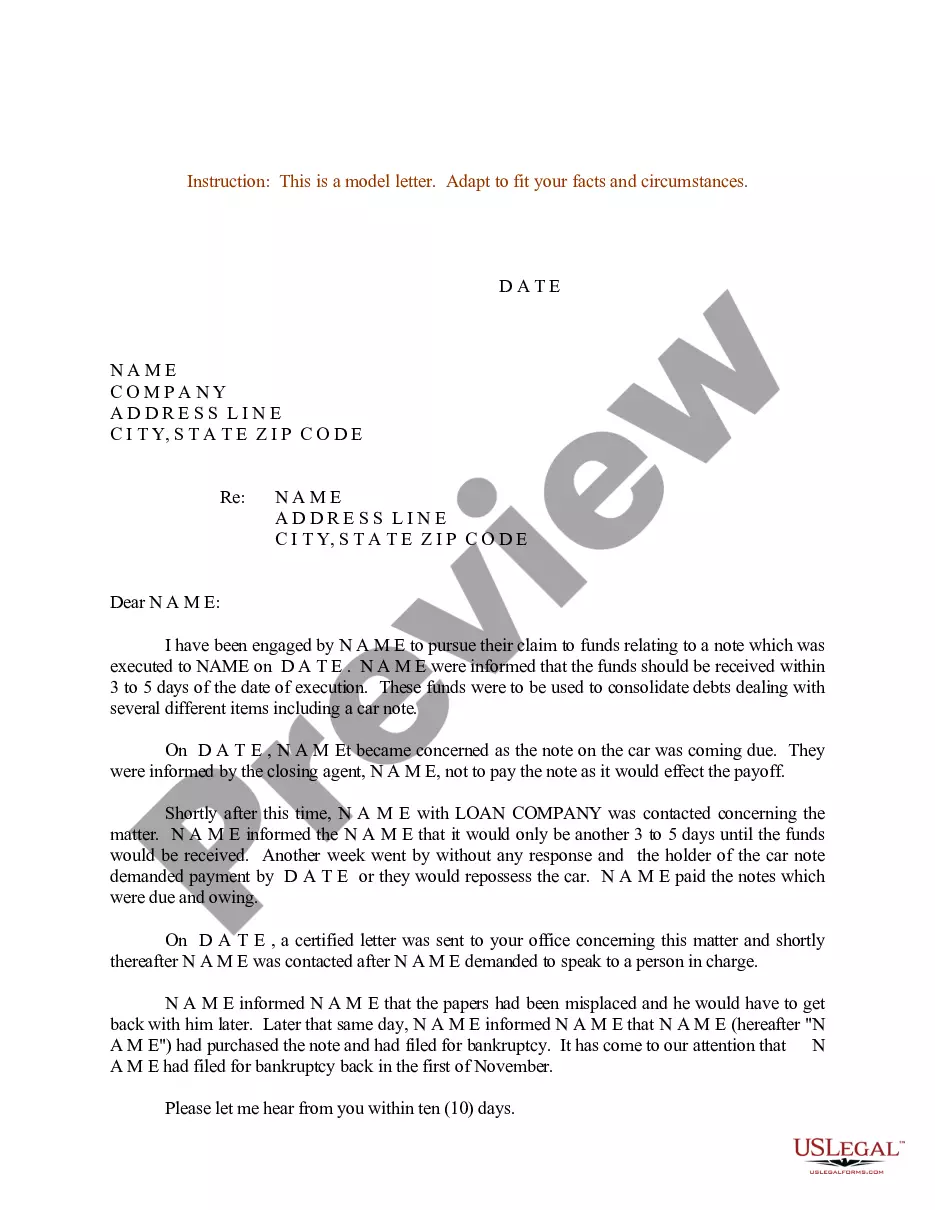
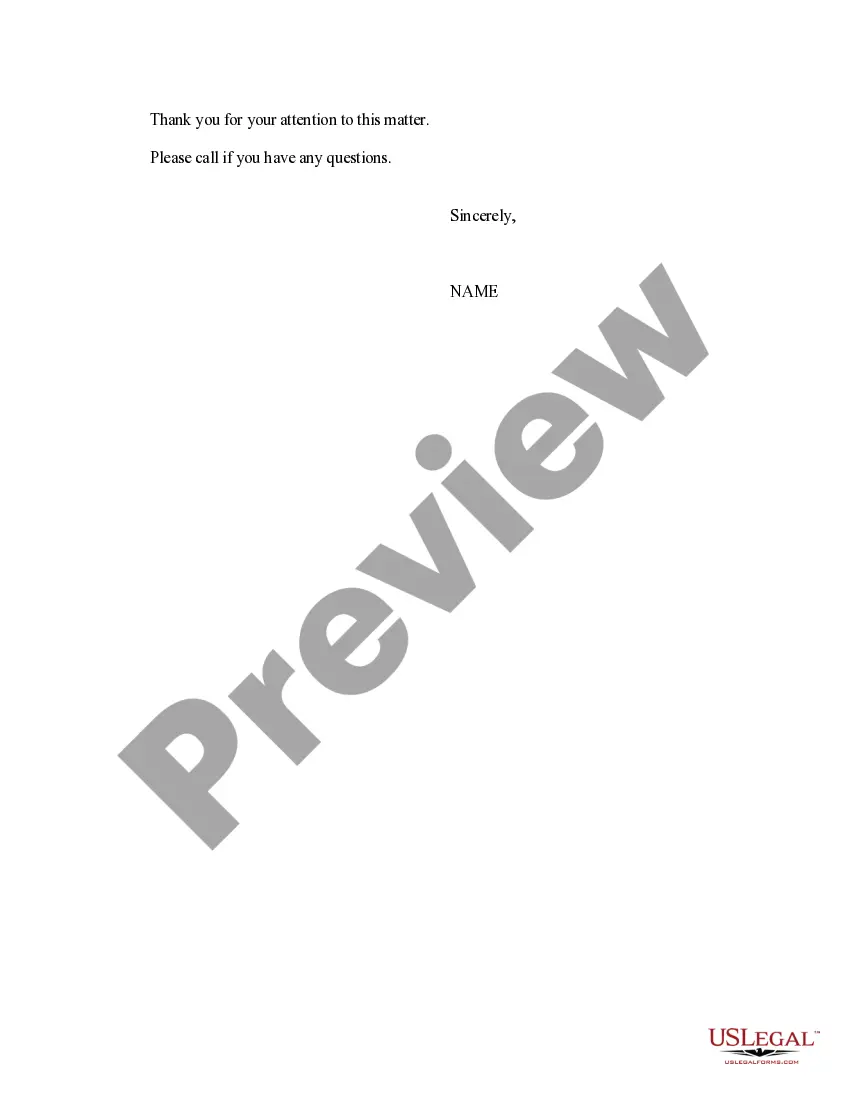
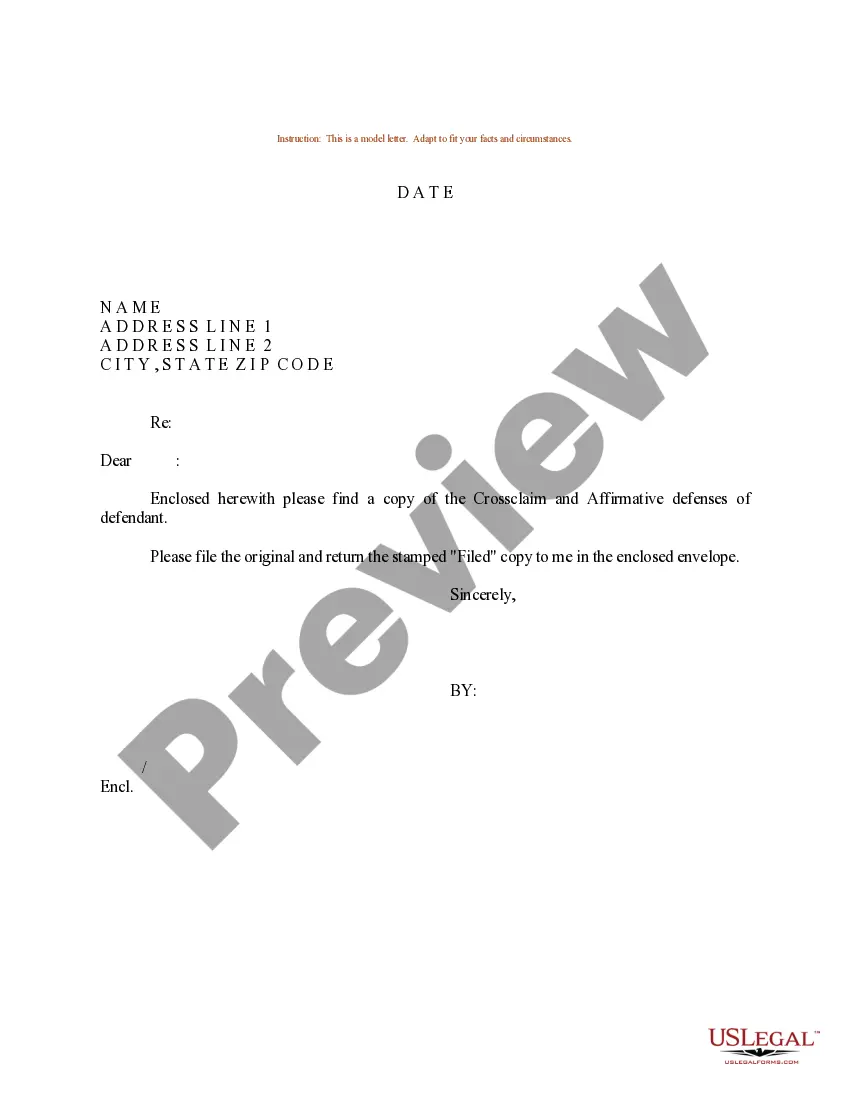
Bronx New York Sample Letter for Claim to Funds
Description

Get your form ready online
Our built-in tools help you complete, sign, share, and store your documents in one place.
Make edits, fill in missing information, and update formatting in US Legal Forms—just like you would in MS Word.
Download a copy, print it, send it by email, or mail it via USPS—whatever works best for your next step.
Sign and collect signatures with our SignNow integration. Send to multiple recipients, set reminders, and more. Go Premium to unlock E-Sign.
If this form requires notarization, complete it online through a secure video call—no need to meet a notary in person or wait for an appointment.
We protect your documents and personal data by following strict security and privacy standards.

Make edits, fill in missing information, and update formatting in US Legal Forms—just like you would in MS Word.

Download a copy, print it, send it by email, or mail it via USPS—whatever works best for your next step.

Sign and collect signatures with our SignNow integration. Send to multiple recipients, set reminders, and more. Go Premium to unlock E-Sign.

If this form requires notarization, complete it online through a secure video call—no need to meet a notary in person or wait for an appointment.

We protect your documents and personal data by following strict security and privacy standards.
Looking for another form?
How to fill out Sample Letter For Claim To Funds?
Handling documentation for business or personal purposes is consistently a significant duty.
When formulating a contract, a public service inquiry, or a power of attorney, it is crucial to consider all federal and state regulations of the particular region.
Nonetheless, minor counties and even municipalities also possess legislative conditions that you must take into account.
To find the one that suits your requirements, use the search tab in the page header.
- All these factors render it challenging and lengthy to draft Bronx Sample Letter for Claim to Funds without expert assistance.
- It's simple to circumvent unnecessary expenses on attorneys preparing your paperwork and produce a lawfully acceptable Bronx Sample Letter for Claim to Funds independently, utilizing the US Legal Forms web library.
- It is the finest online collection of state-specific legal documentation that is professionally validated, so you can be assured of their legitimacy when choosing a sample for your county.
- Users who have previously subscribed only need to sign in to their accounts to access the required form.
- If you are not yet a subscriber, follow the step-by-step instructions below to acquire the Bronx Sample Letter for Claim to Funds.
- Review the page you've opened and verify if it contains the sample you need.
- To achieve this, utilize the form description and preview if those options are accessible.
Form popularity
FAQ
You must fill out the Application for a Pro Se Summons form and submit it to the clerk in the county where you are suing, along with payment of the court fee. The fee must be paid by cash, certified check, money order or bank check. Personal checks will not be accepted.
How can I search to see if I am entitled to unclaimed funds? To see if there are unclaimed funds in your name, visit the New York State Comptroller's website and conduct a search by going to . There is no charge to search or file a claim to recover unclaimed funds.
No, there is no time limit and no fee for this service. New York State holds these funds in trust, acting as a custodian, until the funds are claimed by the owner or heir. The State never takes ownership of the money. It is held for you until you claim it.
Notice of Claim must be served within 90 days after the claim arises (the date of loss).
Below are government agencies that have databases you can search for unclaimed money. Treasury Hunt: Unclaimed U.S. Securities and Payments. HUD/FHA Mortgage Insurance Refunds. Credit Union Unclaimed Shares. National Association of Unclaimed Property Administrators.U.S. Courts: Unclaimed Funds in Bankruptcy.
To begin an action in Small Claims Court, a person, or someone acting on his or her behalf, must come to the Small Claims Court Clerk's office in the proper county and fill out a statement of claim. To find out where the clerk's office is located in your county, click on Locations.
To start the case, a claim is filed with the Clerk of the Court, and a copy must be served on the Attorney General. Generally speaking, negligence, intentional tort and wrongful death claims must be filed with the court 90 days after the accrual of the action.
How can I search to see if I am entitled to unclaimed funds? To see if there are unclaimed funds in your name, visit the New York State Comptroller's website and conduct a search by going to . There is no charge to search or file a claim to recover unclaimed funds.
The Notice of Claim must be served on the municipal government agency, by personal delivery, or registered or certified mail. The service must be made upon a person designated by law to receive summonses in Supreme Court actions or an attorney regularly engaged in representing such public corporations.
You must fill out the Application for a Pro Se Summons form and submit it to the clerk in the county where you are suing, along with payment of the court fee. The fee must be paid by cash, certified check, money order or bank check. Personal checks will not be accepted.