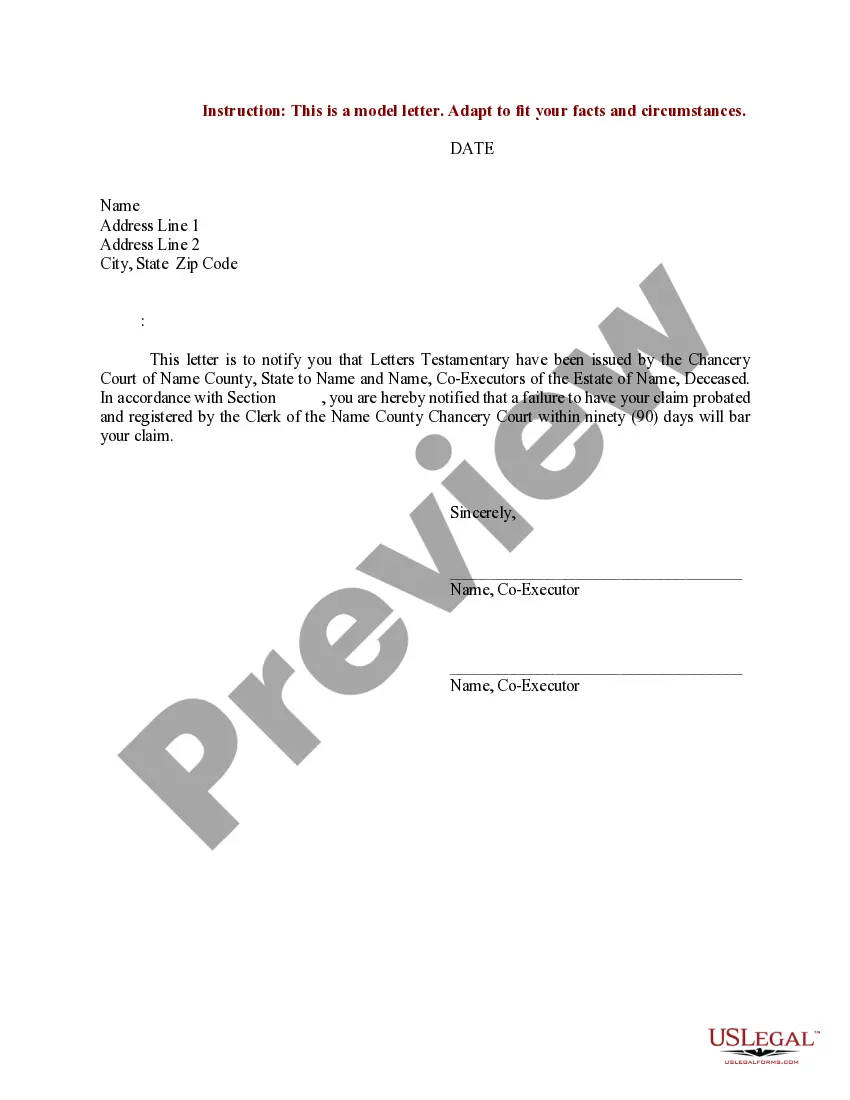
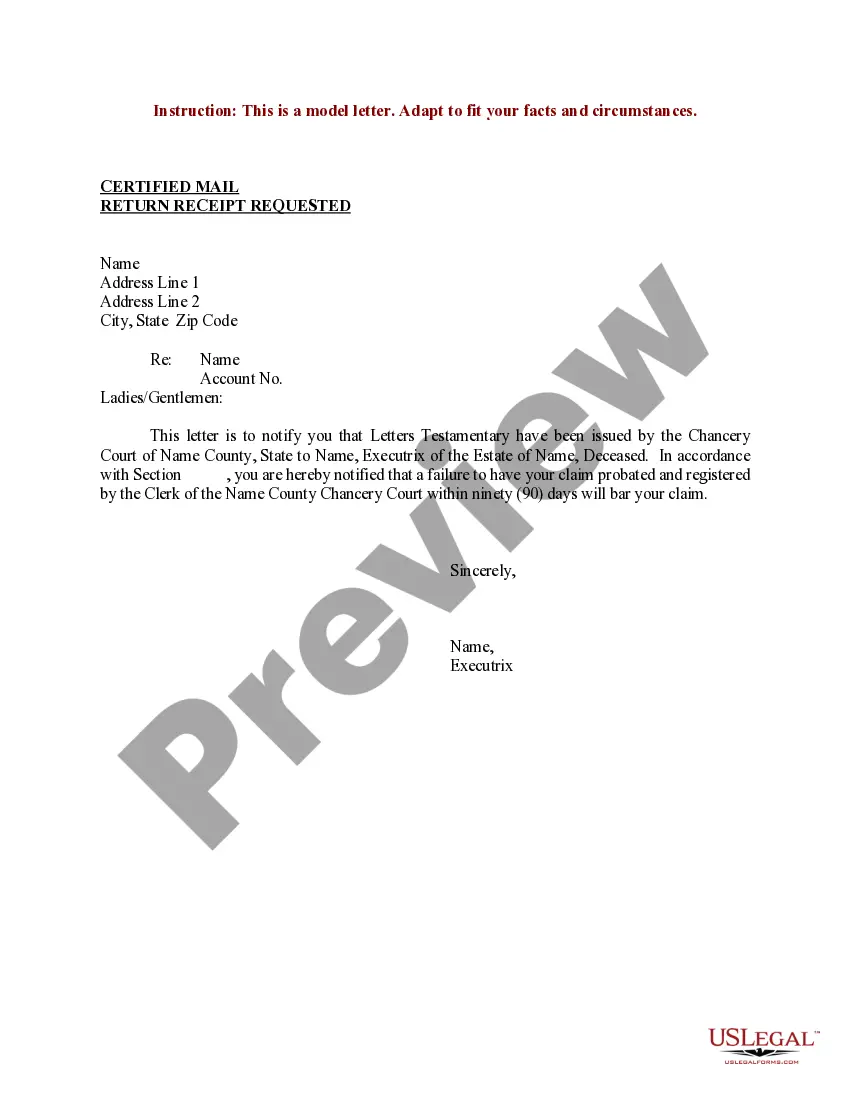
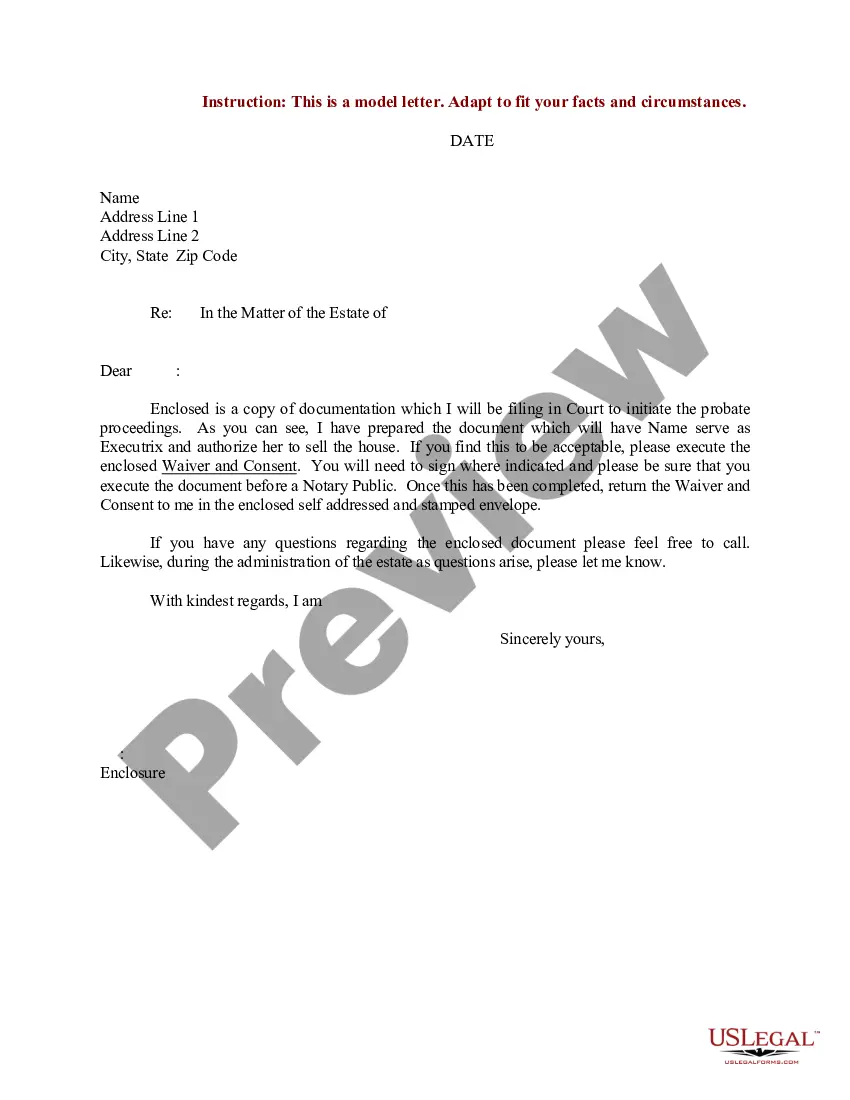
Dallas Texas Sample Letter for Letters Testamentary
Description
Get your form ready online
Our built-in tools help you complete, sign, share, and store your documents in one place.
Make edits, fill in missing information, and update formatting in US Legal Forms—just like you would in MS Word.
Download a copy, print it, send it by email, or mail it via USPS—whatever works best for your next step.
Sign and collect signatures with our SignNow integration. Send to multiple recipients, set reminders, and more. Go Premium to unlock E-Sign.
If this form requires notarization, complete it online through a secure video call—no need to meet a notary in person or wait for an appointment.
We protect your documents and personal data by following strict security and privacy standards.

Make edits, fill in missing information, and update formatting in US Legal Forms—just like you would in MS Word.

Download a copy, print it, send it by email, or mail it via USPS—whatever works best for your next step.

Sign and collect signatures with our SignNow integration. Send to multiple recipients, set reminders, and more. Go Premium to unlock E-Sign.

If this form requires notarization, complete it online through a secure video call—no need to meet a notary in person or wait for an appointment.

We protect your documents and personal data by following strict security and privacy standards.
Looking for another form?



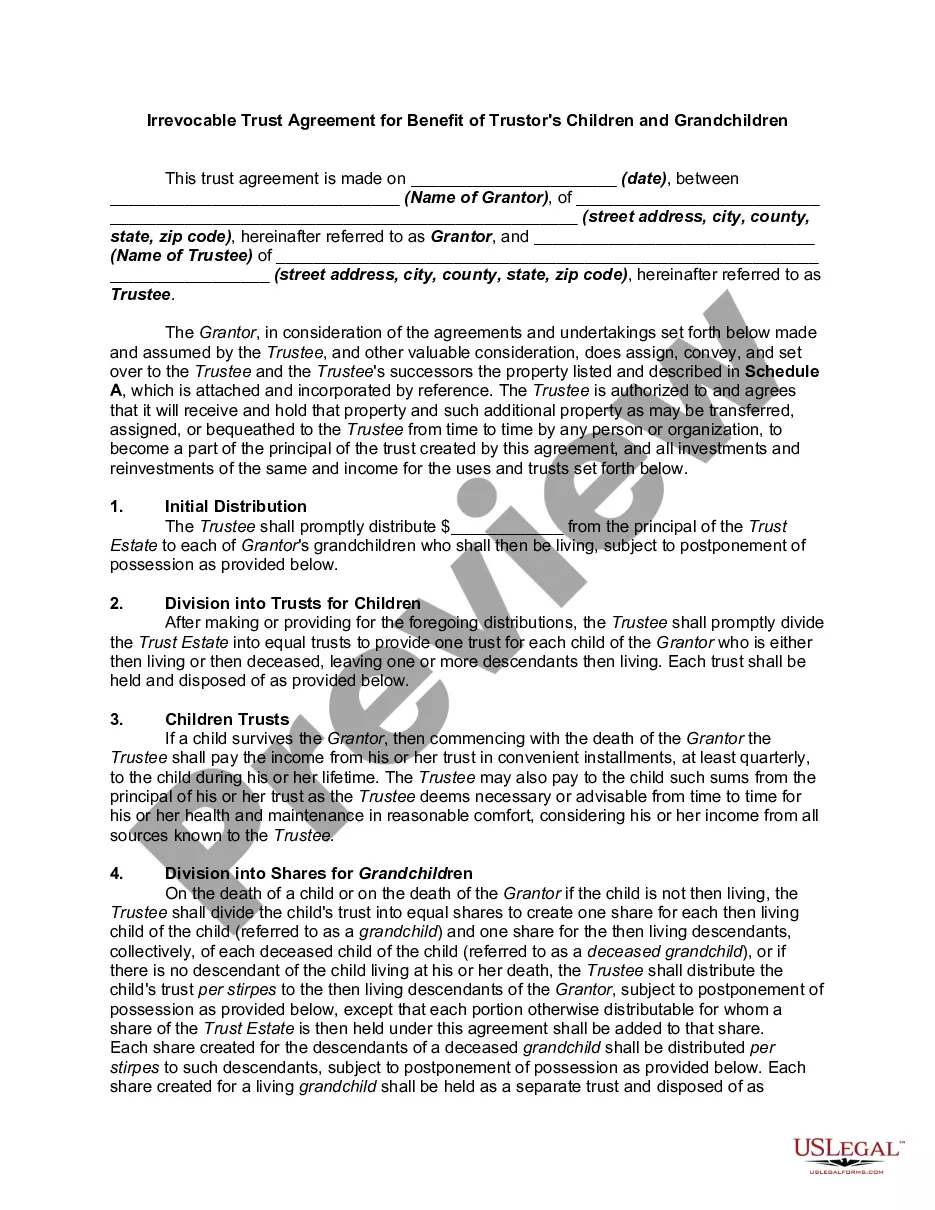

How to fill out Sample Letter For Letters Testamentary?
A document process invariably accompanies any legal action you undertake.
Launching a business, applying for or accepting a job offer, transferring ownership, and various other life circumstances necessitate the preparation of official paperwork that differs across the nation.
This is why having everything gathered in one location is incredibly advantageous.
US Legal Forms is the most comprehensive online repository of current federal and state-specific legal documents.
This is the simplest and most reliable method to acquire legal documents. All templates in our library are expertly drafted and validated for compliance with local laws and regulations. Prepare your documentation and manage your legal matters effectively with US Legal Forms!
- On this platform, you can effortlessly find and download a document for any personal or business need in your county, including the Dallas Sample Letter for Letters Testamentary.
- Finding samples on the platform is incredibly easy.
- If you already have a subscription to our service, Log In to your account, search for the sample using the search bar, and click Download to save it on your device.
- After that, the Dallas Sample Letter for Letters Testamentary will be ready for further use in the My documents section of your profile.
- If you are using US Legal Forms for the first time, follow this brief guide to obtain the Dallas Sample Letter for Letters Testamentary.
- Ensure you have accessed the correct page with your localized form.
- Use the Preview mode (if available) and examine the sample.
- Review the description (if applicable) to ensure the form satisfies your needs.
Form popularity
FAQ
A letter of testamentary in Dallas County is a legal document issued by the probate court that grants an executor the authority to manage the deceased person's estate. This document confirms the executor's status and provides the necessary power to settle debts, distribute assets, and handle other estate matters. If you need assistance, the US Legal platform offers a Dallas Texas Sample Letter for Letters Testamentary to help you understand what this document entails.
But most individuals choose the mailing option, and the letters of administration will be delivered to their home within one or two days after the later to occur of the court hearing, or the filing of any required bond. All letters show the date they were issued and they are valid for 60 days from that date.
How to get Letters Testamentary or Letters of Administration: First, file an application for probate. You'll need to file with the court in the county in which the decedent died. Notify interested parties.Appear at a hearing.Be appointed by a judge.Perform the duties as an Executor or Administrator.
In a situation where a deceased person left a Last Will and Testament that appointed a person as an executor, the letter is referred to as a Letter Testamentary. In a situation where the deceased did not have a will, but a court has opened an administration, the letter is referred to as a Letter of Administration.
In order to obtain letters testamentary in Texas, the probate court must approve the will and determine the qualification of the executor. To do this, the executor must file an application with the appropriate county court with the original will within four years of the decedent's death.
Letter of Testamentary, Administration or Guardianship - $2.00 each.
While Letters Testamentary do not officially expire after a certain date, many institutions will require the Letters Testamentary to be dated within 60 days of a transfer. This is to assure the institution that the executor has not been removed by the court before the request to transfer the assets.
Testamentary expenses means any expenses incurred in obtaining administration of any property of a deceased person by an administrator, and in vesting in the administrator the property to which the administration relates; Sample 1.
In order to obtain letters testamentary in Texas, the probate court must approve the will and determine the qualification of the executor. To do this, the executor must file an application with the appropriate county court with the original will within four years of the decedent's death.