Kings New York Sample Letter Explaining the Purposes of the Waiver and Consent regarding an Estate
Description

Get your form ready online
Our built-in tools help you complete, sign, share, and store your documents in one place.
Make edits, fill in missing information, and update formatting in US Legal Forms—just like you would in MS Word.
Download a copy, print it, send it by email, or mail it via USPS—whatever works best for your next step.
Sign and collect signatures with our SignNow integration. Send to multiple recipients, set reminders, and more. Go Premium to unlock E-Sign.
If this form requires notarization, complete it online through a secure video call—no need to meet a notary in person or wait for an appointment.
We protect your documents and personal data by following strict security and privacy standards.

Make edits, fill in missing information, and update formatting in US Legal Forms—just like you would in MS Word.

Download a copy, print it, send it by email, or mail it via USPS—whatever works best for your next step.

Sign and collect signatures with our SignNow integration. Send to multiple recipients, set reminders, and more. Go Premium to unlock E-Sign.

If this form requires notarization, complete it online through a secure video call—no need to meet a notary in person or wait for an appointment.

We protect your documents and personal data by following strict security and privacy standards.
Looking for another form?

How to fill out Sample Letter Explaining The Purposes Of The Waiver And Consent Regarding An Estate?
Preparing documents, such as Kings Sample Letter Clarifying the Objectives of the Waiver and Consent pertaining to an Estate, to oversee your legal affairs is a challenging and lengthy endeavor.
Many situations necessitate an attorney’s involvement, which further complicates this task and can make it costly.
However, you can take control of your legal affairs and manage them independently.
The onboarding process for new users is quite simple! Here’s what you need to complete before downloading the Kings Sample Letter Clarifying the Objectives of the Waiver and Consent related to an Estate: Ensure your template aligns with your state/county since the regulations for creating legal documents can differ from one state to another.
- US Legal Forms is here to assist you.
- Our site offers over 85,000 legal templates designed for a variety of cases and life events.
- We guarantee that each document complies with the laws of each state, so you won’t need to fret about possible legal compliance issues.
- If you are already familiar with our website and hold a subscription with US, you understand how easy it is to obtain the Kings Sample Letter Clarifying the Objectives of the Waiver and Consent regarding an Estate template.
- Feel free to Log In to your portal, download the template, and adjust it to fit your needs.
- Lost your document? No problem. You can retrieve it in the My documents section of your account - available on both desktop and mobile.
Form popularity
FAQ
A waiver is a demonstration, usually in written form, of a party's intent to relinquish a legal right or claim. The key point to note is that the relinquishment is voluntary, and can apply to a variety of legal situations. Essentially, a waiver removes a real or potential liability for the other party in the agreement.
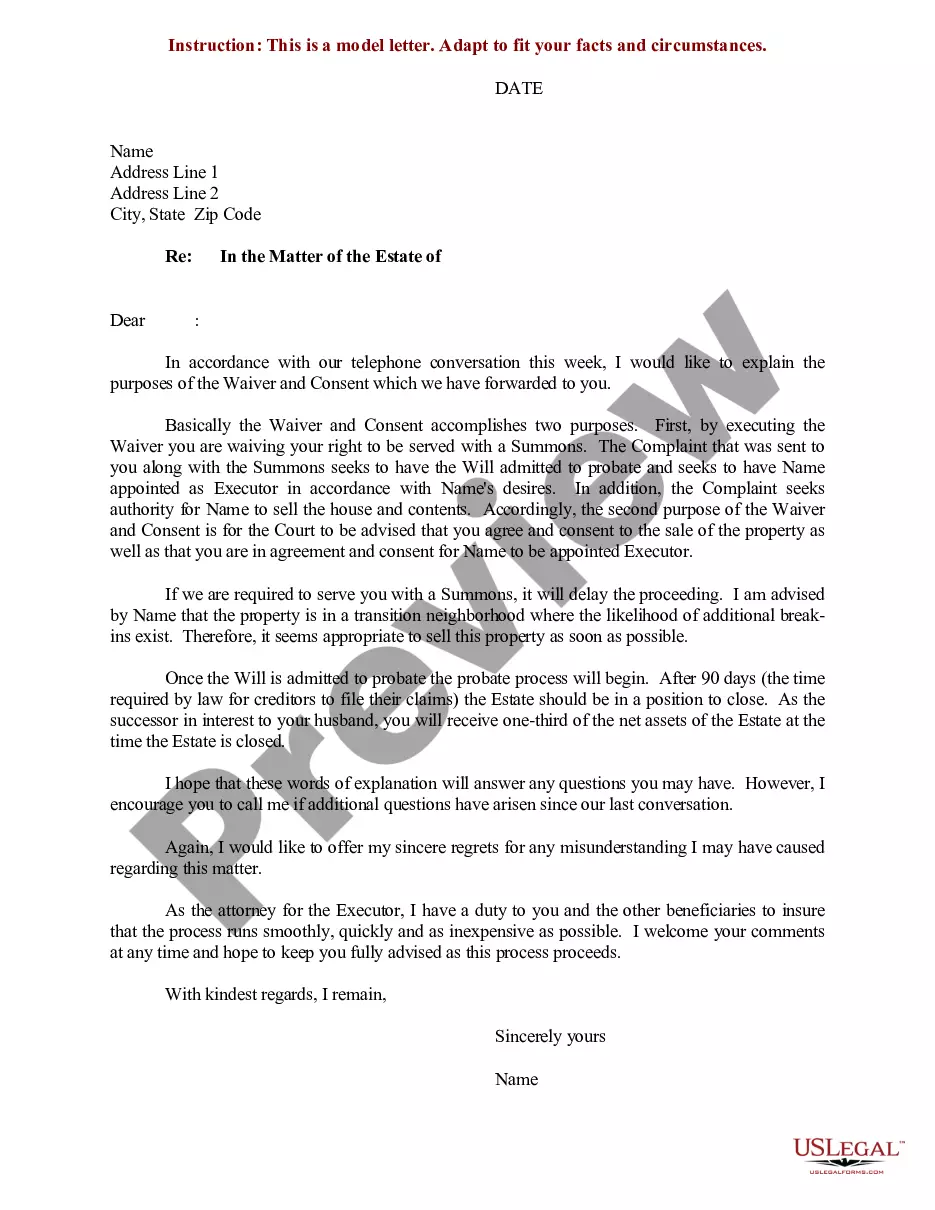
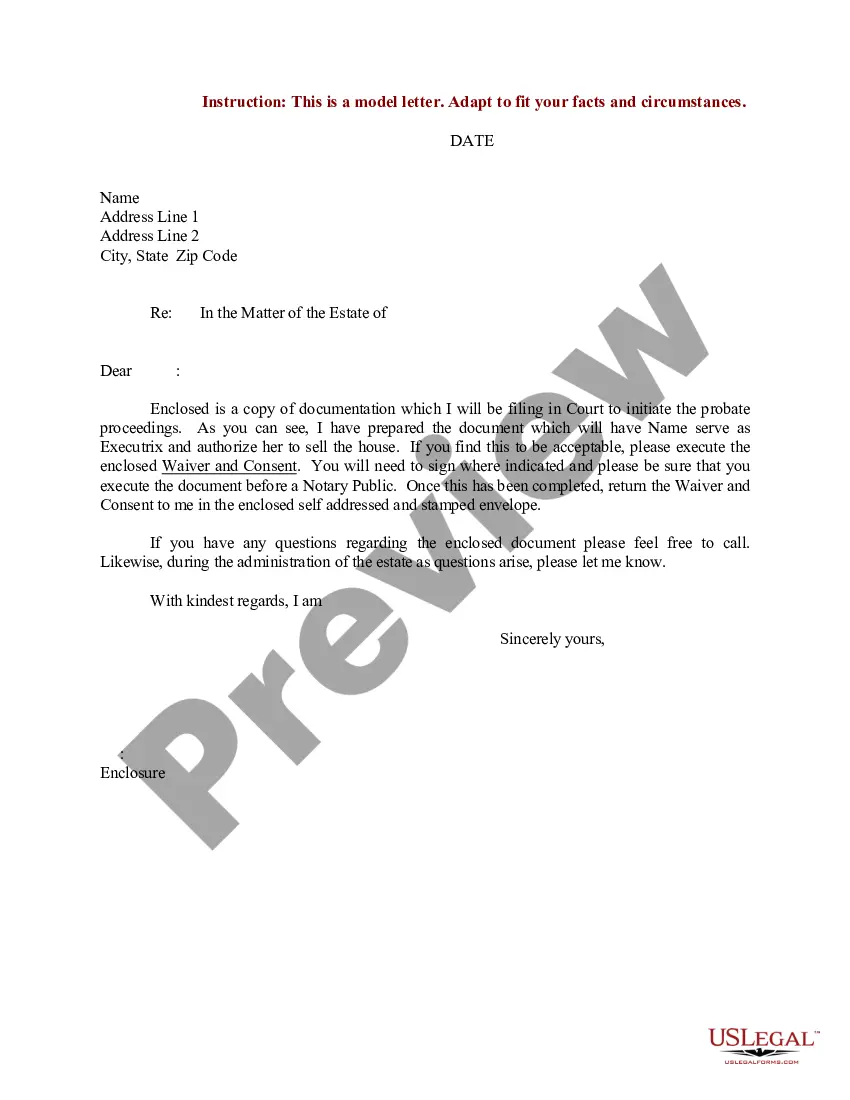
By executing a waiver and consent document, the distributee waives his or her right to a citation being issued by the court, and consents to the court's appointment of the administrator or executor.
Most waivers of citation in probate simply state the interested party has received notice of the lawsuit and does not wish to receive further notice of hearings.
How Do You Become an Administrator of an Estate in New York Obtain a tax id number for an estate from the federal government. Open an estate bank account. Request information from banks and other institutions that control the decedent's assets.Transfer assets from the decedent's name to the name of the estate.
Letters of Administration will need to be obtained which requires filing a petition and many other documents with the Court. The petition for Letters of Administration is filed in the Surrogate's Court in the county where the decedent lived.
It basically says you do not want to be served by a process server or constable/sheriff or by certified mail sent by the District Clerk. This partly means: One, you do not want the "citation" to be issued by the District Clerk.
Waiver of Citation in a probate Before an Executor who is nominated by a will can be appointed by the Surrogate's Court to act as an Executor in a New York estate, they have to give notice to all of the people who would benefit from the estate of the person who died, whether or not they are in the will.
Your surviving spouse would normally be the first choice to be appointed administrator; however, s/he can sign what is called a waiver of citation, renunciation and consent to appointment of administrator. This means that someone lower on the priority list has asked the spouse to give up the right to be administrator