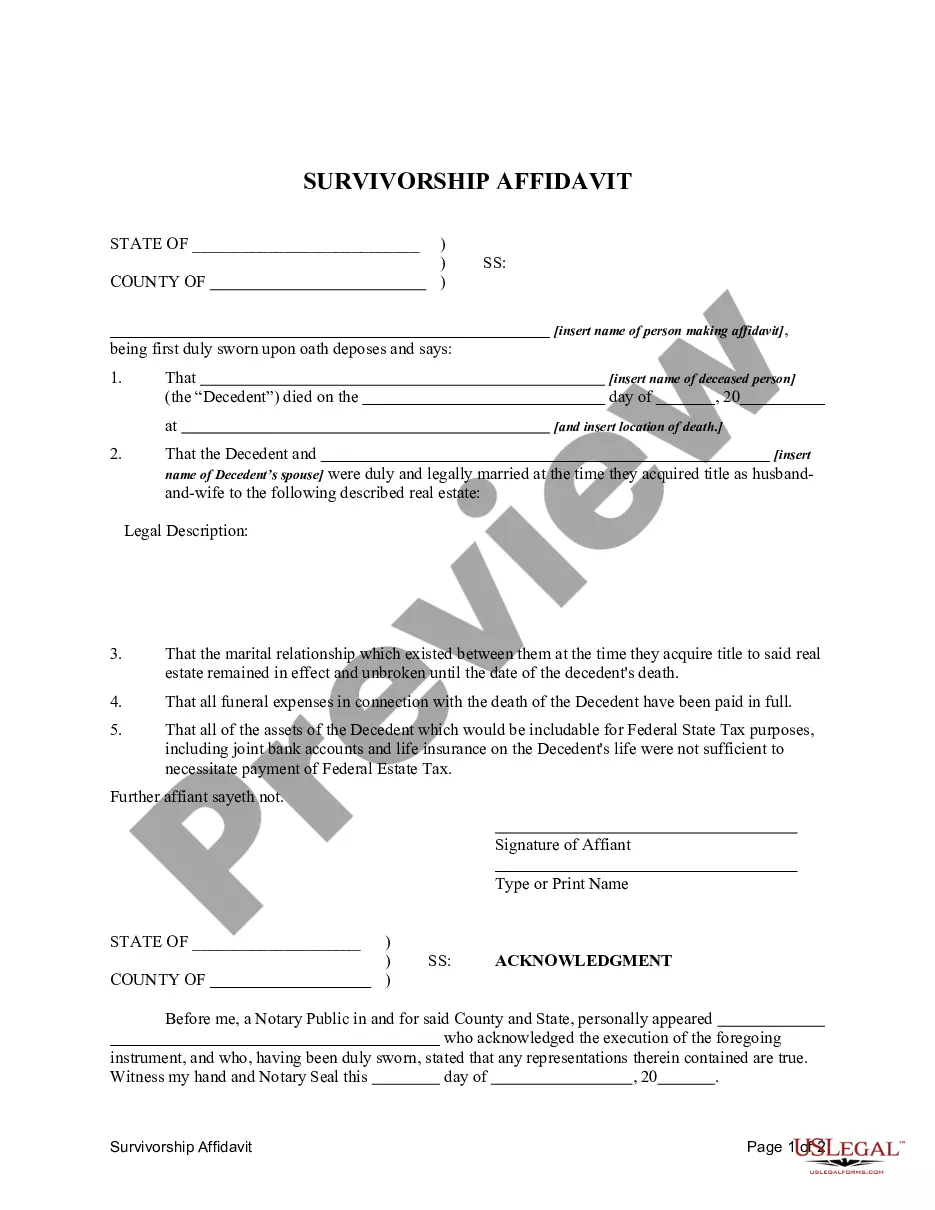
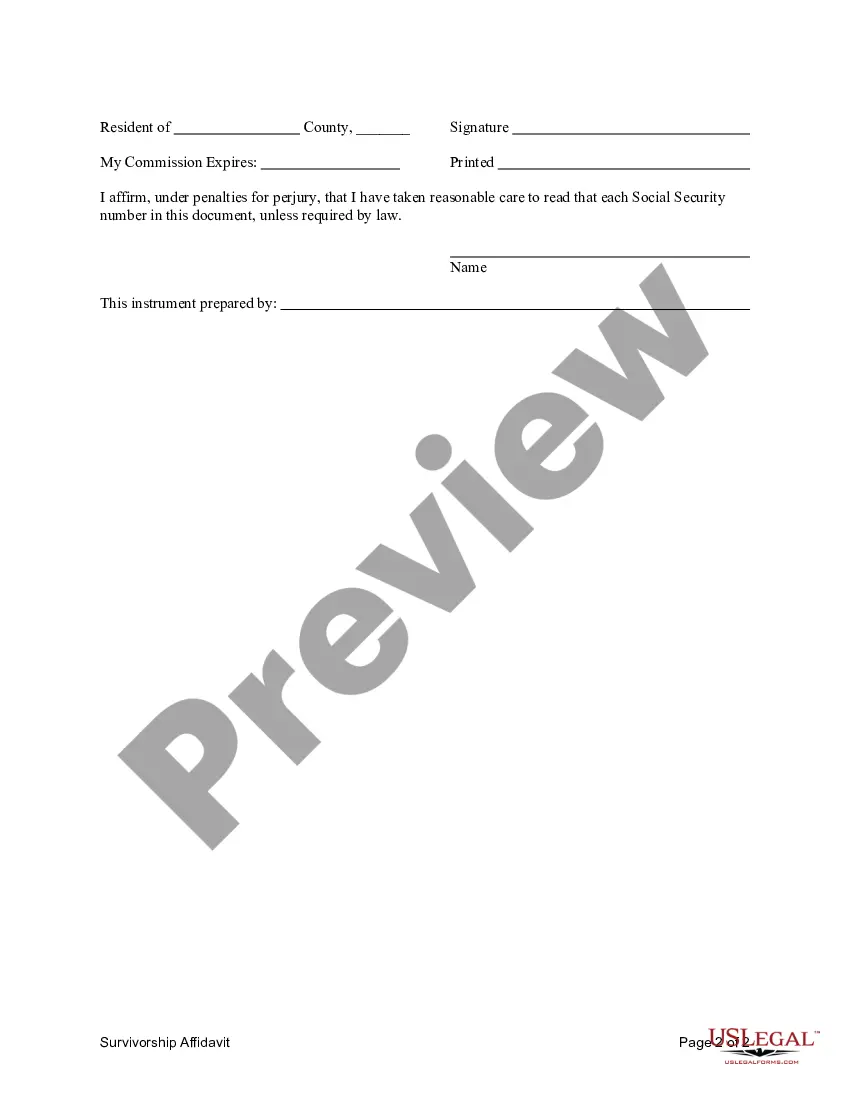
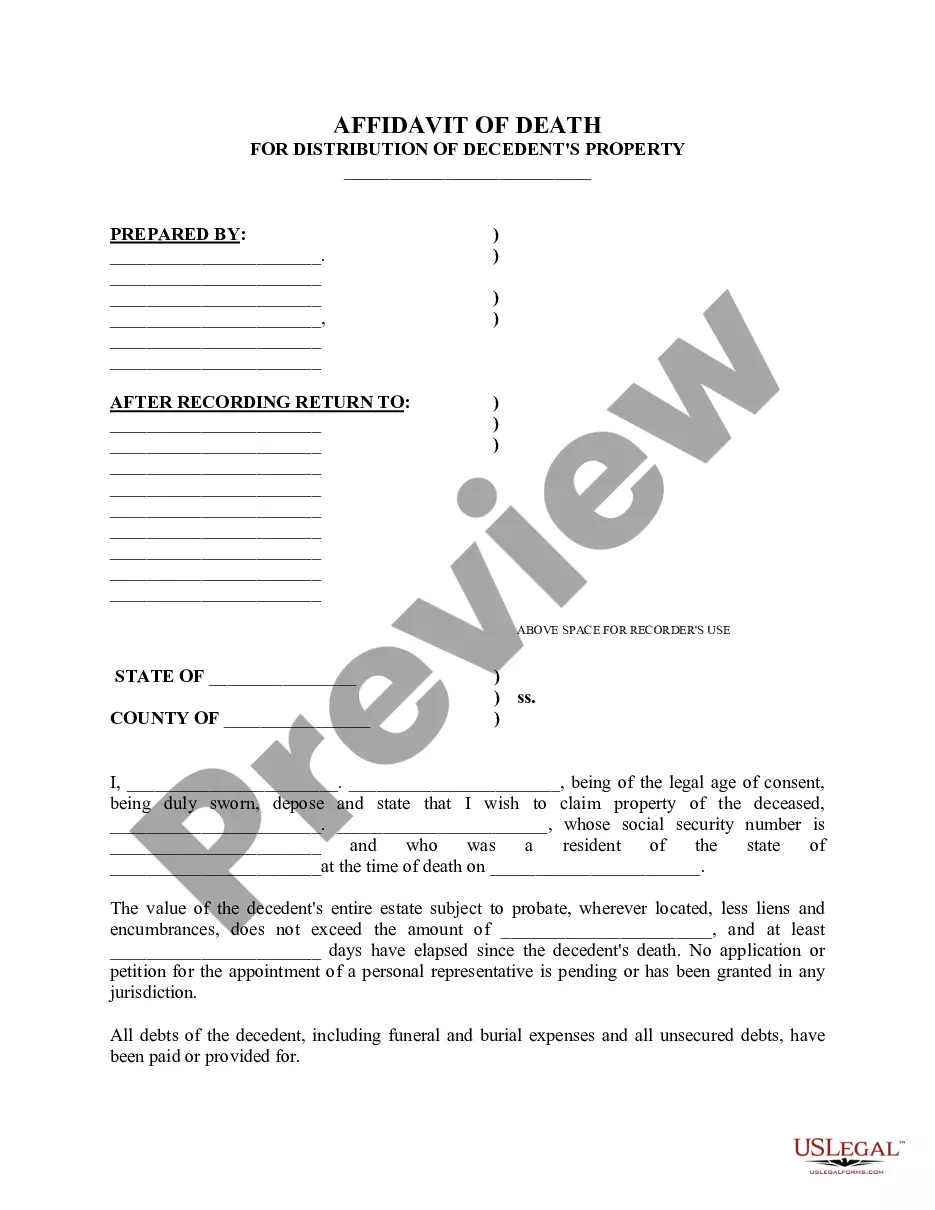
The Survivorship Affidavit is a form for a person to complete to establish the identity of the survivor in a joint tenancy or other property ownership relationship.
Clark Nevada Survivorship Affidavit
144 downloads
Description
Free preview

Get your form ready online
Our built-in tools help you complete, sign, share, and store your documents in one place.
Built-in online Word editor
Make edits, fill in missing information, and update formatting in US Legal Forms—just like you would in MS Word.
Export easily
Download a copy, print it, send it by email, or mail it via USPS—whatever works best for your next step.
E-sign your document
Sign and collect signatures with our SignNow integration. Send to multiple recipients, set reminders, and more. Go Premium to unlock E-Sign.
Notarize online 24/7
If this form requires notarization, complete it online through a secure video call—no need to meet a notary in person or wait for an appointment.
Store your document securely
We protect your documents and personal data by following strict security and privacy standards.

Make edits, fill in missing information, and update formatting in US Legal Forms—just like you would in MS Word.

Download a copy, print it, send it by email, or mail it via USPS—whatever works best for your next step.

Sign and collect signatures with our SignNow integration. Send to multiple recipients, set reminders, and more. Go Premium to unlock E-Sign.

If this form requires notarization, complete it online through a secure video call—no need to meet a notary in person or wait for an appointment.

We protect your documents and personal data by following strict security and privacy standards.
Looking for another form?
How to fill out Survivorship Affidavit?
Laws and statutes in every jurisdiction vary from one state to another.
If you are not an attorney, it can be challenging to navigate different standards when it comes to creating legal documents.
To prevent costly legal fees while preparing the Clark Survivorship Affidavit, you require a validated template suitable for your area.
This is the easiest and most economical method to acquire current templates for any legal situations. Discover them all with just a few clicks and manage your documentation effectively with the US Legal Forms!
- Review the page content to ensure you have located the correct sample.
- Utilize the Preview feature or read the form description if it is provided.
- Look for another document if there are discrepancies with any of your requirements.
- Use the Buy Now button to obtain the document once you identify the appropriate one.
- Select one of the subscription plans and Log In or create an account.
- Choose how you wish to pay for your subscription (via credit card or PayPal).
- Select the format in which you would like to save the document and click Download.
- Complete and sign the document on paper after printing or do it all digitally.
Form popularity
FAQ
If the surviving spouse wishes to remove the deceased spouse's name from the property so that the property is listed under the sole name of the surviving owner, an official death certificate must be sent to the Land Registry.
Once they finalise the distribution, heirs can draw a family settlement deed where each member signs, which can then be registered for official records. To transfer property, you need to apply at the sub-registrar's office. You will need the ownership documents, the Will with probate or succession certificate.
Fill out the affidavit completely. Sign the document in front of a notary. Attach a "certified" copy of the death certificate. Also attach a "legal description" of the property to be transferred (a copy of the survivorship deed or transfer on death designation or deed will suffice).
Even though executing and recording an affidavit of surviving joint tenant clears the title, the deceased owner's name remains on the deed. The only way to remove that name is by executing and recording a new deed, preferably including a copy of the recorded affidavit.
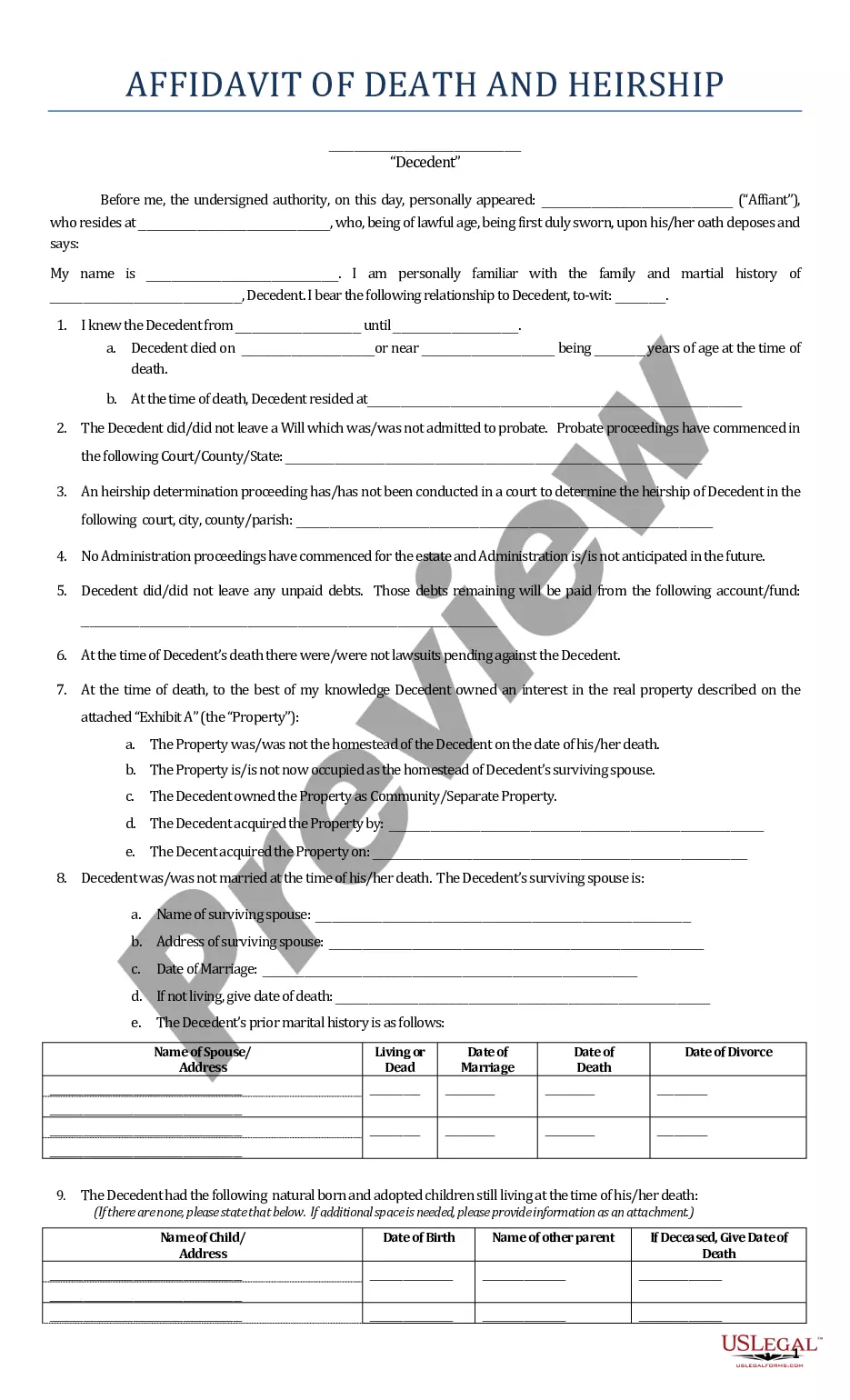
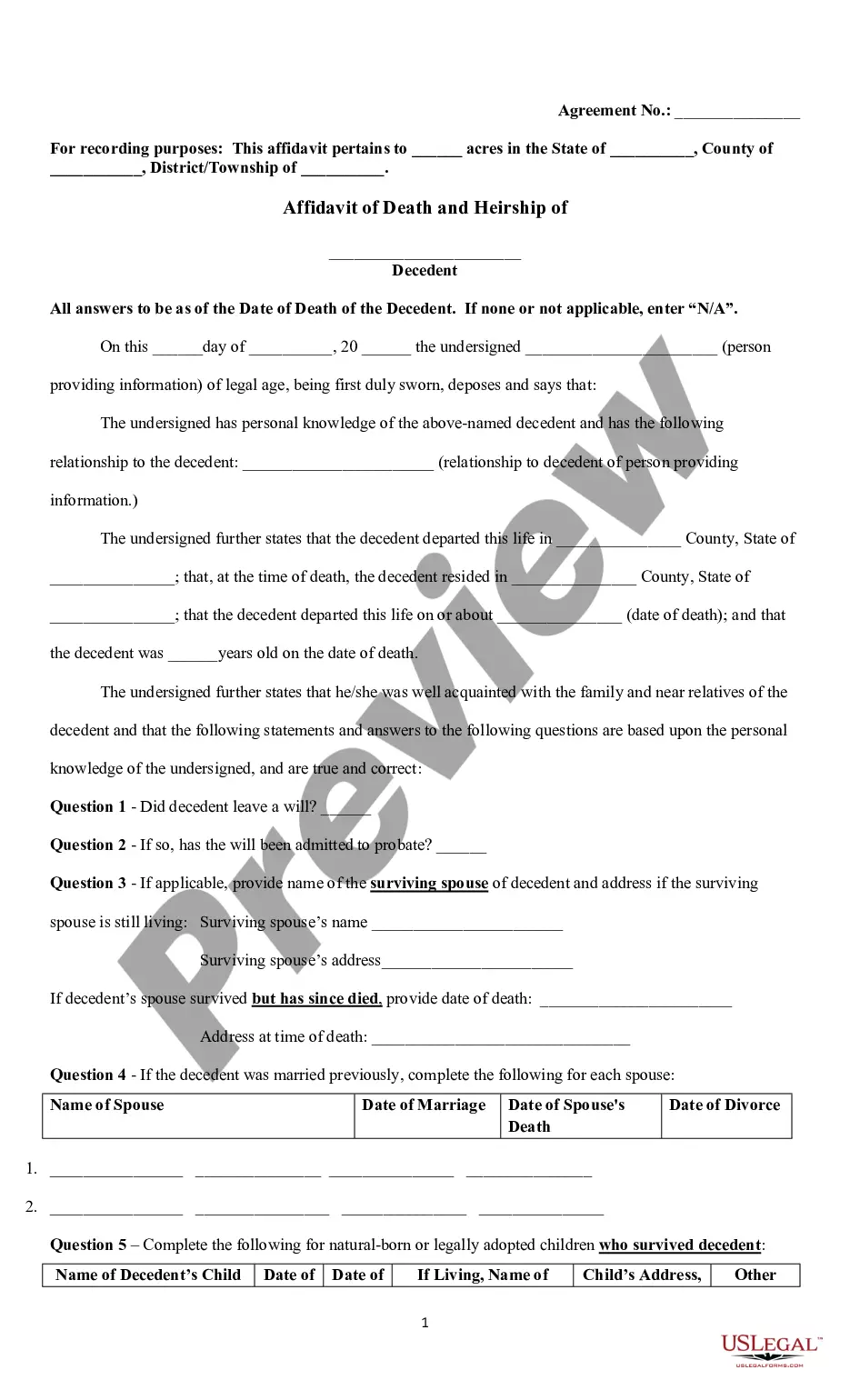
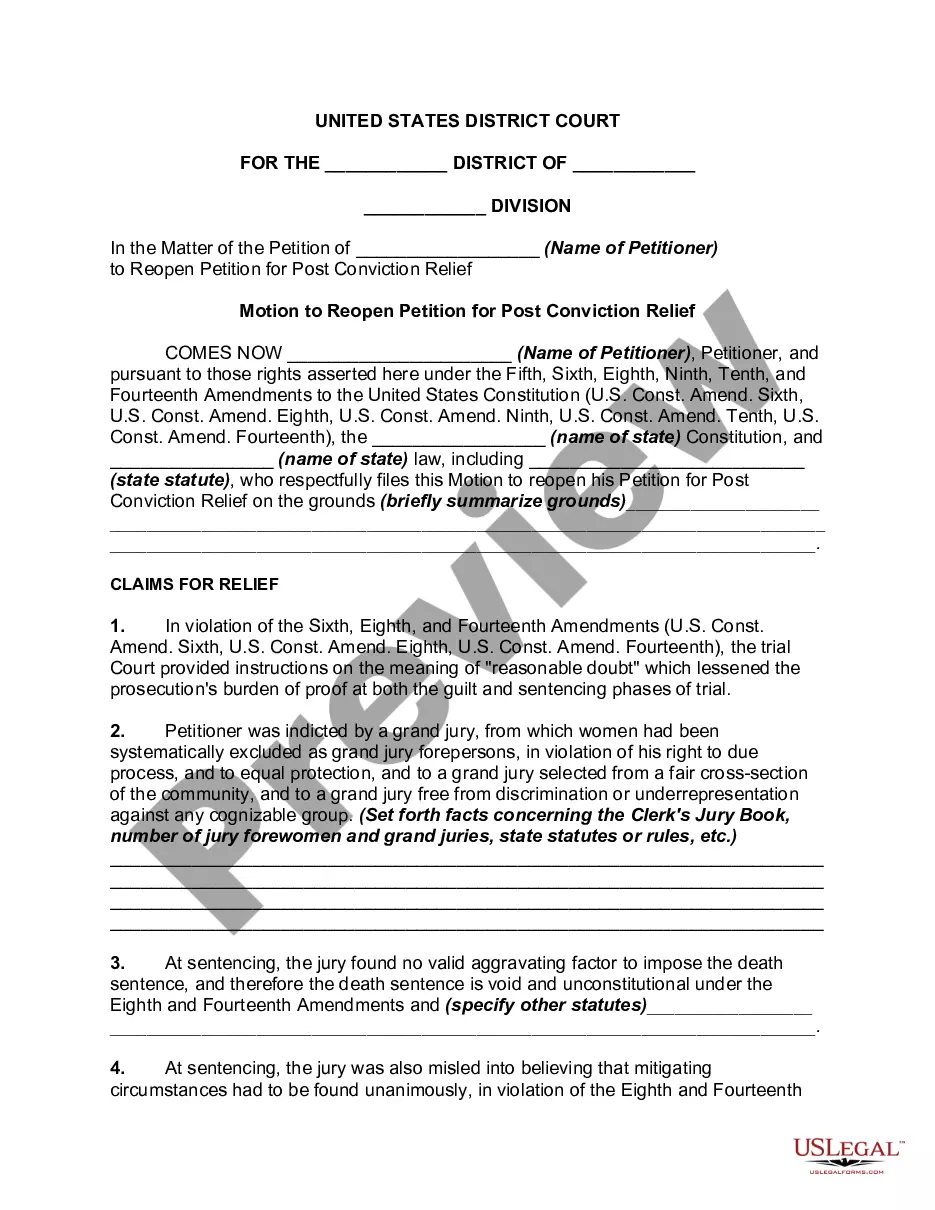
A survivorship affidavit (sometimes called an affidavit of death or affidavit of continuous marriage) is a legal document used to remove a deceased owner from title to property by recording evidence of the deceased owner's death in the land records.
How do I remove a deceased joint tenant's name from the title of my property? You will need to record a new transfer document to remove the deceased joint tenant from the ownership of the property; usually we see an Affidavit of Surviving Joint Tenant document used in this situation.
When one of them dies, the remaining owner automatically owns the whole of the property. This is the case, even if the deceased left a Will leaving all of their assets to someone else, because a joint tenancy interest in a property passes by the Right of Survivorship and not via a Will.
A Nevada TOD deed must be in a format substantially similar to the model and must: State the names of the property owner and beneficiary; Include a legal description of the property; Declare that the transfer becomes effective upon the owner's death; and, Provide the following disclaimer:
However, in the case of death of a spouse, the property can only be transferred in two ways. One is through partition deed or settlement deed in case no will or testament is created by the deceased spouse. And second is through the will deed executed by the person before his/her last death.