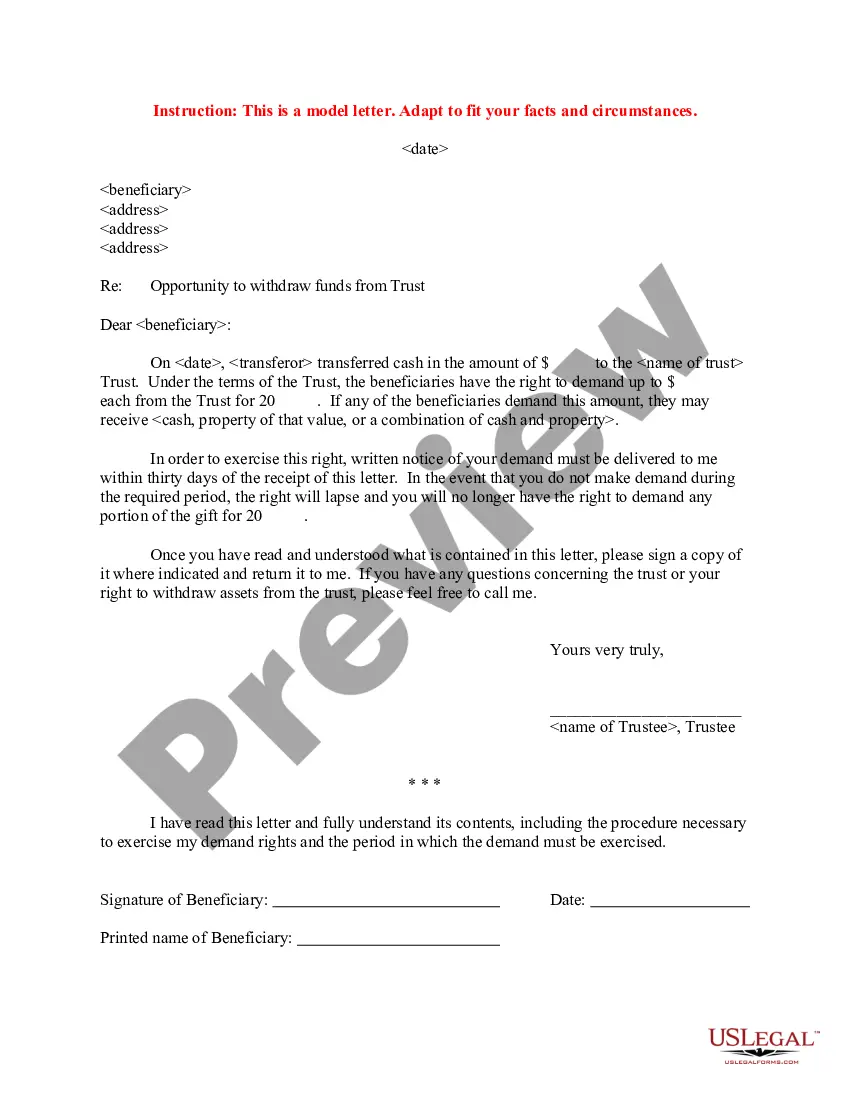
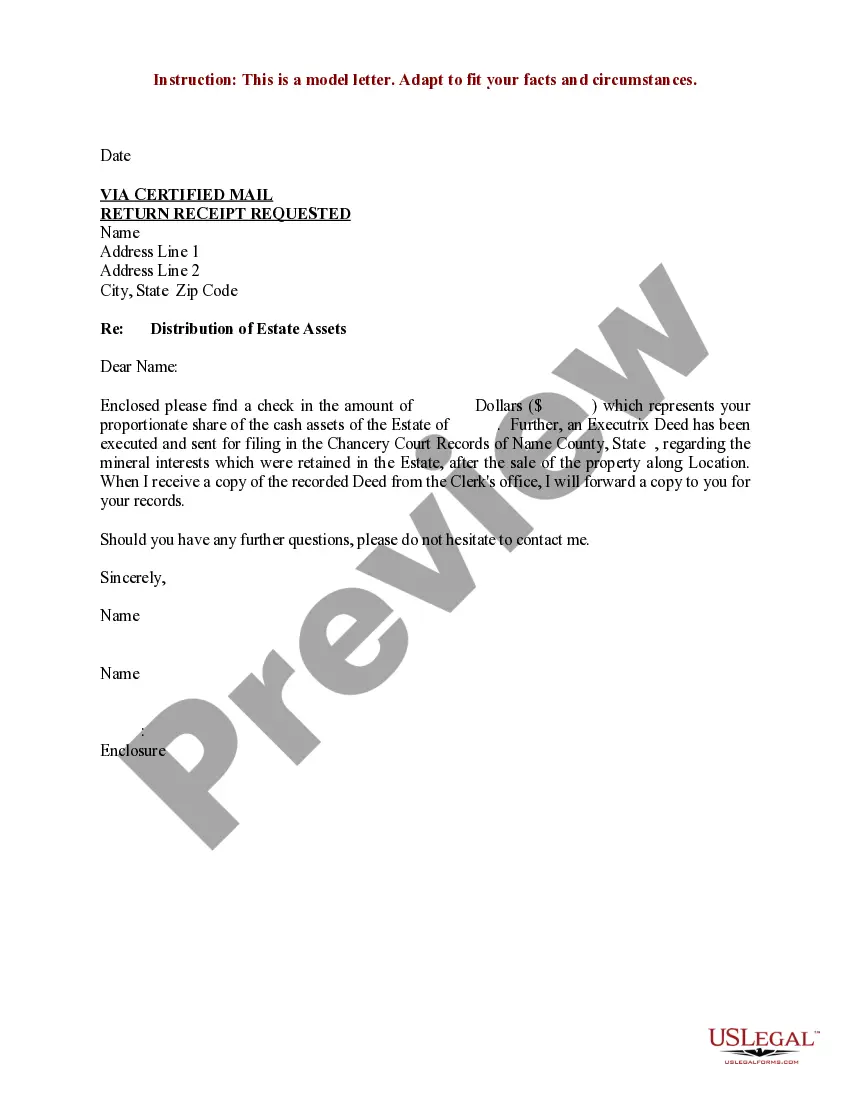
Chicago Illinois Sample Letter to Beneficiaries regarding Trust Money
Description
Get your form ready online
Our built-in tools help you complete, sign, share, and store your documents in one place.
Make edits, fill in missing information, and update formatting in US Legal Forms—just like you would in MS Word.
Download a copy, print it, send it by email, or mail it via USPS—whatever works best for your next step.
Sign and collect signatures with our SignNow integration. Send to multiple recipients, set reminders, and more. Go Premium to unlock E-Sign.
If this form requires notarization, complete it online through a secure video call—no need to meet a notary in person or wait for an appointment.
We protect your documents and personal data by following strict security and privacy standards.

Make edits, fill in missing information, and update formatting in US Legal Forms—just like you would in MS Word.

Download a copy, print it, send it by email, or mail it via USPS—whatever works best for your next step.

Sign and collect signatures with our SignNow integration. Send to multiple recipients, set reminders, and more. Go Premium to unlock E-Sign.

If this form requires notarization, complete it online through a secure video call—no need to meet a notary in person or wait for an appointment.

We protect your documents and personal data by following strict security and privacy standards.
Looking for another form?

How to fill out Sample Letter To Beneficiaries Regarding Trust Money?
Drafting documents, such as the Chicago Sample Letter to Beneficiaries concerning Trust Funds, for managing your legal affairs is a challenging and time-intensive endeavor.
Numerous situations necessitate an attorney's engagement, which further escalates the cost of this task.
However, you can take control of your legal affairs and handle them independently.
The onboarding process for new clients is quite simple! Here’s what you need to do before downloading the Chicago Sample Letter to Beneficiaries concerning Trust Funds: Ensure your document adheres to your state/county regulations as the requirements for drafting legal documents can differ between states. Learn more about the form by previewing it or reading a brief description. If the Chicago Sample Letter to Beneficiaries regarding Trust Money isn't what you needed, you can use the header to search for another document. Sign in or create an account to start using our website and access the form. Everything look good on your end? Click the Buy now button and select the subscription option. Choose the payment gateway and enter your payment details. Your form is ready to proceed. You can download it now. Locating and purchasing the right document with US Legal Forms is easy. Thousands of businesses and individuals are already reaping the benefits of our vast collection. Subscribe now to discover what additional advantages you can gain with US Legal Forms!
- US Legal Forms is here to assist you.
- Our site offers over 85,000 legal templates designed for various situations and personal circumstances.
- We guarantee that every form complies with the regulations of each state, relieving you from concerns about potential legal compliance issues.
- If you are already acquainted with our services and have a subscription with US, you know how simple it is to obtain the Chicago Sample Letter to Beneficiaries regarding Trust Funds form.
- Just Log In to your account, download the template, and tailor it to your requirements.
- Lost your form? No problem. You can retrieve it from the My documents section in your account - accessible via desktop or mobile.
Form popularity
FAQ
A living trust in Illinois provides a variety of benefits that can't be obtained from a will. Trusts are private documents and are not public record or reviewed by any court. No one will know who your beneficiaries are, what your assets are, and what the terms of your trust are. This is very appealing to many people.
Beneficiaries have every right to see the accounting, including all of an executor's activities before the file is permanently closed. Technically, this is the only time the executor is required to share the accounting with all of the beneficiaries.
Beneficiary notifications. Trustees will be required to notify each qualified beneficiary of the trust's existence within 90 days of a trust becoming irrevocable, as well as whether or not the beneficiary may request trust accountings.
Distribute trust assets outright The grantor can opt to have the beneficiaries receive trust property directly without any restrictions. The trustee can write the beneficiary a check, give them cash, and transfer real estate by drawing up a new deed or selling the house and giving them the proceeds.
As a general rule, a beneficiary is entitled to a copy of the trust document, any deeds of variation of the trust, deeds of appointment and trust accounts. If further information is requested, it is at the discretion of the trustee as to whether it will be provided.
Executors should also ask each beneficiary to sign a receipt for the gifts that they receive. This will act as proof of distribution. This receipt should record the gift, the date the distribution was made, the full name of the beneficiary, and the name of the executor.
Individual beneficiaries have no rights to assets until the trustees exercise a discretion in their favour. Consequently, an obligation for trustees to act impartially while managing trust assets for the benefit of all beneficiaries is reasonable and appropriate.
Of the trust's existence, the beneficiary's right to request a copy of the trust agreement and right to an account (within 90 days of the trust becoming irrevocable or a change in trusteeship) when a trust becomes irrevocable (within 90 days of the event)
The grantor can set up the trust, so the money distributes directly to the beneficiaries free and clear of limitations. The trustee can transfer real estate to the beneficiary by having a new deed written up or selling the property and giving them the money, writing them a check or giving them cash.