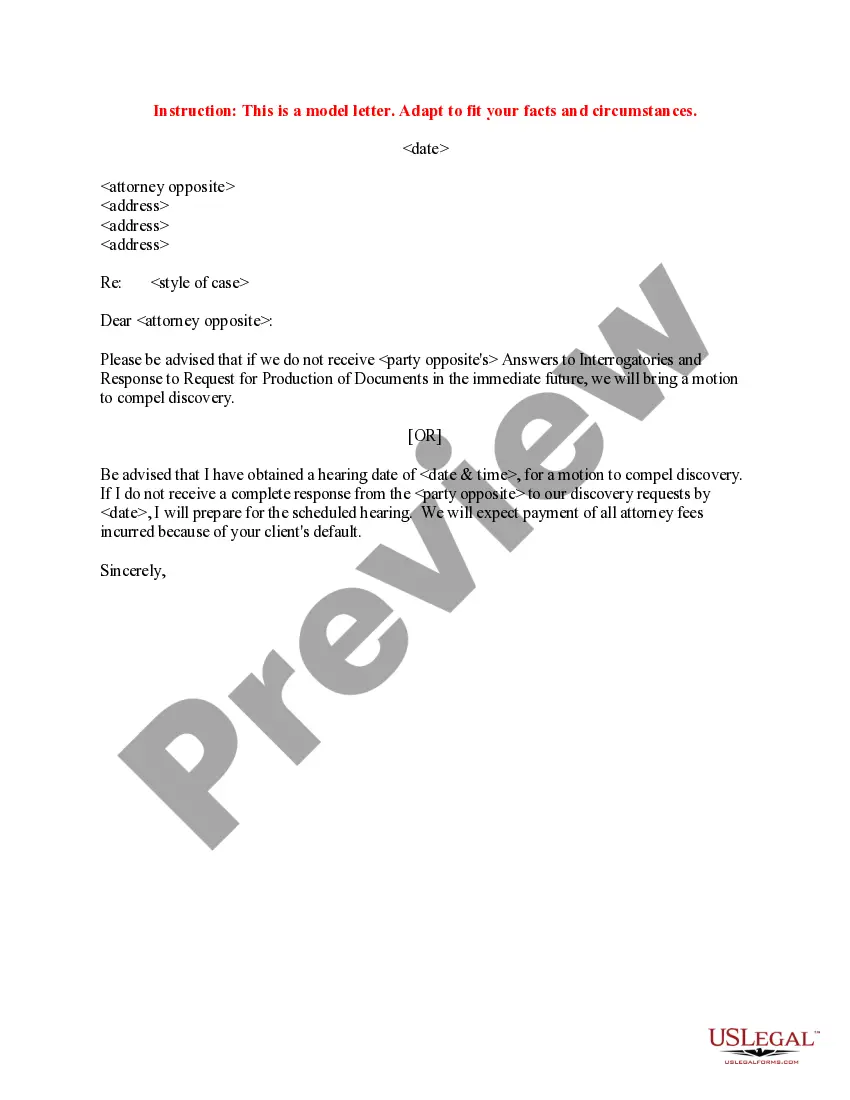
Harris Texas Discovery - Sample Letter to Attorney Opposite regarding His Client's overdue Interrogatories
Description
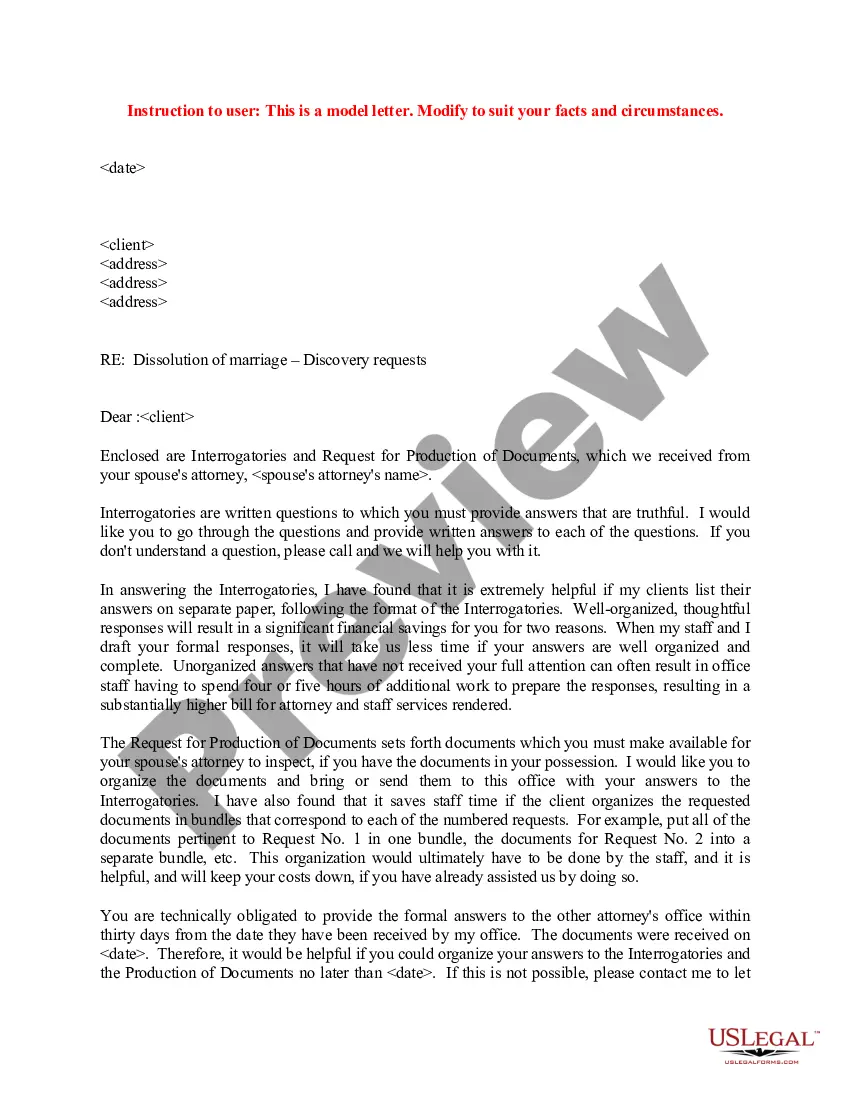
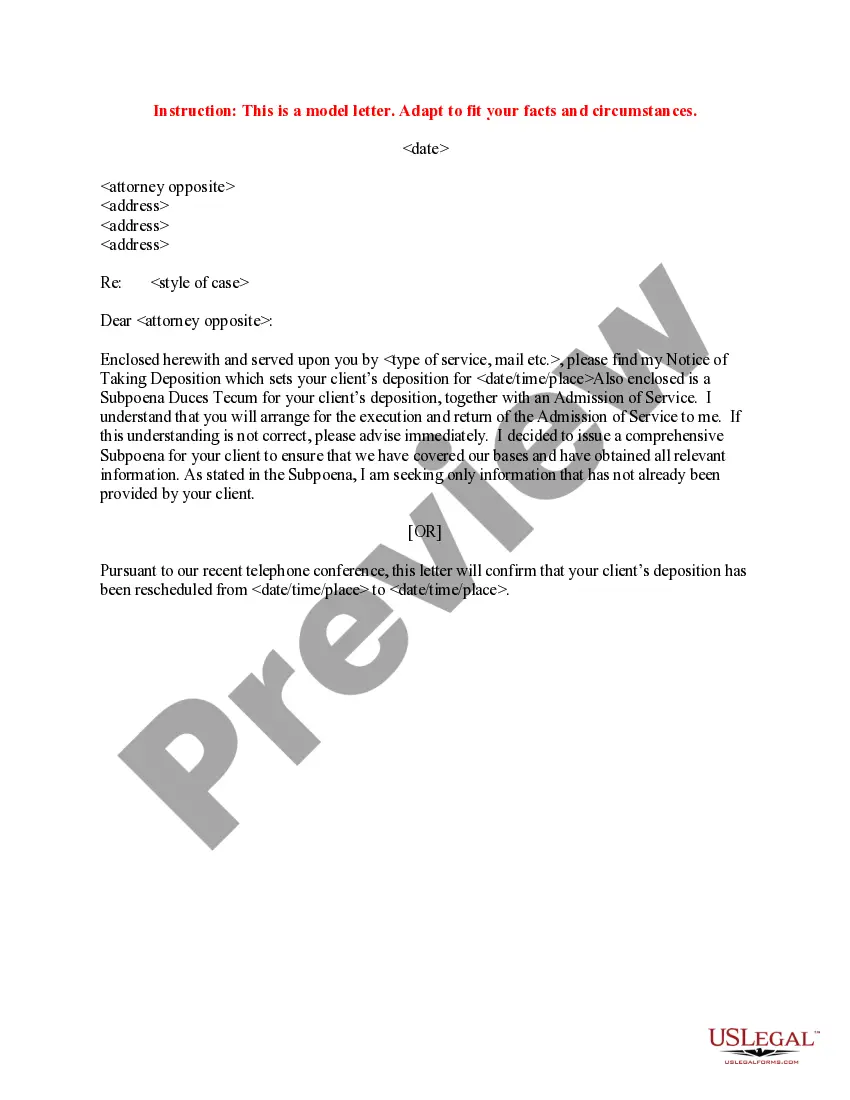
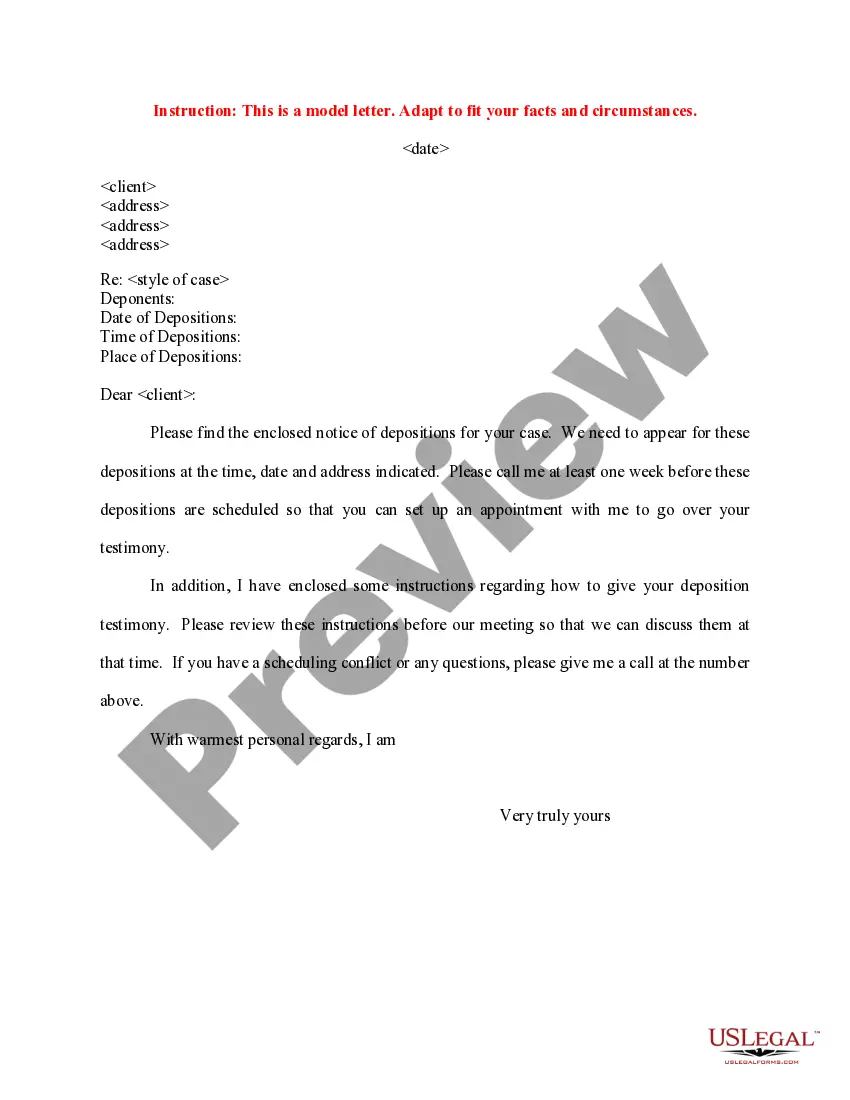
Get your form ready online
Our built-in tools help you complete, sign, share, and store your documents in one place.
Make edits, fill in missing information, and update formatting in US Legal Forms—just like you would in MS Word.
Download a copy, print it, send it by email, or mail it via USPS—whatever works best for your next step.
Sign and collect signatures with our SignNow integration. Send to multiple recipients, set reminders, and more. Go Premium to unlock E-Sign.
If this form requires notarization, complete it online through a secure video call—no need to meet a notary in person or wait for an appointment.
We protect your documents and personal data by following strict security and privacy standards.

Make edits, fill in missing information, and update formatting in US Legal Forms—just like you would in MS Word.

Download a copy, print it, send it by email, or mail it via USPS—whatever works best for your next step.

Sign and collect signatures with our SignNow integration. Send to multiple recipients, set reminders, and more. Go Premium to unlock E-Sign.

If this form requires notarization, complete it online through a secure video call—no need to meet a notary in person or wait for an appointment.

We protect your documents and personal data by following strict security and privacy standards.
Looking for another form?

How to fill out Discovery - Sample Letter To Attorney Opposite Regarding His Client's Overdue Interrogatories?
A document procedure consistently accompanies any lawful engagement you initiate.
Establishing a business, submitting or accepting employment proposals, transferring ownership, and numerous other life events necessitate the preparation of formal documentation that varies by state.
This is why having everything gathered in one area is incredibly beneficial.
US Legal Forms is the most extensive online repository of current federal and state-specific legal documents.
This is the simplest and most dependable method to acquire legal documents. All templates in our library are expertly drafted and verified for compliance with local laws and regulations. Prepare your documentation and effectively manage your legal matters with US Legal Forms!
- On this site, you can readily find and acquire a document for any personal or commercial intention utilized in your jurisdiction, including the Harris Discovery - Sample Letter to Attorney Opposite regarding His Client's overdue Interrogatories.
- Finding templates on the site is remarkably simple.
- If you possess a subscription to our library, Log In to your account, locate the sample using the search functionality, and click Download to save it on your device.
- Subsequently, the Harris Discovery - Sample Letter to Attorney Opposite regarding His Client's overdue Interrogatories will be available for subsequent use in the My documents section of your profile.
- If you are utilizing US Legal Forms for your first instance, follow this straightforward guide to obtain the Harris Discovery - Sample Letter to Attorney Opposite regarding His Client's overdue Interrogatories.
- Ensure you have accessed the correct page containing your local form.
- Utilize the Preview option (if available) and scroll through the template.
- Review the description (if any) to confirm the form satisfies your requirements.
- If the sample does not suit your needs, search for another document using the search tab.
Form popularity
FAQ
To sanction a party failing to comply with discovery, the court can order attorney's fees, or they can order the fact you are seeking to establish as having been established for purposes of your case, because the other side will not respond to the discovery on this issue.
Motion for Sanctions If the court issues an order compelling discovery, and the party fails to comply with that order, then the court may sanction the party in numerous ways such as refusing to let in the party's evidence at trial, dismissing their lawsuit, or striking their defense to a lawsuit, and imposing
Hello. I'm taking this matter over for NAME and will be your main contact going forward. Please let others on your team know that and share my contact information with them. I'm still getting up to speed on the file but know that I would like to take your client's deposition sometime between DATE and DATE.
Never Refer To Counsel In Argument Resist the impulse in Court to address opposing counsel directly always address through the Court. It will keep you more civil and calmer (and it's what the Court wants anyway).
This motion is called motion to dismiss for plaintiff's failure to comply with the court's order to provide discovery.
Once the court grants the motion to compel, the court will grant the other party a deadline before which the documents or information must be shared. If the person does not respect the order of the court, there may be severe consequences such as the dismissal of the other party's case or being in contempt of court.
Make it a lead-off general objection. Object to anything that is not relevant to the subject matter (no longer the standard) or not likely to lead to admissible evidence (no longer the standard). Don't say if anything is being withheld on the basis of the objection. Use boilerplate wording from form files.
Failing To Respond To Discovery Can Lead To A Dismissal Of Your Case With Prejudice. In the practice of law, the discovery phase can be your best friend or your worst nightmare. Interrogatories, requests for documents, and depositions can make or break your case.
Writing to opposing counsel is never easy....Avoiding an Adversarial Tone Prefer positive to negative words.Don't write when you're angry.Don't use value judgments designed to make readers feel bad about past mistakes.Apologize completely.Empathize before stating an opinion.
To avoid costly mistakes, use this list of tips for keeping your emails to opposing counsel bullet-proof: #1: Consider everything you put in writing to be an exhibit that will end up in front of the judge.#2: Don't put the opposing counsel's email address in the To: line until you know your email is ready to send.