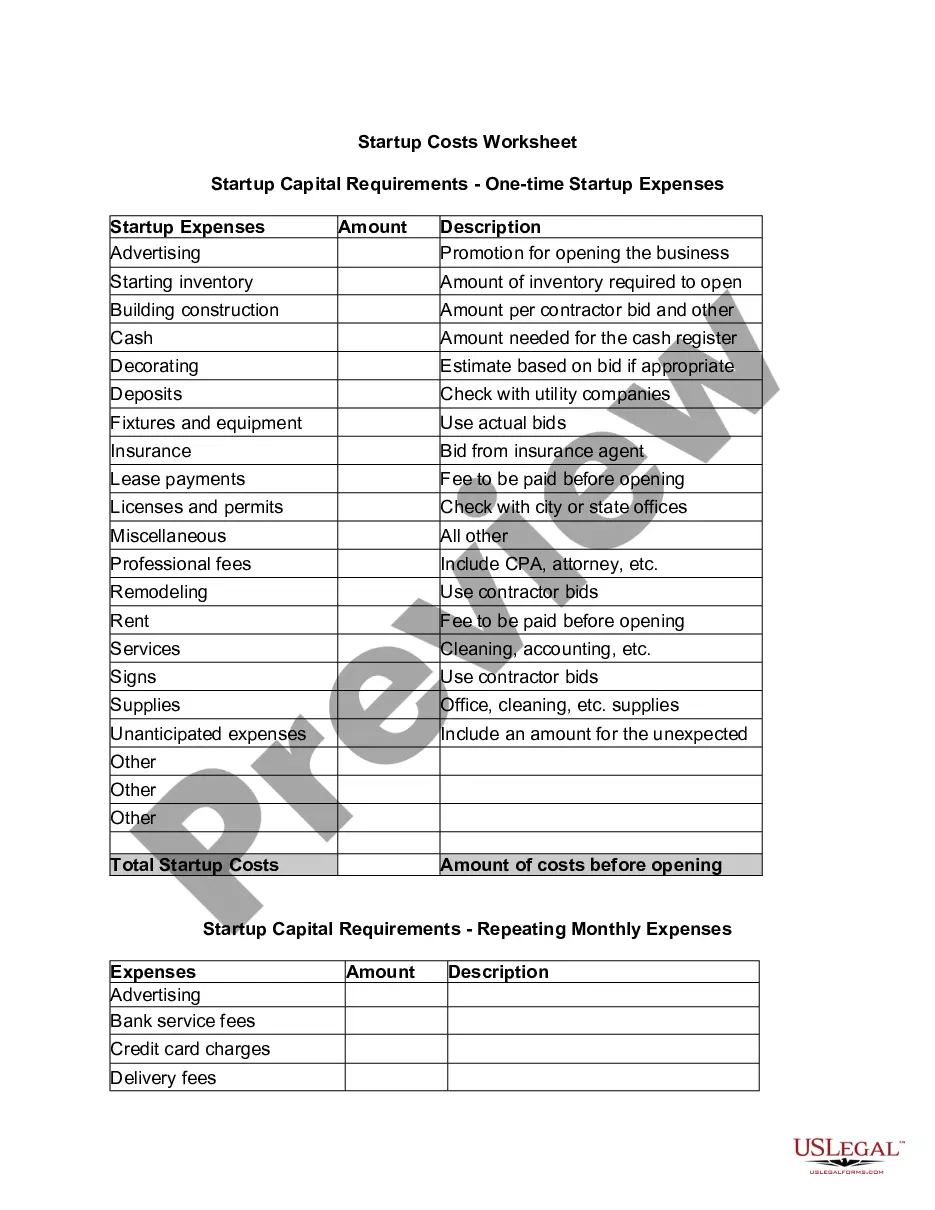
Bronx New York Startup Costs Worksheet
Description
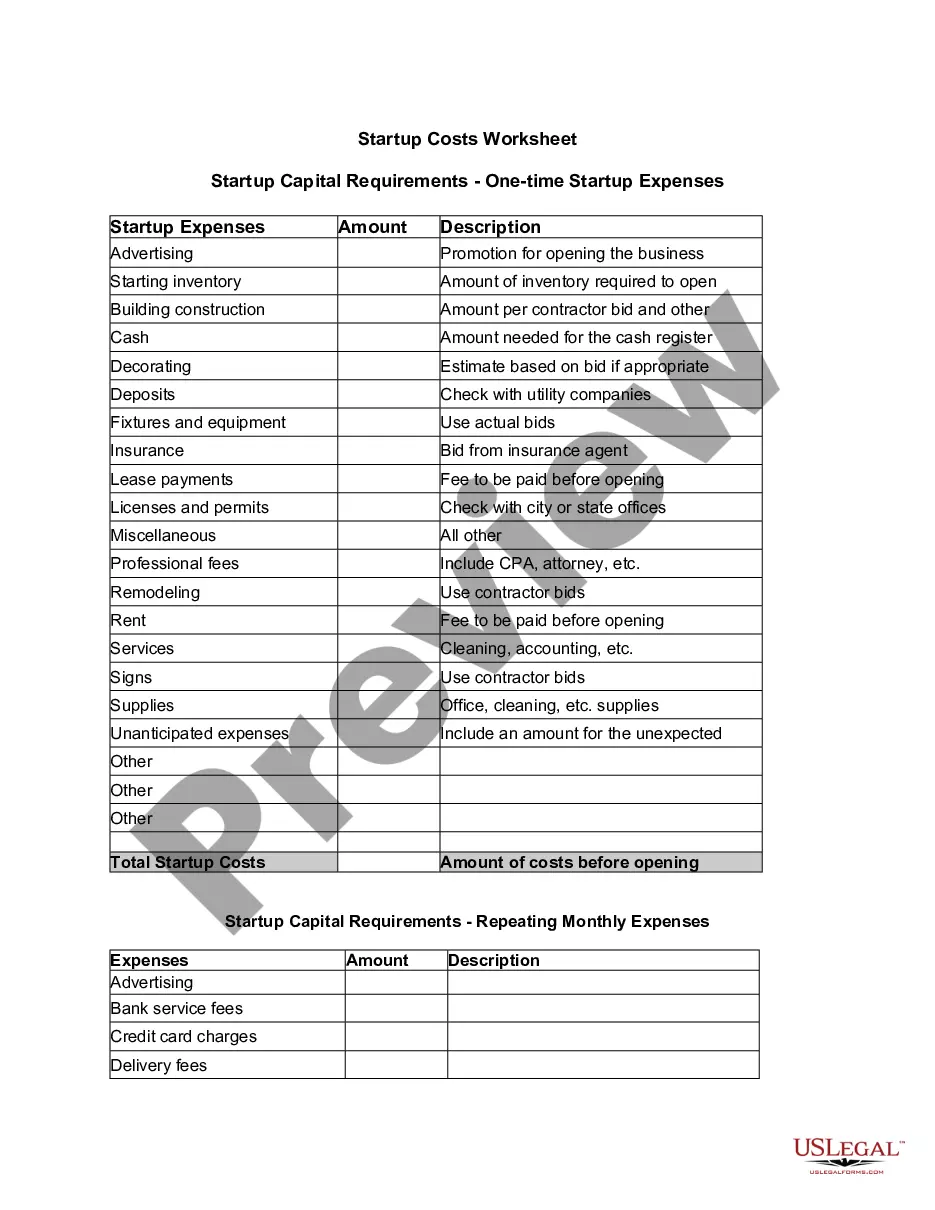
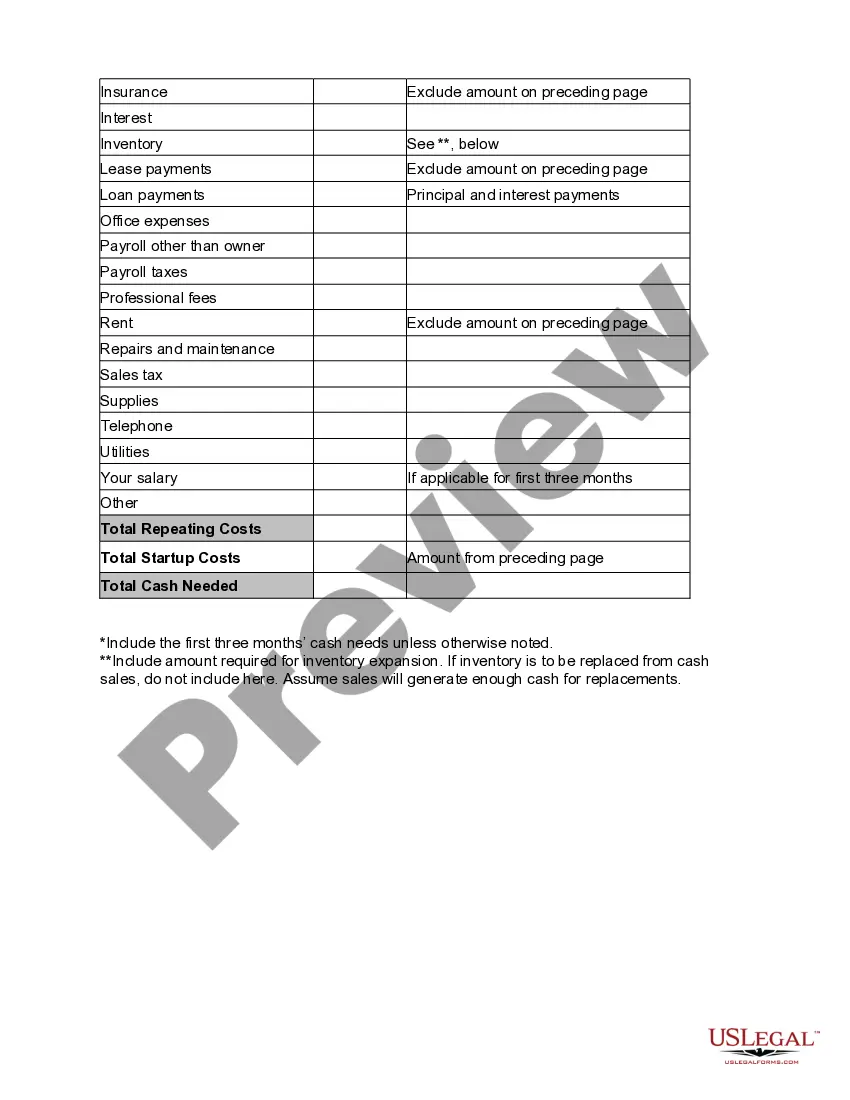
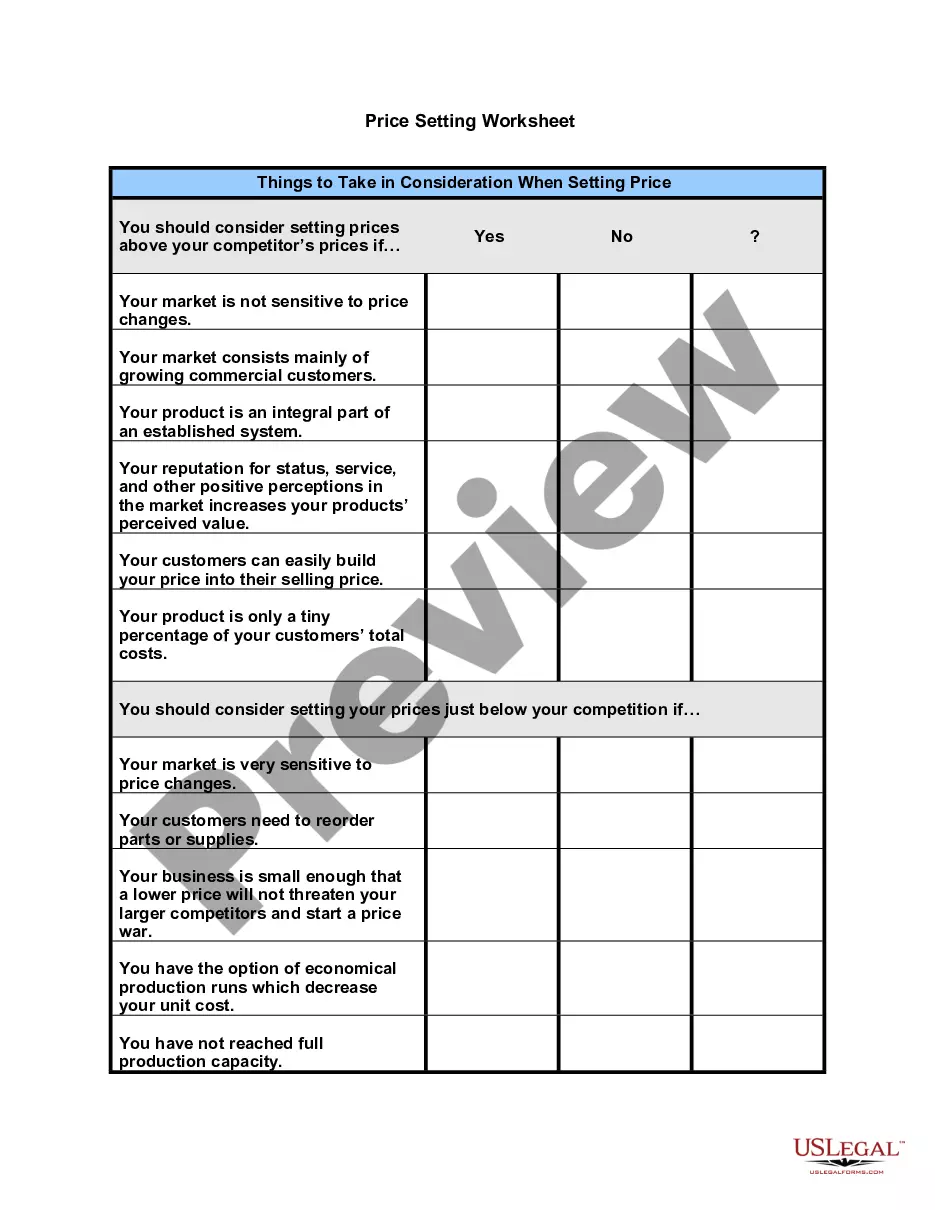
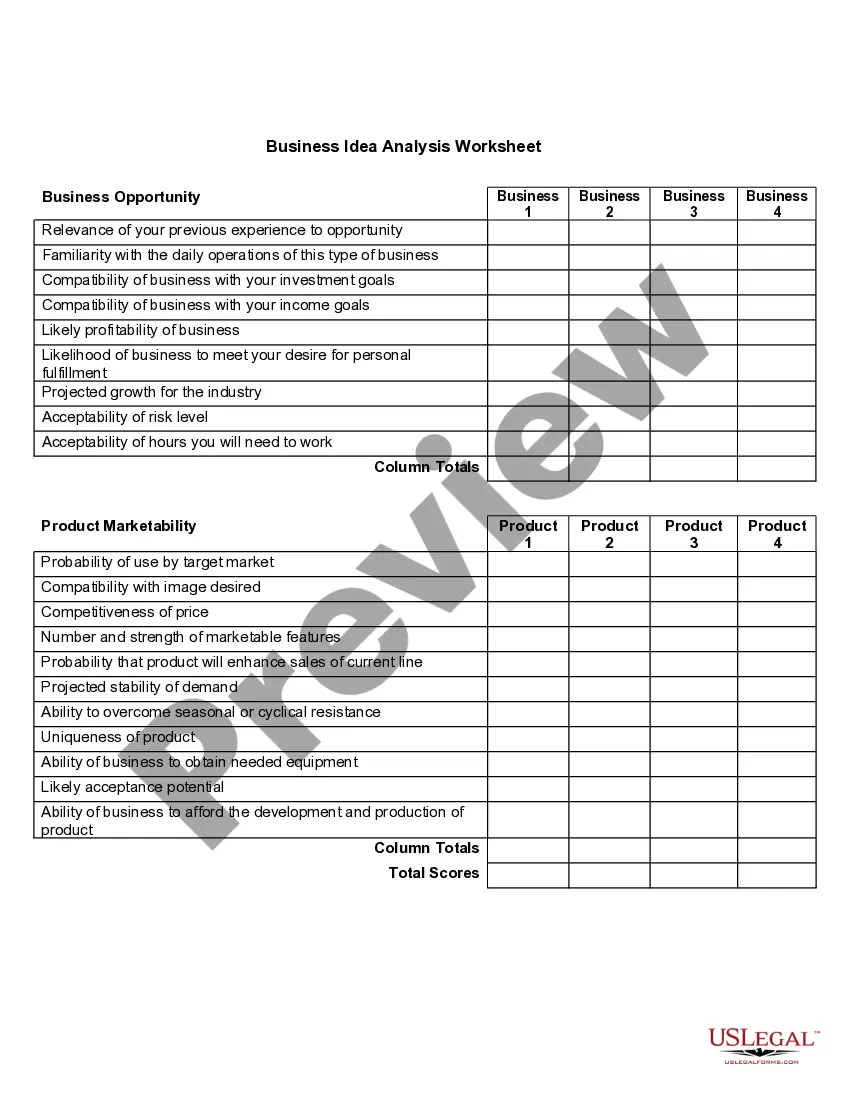





How to fill out Startup Costs Worksheet?
Drafting legal documents can be tedious. Moreover, if you choose to hire a lawyer to create a business contract, documents for asset transfer, prenuptial agreement, divorce documents, or the Bronx Startup Costs Worksheet, it could end up being quite expensive.
So, what is the most sensible way to conserve both time and finances while generating valid documents that fully adhere to your state and local laws? US Legal Forms offers an excellent alternative, whether you are looking for templates for personal or business purposes.
Don't be concerned if the form doesn't meet your needs - search for the appropriate one in the header.
- US Legal Forms is the largest online collection of state-specific legal documents, supplying users with up-to-date and professionally validated templates for every situation, all gathered in one location.
- As a result, if you are seeking the most recent version of the Bronx Startup Costs Worksheet, you can effortlessly locate it on our site.
- Acquiring the documents requires very little time.
- Users who already have an account should verify that their subscription is current, Log In, and select the template by clicking the Download button.
- If you haven't registered yet, here's how to obtain the Bronx Startup Costs Worksheet.
- Browse the page to confirm there is a template available for your region.
- Review the form description and utilize the Preview option, if provided, to ensure it is the template you want.
Form popularity
FAQ
Your worksheet should list all the facilities costs, equipment, initial supplies and materials, advertising materials, and miscellaneous costs you need to open your business. Once you understand all of the cost categories involved, you can verify that your plan has captured all of the expenses needed to get started.
Key Takeaways. Startup costs are the expenses incurred during the process of creating a new business. Pre-opening startup costs include a business plan, research expenses, borrowing costs, and expenses for technology. Post-opening startup costs include advertising, promotion, and employee expenses.
Startup costs do not include costs for interest, taxes, and research and experimentation (Sec. 195(c)(1)).
A startup cost is any expense incurred when starting a new business. Startup costs will include equipment, incorporation fees, insurance, taxes, and payroll. Although startup costs will vary by your business type and industry an expense for one company may not apply to another.
Interest, taxes, and research and experimental expenditures specifically are excluded from the definition of startup costs (Sec. 195(c)). Sec. 174(a)(1) allows research and experimental expenditures to be deducted or amortized only if incurred in connection with a trade or business.
Key Takeaways. Startup costs are the expenses incurred during the process of creating a new business. Pre-opening startup costs include a business plan, research expenses, borrowing costs, and expenses for technology. Post-opening startup costs include advertising, promotion, and employee expenses.
Examples of startup costs include licensing and permits, insurance, office supplies, payroll, marketing costs, research expenses, and utilities.
Startup costs are the expenses incurred during the process of creating a new business. Pre-opening startup costs include a business plan, research expenses, borrowing costs, and expenses for technology. Post-opening startup costs include advertising, promotion, and employee expenses.
Startup costs will include equipment, incorporation fees, insurance, taxes, and payroll. Although startup costs will vary by your business type and industry an expense for one company may not apply to another.