Tarrant Texas Attorney Retainer Agreement
Description

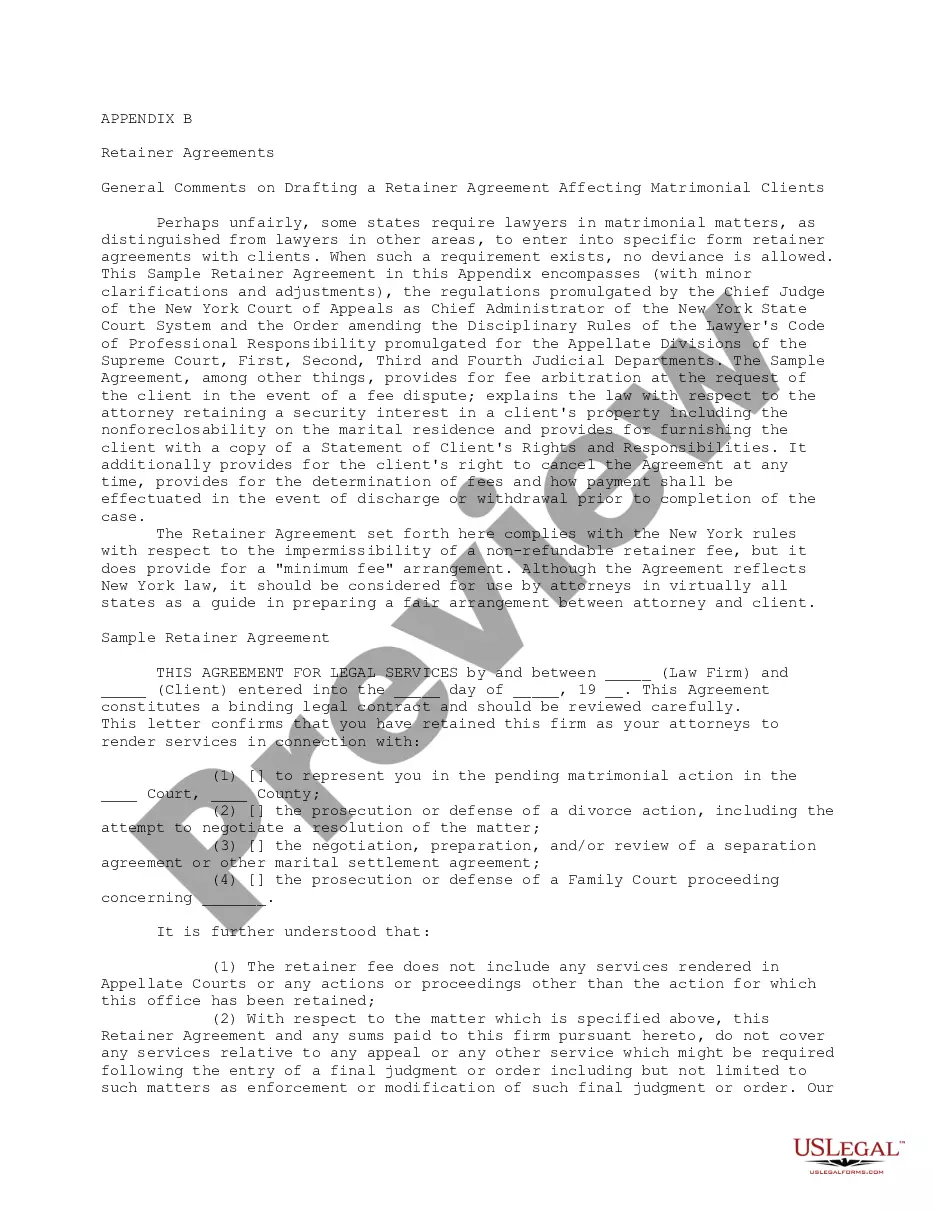
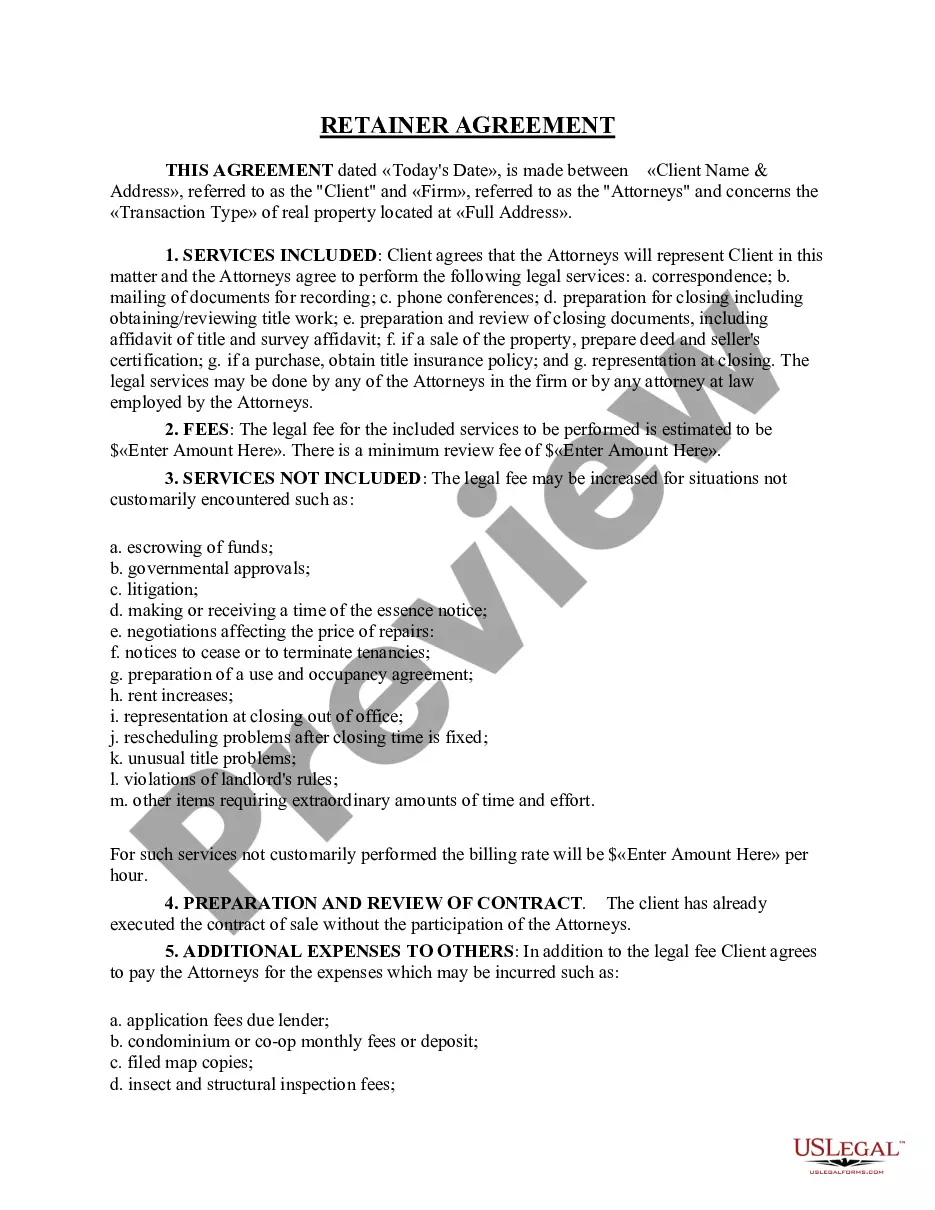
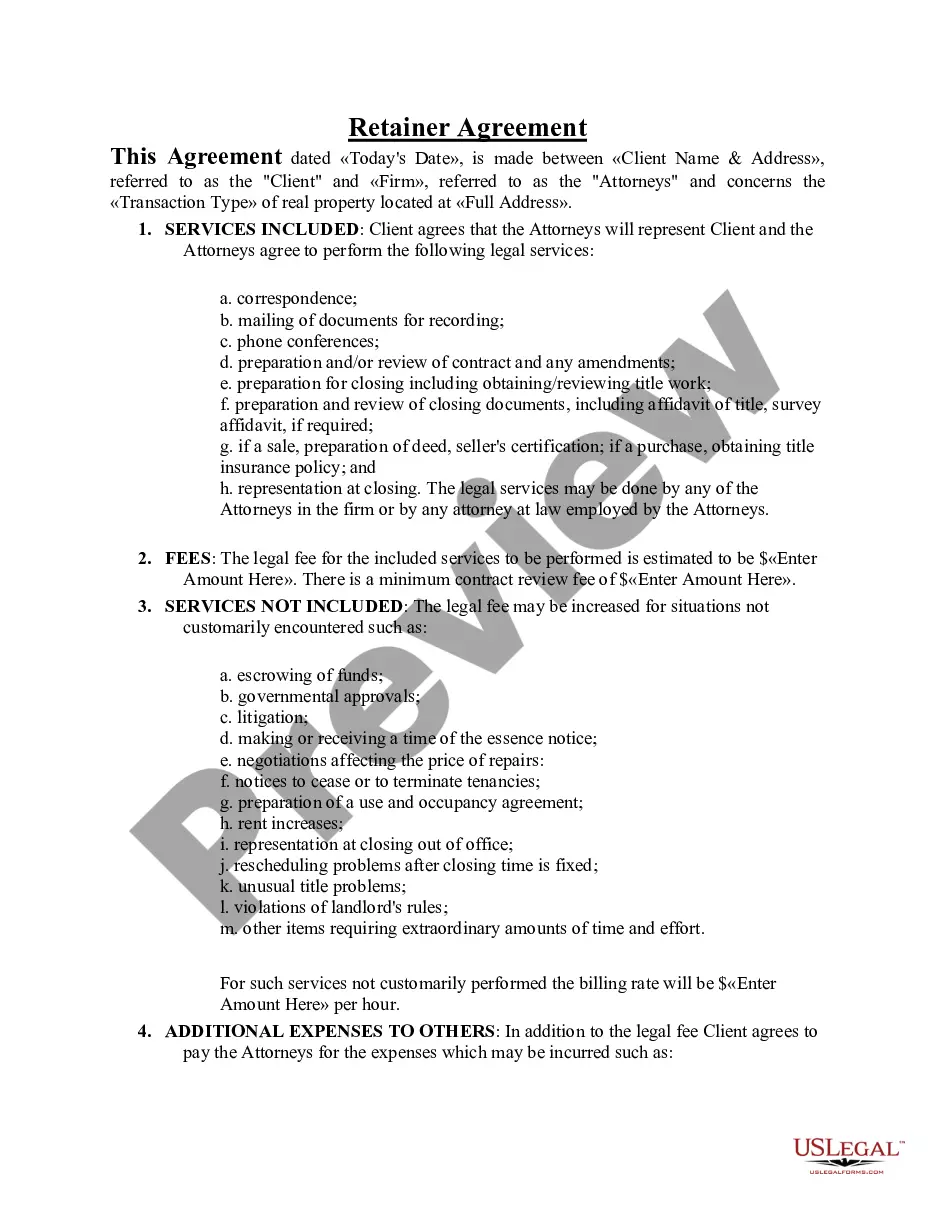
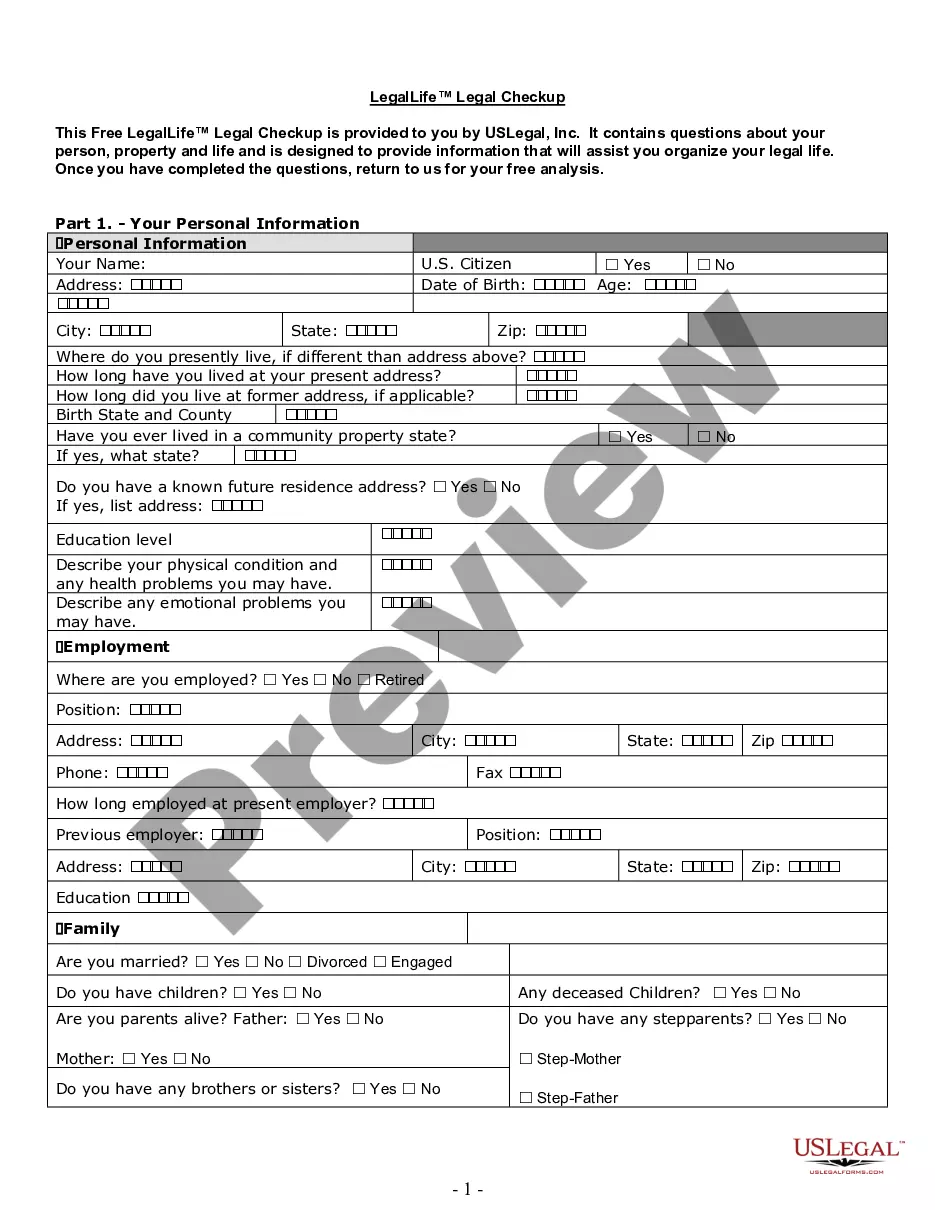

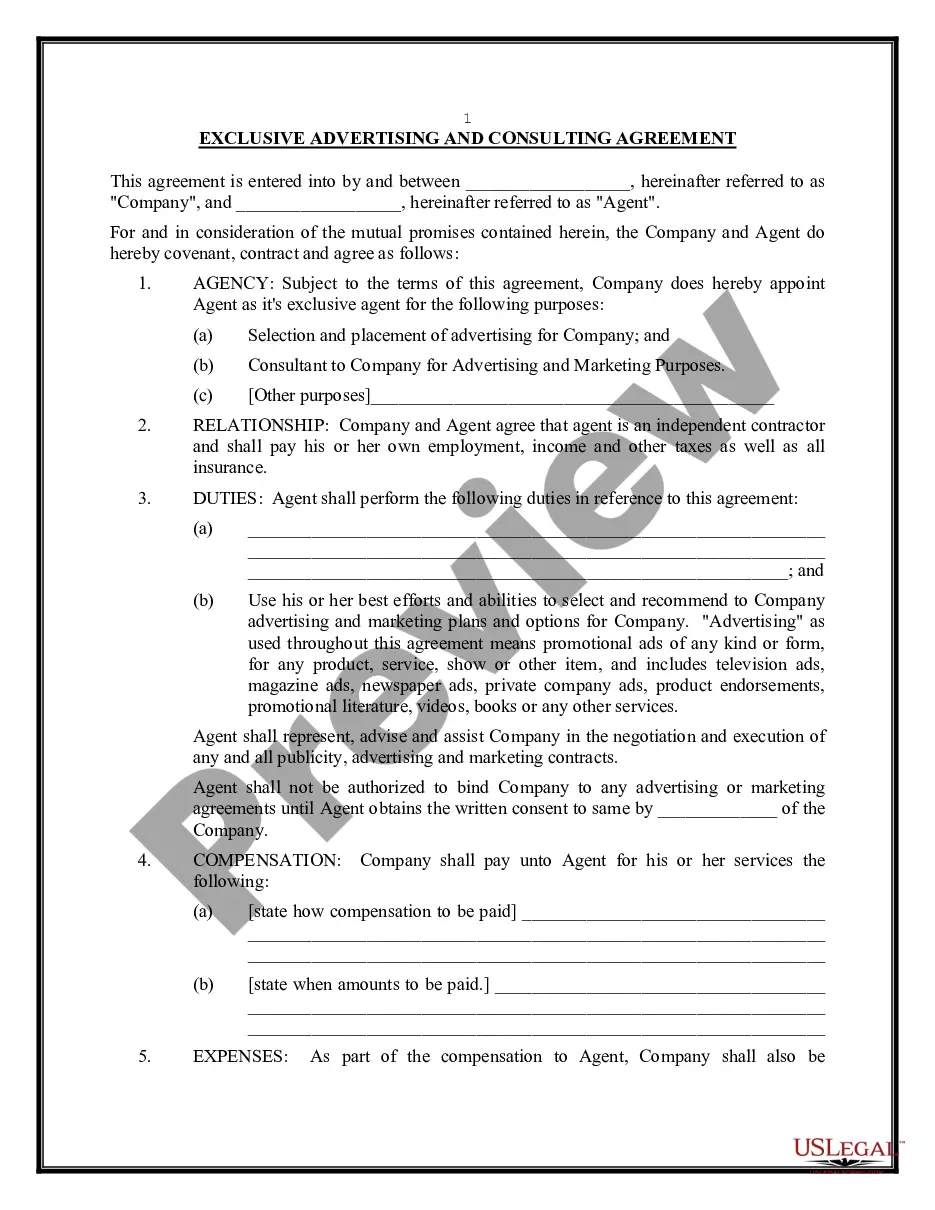
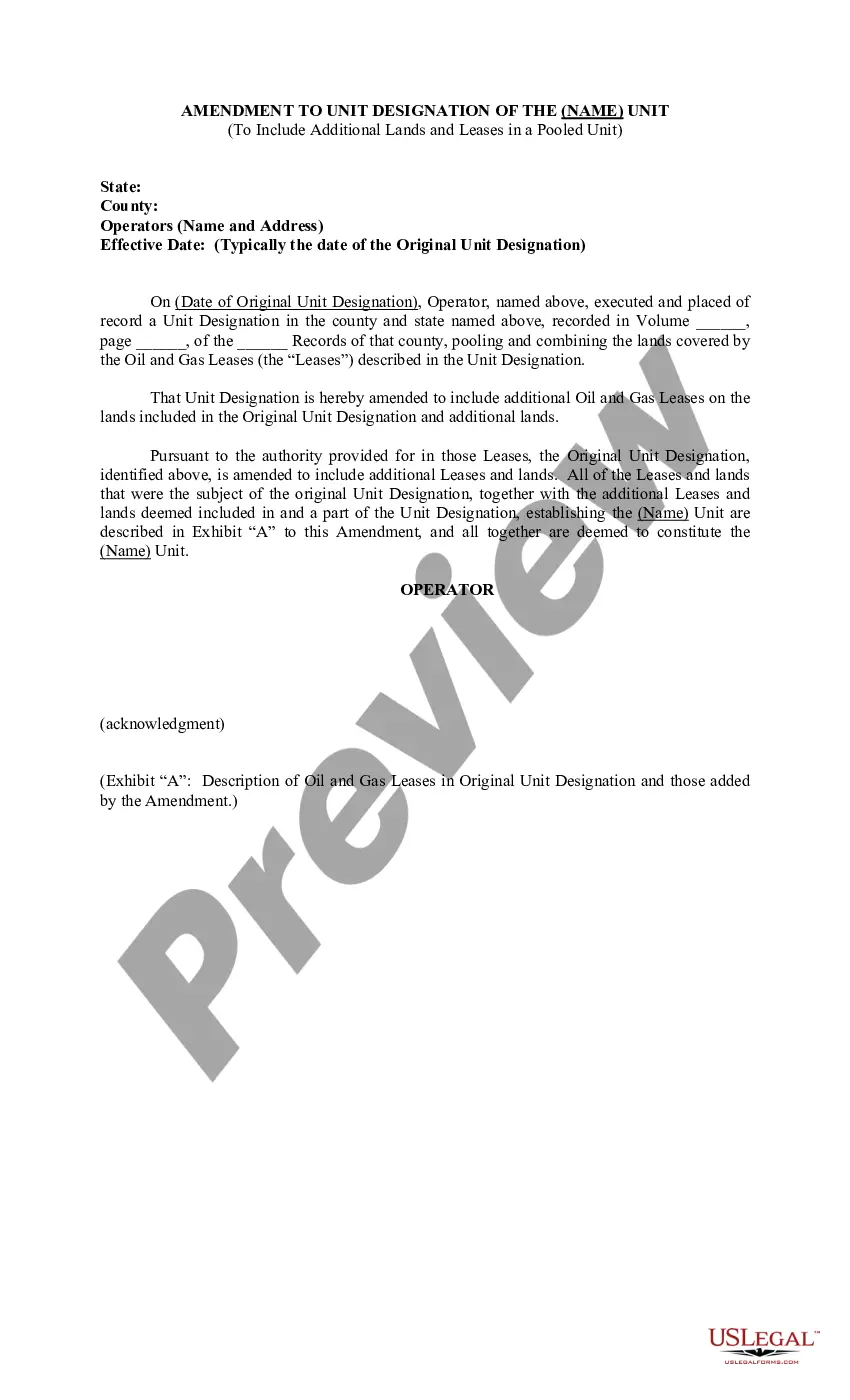
How to fill out Attorney Retainer Agreement?
Whether you intend to launch your enterprise, enter into an agreement, request your identification update, or settle familial legal matters, it is essential to prepare specific documentation that complies with your local statutes and regulations.
Locating the appropriate papers can require substantial time and effort unless you utilize the US Legal Forms library.
The service offers users access to over 85,000 expertly crafted and validated legal documents for any personal or business occasion. All documents are categorized by state and area of application, making it quick and simple to select a copy like the Tarrant Attorney Retainer Agreement.
Documents offered by our library can be reused. By maintaining an active subscription, you can access all your previously purchased paperwork at any time in the My documents section of your profile. Stop wasting time on a never-ending quest for current official documents. Join the US Legal Forms platform and organize your paperwork with the most extensive online form library!
- Ensure the sample fulfills your personal requirements and complies with state law.
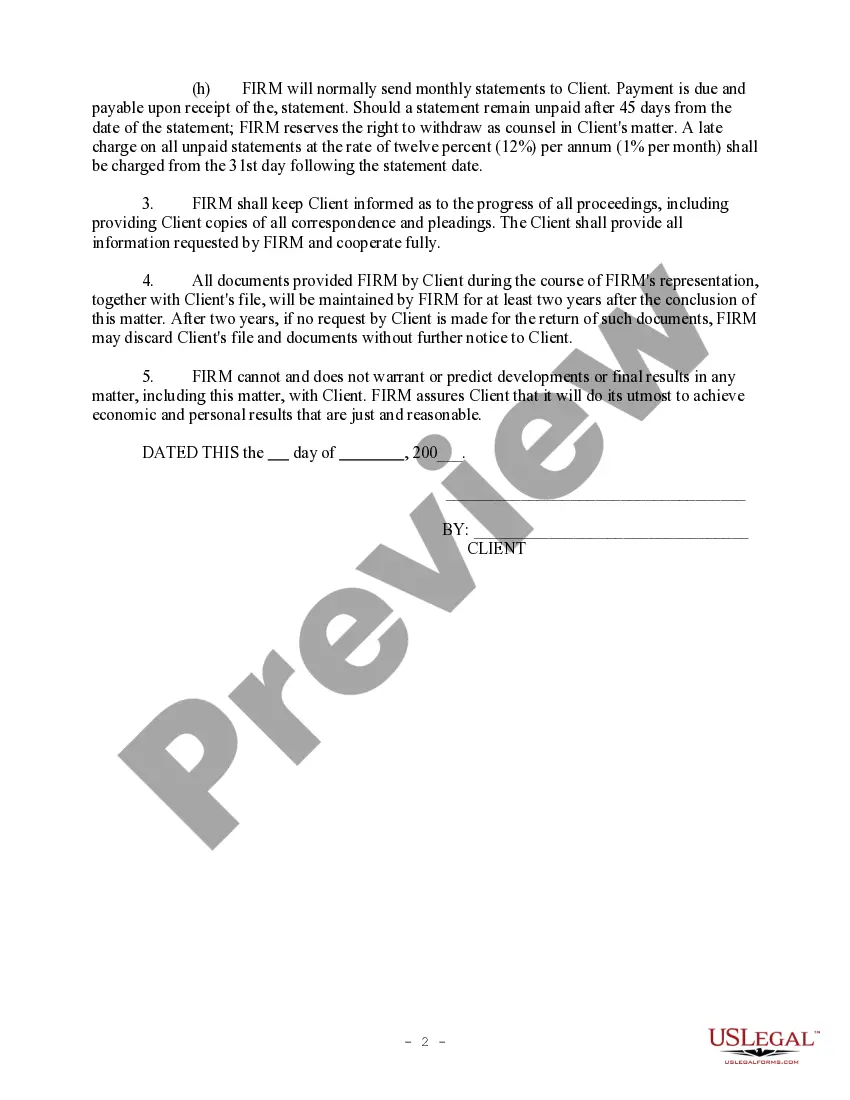
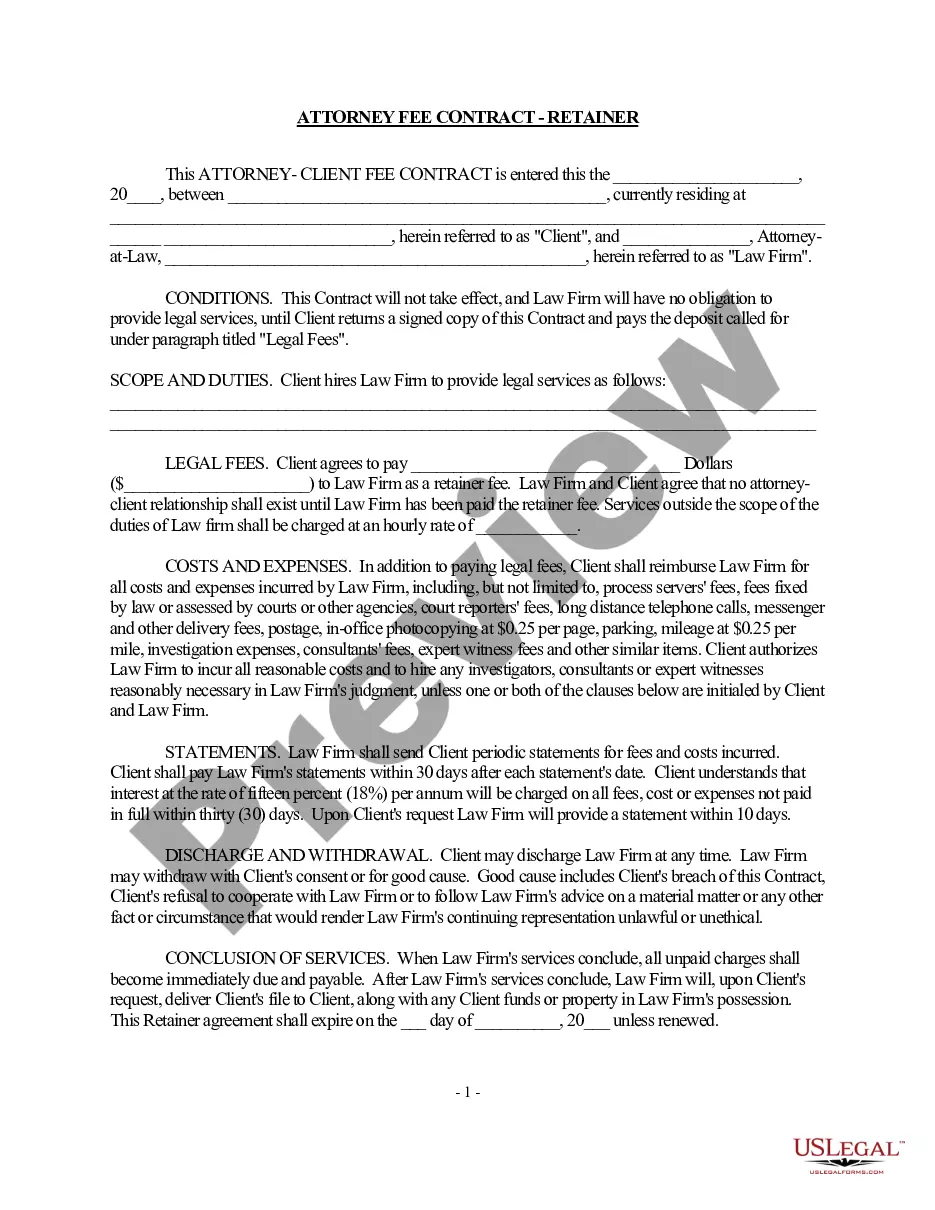
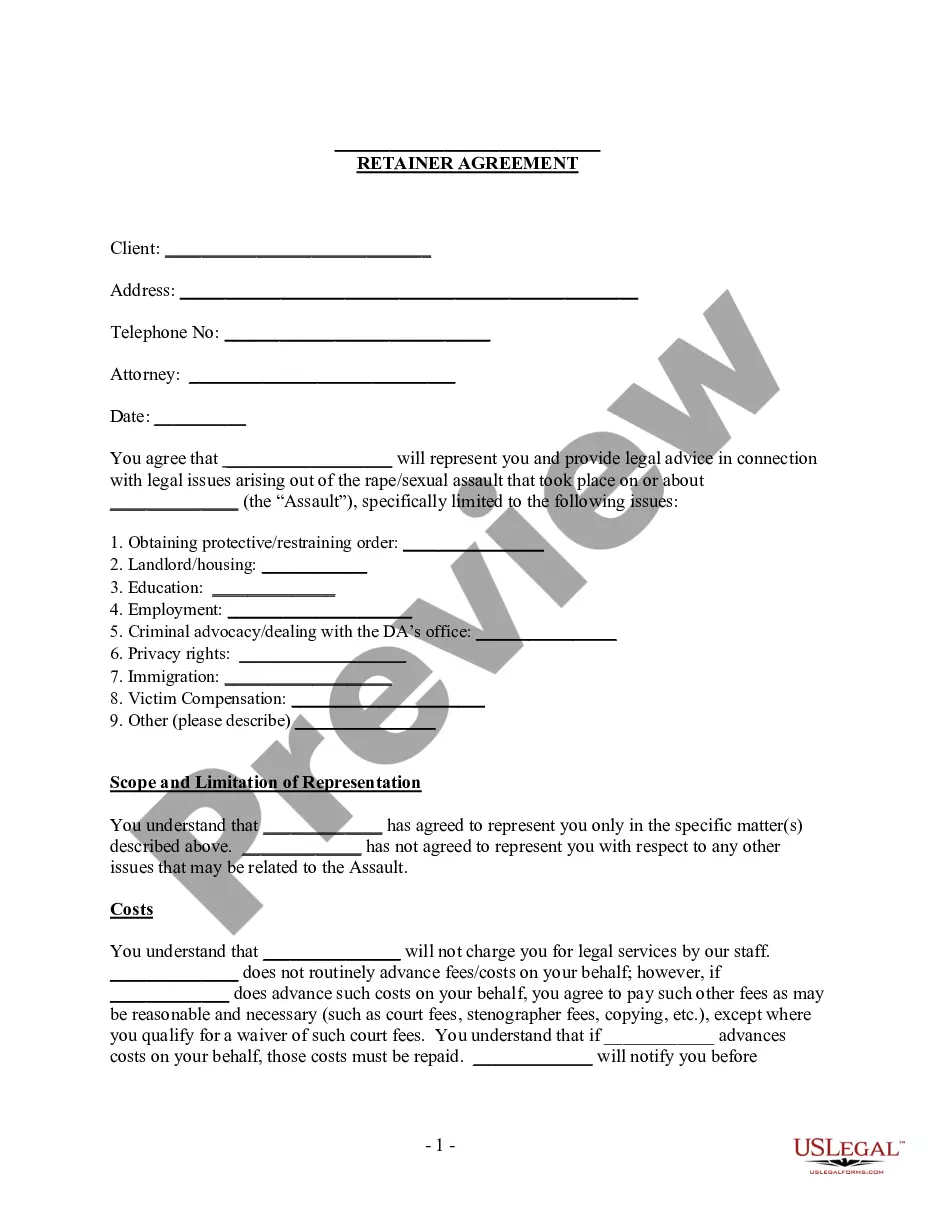
- Review the form description and examine the Preview if available on the page.
- Utilize the search tab specifying your state above to locate another template.
- Click Buy Now to acquire the sample once you identify the correct one.
- Select the subscription plan that best fits your needs to proceed.
- Log in to your account and make the payment using a credit card or PayPal.
- Download the Tarrant Attorney Retainer Agreement in the desired file format.
- Print the document or complete and sign it electronically via an online editor to save time.
Form popularity
FAQ
How Contingency Works in Texas. When a lawyer agrees to work on contingency, which is common in personal injury cases, the plaintiff can hire an attorney without paying legal fees upfront. The attorney's fees are simply deducted from the final award usually 33% to 45% of the total settlement.
Details about the Retainer fee: how much the lawyer will be paid at the outset of the case, and whether the lawyer can access the money during trial to pay for expenses related to the case. Details about the Contingency fee: What percentage the attorney will be paid, whether they will be paid in installments, etc.
Contingency Fee Agreements: 101 A contingent fee agreement is a legal agreement that allows you to hire a lawyer for your case without having to pay any out-of-pocket upfront fees unlike a retainer fee. The lawyer getting payment is contingent on you winning your case.
A retainer fee is an amount of money paid upfront to secure the services of a consultant, freelancer, lawyer, or other professional. A retainer fee is most commonly paid to individual third parties that have been engaged by the payer to perform a specific action on their behalf.
A contingent fee agreement is a legal agreement that allows you to hire a lawyer for your case without having to pay any out-of-pocket upfront fees unlike a retainer fee. The lawyer getting payment is contingent on you winning your case. If you do not win your case, you don't have to pay your contingency lawyer.
Under the Texas Disciplinary Rules of Professional Conduct, contingency fees are only allowed in civil cases. A contingency fee agreement must be given in writing to a client and signed by the client before the attorney renders any services for the personal injury matter.
In a definitive sense, a retainer is a fee that is paid in advance in order to hold services (ie. a wedding or event date). While a deposit may also reserve a date, it is returned when the services have been completed. A retainer is by default non-refundable and is not returned.
In Texas, typical contingency fee percentages can range from 33% to 45%. Some attorneys will even charge lower percentages if a case settles prior to a lawsuit being filed. Example: Let's say a car accident case settles before filing a lawsuit for $10,000 and there is $1,000 of case expenses.
Though contingent commissions are not as popular as they once were, they are legal to use and are considered ethical if brokers are upfront about the agreement they have with an insurer or reinsurer.
Texas seemingly has no definitive case law regarding non-refundable retainers. While a non-refundable retainer is not unethical per se, an attorney may be disciplined for refusing to refund an unearned fee (DR 2-110(A)(3)) or for charging a clearly excessive fee (DR 2-106).