Queens New York Sample Letter for Telephone Conversation
Description
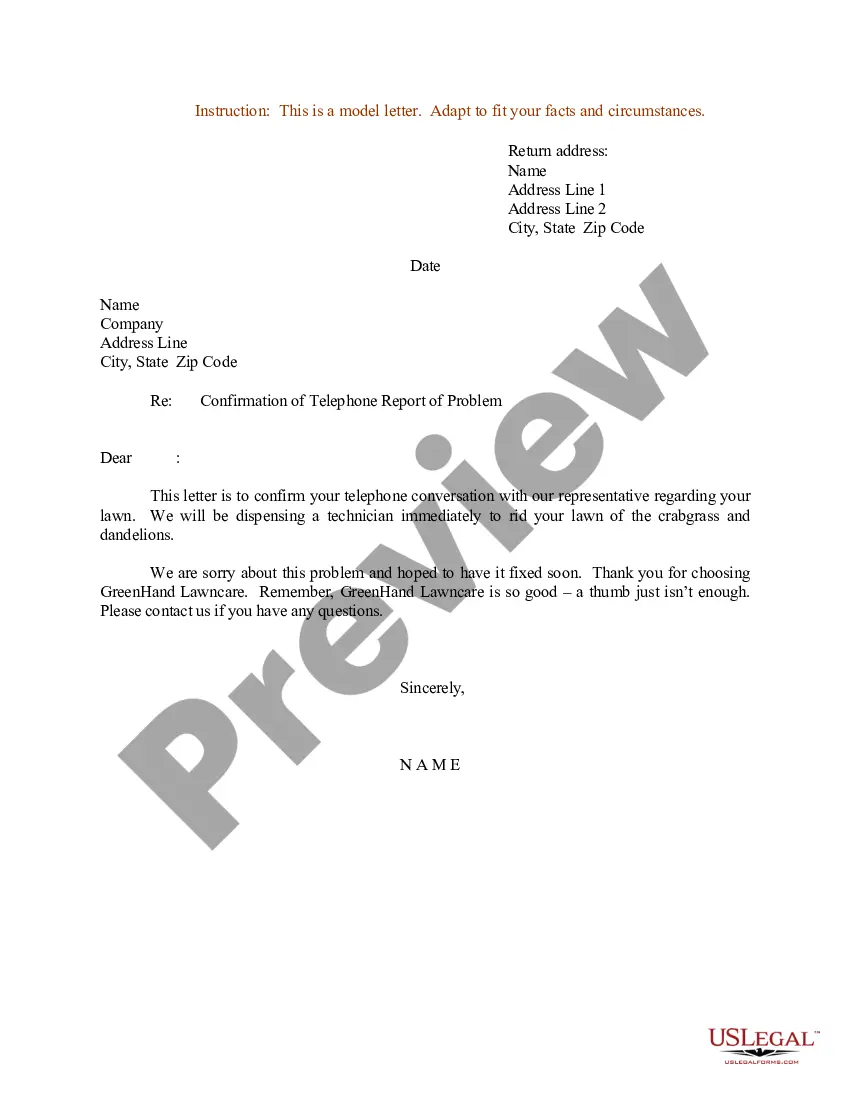
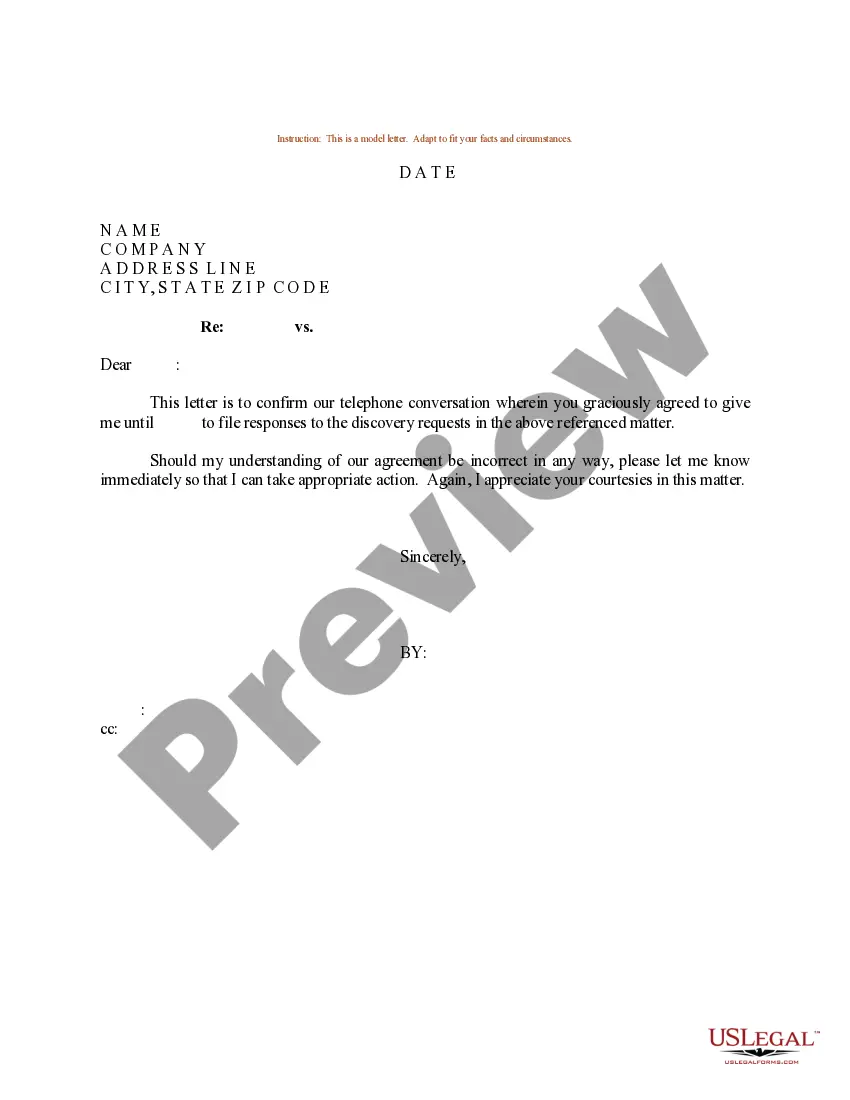
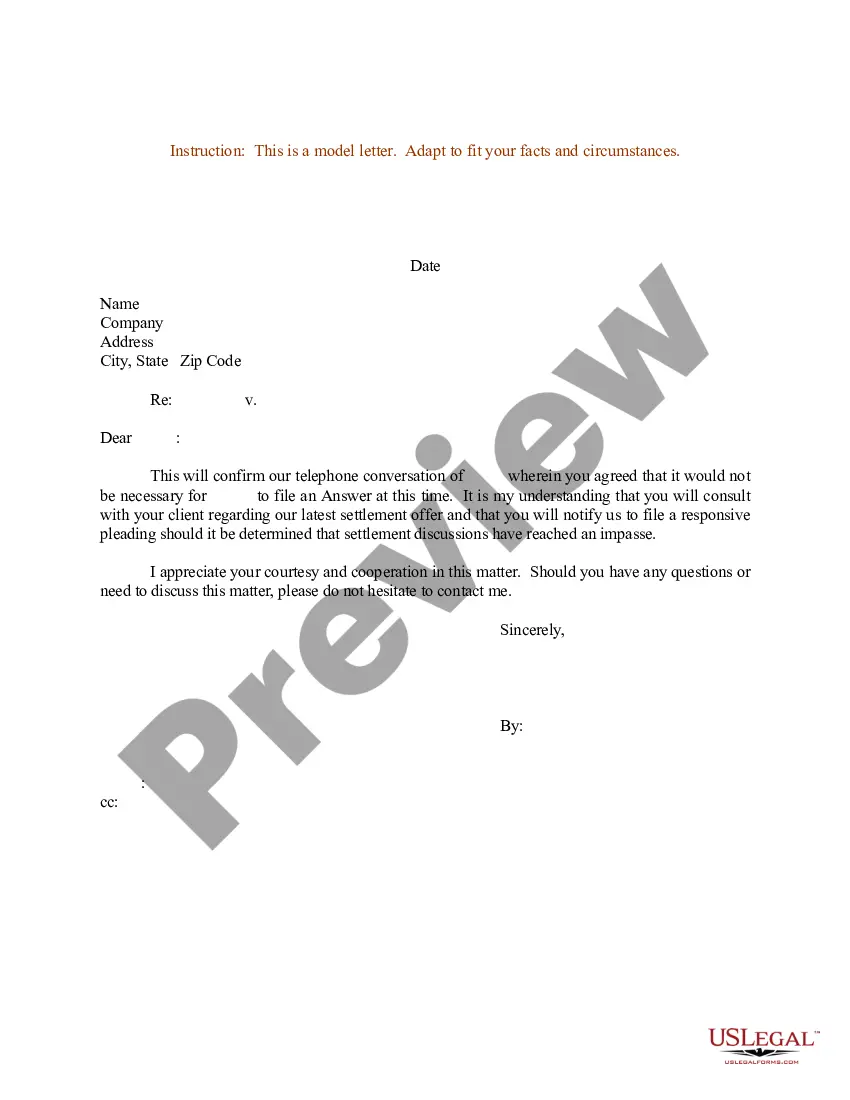




How to fill out Sample Letter For Telephone Conversation?
How long does it typically require for you to compose a legal document.
Since each state has its own laws and regulations for every life event, finding a Queens Sample Letter for Telephone Conversation that meets all local standards can be overwhelming, and acquiring it from a qualified attorney is frequently expensive.
Numerous online platforms provide the most sought-after state-specific documents for download, but utilizing the US Legal Forms repository is the most beneficial.
Select the subscription plan that best fits your needs, create an account on the platform or Log In to proceed to payment options, complete payment via PayPal or with your credit card, change the file format if necessary, and click Download to save the Queens Sample Letter for Telephone Conversation. You can print the document or utilize any preferred online editor to finalize it electronically. Regardless of how many times you require the purchased document, you can find all the files you’ve ever downloaded in your profile by visiting the My documents tab. Give it a try!
- US Legal Forms is the largest online compilation of templates, organized by states and areas of application.
- Alongside the Queens Sample Letter for Telephone Conversation, you can access any particular document to manage your business or personal affairs while adhering to your county regulations.
- Experts validate all templates for their relevance, ensuring you can prepare your documents accurately.
- Using the service is exceptionally straightforward.
- If you already possess an account on the platform and your subscription is active, you simply need to Log In, select the required sample, and download it.
- You can access the document in your profile at any time later.
- If you are new to the platform, additional steps are necessary before you can obtain your Queens Sample Letter for Telephone Conversation.
- Verify the content of the page you’re on.
- Review the description of the sample or Preview it (if available).
- Search for another document using the relevant option in the header.
- Click Buy Now when you’re confident in the document you have selected.
Form popularity
FAQ
Kings and queens are addresses as Your Majesty when speaking to them personally and all other members of the royal family would be addressed as royal highness. Upon second address, the queen should be called m'am and the king sir. The guidelines for addressing royals when writing to them does differ from the
According to the announcement in the London Gazette, he should henceforth be known as His Royal Highness The Prince Philip, Duke of Edinburgh, with the capitalised definite article normally restricted to the children of monarchs.
If you wish to write a formal letter, you can open with 'Madam' and close the letter with the form 'I have the honour to be, Madam, Your Majesty's humble and obedient servant'. This traditional approach is by no means obligatory. You should feel free to write in whatever style you feel comfortable.
On presentation to The Queen, the correct formal address is 'Your Majesty' and subsequently 'Ma'am,' pronounced with a short 'a,' as in 'jam'. For male members of the Royal Family the same rules apply, with the title used in the first instance being 'Your Royal Highness' and subsequently 'Sir'.
If you wish to write a formal letter, you can open with 'Madam' and close the letter with the form 'I have the honour to be, Madam, Your Majesty's humble and obedient servant'. This traditional approach is by no means obligatory. You should feel free to write in whatever style you feel comfortable.
When writing to The Queen, tradition dictates you should open with 'Madam', and close the letter with 'I have the honour to be, Madam, Your Majesty's humble and obedient servant'. For male members of the family, open with 'Sir', though you may also use 'Your Royal Highness' where appropriate for both men and women.
Address the royalty properly. When greeting the Queen, address her as "Your Majesty" the first time. If you address her after the first time, call her "Ma'am," pronounced like "jam." Address male royalty as "Your Royal Highness" the first time, regardless of their rank or title.
For those who do wish to write directly to The Queen, the letter should begin 'Madam' or 'May it please Your Majesty'. It ends with 'I have the honour to remain, Madam, Your Majesty's most humble and obedient subject' and then your name. Within the body of the letter do not use 'you' (singular) or 'your' (singular).
How to write to The Queen. If you wish to write a formal letter, you can open with 'Madam' and close the letter with the form 'I have the honour to be, Madam, Your Majesty's humble and obedient servant'. This traditional approach is by no means obligatory.
If communicating directly with a member of the Royal Family the letter should begin 'Sir/Madam' and end 'I have the honour to remain, Sir/Madam, Your Royal Highness's most humble and obedient servant'. In the body of the letter substitute 'Your Royal Highness' for 'you' and 'Your Royal Highness's' for 'your'.