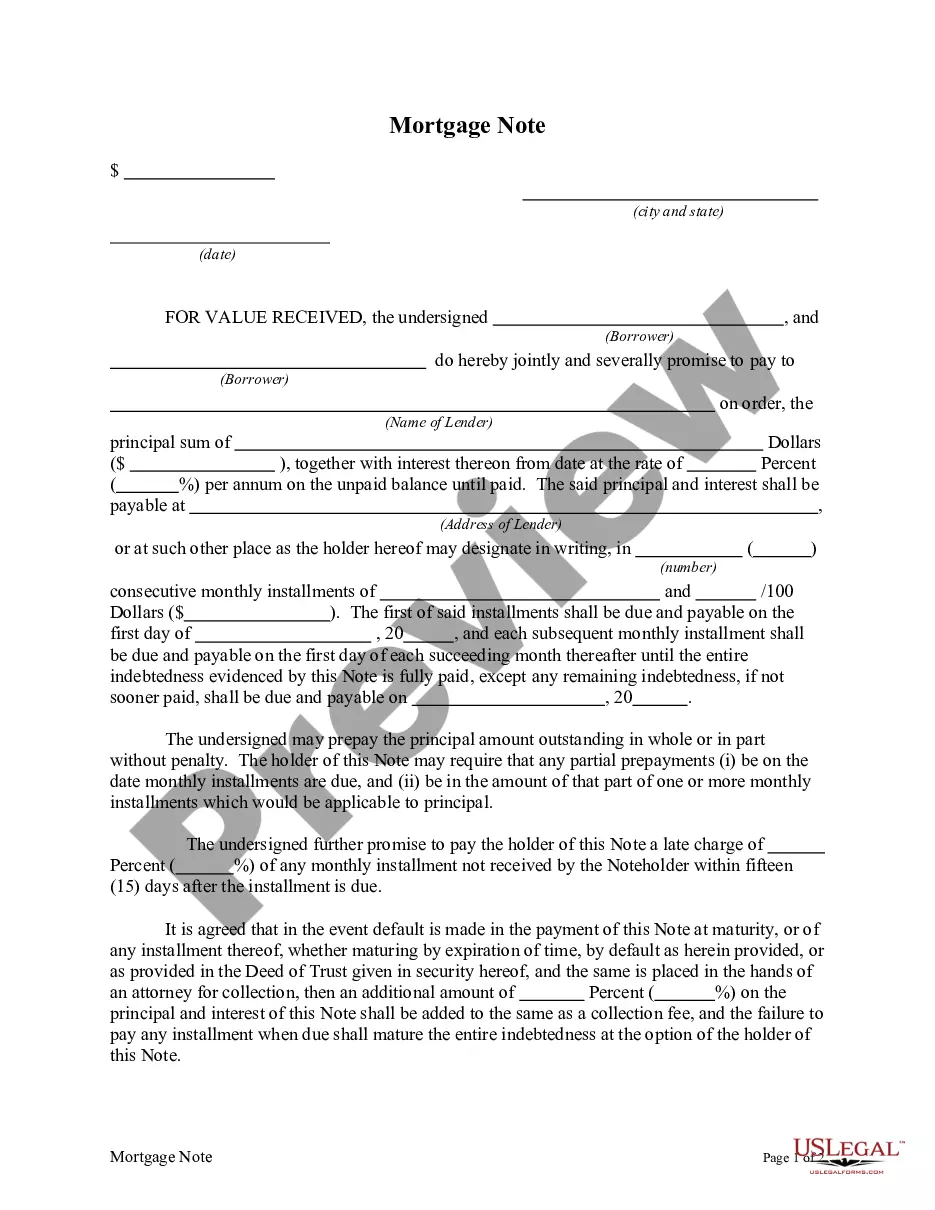
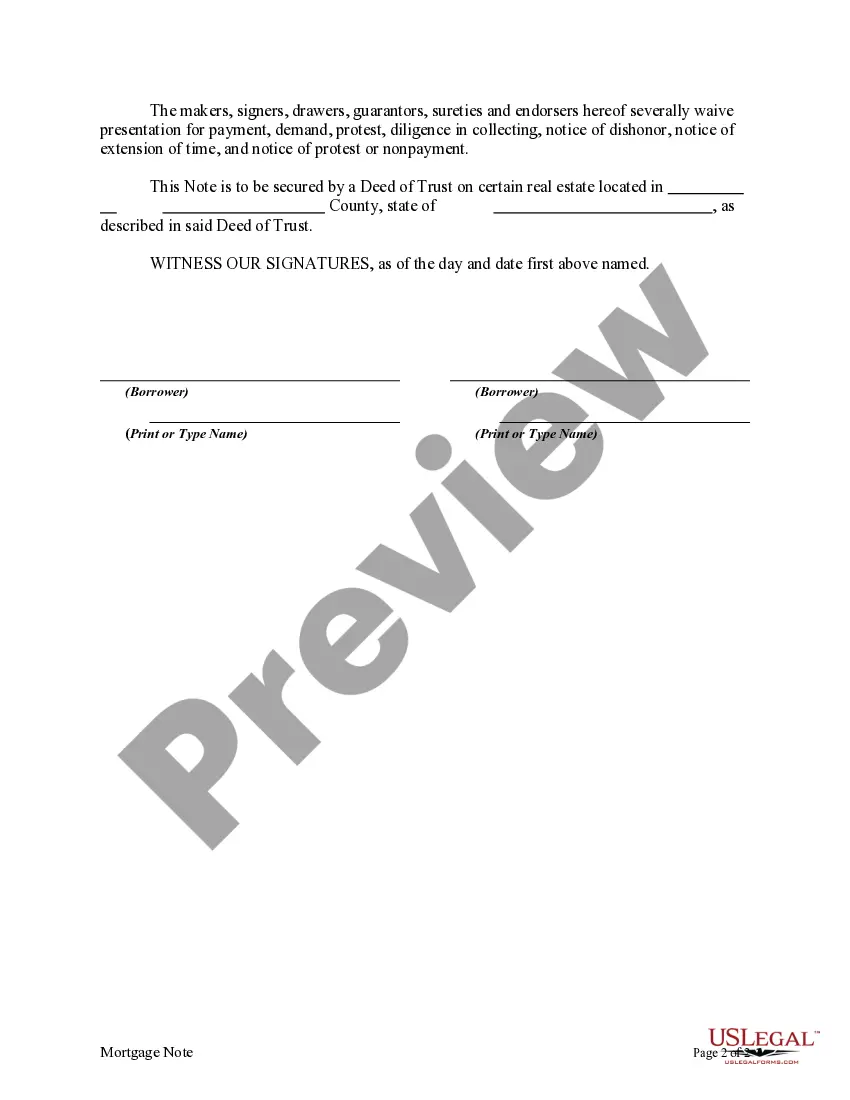
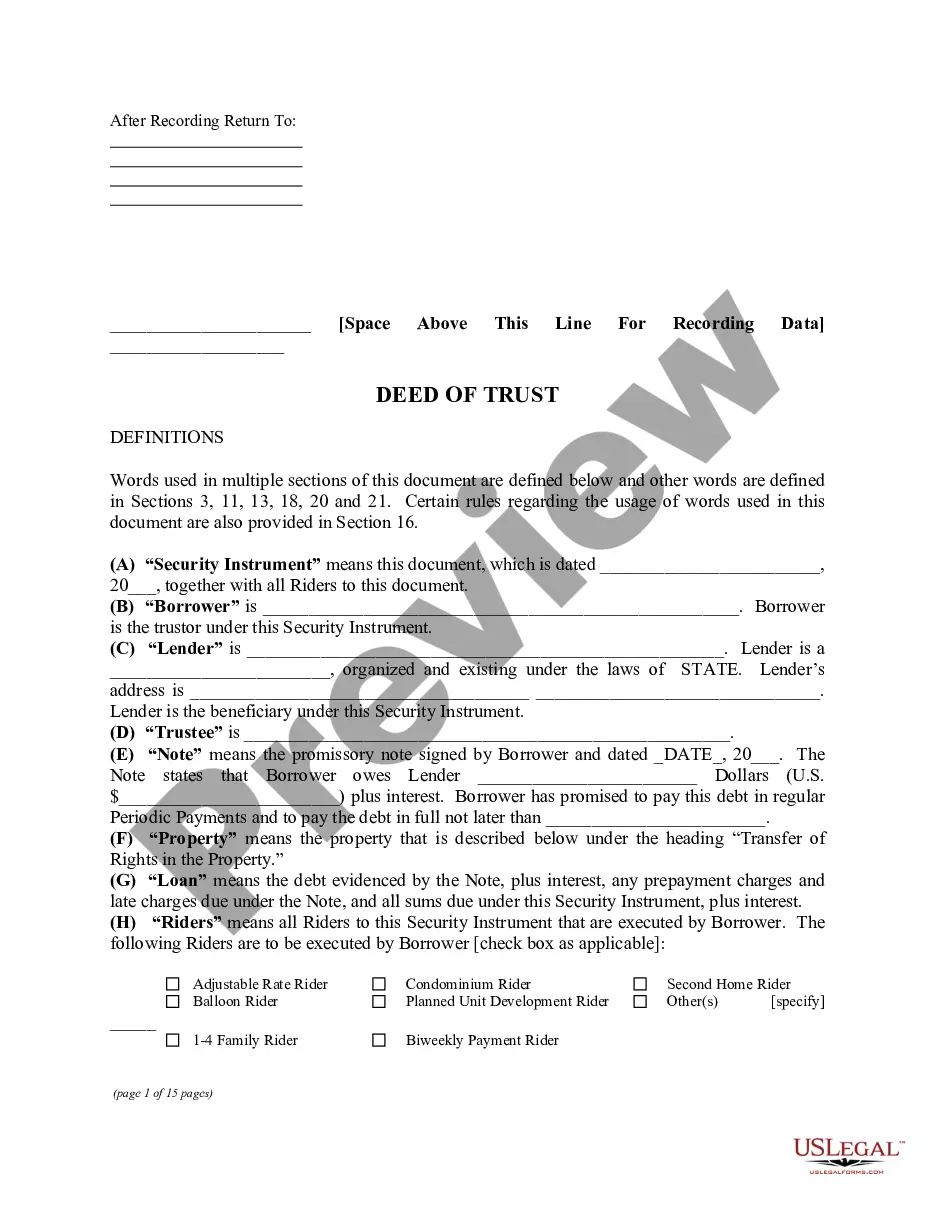
King Washington Mortgage Note
Description
Get your form ready online
Our built-in tools help you complete, sign, share, and store your documents in one place.
Make edits, fill in missing information, and update formatting in US Legal Forms—just like you would in MS Word.
Download a copy, print it, send it by email, or mail it via USPS—whatever works best for your next step.
Sign and collect signatures with our SignNow integration. Send to multiple recipients, set reminders, and more. Go Premium to unlock E-Sign.
If this form requires notarization, complete it online through a secure video call—no need to meet a notary in person or wait for an appointment.
We protect your documents and personal data by following strict security and privacy standards.

Make edits, fill in missing information, and update formatting in US Legal Forms—just like you would in MS Word.

Download a copy, print it, send it by email, or mail it via USPS—whatever works best for your next step.

Sign and collect signatures with our SignNow integration. Send to multiple recipients, set reminders, and more. Go Premium to unlock E-Sign.

If this form requires notarization, complete it online through a secure video call—no need to meet a notary in person or wait for an appointment.

We protect your documents and personal data by following strict security and privacy standards.
Looking for another form?

How to fill out Mortgage Note?
Drafting legal paperwork can be challenging. Furthermore, if you choose to hire an attorney to create a commercial contract, documents for ownership transfer, prenuptial agreement, divorce documents, or the King Mortgage Note, it might cost you a fortune. So what is the most effective way to conserve time and money while generating valid forms in complete adherence to your state and local laws and regulations.
US Legal Forms is an excellent alternative, whether you require templates for personal or business purposes.
- US Legal Forms is the largest online compilation of state-specific legal documents, offering users the current and professionally authenticated templates for any situation, all conveniently housed in one location.
- Thus, if you require the most recent version of the King Mortgage Note, you can readily find it on our site.
- Acquiring the documents requires minimal time.
- Those who already possess an account should confirm their subscription is active, Log In, and choose the template by clicking on the Download button.
- If you have not yet subscribed, here’s how you can obtain the King Mortgage Note.
- Browse the page and confirm there is a template available for your area.
- Review the form description and utilize the Preview option, if present, to verify it’s the template you require.
- Don’t worry if the form does not meet your expectations - search for the right one in the header.
- Click Buy Now once you locate the necessary sample and select the most appropriate subscription.
- Log in or register for an account to buy your subscription.
- Process the payment using a credit card or via PayPal.
- Select the document format for your King Mortgage Note and download it.
- When you are finished, you can either print it out and fill it on paper or upload the samples to an online editor for quicker and more convenient completion.
- US Legal Forms permits you to reuse all the documents ever obtained multiple times - you can locate your templates in the My documents tab in your profile.
- Give it a try now!
Form popularity
FAQ
The mortgage note is part of your closing papers and you will receive a copy at closing. If you lose your closing papers or they get destroyed, you can obtain a copy of your mortgage note by searching the county's records or contacting the registry of deeds.
You can look up who owns your mortgage online, call, or send a written request to your servicer asking who owns your mortgage. The servicer has an obligation to provide you, to the best of its knowledge, the name, address, and telephone number of who owns your loan.
Homebuyers usually think of the mortgage as the contract they're signing with the lender to borrow money to buy a house. But the promissory note is the document that contains the promise to repay the amount borrowed. The purpose of the mortgage is to provide security for the loan that's evidenced by a promissory note.
The bank or mortgage company owns an interest in the property and the mortgage note itself but the lender does not own your house. Your home is considered collateral for the mortgage loan. As long as you pay your home loan in accordance with the terms, you are the legal owner of the property.
The mortgage owner, also referred to the mortgage holder or note holder, is the entity that owns your loan. They have the legal right to enforce the loan agreement, which consists of a promissory note and a security interest or deed of trust.
A mortgage note is a legal document that sets out all the terms of the mortgage between a borrower and their lending institution. It includes terms such as: The total amount of the home loan. The down payment amount. Whether monthly or bimonthly payments are required.
The Deed is a recorded document memorializing the transfer of property from the Grantor to the Grantee. The Note is an unrecorded paper that binds an individual who has assumed debt through a promise-to-pay instrument.
When a borrower pays off a mortgage, the note holder gives the note to the borrower. This means that the home is theirs, free and clear. If a borrower refinances a mortgage, the new mortgage pays off the original lender and a new note is created, to be held by that lender until the new mortgage is paid in full.
Once the borrower signs the required documentation and provides the note, the lender holds the paper until the borrower makes the final loan repayment.
If you lose your closing papers or they get destroyed, you can obtain a copy of your mortgage note by searching the county's records or contacting the registry of deeds. It's also possible to obtain a copy from the company who services your loan (that is, the company you get billing statements from).