Miami-Dade Florida Demand Promissory Note
Description








Form popularity
FAQ
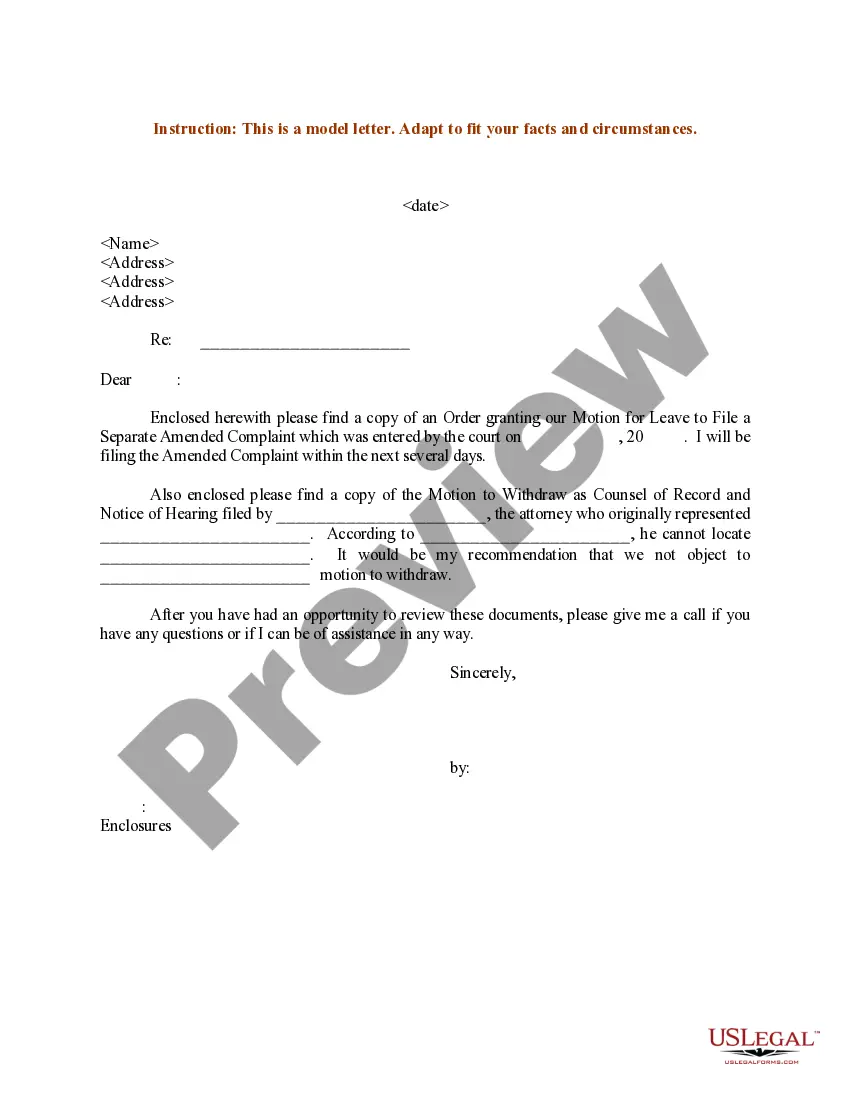
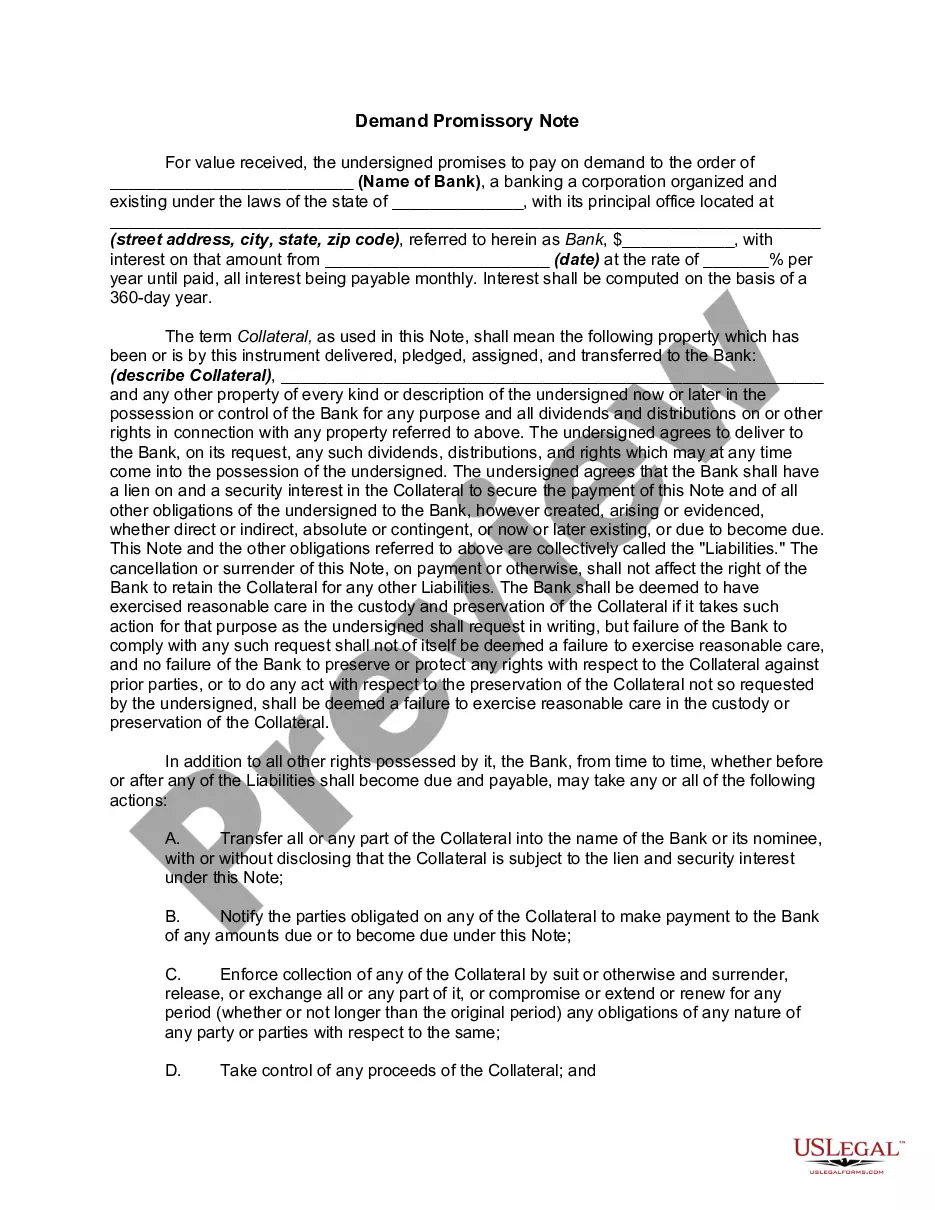
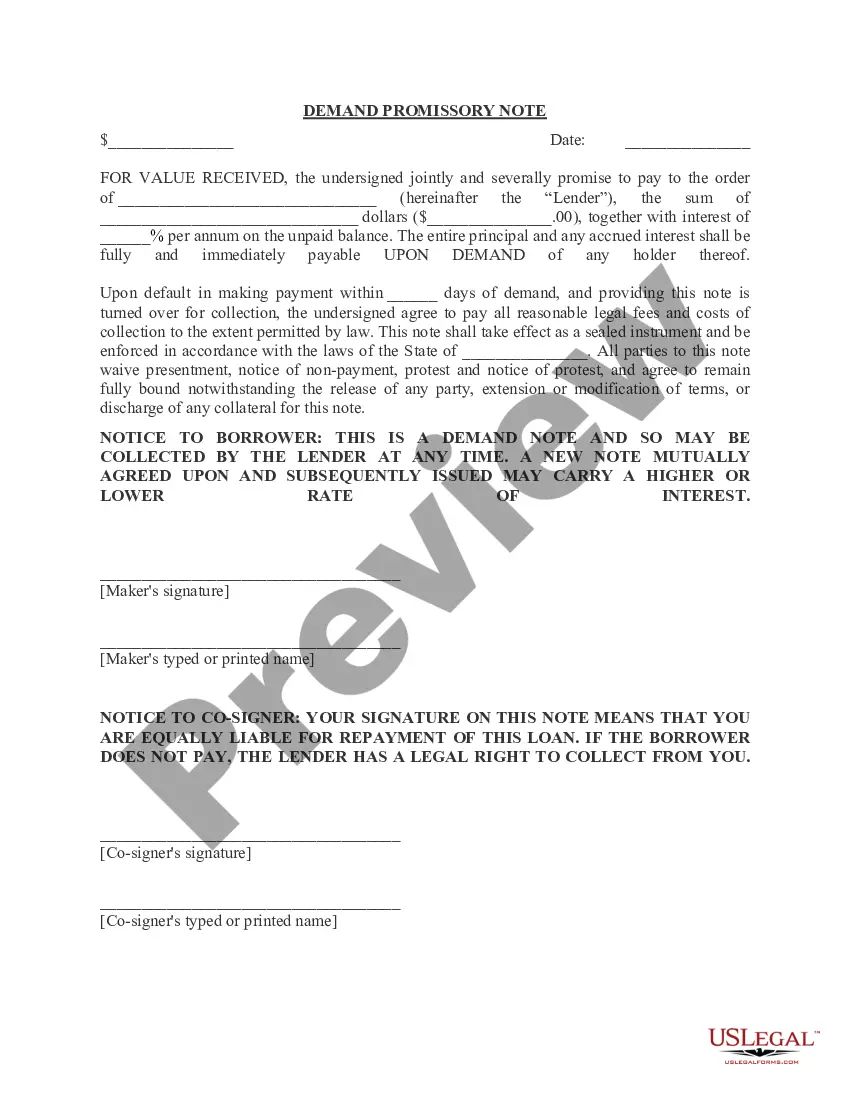
Demand promissory notes are notes that do not carry a specific maturity date, but are due on demand of the lender. Usually the lender will only give the borrower a few days' notice before the payment is due. Promissory notes may be used in combination with security agreements.
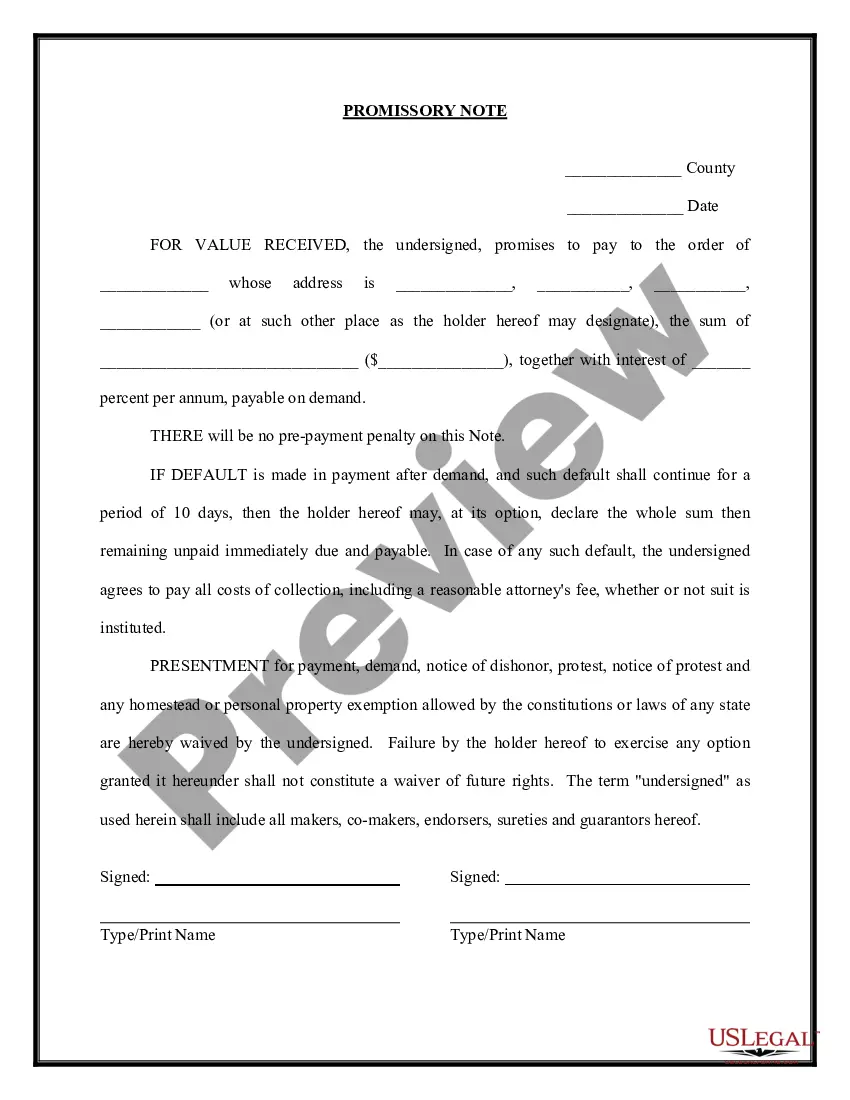
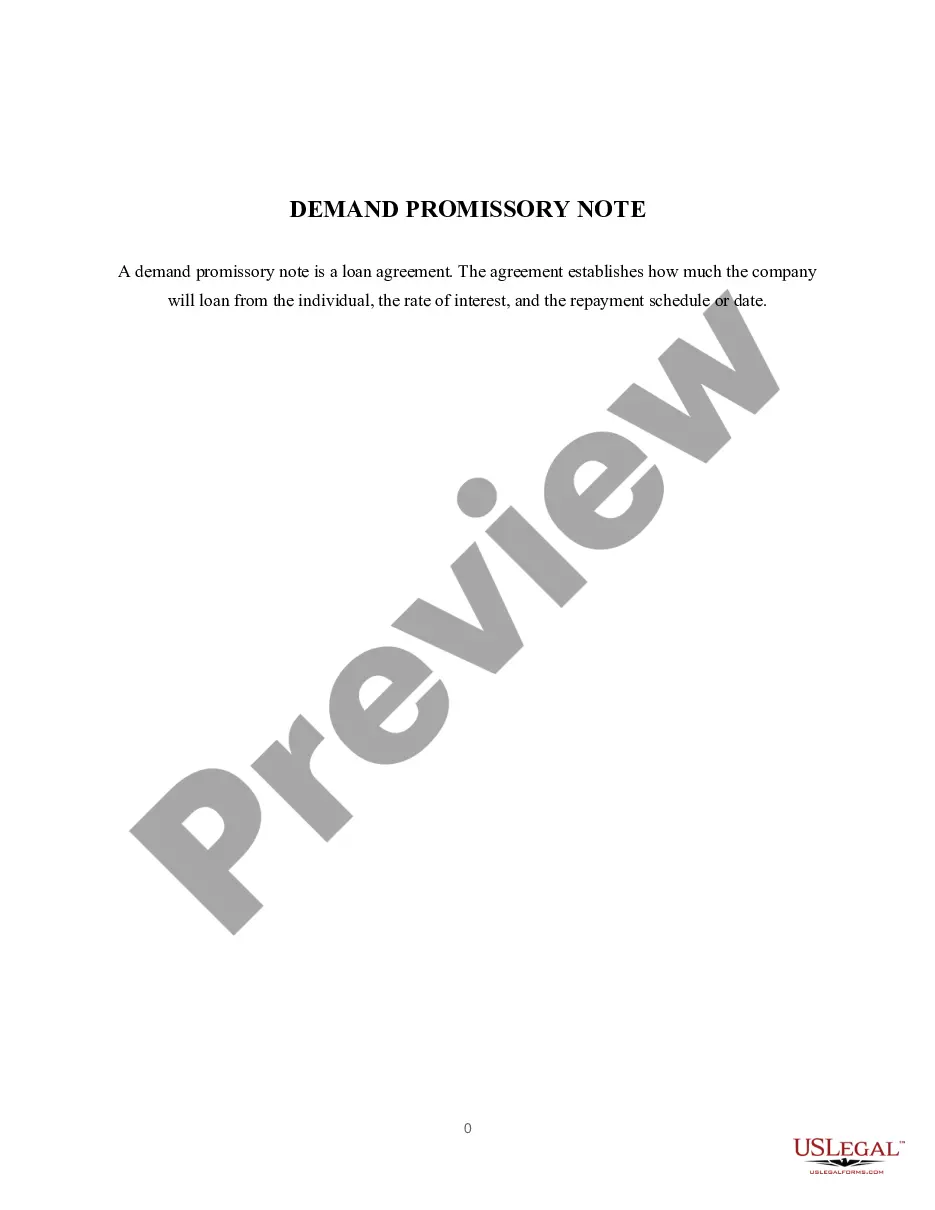
Promissory notes may also be referred to as an IOU, a loan agreement, or just a note. It's a legal lending document that says the borrower promises to repay to the lender a certain amount of money in a certain time frame. This kind of document is legally enforceable and creates a legal obligation to repay the loan.
There are two types of promissory notes often used to evidence a loan or debt. One type is referred to as ?demand? promissory note because the note is payable at any time on demand by the lender. The other type is ?with distinguishing characteristics.? A demand note is theoretically due from the moment it is executed.
A promissory note that is payable on demand is payable at the will of the holder. A promissory note without a specified time of payment, according to N. Bank v. Pefferoni Pizza Co., may also be considered payable on demand.
It is the bank or lender who issues a demand promissory note. A demand promissory note is different from a standard promissory note because the borrower is not on a specific timeline for repayment. Instead, the borrower waits to repay the debt or loan until the lender demands repayment.
A promissory note can become invalid if it excludes A) the total sum of money the borrower owes the lender (aka the amount of the note) or B) the number of payments due and the date each increment is due.
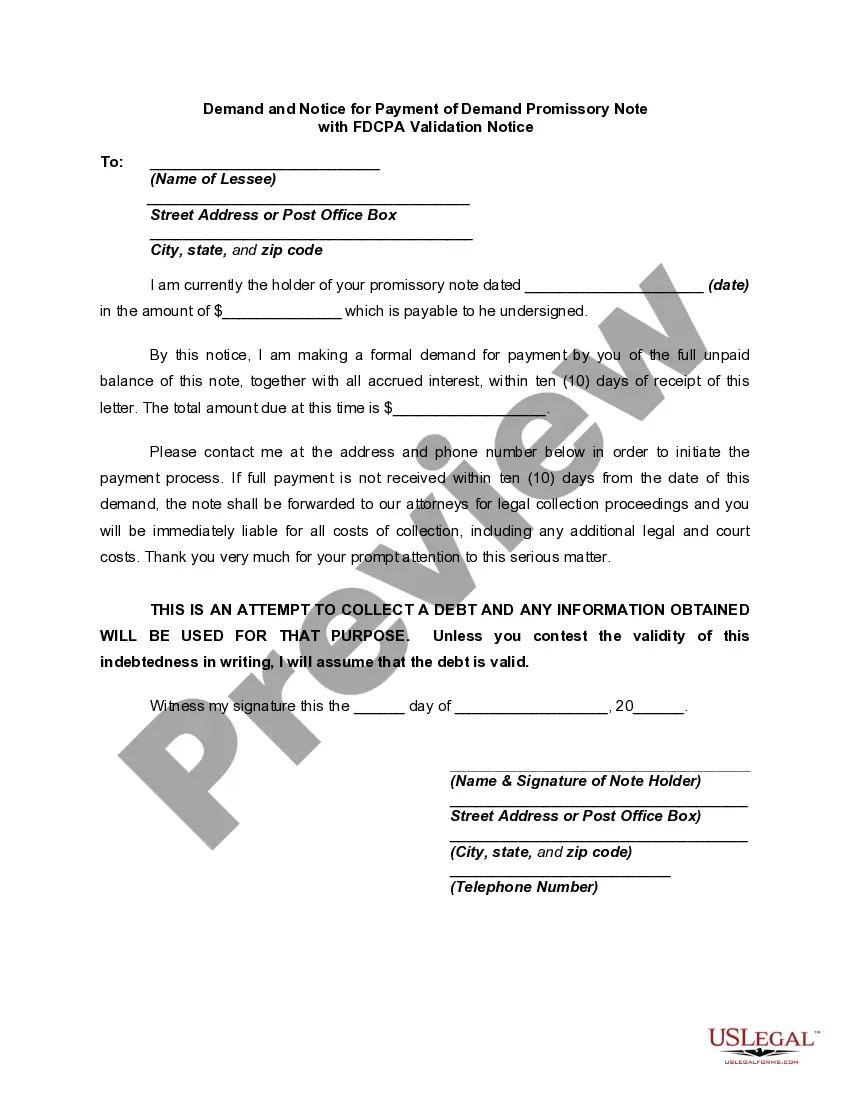
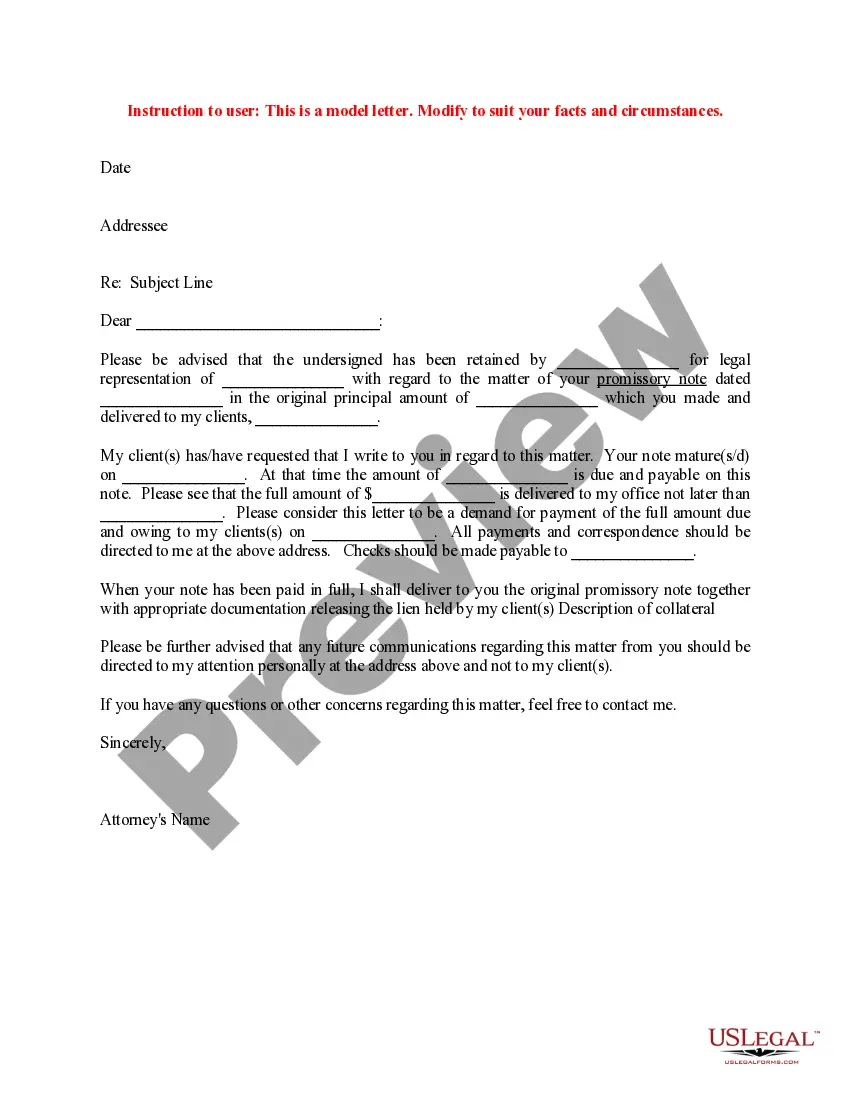
To collect on a demand promissory note, you will need to send a demand for payment letter to the lender. This lets the lender know that you want the loan paid back now and that the repayment period is ending. This demand letter should include the following: The date of the letter.
The broad terms of a demand note are laid out in a written demand loan agreement, which is not always enforceable under law, but serves as a type of moral contract between the parties.
(2) Notwithstanding anything contained in the Negotiable Instruments Act, 1881, (26 of 1881) no person in 190India other than the Bank or, as expressly authorised by this Act, the Central Government shall make or issue any promissory note expressed to be payable to the bearer of the instrument.