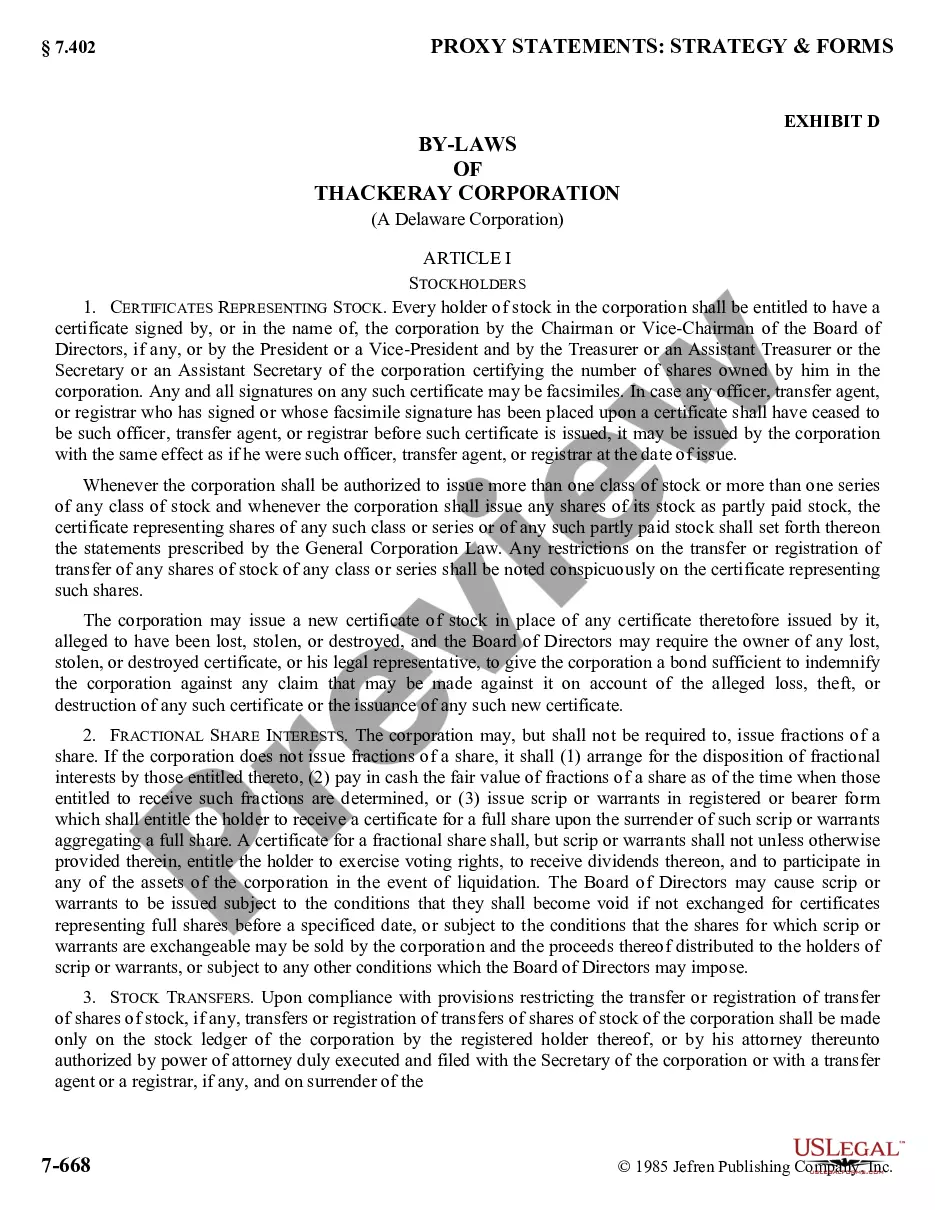
Fulton Georgia Disputed Accounted Settlement
Description
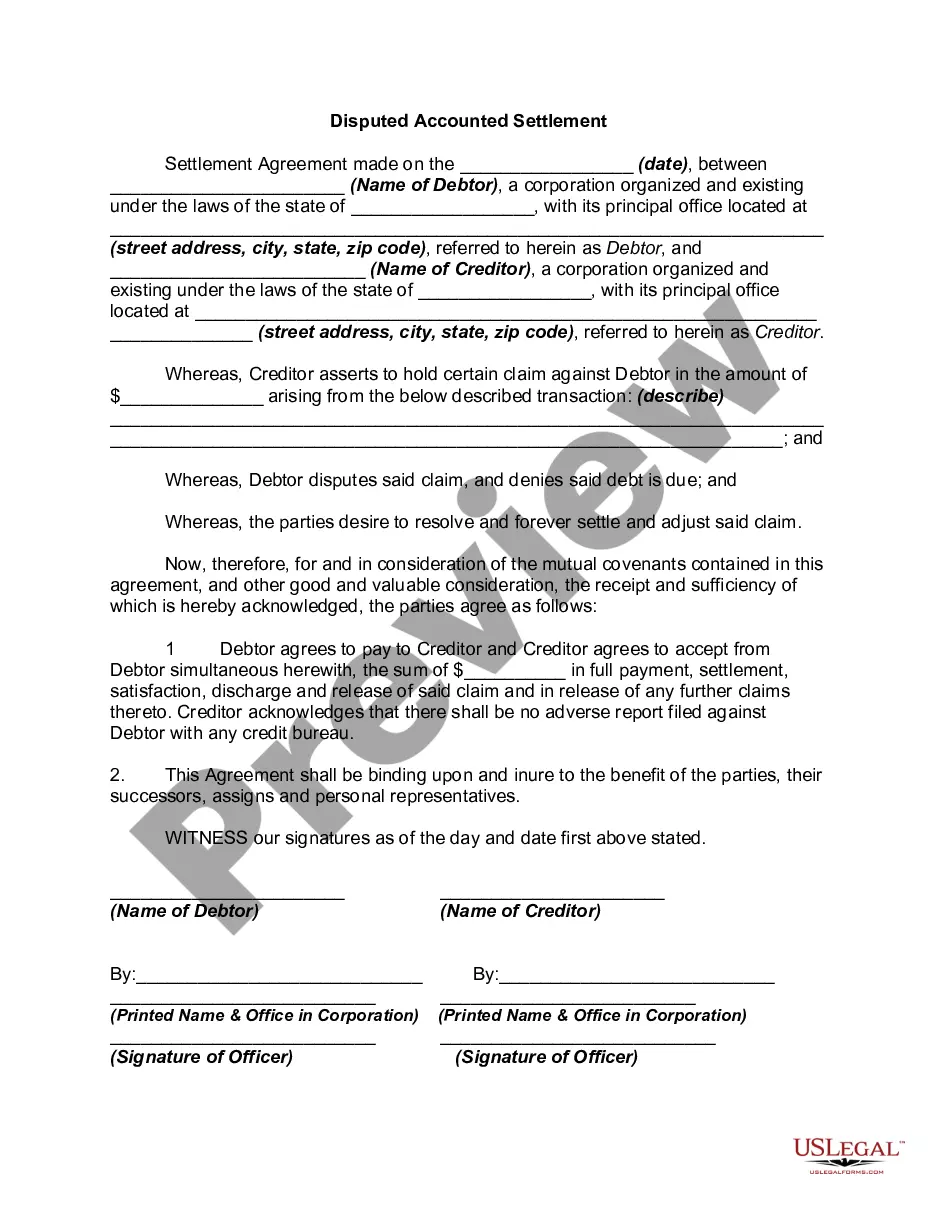
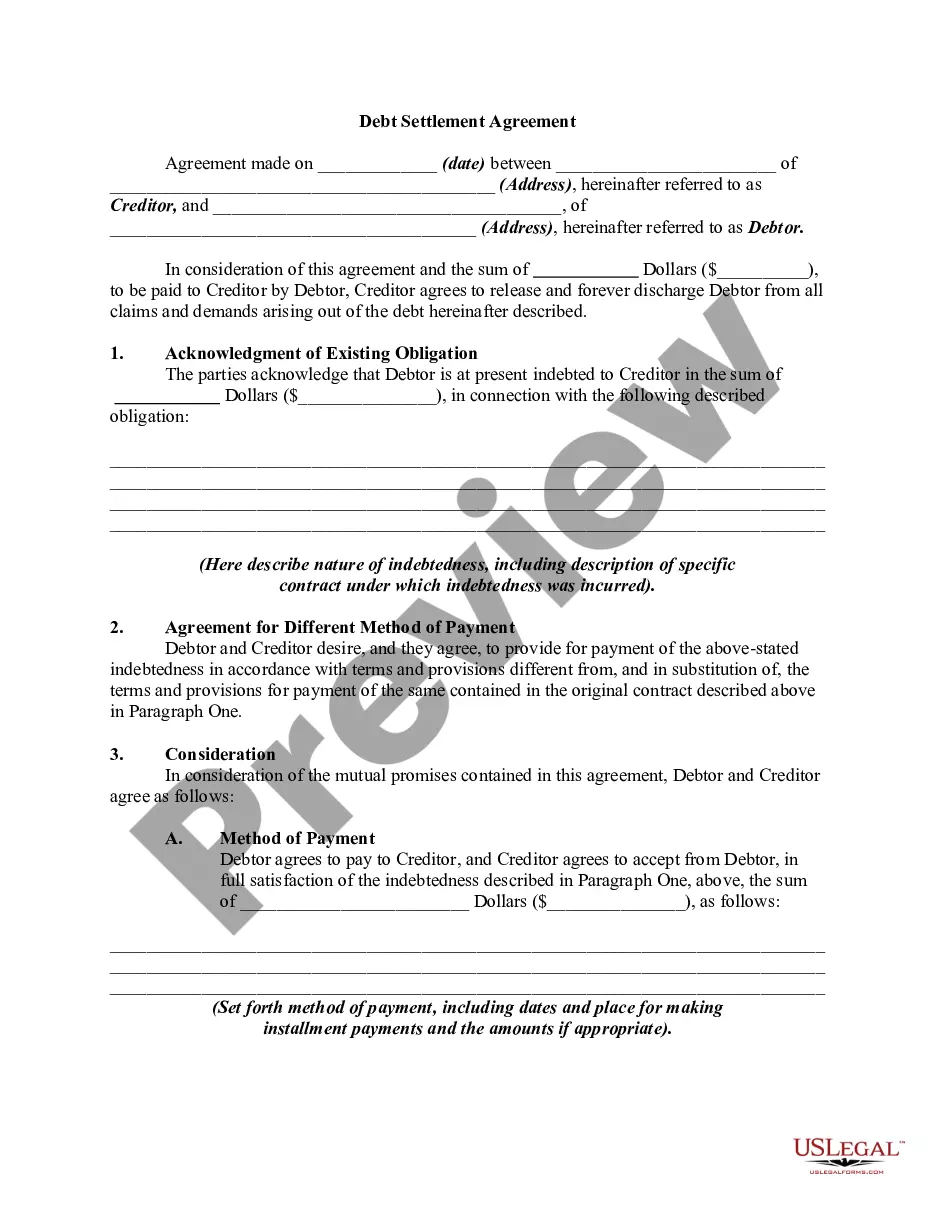
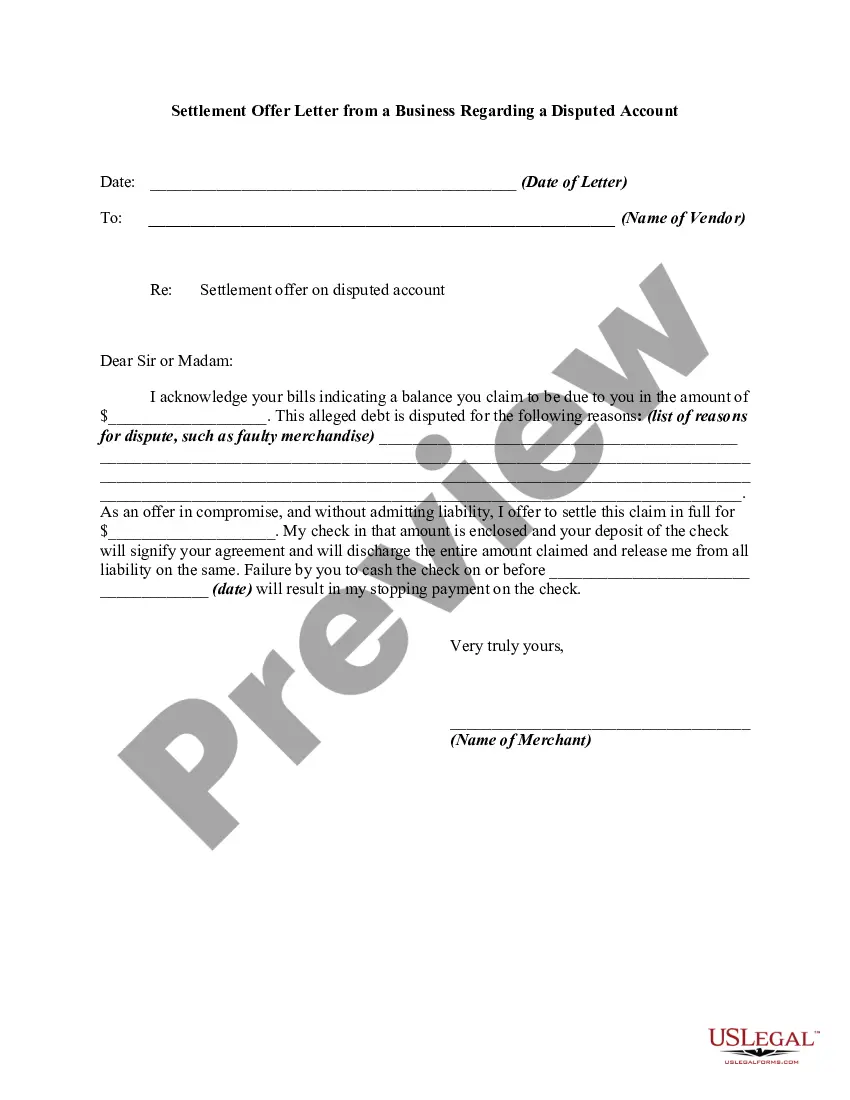
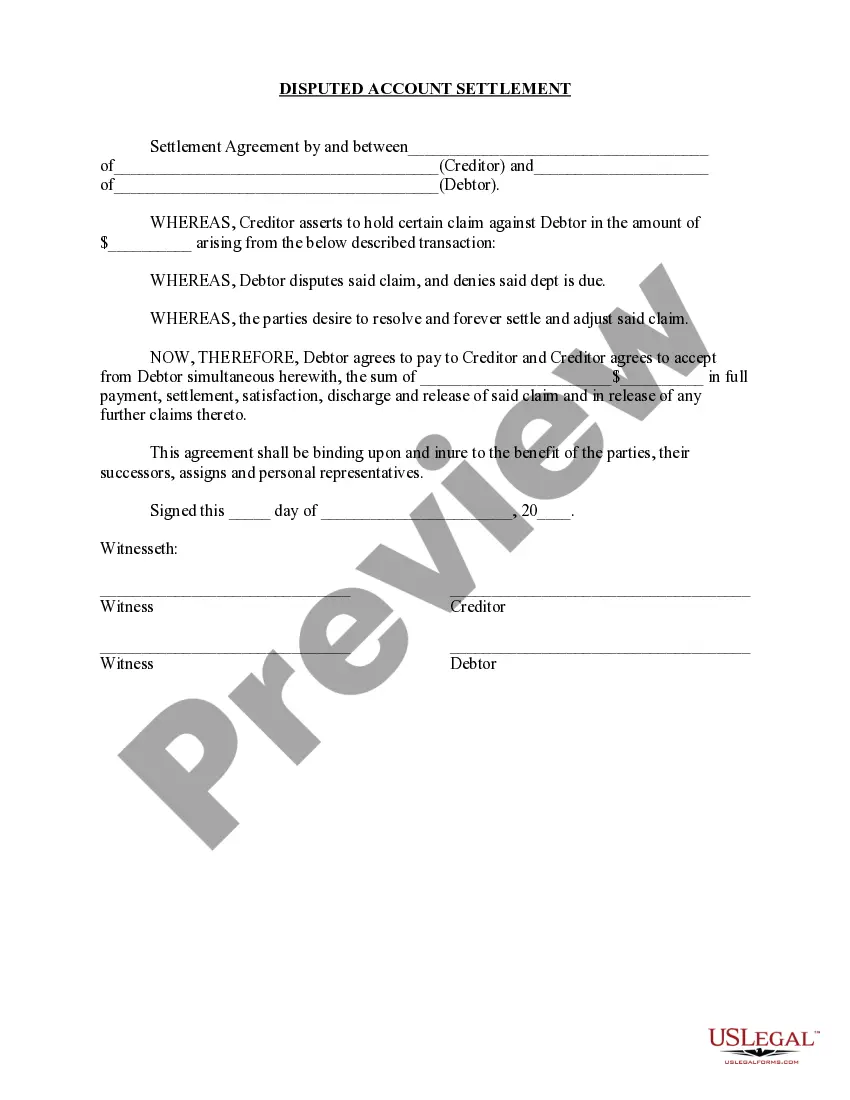
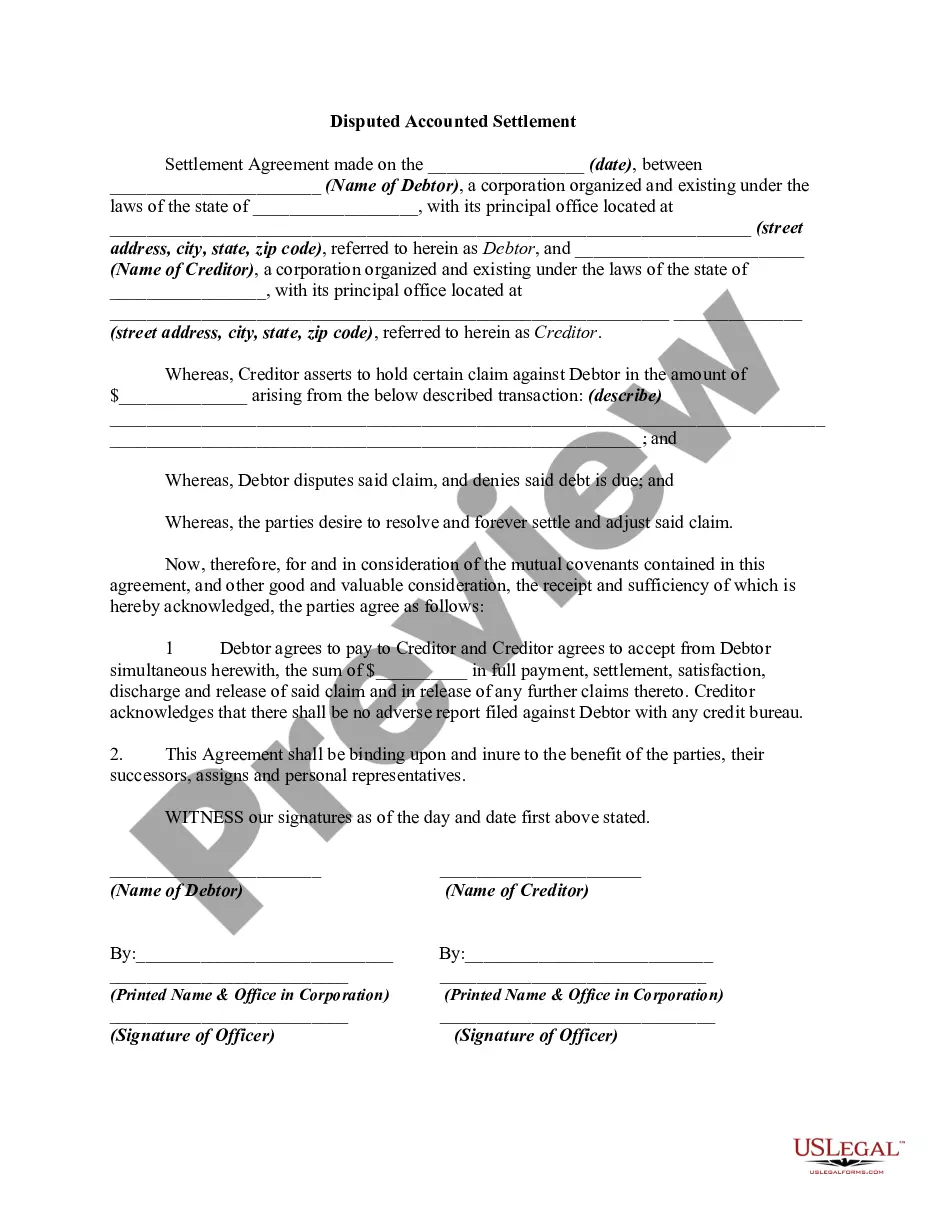


How to fill out Disputed Accounted Settlement?
Whether you plan to launch your business, enter into an agreement, request your ID renewal, or address familial legal matters, it is essential to prepare specific documentation that complies with your local laws and regulations.
Finding the appropriate documents can require considerable time and effort unless you utilize the US Legal Forms library.
This service offers users over 85,000 expertly crafted and verified legal templates for any personal or commercial situation. All documents are organized by state and area of usage, making it easy and straightforward to select a version such as the Fulton Disputed Accounted Settlement.
Forms available on our website are reusable. With an active subscription, you can access all of your previously acquired documents at any time in the My documents section of your profile. Stop wasting time on a continuous search for updated official documentation. Join the US Legal Forms platform and keep your paperwork organized with the most extensive online form collection!
- Ensure that the template meets your personal requirements and complies with state law.
- Review the form description and check the Preview if available on the page.
- Use the search option indicating your state above to find another template.
- Click Buy Now to obtain the document once you locate the appropriate one.
- Select the subscription plan that best fits your needs to proceed.
- Log in to your account and pay for the service using a credit card or PayPal.
- Download the Fulton Disputed Accounted Settlement in the file format you need.
- Print the document or fill it out and sign it electronically through an online editor to save time.
Form popularity
FAQ
To stop your eviction in Georgia, you should consult with your landlord first, as they may be open to negotiation. If your situation involves a Fulton Georgia Disputed Account Settlement, consider seeking legal assistance. A local attorney can advocate on your behalf and explore options for resolving your issues. Legal services like uslegalforms can also help you find the right resources and forms to support your case.
In case of a conciliation, a record of the proceedings will be made, on which the agreements reached will be stated. If no conciliation is reached, or if the party on whose behalf the administrative intervention has been brought about fails to appear, the mediator will declare it if the interested party so wishes.
Some common methods for contract dispute resolution include: Mediation. Mediation is a process in which both parties involved in a dispute agree to meet with a neutral third-party mediator often another attorney or a retired judge.Arbitration.Collaborative law.Traditional litigation.
Some of the most common methods for contract dispute resolution include: Mediation. Mediation is a process in which both parties involved in a dispute agree to meet with a neutral, third-party mediator often another attorney or a retired judge.Arbitration.Collaborative Law.Traditional Litigation.
What happens if we don't reach an agreement? If conciliation is unsuccessful, or if only one party appears, the matter will either be heard on the day, if time permits, or be listed for another day. Orders may be made even if only one party appears (these are known as 'ex parte orders').
Parties are asked to attempt conciliation before the hearing can take place. Conciliation allows you to have control over the outcome of your dispute and is more likely to result in an agreement you both find acceptable.
Main benefits Conciliation ensures party autonomy. The parties can choose the timing, language, place, structure and content of the conciliation proceedings. Conciliation ensures the expertise of the decision maker.Conciliation is time and cost efficient.Conciliation ensures confidentiality.
I) Conciliated-Mediated Settlement Agreement is written agreement following successful conciliation-mediation proceedings prepared and duly signed by the parties with the assistance of the Conciliator-Mediator.
Dispute resolution processes fall into two major types: Adjudicative processes, such as litigation or arbitration, in which a judge, jury or arbitrator determines the outcome. Consensual processes, such as collaborative law, mediation, conciliation, or negotiation, in which the parties attempt to reach agreement.
Conciliation gives you and the other party an opportunity to meet each other, discuss your issues and reach a compromise that meets both your needs. During the conciliation process, you are encouraged to: Try to understand and respect each other's different points of view. Be prepared to negotiate.