Chicago Illinois Motion by Defendant to Dismiss with Prejudice for Failure to Prosecute

State:
Multi-State
City:
Chicago
Control #:
US-02698BG
Format:
Word; 
Rich Text
247 downloads

Description

Rule 41(b) of the FRCP states:


If the plaintiff fails to prosecute or to comply with these rules or a court order, a defendant may move to dismiss the action or any claim against it. Unless the dismissal order states otherwise, a dismissal under this subdivision (b) and any dismissal not under this rule - except one for lack of jurisdiction, improper venue, or failure to join a party under Rule 19 - operates as an adjudication on the merits.


The following form is a complaint that adopts the "notice pleadings" format of the Federal Rules of Civil Procedure, which have been adopted by most states in one form or another. For example, the Pennsylvania Rules of Civil Procedure state:


Rule 1901. Prompt disposition of matters; termination of inactive cases.


(a) General policy.-It is the policy of the unified judicial system to bring each pending matter to a final conclusion as promptly as possible consistently with the character of the matter and the resources of the system. Where a matter has been inactive for an unreasonable period of time, the tribunal, on its own motion, shall enter an appropriate order terminating the matter.
Free preview
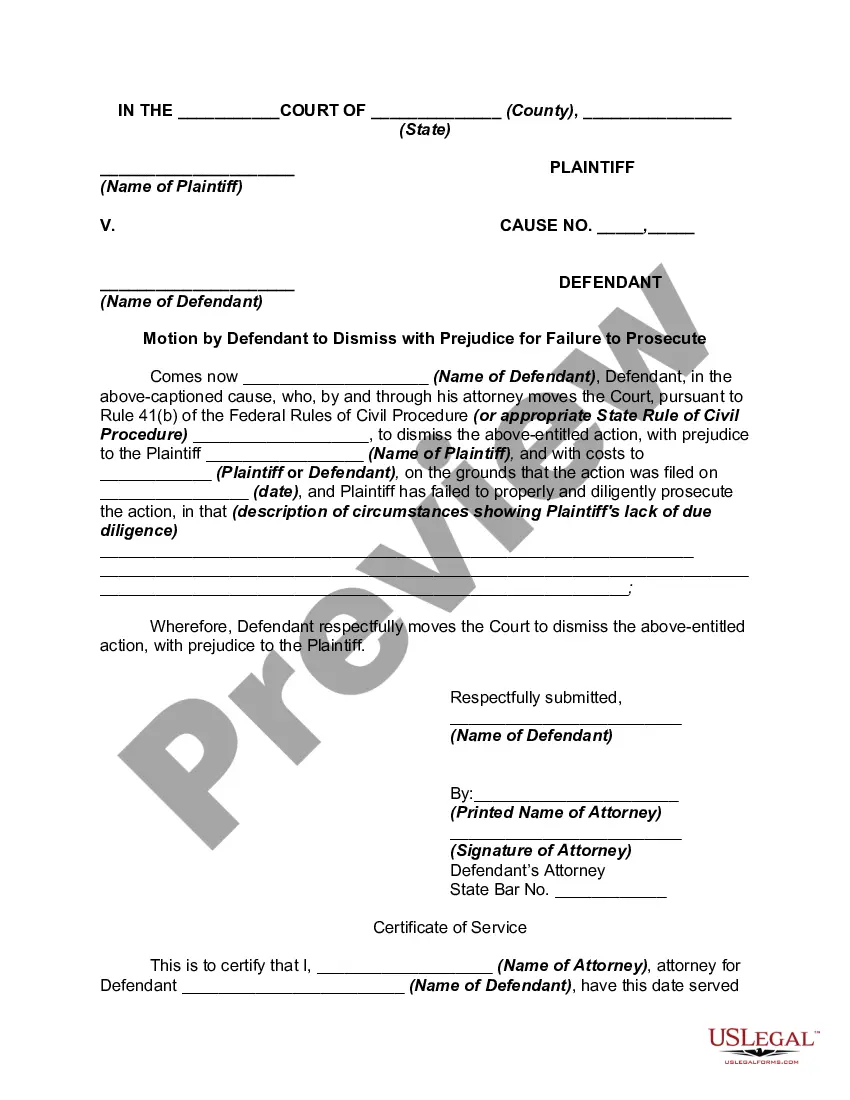
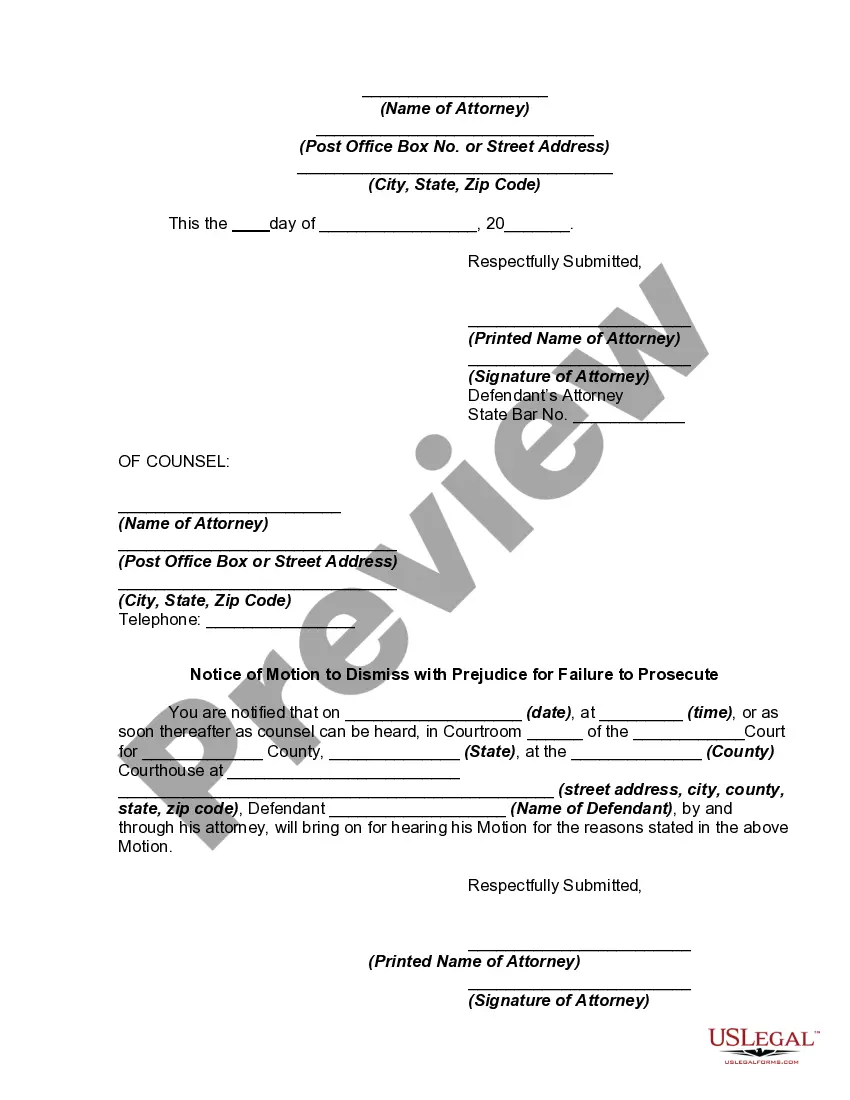
  • Preview Motion by Defendant to Dismiss with Prejudice for Failure to Prosecute
  • Preview Motion by Defendant to Dismiss with Prejudice for Failure to Prosecute
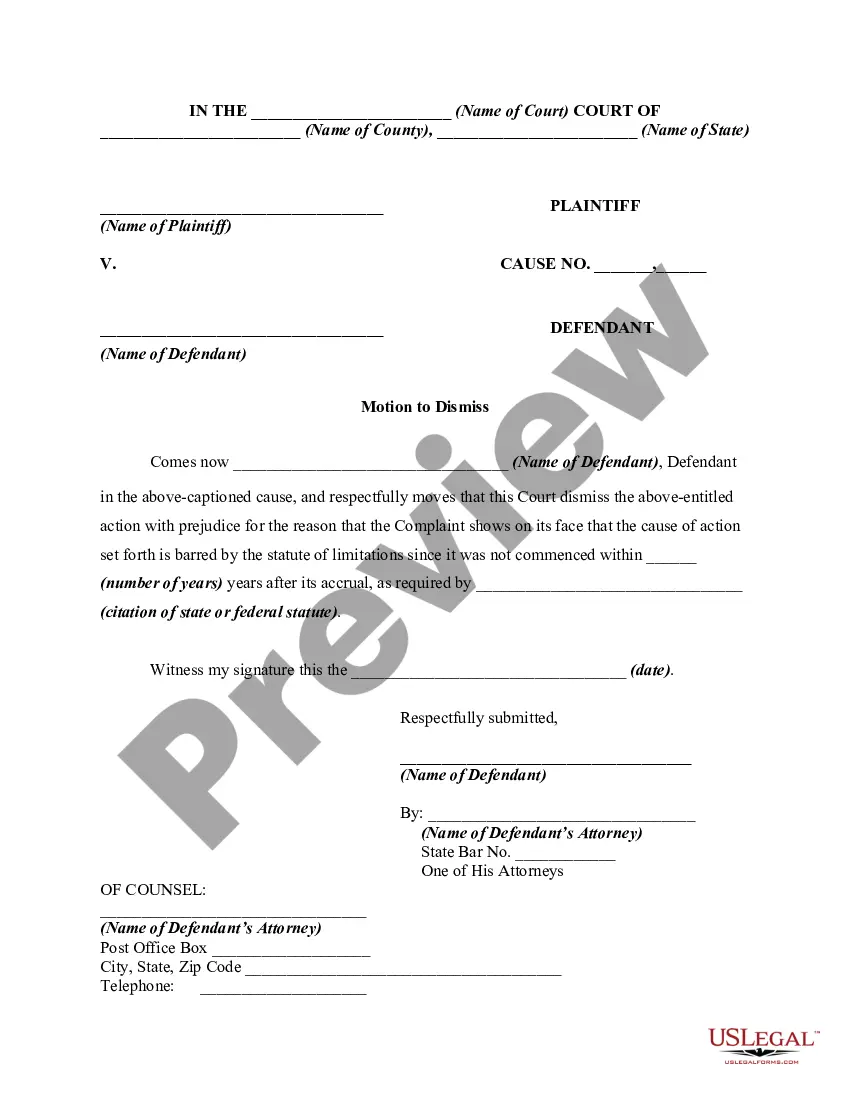
  • Preview Motion by Defendant to Dismiss with Prejudice for Failure to Prosecute

Get your form ready online

Our built-in tools help you complete, sign, share, and store your documents in one place.

Built-in online Word editor

Make edits, fill in missing information, and update formatting in US Legal Forms—just like you would in MS Word.

Export easily

Download a copy, print it, send it by email, or mail it via USPS—whatever works best for your next step.

E-sign your document

Sign and collect signatures with our SignNow integration. Send to multiple recipients, set reminders, and more. Go Premium to unlock E-Sign.

Notarize online 24/7

If this form requires notarization, complete it online through a secure video call—no need to meet a notary in person or wait for an appointment.

Store your document securely

We protect your documents and personal data by following strict security and privacy standards.

Form selector

Make edits, fill in missing information, and update formatting in US Legal Forms—just like you would in MS Word.

Form selector

Download a copy, print it, send it by email, or mail it via USPS—whatever works best for your next step.

Form selector

Sign and collect signatures with our SignNow integration. Send to multiple recipients, set reminders, and more. Go Premium to unlock E-Sign.

Form selector

If this form requires notarization, complete it online through a secure video call—no need to meet a notary in person or wait for an appointment.

Form selector

We protect your documents and personal data by following strict security and privacy standards.

Looking for another form?

This field is required
Ohio
Select state

How to fill out Motion By Defendant To Dismiss With Prejudice For Failure To Prosecute?

Are you seeking to swiftly compose a legally-enforceable Chicago Motion by Defendant to Dismiss with Prejudice for Failure to Prosecute, or potentially any other document to handle your personal or business matters? You have two alternatives: hire a legal consultant to create a legal document for you or do it entirely by yourself. The positive news is that there's an additional option - US Legal Forms. It will assist you in obtaining well-structured legal documents without incurring excessive costs for legal assistance.

US Legal Forms offers a vast array of over 85,000 state-specific document templates, including Chicago Motion by Defendant to Dismiss with Prejudice for Failure to Prosecute and comprehensive form packages. We provide templates for a variety of life situations: from divorce documents to real estate templates. We have been in the industry for over 25 years and maintain an impeccable reputation among our clientele. Here’s how you can join them and secure the required template without hassle.

If you have already created an account, you can simply Log In to it, locate the Chicago Motion by Defendant to Dismiss with Prejudice for Failure to Prosecute template, and download it. To re-download the document, just navigate to the My documents tab.

It's straightforward to purchase and download legal forms if you utilize our services. Additionally, the templates we provide are refreshed by industry professionals, which enhances your confidence when drafting legal matters. Try US Legal Forms today and witness the benefits for yourself!

  1. Firstly, thoroughly confirm if the Chicago Motion by Defendant to Dismiss with Prejudice for Failure to Prosecute aligns with your state’s or county’s regulations.
  2. If the document comes with a description, ensure to verify its intended use.
  3. Begin the search anew if the document doesn’t meet your requirements by utilizing the search box in the header.
  4. Choose the subscription that best corresponds with your needs and proceed to the payment process.
  5. Select the file format in which you wish to receive your document and download it.
  6. Print it out, complete it, and sign where indicated.

Form popularity

FAQ

After a motion to dismiss is granted, the case is typically concluded, and the plaintiff cannot pursue the same claim again. This outcome highlights the significance of timely prosecution and solid case preparation. In situations involving the Chicago Illinois Motion by Defendant to Dismiss with Prejudice for Failure to Prosecute, it is crucial for defendants to ensure all paperwork is in order to avoid unnecessary legal complications.

Filling out a motion for dismissal involves specific steps to ensure clarity and compliance with legal requirements. You'll need to state the grounds for dismissal clearly, provide relevant supporting documents, and submit your request to the appropriate court. For those unfamiliar with this process, using resources like uslegalforms can help you navigate the intricacies, particularly when dealing with a Chicago Illinois Motion by Defendant to Dismiss with Prejudice for Failure to Prosecute.

A motion to dismiss under Illinois law 2-615 challenges the legal sufficiency of the plaintiff's complaint. Essentially, it claims that the complaint does not establish a viable legal claim. This type of motion plays a vital role in the Chicago Illinois Motion by Defendant to Dismiss with Prejudice for Failure to Prosecute, as it can lead to a swift resolution if the allegations are deemed insufficient.

In Illinois, a 2-619 motion to dismiss allows a defendant to argue that a case should be dismissed due to specific defenses or lack of jurisdiction. This motion can be critical in the Chicago Illinois Motion by Defendant to Dismiss with Prejudice for Failure to Prosecute, as it focuses on issues like late filings or improper claims. Utilizing this motion effectively can save you time and resources in handling your legal matters.

A motion to dismiss with prejudice is a legal request made by the defendant in a case, aiming to terminate the case permanently. When granted, it prevents the plaintiff from bringing the same claim again in the future. In the context of Chicago Illinois Motion by Defendant to Dismiss with Prejudice for Failure to Prosecute, this motion reinforces the importance of timely prosecution by plaintiffs.

Whether it is better to have a case dismissed with or without prejudice depends on your legal strategy and future intentions. A dismissal with prejudice permanently bars re-filing the case, which can be final, while a dismissal without prejudice allows for the possibility of re-filing in the future. Understanding the implications of a Chicago Illinois Motion by Defendant to Dismiss with Prejudice for Failure to Prosecute will help you make informed decisions regarding your case.

When a case is dismissed for failure to prosecute, it indicates that the plaintiff has not actively pursued their case within a specified time frame. This dismissal can occur if there is an unreasonable delay or lack of action by the plaintiff. Knowing the implications of a Chicago Illinois Motion by Defendant to Dismiss with Prejudice for Failure to Prosecute is important, as it highlights the necessity of timely legal action.

In Illinois, you can encounter several types of motions to dismiss, each serving different purposes. Among these, the common types include motions based on lack of jurisdiction, failure to state a claim, or even procedural deficiencies. If you are navigating a Chicago Illinois Motion by Defendant to Dismiss with Prejudice for Failure to Prosecute, recognizing these variations can help in crafting a strong legal strategy.

When a motion is dismissed with prejudice, it means the case is permanently closed, preventing any future claims on the same issue. This resolution typically indicates that the court has determined there is no basis for the claim or that the plaintiff has not followed procedural requirements. Consequently, if you are dealing with a Chicago Illinois Motion by Defendant to Dismiss with Prejudice for Failure to Prosecute, understanding this outcome is crucial for any future legal actions.

To argue against a motion to dismiss, you need to provide compelling facts and legal arguments that demonstrate the plaintiff's claims have merit. Address the specific points raised in the motion and present evidence to support your position. Understanding the nuances of the Chicago Illinois Motion by Defendant to Dismiss with Prejudice for Failure to Prosecute can greatly enhance your rebuttal, allowing you to effectively counter the motion.

Interesting Questions

Trusted and secure by over 3 million people of the world’s leading companies

Chicago Illinois Motion by Defendant to Dismiss with Prejudice for Failure to Prosecute