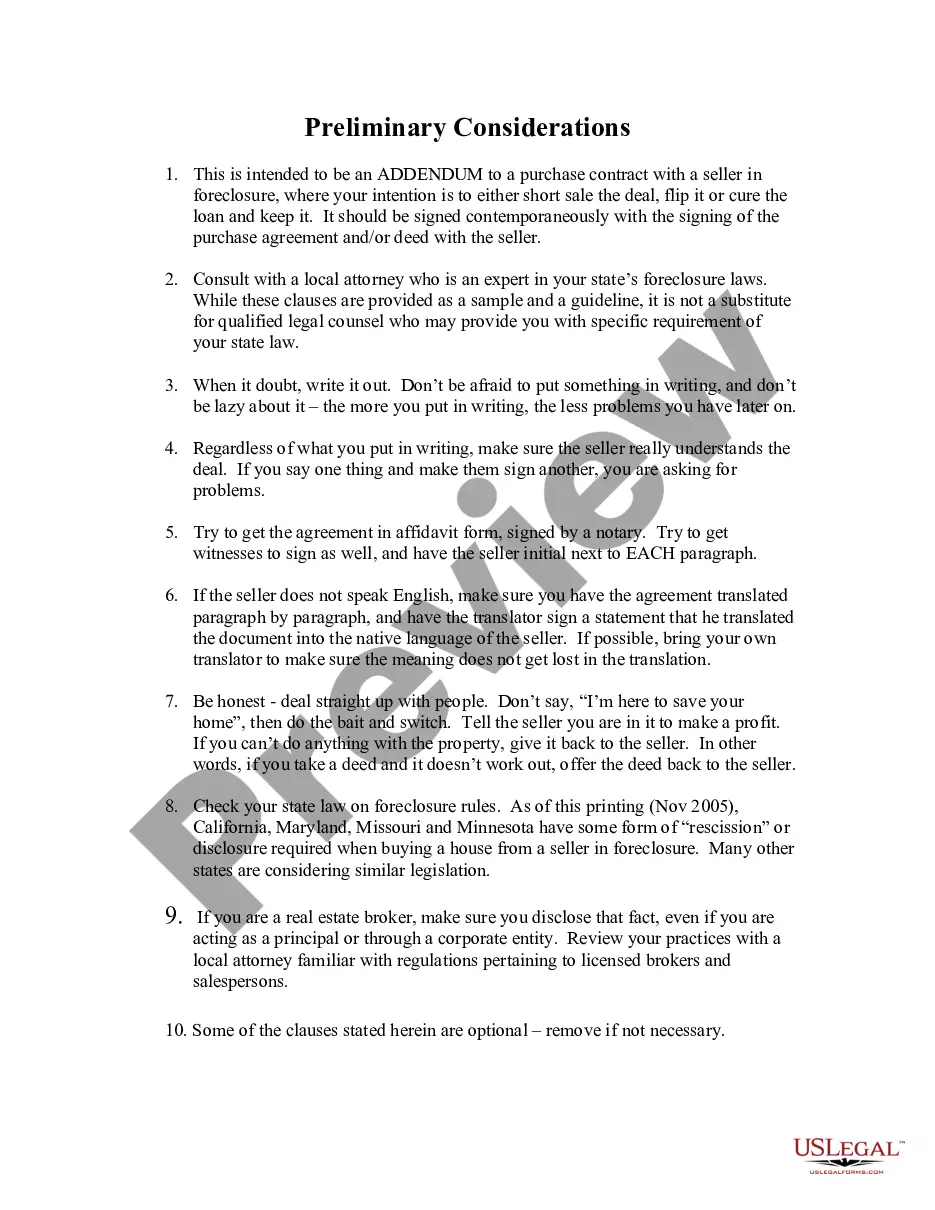
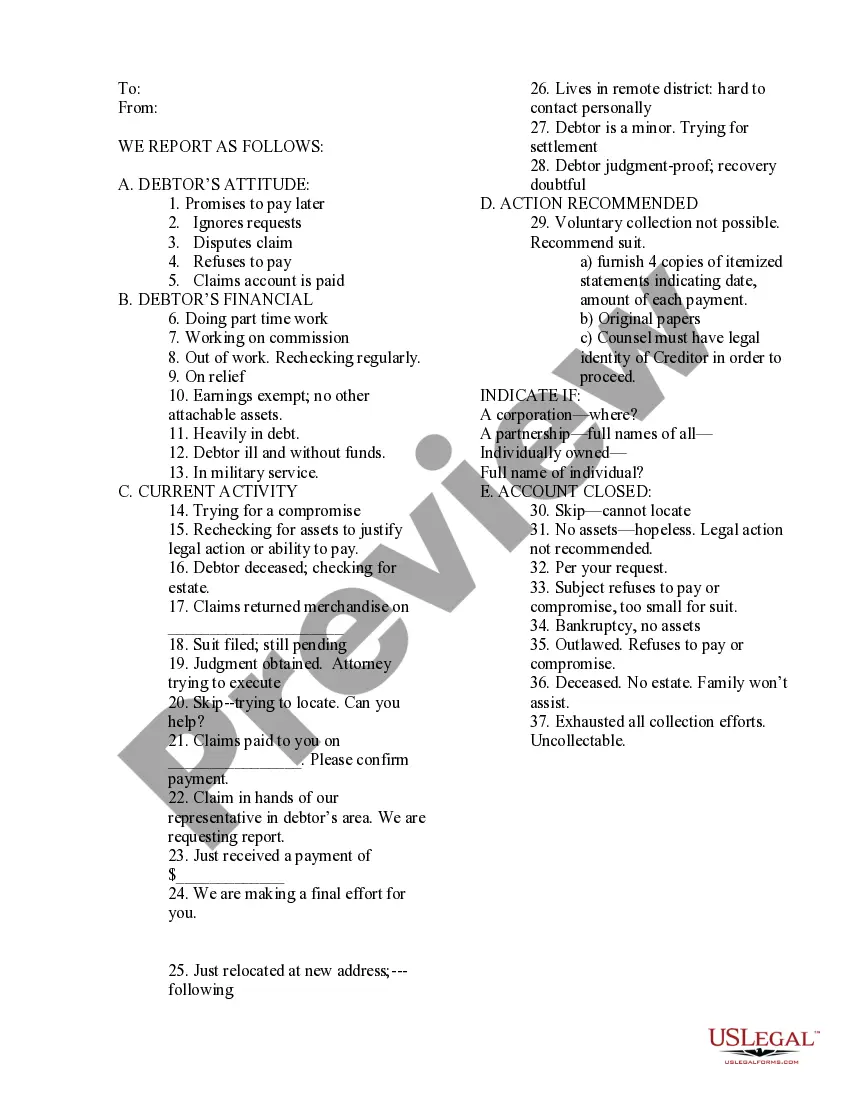
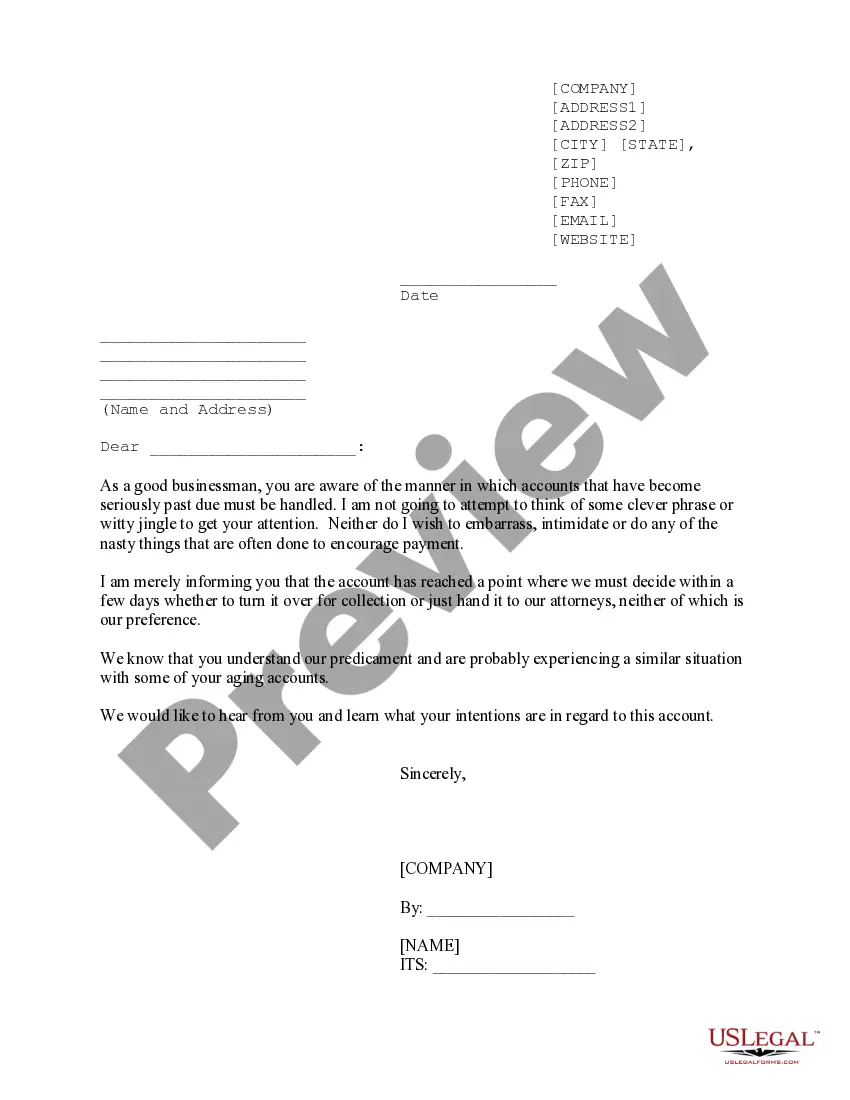
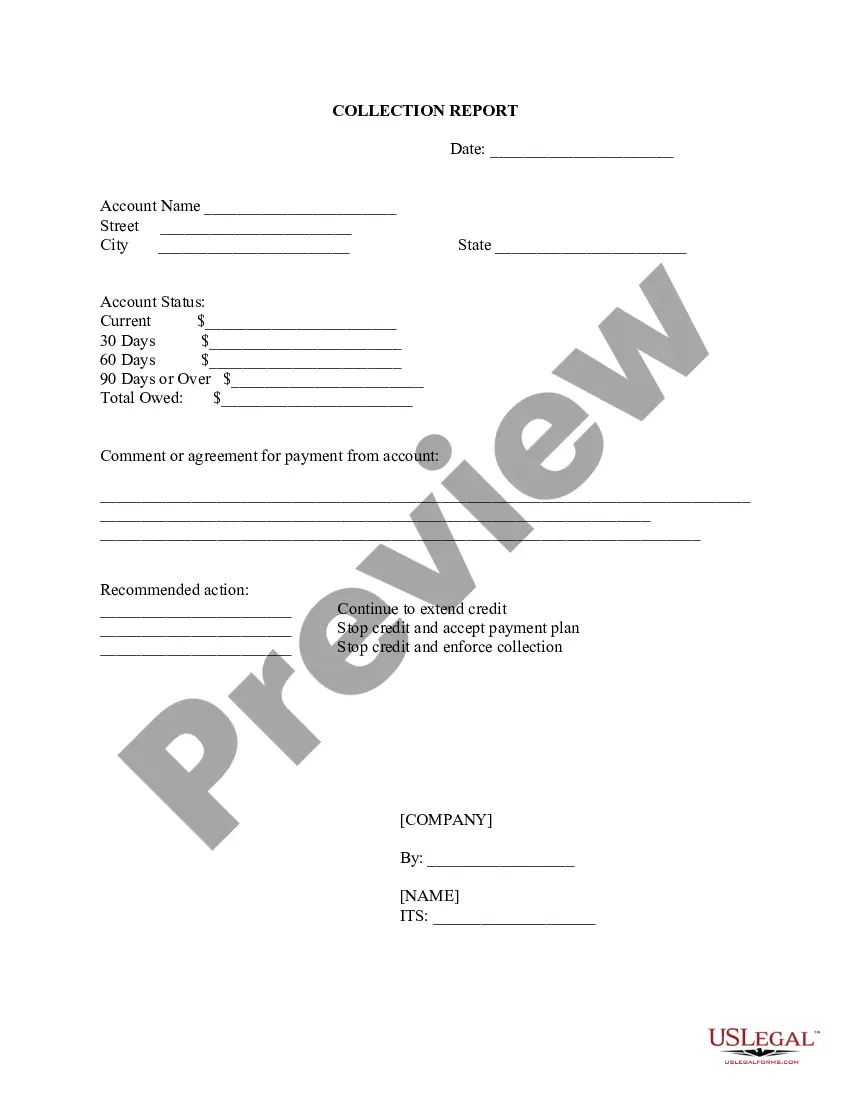
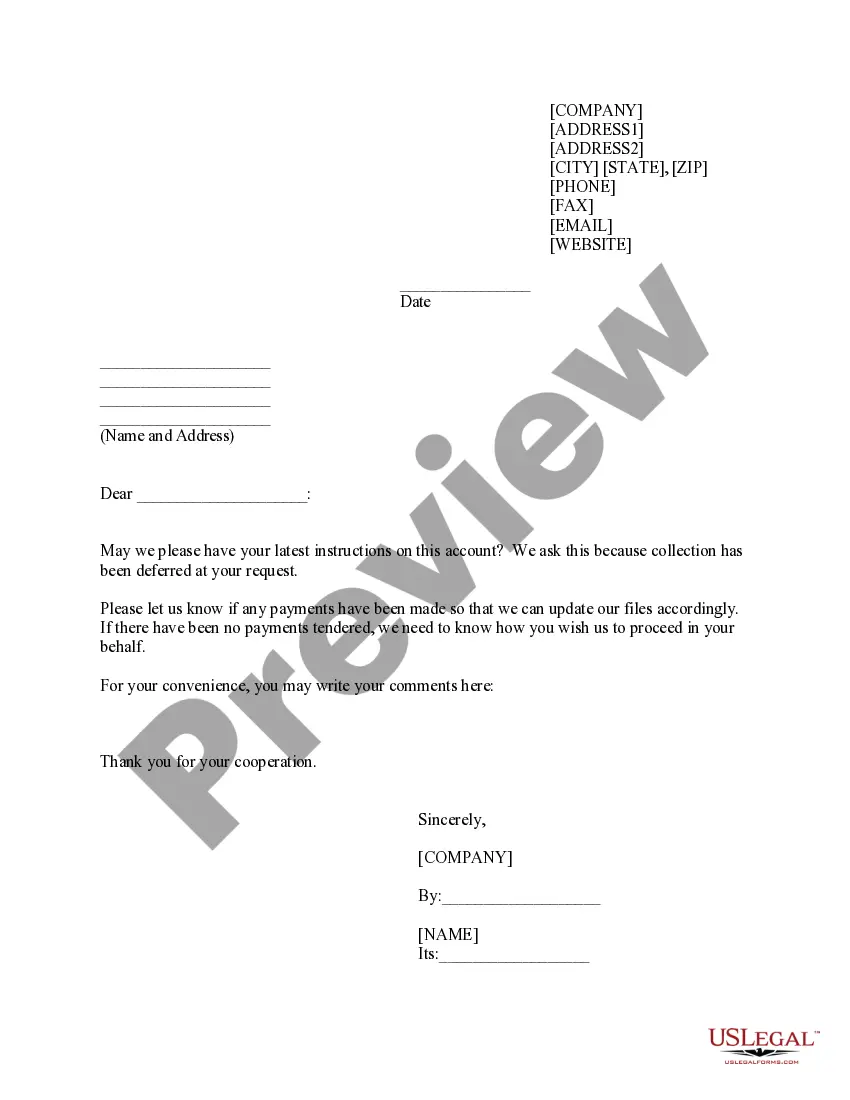
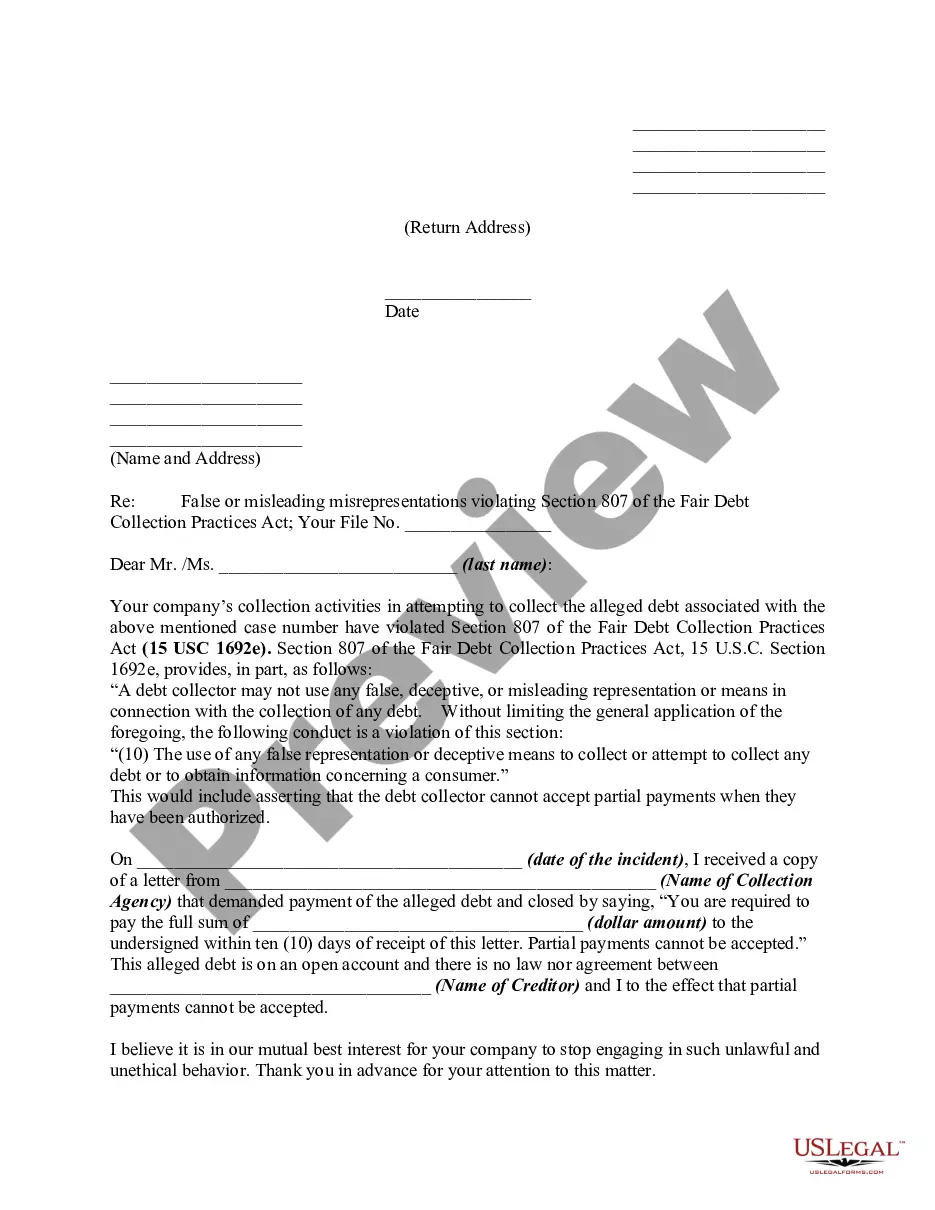
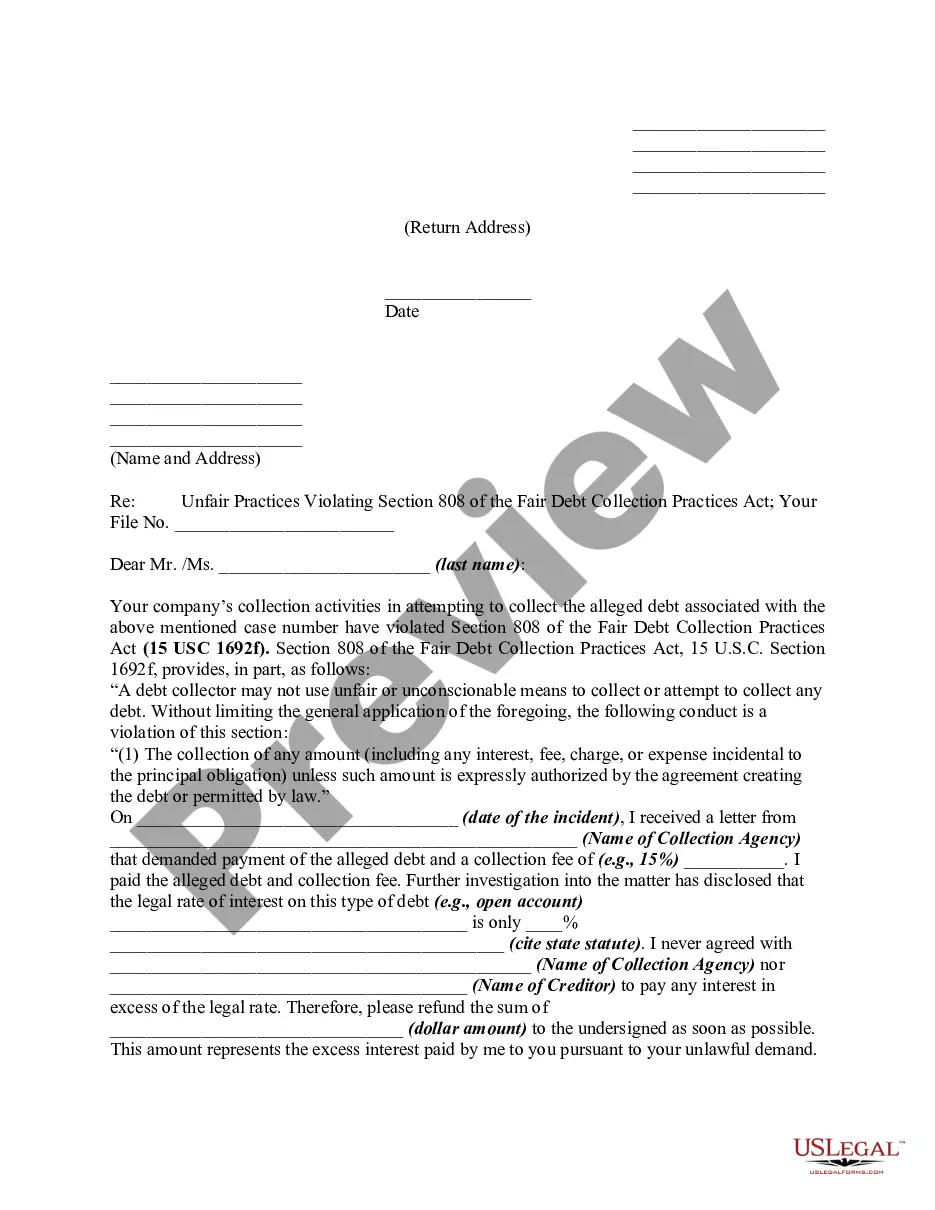
Minneapolis Minnesota Collection Reports on Current Status of Debt
Description

Form popularity
FAQ
If you are looking to reach Minnesota collections, you can contact the Minnesota Department of Revenue at 1-800-657-3777. They provide information and support regarding Minneapolis Minnesota Collection Reports on Current Status of Debt. This resource can be invaluable for both consumers and businesses needing guidance on debt-related inquiries. For comprehensive legal forms and templates, visit uslegalforms to streamline your collection efforts.
In Minnesota, a debt typically becomes uncollectible after six years from the date of the last payment or acknowledgment of the debt. This time frame is crucial for creditors and debtors alike when reviewing Minneapolis Minnesota Collection Reports on Current Status of Debt. Understanding this timeline helps you take appropriate actions before the debt becomes too old to collect. If you need assistance, consider using uslegalforms to access resources that can guide you through the debt collection process.
In Minnesota, debt collection is governed by both state and federal laws that protect consumers from unfair practices. Collectors must follow strict guidelines, including providing clear information about the debt and respecting the debtor's rights. You can learn more about these regulations in Minneapolis Minnesota Collection Reports on Current Status of Debt, which offer insights on consumer protections. Understanding these rules can empower you to navigate debt situations more confidently.
The 7 7 7 rule for debt collectors refers to a guideline that helps debt collectors manage their communication with debtors effectively. Under this rule, collectors can contact a debtor a maximum of seven times in seven days, ensuring they do not overwhelm the individual. This practice is designed to maintain balance and fairness in debt collection, which you can find detailed in Minneapolis Minnesota Collection Reports on Current Status of Debt. By following this guideline, collectors can foster a more respectful relationship with debtors.
Pro: Vibrant arts and culture scene. ... Con: Harsh winters. ... Pro: Abundant natural beauty. ... Con: Mosquitoes in summer. ... Pro: Great infrastructure. ... Con: Rural isolation. ... Pro: Thriving job market. ... Con: Traffic congestion in urban areas.
While living in Minneapolis, you can benefit from small-town vibes and big-city amenities. Although the cost of living is 3% higher than the state average, Minneapolis offers a budding economy, excellent and affordable healthcare, and 0% tax on clothing and shoes. Housing can also be very affordable!
Minnesota Minneapolis, officially the City of Minneapolis, is a city in and the county seat of Hennepin County, Minnesota, United States. With a population of 429,954, it is the state's most populous city as of the 2020 census. Minneapolis - Wikipedia wikipedia.org ? wiki ? Minneapolis wikipedia.org ? wiki ? Minneapolis
MINNEAPOLIS (WCCO) -- ing to a new survey, Minneapolis is increasingly among the world's most livable cities, even amid the COVID-19 pandemic. The Economist's Global Livability Index for 2021 listed the City of Lakes as the 36th most livable city in the world, up 19 spots since last year.
The cost of living in Minneapolis, MN is 2% lower than the state average and 6% lower than the national average. Minneapolis, MN housing is 13% cheaper than the U.S average, while utilities are about 6% less pricey.
When it comes to twin cities living, it can't be beat. In fact, you can easily expect a great quality of life in Minneapolis, with its endless supply of parks and outdoor activities, numerous gorgeous lakes, and mouthwatering food scene ? among many other things.