A compilation album is an album featuring tracks from multiple recording artists, often culled from a variety of sources. The tracks are usually collected according to a common characteristic, such as popularity, source or subject matter.
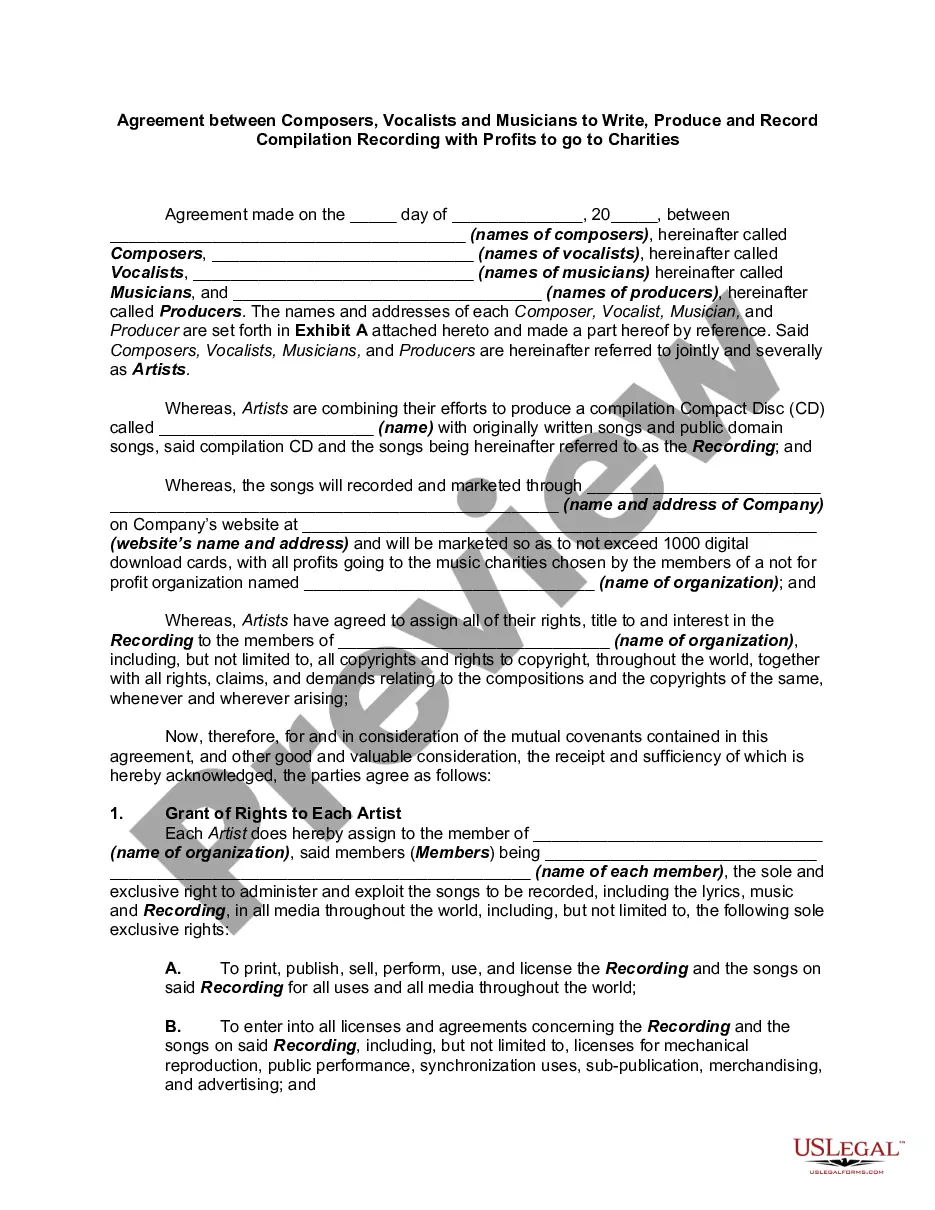
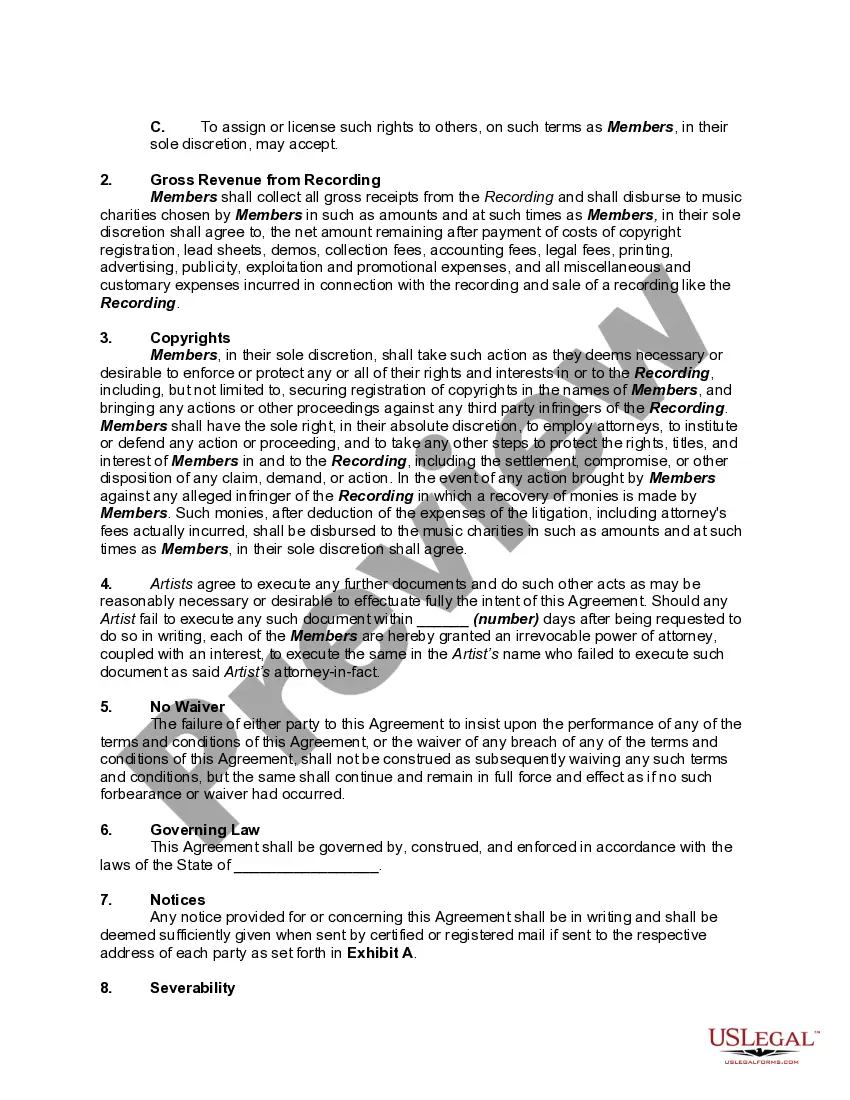
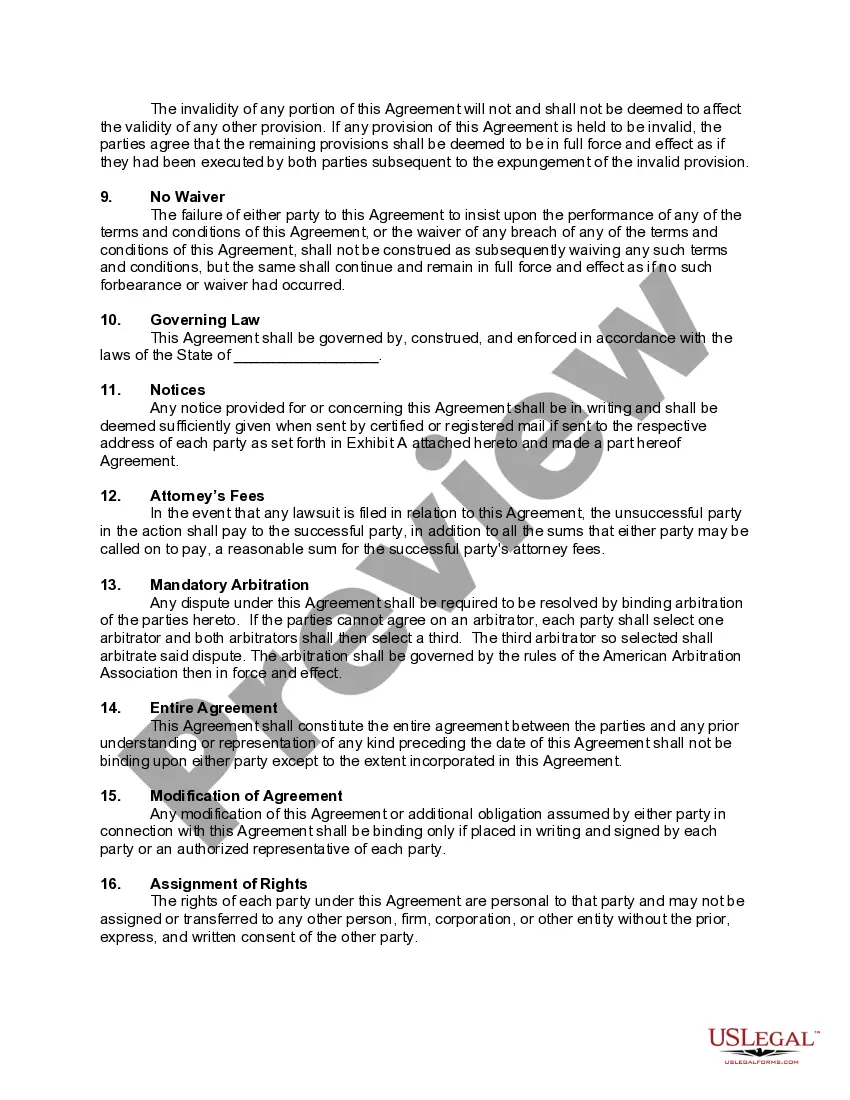
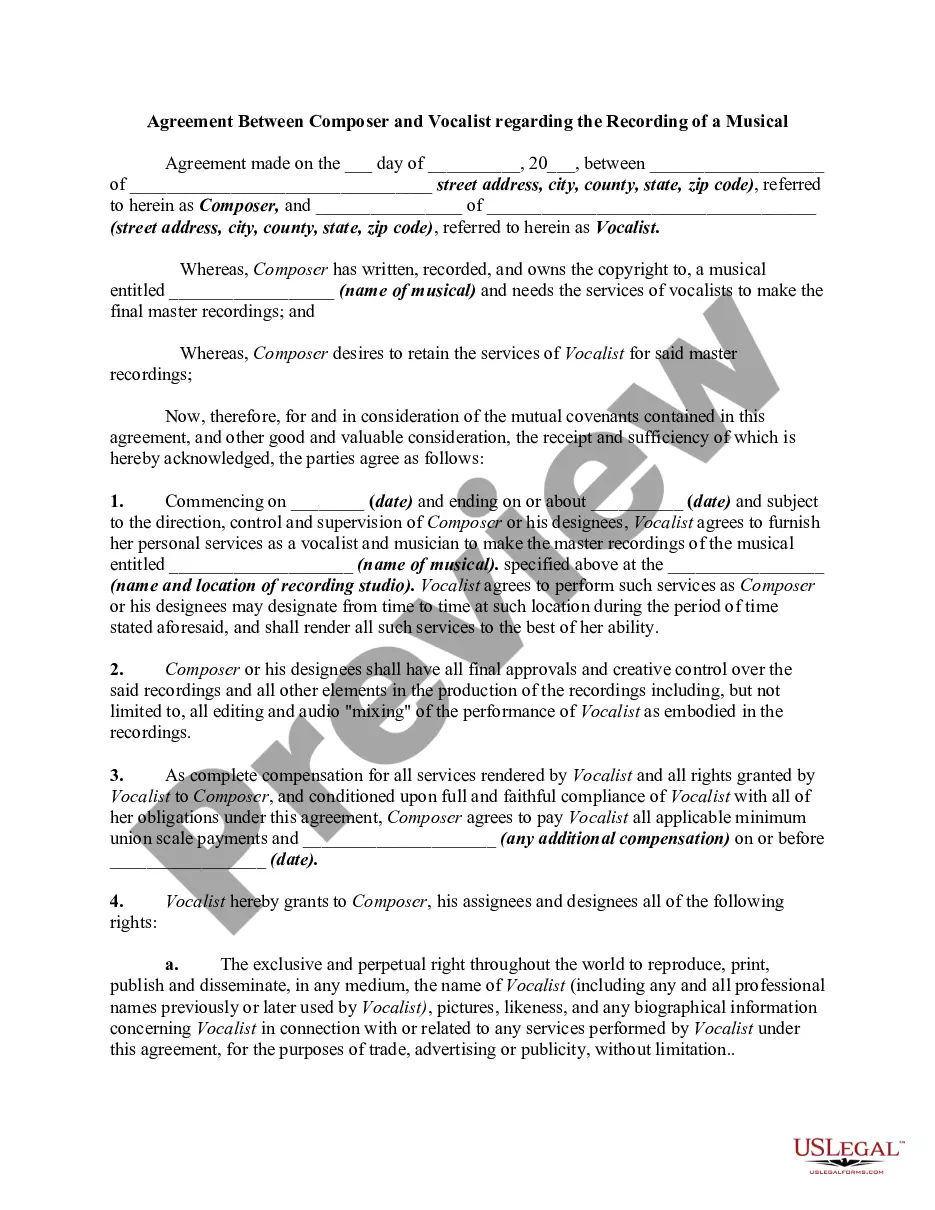
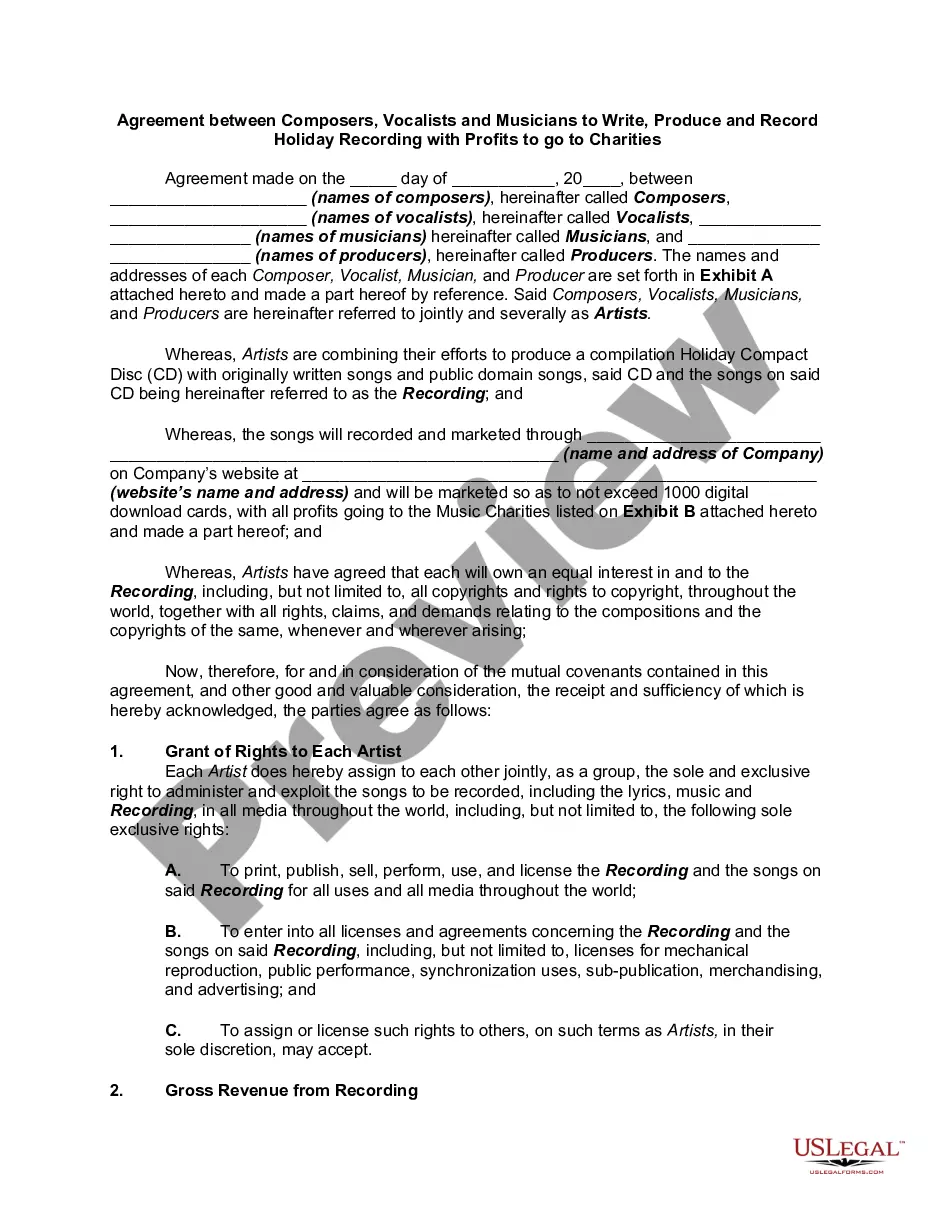
North Las Vegas Nevada Agreement Between Composers, Vocalists and Musicians to Write, Produce and Record Compilation Recording with Profits to go to Charities
Category:
State:
Multi-State
City:
North Las Vegas
Control #:
US-02021BG
Format:
Word
Instant download
Description
Free preview
Form popularity
FAQ
Publishing rights in the music industry refer to the legal rights that govern the use and distribution of musical compositions. These rights allow composers and songwriters to earn income from their work through licensing agreements and royalties. Engaging in the North Las Vegas Nevada Agreement Between Composers, Vocalists and Musicians to Write, Produce and Record Compilation Recording with Profits to go to Charities can help ensure that these rights are respected and can contribute to charitable initiatives.
The primary source of income for most US music publishers is performance royalties. These royalties are generated when songs are played on the radio, in venues, or through streaming platforms. By leveraging the North Las Vegas Nevada Agreement Between Composers, Vocalists and Musicians to Write, Produce and Record Compilation Recording with Profits to go to Charities, musicians can maximize their earning potential while supporting charitable efforts.
The Charitable Solicitation Act in Nevada regulates how organizations solicit donations from the public. This act ensures transparency and protects donors by requiring proper registration and disclosure of information. If you’re involved in the North Las Vegas Nevada Agreement Between Composers, Vocalists and Musicians to Write, Produce and Record Compilation Recording with Profits to go to Charities, understanding this act is crucial for lawful fundraising efforts.
When you write and publish musical compositions, you gain specific legal rights, such as copyright ownership and the ability to collect royalties. This means that you can earn income from streaming, performances, and sales. The North Las Vegas Nevada Agreement Between Composers, Vocalists and Musicians to Write, Produce and Record Compilation Recording with Profits to go to Charities ensures that these rights are protected while benefiting charitable causes.
Creating a nonprofit organization in Nevada involves several key steps, including choosing a name, filing articles of incorporation, and applying for tax-exempt status. It’s essential to draft bylaws and establish a board of directors. If you are considering the North Las Vegas Nevada Agreement Between Composers, Vocalists and Musicians to Write, Produce and Record Compilation Recording with Profits to go to Charities, establishing a nonprofit can help facilitate the charitable aspect of your music project.
Publishing income primarily comes from various streams, including mechanical royalties, performance royalties, and synchronization fees. In the context of the North Las Vegas Nevada Agreement Between Composers, Vocalists and Musicians to Write, Produce and Record Compilation Recording with Profits to go to Charities, these income sources can help fund charitable initiatives. By understanding these income sources, artists can better manage their financial expectations and support their philanthropic goals.
What are the median and average incomes in North Las Vegas? Y-o-Y Change Average Household Income $78,202 6.5% Median Household Income $64,738 6.2% People below Poverty Level 32,413 6.5% People above Poverty Level 220,455 4.6%
The 5 largest ethnic groups in Las Vegas, NV are White (Non-Hispanic) (42.1%), White (Hispanic) (13.4%), Other (Hispanic) (12.6%), Black or African American (Non-Hispanic) (11.1%), and Two+ (Hispanic) (6.62%).
Cost of Living in North Las Vegas, NV However, North Las Vegas is a bit more expensive than the national average. ing to bestplaces.net, the cost-of-living index in North Las Vegas is 109.9 (national average is 100).
The 5 largest ethnic groups in North Las Vegas, NV are White (Non-Hispanic) (24%), Black or African American (Non-Hispanic) (21.3%), White (Hispanic) (18.9%), Other (Hispanic) (13.1%), and Two+ (Hispanic) (8.65%).