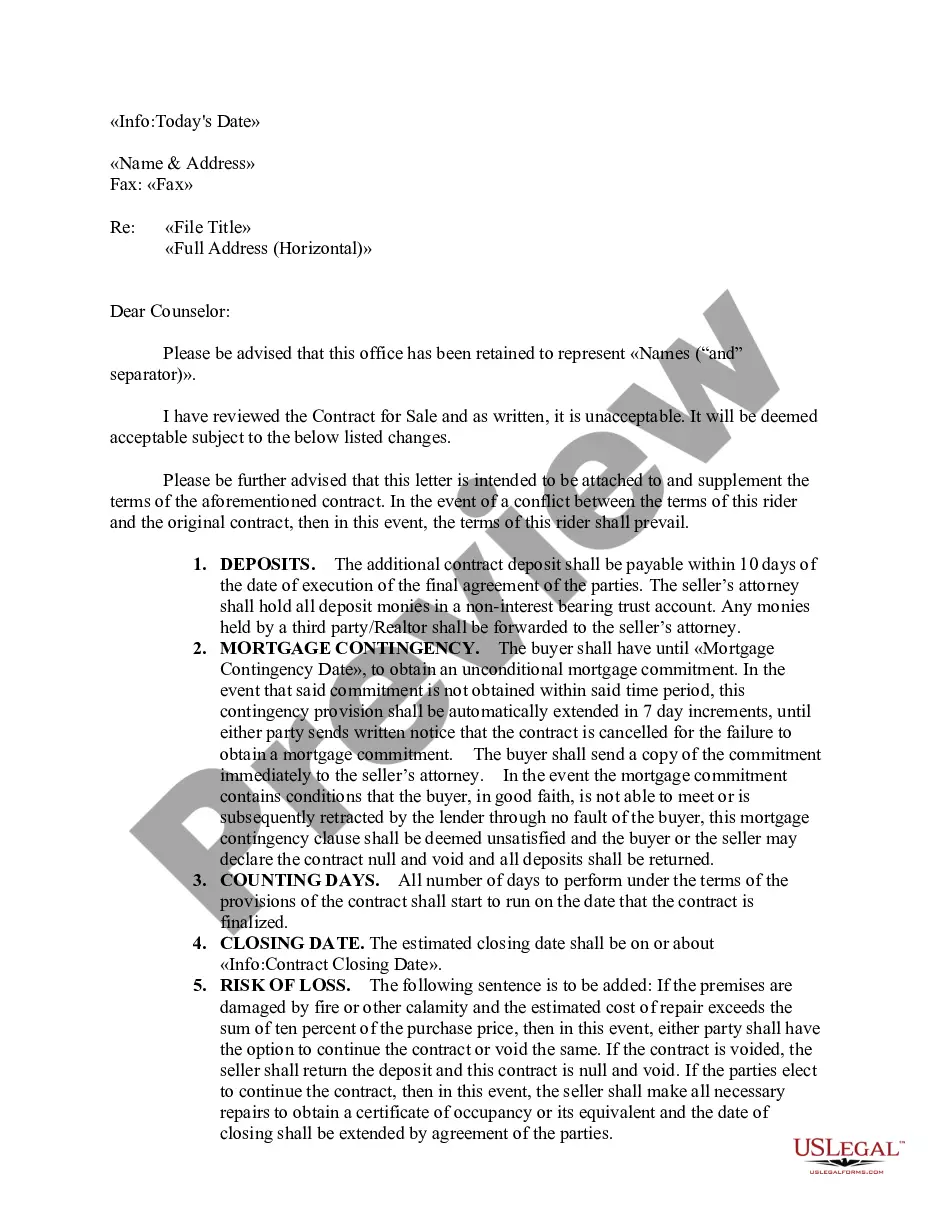
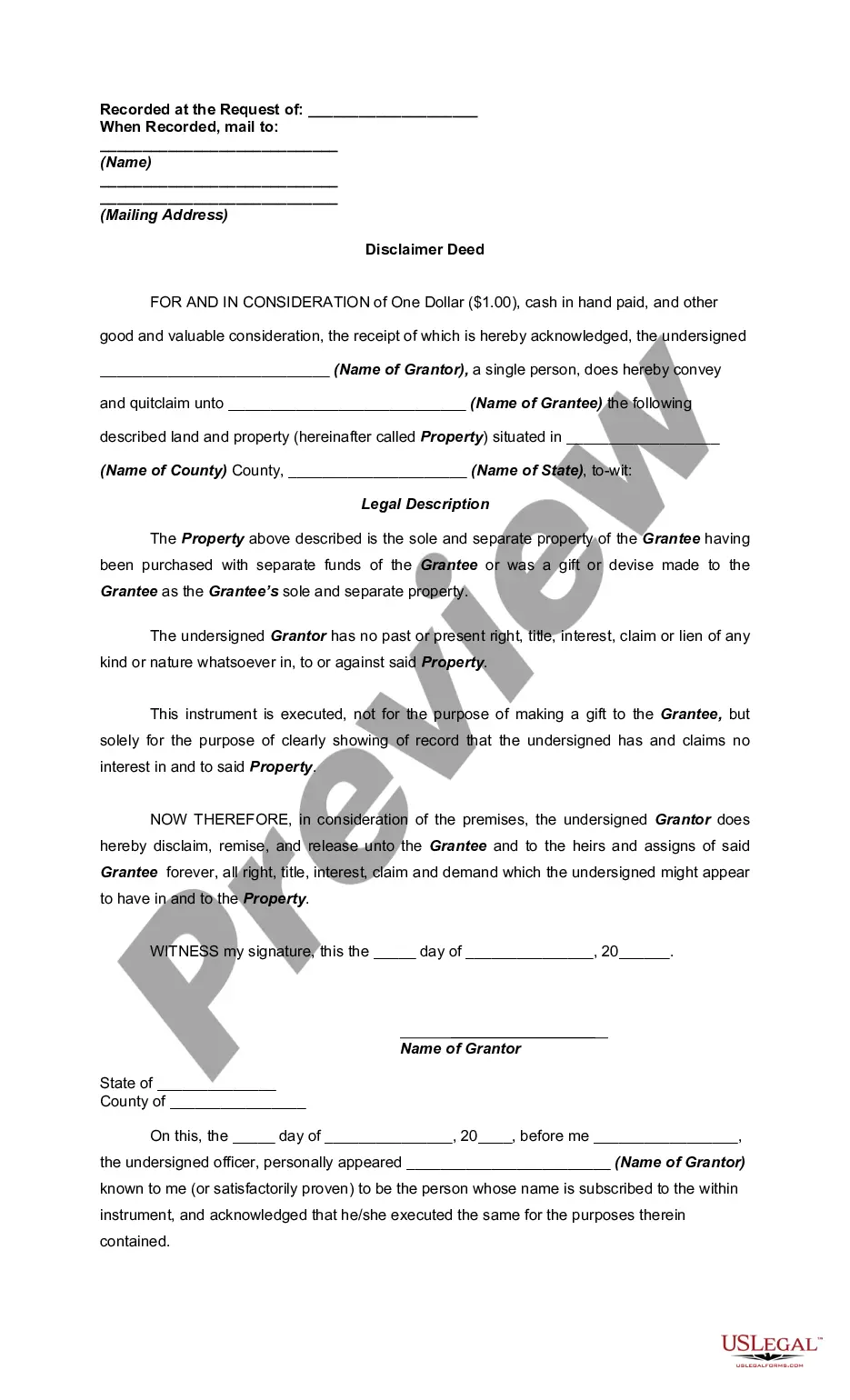
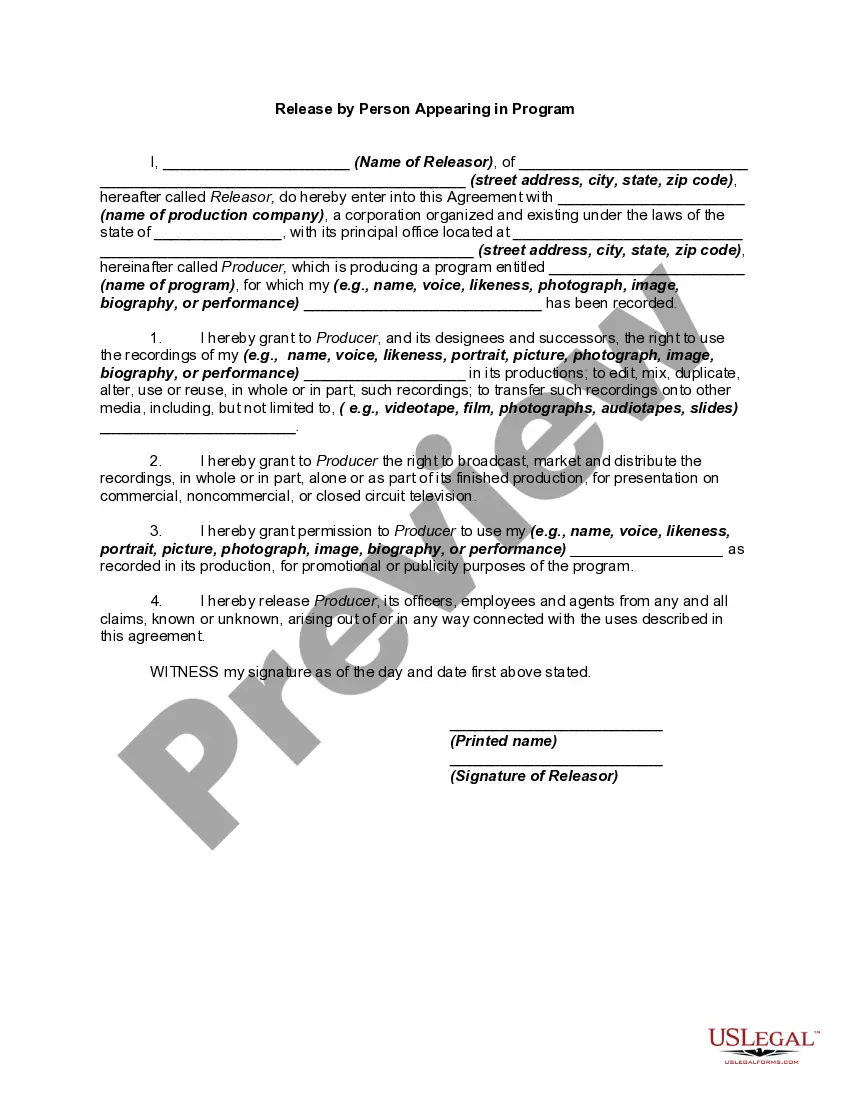
A disclaimer deed is a deed in which a spouse disclaims any interest in the real property acquired by the other spouse. A mortgage company often asks a borrower to sign a disclaimer deed so that his spouse not having her name on the loan, cannot claim any interest in the property.
Columbus Ohio Disclaimer Deed
Category:
State:
Multi-State
City:
Columbus
Control #:
US-01994BG
Format:
Word;
Rich Text
Instant download
Description
Free preview




Form popularity
FAQ
To disclaim an inheritance in Ohio, you must file a written disclaimer within nine months of the decedent's death. This disclaimer should clearly state your intention to reject the inheritance and must be signed and dated. Using a Columbus Ohio Disclaimer Deed can help formalize this process. Consider using resources like US Legal Forms to access templates and step-by-step instructions that can simplify the process.
To fill out an Ohio quit claim deed, start by obtaining a blank form, which you can find on platforms like US Legal Forms. Clearly enter the grantor's and grantee's names, along with the property description and the terms of the transfer. Make sure to sign and date the deed in front of a notary public. After completing the document, file it with the county recorder's office to make the transfer official.
Yes, property can be transferred without probate in Ohio through mechanisms like a Columbus Ohio Disclaimer Deed or a transfer on death designation. These options allow property owners to pass on their assets directly to beneficiaries without going through the lengthy probate process. Utilizing these methods can save time and reduce administrative burdens. It's advisable to consult resources or professionals to guide you through the process.
In Ohio, it is not mandatory for an attorney to prepare a deed, including a Columbus Ohio Disclaimer Deed. However, working with an attorney can help ensure that the deed is correctly drafted and complies with local laws. This can prevent potential legal issues in the future. If you prefer a more DIY approach, platforms like US Legal Forms provide templates that simplify the process.
Ing to Ohio Instructions for Form IT 1040, ?Every Ohio resident and part year resident is subject to the Ohio Income tax.? Every full-year resident, part year resident and full year nonresident must file an Ohio tax return if they have income from Ohio sources.
Local income tax is usually based on where a taxpayer lives, but in some cases, taxpayers also owe local income tax based on where they perform work (for example, if they commute). You may have withholding obligations based on where your company does business or based on where your employees perform work.
Columbus residents pay a total of 2.5% in taxes on all income earned, regardless of whether it was earned in Columbus or another city.
In Ohio, you have an income tax obligation to both your employment city and your resident city. Your employer is required by law to withhold your work place city tax and if you have "fully withheld", you have no filing requirement with your work place city.
Municipalities may generally impose tax on on wages, salaries, and other compensation earned by residents and by nonresidents who work in the municipality. The tax also applies to the net profits of business attributable to activities in the municipality, and to the net profits from rental activities.
1. WHO SHOULD FILE THIS RETURN: a) All Ohio City residents 18 years of age and over, (except high school students) are required to regis- ter and report income with the Ohio City Tax Office. b) High School Students 18 years of age and under, working part time, do not have to register with the Ohio City Tax Office.