Federal Pro Se [Non-prisoner] Complaint Form:
** THIS IS NOT A FEDERAL PRO SE COMPLAINT FORM *****
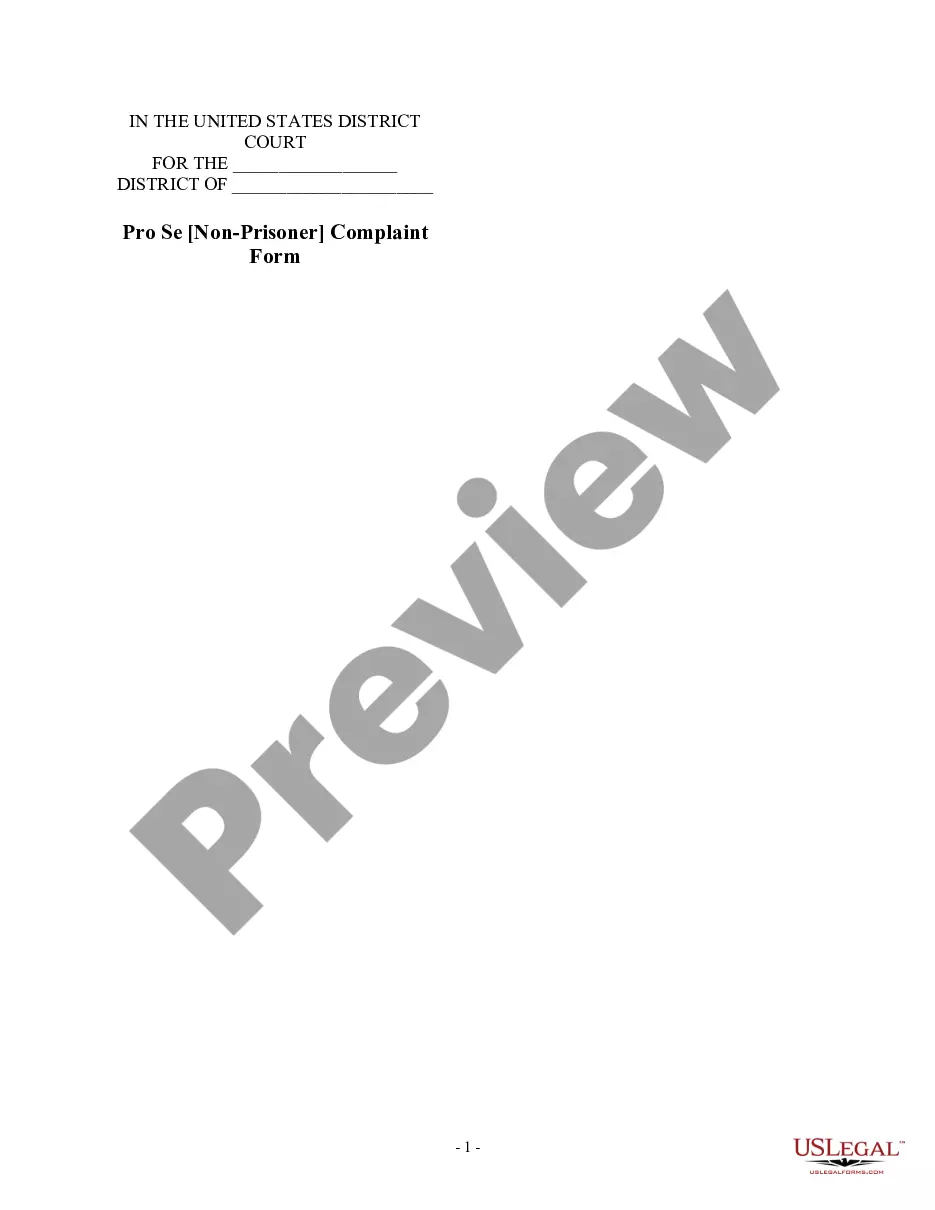
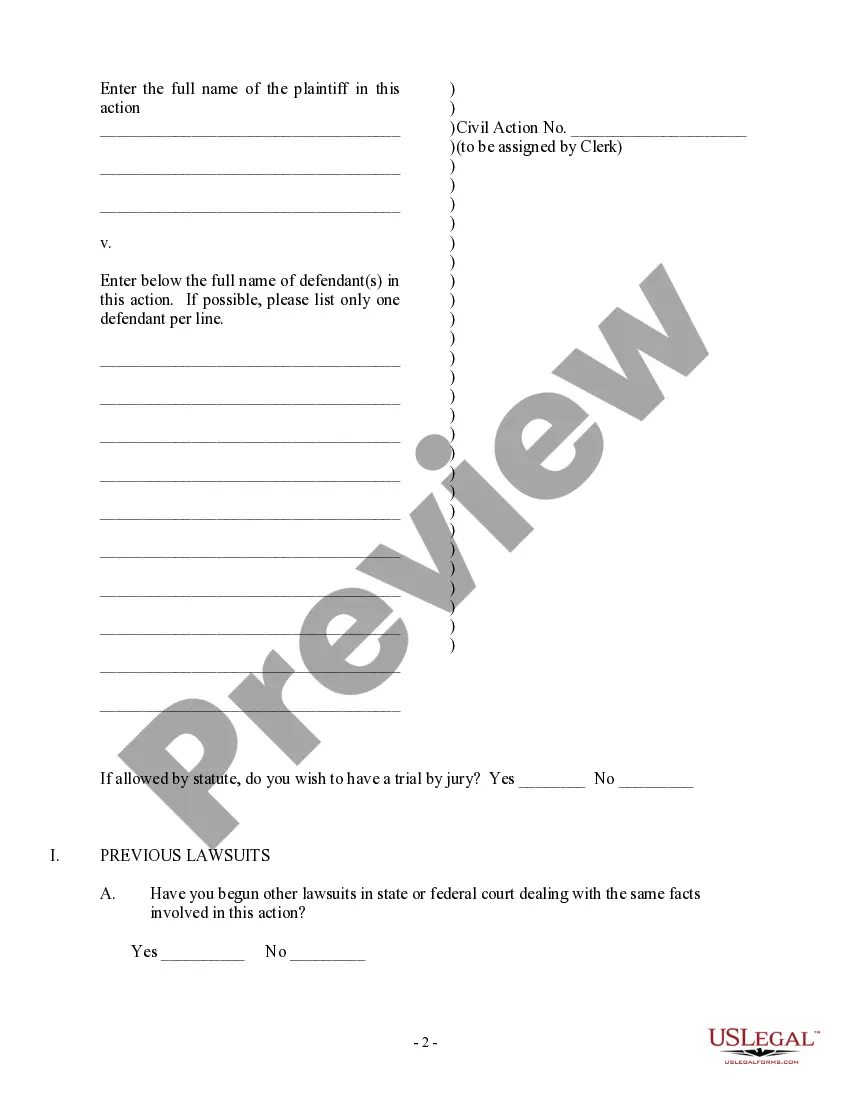
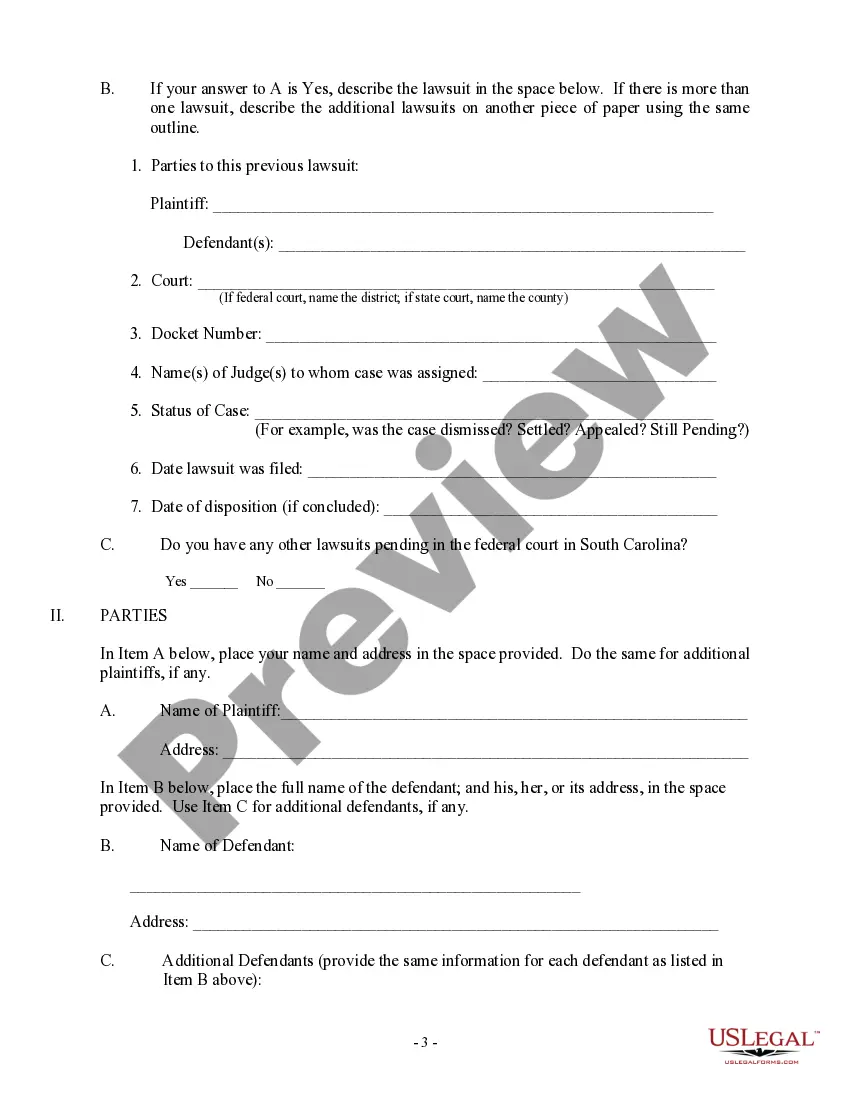
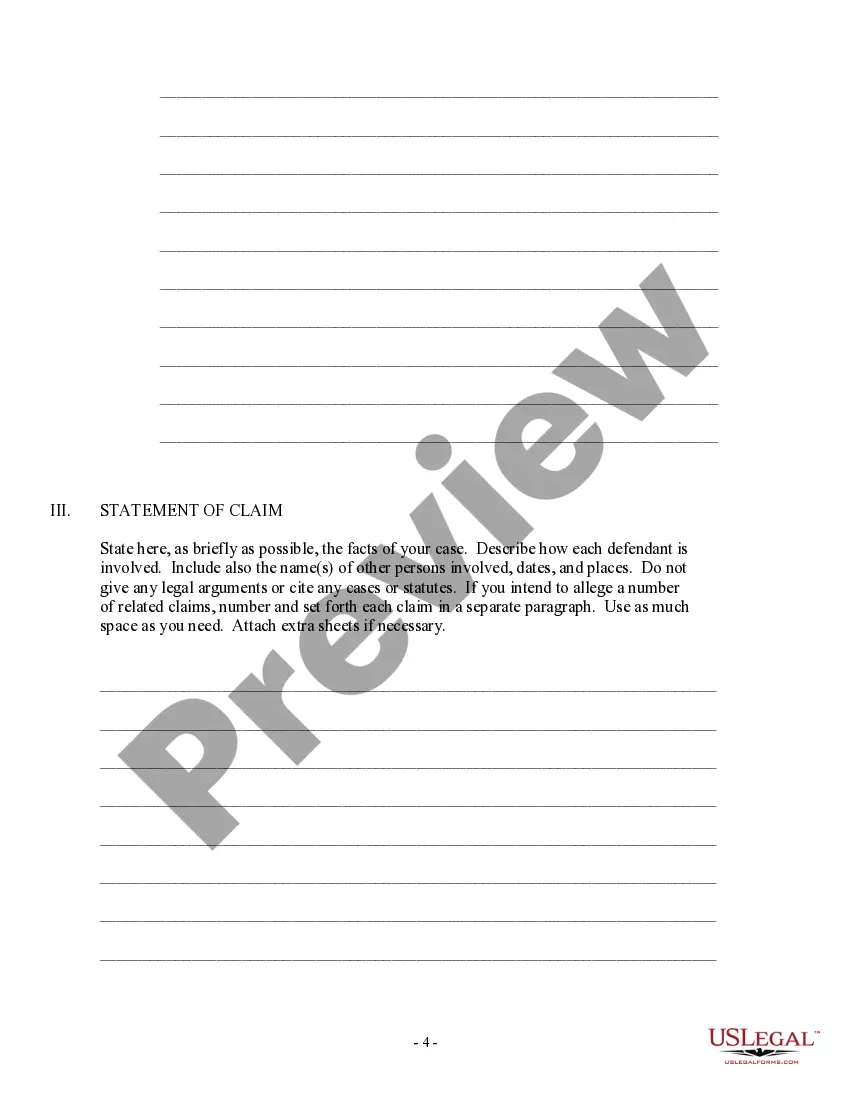
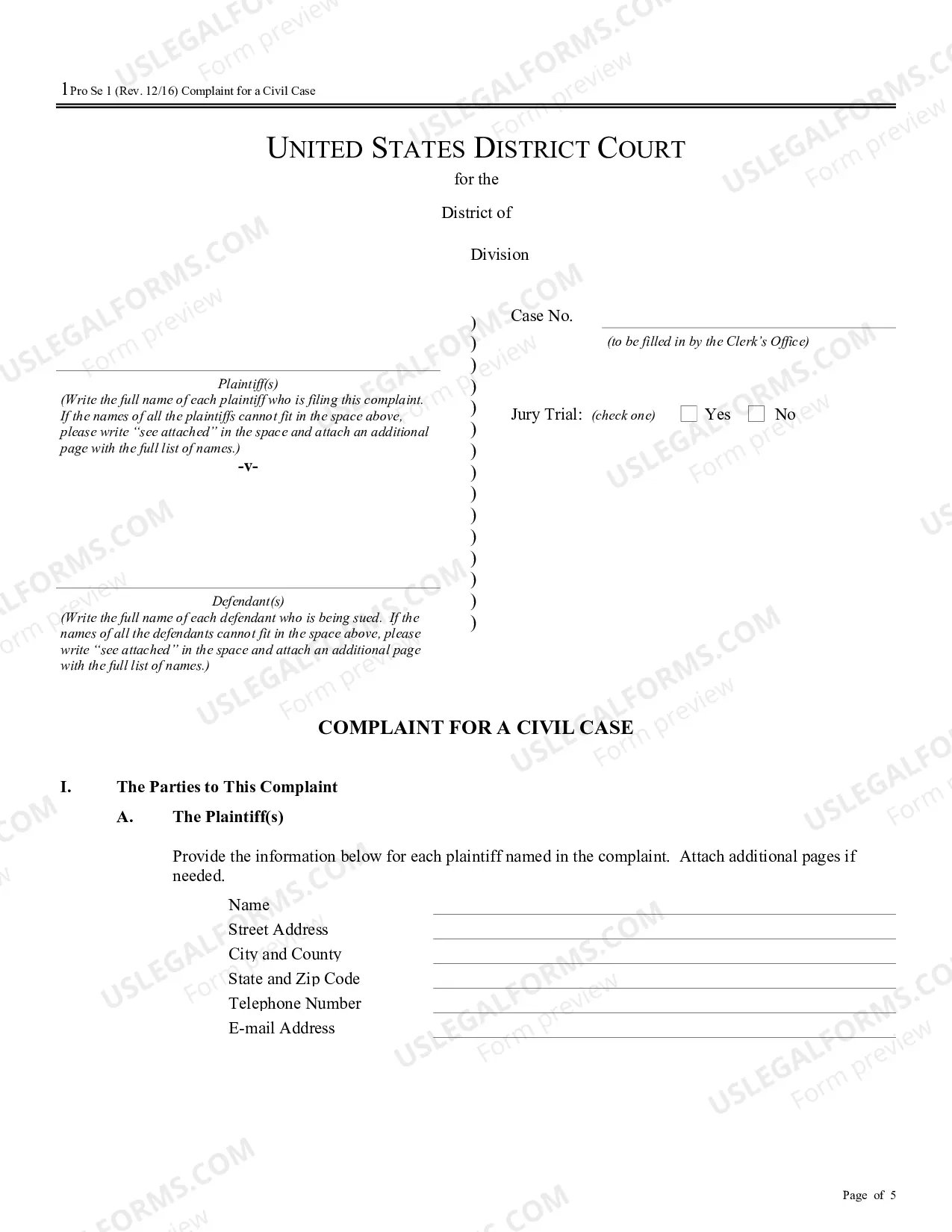
Hillsborough Florida Federal Pro Se - Non-Prisoner - Complaint Form
State:
Multi-State
Category:
County:
Hillsborough
Control #:
US-01991
Format:
Word;
Rich Text
91 downloads
Description
Free preview
Get your form ready online
Our built-in tools help you complete, sign, share, and store your documents in one place.
Built-in online Word editor
Make edits, fill in missing information, and update formatting in US Legal Forms—just like you would in MS Word.
Export easily
Download a copy, print it, send it by email, or mail it via USPS—whatever works best for your next step.
E-sign your document
Sign and collect signatures with our SignNow integration. Send to multiple recipients, set reminders, and more. Go Premium to unlock E-Sign.
Notarize online 24/7
If this form requires notarization, complete it online through a secure video call—no need to meet a notary in person or wait for an appointment.
Store your document securely
We protect your documents and personal data by following strict security and privacy standards.

Make edits, fill in missing information, and update formatting in US Legal Forms—just like you would in MS Word.

Download a copy, print it, send it by email, or mail it via USPS—whatever works best for your next step.

Sign and collect signatures with our SignNow integration. Send to multiple recipients, set reminders, and more. Go Premium to unlock E-Sign.

If this form requires notarization, complete it online through a secure video call—no need to meet a notary in person or wait for an appointment.

We protect your documents and personal data by following strict security and privacy standards.
Looking for another form?
How to fill out Federal Pro Se - Non-Prisoner - Complaint Form?
How long does it typically take you to create a legal document.
Since each state has its own laws and regulations for various life circumstances, finding a Hillsborough Federal Pro Se - Non-Prisoner - Complaint Form that fulfills all local requirements can be draining, and acquiring it from a qualified attorney is frequently costly.
Many online platforms provide the most sought-after state-specific documents for download, but utilizing the US Legal Forms library is the most advantageous.
Click Buy Now once you are certain about the chosen document.
- US Legal Forms is the most all-inclusive online index of templates, organized by states and areas of application.
- In addition to the Hillsborough Federal Pro Se - Non-Prisoner - Complaint Form, you can discover any particular form to manage your business or personal matters, adhering to your local standards.
- Experts validate all samples for their authenticity, ensuring you can accurately prepare your paperwork.
- Employing the service is relatively straightforward.
- If you already possess an account on the platform, and your subscription is active, you just need to Log In, pick the necessary sample, and download it.
- You can save the document in your profile at any later time.
- If you are unfamiliar with the platform, there will be a few additional steps to finalize prior to obtaining your Hillsborough Federal Pro Se - Non-Prisoner - Complaint Form.
- Review the content of the page you are currently on.
- Examine the description of the template or Preview it (if available).
- Search for another form using the relevant option in the header.
Form popularity
FAQ
The most common complaint involves allegations of color of law violations. Another common complaint involves racial violence, such as physical assaults, homicides, verbal or written threats, or desecration of property.
Choose from this list to see example civil rights violations: Workplace discrimination or other employment-related problem. Housing discrimination or harassment. Discrimination at a school, educational program or service, or related to receiving education. Mistreated by police, correctional staff, or inmates.
Choose from this list to see example civil rights violations: Workplace discrimination or other employment-related problem. Housing discrimination or harassment. Discrimination at a school, educational program or service, or related to receiving education. Mistreated by police, correctional staff, or inmates.
Clothed with the power of the state and authorized to pass judgment on the most basic aspects of everyday life, a judge can deprive citizens of liberty and property in complete disregard of the Constitution.
If you believe that you have been discriminated against because of your race, color, national origin, disability, age, sex, or religion in programs or activities that HHS directly operates or to which HHS provides federal financial assistance, you may file a complaint with OCR.
Complaints are filed in the Civil Clerk's Office in the United States District Court for your district. Federal rules now allow for service of process by certified mail. You will be required to serve the defendant judge and also your state attorney general if you are suing a state judge.
A federal civil case involves a legal dispute between two or more parties. A civil action begins when a party to a dispute files a complaint, and pays a filing fee required by statute. A plaintiff who is unable to pay the fee may file a request to proceed in forma pauperis.
The most common complaint involves allegations of color of law violations. Another common complaint involves racial violence, such as physical assaults, homicides, verbal or written threats, or desecration of property.
Both civil and court cases include a plaintiff and defendant. The three most common civil cases are tort claims, contract breaches and landlord/tenant issues.
Currently, four penalties may be imposed: private censure, public censure, request that the judge voluntarily resign and recommend impeachment to the House of Representatives.