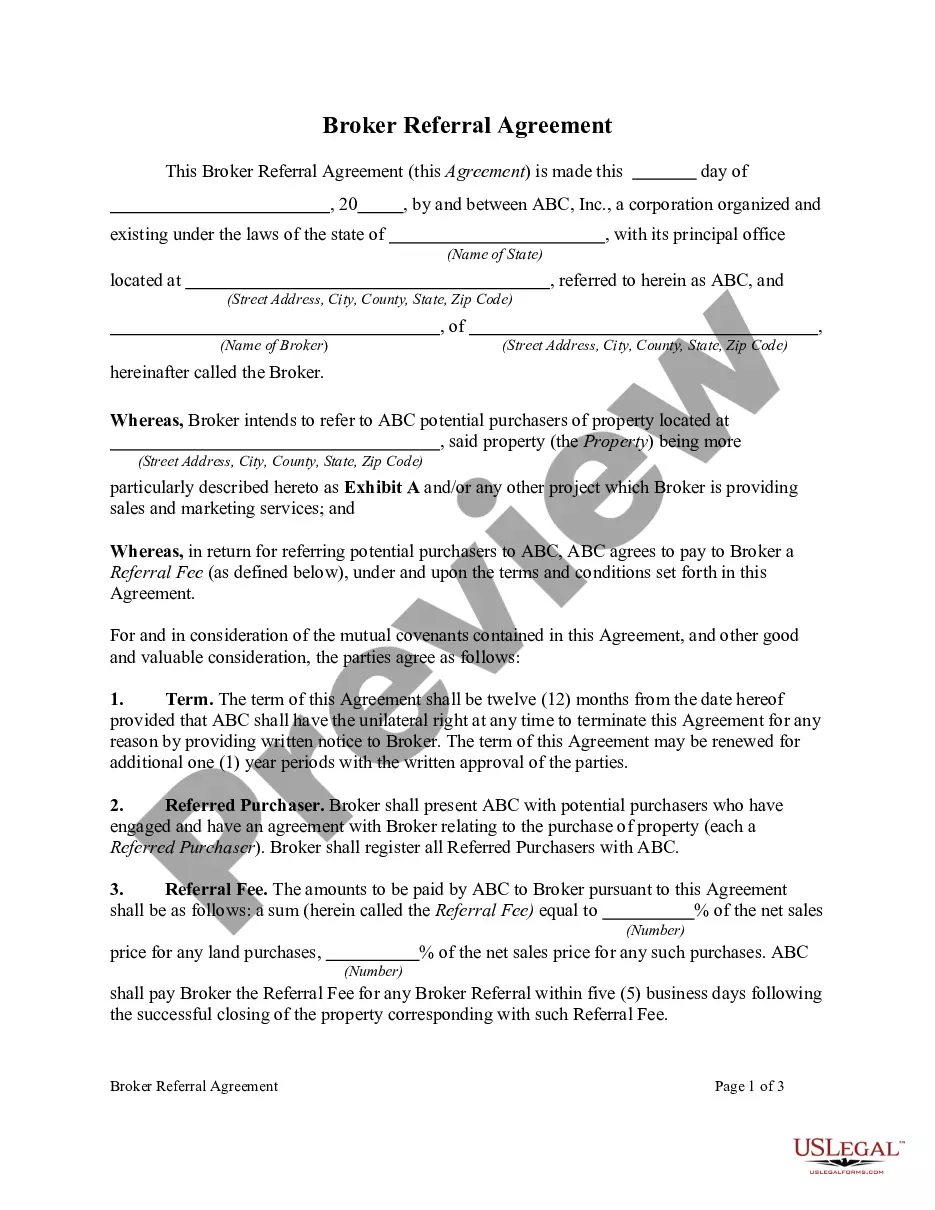
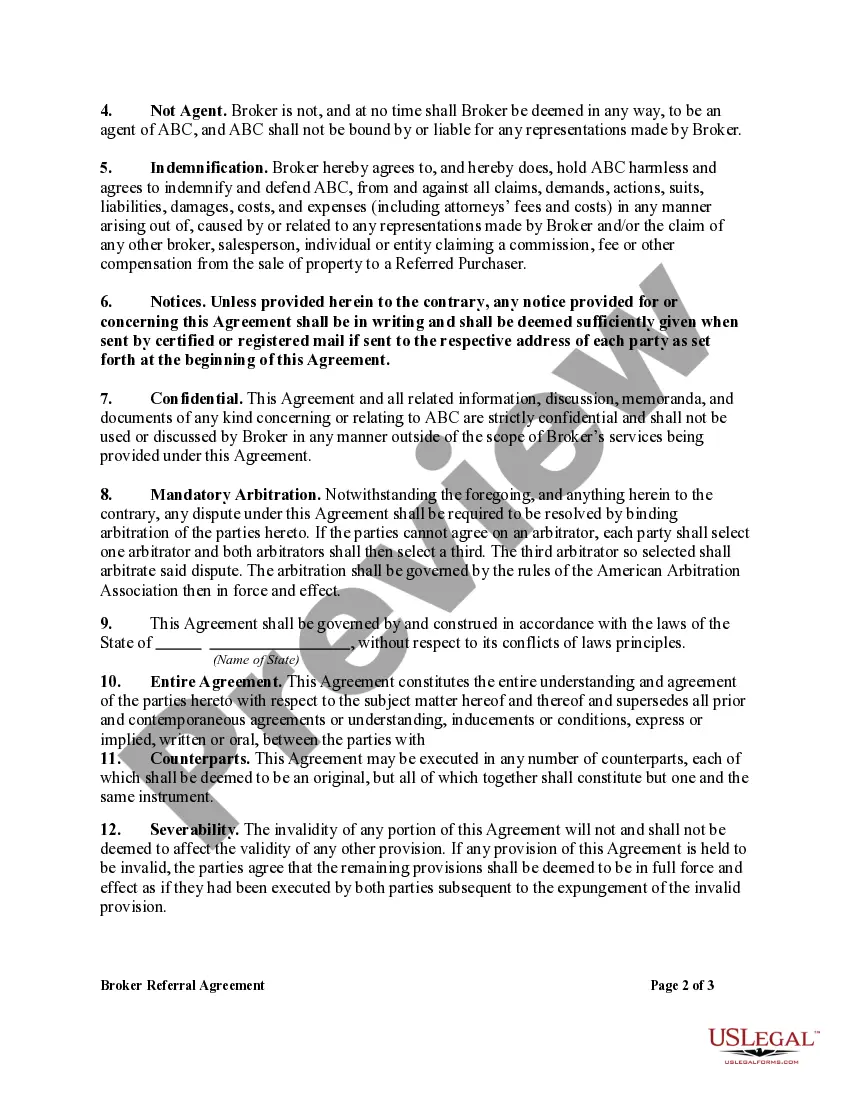
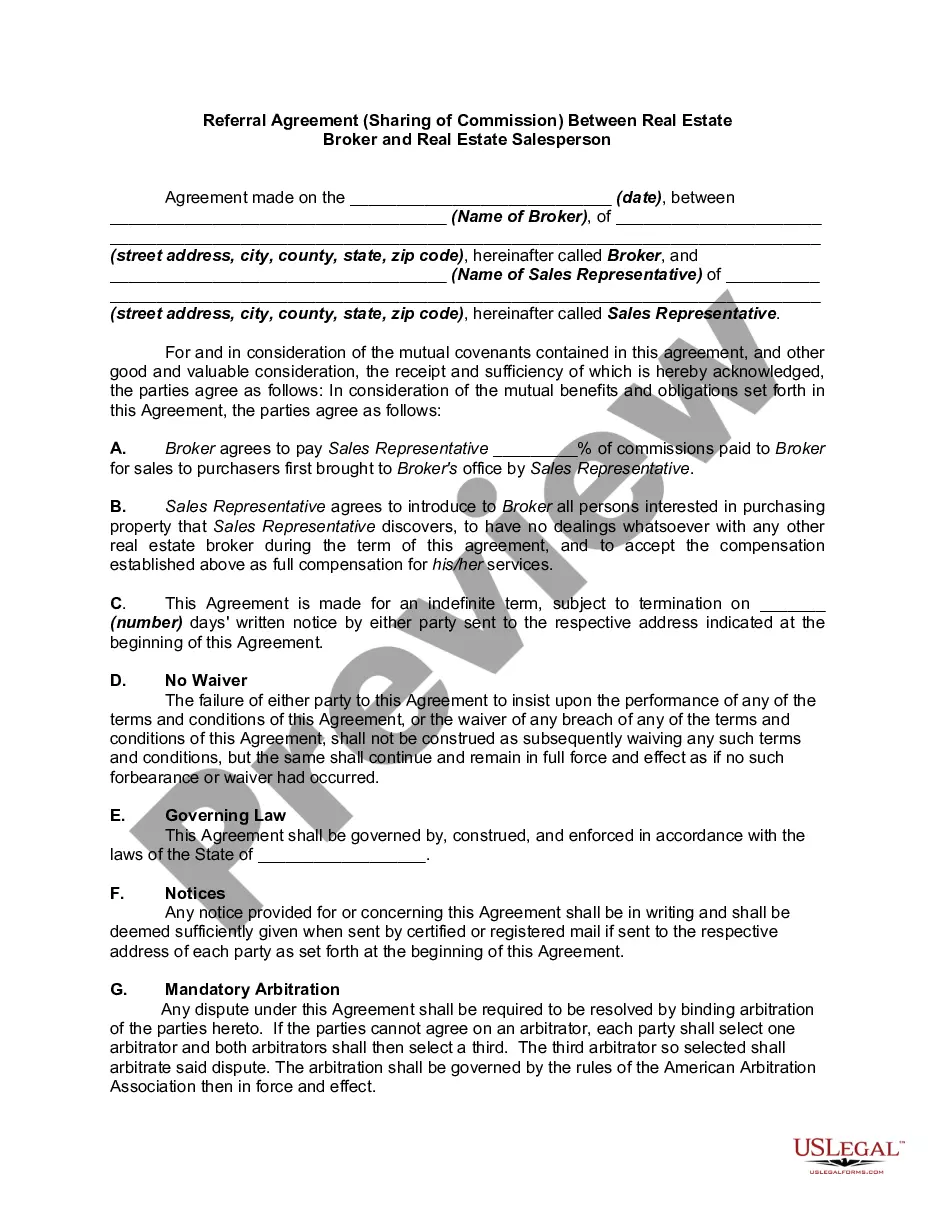
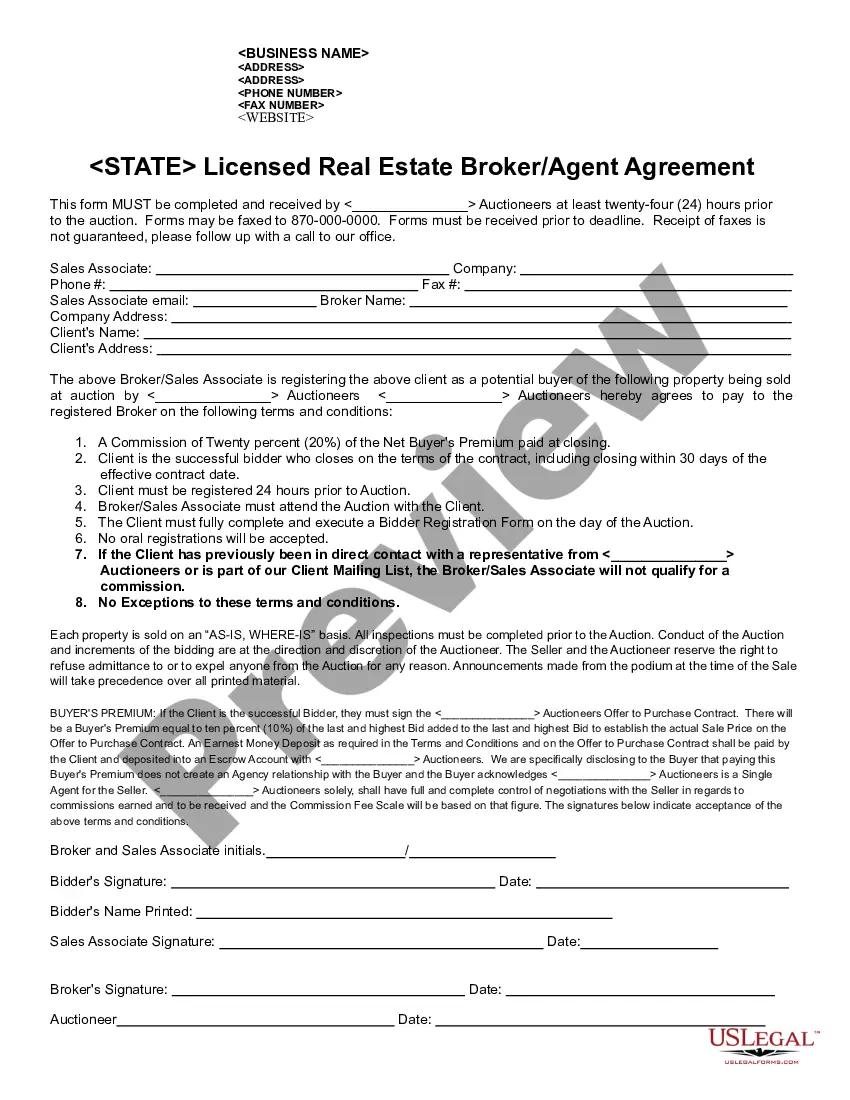
Tarrant Texas Broker Referral Agreement
Description
Get your form ready online
Our built-in tools help you complete, sign, share, and store your documents in one place.
Make edits, fill in missing information, and update formatting in US Legal Forms—just like you would in MS Word.
Download a copy, print it, send it by email, or mail it via USPS—whatever works best for your next step.
Sign and collect signatures with our SignNow integration. Send to multiple recipients, set reminders, and more. Go Premium to unlock E-Sign.
If this form requires notarization, complete it online through a secure video call—no need to meet a notary in person or wait for an appointment.
We protect your documents and personal data by following strict security and privacy standards.

Make edits, fill in missing information, and update formatting in US Legal Forms—just like you would in MS Word.

Download a copy, print it, send it by email, or mail it via USPS—whatever works best for your next step.

Sign and collect signatures with our SignNow integration. Send to multiple recipients, set reminders, and more. Go Premium to unlock E-Sign.

If this form requires notarization, complete it online through a secure video call—no need to meet a notary in person or wait for an appointment.

We protect your documents and personal data by following strict security and privacy standards.
Looking for another form?


How to fill out Broker Referral Agreement?
Assembling documents for business or personal requirements is consistently a significant obligation.
When formulating a contract, a public service application, or a power of attorney, it is crucial to take into account all federal and state laws applicable in the specific locality.
However, small counties and even municipalities also possess legislative regulations that must be heeded.
Join the platform and seamlessly access verified legal forms for any circumstance with just a few clicks!
- All these factors render the process of drafting the Tarrant Broker Referral Agreement demanding and time-intensive without expert help.
- It is feasible to circumvent the costs associated with attorneys when preparing your paperwork and construct a legally sound Tarrant Broker Referral Agreement independently, utilizing the US Legal Forms online repository.
- It is the premier online compilation of state-tailored legal templates that are professionally validated, ensuring their authenticity when selecting a template for your county.
- Formerly subscribed users simply need to Log In to their accounts to acquire the required form.
- If you do not yet have a subscription, follow the detailed instructions below to obtain the Tarrant Broker Referral Agreement.
- Browse the page you've accessed and confirm if it contains the template you require.
- To verify this, utilize the form description and preview features if available.
Form popularity
FAQ
Opcity operates as a licensed real estate brokerage in Texas under TREC License # 9005100, but it does not produce any services that are typically offered by real estate agents and does not represent consumers when buying or selling real estate in any State.
Section 8(a) of RESPA prohibits giving or accepting a fee, kickback or thing of value for business referrals to settlement services for federally- related mortgage loans. A thing of value includes increased equity in a parent or subsidiary entity.
Referral fees are a marketing expense, a payment for a lead (but it's only paid if the sale is made). Sales commissions are a sales expense, a payment to a salesperson to close a sale.
A real estate referral brokerage is a place for real estate agents who do not do transactions. It is also referred to as a referral only brokerage. Agents who join a referral brokerage do not represent clients. They earn an income by referring clients to other real estate agents.
No. Under the provisions of the Real Estate License Act, she must be licensed to receive valuable consideration for referring prospects for the purchase or sale of real estate. Since she is not licensed, you cannot share fees with her or pay her any kind of referral fee.
More importantly, Opcity is a real estate agent that does not engage in actual real estate broker services. Opcity systematically applies pay-to-play bias towards all matching results, meaning, only real estate agents that have agreed to pay a referral fee are matched with consumers.
The short answer to this question is yes, real estate agents can pay referral fees to licensed persons. But there is one catch. However, most state laws prohibit the paying of referral fees to unlicensed persons. Federal law also prohibits this in most cases.
Opcity charges between 30-35% of the commission you make from one of their referrals as their referral fee. Yes, that is a high price to pay, but quality referrals may be worth it. Read below to find out more about Opcity, and determine if you could benefit from their service.
Most common, in my experience: a referral fee for 10% of revenue. Second most common: a referral fee for 5% of revenue. After that, it tends to be a mixfor instance, 20% of the first month's retainer, and nothing after that.
Most common, in my experience: a referral fee for 10% of revenue. Second most common: a referral fee for 5% of revenue. After that, it tends to be a mixfor instance, 20% of the first month's retainer, and nothing after that.