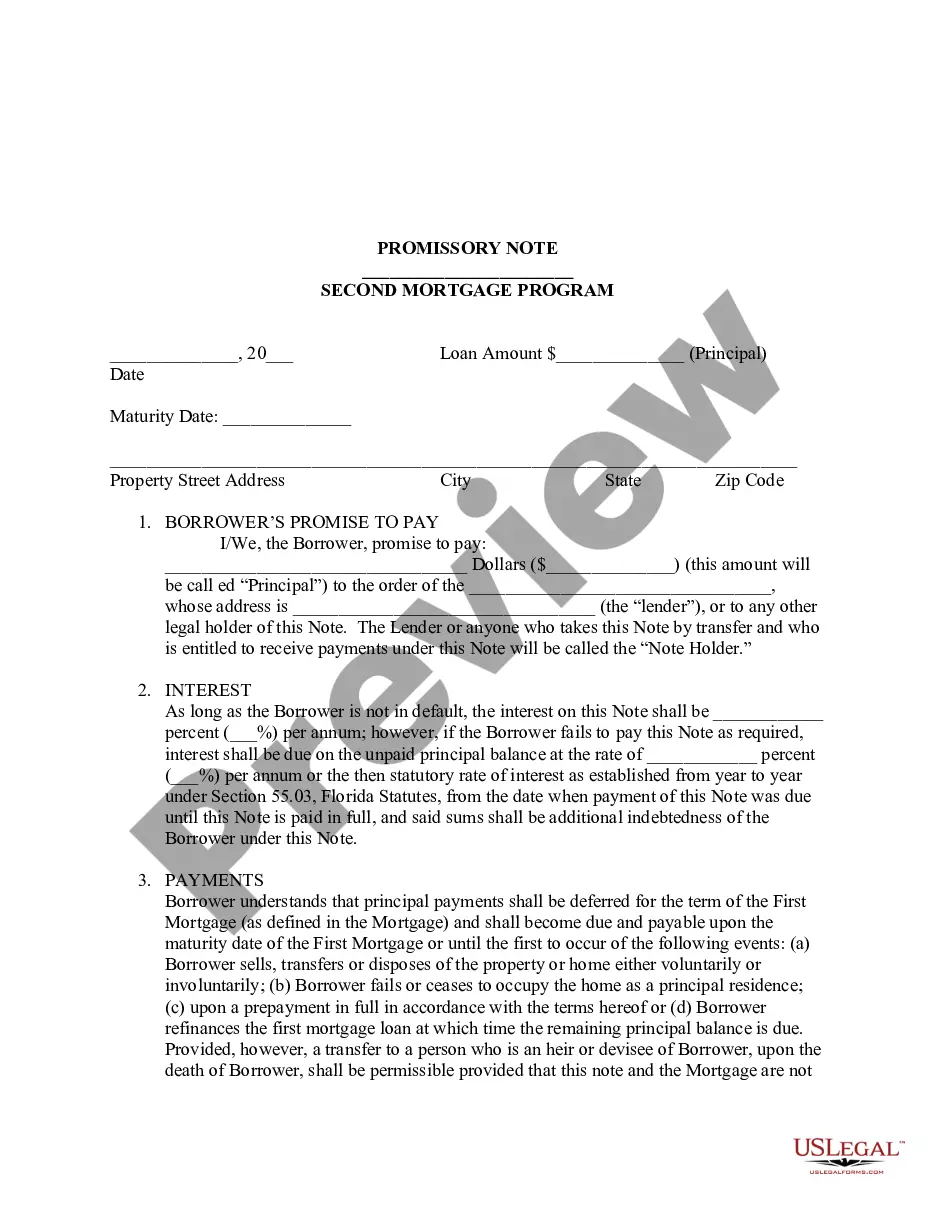
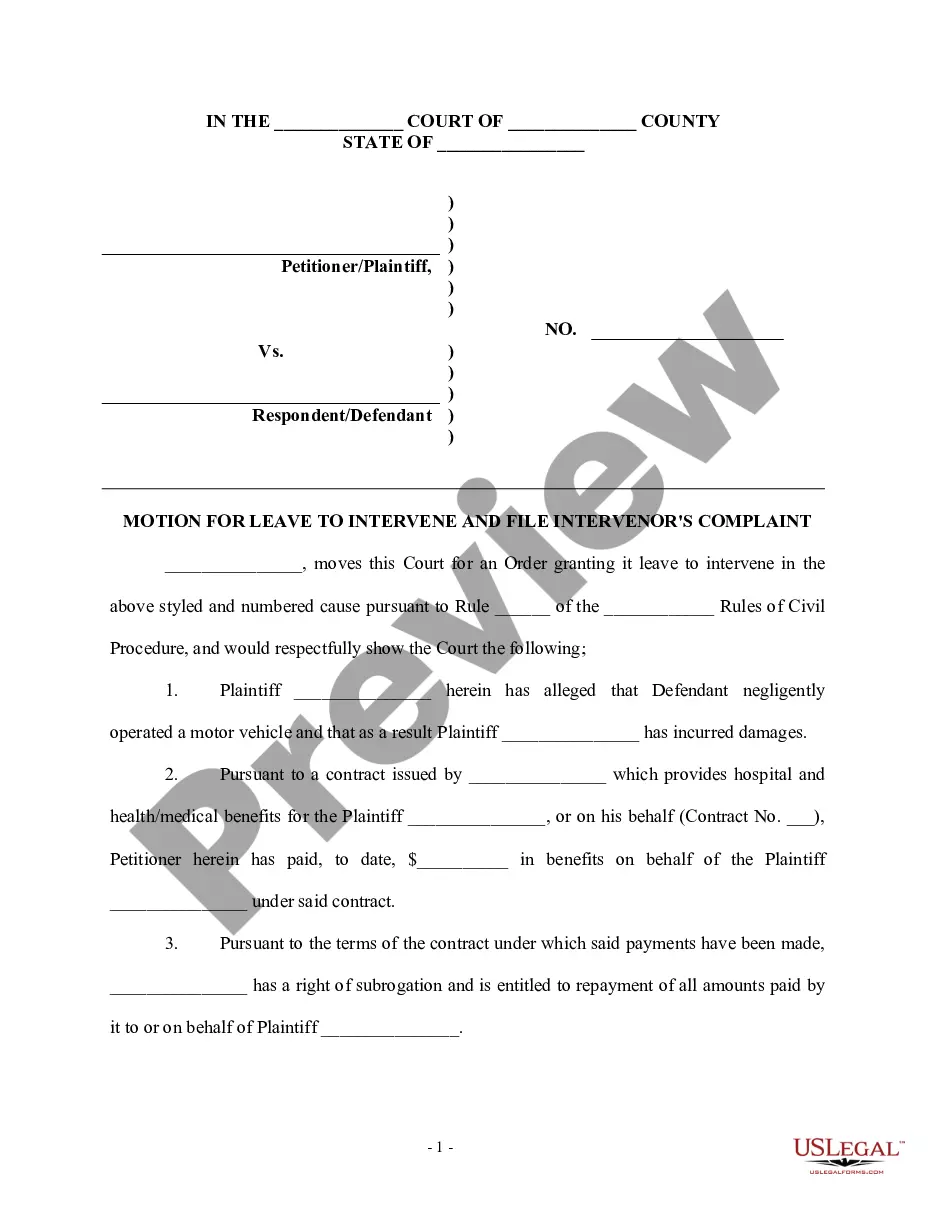
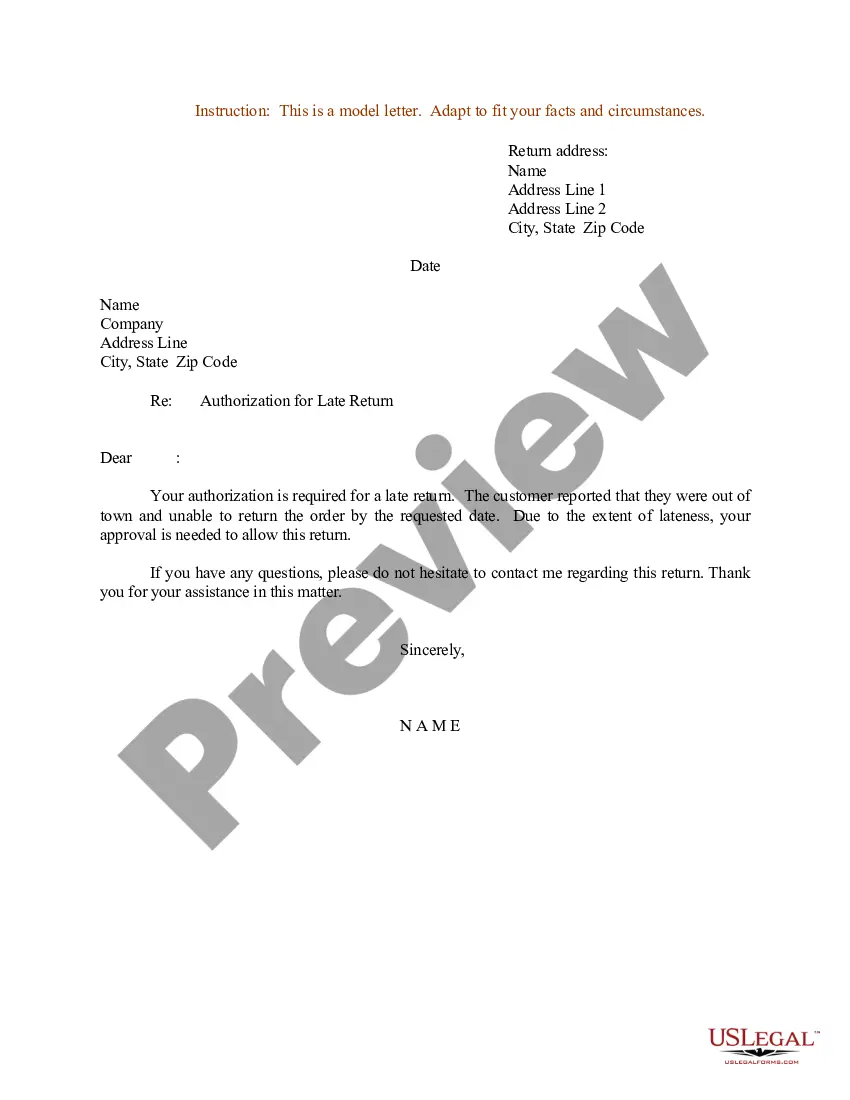
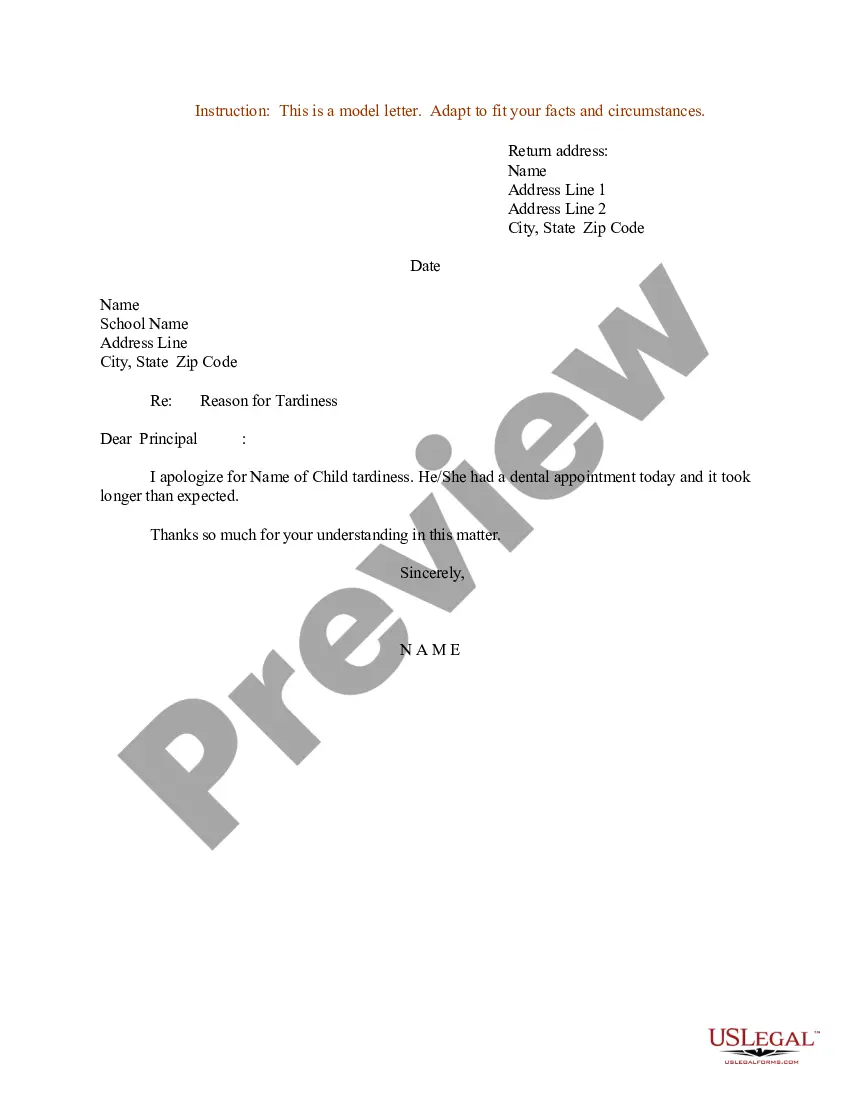
Saint Paul Minnesota Sample Letter for Authorization for Late Return
Description





Form popularity
FAQ
To create a simple authorization, start by writing a brief letter that includes your name, the name of the person you are authorizing, and the specific permissions you are granting. Ensure the language is straightforward and to the point, like in the Saint Paul Minnesota Sample Letter for Authorization for Late Return. Always remember to sign and date the letter to make it legally binding, which provides the authorized individual with clear permission to act on your behalf.
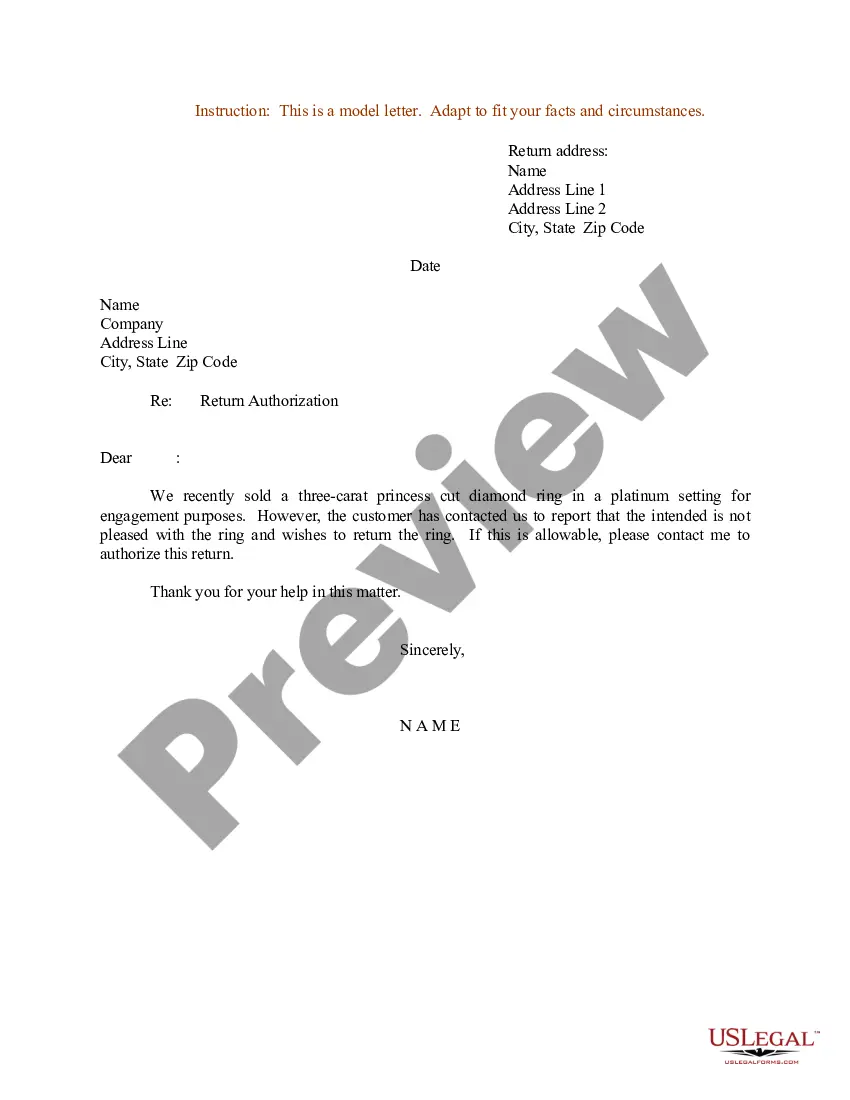
An example of a letter of authorization is a document that allows someone to act on your behalf in specific matters. For instance, a Saint Paul Minnesota Sample Letter for Authorization for Late Return could include your name, the authorized person's name, and a clear statement granting them permission to return an item late. This example helps you understand the format and necessary elements of creating your own authorization letter.
Begin your letter by clearly identifying yourself and providing your contact information. Then, state the person you are authorizing and describe the specific actions they can take for you. When drafting a letter like the Saint Paul Minnesota Sample Letter for Authorization for Late Return, include any necessary dates and details to ensure clarity. Don’t forget to sign the letter to validate the authorization.
To write a letter of authorization, start by including your name, address, and contact information at the top. Next, clearly state the purpose of the letter, specifying who you are authorizing and what actions they are allowed to take on your behalf. For example, if you are providing a Saint Paul Minnesota Sample Letter for Authorization for Late Return, make sure to include relevant details about the item or situation. Finally, sign the letter and date it to make it official.
Paul was not one of the Twelve Apostles, and did not know Jesus during his lifetime. ing to the Acts, Paul lived as a Pharisee and participated in the persecution of early disciples of Jesus, possibly Hellenised diaspora Jews converted to Christianity, in the area of Jerusalem, prior to his conversion.
Before conversion Before his conversion, Paul was known as Saul and was "a Pharisee of Pharisees", who "intensely persecuted" the followers of Jesus.
Definition. Paul was a follower of Jesus Christ who famously converted to Christianity on the road to Damascus after persecuting the very followers of the community that he joined. However, as we will see, Paul is better described as one of the founders of the religion rather than a convert to it.
Paul was a follower of Jesus Christ who famously converted to Christianity on the road to Damascus after persecuting the very followers of the community that he joined. However, as we will see, Paul is better described as one of the founders of the religion rather than a convert to it.
Although St. Paul was not one of the original 12 Apostles of Jesus, he was one of the most prolific contributors to the New Testament. Of the 27 books in the New Testament, 13 or 14 are traditionally attributed to Paul, though only 7 of these Pauline epistles are accepted as being entirely authentic and dictated by St.
He went on to become one of the most powerful preachers of the faith. He was a well-educated man driven by passion and a love for Christ and His Church. Today St Paul is celebrated in the Catholic Church as the patron saint of the missions, writers and publishers.