Mesa Arizona Agreement to Arbitrate Malpractice Claim of Clinic Offering Neurointegration Therapy

State:
Multi-State
City:
Mesa
Control #:
US-01817BG
Format:
Word
Instant download

Description

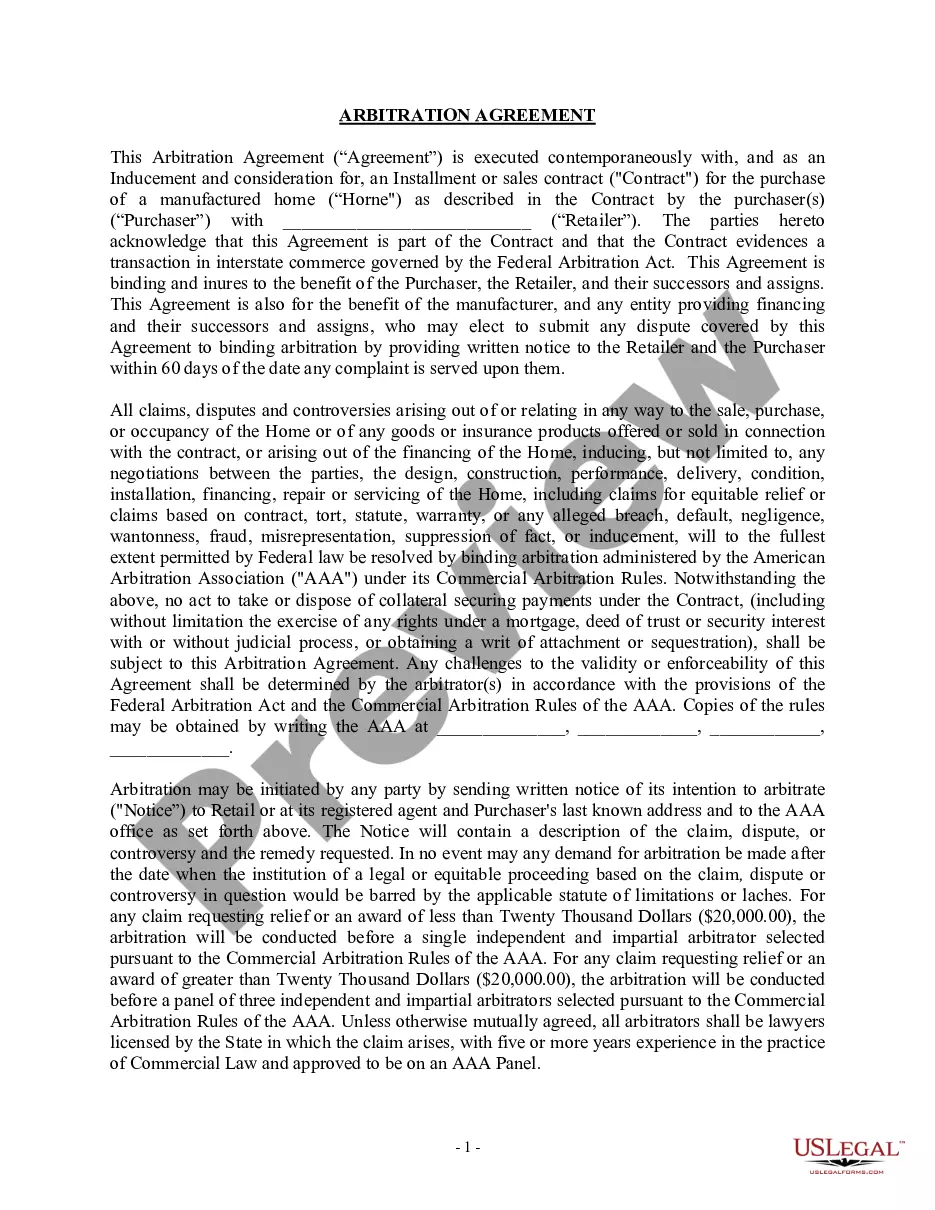
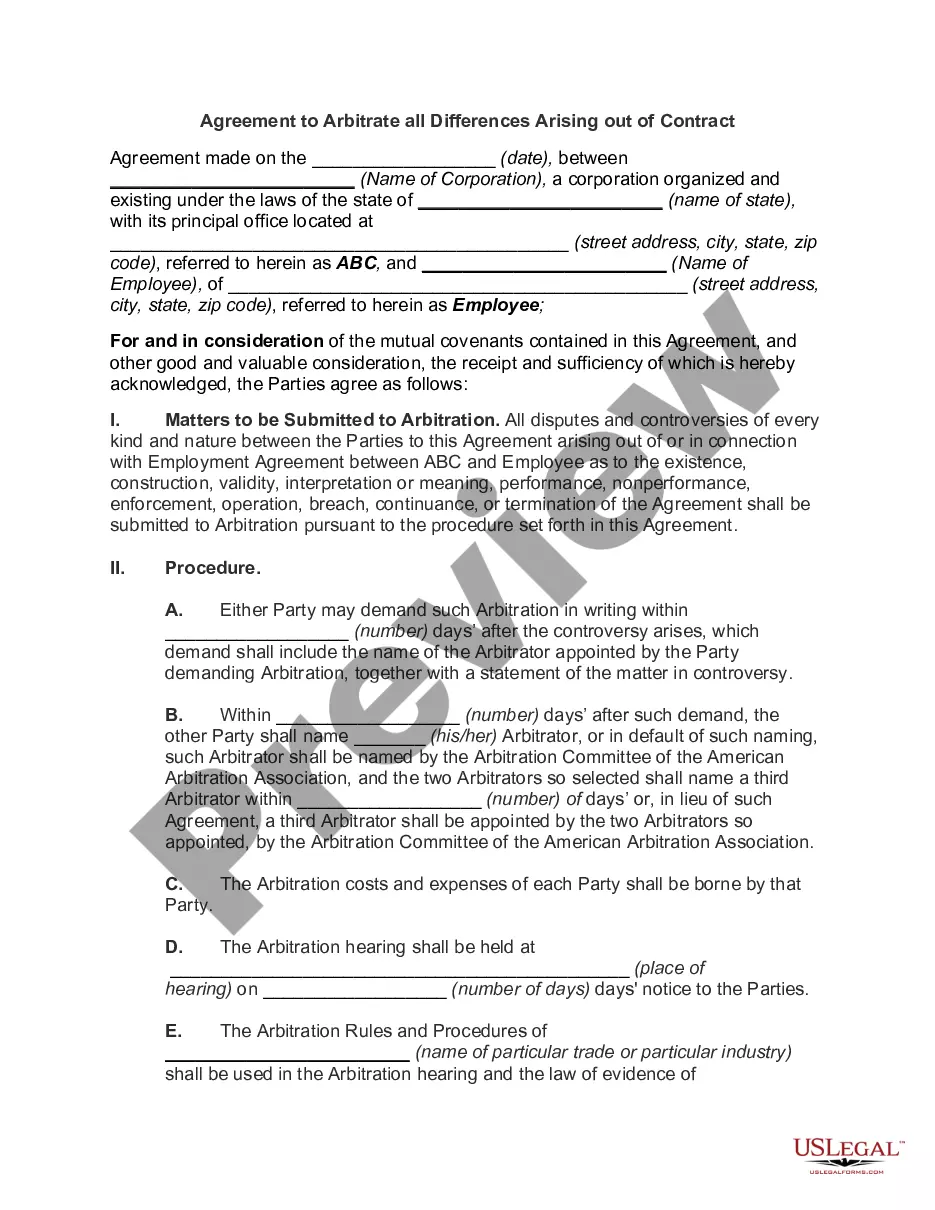
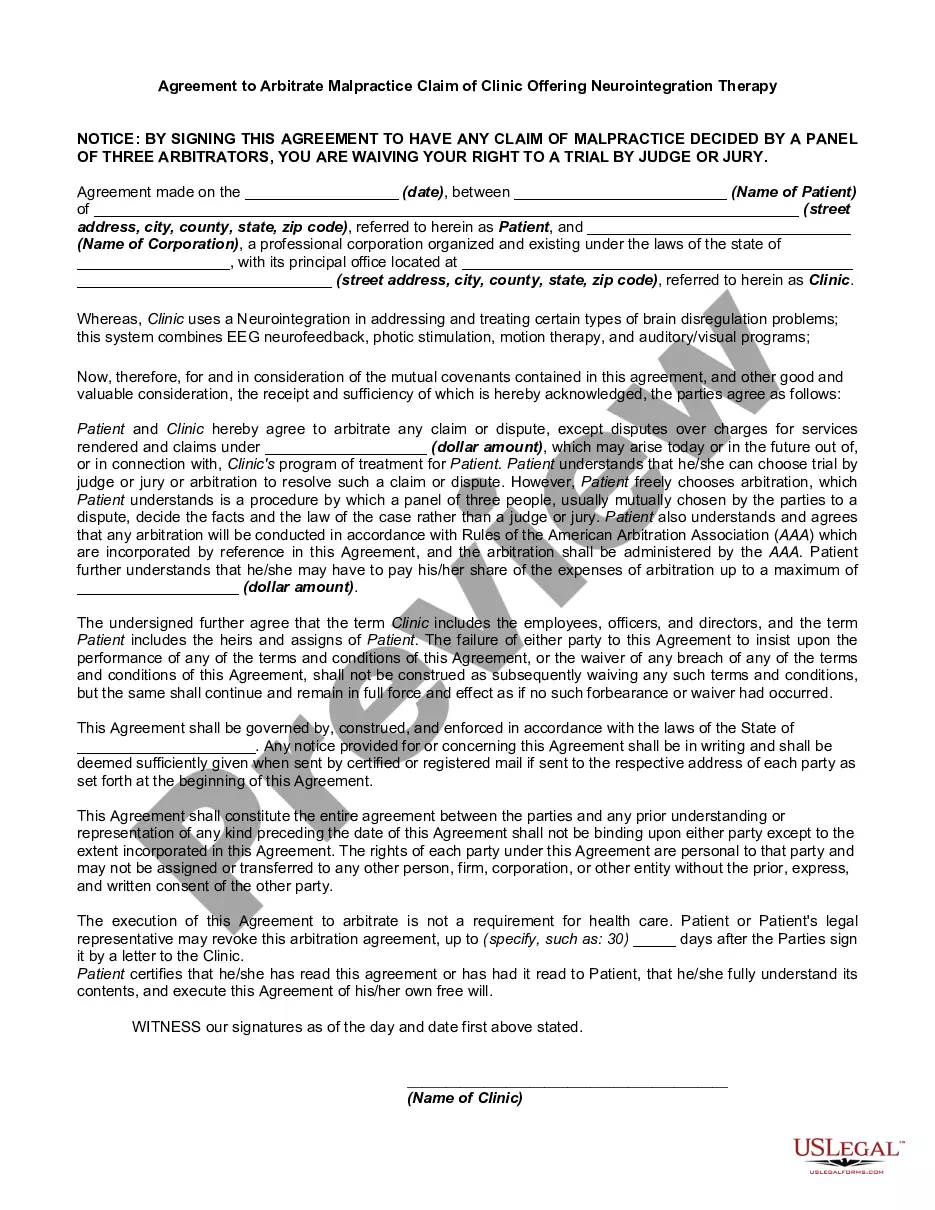
Arbitration is a process in which the disputing parties choose a neutral third person, or arbitrator, who hears both sides of the dispute and then renders a decision. The big difference between mediation and arbitration is that a mediator helps the parties to fashion their own settlement, while an arbitrator decides the issue. An arbitrator is more like a judge than a mediator. The parties go into arbitration knowing that they will be bound by the decision. Arbitration is unlike litigation in that the parties choose the arbitrator, the proceedings are conducted in a private manner, and the rules of evidence and procedure are informal. Also, in arbitration, the arbitrators tend to be experts in the issues they are called on to decide. Arbitration has been the widest used ADR process in the business world, and would be especially desirable where the parties do not want to litigate an issue, but do want a binding decision. They can go into arbitration knowing that they can get a quick and relatively inexpensive decision, by which they agree they will be bound.


This form is a generic example that may be referred to when preparing such a form for your particular state. It is for illustrative purposes only. Local laws should be consulted to determine any specific requirements for such a form in a particular jurisdiction.

Free preview
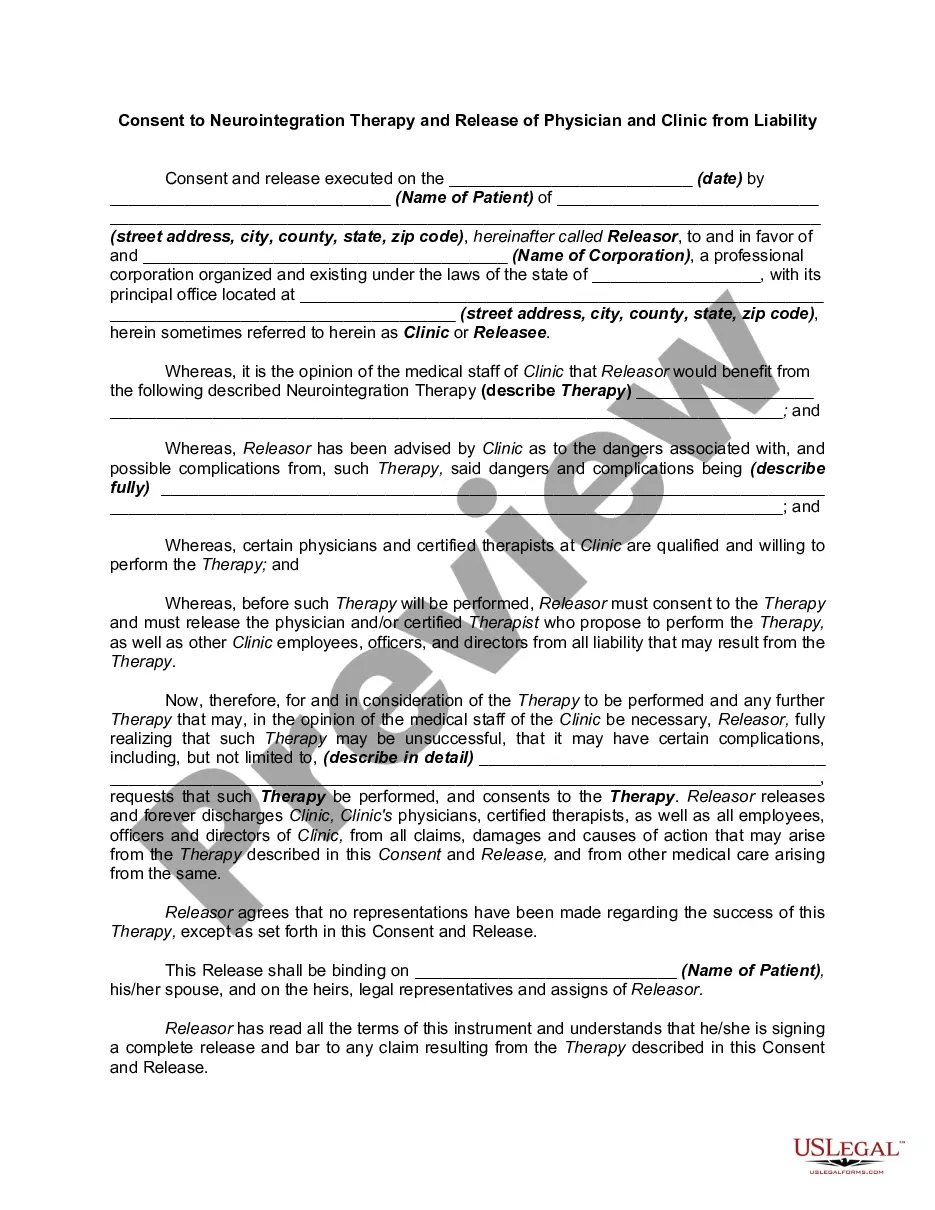
  • Preview Agreement to Arbitrate Malpractice Claim of Clinic Offering Neurointegration Therapy
  • Preview Agreement to Arbitrate Malpractice Claim of Clinic Offering Neurointegration Therapy

Form popularity

FAQ

A successful malpractice lawsuit hinges on four major criteria: a clear duty of care, a breach of that duty, causation linking the breach to the injury, and quantifiable damages. Each criterion must be thoroughly established to build a compelling case. If you are exploring a Mesa Arizona Agreement to Arbitrate Malpractice Claim of Clinic Offering Neurointegration Therapy, understanding these criteria can significantly enhance your chances of a favorable outcome.

The four requirements for a malpractice claim include establishing a duty of care, proving a breach of that duty, showing a direct connection between the breach and the injury, and demonstrating actual damages. Each of these elements plays a vital role in the overall claim process. For individuals considering a Mesa Arizona Agreement to Arbitrate Malpractice Claim of Clinic Offering Neurointegration Therapy, recognizing these requirements is essential for navigating the legal landscape effectively.

To successfully pursue a malpractice suit, you need to establish four key elements known as the 4 D's: Duty, Dereliction, Direct Cause, and Damages. First, you must prove that the healthcare professional had a duty to provide care. Then, you need to demonstrate that they failed in this duty, causing harm. Finally, you must show that this failure directly resulted in damages. Understanding these elements is crucial for filing a Mesa Arizona Agreement to Arbitrate Malpractice Claim of Clinic Offering Neurointegration Therapy.

The average medical malpractice settlement in Arizona can vary widely, typically ranging from tens of thousands to millions of dollars, depending on the specifics of each case. In the context of the Mesa Arizona Agreement to Arbitrate Malpractice Claim of Clinic Offering Neurointegration Therapy, settlements often reflect the severity of the injury, the impact on the victim's life, and the costs of ongoing care. Understanding these factors can help you assess what to expect if you pursue a claim. For personalized guidance, consider using resources like uslegalforms to navigate the complexities of malpractice claims.

Deciding whether to agree to hospital arbitration involves careful consideration of your rights and options. While the Mesa Arizona Agreement to Arbitrate Malpractice Claim of Clinic Offering Neurointegration Therapy can provide a streamlined process for resolving disputes, it may also restrict your ability to take your case to court. Weigh the potential benefits, such as faster decisions and reduced costs, against the limitations that arbitration might impose. Consulting with a legal professional can help you make an informed choice.

An arbitration agreement for medical malpractice is a legal contract that requires you to resolve disputes through arbitration instead of in court. In the context of the Mesa Arizona Agreement to Arbitrate Malpractice Claim of Clinic Offering Neurointegration Therapy, this agreement outlines the process for handling potential claims related to malpractice. By agreeing to arbitration, you can expect a quicker resolution, often leading to lower costs compared to traditional litigation. It's important to understand the terms before signing, as it may limit your options for pursuing legal action.

In Arizona, medical negligence law requires that healthcare providers adhere to a standard of care that a reasonably competent provider would follow under similar circumstances. If a provider fails to meet this standard, they may be held liable for any resulting harm. Understanding the specifics of the Mesa Arizona Agreement to Arbitrate Malpractice Claim of Clinic Offering Neurointegration Therapy is essential for those involved in such cases, as it outlines the arbitration process for resolving disputes efficiently.

To win a medical malpractice suit, you must prove four critical points: a doctor-patient relationship existed, the healthcare provider acted negligently, the negligence caused injury, and actual damages occurred. Establishing these points requires thorough documentation and expert testimony. The Mesa Arizona Agreement to Arbitrate Malpractice Claim of Clinic Offering Neurointegration Therapy can provide a framework for addressing these elements effectively.

Therapist negligence may include failing to provide adequate treatment, not following established protocols, or not obtaining informed consent from the patient. Any action that negatively impacts the client's well-being or contributes to worsening conditions can be seen as negligence. When assessing such situations, consider the guidelines of the Mesa Arizona Agreement to Arbitrate Malpractice Claim of Clinic Offering Neurointegration Therapy for clarity on legal proceedings.

To establish a malpractice suit involving a therapist, you must prove four key elements: duty, breach, causation, and damages. First, it must be shown that the therapist had a duty to provide care. Next, evidence needs to demonstrate that the therapist breached that duty. Then, you must link the breach directly to the damages suffered. Understanding these elements is crucial, especially when navigating the Mesa Arizona Agreement to Arbitrate Malpractice Claim of Clinic Offering Neurointegration Therapy.

Interesting Questions

Trusted and secure by over 3 million people of the world’s leading companies

Mesa Arizona Agreement to Arbitrate Malpractice Claim of Clinic Offering Neurointegration Therapy