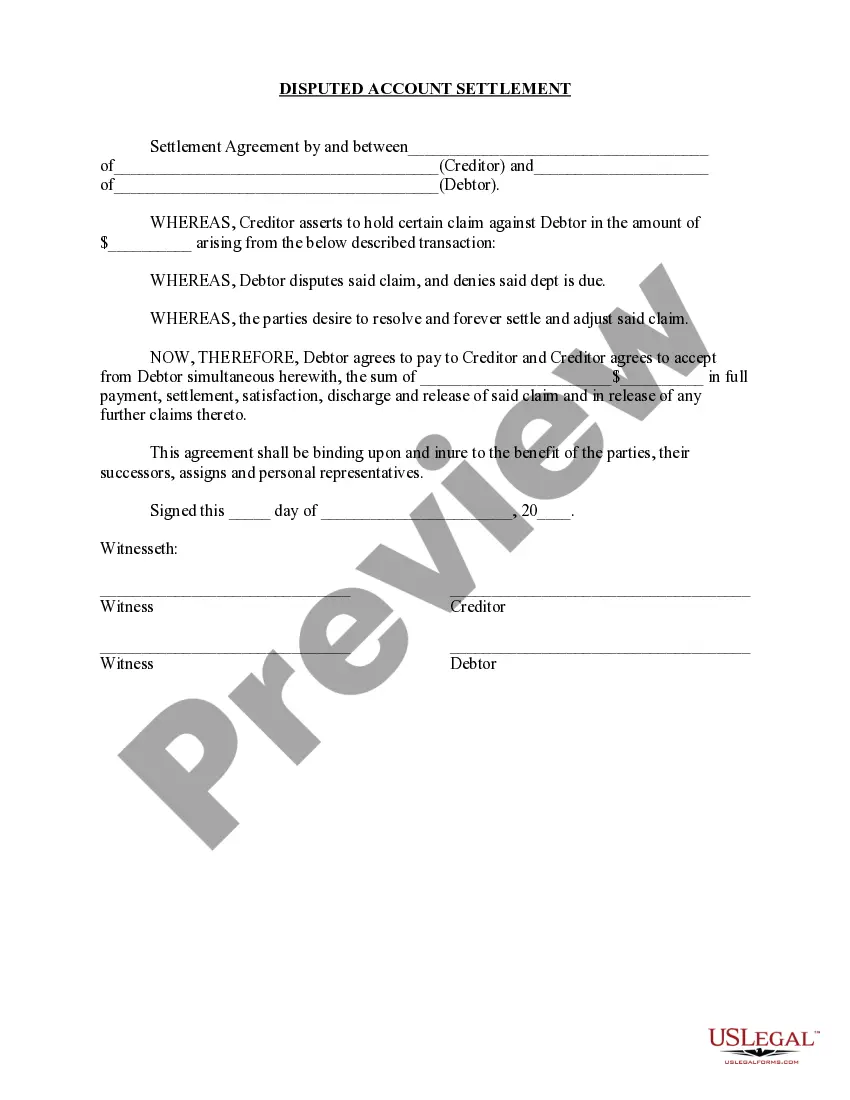
Minneapolis Minnesota Disputed Open Account Settlement
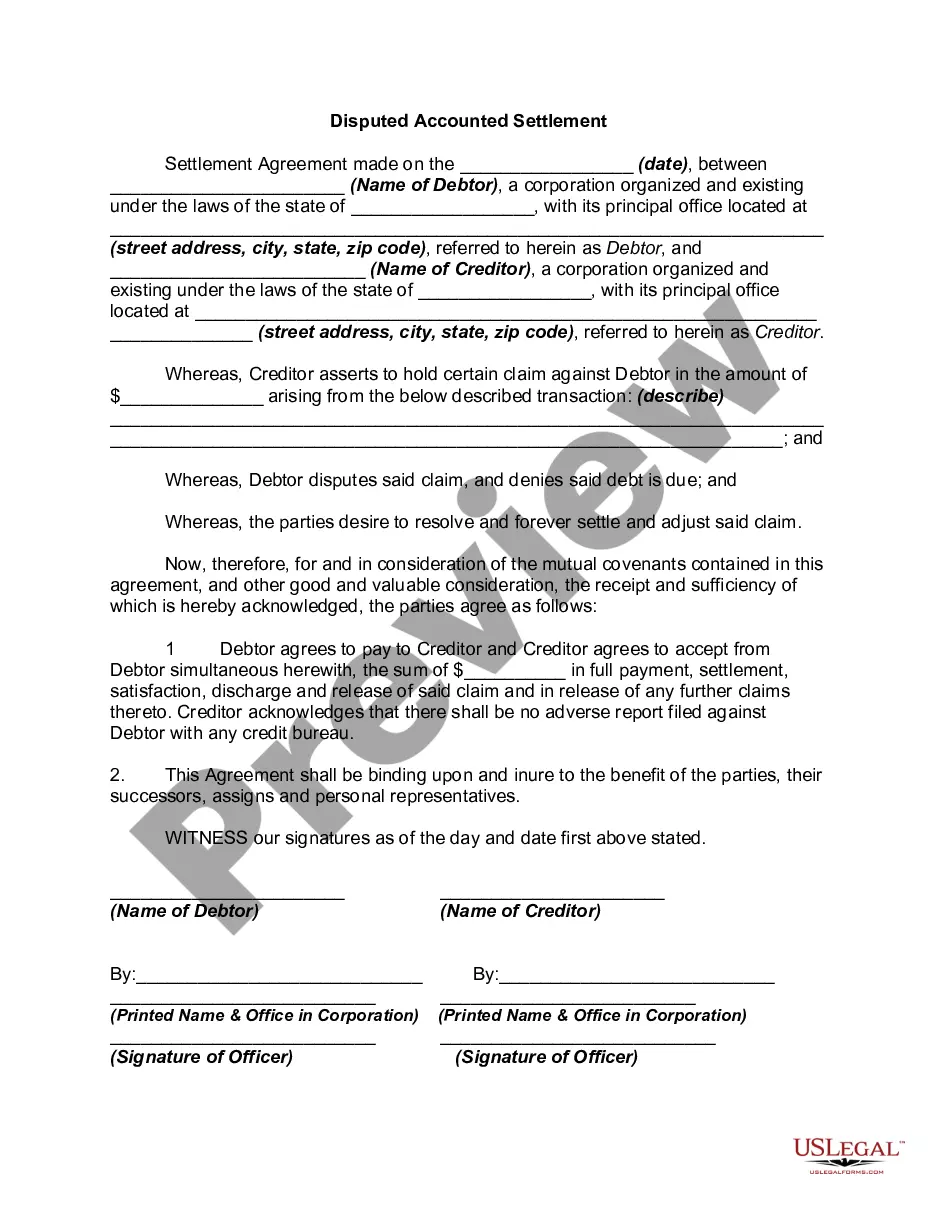
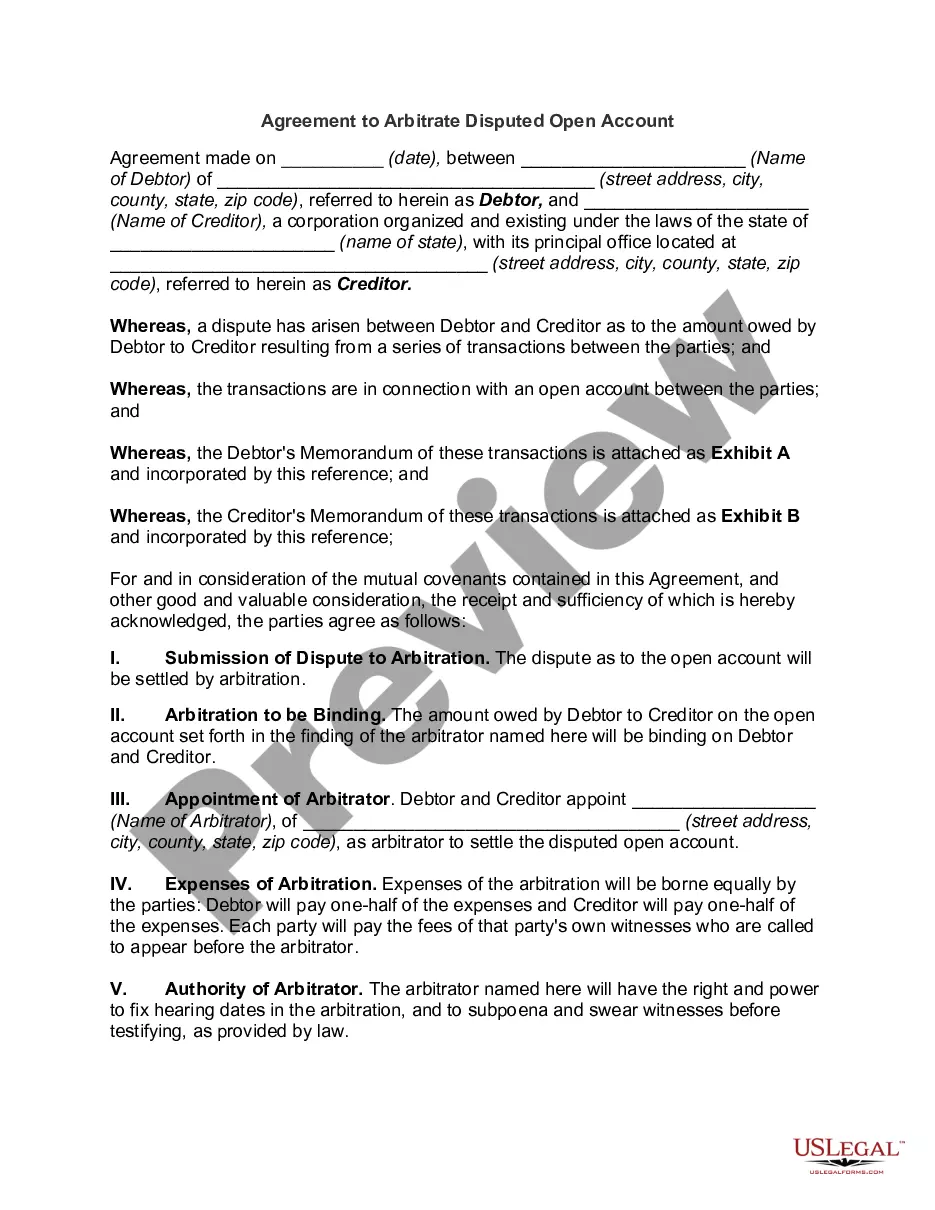
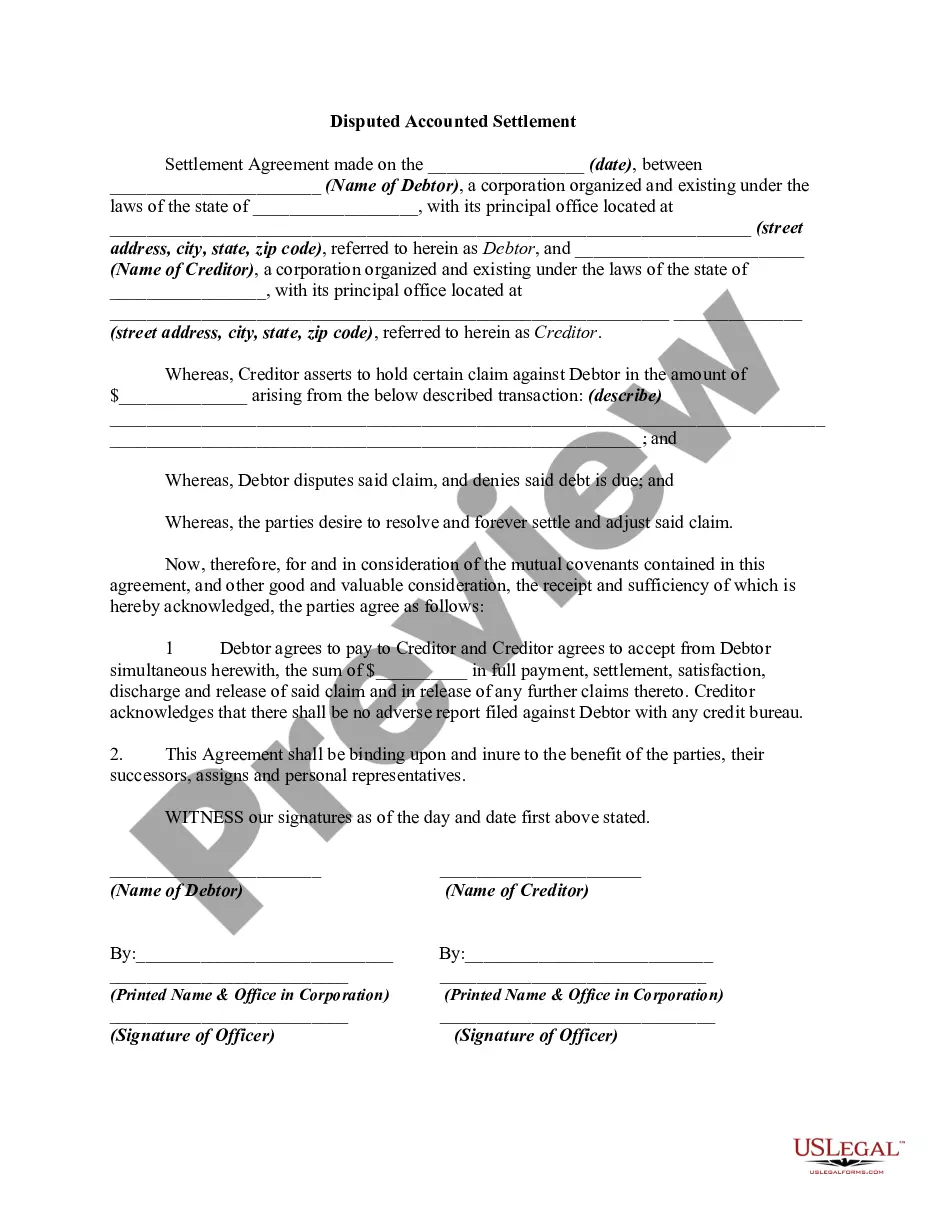
Description

Form popularity
FAQ
The new medical debt law in Minnesota aims to protect consumers from aggressive collection practices related to medical bills. It places limits on how quickly medical debts can be pursued and requires transparency in billing. If you are facing challenges with medical debt, exploring the Minneapolis Minnesota Disputed Open Account Settlement can provide helpful options for resolution.
In Minnesota, a debt collector can attempt to collect a debt for up to six years, depending on the type of debt. After this period, the debt becomes 'time-barred,' meaning you cannot be legally pursued for it. If you feel overwhelmed by debt collection efforts, consider seeking support through the Minneapolis Minnesota Disputed Open Account Settlement to understand your rights.
Yes, the U of M data settlement is legitimate and designed to provide compensation to those affected by the data breach. It operates under legal guidelines to ensure fairness and transparency. Engaging with legal resources can help you navigate the Minneapolis Minnesota Disputed Open Account Settlement process effectively.
The University of Minnesota data incident refers to a significant data breach that exposed sensitive information of students and faculty. This breach raised concerns about privacy and security, prompting the university to take measures to protect its data. Understanding this incident is vital, especially if you are considering the Minneapolis Minnesota Disputed Open Account Settlement for your case.
The payout for the University of Minnesota data breach settlement varies based on the number of claims filed and the extent of the damages. Typically, settlements aim to cover both actual damages and any consequential losses. To get a clearer picture of potential payouts, reviewing the specifics of the Minneapolis Minnesota Disputed Open Account Settlement is advisable.
Yes, the University of Minnesota data incident settlement is a legitimate process for compensating affected individuals. It provides a structured way for those impacted by the data breach to receive compensation. If you are concerned about your eligibility, consider consulting with a legal professional who can guide you through the Minneapolis Minnesota Disputed Open Account Settlement.
To file a lawsuit in Minnesota, you need to start by determining the appropriate court for your case, which depends on the amount you are disputing. For a Minneapolis Minnesota Disputed Open Account Settlement, you would typically file in the district court. Next, prepare your complaint, which outlines your claims and the relief you seek. Finally, file your complaint with the court and serve it to the other party, ensuring you follow all local rules and procedures.
Deciding whether to dispute or settle debt often depends on your unique financial circumstances. Disputing a debt can help you challenge inaccuracies, while settling a debt may lead to a reduced payment that resolves the account. In cases of a Minneapolis Minnesota Disputed Open Account Settlement, settling can prevent further collection actions and provide peace of mind. Consider using platforms like US Legal Forms to guide you through the process and find the best solution.
In Minnesota, the statute of limitations for debt collection typically spans six years for most debts, including those related to disputed open accounts. This means that creditors have six years from the date of default to file a lawsuit to collect the debt. It's crucial to understand this timeline when considering a Minneapolis Minnesota Disputed Open Account Settlement, as waiting too long could limit your options. Always consult a legal expert to navigate your specific situation.
To write a settlement offer letter for a Minneapolis Minnesota Disputed Open Account Settlement, start by clearly stating your intention to resolve the dispute amicably. Include your account details, the nature of the dispute, and any relevant evidence that supports your position. Then, propose a specific settlement amount that you believe is fair, and express your willingness to negotiate. Finally, set a deadline for a response to encourage prompt communication.