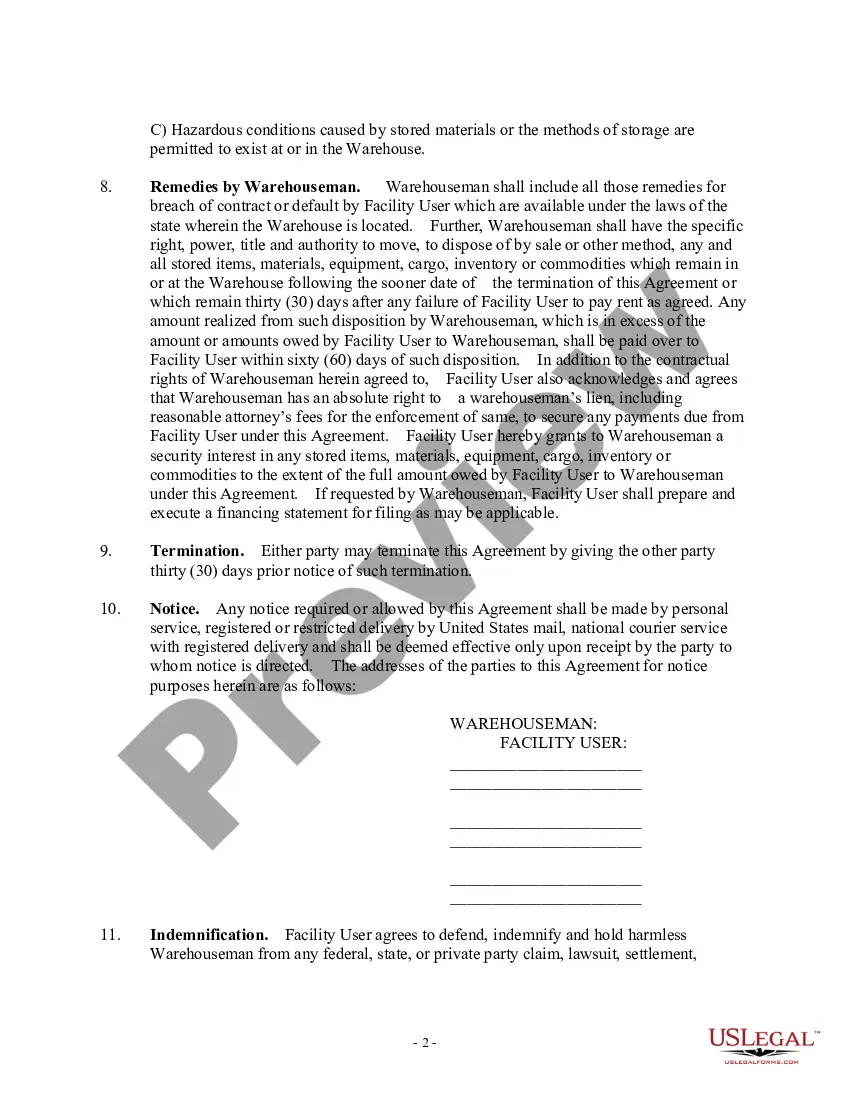
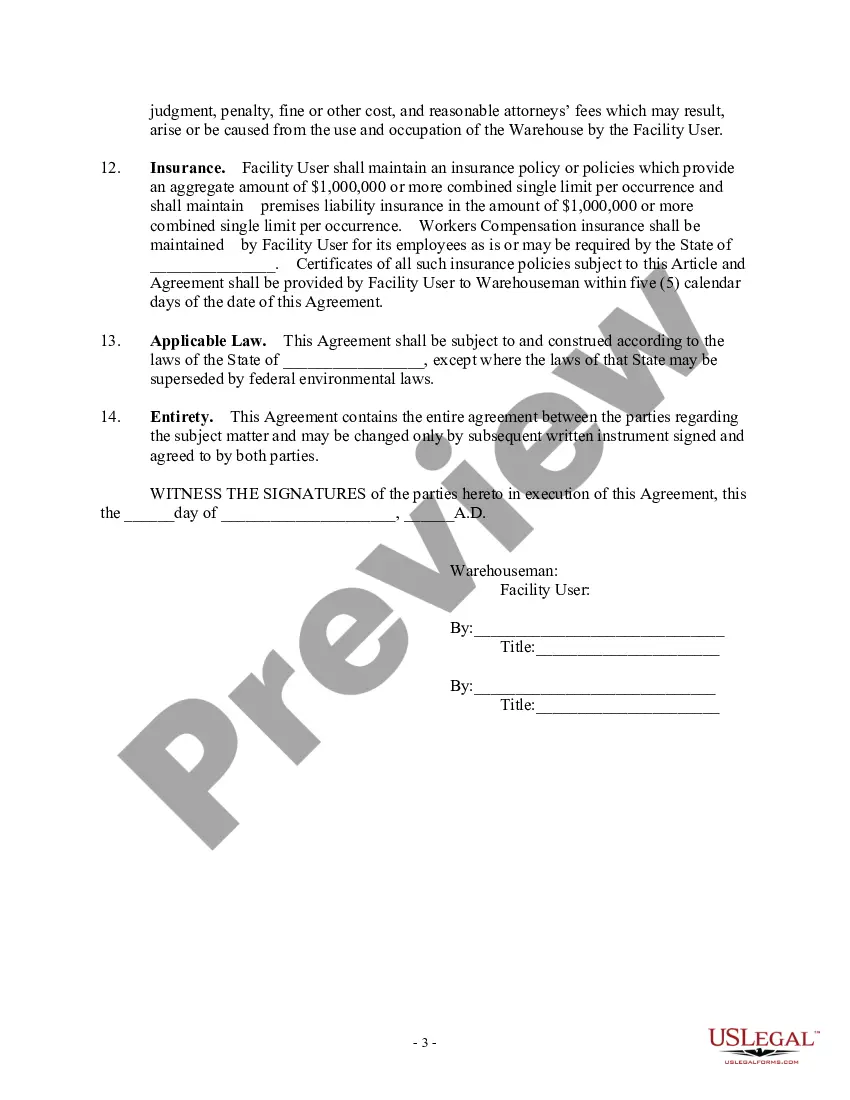
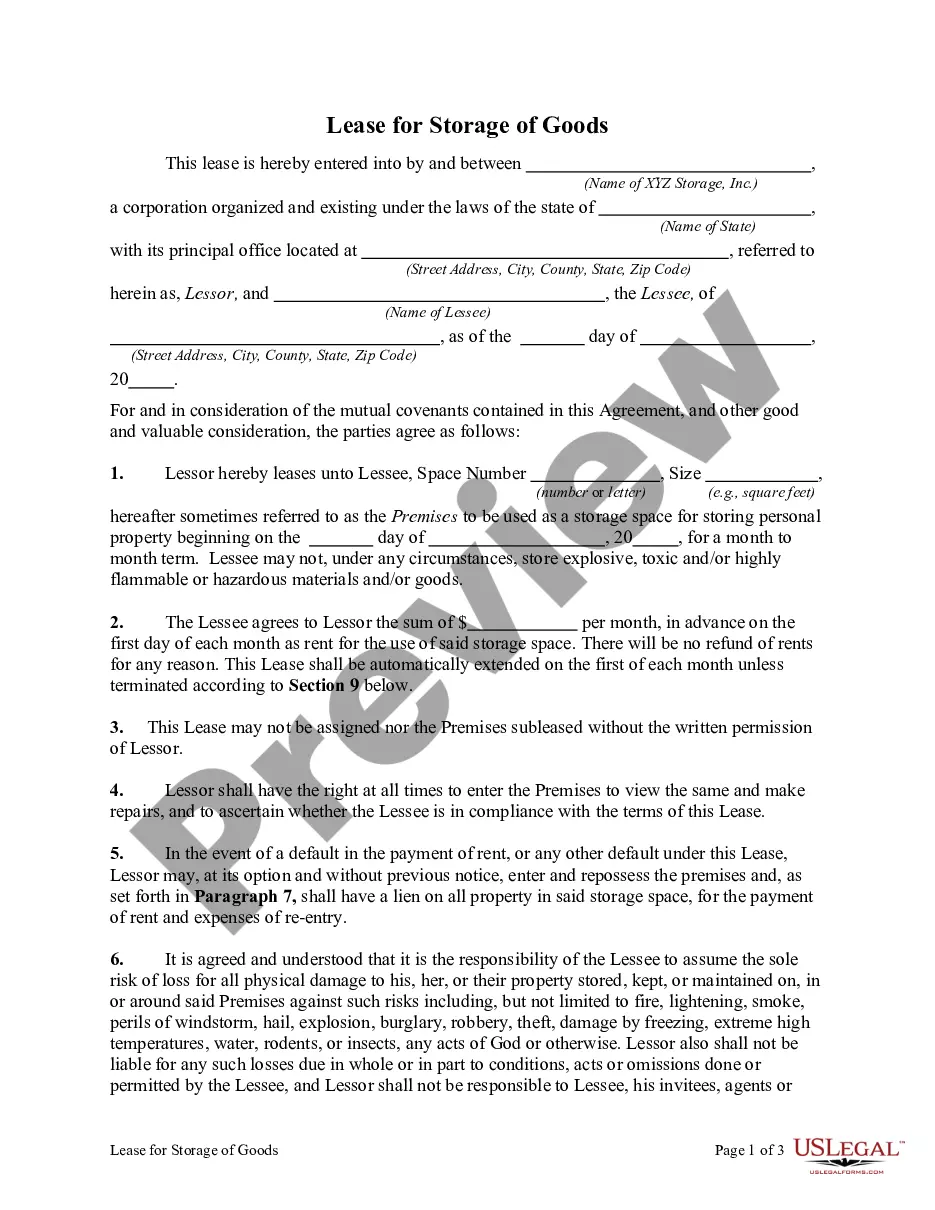
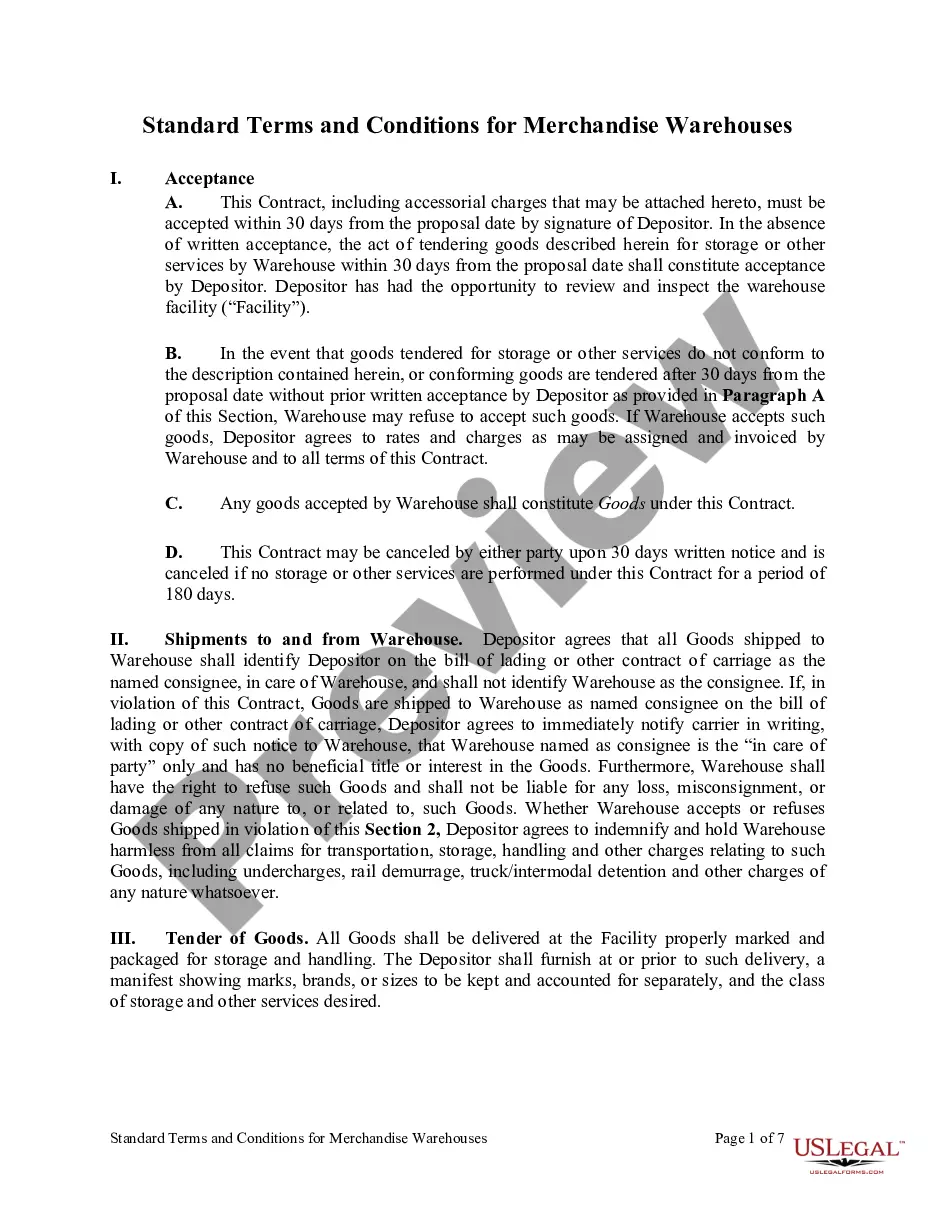
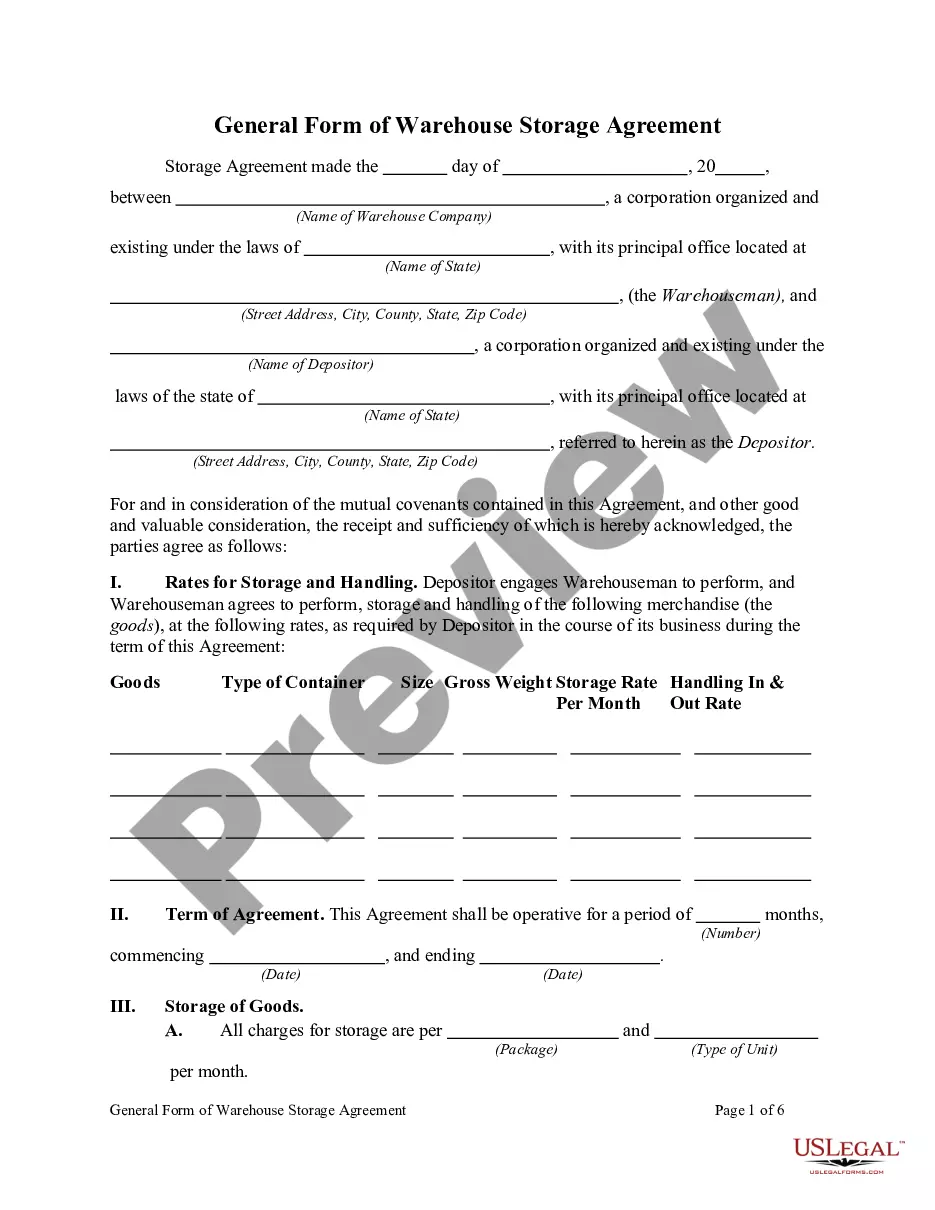
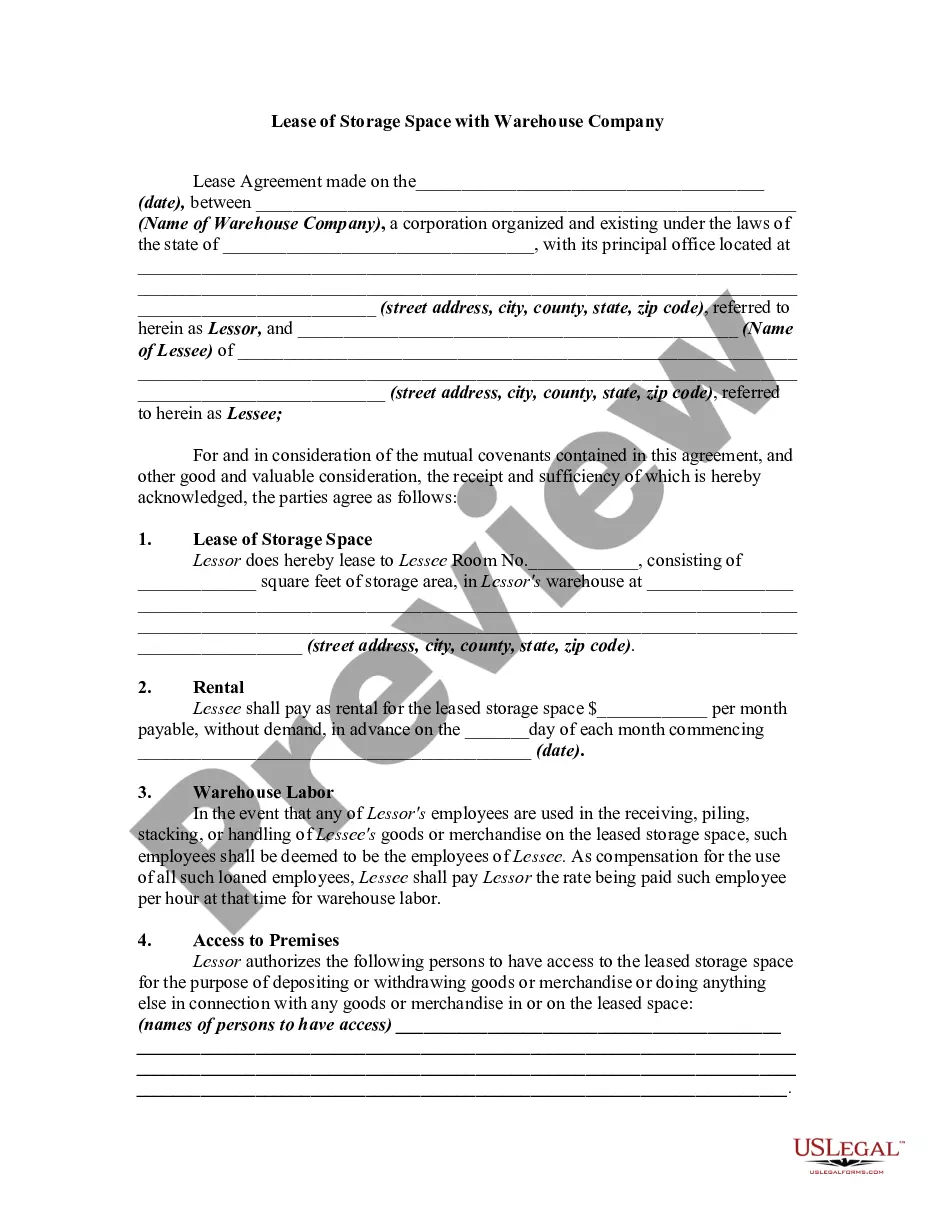
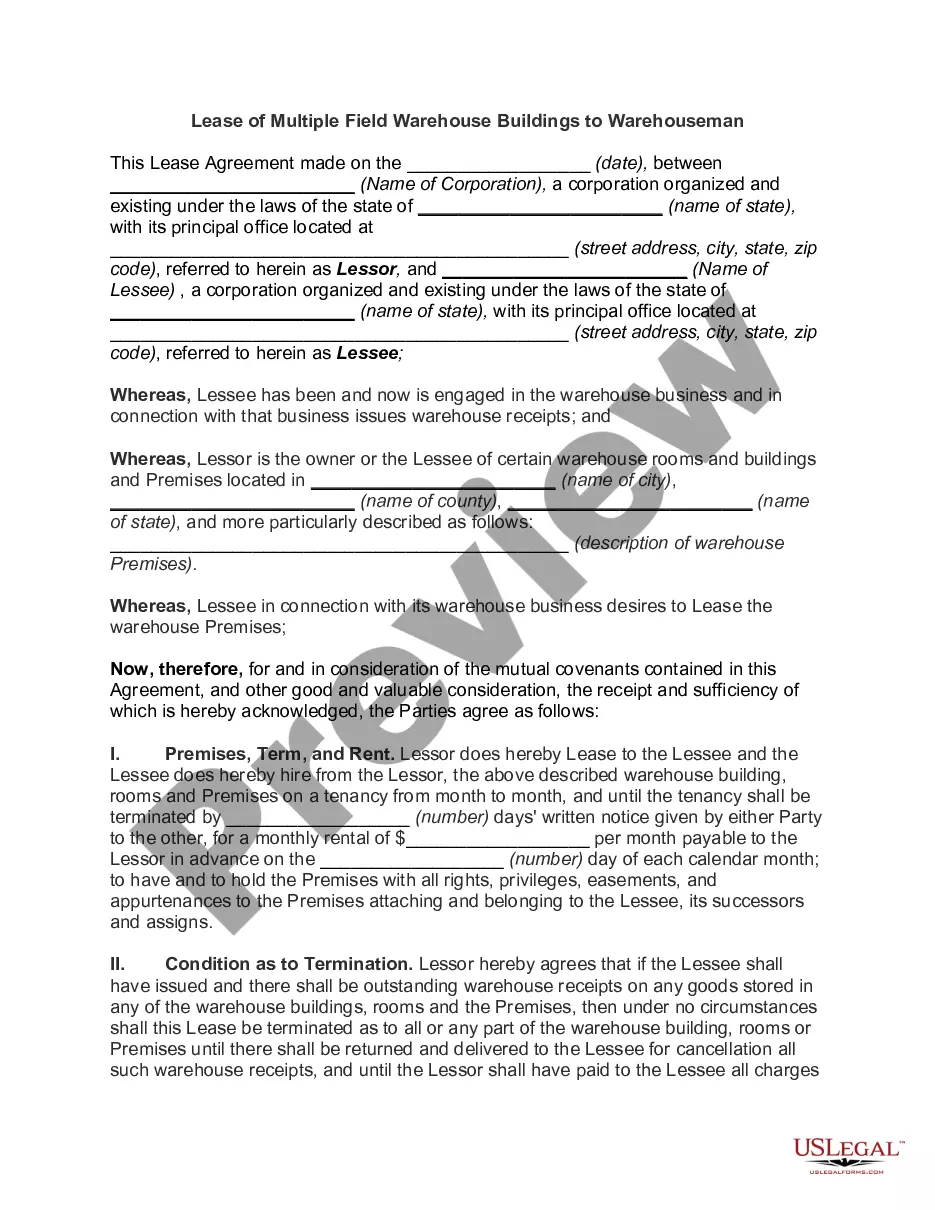
This form is a Warehouse and Storage Agreement. The form provides that the warehouseman leases to the facility user a building and premises described in the agreement. The facility user is allowed to enter and use the warehouse for the purpose of placing items and materials into storage and retrieving those items during the term of the contract.
Newark New Jersey Warehouse and Storage Agreement
Category:
State:
Multi-State
City:
Newark
Control #:
US-01772
Format:
Word;
Rich Text
Instant download
Description
Free preview

Form popularity
FAQ
A storage unit in New Jersey may be deemed abandoned after a period of 60 days of non-payment. During this time, the facility must follow legal procedures to notify the tenant. Knowing the specifics of the Newark New Jersey Warehouse and Storage Agreement allows you to address any issues before reaching this point. Staying proactive can help you retain access to your belongings.
The increase in warehouse construction in New Jersey stems from its strategic location and growing demand for logistics and distribution. With proximity to major highways and ports, businesses find it ideal for supply chain operations. This trend also reflects the need for more storage solutions, making the Newark New Jersey Warehouse and Storage Agreement increasingly relevant for businesses and individuals alike. Understanding this market can help you make informed decisions about storage options.
New Jersey's self-storage laws outline the rights and responsibilities of both storage facility owners and tenants. These laws include provisions for late fees, auction processes, and the handling of abandoned property. Familiarizing yourself with the Newark New Jersey Warehouse and Storage Agreement can ensure you comply with these regulations. It's crucial to know your rights to protect your stored items.
In New Jersey, the timeline for auctioning off a storage unit typically follows a period of 30 days after the tenant's default. The storage facility must provide a notice to the tenant, and if the rent remains unpaid, the unit may be auctioned. Understanding the Newark New Jersey Warehouse and Storage Agreement can help you navigate these rules effectively. Always stay informed to avoid losing your belongings.
In New Jersey, while state law does not mandate that LLCs have an operating agreement, it is highly recommended. An operating agreement outlines the management structure and operating procedures for the LLC, which can help prevent disputes among members. Additionally, having this agreement in place can clarify the terms of a Newark New Jersey Warehouse and Storage Agreement, ensuring that all parties understand their rights and responsibilities. To create an effective operating agreement, consider using resources from US Legal Forms to streamline the process.
The three-day contract rule in New Jersey allows consumers to cancel certain types of agreements within three days of signing. This rule is designed to protect consumers from impulsive decisions and ensure they have time to consider the terms of their Newark New Jersey Warehouse and Storage Agreement. It is crucial to read your contract carefully, as not all agreements fall under this cancellation policy. Understanding your rights can help you make informed decisions.
Starting a moving company in New Jersey involves several steps, including registering your business and obtaining the necessary licenses. You will need to comply with state regulations, which may include specific guidelines for Newark New Jersey Warehouse and Storage Agreements. Additionally, consider using platforms like US Legal Forms to access templates and resources that can help streamline the process, ensuring you have all the legal documents ready for your new venture.
Yes, in New Jersey, consumers generally have a three-day right to cancel certain contracts, including those involving Newark New Jersey Warehouse and Storage Agreements. This right allows you to reconsider your decision and back out of the agreement if you change your mind. However, it is essential to understand that this cancellation right may not apply to all types of contracts. Always check the specific terms of your agreement to ensure that you are informed.
A warehousing agreement is a contract that outlines the terms between a warehouse provider and a business regarding storage services. This agreement typically includes details about storage fees, duration, and responsibilities for handling the goods. By utilizing a Newark New Jersey Warehouse and Storage Agreement, businesses can ensure that their storage needs are met efficiently and within a legal framework, minimizing risks associated with inventory management.
The four common types of agreements include verbal agreements, written agreements, implied agreements, and unilateral agreements. Each type serves different purposes and can be utilized in various situations. For instance, a Newark New Jersey Warehouse and Storage Agreement is typically a written contract, providing clear guidelines and responsibilities for both parties involved.