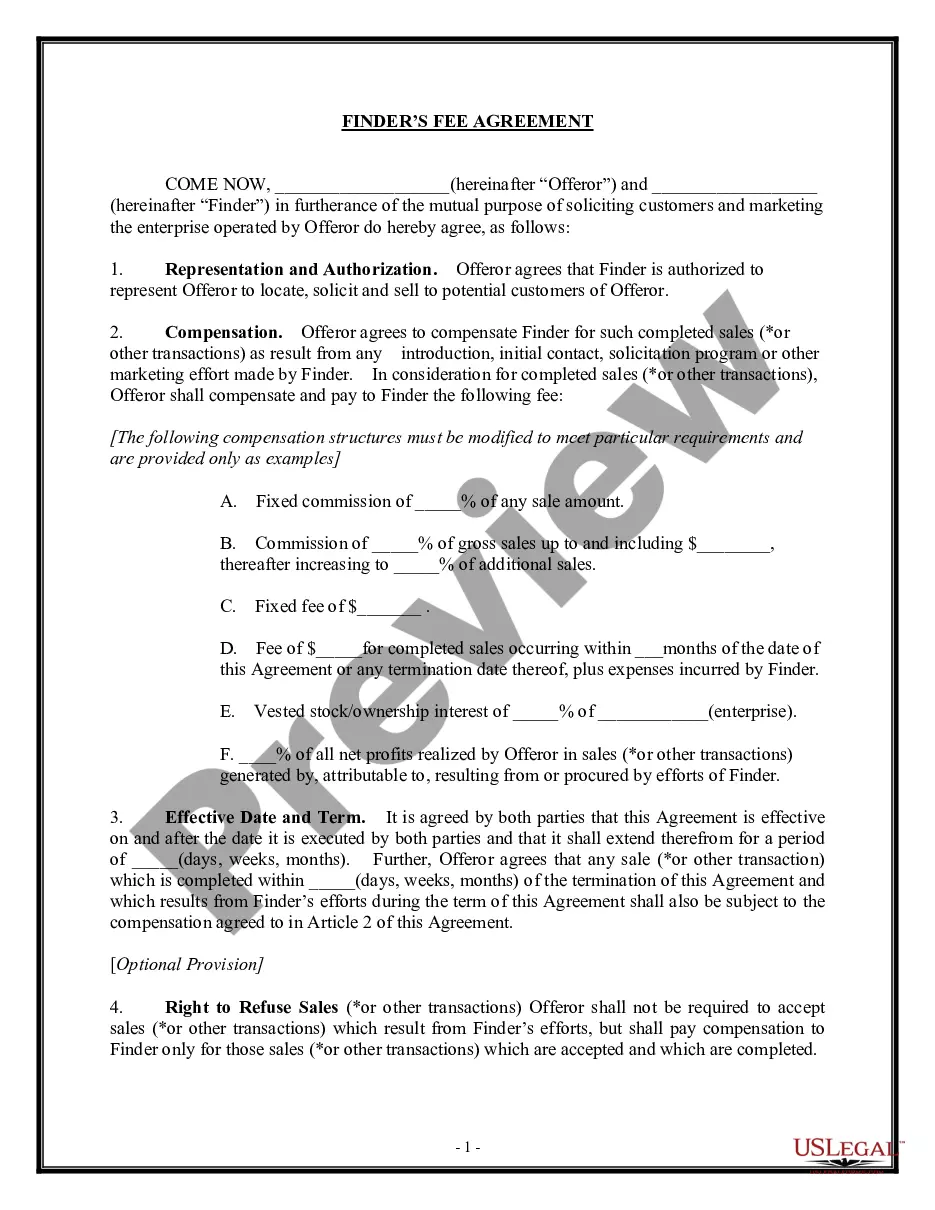
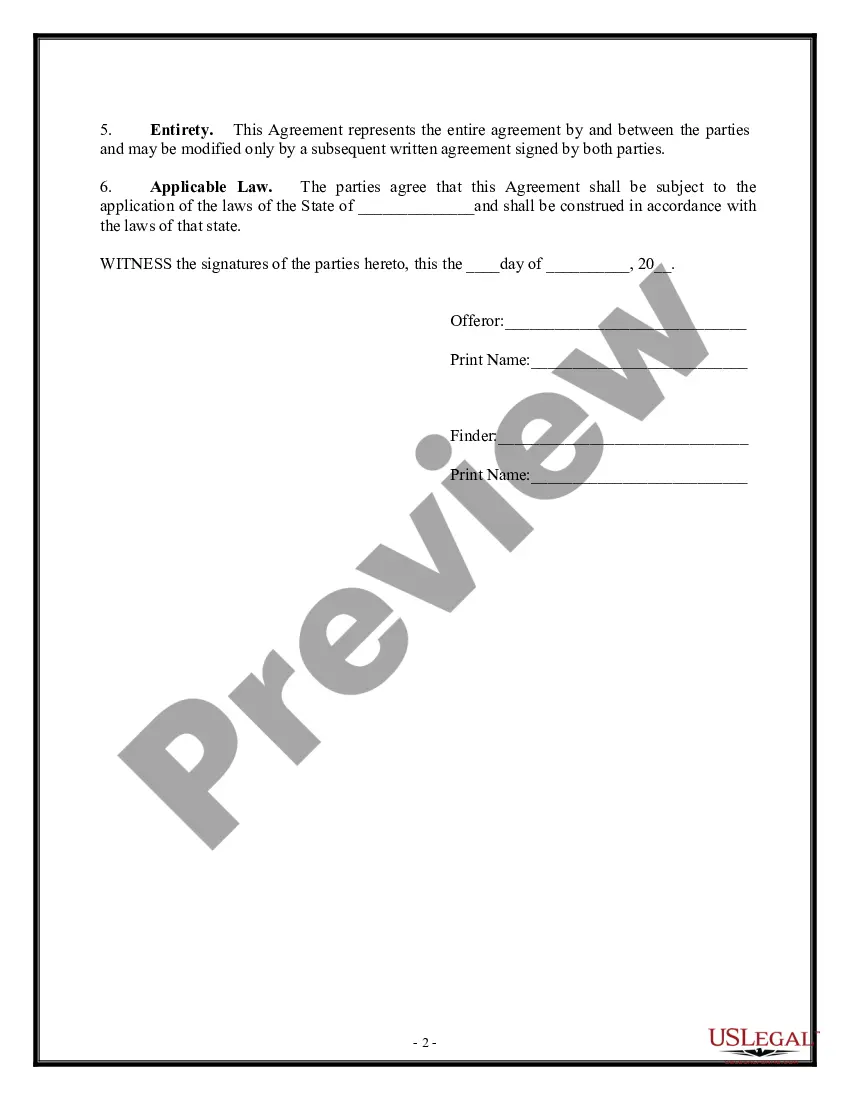
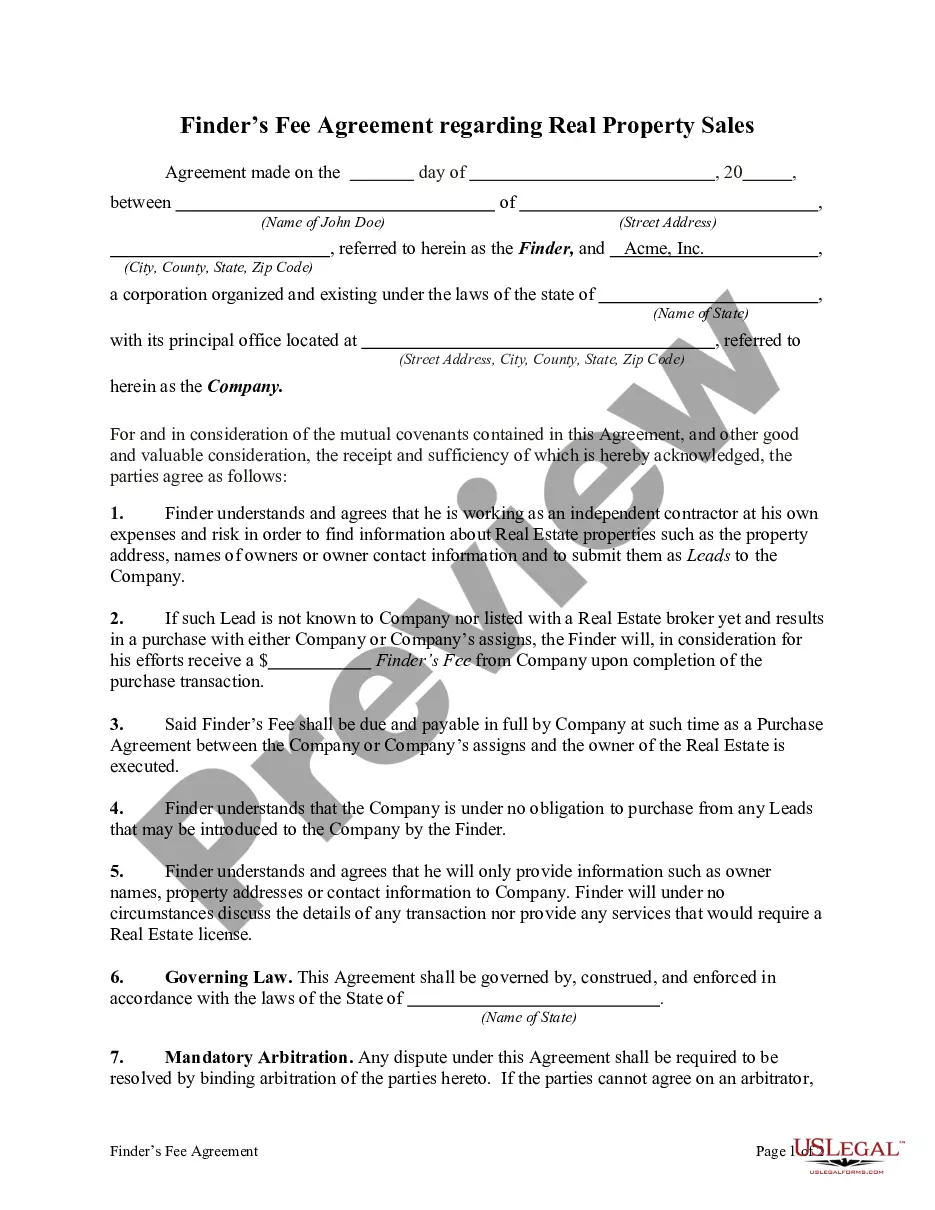
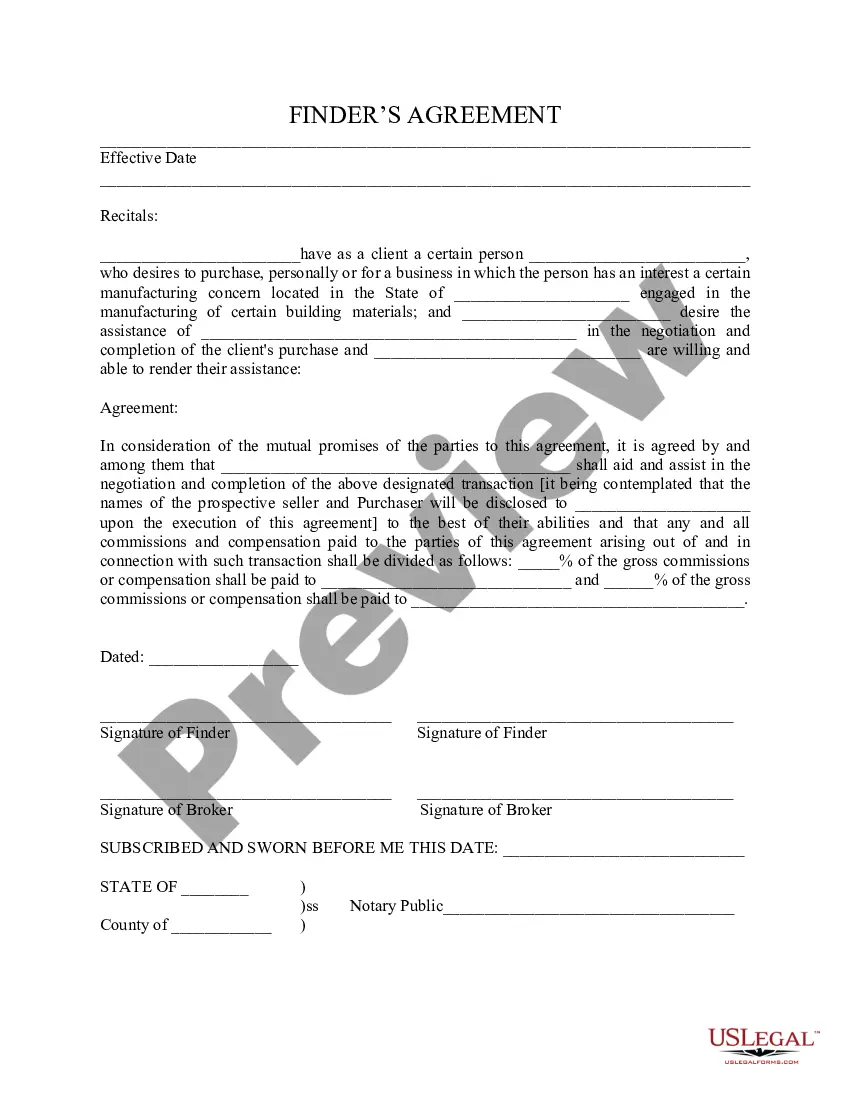
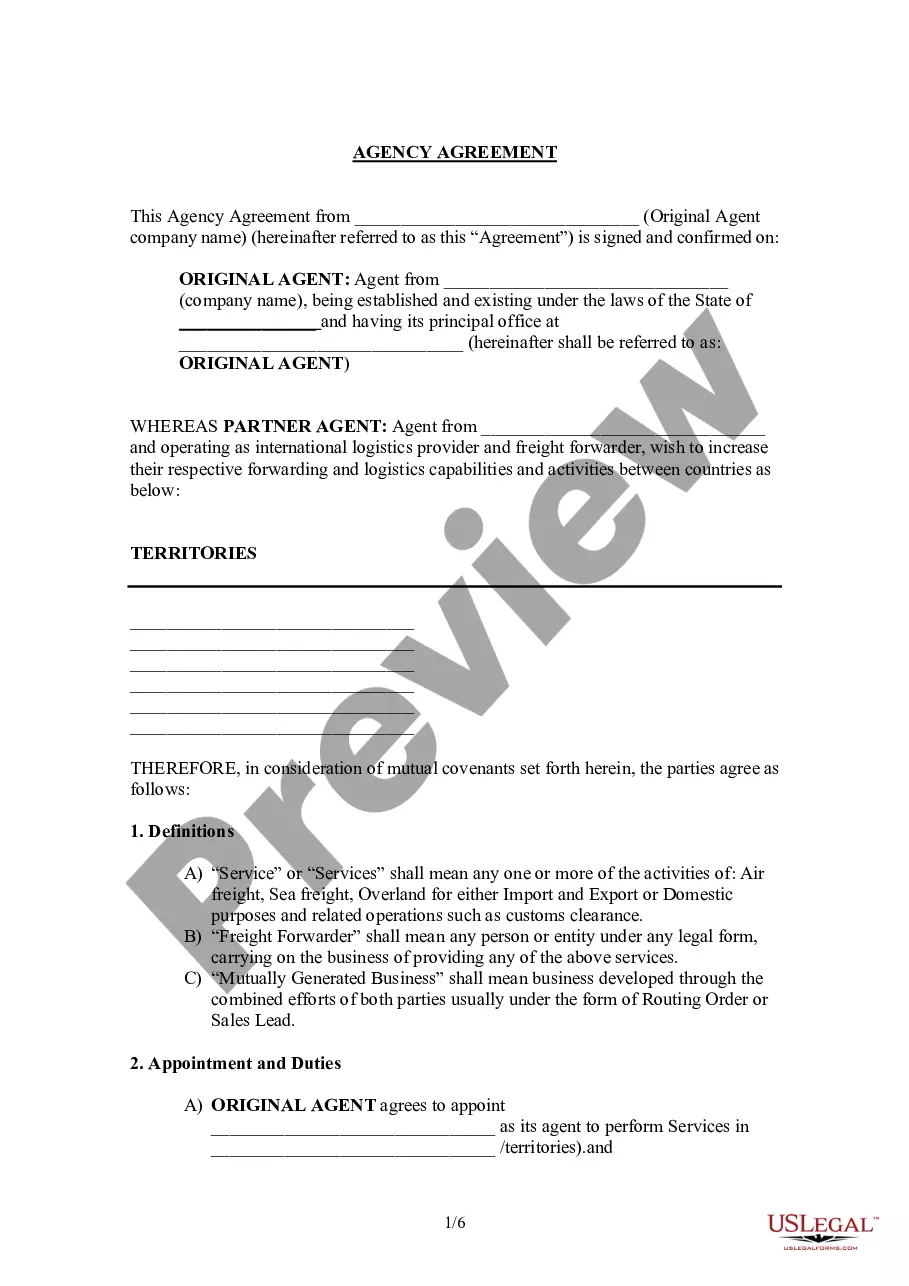
This form is a Finder's Fee Agreement. The offerer and the finder agree to certain terms in furtherance of the mutual purpose of solciting customers and marketing the enterprise operated by the offeror. The document provides that the finder is authorized to represent the offerer in locating, soliciting, and selling to potential customers of the offeror.
Boston Massachusetts Finders Fee Agreement
Category:
State:
Multi-State
City:
Boston
Control #:
US-01771
Format:
Word;
Rich Text
Instant download
Description
Free preview





Form popularity
FAQ
A 10% finder's fee is generally considered reasonable in many scenarios, particularly in a Boston Massachusetts Finders Fee Agreement. This percentage reflects the value of the service provided and aligns well with industry standards. However, the appropriateness of this fee depends on the specific circumstances of the transaction and the value being exchanged. Always review the agreement details to ensure that both parties feel satisfied with the terms.
A typical finder's fee varies based on the industry and the agreement between parties. In the context of a Boston Massachusetts Finders Fee Agreement, it usually ranges from 5% to 15% of the total transaction amount. This fee compensates the finder for their efforts in linking parties that may not have connected otherwise. It's essential to clarify the terms in your agreement to ensure transparency and mutual understanding.
In Massachusetts, the responsibility for paying the broker fee has shifted primarily to the landlords. This means landlords may cover the broker fee instead of tenants, depending on the agreement made. This shift aims to ease the financial burden on renters. When creating a Boston Massachusetts Finders Fee Agreement, it is essential to clearly outline who is responsible for the broker fee to avoid confusion and maintain transparency.
The new law about broker fees focuses on protecting tenants from high rental costs associated with broker services. With this legislation, landlords are required to disclose all fees upfront, allowing tenants to make informed decisions. This law significantly impacts the drafting of a Boston Massachusetts Finders Fee Agreement by ensuring all parties understand their financial responsibilities. Adapting to this law is vital for smooth rental transactions.
The new broker fee rule in Massachusetts impacts how fees are handled between landlords and tenants. Under this rule, landlords can no longer pass on the entire broker fee to tenants, which shifts the financial responsibility. This change aims to create a fairer rental market. Understanding these changes is crucial for anyone looking to draft a Boston Massachusetts Finders Fee Agreement.
Yes, you can write your own rental agreement in Boston, provided it meets local laws and requirements. Creating your own agreement offers flexibility to include specific terms that suit both parties. However, it's wise to reference a Boston Massachusetts Finders Fee Agreement template to ensure you cover all necessary legal aspects and protect your rights.
To avoid paying a broker's fee in Boston, consider searching for rental listings directly from property owners or using online platforms that allow for direct communication. You can also explore no-fee apartments, which often eliminate the need for broker services. If you choose to use a Boston Massachusetts Finders Fee Agreement, negotiate terms to minimize or waive fees.
A standard finders fee agreement outlines the terms under which a broker or finder receives compensation for connecting a tenant with a property owner. In Boston, this agreement usually specifies the fee percentage, payment timeline, and responsibilities of both parties. Understanding the details of a Boston Massachusetts Finders Fee Agreement can help ensure a smooth rental process.
The average broker fee in Boston typically ranges from 15% to 20% of the total annual rent. This fee can vary based on the property type and the broker's services. When considering a Boston Massachusetts Finders Fee Agreement, be sure to discuss the fee structure upfront to avoid surprises later.