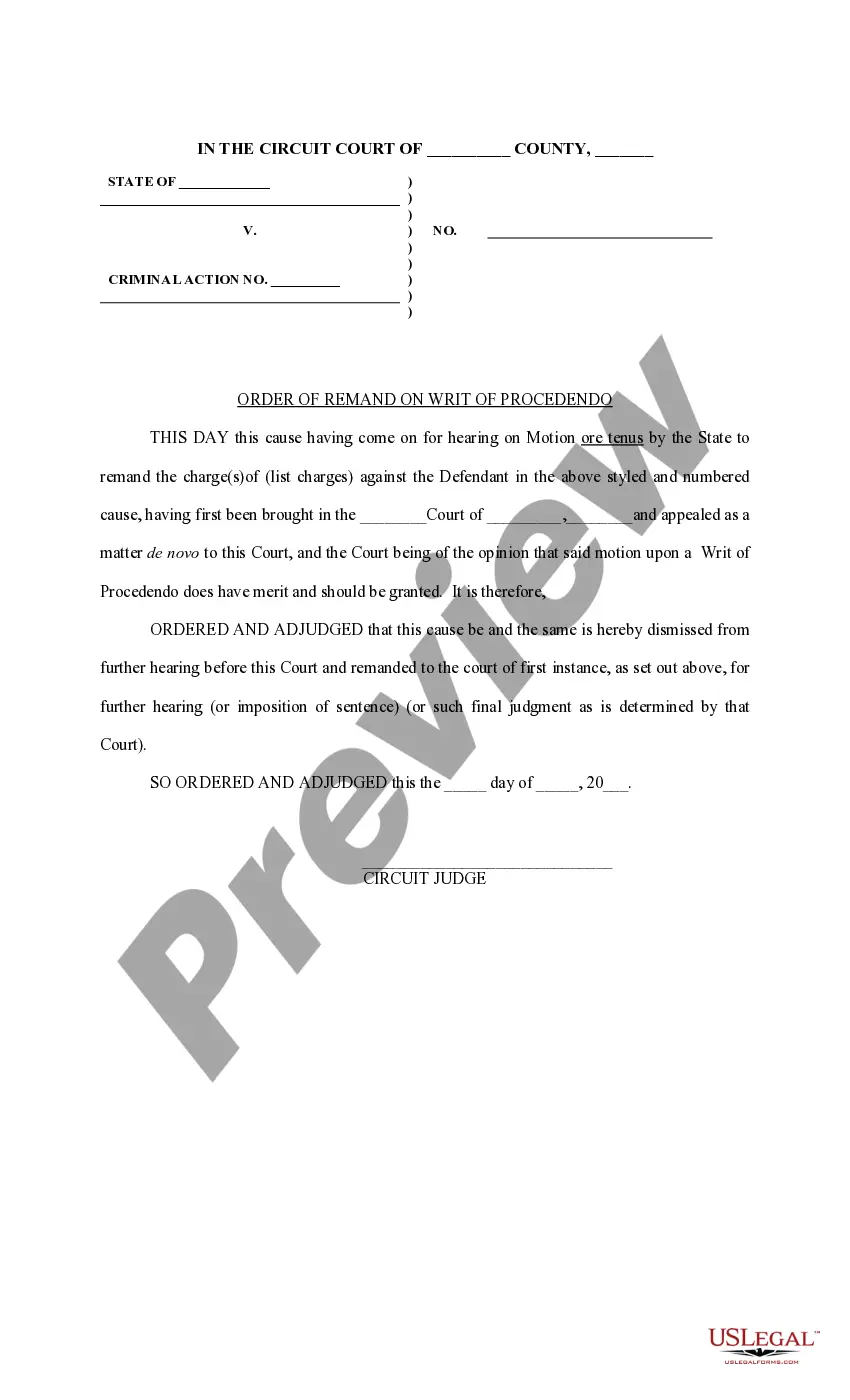
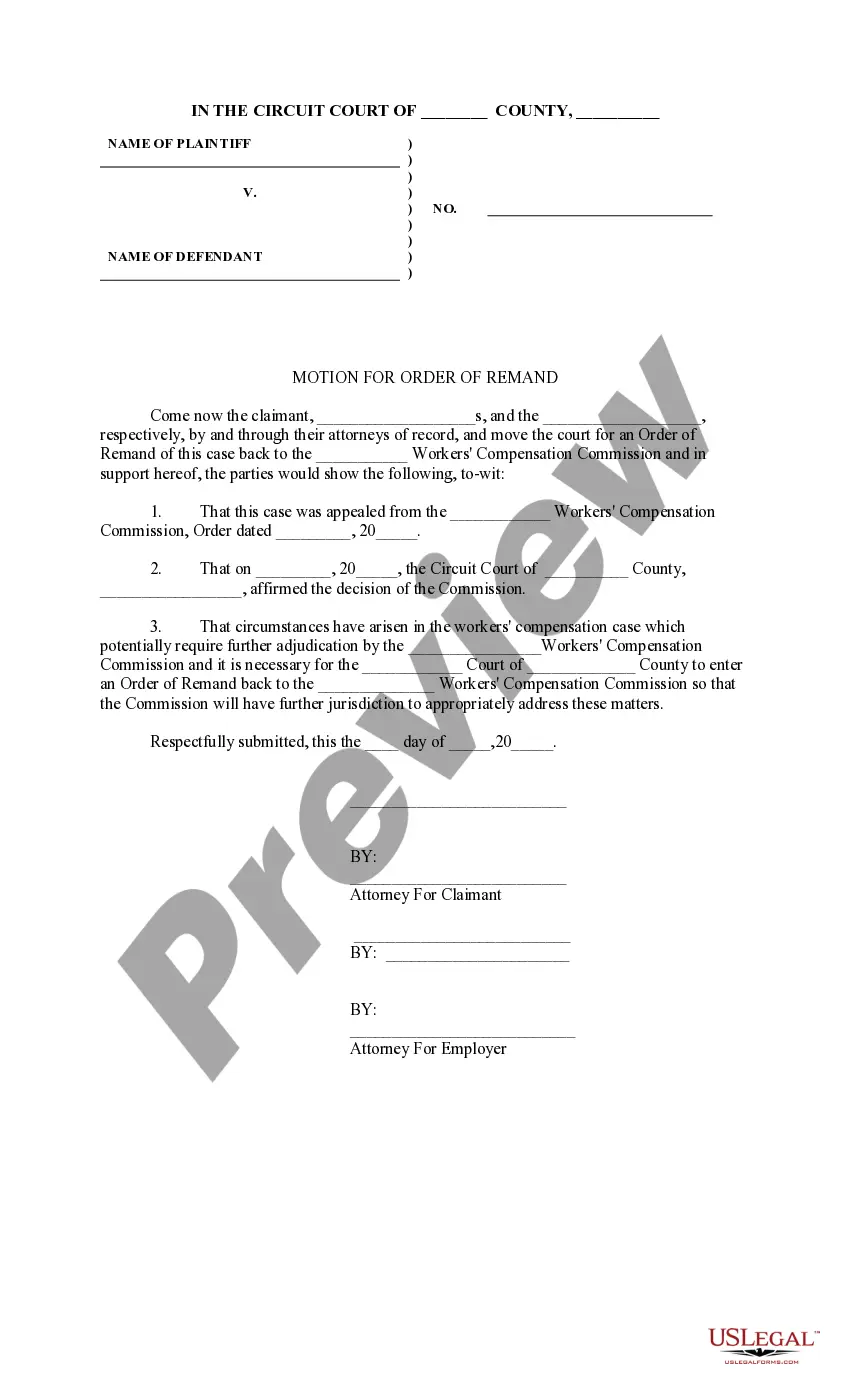
Charlotte North Carolina Order of Remand on Writ of Procedendo
Description
Form popularity
FAQ
Being on remand can be serious, as it indicates that a higher court has found issues in the original handling of the case. This situation often necessitates further legal action and can prolong the resolution of the matter. For those dealing with the Charlotte North Carolina Order of Remand on Writ of Procedendo, understanding the implications is crucial. If you find yourself in this situation, consider exploring US Legal Forms for the documents and information needed to navigate the remand process effectively.
When a case is remanded, the court typically provides specific instructions on how the lower court should proceed. This can include conducting a new trial, reconsidering certain aspects of the case, or making specific findings of fact. In relation to the Charlotte North Carolina Order of Remand on Writ of Procedendo, this process ensures that the issues are addressed correctly and fairly. If you’re unsure about the steps following a remand, US Legal Forms offers various templates and guides to assist you.
When a case is remanded to state court, it means that the higher court has sent the case back to the original court for further proceedings. This often occurs in cases involving the Charlotte North Carolina Order of Remand on Writ of Procedendo, where the higher court believes additional context or action is necessary. The remanded case will be reviewed under the original court's jurisdiction, and parties involved must prepare for the next steps. Utilizing US Legal Forms can help streamline the documentation needed during this process.
In North Carolina, a writ of execution is valid for 90 days from the date it is issued. However, this period can be extended by the court if necessary. Understanding the timeline is crucial, especially when dealing with cases related to the Charlotte North Carolina Order of Remand on Writ of Procedendo. If you require assistance with the specifics of a writ, US Legal Forms provides resources that can help clarify these details.
A writ of recordari is a legal order that commands a lower court to send records of a case to a higher court for review. In the context of the Charlotte North Carolina Order of Remand on Writ of Procedendo, this writ ensures that the higher court has the information necessary to make a decision. It's essential for maintaining the flow of justice and ensuring cases are handled correctly. If you need guidance on navigating this process, consider using US Legal Forms for easy access to necessary documents.
District courts in North Carolina handle a variety of cases, including civil, criminal, and juvenile matters. They address issues such as family law, traffic violations, and small claims. If you find yourself needing to understand the implications of a Charlotte North Carolina Order of Remand on Writ of Procedendo, district courts are where these matters are typically processed. You can rely on US Legal Forms to provide the necessary documents and guidance for navigating the legal landscape effectively.
When a case is remanded to a lower court, the higher court sends the case back for further proceedings. This may occur for various reasons, such as errors in the original trial or the need for additional evidence. The lower court will then reassess the case based on the higher court's guidance. If you are involved in a situation involving a Charlotte North Carolina Order of Remand on Writ of Procedendo, understanding these proceedings can help you prepare effectively.
In North Carolina, civil cases involving $25,000 or less are typically heard in District Court. This court handles various civil matters, including small claims and family law cases. If you are dealing with a legal issue that falls within this financial range, understanding the role of District Court is crucial. For assistance with the process, consider resources like US Legal Forms, which can help you navigate the complexities of your civil case.