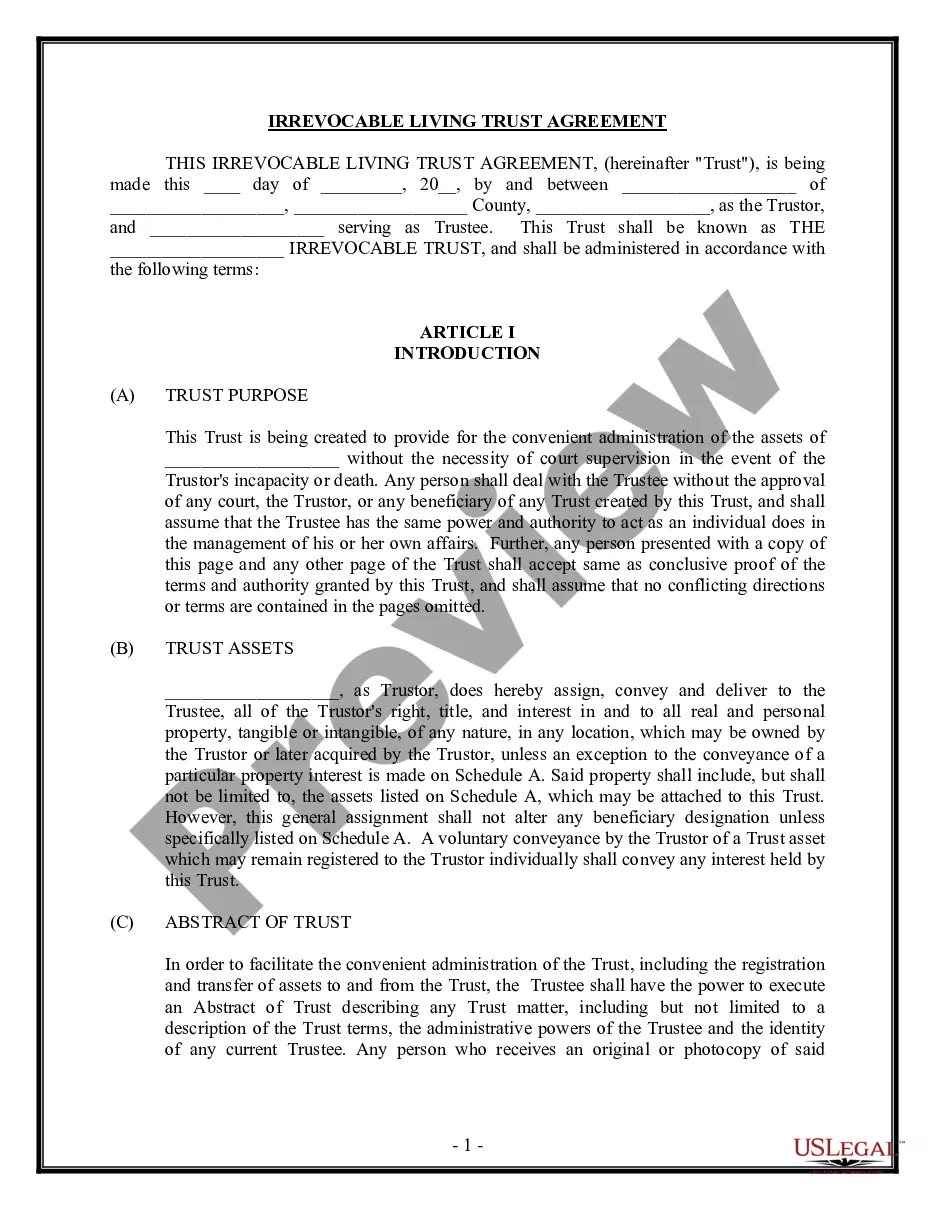
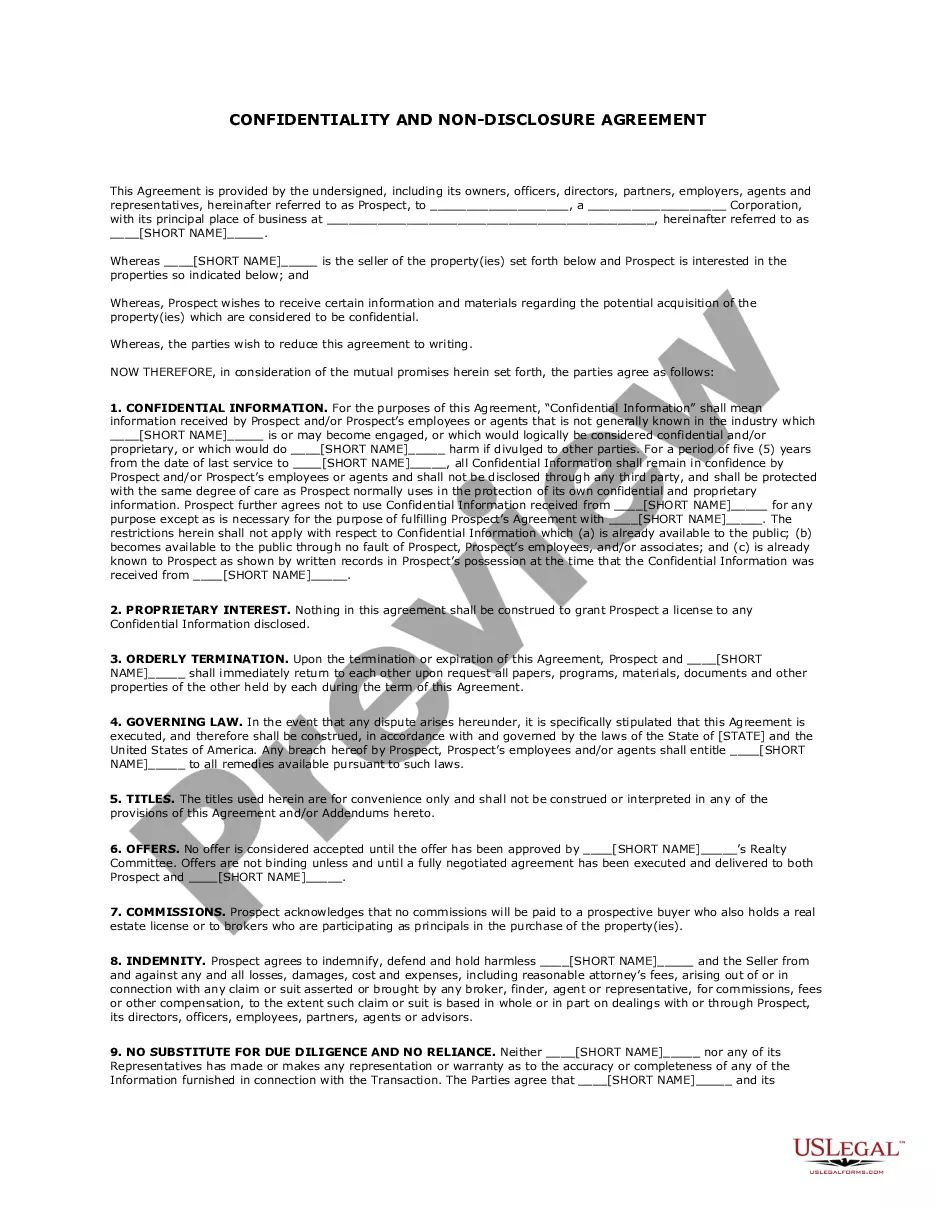
Montgomery Maryland Confidentiality and Nondisclosure Agreement - Promoter to Owner
Description
Get your form ready online
Our built-in tools help you complete, sign, share, and store your documents in one place.
Make edits, fill in missing information, and update formatting in US Legal Forms—just like you would in MS Word.
Download a copy, print it, send it by email, or mail it via USPS—whatever works best for your next step.
Sign and collect signatures with our SignNow integration. Send to multiple recipients, set reminders, and more. Go Premium to unlock E-Sign.
If this form requires notarization, complete it online through a secure video call—no need to meet a notary in person or wait for an appointment.
We protect your documents and personal data by following strict security and privacy standards.

Make edits, fill in missing information, and update formatting in US Legal Forms—just like you would in MS Word.

Download a copy, print it, send it by email, or mail it via USPS—whatever works best for your next step.

Sign and collect signatures with our SignNow integration. Send to multiple recipients, set reminders, and more. Go Premium to unlock E-Sign.

If this form requires notarization, complete it online through a secure video call—no need to meet a notary in person or wait for an appointment.

We protect your documents and personal data by following strict security and privacy standards.
Looking for another form?
How to fill out Confidentiality And Nondisclosure Agreement - Promoter To Owner?
Drafting legal documents is essential in the modern landscape.
However, you don't always have to obtain expert assistance to create some of them from scratch, including the Montgomery Confidentiality and Nondisclosure Agreement - Promoter to Owner, utilizing a service like US Legal Forms.
US Legal Forms offers more than 85,000 documents to select from across a range of categories, from living wills to real estate contracts to divorce agreements. Each document is organized according to its relevant state, making the search process more straightforward.
If you are already subscribed to US Legal Forms, you can find the necessary Montgomery Confidentiality and Nondisclosure Agreement - Promoter to Owner, sign in to your account, and download it. Of course, our site cannot entirely replace a legal expert. If you face an extremely complex issue, we suggest enlisting the help of an attorney to review your document before it is executed and submitted.
With over 25 years in the industry, US Legal Forms has established itself as a reliable resource for various legal documents for millions of clients. Join them today and acquire your state-specific paperwork effortlessly!
- Review the preview and description of the document (if available) to understand what you will receive after downloading it.
- Make sure that the template you select is relevant to your state/county/region, as state regulations can affect the legitimacy of some documents.
- Look through the related document templates or start your search again to find the correct file.
- Click Buy now and set up your account. If you already possess one, choose to sign in.
- Select your choice, then a suitable payment option, and purchase the Montgomery Confidentiality and Nondisclosure Agreement - Promoter to Owner.
- Choose to save the document template in any supported file format.
- Go to the My documents tab to re-download the document.
Form popularity
FAQ
The NDA is common before discussions between businesses about potential joint ventures. Employees are often required to sign NDAs to protect an employer's confidential business information. An NDA may also be referred to as a confidentiality agreement.
This NDA (one way), also referred to as a non-disclosure agreement (one-way) or a one-way confidentiality agreement, helps to protect your confidential information when you are sharing it with another person or business.
NDAs can be either mutual or one way. A mutual NDA requires each party to protect the confidential information to the other party. A one-way NDA contemplates that only one party will be disclosing confidential information. If you won't be disclosing any confidential information, then you may not need a mutual NDA.
How do I write a Non-Disclosure Agreement? Contact information for the parties involved. Details about the confidential information that needs protection. Permitted uses of the confidential information by the recipient. Time restrictions for keeping information confidential. Reason for disclosure.
Unilateral or Mutual When drafting an NDA, you must choose between a mutual or unilateral NDA. In a unilateral NDA, one party agrees to non-disclosure of confidential information belonging to the other party. In a mutual NDA, both parties agree not to reveal the other's confidential information.
A mutual confidentiality agreement is also sometimes called a mutual non-disclosure agreement. It is a legal document and contract that requires both parties that sign the agreement to not disclose any information protected by the agreement.
NDA vs confidentiality agreement: What is the difference? A confidentiality agreement binds all parties to keep secret information confidential, while an NDA upholds secrecy by creating a confidential relationship between the parties who sign it.
Mutual or Unilateral A unilateral NDA means only one party is agreeing to protect the other party's confidential information; while a mutual NDA means both parties are agreeing to do so.
Obviously, the part of a mutual NDA that limits the other party is intended to protect confidential information. The mutual aspectprotecting both partiesalso allows the parties to move ahead in pursuing a common goal, without either having to fear that confidential information will be disclosed to third parties.
Both parties will sign the NDA after they finish drafting it. Like any business contract, unilateral NDAs require someone with authority (i.e., a C-suite executive) to sign the agreement on behalf of each party. Then, one party will disclose the confidential information and designate it as confidential.