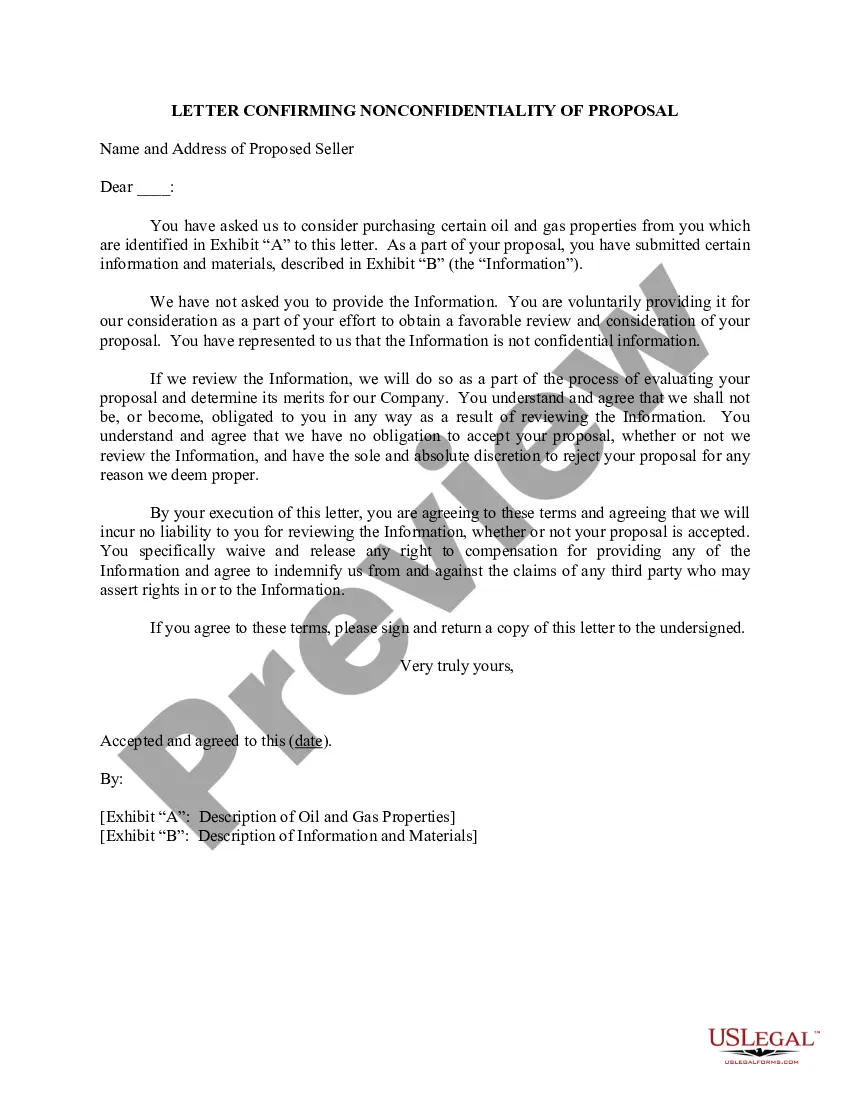
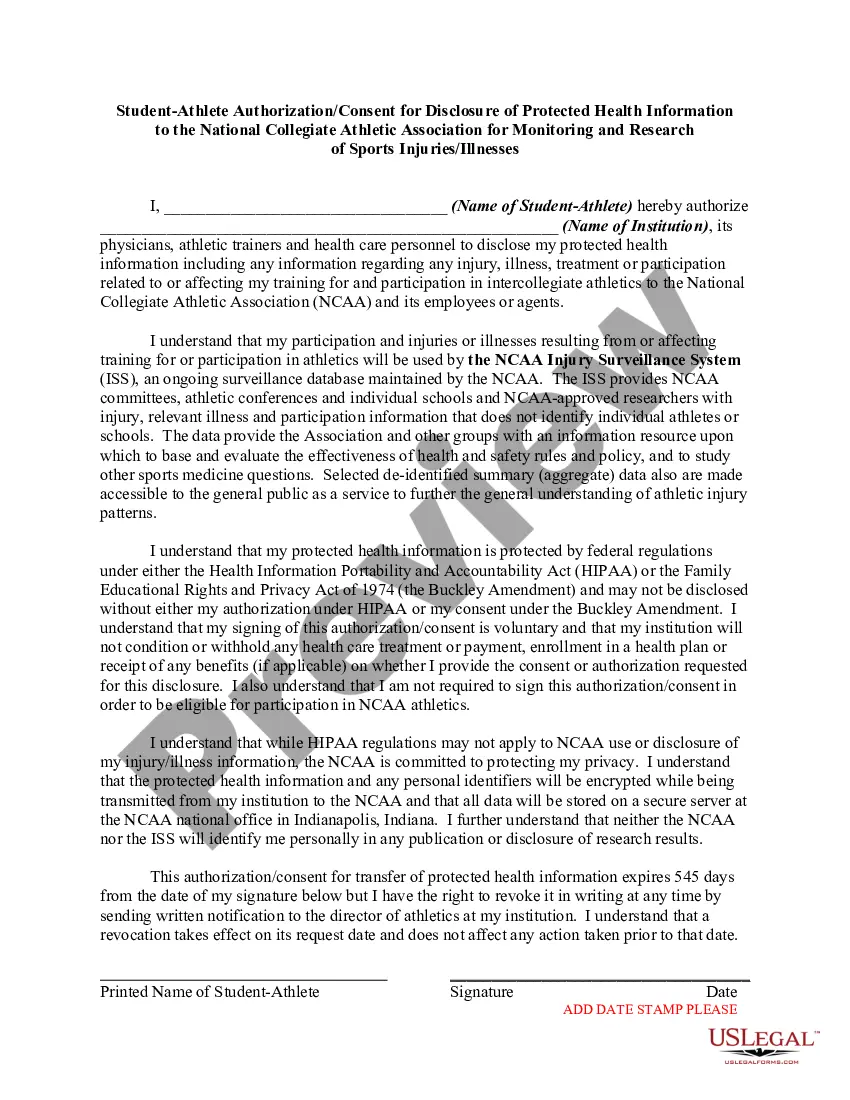
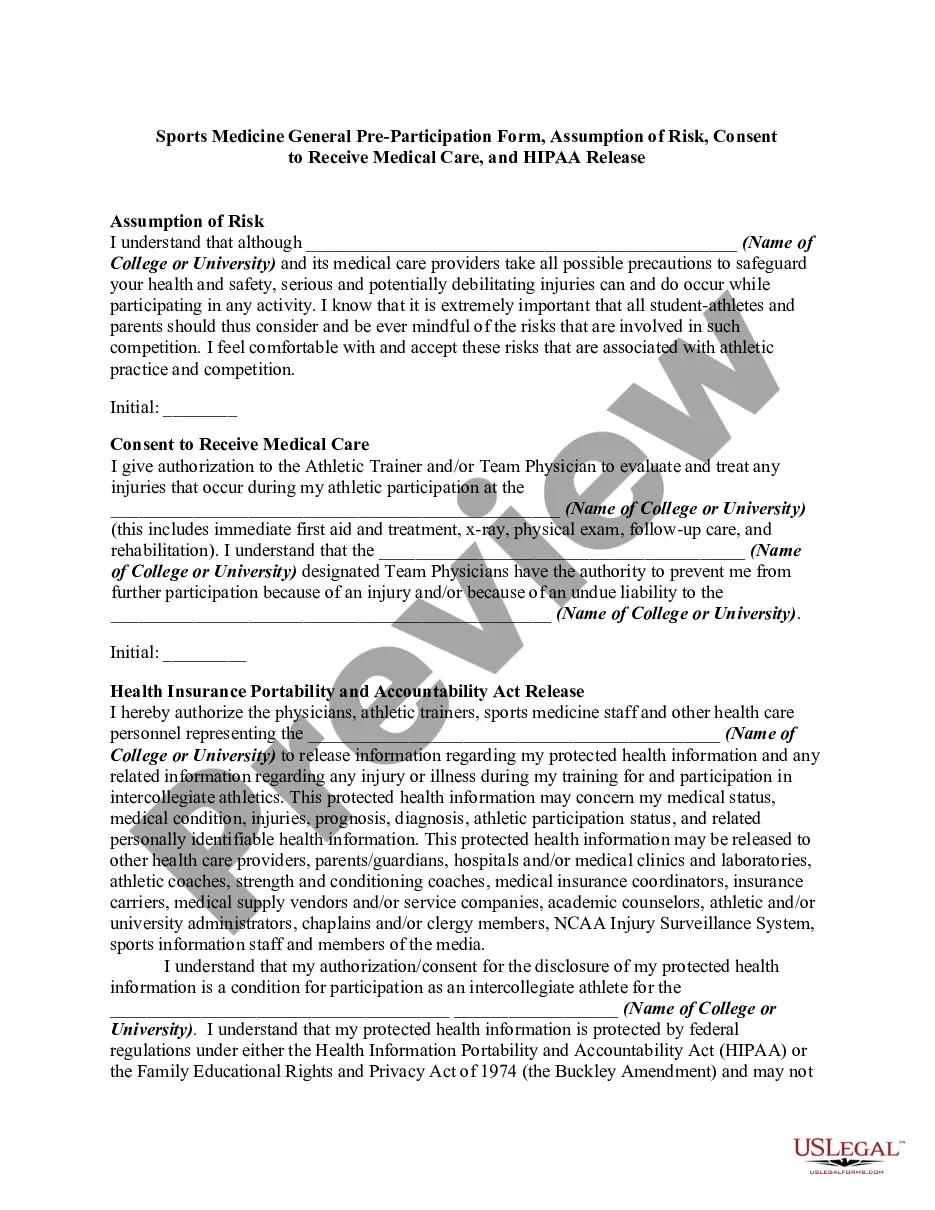
The NCAA Injury Surveillance System (ISS), an ongoing surveillance database maintained by the NCAA. The ISS provides NCAA committees, athletic conferences and individual schools and NCAA-approved researchers with injury, relevant illness and participation information that does not identify individual athletes or schools. The data provide the Association and other groups with an information resource upon which to base and evaluate the effectiveness of health and safety rules and policy, and to study other sports medicine questions. This letter is meant to satisfy requirements of the Health Insurance Portability and Accountability Act (HIPAA).
Tampa Florida Student-Athlete Authorization or Consent for Disclosure of Protected Health Information to the National Collegiate Athletic Association for Monitoring and Research of Sports Injuries or Illnesses
Category:
State:
Multi-State
City:
Tampa
Control #:
US-01719BG
Format:
Word;
Rich Text
Instant download
Description



Form popularity
FAQ
A student should register with the NCAA as early as possible, ideally during their junior year of high school, to ensure eligibility for college athletics. Early registration allows students to receive guidance and understand the eligibility requirements better. Properly completing the Tampa Florida Student-Athlete Authorization or Consent for Disclosure of Protected Health Information to the National Collegiate Athletic Association for Monitoring and Research of Sports Injuries or Illnesses is also crucial at this stage to facilitate the sharing of necessary health information.
Yes, HIPAA, or the Health Insurance Portability and Accountability Act, applies to college athletes, protecting their medical information from unauthorized disclosure. However, student-athletes must also provide consent for their health information to be shared, particularly when it pertains to NCAA monitoring and research. By utilizing the Tampa Florida Student-Athlete Authorization or Consent for Disclosure of Protected Health Information to the National Collegiate Athletic Association for Monitoring and Research of Sports Injuries or Illnesses, athletes can navigate these requirements efficiently.
The 40-60-80 rule refers to the guidelines set by the NCAA regarding the percentage of a student-athlete’s eligibility based on their participation in college sports. This rule helps assess and maintain the balance between academics and athletics, ensuring that student-athletes stay on track for graduation. Understanding this concept is vital for anyone involved in college athletics, particularly when navigating the Tampa Florida Student-Athlete Authorization or Consent for Disclosure of Protected Health Information to the National Collegiate Athletic Association for Monitoring and Research of Sports Injuries or Illnesses.
The NCAA permission to contact form is a crucial document that allows the National Collegiate Athletic Association to communicate with healthcare providers regarding a student-athlete's health information. This form is essential for ensuring that any medical data shared is done so legally and ethically. By completing the Tampa Florida Student-Athlete Authorization or Consent for Disclosure of Protected Health Information to the National Collegiate Athletic Association for Monitoring and Research of Sports Injuries or Illnesses, student-athletes can facilitate necessary research and monitoring while safeguarding their privacy.
Athletes are indeed protected by HIPAA regulations, which safeguard their medical information from unauthorized disclosure. This protection is crucial for preserving the privacy of student-athletes, especially when dealing with health conditions or injuries. When considering the Tampa Florida Student-Athlete Authorization or Consent for Disclosure of Protected Health Information to the National Collegiate Athletic Association for Monitoring and Research of Sports Injuries or Illnesses, athletes can ensure their health information is shared responsibly, supporting both their safety and their athletic performance.
Yes, HIPAA does apply to college students, especially in settings where healthcare services are provided, such as campus health centers. Under HIPAA, students have rights regarding their medical information and how it is shared. This is relevant for student-athletes who may need to consider the Tampa Florida Student-Athlete Authorization or Consent for Disclosure of Protected Health Information to the National Collegiate Athletic Association for Monitoring and Research of Sports Injuries or Illnesses, as it ensures their health data is handled appropriately during their athletic career.
A personal statement for a student-athlete typically highlights the individual’s experiences, achievements, and goals. For instance, it may detail how a student-athlete overcame challenges in academics and sports, while emphasizing their dedication to both areas. This kind of statement can also address the importance of the Tampa Florida Student-Athlete Authorization or Consent for Disclosure of Protected Health Information to the National Collegiate Athletic Association for Monitoring and Research of Sports Injuries or Illnesses, illustrating how it supports their journey in athletics and education.
NCAA Rule 17.1 6.6 1 outlines the requirements for student-athletes seeking medical exemptions related to their participation in sports. This rule emphasizes the importance of proper documentation and authorization for disclosing health information to the NCAA. Utilizing a Tampa Florida Student-Athlete Authorization or Consent for Disclosure of Protected Health Information to the National Collegiate Athletic Association for Monitoring and Research of Sports Injuries or Illnesses can simplify this process, ensuring compliance and protecting the athlete's interests.
An NCAA medical hardship waiver allows a student-athlete to preserve a year of eligibility due to a season-ending injury or illness. This waiver is essential for athletes who may not have played in a sufficient number of games or competitions due to health issues. By obtaining a Tampa Florida Student-Athlete Authorization or Consent for Disclosure of Protected Health Information to the National Collegiate Athletic Association for Monitoring and Research of Sports Injuries or Illnesses, athletes can ensure their medical information is appropriately shared, facilitating the waiver process.