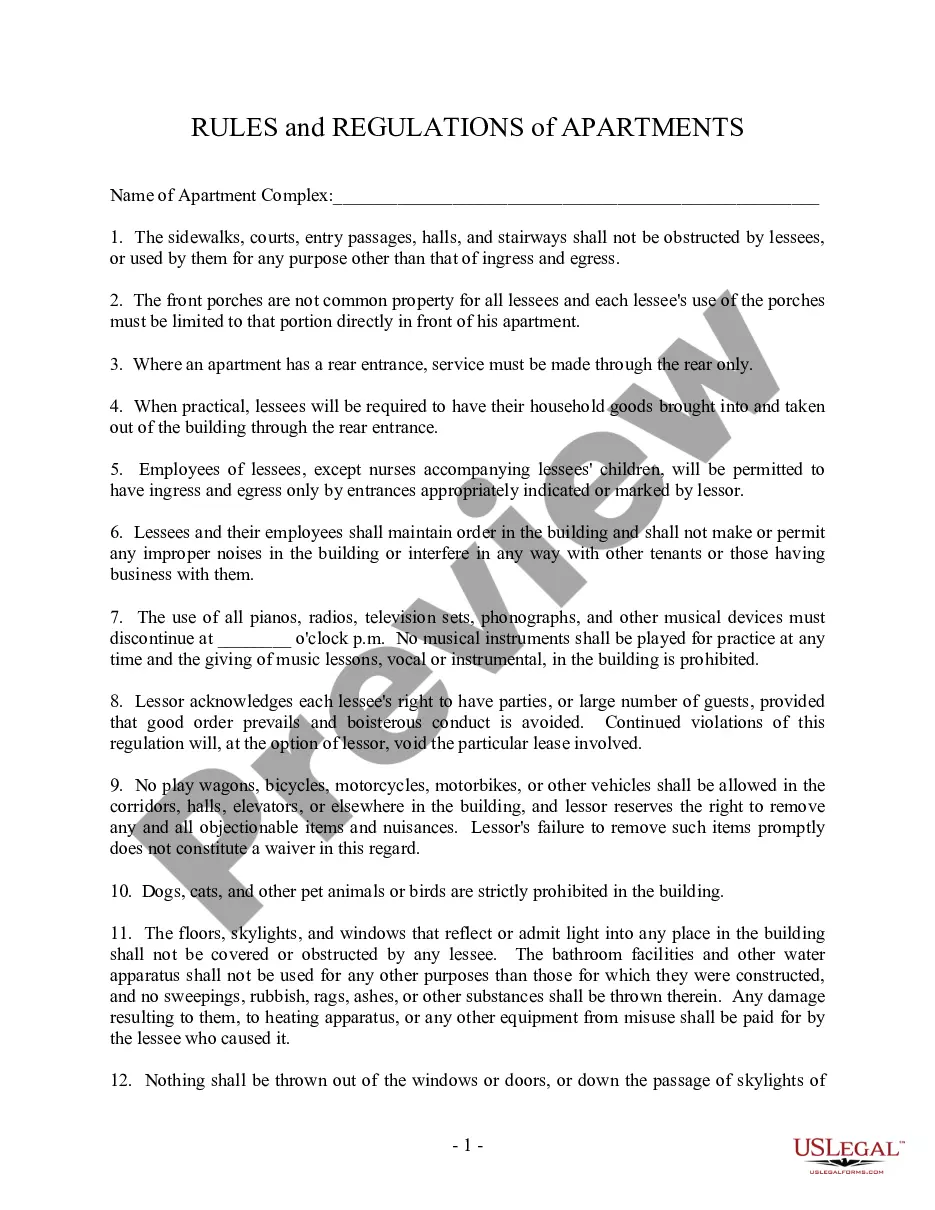
Raleigh North Carolina Apartment Rules
Description

Form popularity
FAQ
In Raleigh, North Carolina, apartment rules generally limit the number of occupants based on the number of bedrooms. A common guideline is two persons per bedroom, plus one additional occupant. Therefore, a family of five may face challenges living in a two-bedroom apartment due to these occupancy limits. To navigate these rules effectively and find suitable housing, consider exploring resources like US Legal Forms, which provide valuable information on Raleigh North Carolina Apartment Rules.
You should report an apartment complex to local housing authorities or the North Carolina Real Estate Commission if you face issues related to Raleigh North Carolina Apartment Rules. These organizations handle tenant complaints and can investigate violations. In some cases, you might also consider reaching out to legal aid organizations for additional support. Remember, documenting your experiences can strengthen your case.
To file a complaint against an apartment complex in North Carolina, start by documenting the issues you face and gathering any relevant evidence. Next, contact your local housing authority or the North Carolina Real Estate Commission to file your complaint. They can guide you through the process and help ensure that your concerns are addressed. Utilizing legal resources from uslegalforms can also provide helpful templates for your complaint.
If you experience landlord issues in Raleigh, you can report them to local housing authorities or the North Carolina Real Estate Commission. Additionally, you may want to document your concerns and communicate with your landlord directly. If the issues persist, consider seeking legal advice or utilizing resources from uslegalforms to better understand your options under Raleigh North Carolina Apartment Rules.
Apartment complexes in North Carolina are regulated by both state and local laws, including Raleigh North Carolina Apartment Rules. The North Carolina Real Estate Commission oversees rental properties, ensuring compliance with housing regulations. Local housing authorities may also have specific guidelines that apartment complexes must follow. Understanding these regulations can help you know your rights as a tenant.
Yes, you can sue your apartment complex in North Carolina if they violate Raleigh North Carolina Apartment Rules. Common reasons for legal action include breaches of lease agreements, failure to maintain safe living conditions, or discrimination. Before taking legal action, consider contacting your landlord to discuss issues directly. If necessary, you can find legal forms and resources on platforms like uslegalforms to assist you.
A violation of renters' rights in North Carolina occurs when landlords fail to fulfill their obligations, such as not providing a habitable home or retaliating against tenants for complaints. Other violations may include illegal eviction practices or discrimination against tenants. Knowing the Raleigh North Carolina Apartment Rules will help you identify these violations and take appropriate action.
Housing laws in North Carolina cover a range of topics, including tenant rights, landlord obligations, and eviction procedures. These laws ensure that rental agreements are fair and that both parties adhere to their responsibilities. By understanding the Raleigh North Carolina Apartment Rules, you can navigate these laws and protect your interests as a tenant.
In Raleigh, NC, renters have the right to receive proper notice before any eviction, to have a safe living environment, and to seek legal recourse if their rights are violated. Tenants can also challenge unfair lease terms and demand repairs for unsafe conditions. Familiarizing yourself with the Raleigh North Carolina Apartment Rules empowers you to advocate for your rights effectively.
Renters in North Carolina enjoy several protections, including the right to a habitable living environment and protection against unjust eviction. The Raleigh North Carolina Apartment Rules require landlords to maintain their properties and address significant repairs promptly. Moreover, laws also guard against discrimination, ensuring that all tenants have equal access to housing.