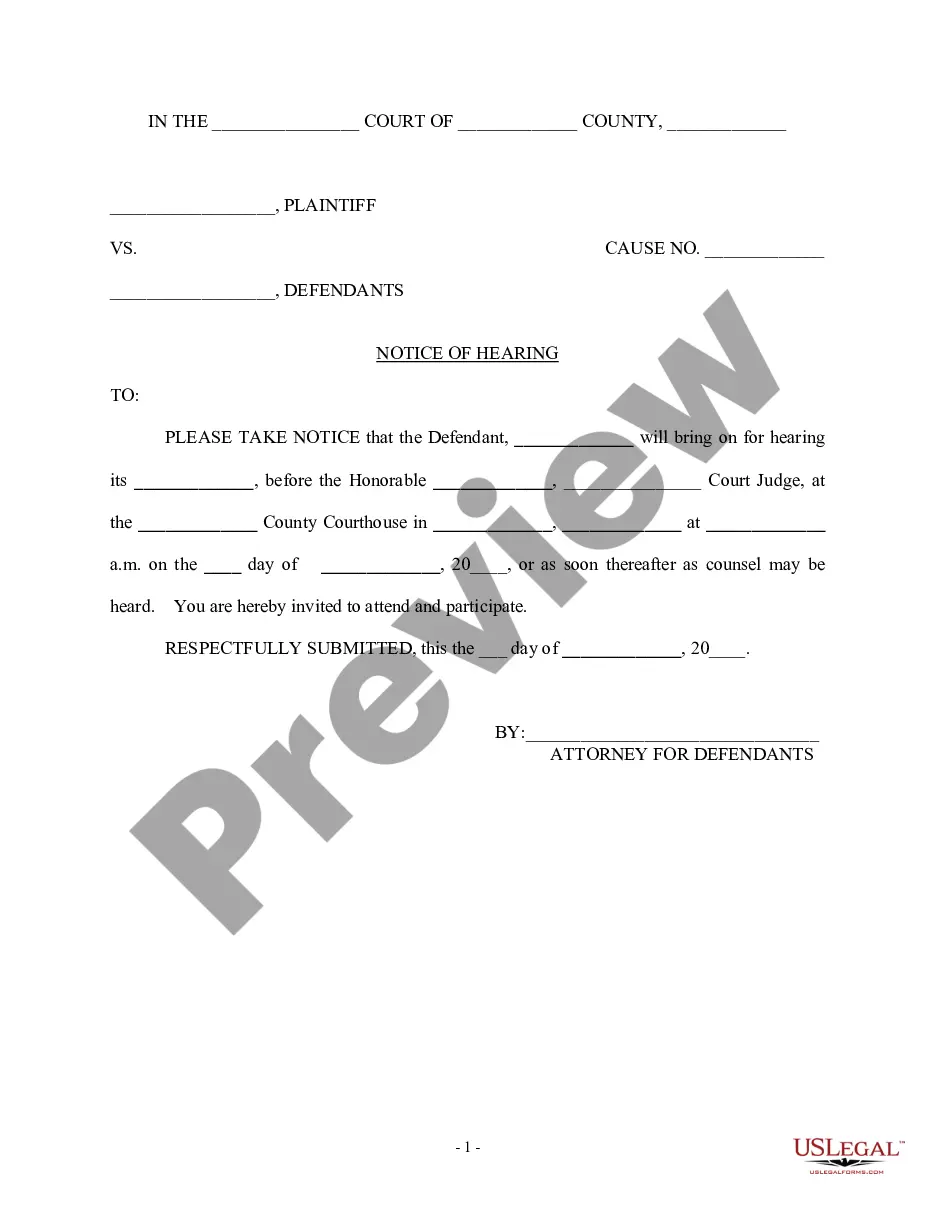
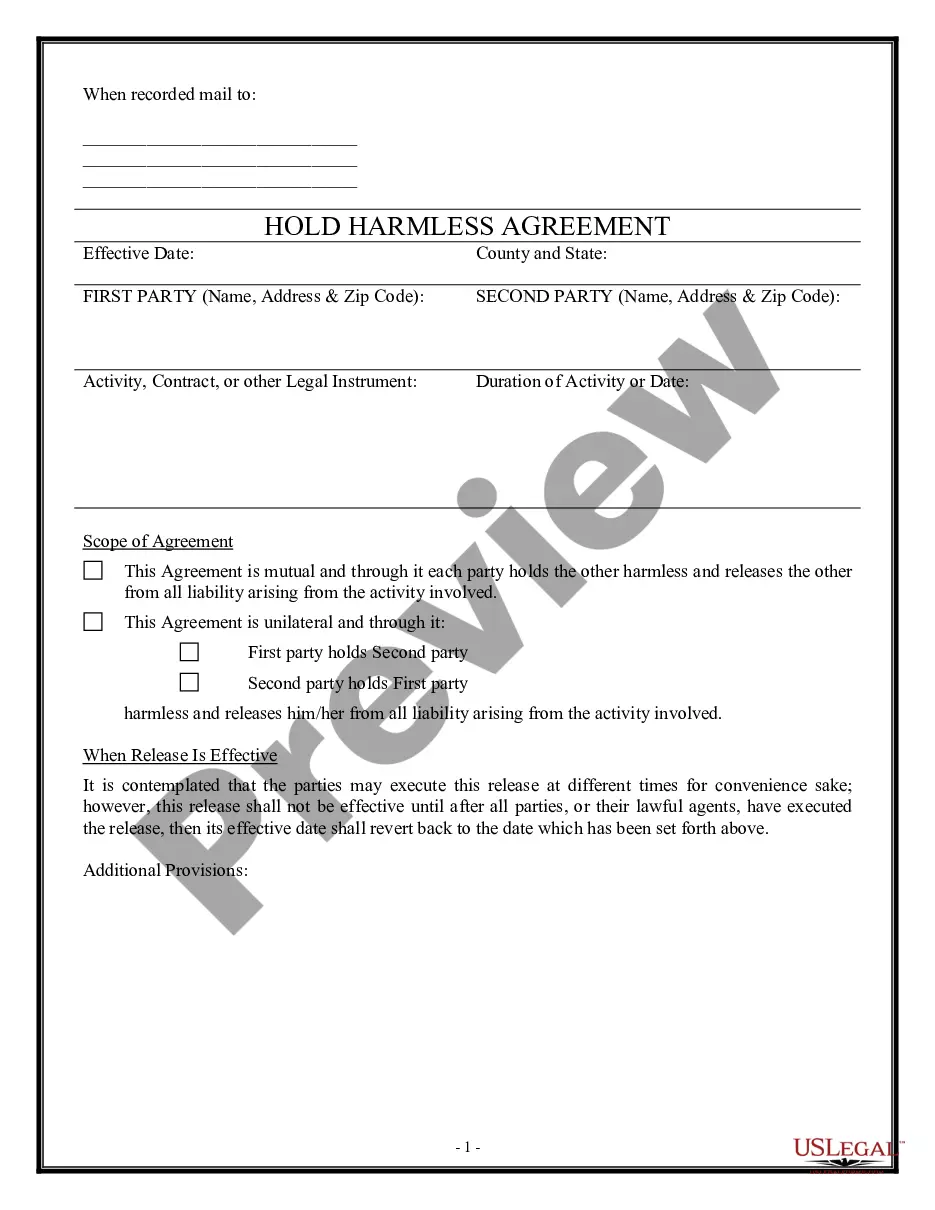
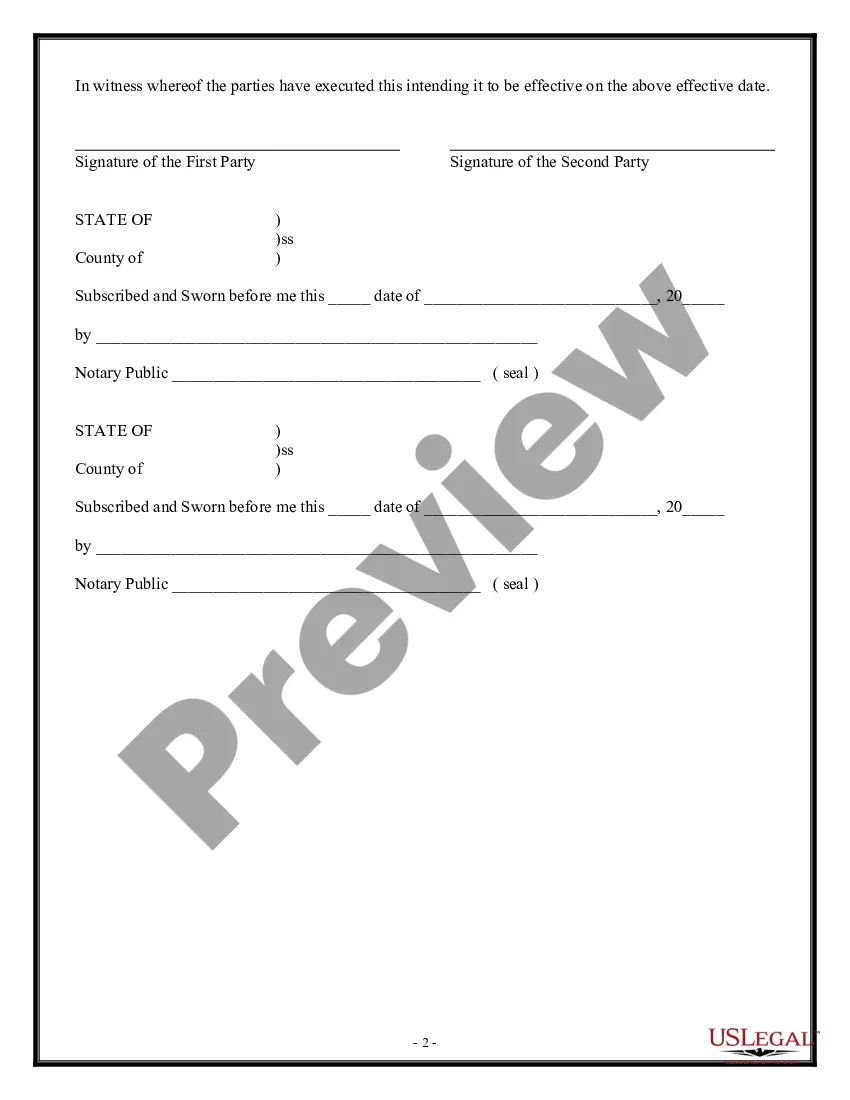
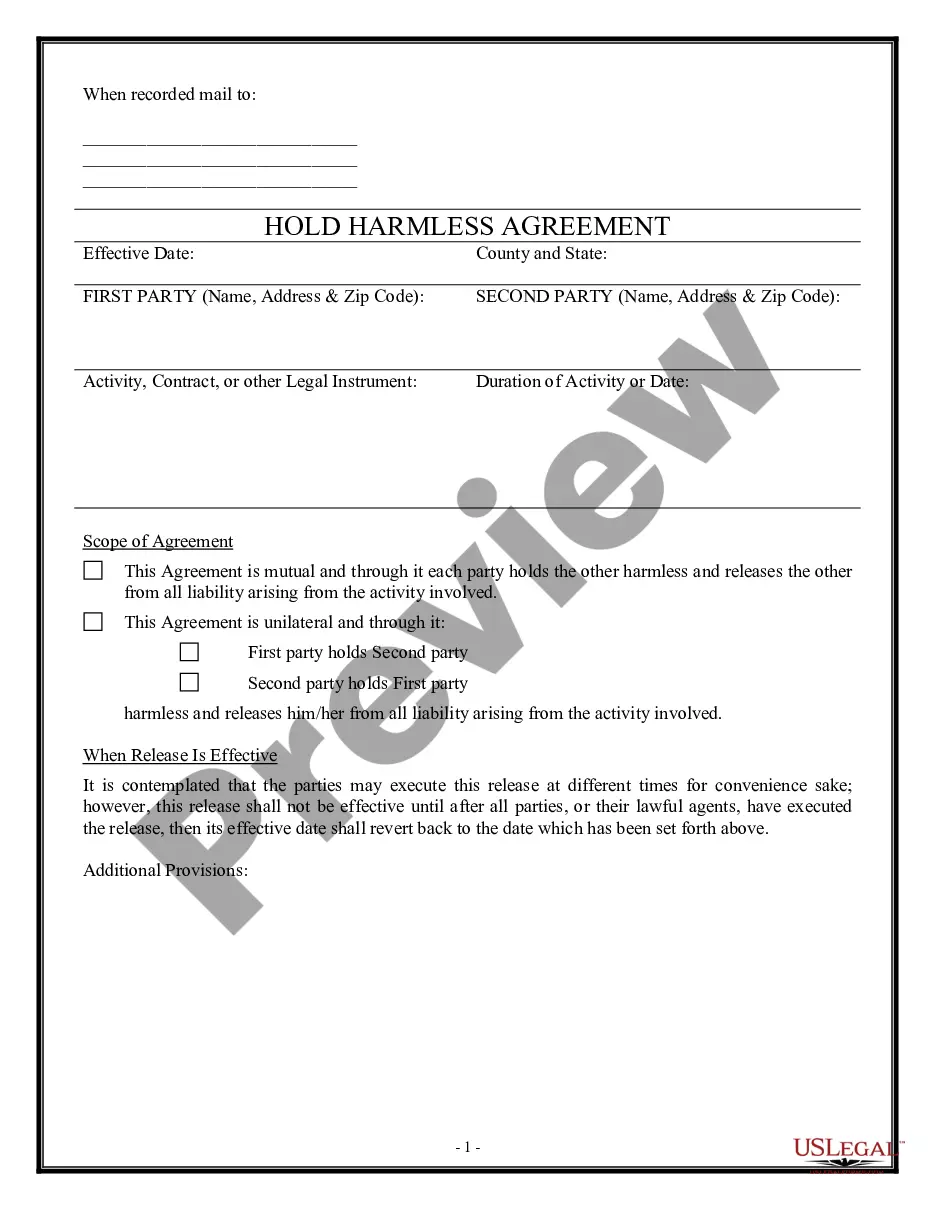
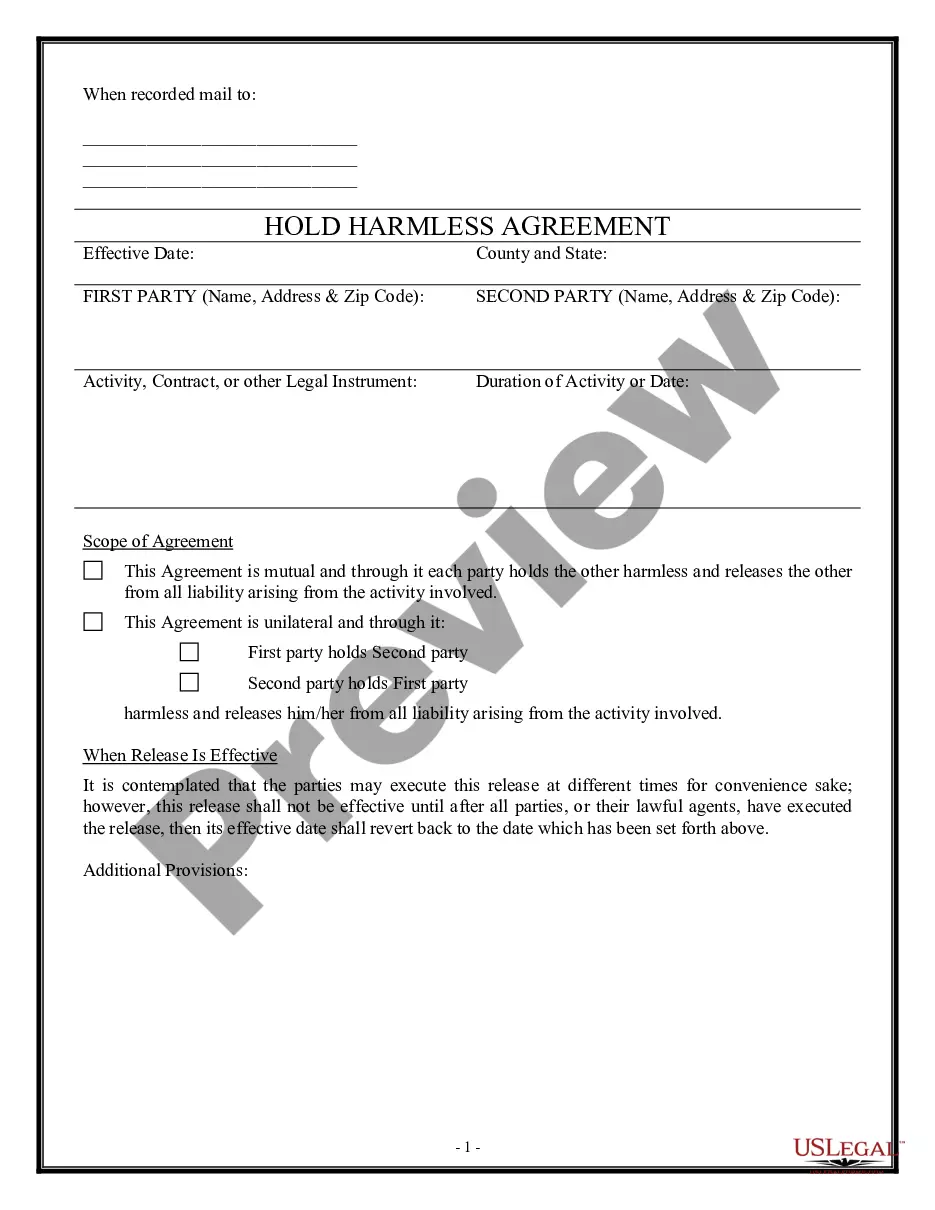
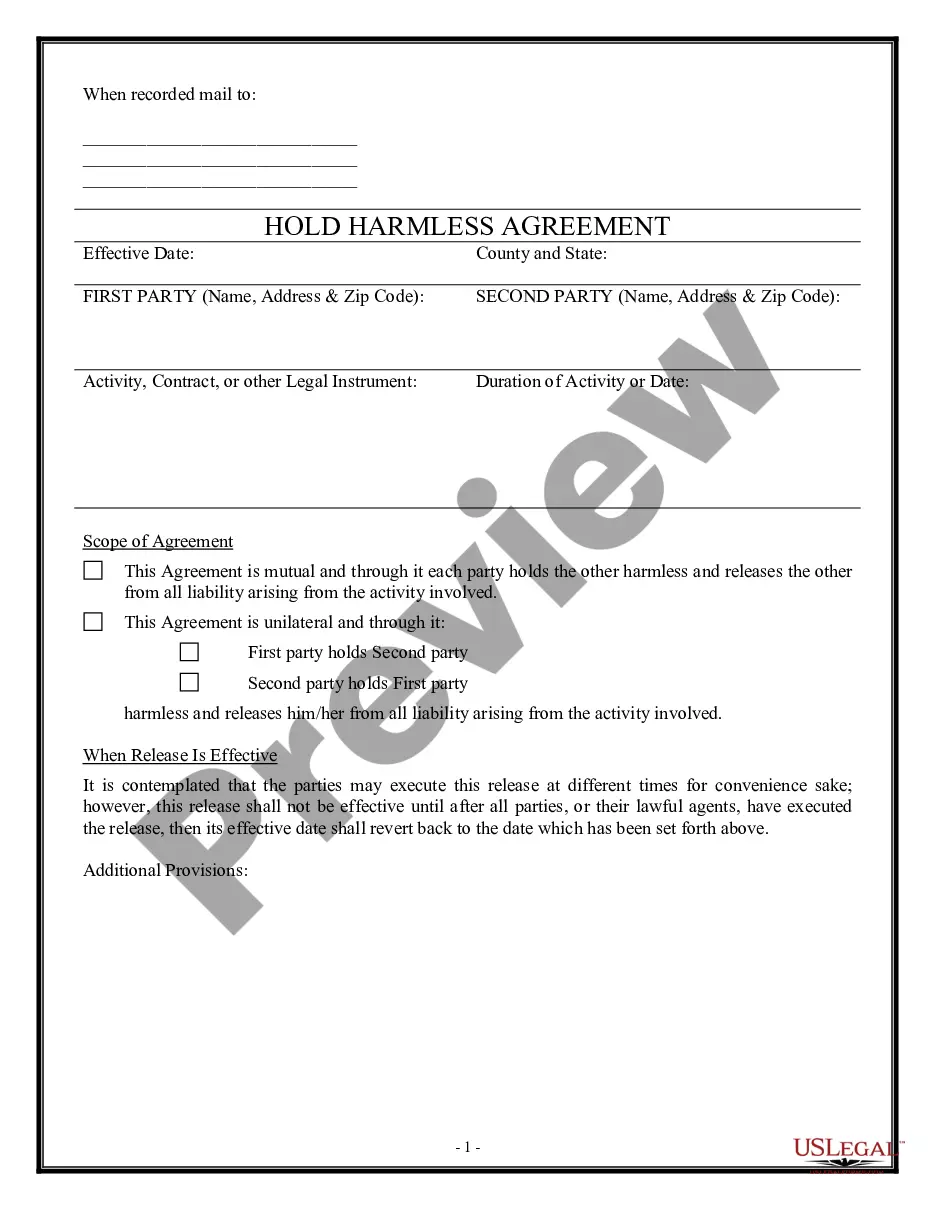
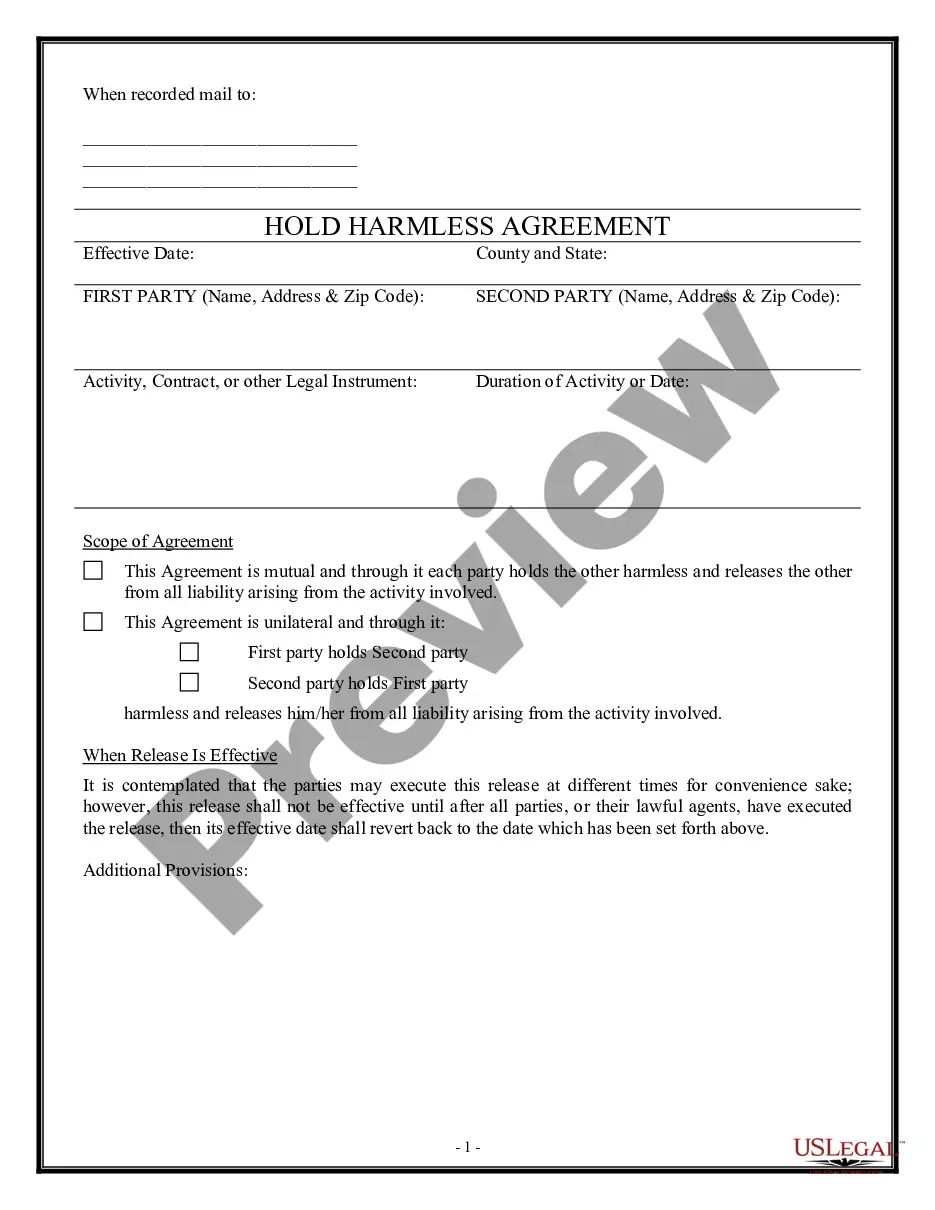
This form is a Hold Harmless Agreement. The form provides that the agreement is mutual and each party holds the other harmless and releases the other from all liability arising from the activity involved.
Collin Texas General Hold Harmless Agreement
State:
Multi-State
Category:
County:
Collin
Control #:
US-01708-AZ
Format:
Word;
Rich Text
490 downloads
Description
Free preview
Get your form ready online
Our built-in tools help you complete, sign, share, and store your documents in one place.
Built-in online Word editor
Make edits, fill in missing information, and update formatting in US Legal Forms—just like you would in MS Word.
Export easily
Download a copy, print it, send it by email, or mail it via USPS—whatever works best for your next step.
E-sign your document
Sign and collect signatures with our SignNow integration. Send to multiple recipients, set reminders, and more. Go Premium to unlock E-Sign.
Notarize online 24/7
If this form requires notarization, complete it online through a secure video call—no need to meet a notary in person or wait for an appointment.
Store your document securely
We protect your documents and personal data by following strict security and privacy standards.

Make edits, fill in missing information, and update formatting in US Legal Forms—just like you would in MS Word.

Download a copy, print it, send it by email, or mail it via USPS—whatever works best for your next step.

Sign and collect signatures with our SignNow integration. Send to multiple recipients, set reminders, and more. Go Premium to unlock E-Sign.

If this form requires notarization, complete it online through a secure video call—no need to meet a notary in person or wait for an appointment.

We protect your documents and personal data by following strict security and privacy standards.
Looking for another form?

How to fill out General Hold Harmless Agreement?
Do you need to swiftly compose a legally-binding Collin General Hold Harmless Agreement or perhaps any other document to manage your personal or corporate matters.
You can choose one of two options: reach out to a legal consultant to draft a legal document for you or formulate it entirely by yourself. Fortunately, there’s a third option - US Legal Forms.
If the form contains a description, ensure to review its purpose.
If the template is not what you were expecting, start your search anew by utilizing the search bar in the header.
- It will assist you in obtaining professionally crafted legal documents without incurring exorbitant fees for legal assistance.
- US Legal Forms provides a vast directory of over 85,000 state-compliant form templates, including the Collin General Hold Harmless Agreement and package forms.
- We supply documents for a variety of scenarios: from divorce paperwork to real estate form templates.
- We have been serving the market for more than 25 years and enjoy an impeccable reputation among our clients.
- Here’s how you can join their ranks and acquire the necessary template without unnecessary complications.
- To begin, verify that the Collin General Hold Harmless Agreement is customized to your state’s or county’s regulations.
Form popularity
FAQ
A hold harmless agreement (or harmless agreement) is a legally binding agreement stating that one party will not hold the other party responsible (or liable) for the risk of physical or property damage.
The prevailing interpretation is that hold harmless and indemnify are synonymous. However, under the minority view, hold harmless requires payment of both actual losses and potential liabilities, while indemnify protects against incurred losses only.
The hold harmless clause is a statement in a legal contract that absolves one or both parties in a contract of legal liability for any injuries or damage suffered by the party signing the contract.
A hold harmless clause is used as a release of liability in a contract that protects one party from injury or property damage caused by another party. By signing the clause, the other party is agreeing not to hold business owners legally responsible for the risks involved in certain services.
Enforceability of Hold Harmless Agreements The general answer is yes, that these documents signing away your right to sue for negligence are legally enforceable.
Enforceability of Hold Harmless Agreements The general answer is yes, that these documents signing away your right to sue for negligence are legally enforceable.
A hold harmless clause is used as a release of liability in a contract that protects one party from injury or property damage caused by another party. By signing the clause, the other party is agreeing not to hold business owners legally responsible for the risks involved in certain services.
A hold harmless agreement protects business owners from being sued when someone suffers damage, bodily injury, or financial loss on business property or while a service is being provided.
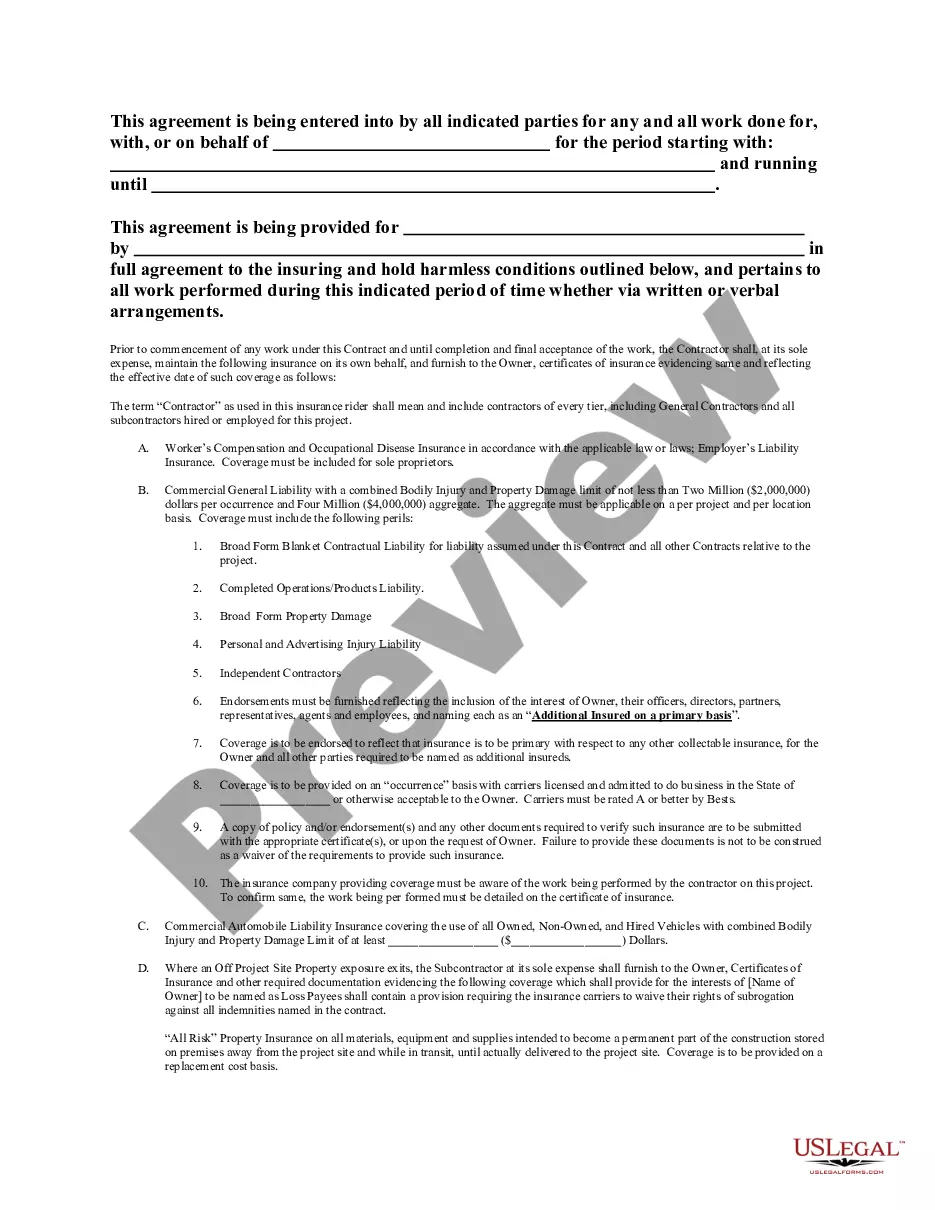
Services: Protects against liabilities that occur while someone performs a defined service. For example, a contractor on a construction job agrees to hold harmless the general contractor who hired him.