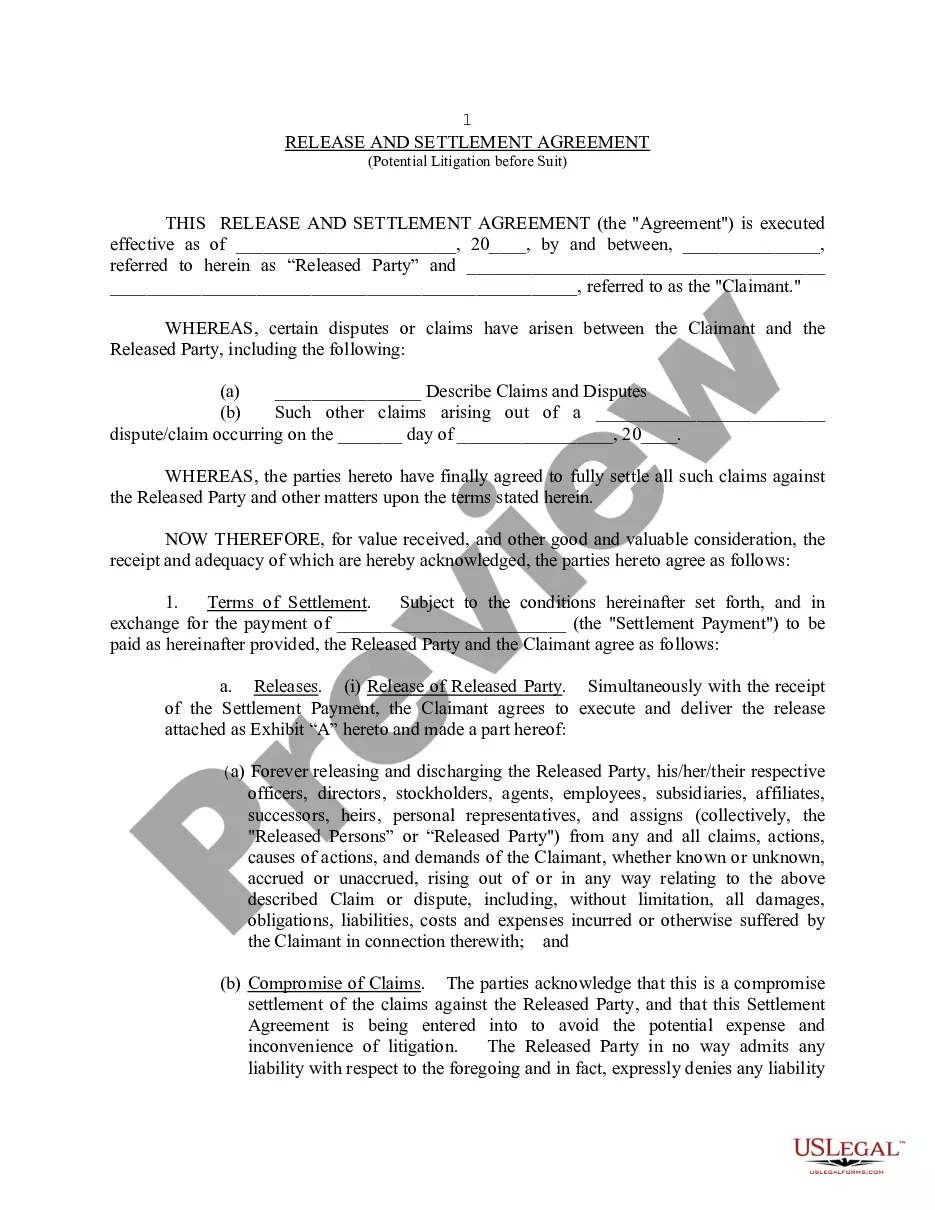
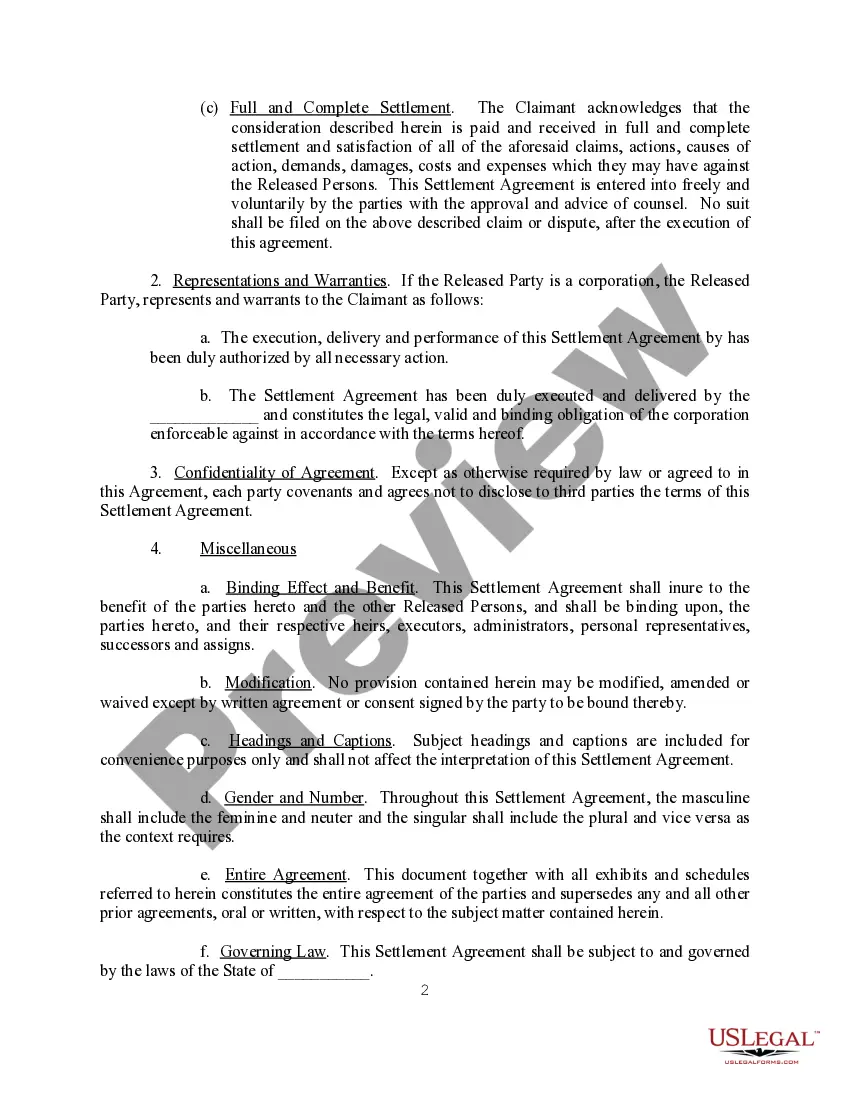
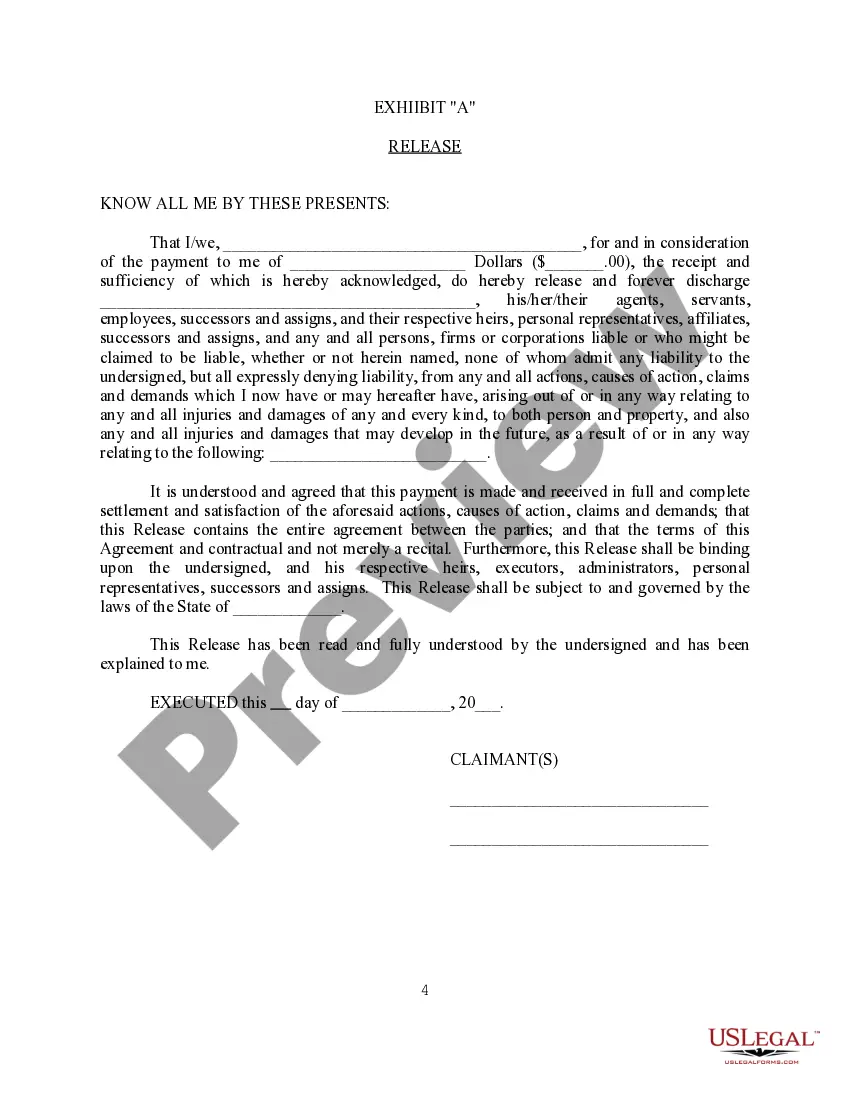
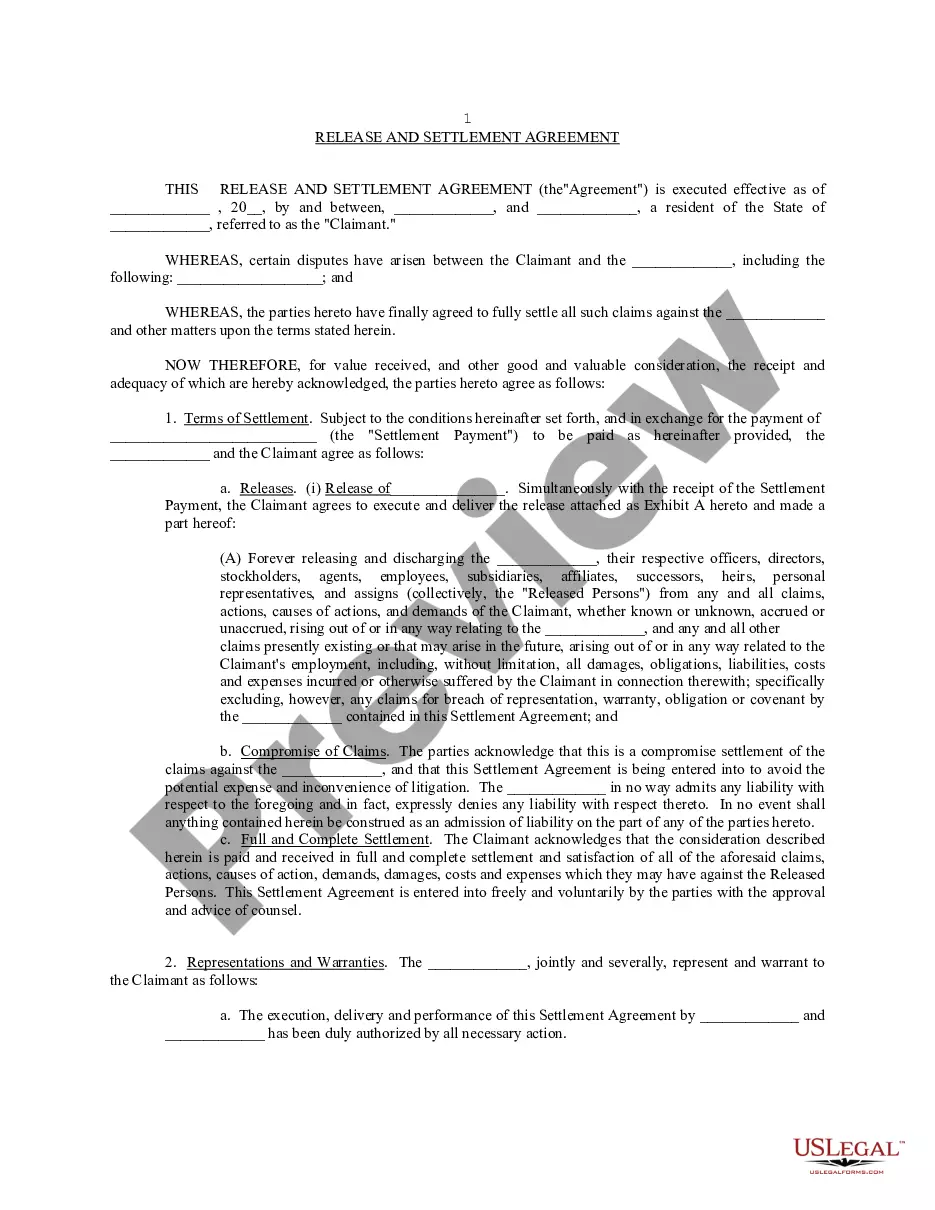
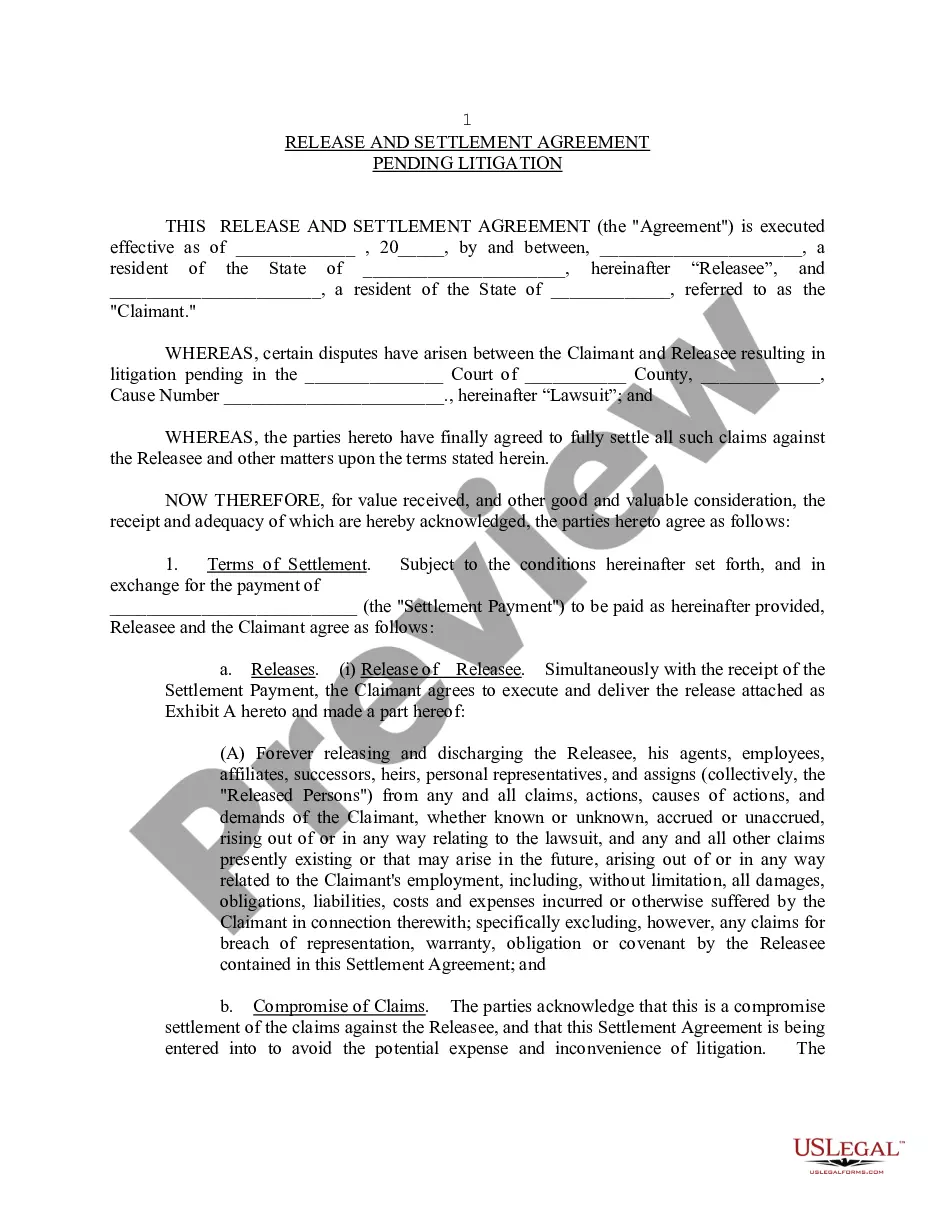
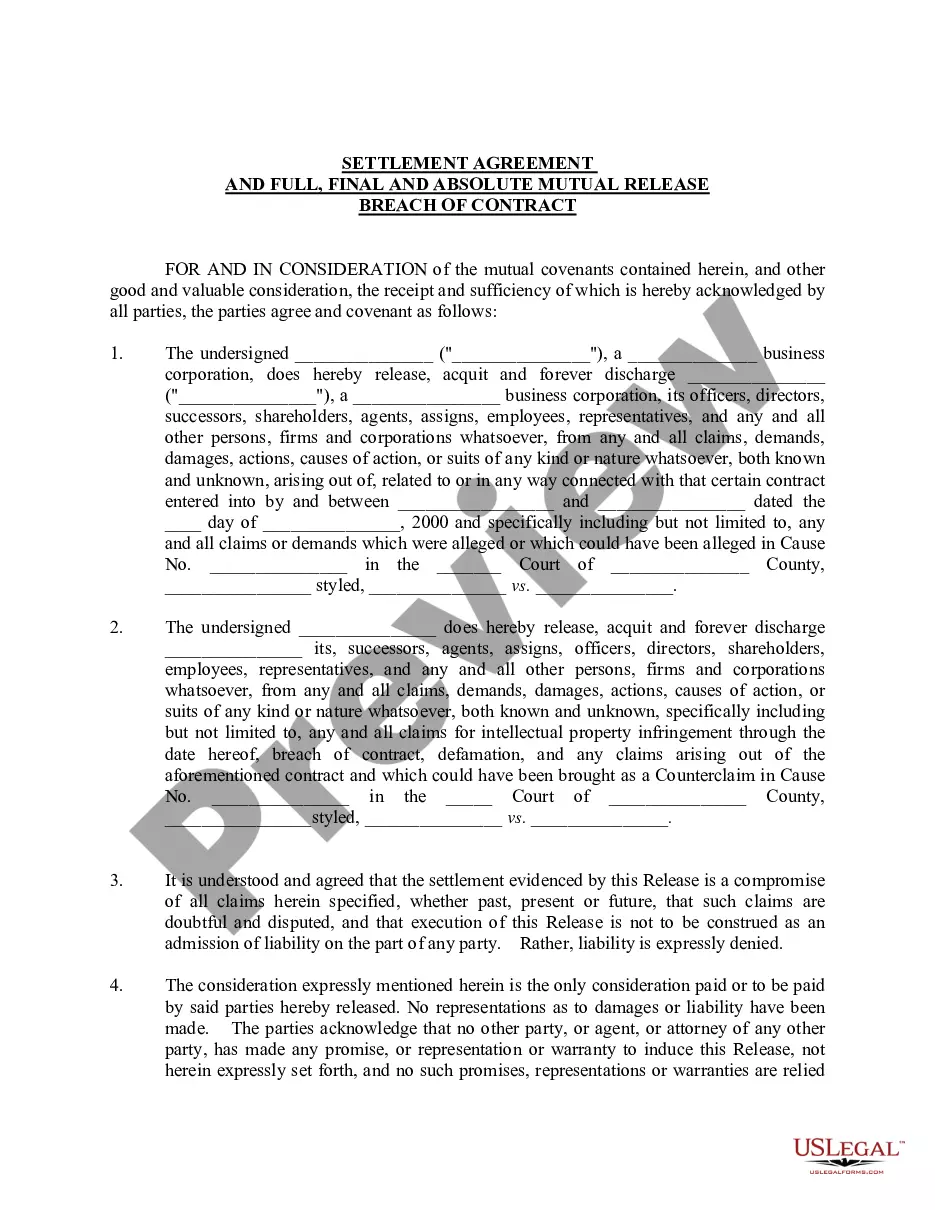
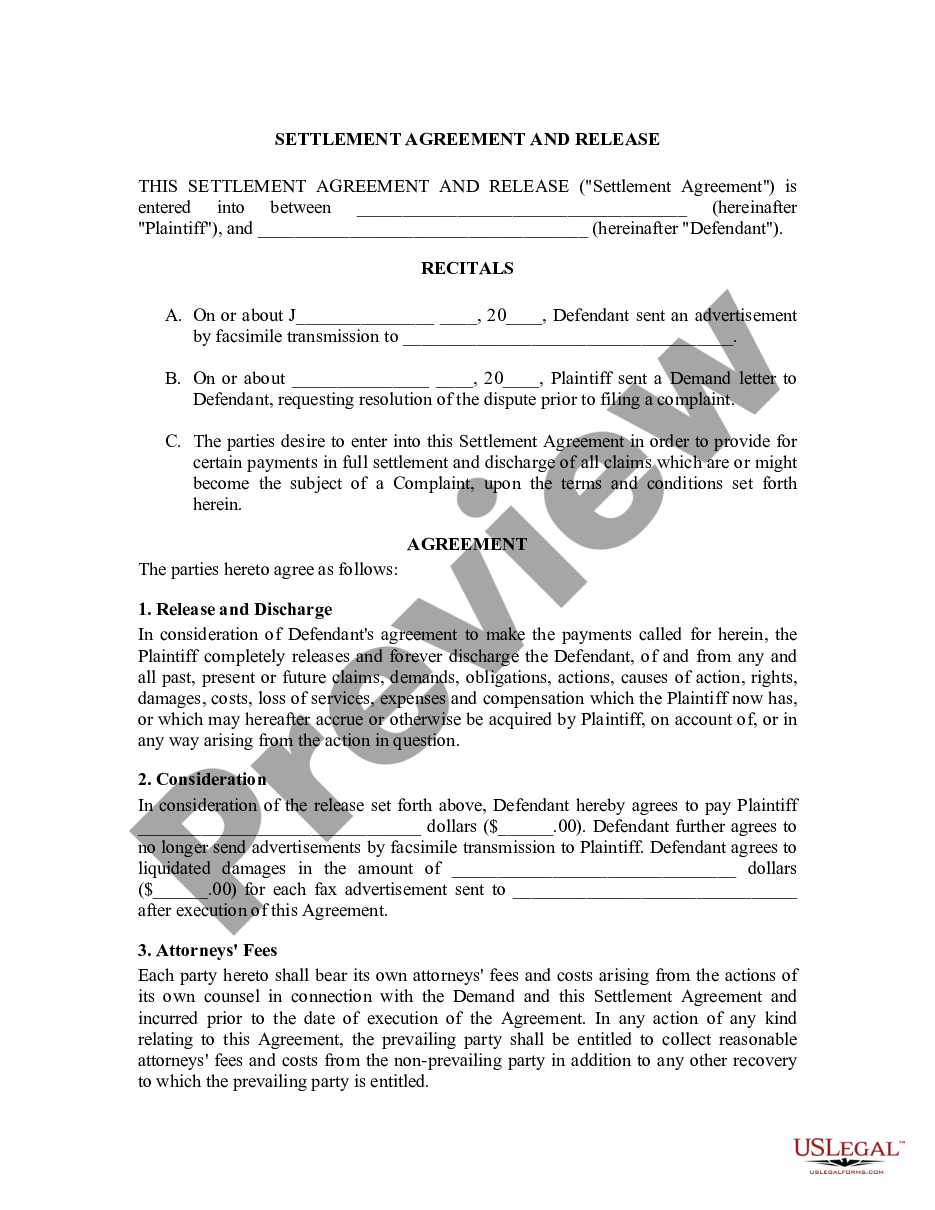
This form is a release and settlement agreement. The claimant forever releases and discharges the releasee from any and all claims and disputes rising out of the cause of action described in the form. The parties also acknowledge that the settlement agreement is a compromise of the claims against the released party.
Austin Texas Release and Settlement Agreement - Potential Litigation before Suit
Category:
State:
Multi-State
City:
Austin
Control #:
US-01662
Format:
Word;
Rich Text
Instant download
Description
Free preview






Form popularity
FAQ
The 408 rule stipulates that any offers made in settlement negotiations cannot be used as evidence in court should the negotiations fail. This aims to encourage open communication between parties during dispute resolution. Understanding the implications of the Texas 408 rule is vital for individuals involved in an Austin Texas Release and Settlement Agreement - Potential Litigation before Suit, as it promotes a more amicable settlement process.
Yes, a judge has the authority to overrule a settlement agreement if it does not comply with legal standards or if there are issues of fairness. Additionally, if there is evidence of fraud or coercion, a judge may find grounds to reject the agreement. Ensuring that your Austin Texas Release and Settlement Agreement - Potential Litigation before Suit is legally sound is crucial to prevent such incidents.
A settlement typically refers to an agreement between two parties to resolve a dispute, often involving a payment or performance. On the other hand, a release is a document where one party relinquishes their right to claim against another. Understanding this distinction is essential when drafting an Austin Texas Release and Settlement Agreement - Potential Litigation before Suit to ensure you are fully protected.
To void a settlement agreement, a party must typically prove that one of the fundamental factors is lacking, such as consent or understanding. Legal grounds like misrepresentation or undue influence can also serve as the basis for voiding the agreement. It is advisable to consult legal experts to explore options when dealing with an Austin Texas Release and Settlement Agreement - Potential Litigation before Suit.
In Texas, settlement offers must be communicated in writing and clearly outline all terms for clarity. Parties cannot retract a valid offer once it is presented unless the other party declines it. Moreover, any agreement reached must adhere to Texas law, further ensuring that your Austin Texas Release and Settlement Agreement - Potential Litigation before Suit remains enforceable.
Various conditions can void a settlement agreement. For instance, if one party fails to comply with the terms or if there is a substantial change in circumstances, the agreement may be contested. Additionally, if fraud or coercion is proven, this can also invalidate a settlement. Make sure to grasp these nuances when considering an Austin Texas Release and Settlement Agreement - Potential Litigation before Suit.
A settlement agreement can become void due to several reasons. If any party was under duress or did not fully understand the terms, the agreement may not be valid. Furthermore, if a party misrepresented facts or if the terms of the agreement are ambiguous, it could be challenged in court. Understanding these aspects is crucial for an Austin Texas Release and Settlement Agreement - Potential Litigation before Suit.
Several factors can render a contract void. First, a lack of capacity can cause issues; if one party is a minor or mentally incapacitated, the contract may not hold. Secondly, if the contract involves illegal activities, it cannot be enforced. Lastly, if there is a mutual mistake regarding a fundamental fact, this can also void the agreement, impacting your Austin Texas Release and Settlement Agreement - Potential Litigation before Suit.
To proceed with a lawsuit, three essential elements must exist: a valid legal claim, the ability to show damages, and legal standing. An Austin Texas Release and Settlement Agreement - Potential Litigation before Suit may help you assess if these criteria are met before you decide to file. Each element plays a crucial role in whether your case will succeed in court. Engaging with a knowledgeable platform, like uslegalforms, can guide you through these requirements effectively.
Judges often favor settlements because they help clear court dockets and minimize the time spent on cases. An Austin Texas Release and Settlement Agreement - Potential Litigation before Suit allows parties to find mutually agreeable solutions, which can save them from lengthy trials. Settlements can reduce stress for all involved and preserve relationships that could be strained by litigation. Ultimately, judges appreciate outcomes that bring closure without the need for a formal court ruling.