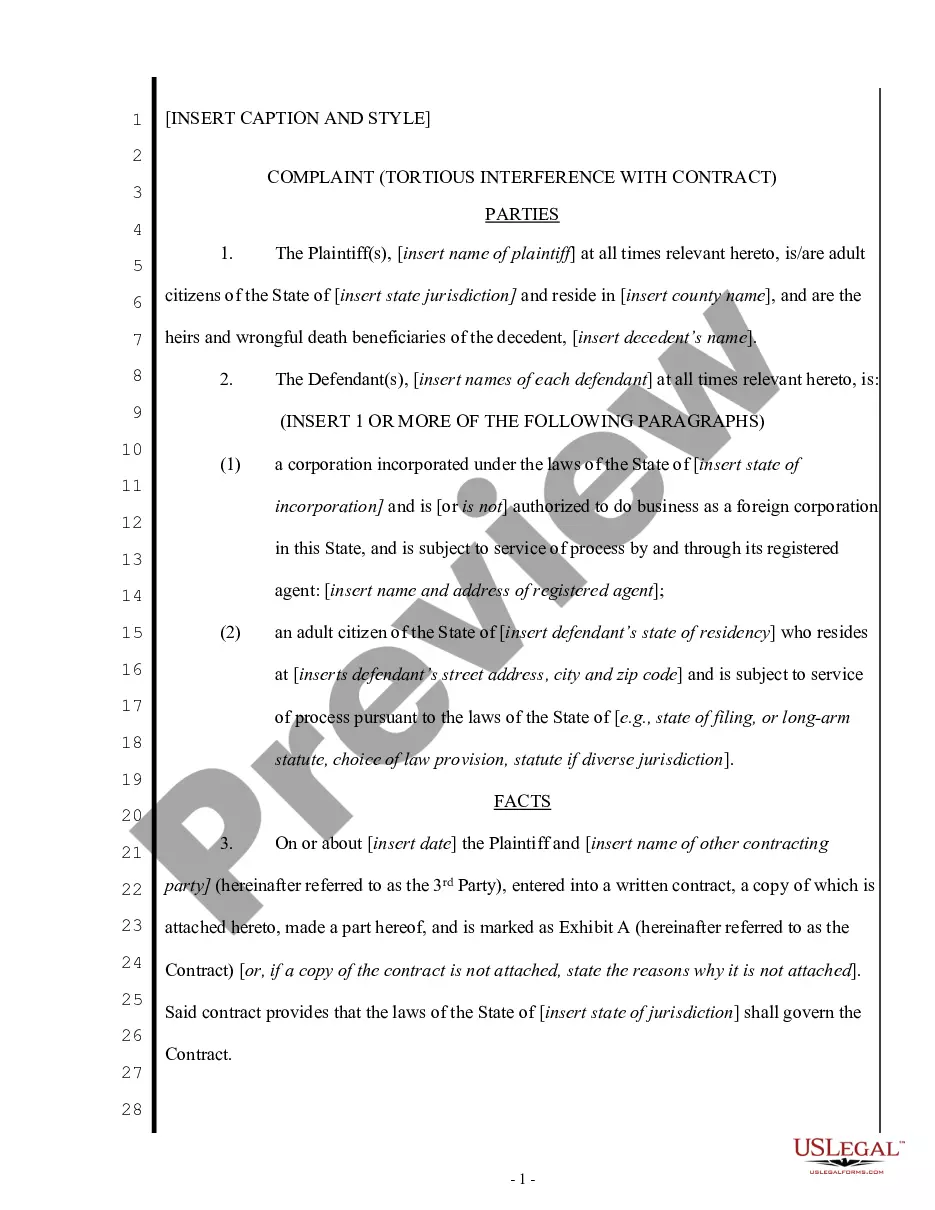
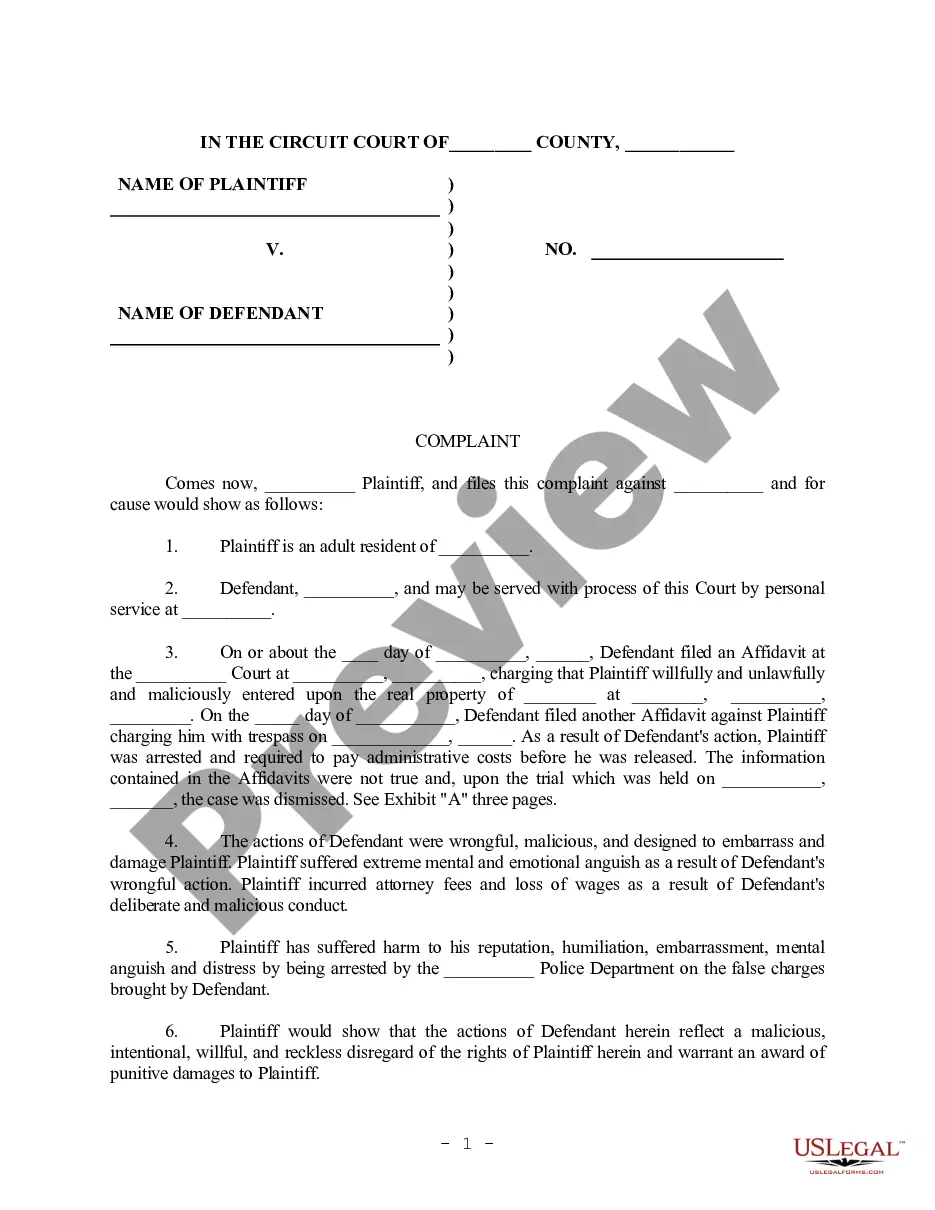
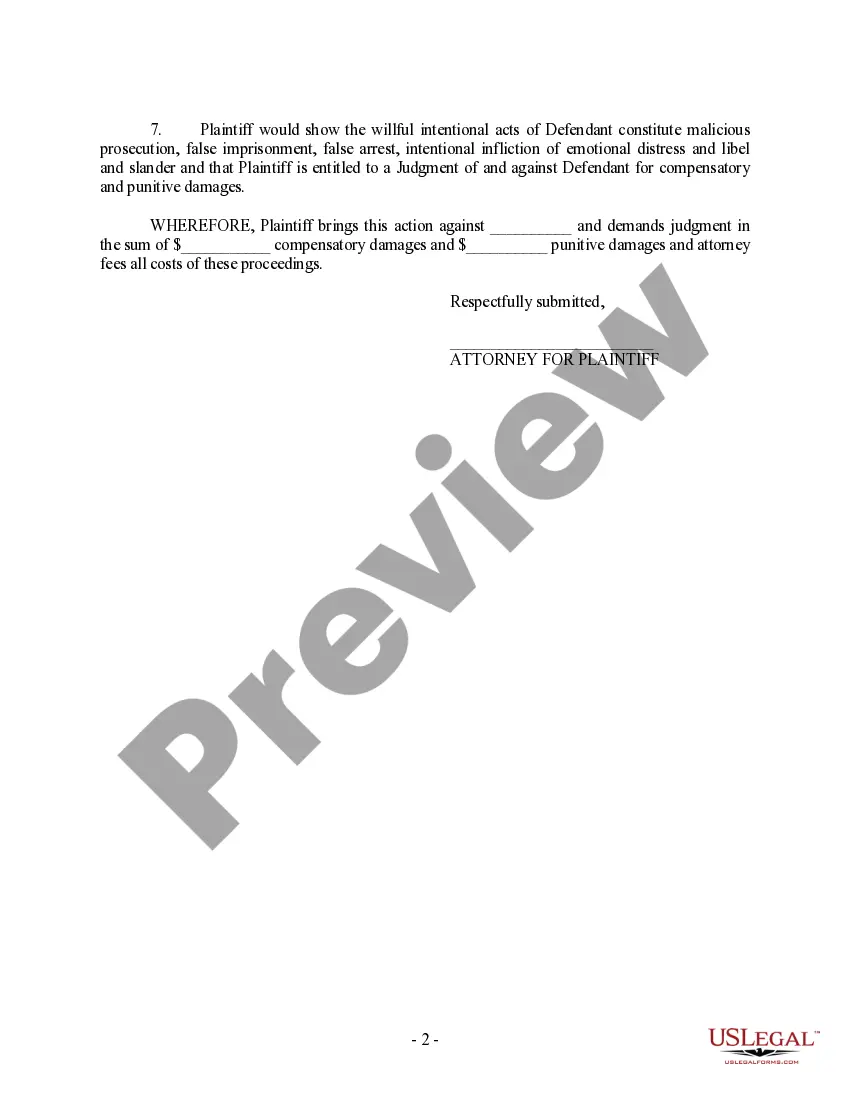
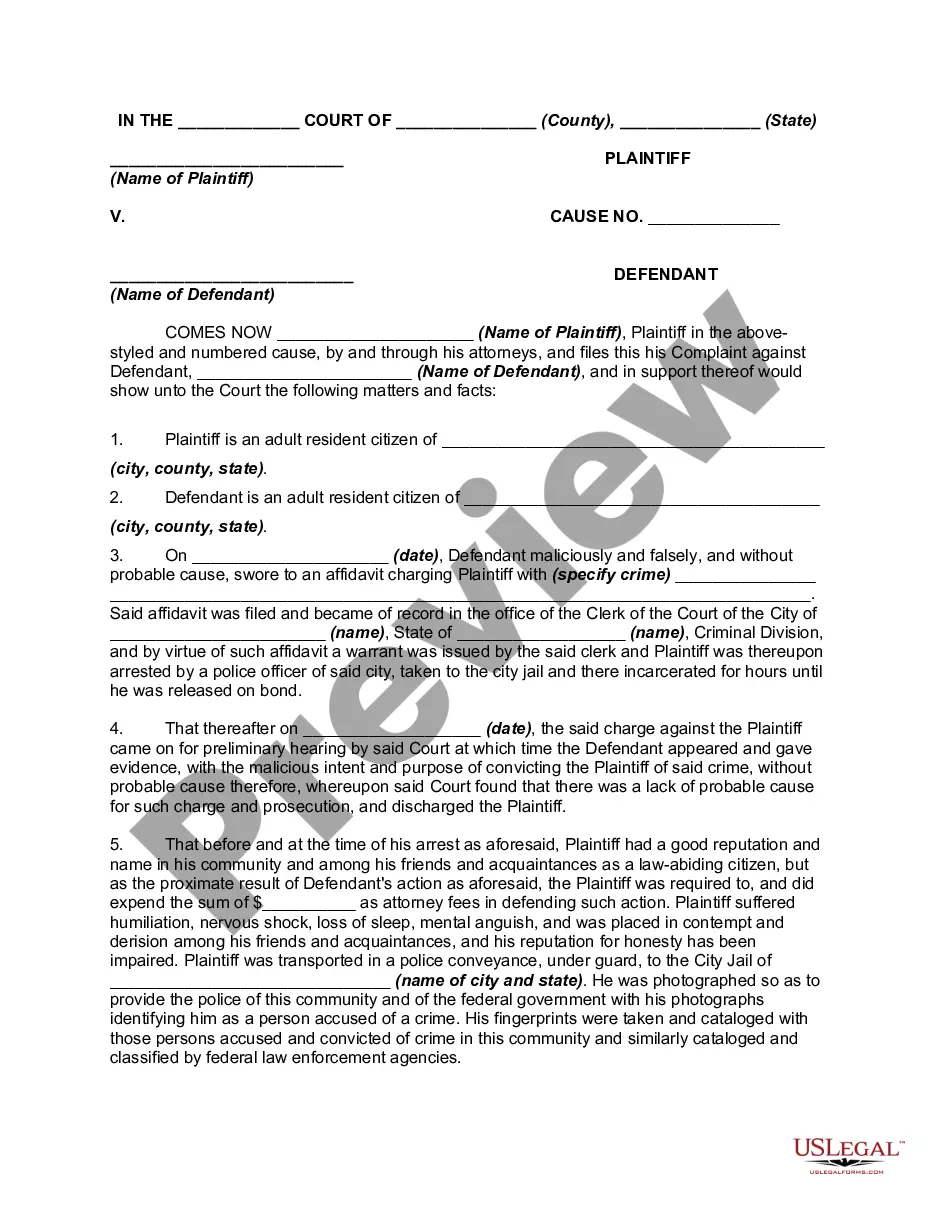
Pittsburgh Pennsylvania Complaint for malicious prosecution
Description






Form popularity
FAQ
Before you proceed with a complaint, it's vital to evaluate the strength of your evidence and your legal basis for action. Consider whether the alleged prosecution was indeed malicious and if you can prove it in a court of law. Consulting with an experienced legal professional can provide necessary insights, ensuring your Pittsburgh Pennsylvania Complaint for malicious prosecution is well-founded and judiciously framed.
If you're looking to press charges in Pennsylvania, start by gathering relevant information to support your case. You must file a complaint with the local district attorney’s office that outlines the alleged criminal actions. It’s recommended to consult with a legal professional to better understand the requirements for a Pittsburgh Pennsylvania Complaint for malicious prosecution, ensuring all steps are properly followed for effective legal action.
When preparing your Pittsburgh Pennsylvania Complaint for malicious prosecution, it’s crucial to include specific information and relevant evidence. You should provide facts and circumstances surrounding the prosecution, as well as any documentation that supports your claims, such as court records or communication. A clear presentation of this evidence helps substantiate your allegations and strengthens your overall case.
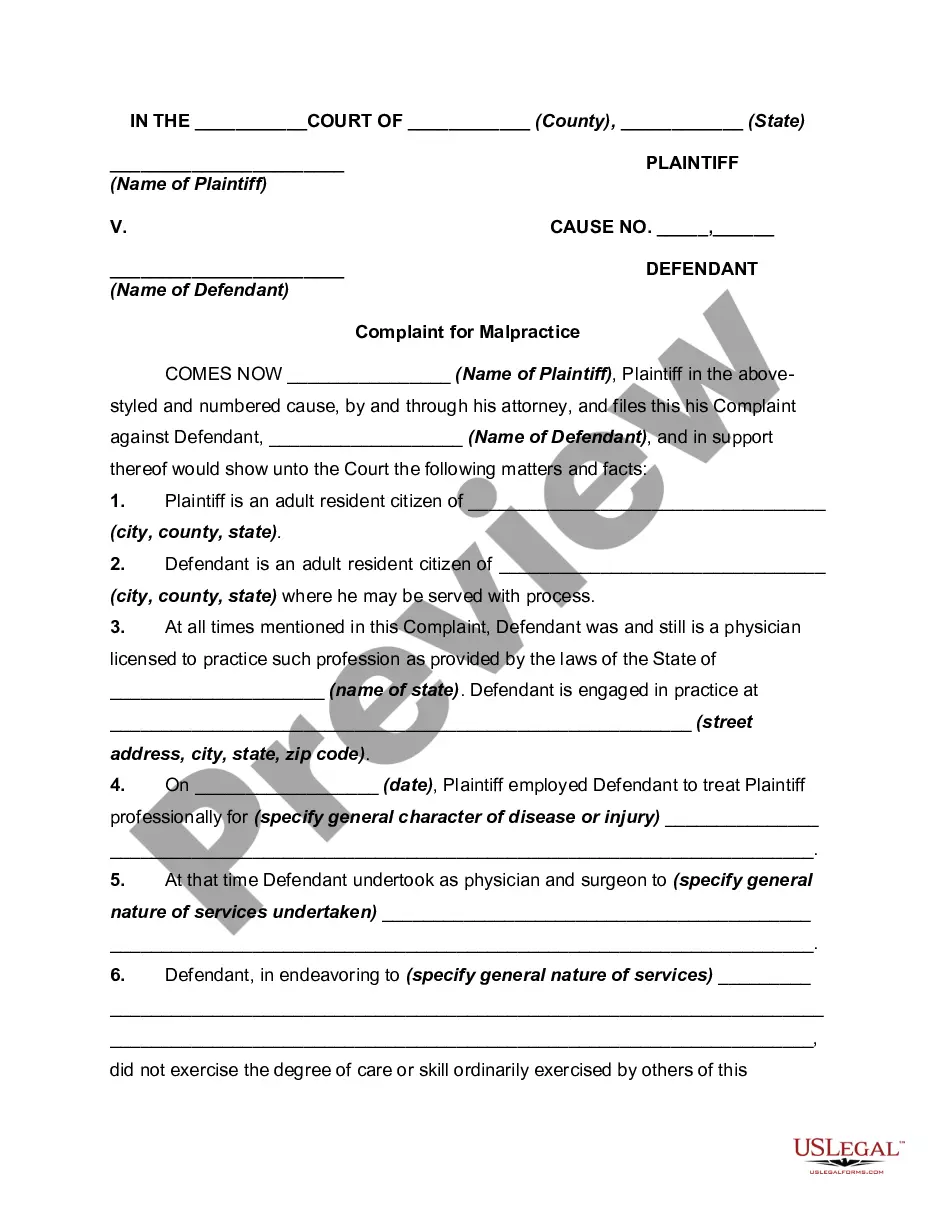
To file a Pittsburgh Pennsylvania Complaint for malicious prosecution, you need to include several key components. This includes the caption, which identifies the parties involved, a statement of jurisdiction, and a concise description of the facts supporting your claim. Additionally, the complaint must specify the legal grounds for your case and the relief you are seeking, ensuring all essential details are clearly outlined.
When crafting a Pittsburgh Pennsylvania Complaint for malicious prosecution, it's important to use strong and clear language. Words such as 'defendant,' 'plaintiff,' 'allegation,' 'evidence,' and 'damages' help establish the gravity of your claims. These terms not only clarify your stance but also show the court the seriousness of your case. Utilizing such terminology will aid in creating a compelling narrative.
For a complaint, especially one pertaining to malicious prosecution, you will need to collect various types of evidence. This can include documents, eyewitness statements, and any prior correspondence related to the case. Thorough documentation helps to support your claims. Using the Pittsburgh Pennsylvania Complaint for malicious prosecution template from uslegalforms can guide you in compiling the necessary evidence and structuring your complaint correctly.
To file a complaint with the city of Pittsburgh, you can typically start by visiting the city's official website or contacting the city's office directly. They often provide forms and detailed instructions on the process. Taking the right steps is essential to ensure your complaint is received and processed properly; consider using the Pittsburgh Pennsylvania Complaint for malicious prosecution for clarity and effectiveness in your submission.
In Pennsylvania, you can take legal action if someone makes false accusations against you. This may involve filing a complaint for malicious prosecution if the accusation leads to wrongful legal action against you. It's crucial to gather your evidence and seek guidance from a legal expert. The Pittsburgh Pennsylvania Complaint for malicious prosecution provides a route to address these harmful allegations effectively.
To prove vindictive prosecution, a party must show that the prosecution's motivation stems from an intent to punish for exercising a legal right, such as standing up against unlawful actions. This requires demonstrating a clear connection between the legal actions taken and the retaliatory feelings of the prosecutor. Filing a Pittsburgh Pennsylvania Complaint for malicious prosecution with the right support can help you build a strong case against such vindictive legal maneuvers.
Proving malicious intent can be challenging, as it requires demonstrating that the defendant had a specific desire to cause harm when initiating legal action. The court usually seeks clear evidence or indications of ill intent, making it crucial for plaintiffs to gather detailed information. In cases centered around a Pittsburgh Pennsylvania Complaint for malicious prosecution, working with knowledgeable legal resources can significantly aid in establishing the necessary proof of intent.