Nassau New York Complaint for malicious prosecution
Description






How to fill out Complaint For Malicious Prosecution?
Preparing paperwork for business or individual requirements is always a significant duty.
When drafting a contract, a public service application, or a power of attorney, it's essential to take into account all federal and state laws and regulations pertinent to the local area.
Nonetheless, smaller counties and even municipalities also have legal stipulations that you need to keep in mind.
To locate the one that meets your needs, use the search tab in the page header.
- All these elements make it challenging and time-consuming to write a Nassau Complaint for malicious prosecution without professional assistance.
- It's simple to avoid squandering money on lawyers who craft your documentation and create a legally acceptable Nassau Complaint for malicious prosecution independently, utilizing the US Legal Forms online library.
- It is the largest digital collection of state-specific legal templates that have been professionally reviewed, so you can trust their reliability when choosing a template for your county.
- Previous users who have a subscription only need to Log In to their accounts to download the required form.
- If you still do not possess a subscription, follow the step-by-step directions below to acquire the Nassau Complaint for malicious prosecution.
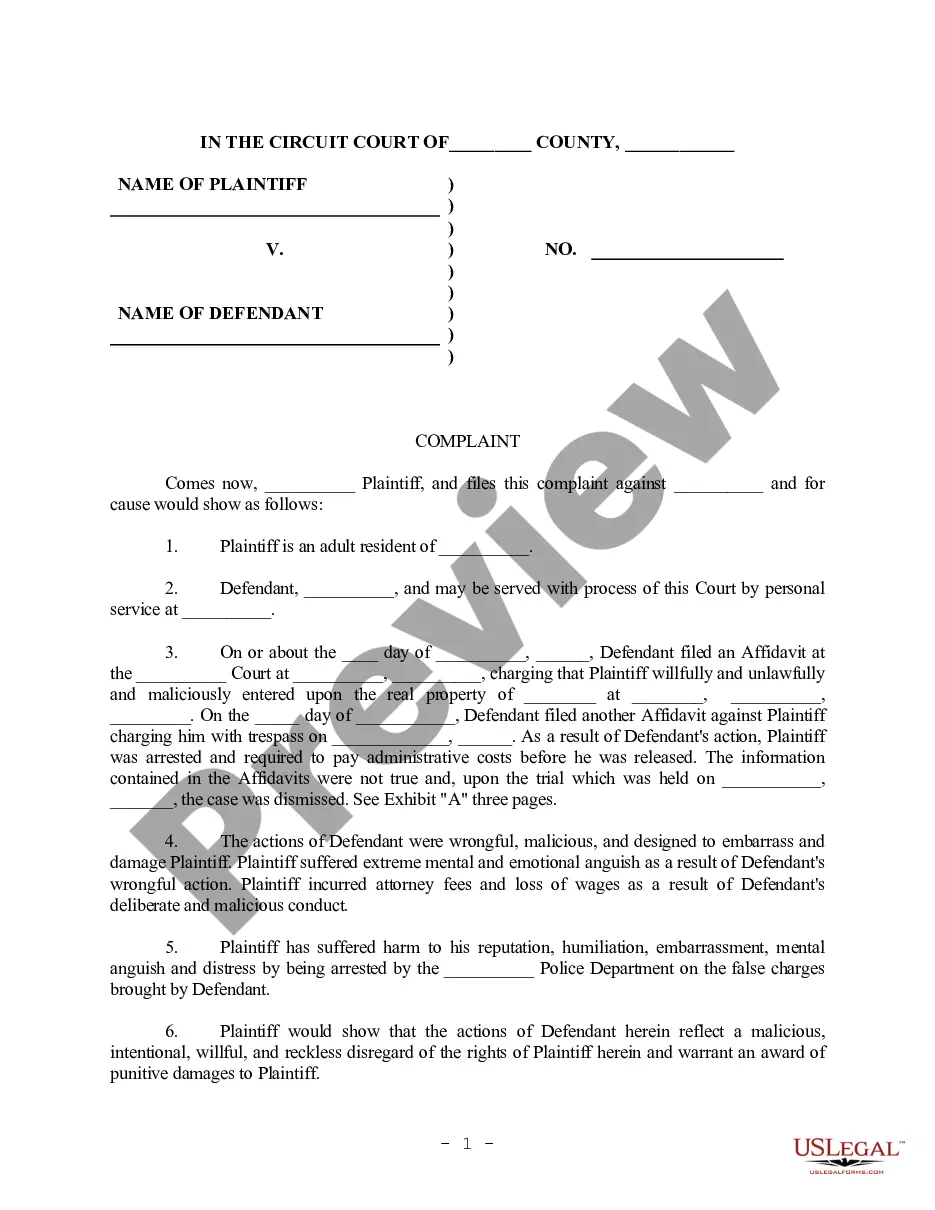
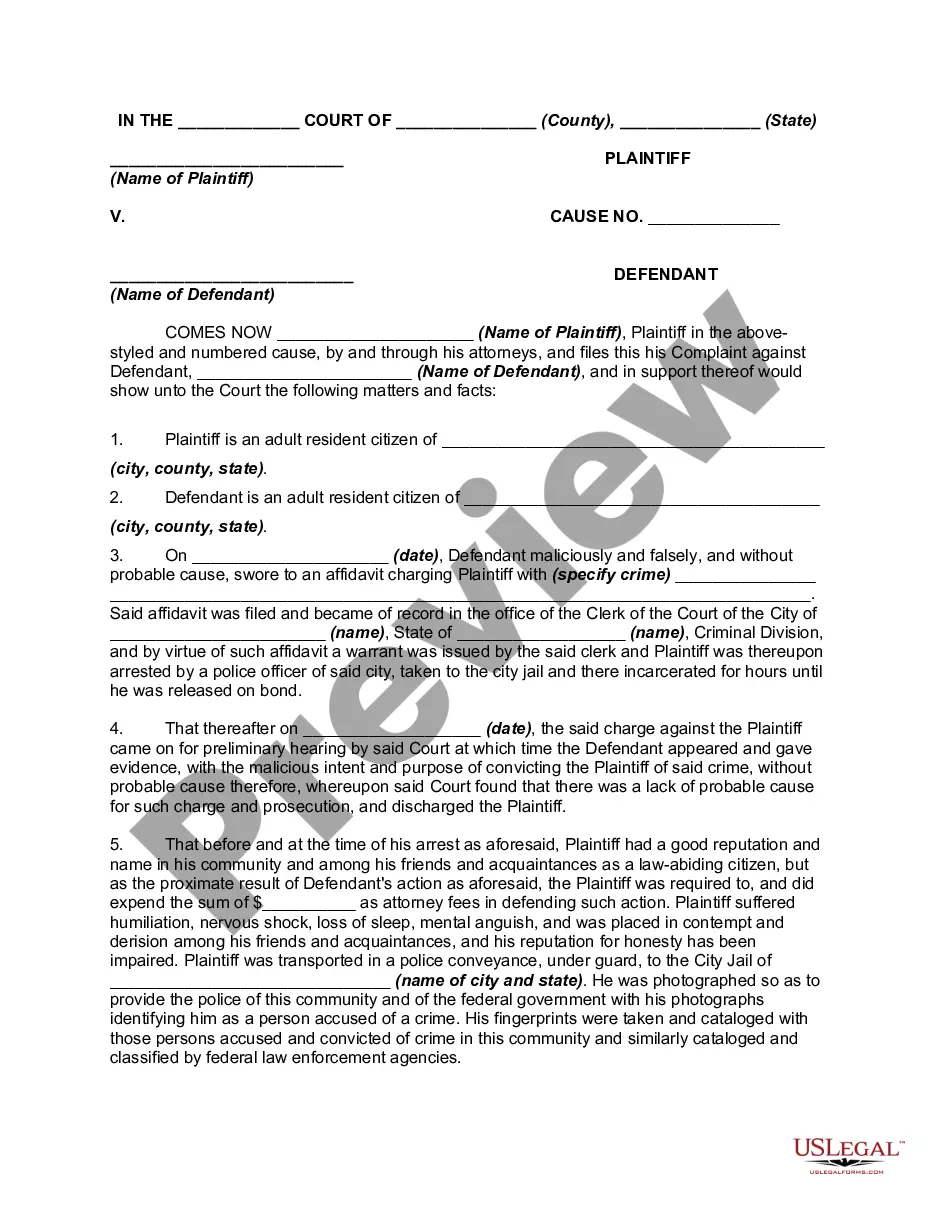
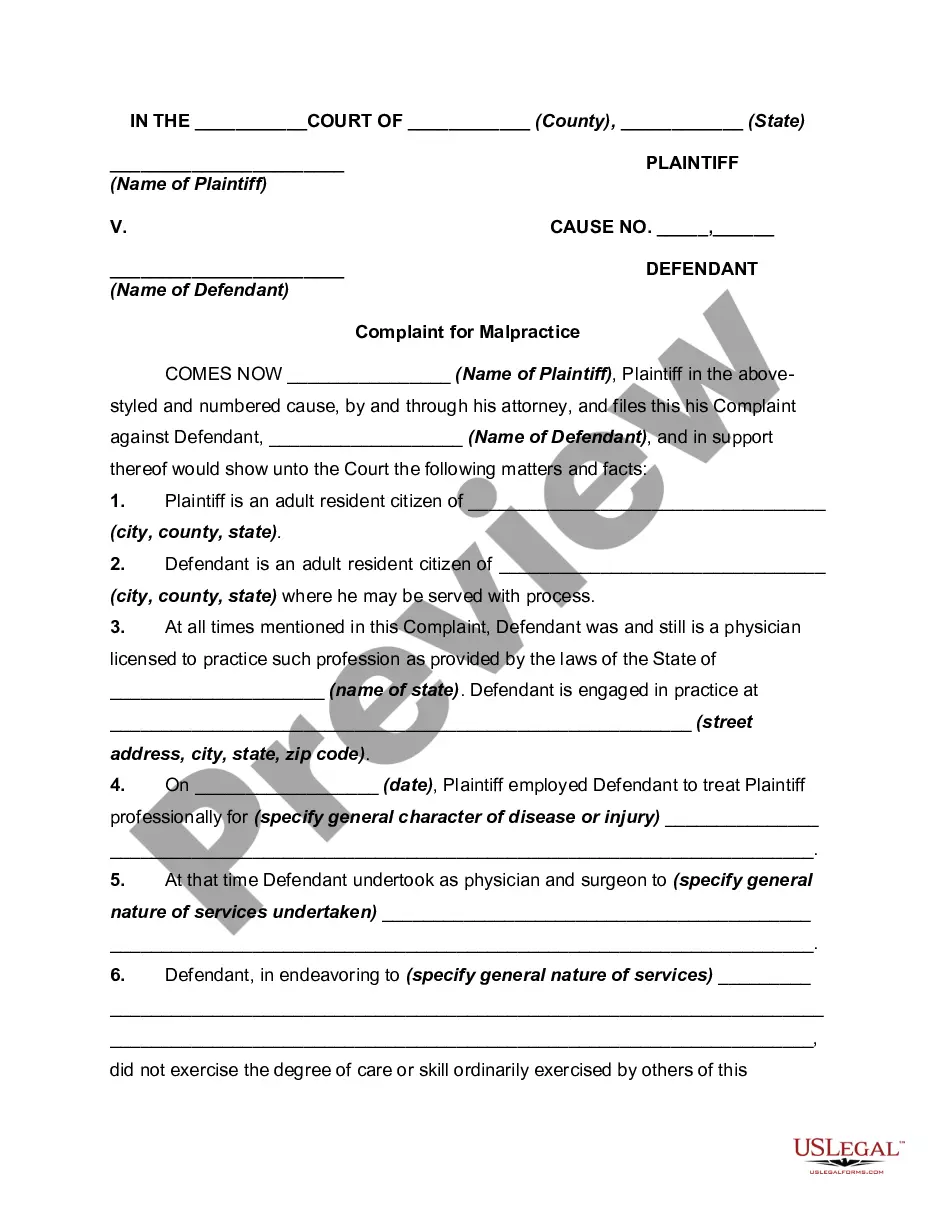
- Examine the page you have opened and verify if it features the template you require.
- To achieve this, employ the form description and preview if these options are available.
Form popularity
FAQ
In order to succeed in an action for malicious prosecution, the plaintiff must prove all four requirements; namely, that the prosecution was instigated by the defendant; it was concluded in favour of the plaintiff; there was no reasonable and probable cause for the prosecution; and that the prosecution was actuated by
To win a suit for malicious prosecution, the plaintiff must prove four elements: (1) that the original case was terminated in favor of the plaintiff, (2) that the defendant played an active role in the original case, (3) that the defendant did not have probable cause or reasonable grounds to support the original case,
Malicious prosecution refers to a criminal or civil case that is filed without an adequate basis and for an improper purpose, such as harassing the defendant, ruining another person's reputation, or to knowingly place blame on someone other than the actual wrongdoer.
Remedies available for Malicious Prosecution Public law remedy: the compensation by writ court judgments. Private law remedy: the civil law remedies under the law of tort. Criminal law remedy: the administrative relief of punishing the responsible officials under the criminal law `
The elements of a malicious prosecution cause of action are commonly defined as: (a) Favorable and final termination (the prior action was commenced by or at the direction of the defendant, and was pursued to a legal termination in its favor); (b) Lack of probable cause (the action was commenced or continued to be
Malicious prosecution occurs when one party has knowingly and with malicious intent initiated baseless litigation against another party. This includes both criminal charges and civil claims, for which the cause of action is essentially the same.
The plaintiff must prove that: (1) the prosecution was initiated by the defendant; (2) it was terminated in the plaintiff's favour; (3) there was an absence of reasonable and probable cause to commence the prosecution; and (4) the defendant's conduct in setting the criminal process in motion was fueled by malice.
Naming the wrong person in a lawsuit by accident would not constitute malice. Winning the Frivolous Lawsuit: The plaintiff in the malicious prosecution case must show that he or she won the prior lawsuit at least as to any claims filed under the new lawsuit (favorable termination).