Los Angeles California Responses To Defendant's First Request For Production To Plaintiff
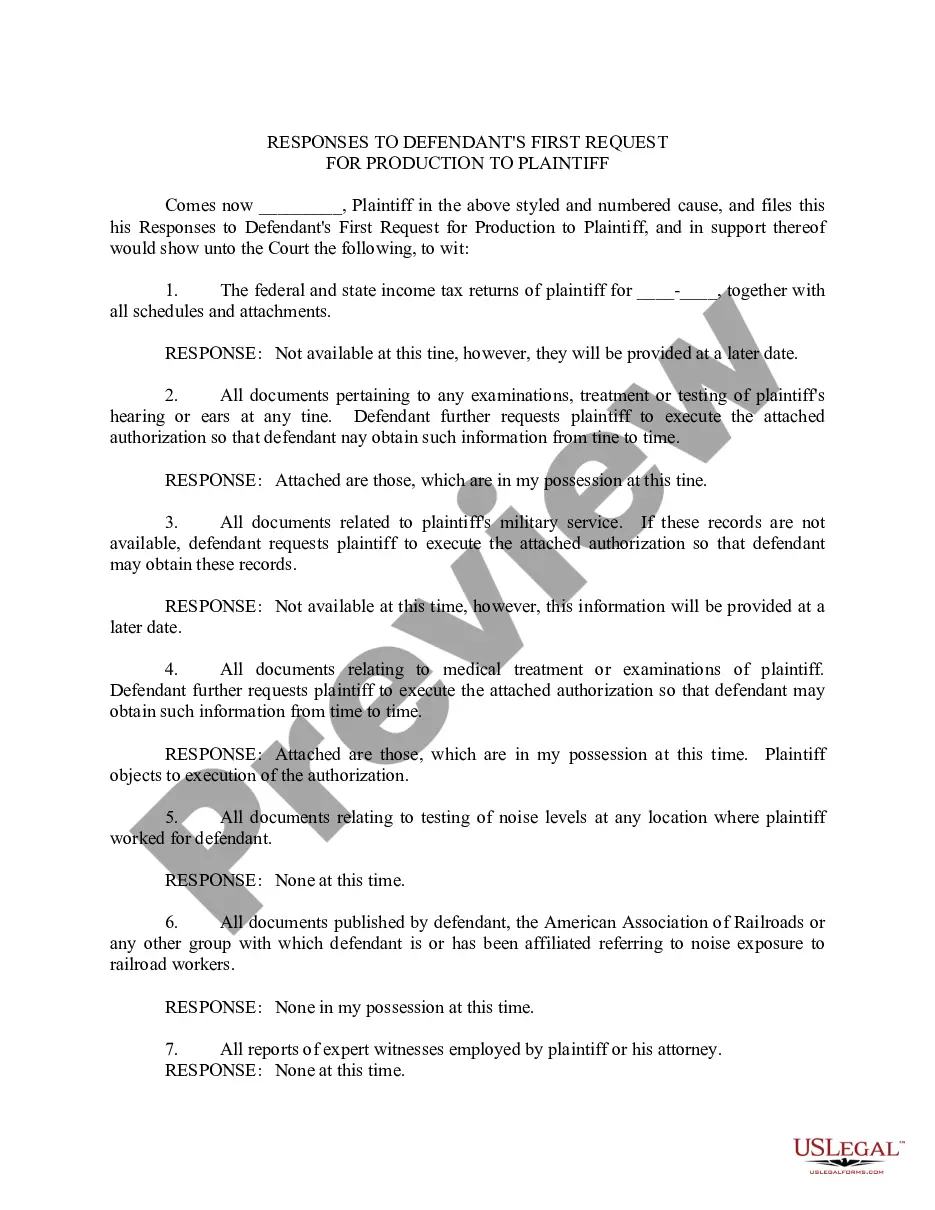
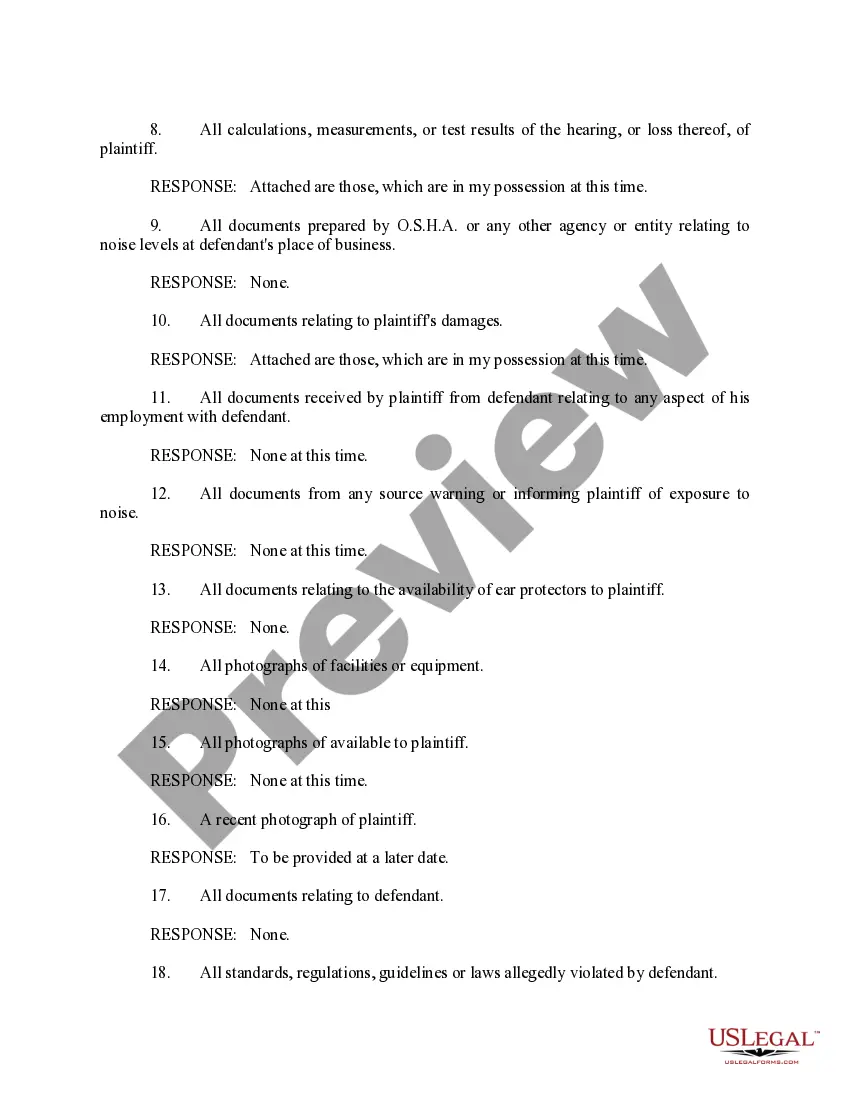
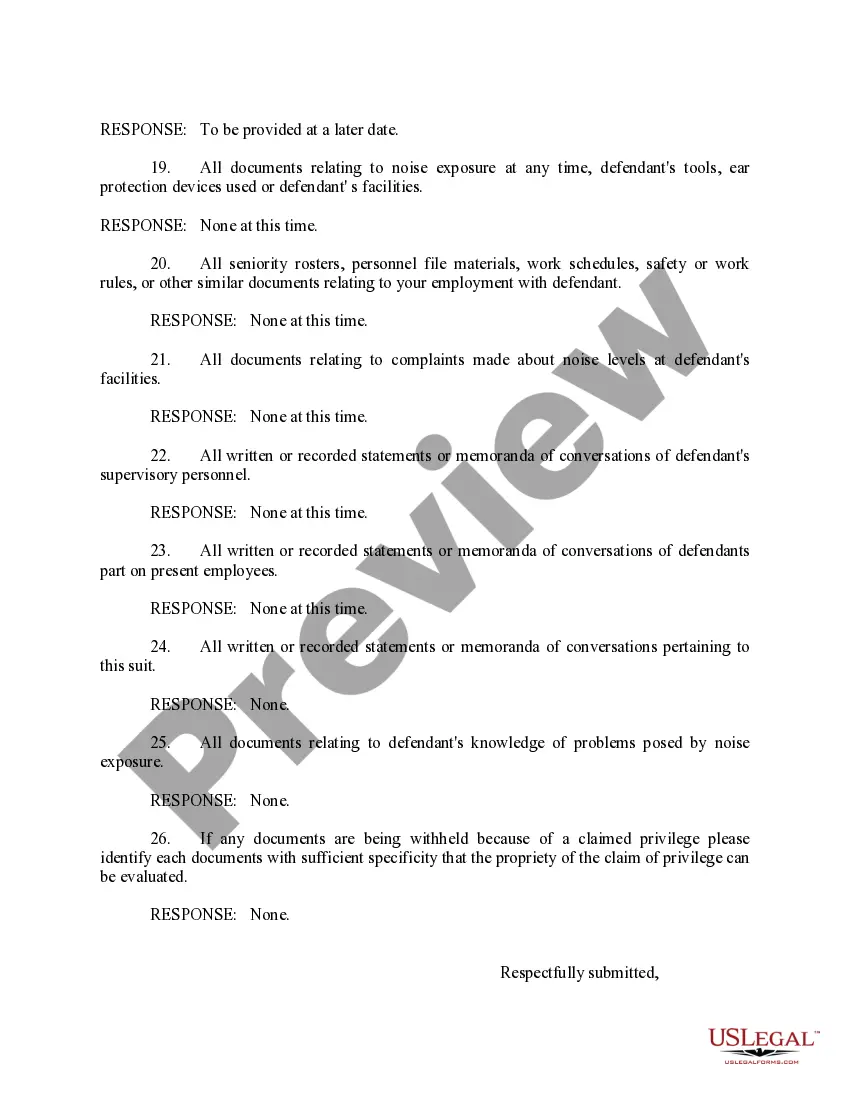
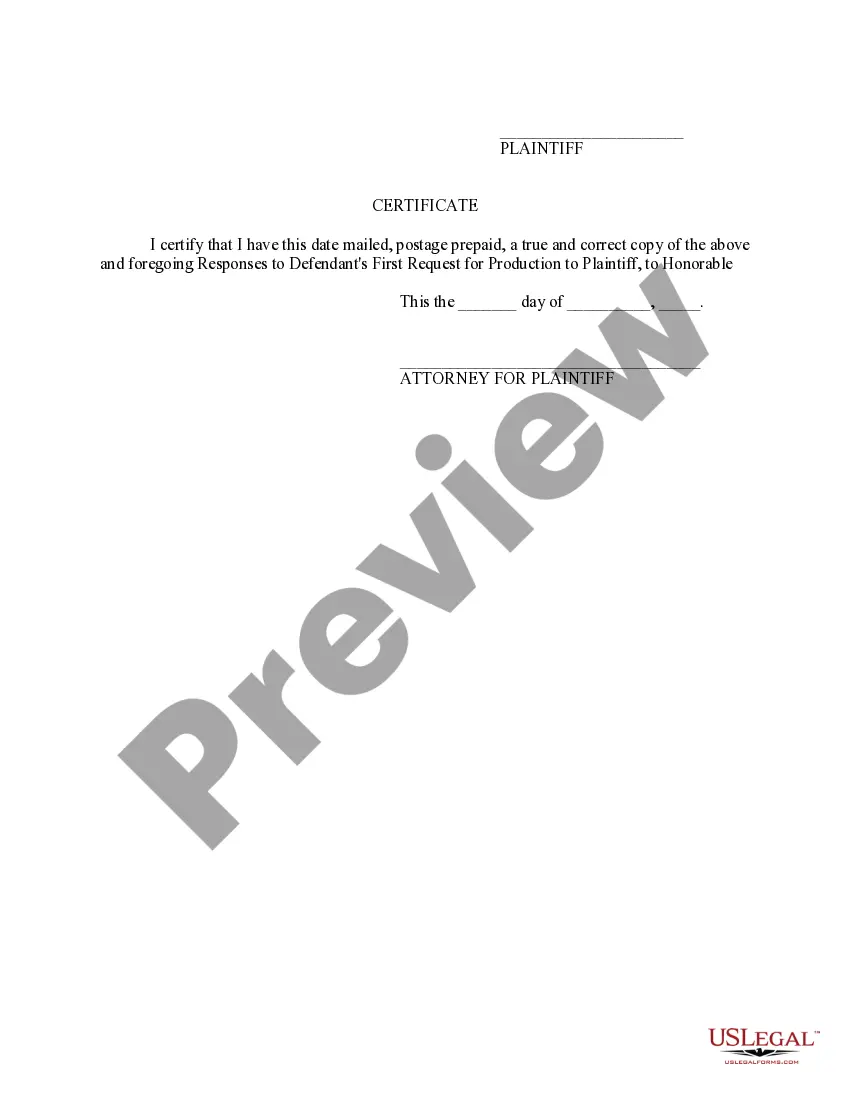
Description

Get your form ready online
Our built-in tools help you complete, sign, share, and store your documents in one place.
Make edits, fill in missing information, and update formatting in US Legal Forms—just like you would in MS Word.
Download a copy, print it, send it by email, or mail it via USPS—whatever works best for your next step.
Sign and collect signatures with our SignNow integration. Send to multiple recipients, set reminders, and more. Go Premium to unlock E-Sign.
If this form requires notarization, complete it online through a secure video call—no need to meet a notary in person or wait for an appointment.
We protect your documents and personal data by following strict security and privacy standards.

Make edits, fill in missing information, and update formatting in US Legal Forms—just like you would in MS Word.

Download a copy, print it, send it by email, or mail it via USPS—whatever works best for your next step.

Sign and collect signatures with our SignNow integration. Send to multiple recipients, set reminders, and more. Go Premium to unlock E-Sign.

If this form requires notarization, complete it online through a secure video call—no need to meet a notary in person or wait for an appointment.

We protect your documents and personal data by following strict security and privacy standards.
Looking for another form?
How to fill out Responses To Defendant's First Request For Production To Plaintiff?
Crafting documents for business or personal requirements is consistently a significant obligation.
When formulating a contract, a public service application, or a power of attorney, it is vital to take into account all federal and state laws and regulations applicable in the specific region.
However, minor counties and even municipalities also possess legislative stipulations that must be acknowledged.
Join the platform to swiftly access verified legal templates for any situation with just a few clicks!
- All these factors contribute to making it arduous and time-intensive to draft Los Angeles Responses To Defendant's First Request For Production To Plaintiff without professional assistance.
- It is feasible to avoid incurring costs for attorneys to draft your paperwork and instead create a legally acceptable Los Angeles Responses To Defendant's First Request For Production To Plaintiff independently, utilizing the US Legal Forms online library.
- This library contains the largest online compilation of state-specific legal templates that have been professionally verified, ensuring their legitimacy when selecting a template for your county.
- Users who have previously subscribed only need to Log In to their accounts to download the required document.
- If you do not yet have a subscription, follow the step-by-step instructions below to acquire the Los Angeles Responses To Defendant's First Request For Production To Plaintiff.
- Review the page you’ve accessed and verify if it includes the template you need.
- To achieve this, use the form description and preview if these features are available.
Form popularity
FAQ
When you respond to a discovery request, you should make sure to do it within the timeframe listed in the discovery request or in the scheduling order if the judge issued one. In some cases, the judge will hold a court conference to establish a timeframe for discovery, motions, and the trial.
: a discovery request served by one party to an action on another (as under Federal Rule of Civil Procedure 34) for the presentation for inspection of specified documents or tangible things or for permission to enter upon and inspect land or property in the other party's possession.
If you admit the request, write admit for your response. If you deny the request, write deny. If you have to qualify an answer or deny only a part, you must specify the part that is true and deny the rest.
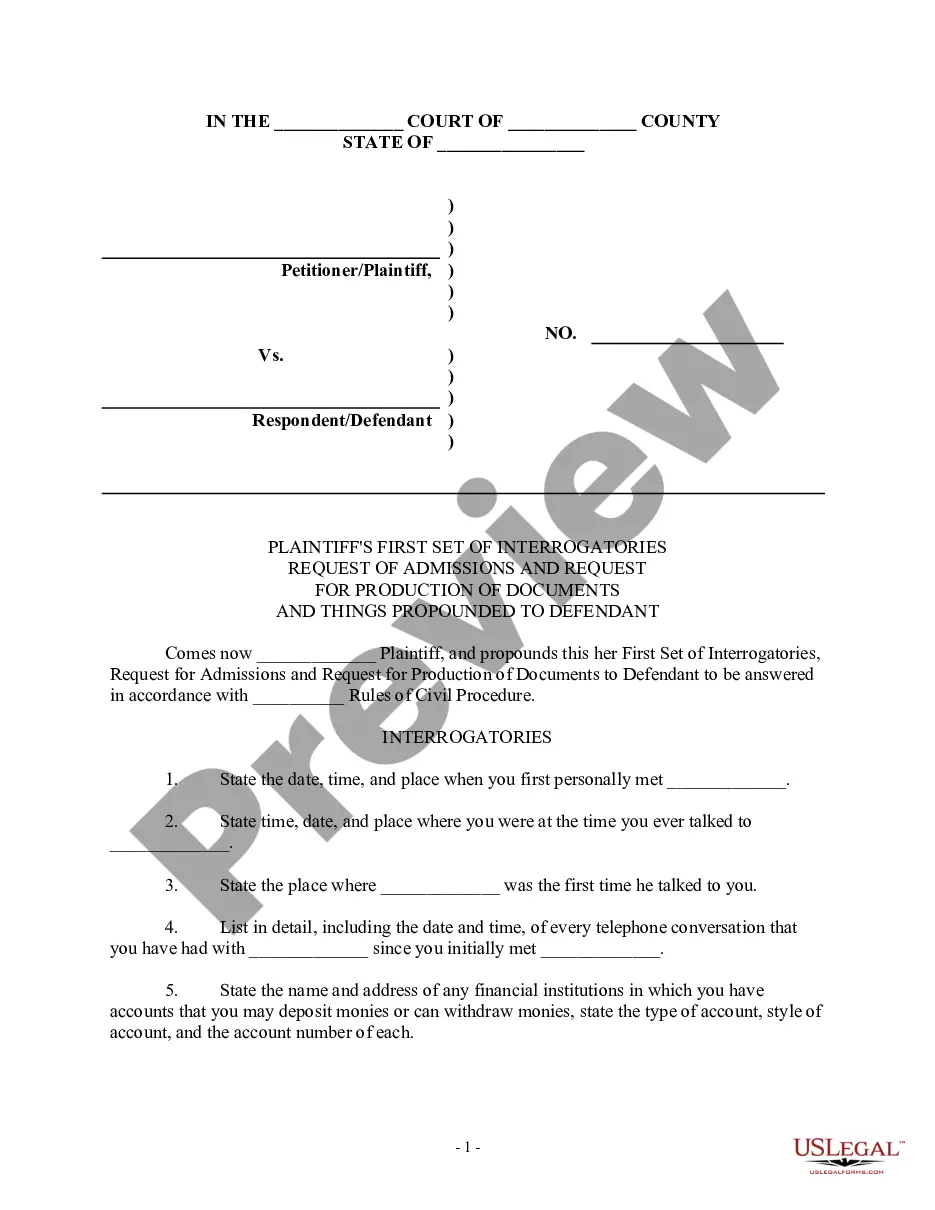
What Is a Request for Production of Documents? A request for production is a discovery device used to gain access to documents, electronic data, and physical items held by an opposing party in a legal matter. The aim is to gain insight into any relevant evidence that the opposing party holds.
Your response to a request for production consists of two parts: One part is a written response to the requests, in which you state under penalty of perjury that you will produce the requested items; that you will not produce and why; or that you object to a request on legal grounds.
How to present a losing objection: Make it a lead-off general objection. Object to anything that is not relevant to the subject matter (no longer the standard) or not likely to lead to admissible evidence (no longer the standard). Don't say if anything is being withheld on the basis of the objection.
2033.210. (a) The party to whom requests for admission have been directed shall respond in writing under oath separately to each request. (b) Each response shall answer the substance of the requested admission, or set forth an objection to the particular request.
California law places strict limits on the number of discovery requests a party can make. In a limited civil case (cases less than $25,000) you may ask each party only 35 questions total, whether they are form interrogatories, special interrogatories, requests for admission, or requests for production.