There are primarily four types of intellectual property in the U.S.: (1) patents, (2) trademarks, (3) copyrights and (4) trade secrets. A copyright exists automatically once the creator of a "work" fixes the work in a tangible medium. A work is "fixed in a tangible medium" when it is written, photographed, recorded or otherwise documented. Copyrights can include everything from books and works of literature, as well as non-literary written documents, including compilations of data, references, price lists and computer software. Although a copyright will generally exist under the common law automatically, the rights of the creator are best protected when the creator files for copyright protection under the Copyright Act (17 U.S.C. 201) through the U.S. Patent and Trademark Office.
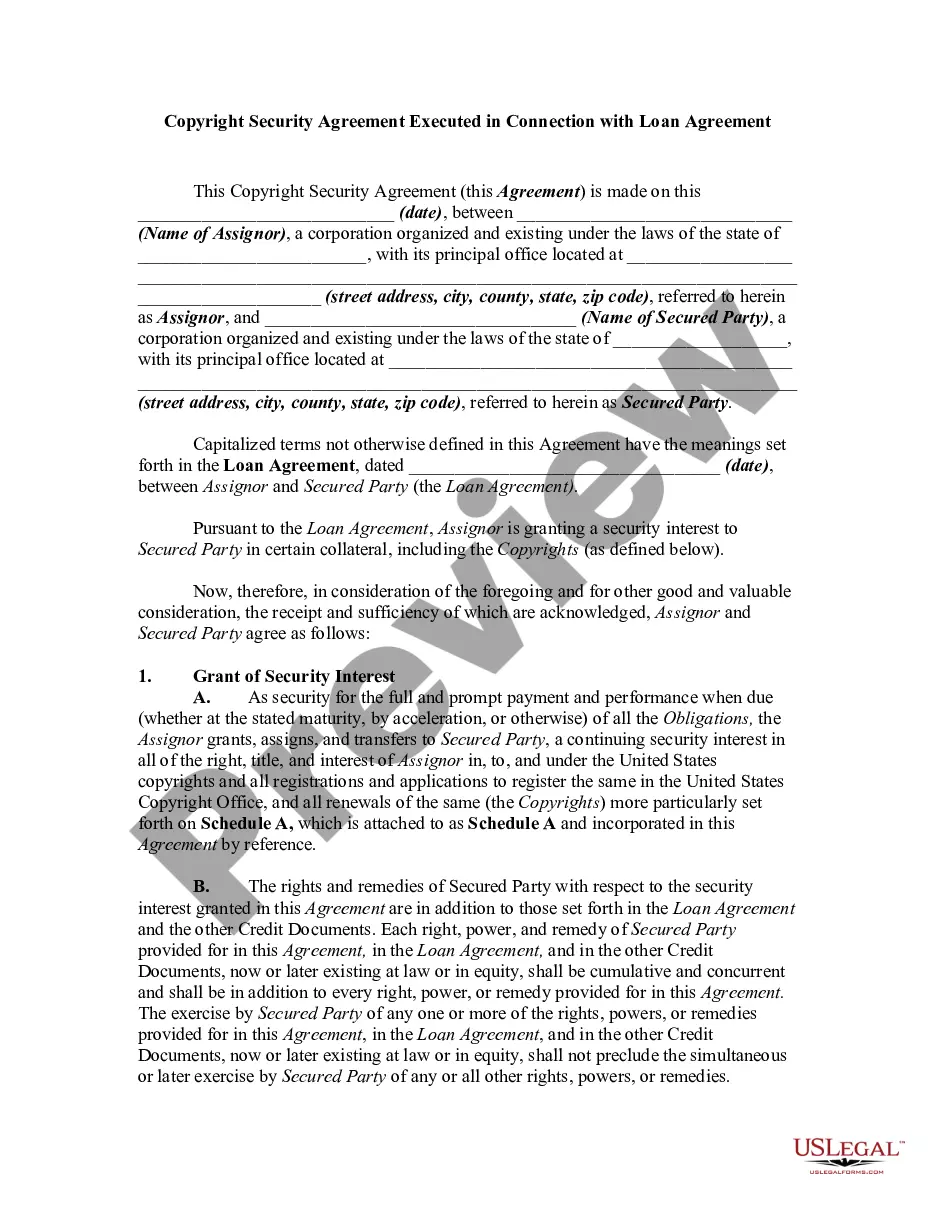
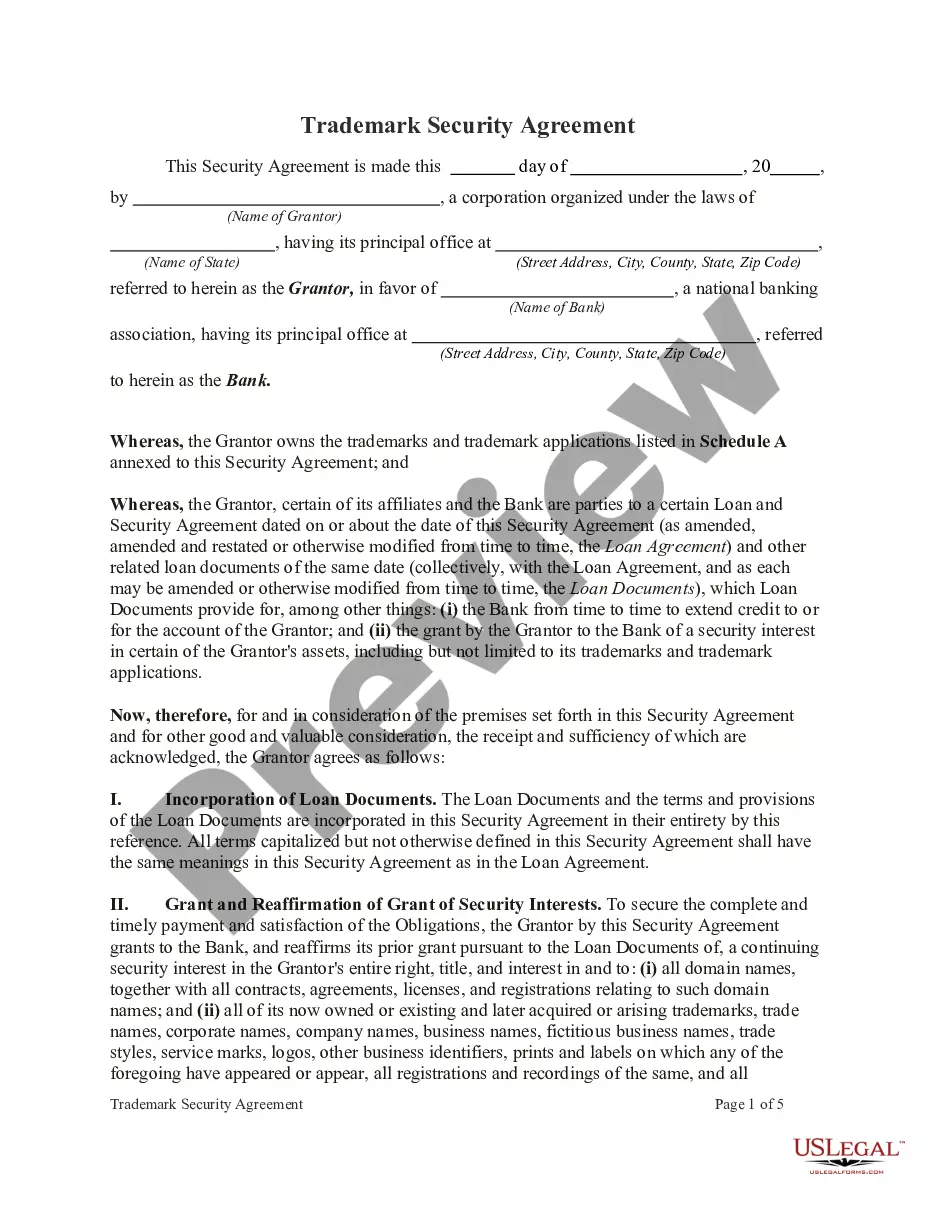
Cincinnati Ohio Copyright Security Agreement Executed in Connection with Loan Agreement
Description





Form popularity
FAQ
Yes, a written security agreement should definitely include a summary of the collateral. Providing a clear description helps clarify which assets are secured under the Cincinnati Ohio Copyright Security Agreement Executed in Connection with Loan Agreement. This summary not only protects the lender’s interests but also ensures that both parties understand the specifics of the agreement. To create a comprehensive agreement, consider using resources from US Legal Forms to streamline the process.
The three requirements for attachment include the debtor's rights in the collateral, the secured party's value given, and a signed security agreement. These elements create enforceable rights for the lender over the collateral. For a Cincinnati Ohio Copyright Security Agreement Executed in Connection with Loan Agreement, meeting these requirements ensures a robust framework for securing loans. By understanding these factors, both borrowers and lenders can navigate agreements more effectively.
A security interest attaches to collateral when specific criteria are met, primarily under local law. The borrower must have rights in the collateral, and the lender must have provided value for the right to claim the asset. In a Cincinnati Ohio Copyright Security Agreement Executed in Connection with Loan Agreement, this attachment gives the lender a claim on the collateral upon default, ensuring their financial interests are safeguarded. Knowing how attachment works fortifies both parties' positions.
A security interest document is a legal form used to create and acknowledge a security interest in an asset. This document specifies the collateral that secures a loan or obligation. In the context of a Cincinnati Ohio Copyright Security Agreement Executed in Connection with Loan Agreement, it outlines the protections afforded to the lender against default by the borrower. Understanding this document helps borrowers and lenders operate with clarity and confidence.
To authenticate a security agreement, the involved parties need to sign the document, indicating their consent and acknowledgment of its terms. Proper execution may also require witnesses or notarization, depending on state laws. For a Cincinnati Ohio Copyright Security Agreement Executed in Connection with Loan Agreement, adhering to these requirements ensures that the agreement is legally binding and enforceable. This process adds a layer of security for both lenders and borrowers.
The standard document for establishing a security interest in collateral is a security agreement. This agreement outlines the terms under which a lender can claim certain assets if a borrower defaults on a loan. Specifically, a Cincinnati Ohio Copyright Security Agreement Executed in Connection with Loan Agreement serves to protect the lender's rights while securing the loan with the borrower's collateral. By using this document, both parties clarify their responsibilities and expectations.
A common security agreement is one that is widely used and understood within financial transactions, typically involving various forms of collateral. An ordinary example includes agreements that secure loans with property, vehicles, or equipment. In the context of a Cincinnati Ohio Copyright Security Agreement Executed in Connection with Loan Agreement, the use of intellectual property as collateral reflects a modern approach to securing loans.
A security agreement establishes the terms and conditions of the collateral between the lender and borrower, while a financing statement serves as a public notice of the lender's interest in the collateral. In the context of a Cincinnati Ohio Copyright Security Agreement Executed in Connection with Loan Agreement, the security agreement protects the interests of both parties. The financing statement, on the other hand, informs others about the lender's claim on the borrower's property.
A copyright security agreement is a specific type of security agreement that involves the use of copyrights as collateral for a loan. This agreement ensures that if the borrower defaults, the lender has the right to seize the copyrights involved. In the case of a Cincinnati Ohio Copyright Security Agreement Executed in Connection with Loan Agreement, this can provide both security for the lender and a potential funding source for the borrower.
Yes, a security agreement must be signed by both parties involved to ensure it is legally binding. This mutual consent confirms that both the lender and borrower understand and agree to the terms outlined in the Cincinnati Ohio Copyright Security Agreement Executed in Connection with Loan Agreement. This signature serves as protection for both parties and illustrates their commitment to the agreement.